
Property Types We Roof
Marine Corps Reserve Facility Roofing Near Pasadena, TX
A reserve training building runs on a monthly rhythm. It fills on drill weekends and sits nearly quiet through the weeks between, and the roof plan has to respect that cycle, because a crane pick on a drill Saturday lands on top of the biggest crowd the building sees all month.
Near Pasadena, TX, the Marine Corps is represented by a reserve unit: 1st Battalion, 23rd Marines is one of the units hosted at Ellington Field Joint Reserve Base, about 7 miles south-southeast, alongside Army National Guard, Air National Guard, Navy Reserve and Coast Guard units. That shared field adds a layer to a job that is otherwise ordinary: more than one command, more than one calendar and more than one set of approvals. We map all of that before we map a single seam.
Sort Out Which Command Owns Each Roof Before Scheduling
On a joint reserve base, the roof over a building may belong to the host, to a tenant or to a shared facility that several units use. The 147th Attack Wing is the host unit at Ellington, and the Marine Corps Reserve is one of several tenants, which means a roofing request can pass through more than one office before work is cleared. A leak in a shared assembly hall touches every unit that books it.
The first meeting settles who signs for what: who accepts the submittals, who controls the work area, who funds the repair and who gets the closeout file. We prepare a one-page roster of those names and a building list tied to each, so the project does not stall waiting for an approval that nobody realized belonged to someone else. Where the buildings are alike, one set of military installation roofing procedures keeps the paperwork consistent across commands.
Schedule the Loud Work for the Quiet Weeks
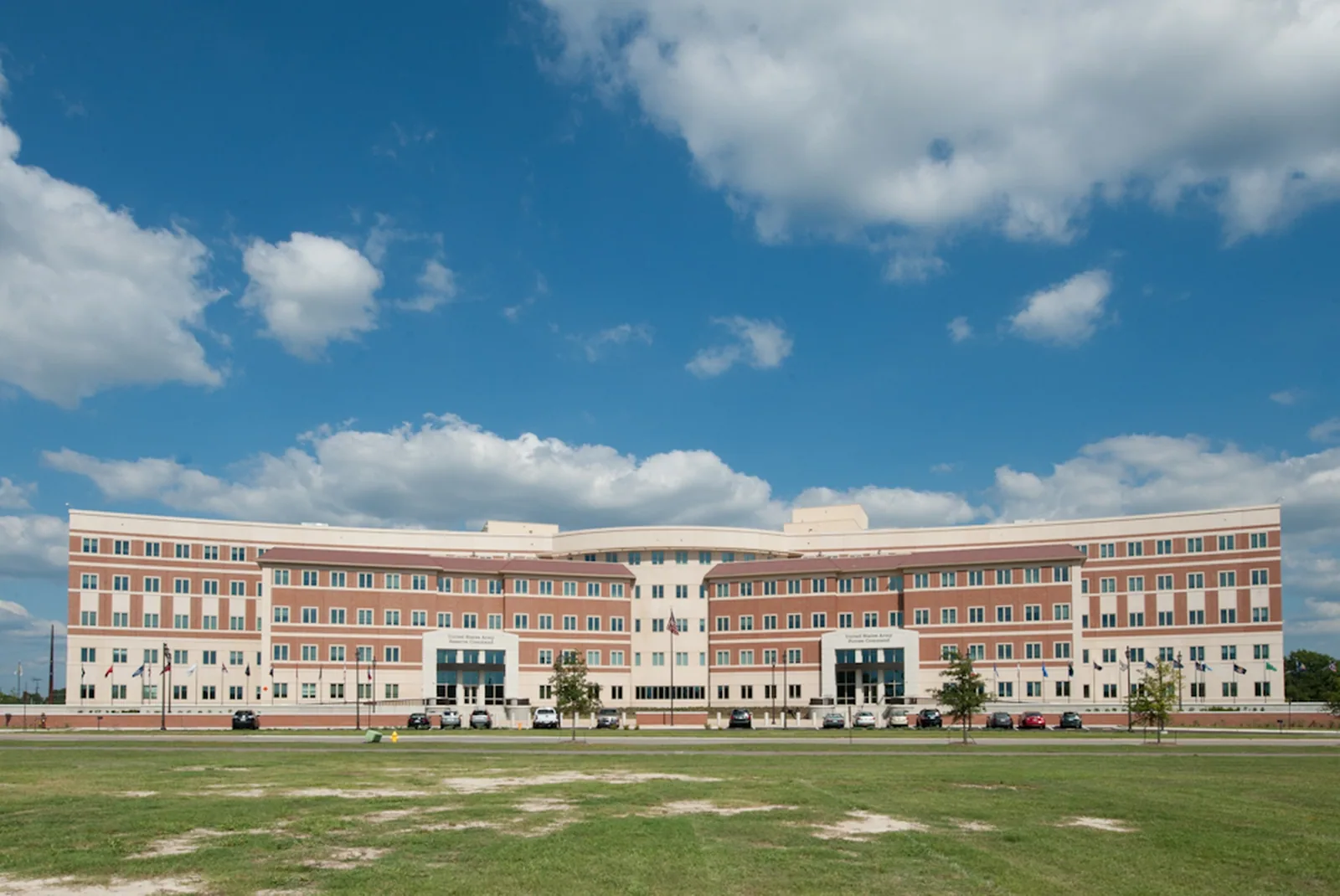
The building types on a reserve field are specific. Ellington's include a Battle Command Training Center of 40,000 square feet, another Armed Forces Reserve Center that holds an assembly hall and offices, and hangars on the airfield. Wherever a reserve unit drills, the drill weekend is the building's busiest stretch, so the work window sits in the weekdays between. Tear-off, crane picks and hot work go into that gap, and the last two days before a drill are kept for dry-in, cleanup and sweeping the laydown area.
Nothing is left open over a weekend. Every section opened during the week is closed, tested and swept before the crew leaves on Friday, because a Saturday storm over a half-opened roof is a costly way to interrupt a training day. If the unit calendar moves, the phasing moves with it, and the project manager gets the revised sequence the same week.
Protect Training Rooms, Cable Closets and Equipment Storage Below
Command training depends on screens, network closets and cabling, and none of that tolerates a drip. Storage rooms for uniforms and gear that are slow and costly to replace belong on the same list. Before any deck opens, the plan names the rooms under each roof section, ranks them by what water would destroy and asks the unit to clear or cover the most sensitive ones.
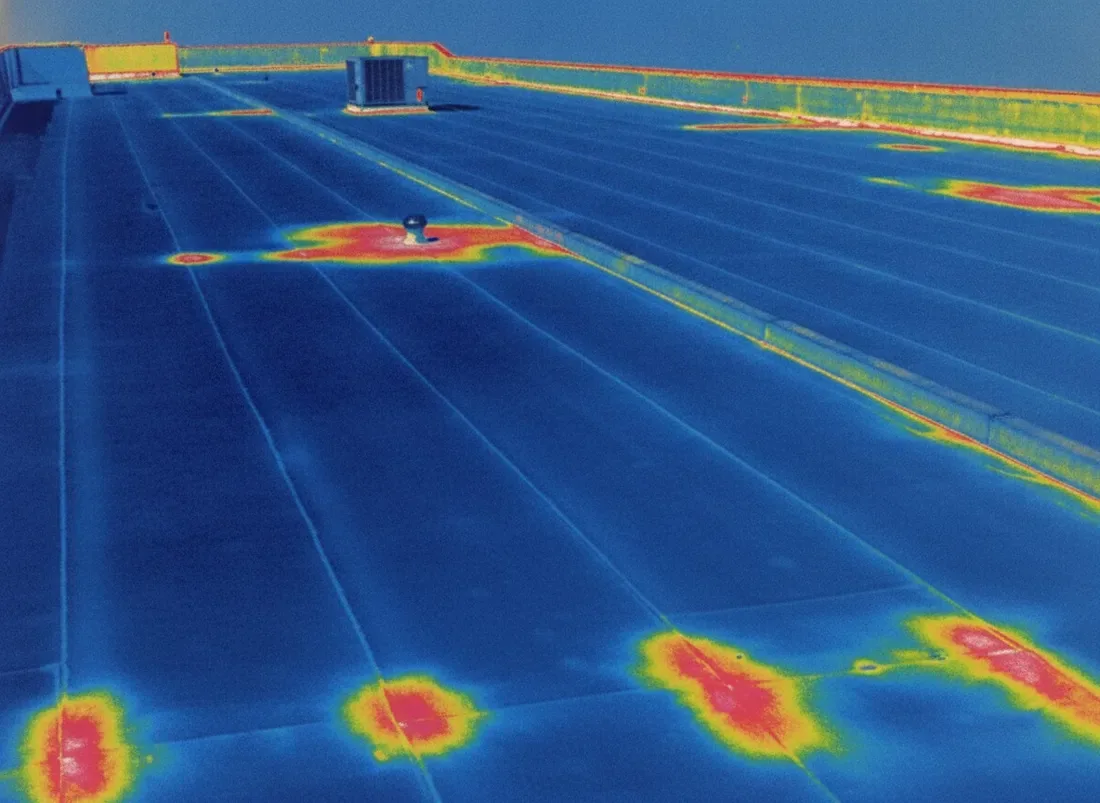
Inside protection goes up first: poly sheeting over racks, covered cable trays and a wet-vacuum station set near the work area. If a leak does appear, a trained crew member goes to the room, not just to the roof. A hands-on survey and an infrared moisture survey before the project begins show how far water has already traveled, so the plan covers areas that look dry but are not.
Shed Heat Before It Cooks the Membrane
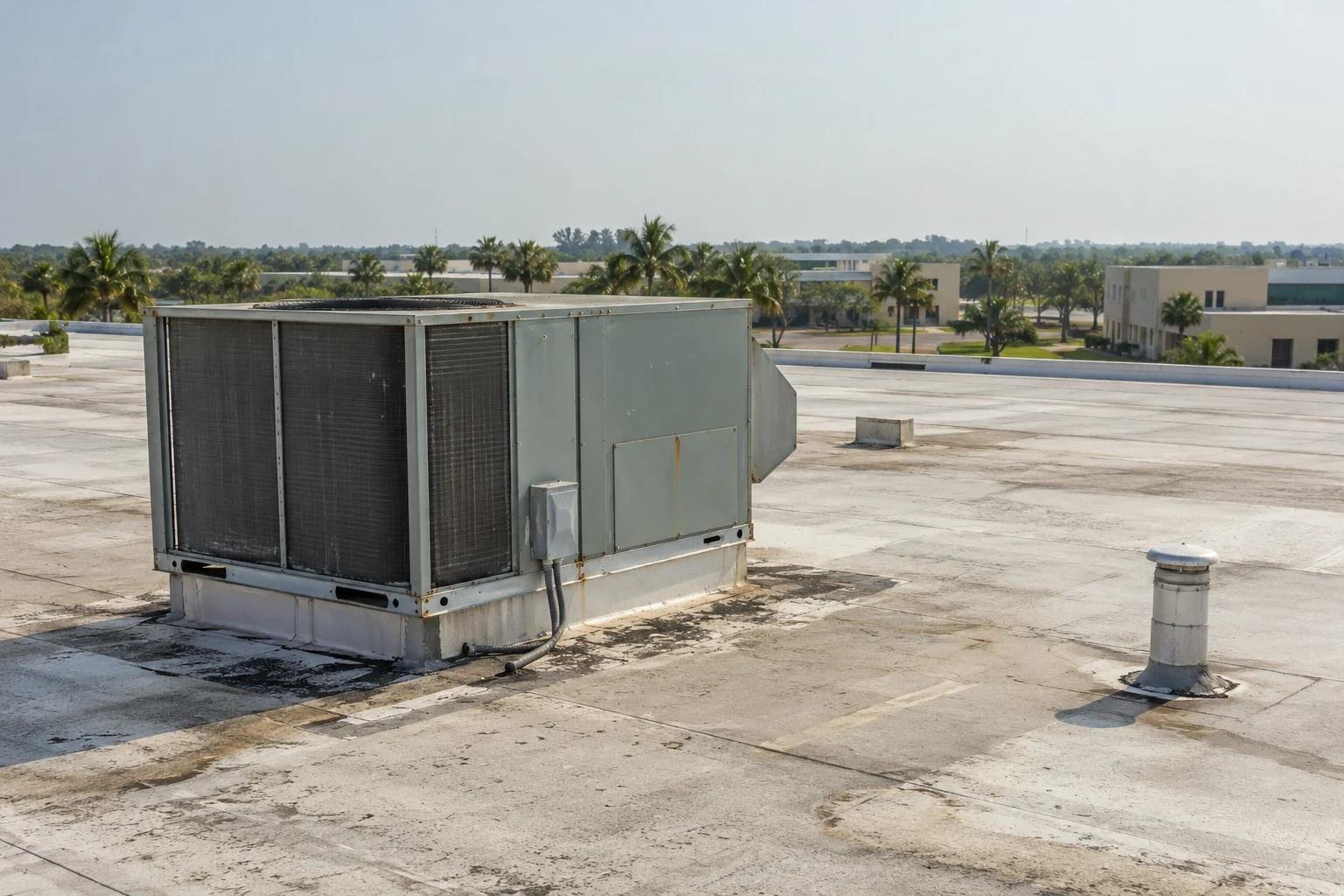
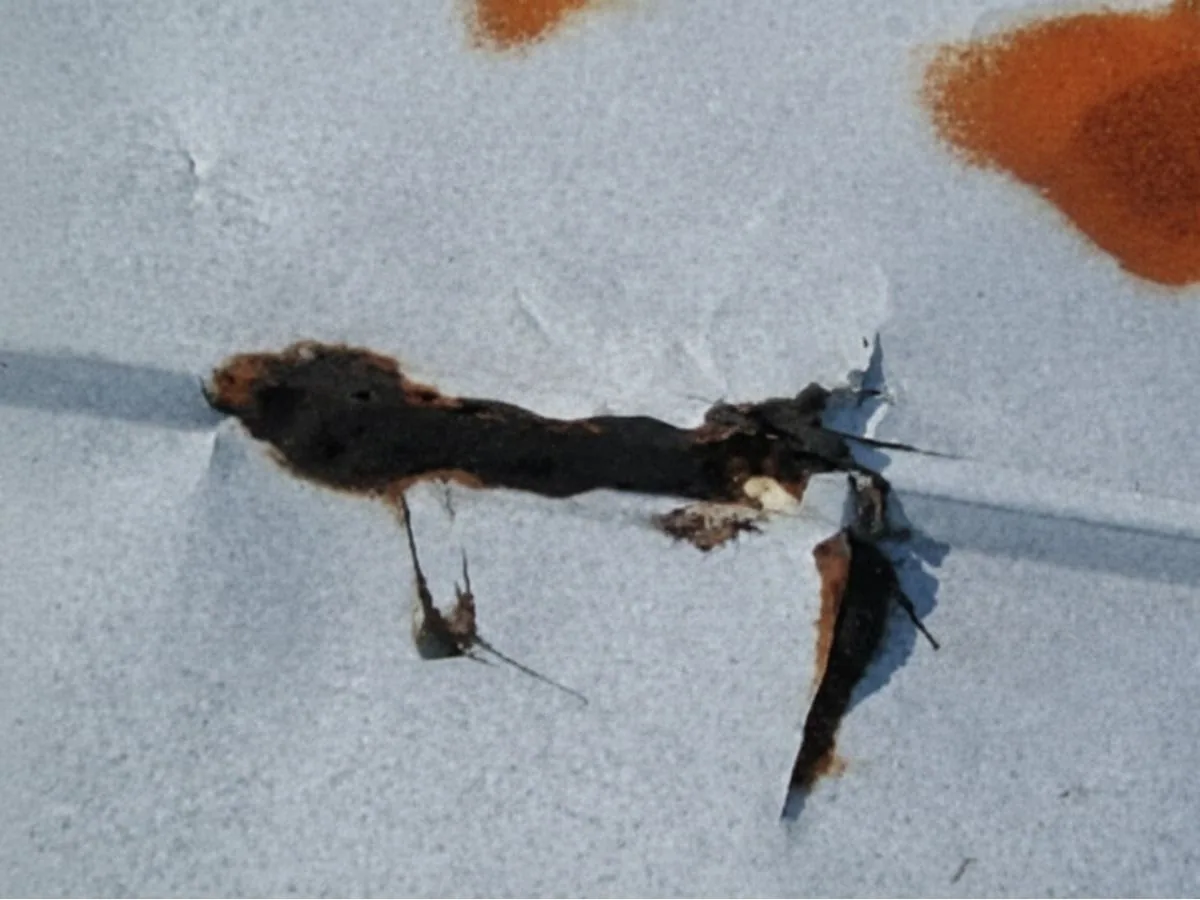
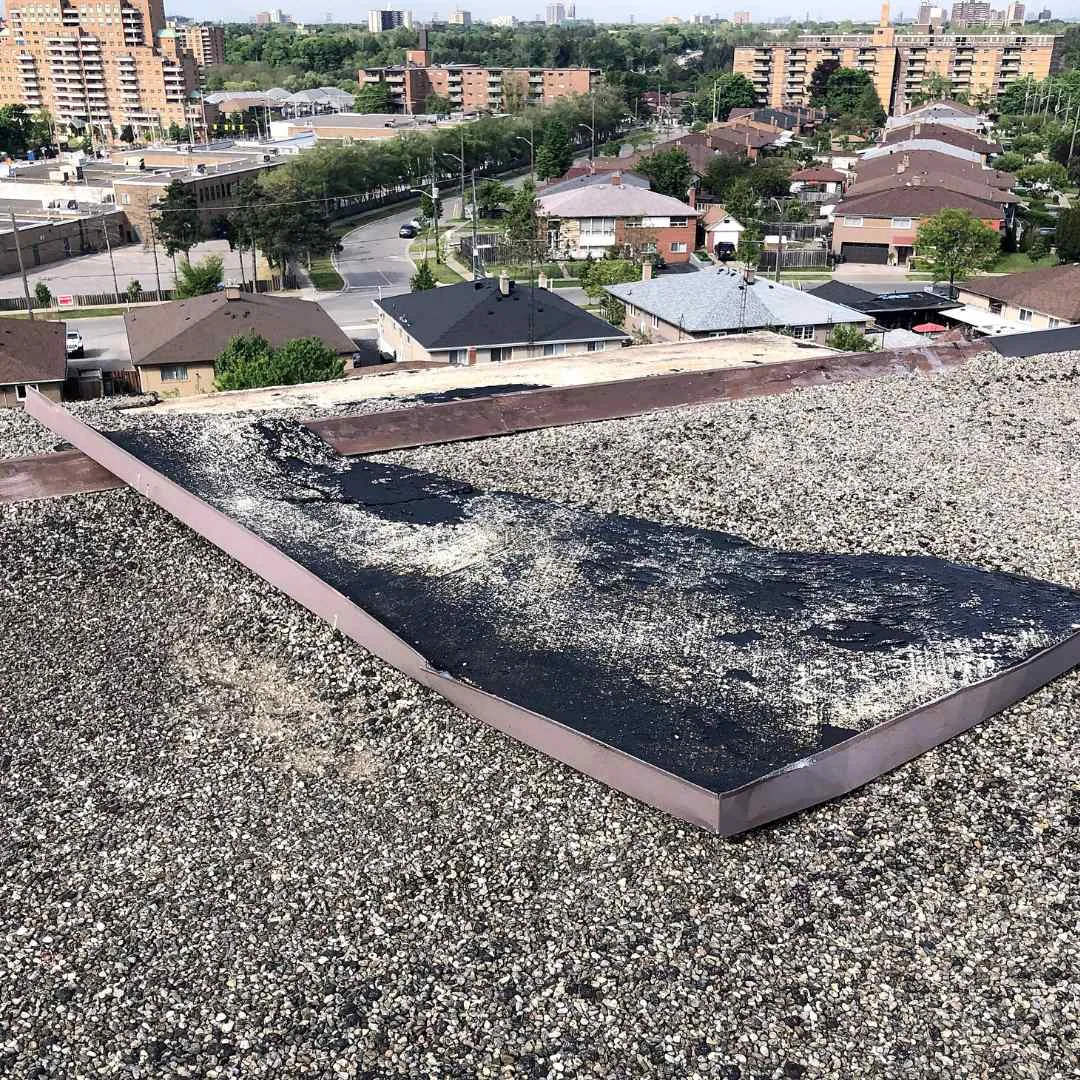
Houston matched its all-time airport high of 109 F on August 27, 2023, at the end of the hottest summer in its records, and an ordinary year already hands the city more than three months of days at 90 F or above. A dark membrane over a drill hall absorbs that heat all day, softens at the seams and ages faster under ultraviolet exposure. Heat also reaches the people inside, so the roof's temperature is a comfort question as well as a membrane question.
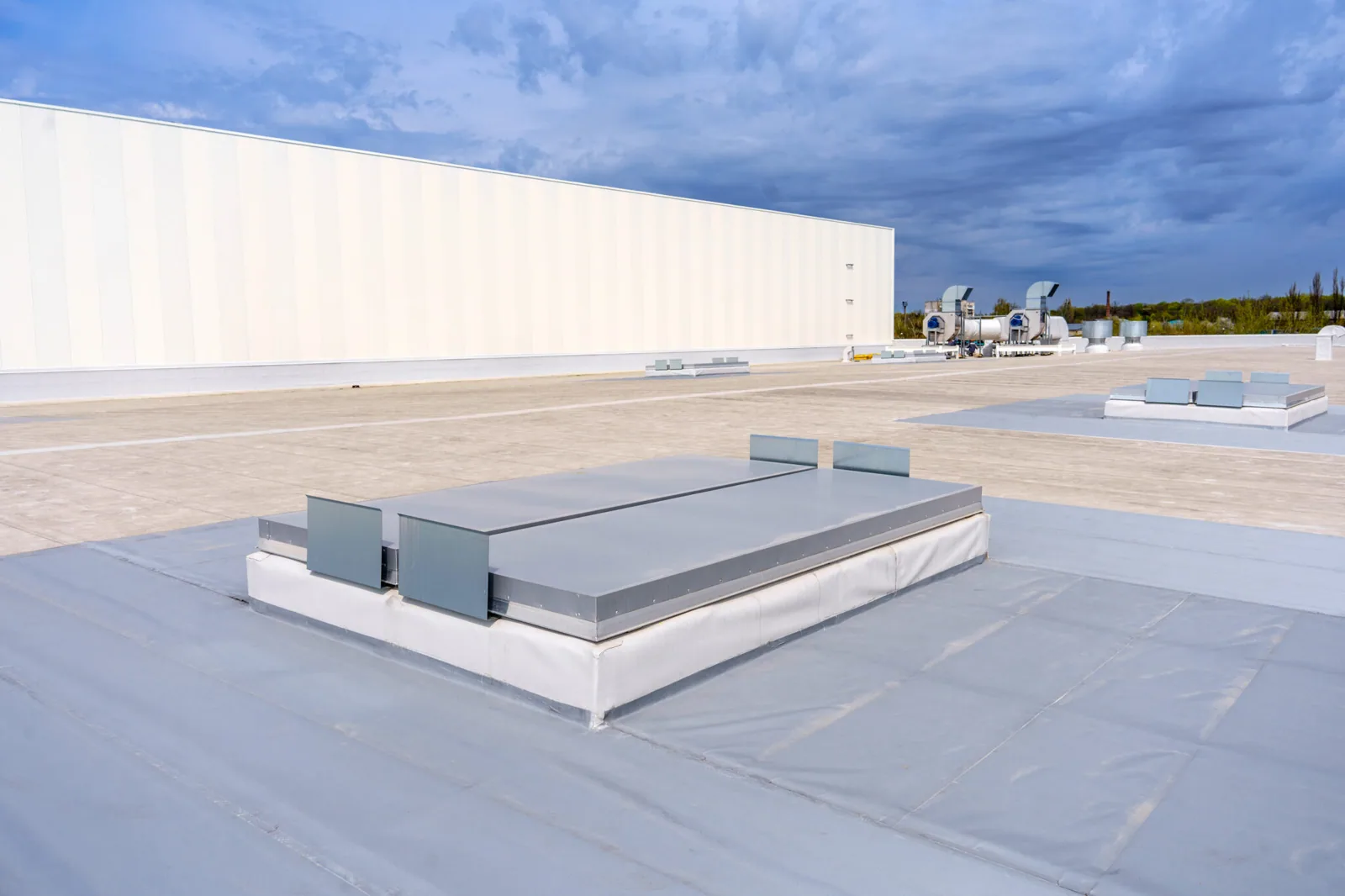
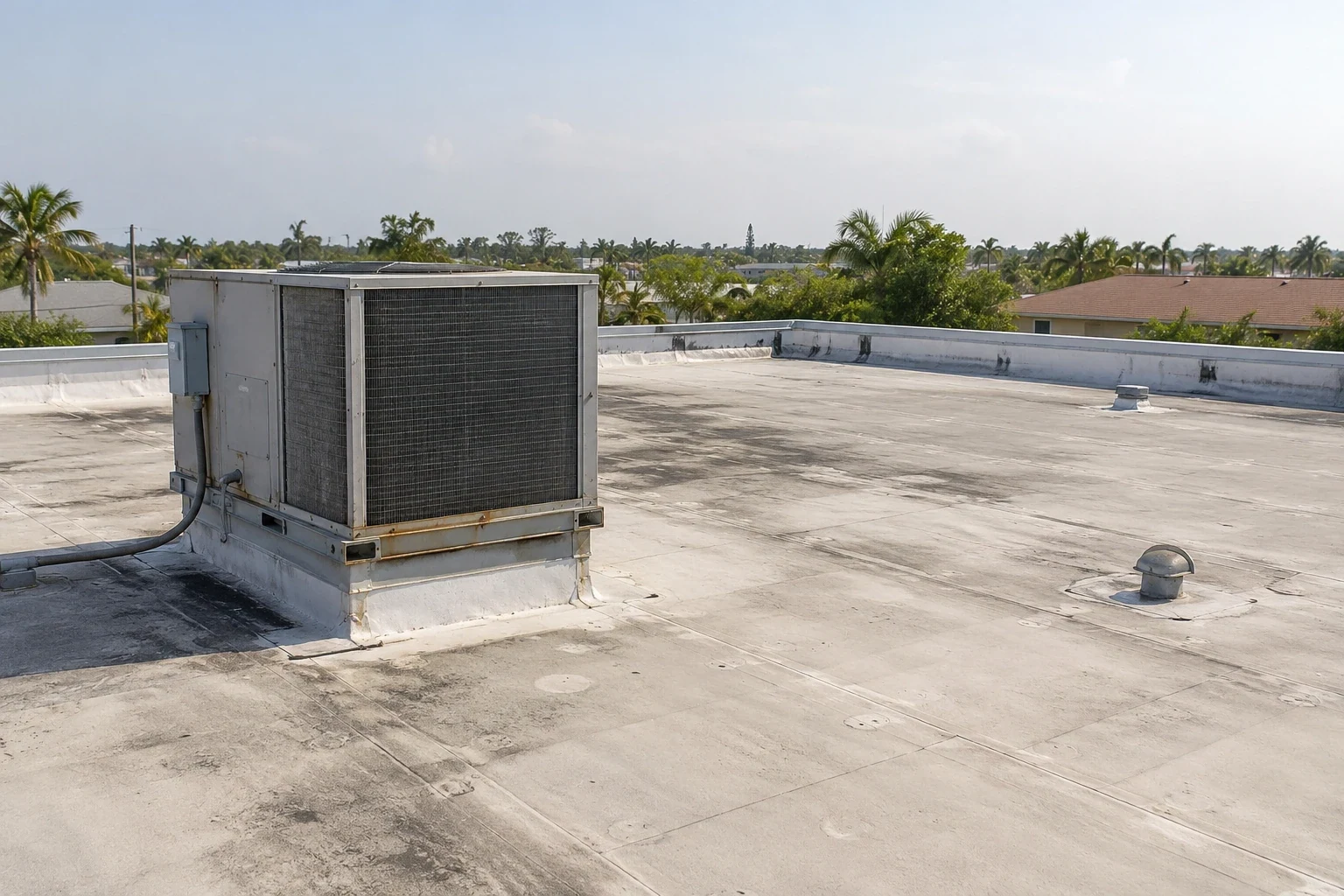
A reflective surface, more insulation or a recoat of an aging membrane all reduce the load. Cool roof installation suits a building with sound insulation and a failing surface, while heat and UV roof damage repair is the right first step on a roof that has already started to chalk, shrink or craze. The survey decides which one fits, not the calendar.
Hold the Edges Against Gusts That Arrive Without a Hurricane
Severe thunderstorms on June 21, 2023 pushed a 97 mph gust across Bush Intercontinental Airport, the strongest wind ever logged there and well past the 82 mph from Hurricane Ike in 2008. On May 16, 2024 a derecho swept Greater Houston, and National Weather Service surveys estimated winds near 100 mph downtown. Neither storm carried a hurricane name, and both damaged buildings across the region.
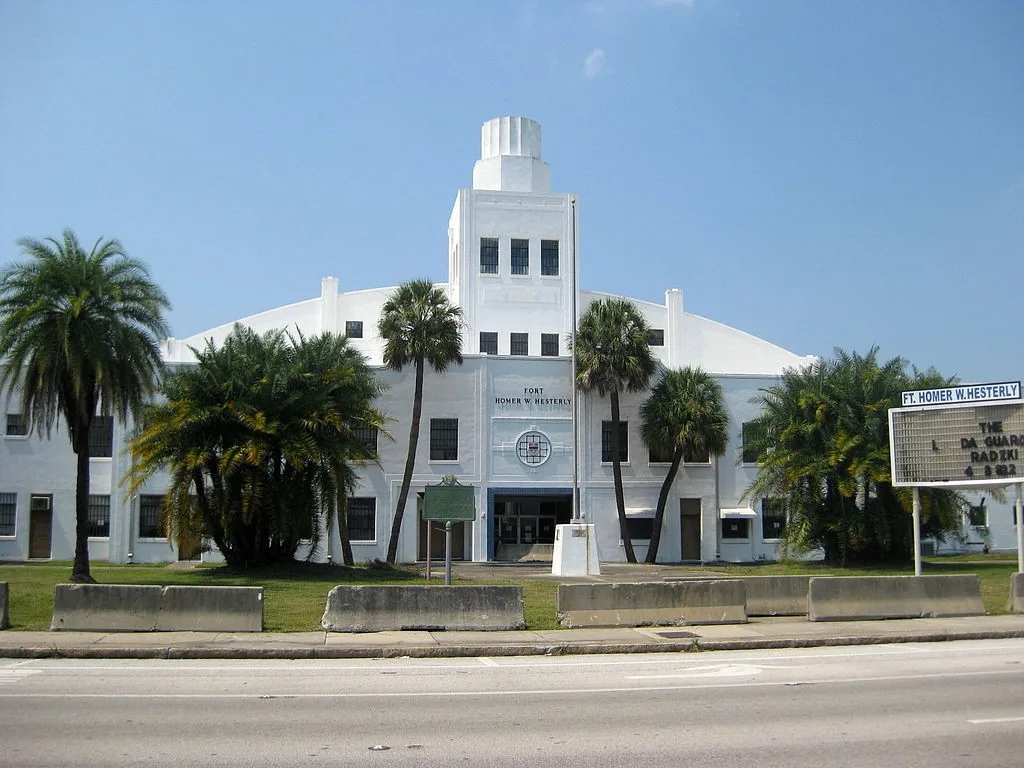
The airfield has its own record here: Hurricane Ike damaged hangar roofs at Ellington in 2008. That is why perimeter securement is the line item we protect first. Edge metal gets fastened into solid blocking, coping joints are sealed, and the outer zones of the field get a denser fastening pattern. Once the wind passes, wind damage roof repair begins at the corners, with photographs taken before anything is moved. The same approach holds for Army installation roofs and National Guard armory roofs.
Leave a Closeout File That Survives Inspection
Military reviewers read a roof through its paperwork. The closeout package holds a photo of each termination and penetration, the finished roof drawing, product literature, signed hot work permits, the quality-control log and a maintenance calendar. A roof condition report then gives the facilities office a baseline to compare against after the next hurricane season, which turns every future inspection into a quick comparison instead of a new investigation.A commercial roof in Alvin has a separate owner and schedule; installation work follows the host site’s access rules.
Commercial Roofing Questions
Who approves roof work for a Marine Corps Reserve unit on a shared field?
Expect two signatures: the host installation's facilities office and the tenant unit. The host typically controls the grounds and access, and the tenant the building schedule. We ask each to name its approver at the first meeting, so no submittal waits on a signature nobody knew was needed.
Will a reroof get in the way of a weekend of training?
Not if the heavy work finishes before the weekend. The crane, the noisy tear-off and hot work all happen on weekdays, and Friday ends with every opened section closed, tested and swept. The hall is clean, dry and quiet when the unit arrives.
Why do cable rooms and network closets get a separate protection plan?
Water that enters a ceiling follows conduit and cable trays to places no roofer will see. A separate plan covers that gear before the deck opens, with sheeting, a drip shield and a person assigned to watch the room whenever rain is forecast.
What should a facilities officer expect at closeout?
A photo record of terminations, the finished roof drawing, manufacturer literature, permits and the inspection log. Those documents let a reviewer trace a completed detail back to the specification without a return trip to the roof.
Why does summer heat matter to a roof on a reserve training building?
Houston logs about 102 days of 90 F heat or worse each year, so a dark membrane cycles through high temperatures daily from late spring through September. Seams soften, the surface chalks, and the building behind it works harder to stay cool.
Keep Reading
Related Roofing Work in Pasadena
Bring Your Drill Calendar and Walk the Roofs With Us
Send the building list, the host and tenant contacts and the training schedule. We will walk the facility with your project manager and set a work window that keeps units training and the roof dry.