
Roof Systems
KEE PVC-Alloy Roofing in Pasadena, TX
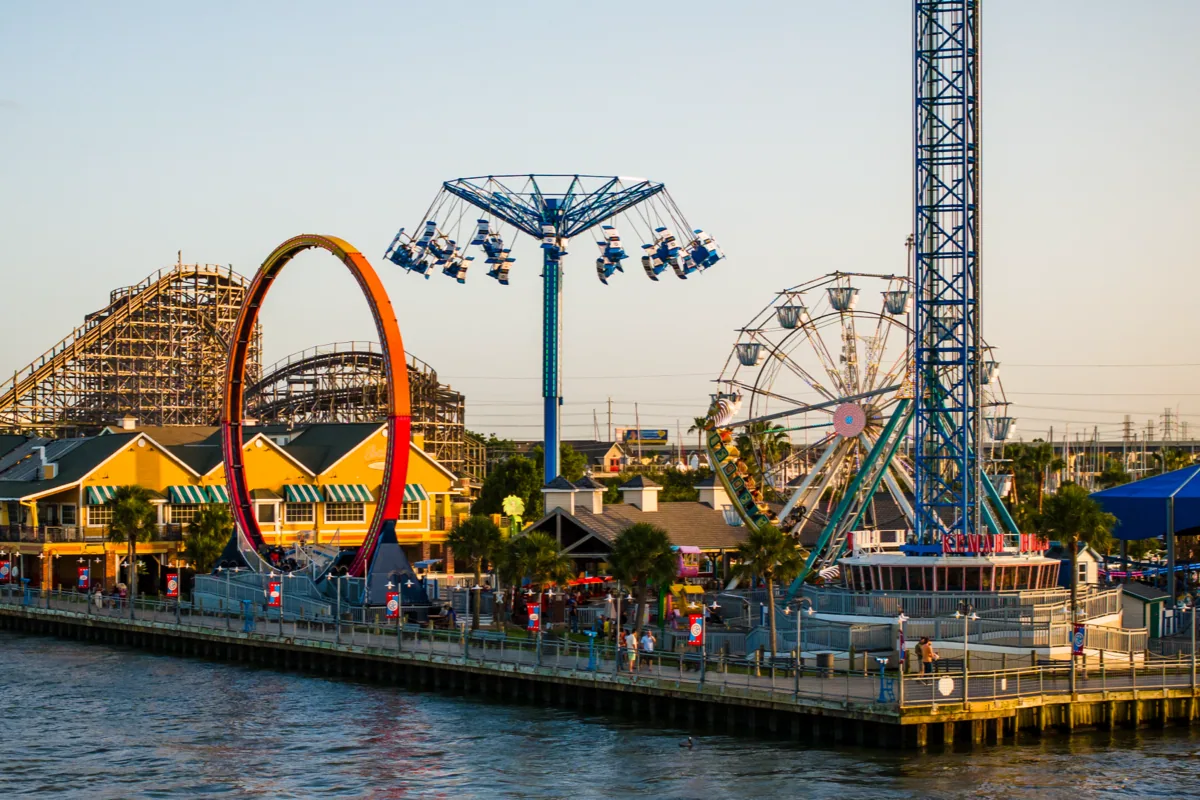
The fryers at a seafood kitchen run from lunch to close, and every hour of that, a fine film of grease leaves through the hood on the roof. It settles on the membrane, runs toward the nearest drain and sits there through a hot afternoon. A standard single-ply sheet can soften under that treatment. KEE membranes exist for exactly that roof, and the fish markets on Seabrook's Waterfront Drive and the restaurants at the Kemah Boardwalk put kitchens close to the bay.
KEE is a PVC-alloy sheet that uses a polymeric modifier where ordinary PVC relies on liquid plasticizers. There is less to migrate out of the sheet, so it holds its flexibility and its seams longer when fats and oils are in contact with it. We install and repair KEE as a working answer for kitchen exhaust, fat and oil exposure and some chemical roofs, not as a premium upgrade for every building.
Read the Hood Before You Read the Roof
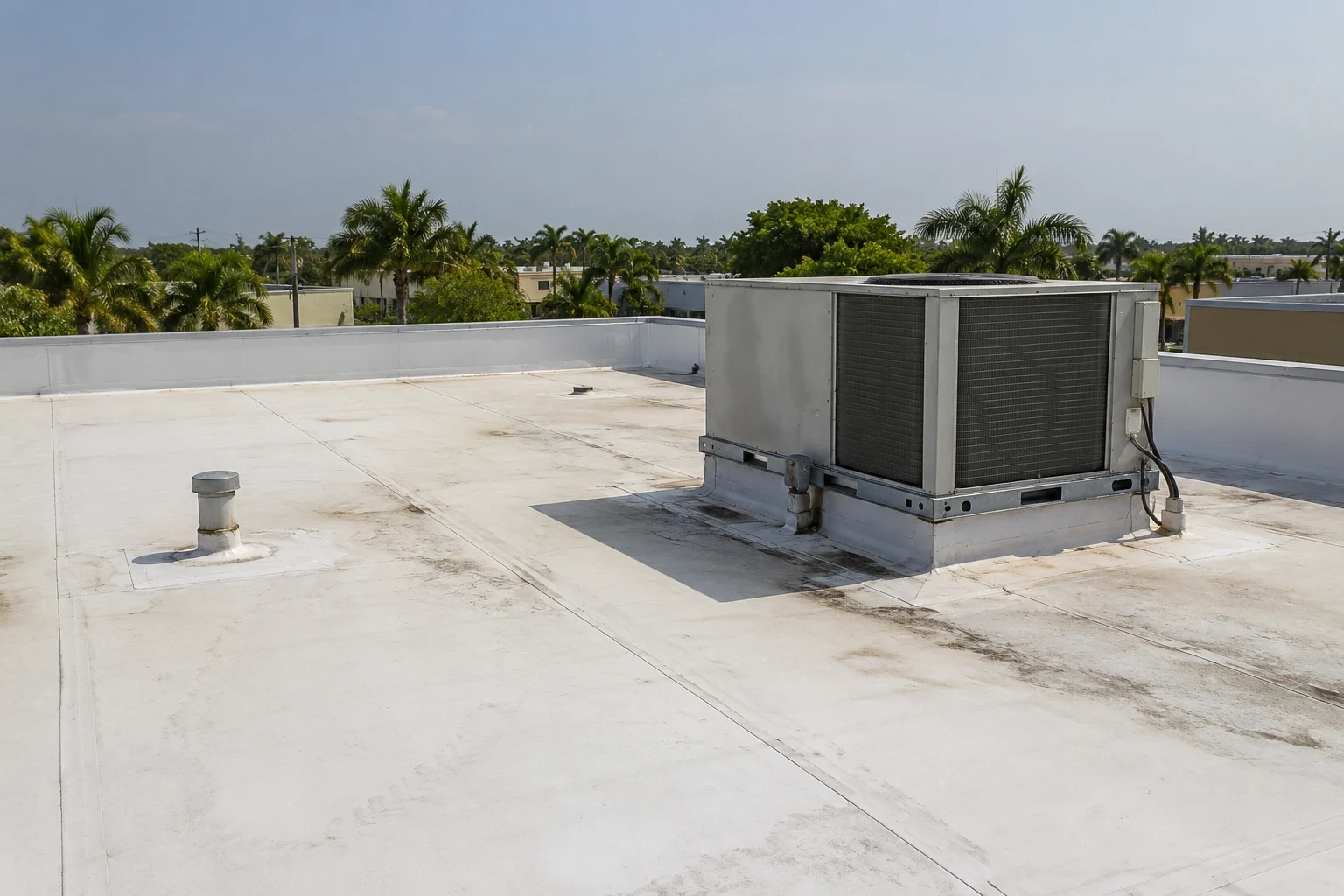
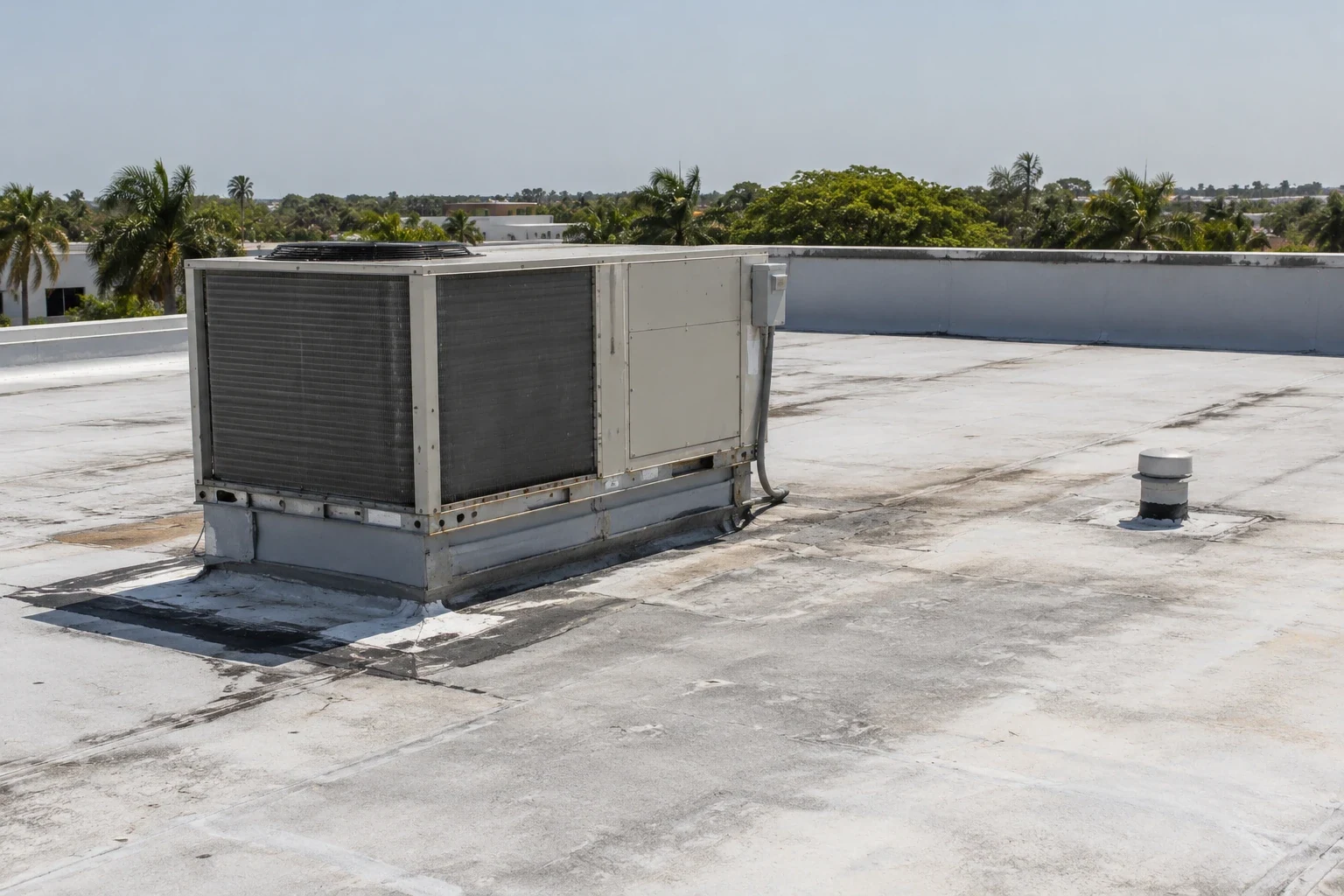
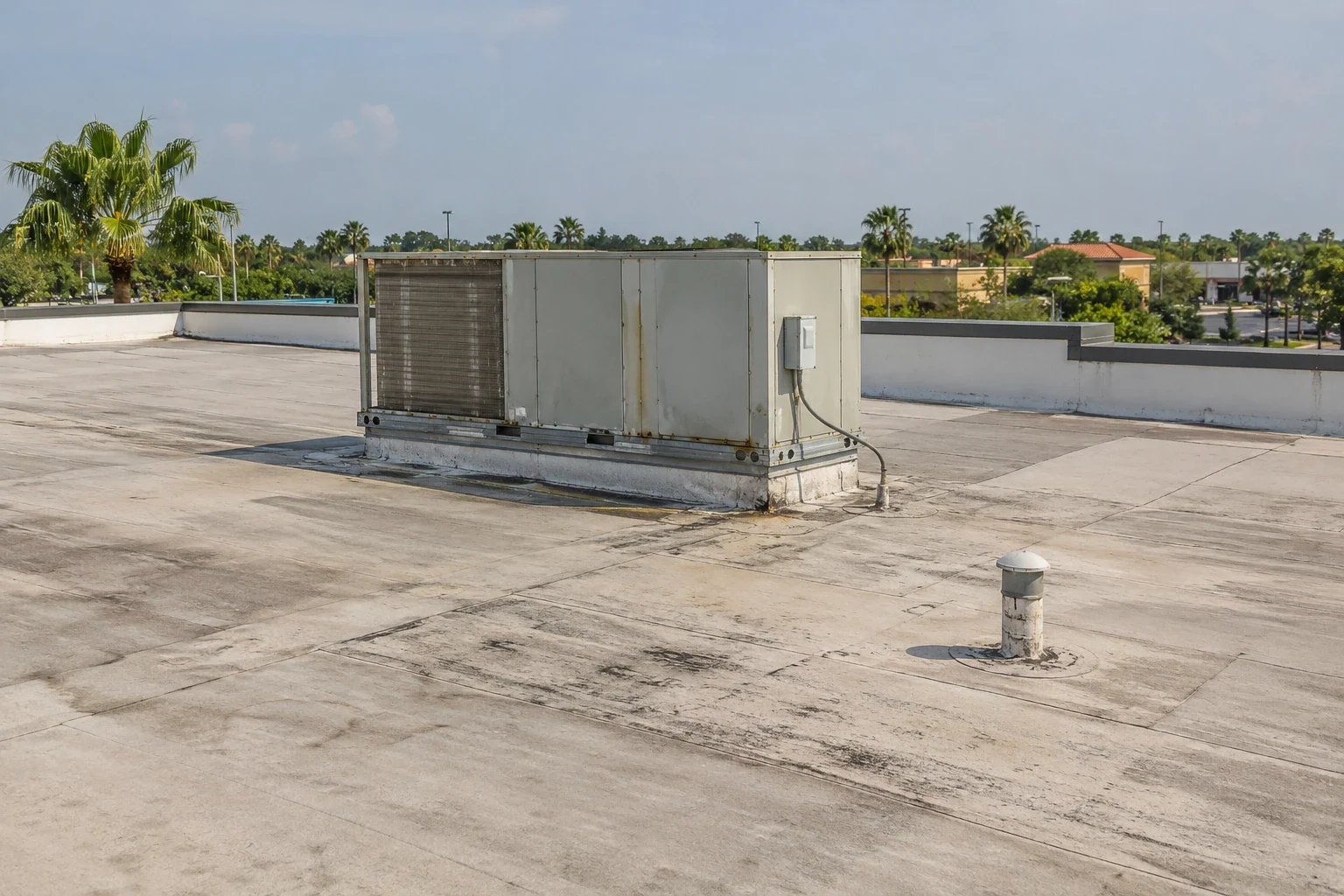
On a restaurant roof, the first inspection starts at the exhaust fan. We note how the fan is mounted, where its drip tray drains and whether the grease container is full, because a roof under a neglected hood sees far more grease than one under a clean one. A cracked or missing drip tray sends fat straight to the membrane, and no sheet is happy.
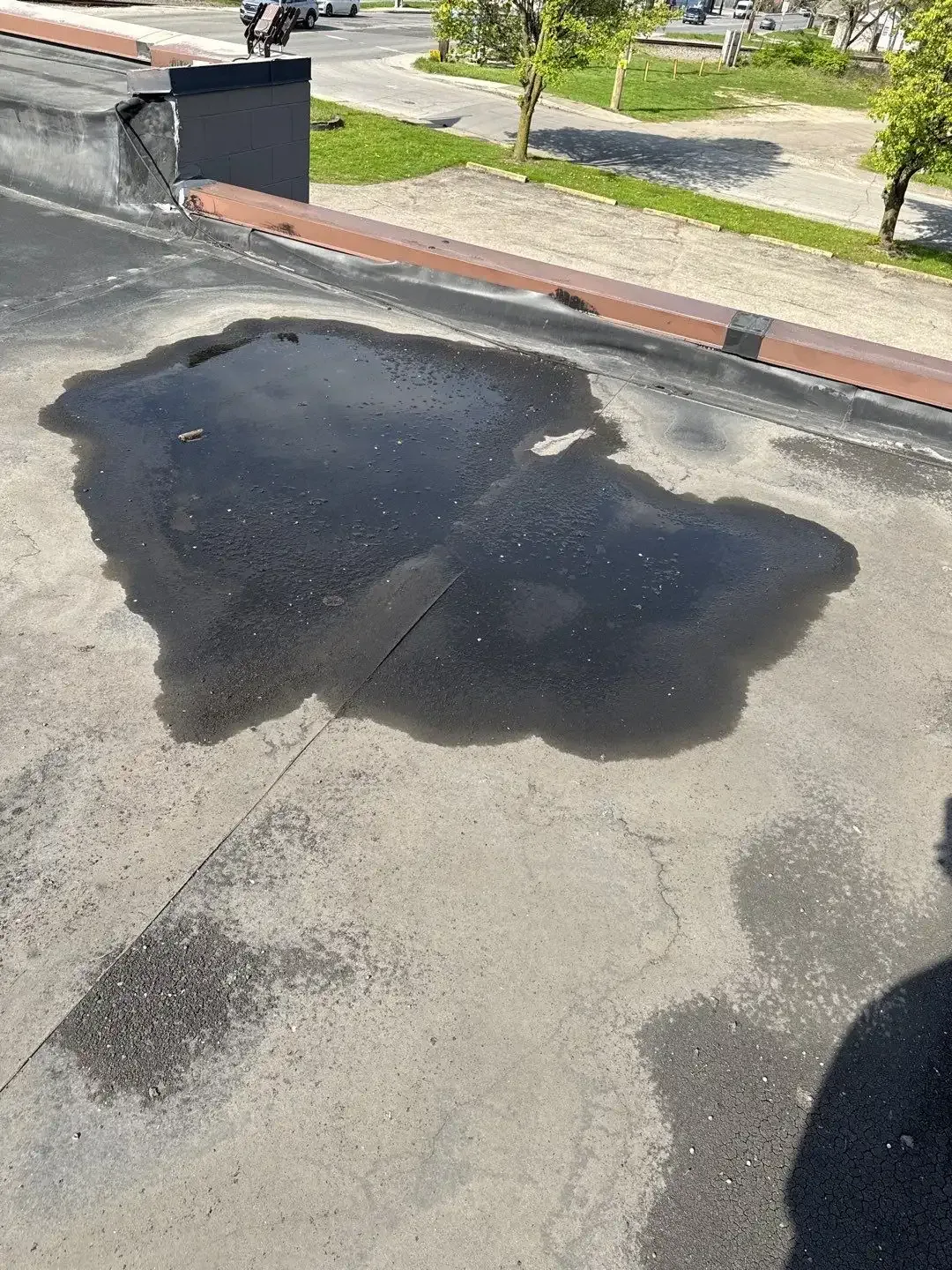
Next we trace the water path. Grease runs with rainwater, so we follow the slope from the fan to the drain and mark any low spot where it settles. A small cricket or curb extension often solves a pooling problem. A roof that has already been through years of unmanaged grease may show swollen, soft or stained membrane, and that condition changes the recommendation from a patch to a sheet change.
Weigh KEE Against Standard PVC Without Overselling Either
The honest comparison is about exposure. PVC roofing stands up to many oils and chemicals and is the right sheet for a great many exhaust-heavy roofs. KEE reaches further, especially where animal fats and cooking oils pour over the surface day after day. On a roof with light exposure, the extra cost of KEE may not pay for itself.
Cost depends on a few visible drivers: the sheet itself, the insulation and cover board underneath, how many penetrations and curbs require custom flashing, and how much access the crew gets. A small restaurant roof and a large hotel kitchen wing price very differently. When another membrane makes more sense, such as TPO on the quiet side of the same building, a combined plan can use each sheet where it fits.
Keep Marina Air Out of the Details
Seabrook sits on Galveston Bay at Clear Lake, with about 75 percent of its area water, many marinas and fish markets on Waterfront Drive. Kemah has its Boardwalk restaurants on the west bay shore. Humid bay air works on the metal parts of a roof there, and the sheet itself may outlast the edge flashing, termination bar and fasteners that hold it down.
We specify corrosion-resistant fasteners and flashing metal, seal terminations with compatible sealants and look over the exposed steel deck during tear-off. A bay-side kitchen roof also needs its fan housings and curbs inspected for corrosion on every visit. Those are small items, and they are the ones that fail first when the building sits close to the bay.
Coordinate Rooftop Access With Kitchen Service
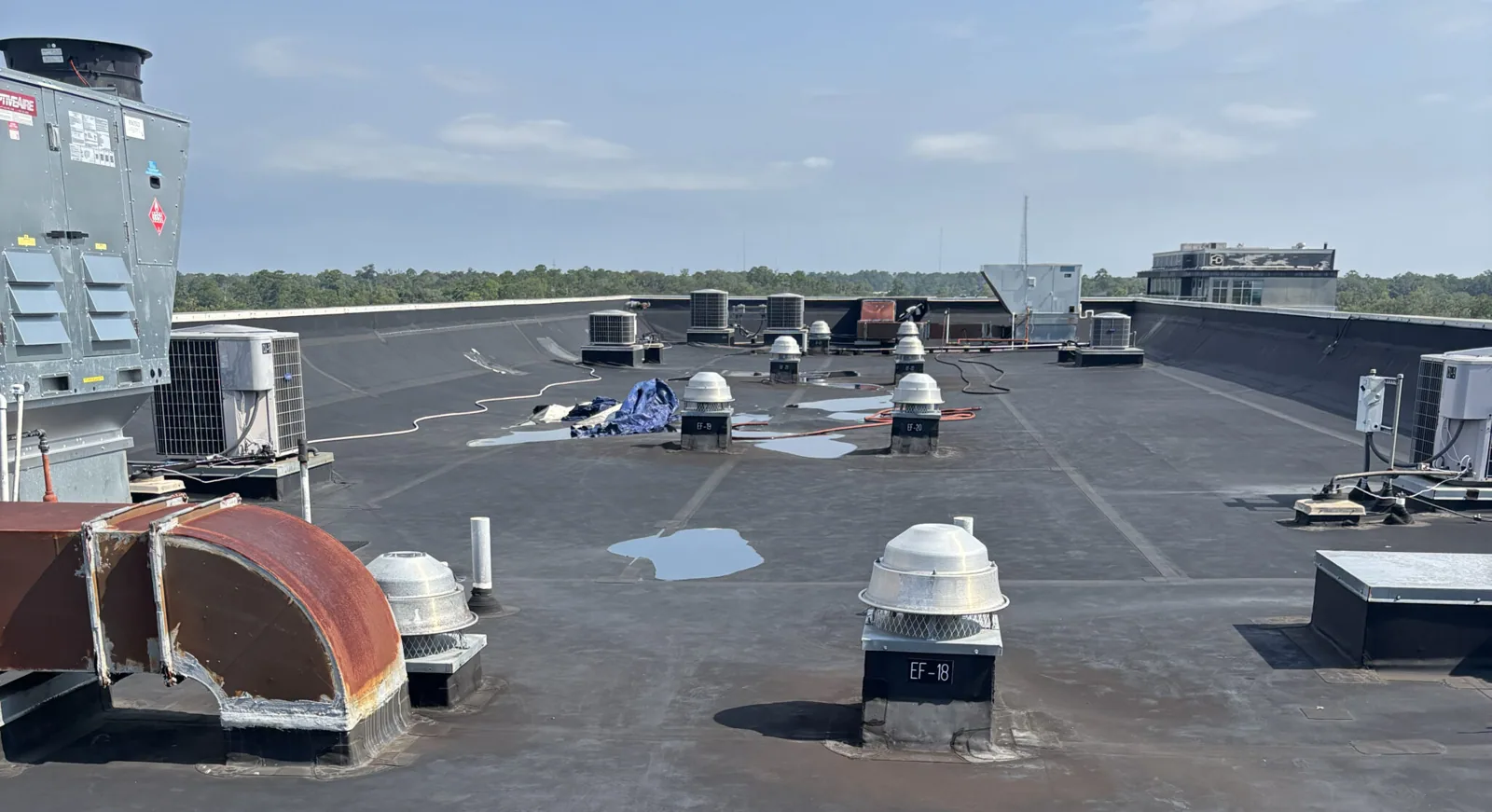
Hood-cleaning crews, refrigeration technicians and exhaust-fan repair visits all put boots on a KEE roof. Each visit adds the risk of a puncture, a spilled degreaser or a dragged tool. We lay walk pads on the paths between the access hatch, the fans and the condensing units and keep a spare patch kit with the building engineer.
A grease roof should also carry a cleaning rhythm. Absorbent pads under fan housings, a quick rinse of the surface near each hood and a check of the drip trays belong on the checklist for every preventive roof maintenance visit. The sheet will withstand a lot, and the routine keeps the exposure from piling up. We write the checklist into the maintenance file so any technician on the roof knows what to look for.
Phase the Work Around Service Hours and Deliveries
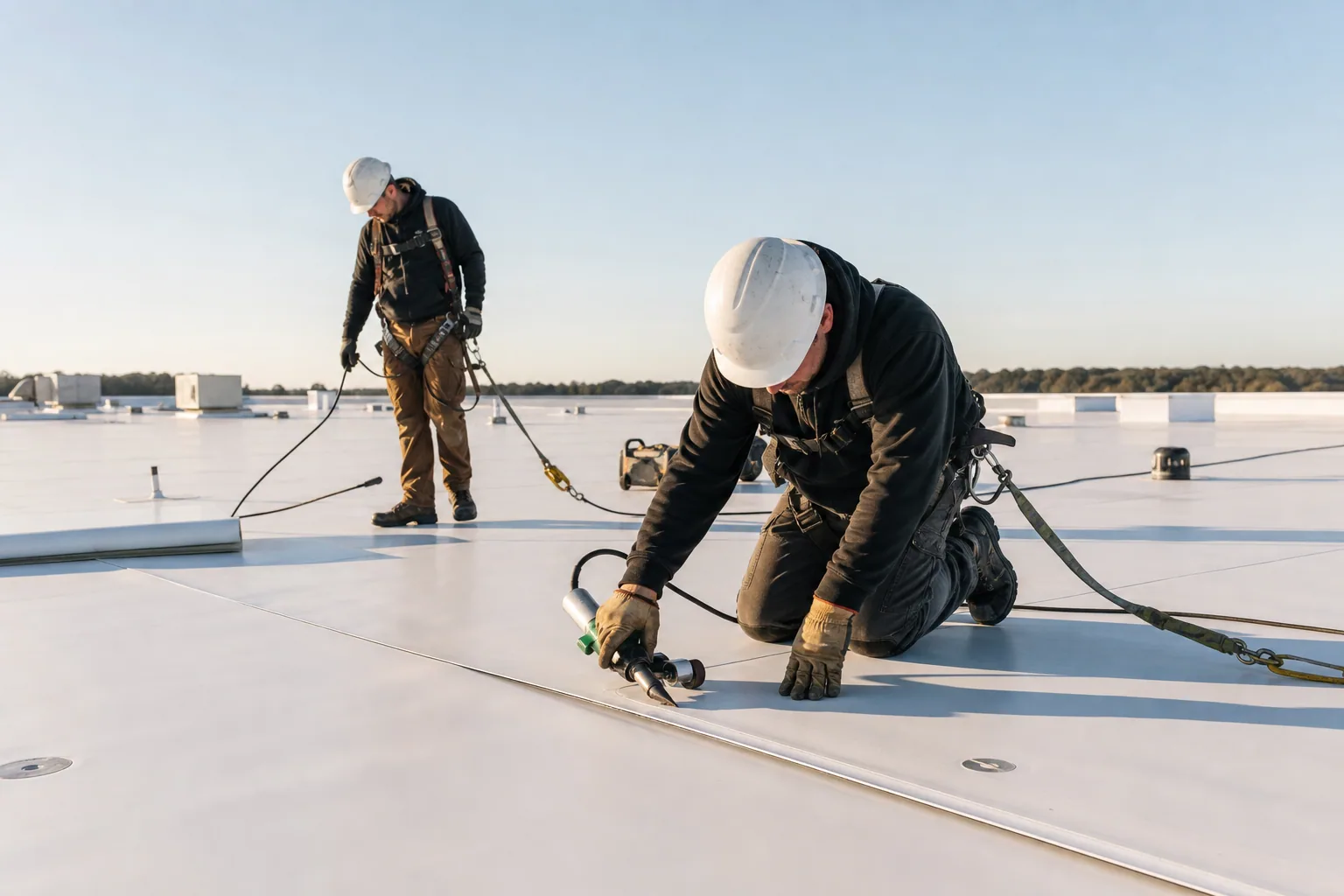
A restaurant, a hotel kitchen or a grocery floor cannot close its roof overhead for a week. The reroof plan starts with the busiest hours of the operation and works backward. Tear-off noise, dust and adhesive odors stay away from dining rooms and air intakes, and the crane pick happens before the lunch rush, not during it.
For a grocery store roof in places like South Houston, where an H-E-B Mi Tienda opened in 2006 and the Lewis Food Town chain once had its headquarters, the sequence also protects refrigerated product, receiving docks and customer entrances. Each bay is opened, insulated and welded shut the same day, and the night shift checks the temporary tie-ins before the building opens the next morning. A site safety orientation covers every worker on the roof.
Prepare the Roof for Surge Season
Hurricane Ike's storm surge in 2008 knocked out streets and power in Seabrook, and residents were without power and water for up to a month. The Kemah Boardwalk's restaurants and rides were heavily damaged. Wind gets the headlines, but surge, flooded streets and weeks without electricity change how a kitchen roof gets repaired and when a crew can reach it.
Seabrook lies east of State Highway 146, where state windstorm insurance rules require roof work to be inspected. If a storm opens the roof, our emergency roof repair response dries in first, and the photo record supports the insurance claim that follows. Power may be out for days, so the owner needs a temporary plan for refrigeration and exhaust before the permanent repair is scheduled.
Commercial Roofing Questions
How is KEE different from the PVC sheet that appears next to it on a spec list?
Both are welded, reinforced single-ply sheets with strong chemical resistance. KEE swaps most of the liquid plasticizer for a polymeric modifier, so it holds up better against fats and oils over time. On a roof without heavy grease or oil exposure, standard PVC performs the same job at a lower material cost.
What happens to the roof when a kitchen hood is replaced or moved?
A new curb or penetration means new flashing, and the weld has to be made on clean, uncontaminated membrane. Old grease must be removed from the weld zone before heat is applied. We coordinate with the mechanical contractor so the new fan lands on a flashed curb, not on cut membrane and sealant.
Do waterfront restaurants need a different roof from inland ones?
The sheet can stay the same, but the metal around it changes. Bay air corrodes fasteners, edge flashing and fan housings quickly, so we choose coated or stainless hardware and inspect those parts more often. The wind exposure is also higher, which affects attachment pattern and edge detail.
How often does a grease-exposed roof need to be cleaned?
Often enough that grease never collects in a pool. That rhythm follows the hood-cleaning schedule and the number of fryers or grills running on the building. We tie the roof rinse to those service visits so the work happens while a crew is already there, and we note any areas that need extra attention.
Does KEE cost much more than PVC?
Typically yes, because the polymer system is more specialized. The price gap shrinks when the roof is small or the project already includes full tear-off and new insulation. We quote both sheets side by side and show the owner where the extra material sits in the roof and what it buys.
Keep Reading
Related Roofing Work in Pasadena
Show Us the Hood and We Will Walk the Roof
Share the building address, the kitchen's operating hours and the roof history. We will walk the site with your facility director and plan a KEE system that fits the way the building works.