
Industries We Serve
Roofing for Manufacturers in Pasadena, TX
Manufacturers measure a stoppage in lost output per hour, and a roof project almost never gets more than a few of those hours to itself. The line comes down for planned maintenance, the plant manager decides what else can ride along, and the roof competes with the compressor overhaul for the same narrow slot. A plant in Pasadena, TX that wants its roof handled has to see the work arrive on the production calendar, not on the roofer's.
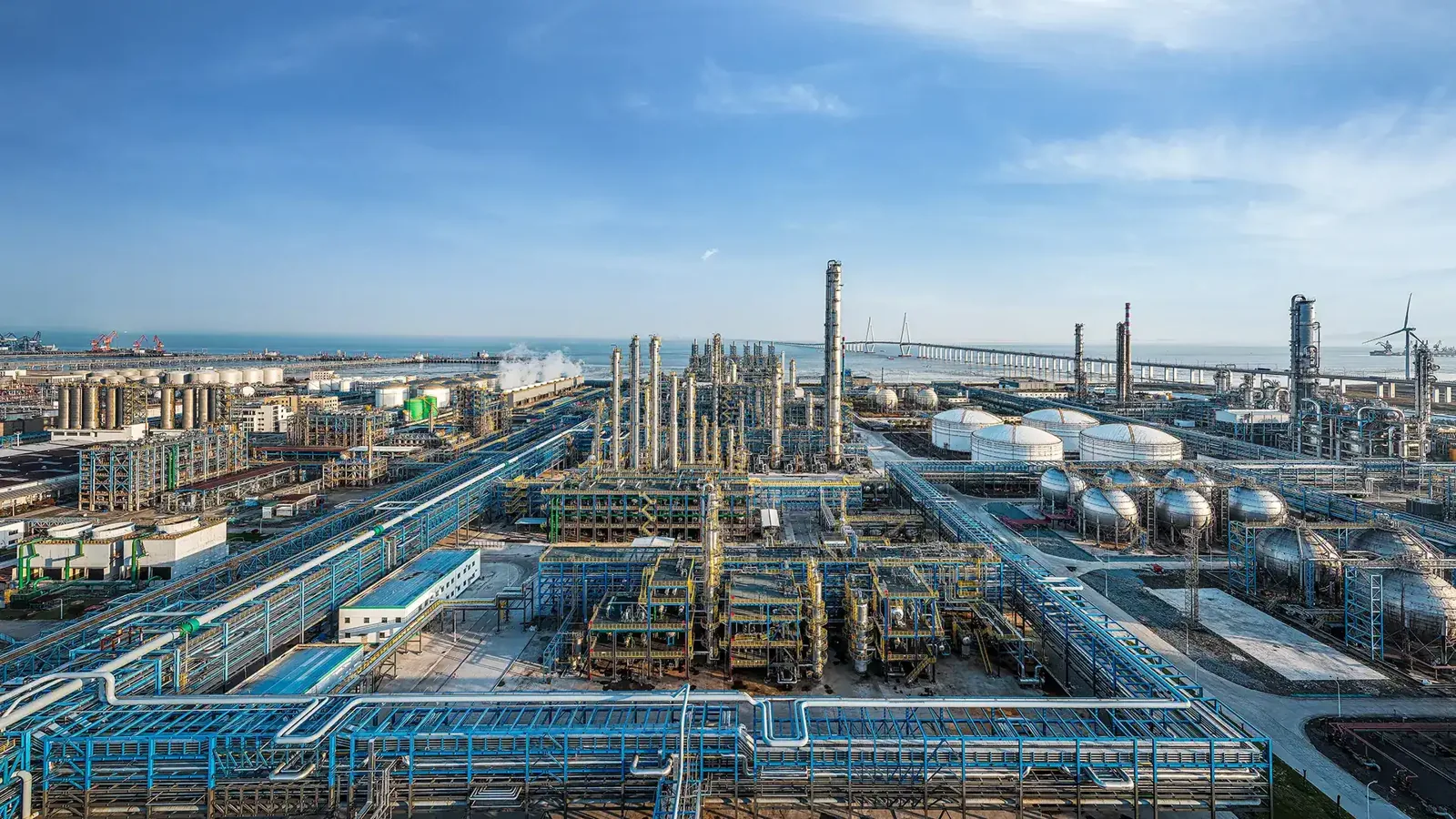
The plants here run beside some of the heaviest industry on the Gulf Coast. The Bayport Industrial District, created by the city in 1970, hosts more than 60 chemical plants, and SH 225 carries traffic past refineries and tank farms on its way to the Ship Channel. Roofs in that setting take exhaust, chemical vapor, heat and humid bay air, and the plan we write for a plant starts with all four.
Start With the Production Calendar, Not the Roof Plan
Before we price a plant roof, we ask for the schedule: planned outages, the quiet weeks around shipping peaks, the days the unit is hot and the days it is cold. A large share of the work, such as tear-off, staging and crane picks, can be done safely only when certain areas of the plant are down, and the rest can go ahead around production with the right controls. Sorting the two lets the roof ride along with a shutdown window without extending it.
When the plant cannot spare a window, we recommend phasing the roof in sections the crew can seal before dark, sized for the headcount the site will accept. A commercial roof replacement done in that rhythm takes longer on the calendar and costs less in lost production. The plan names each section, the day it opens, and the day it is sealed.
Clear Orientation, Permits and Lift Plans Before Anyone Mobilizes
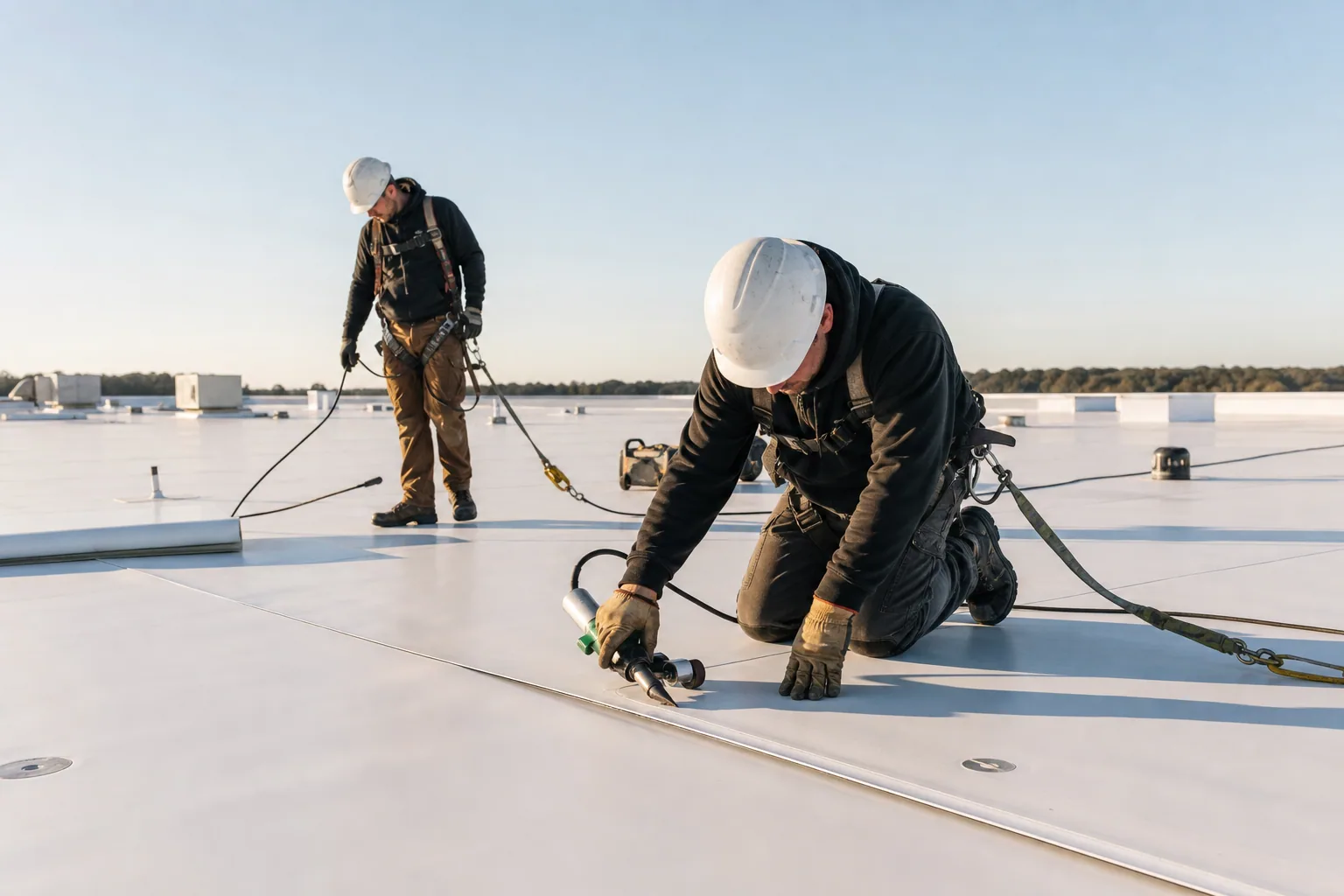
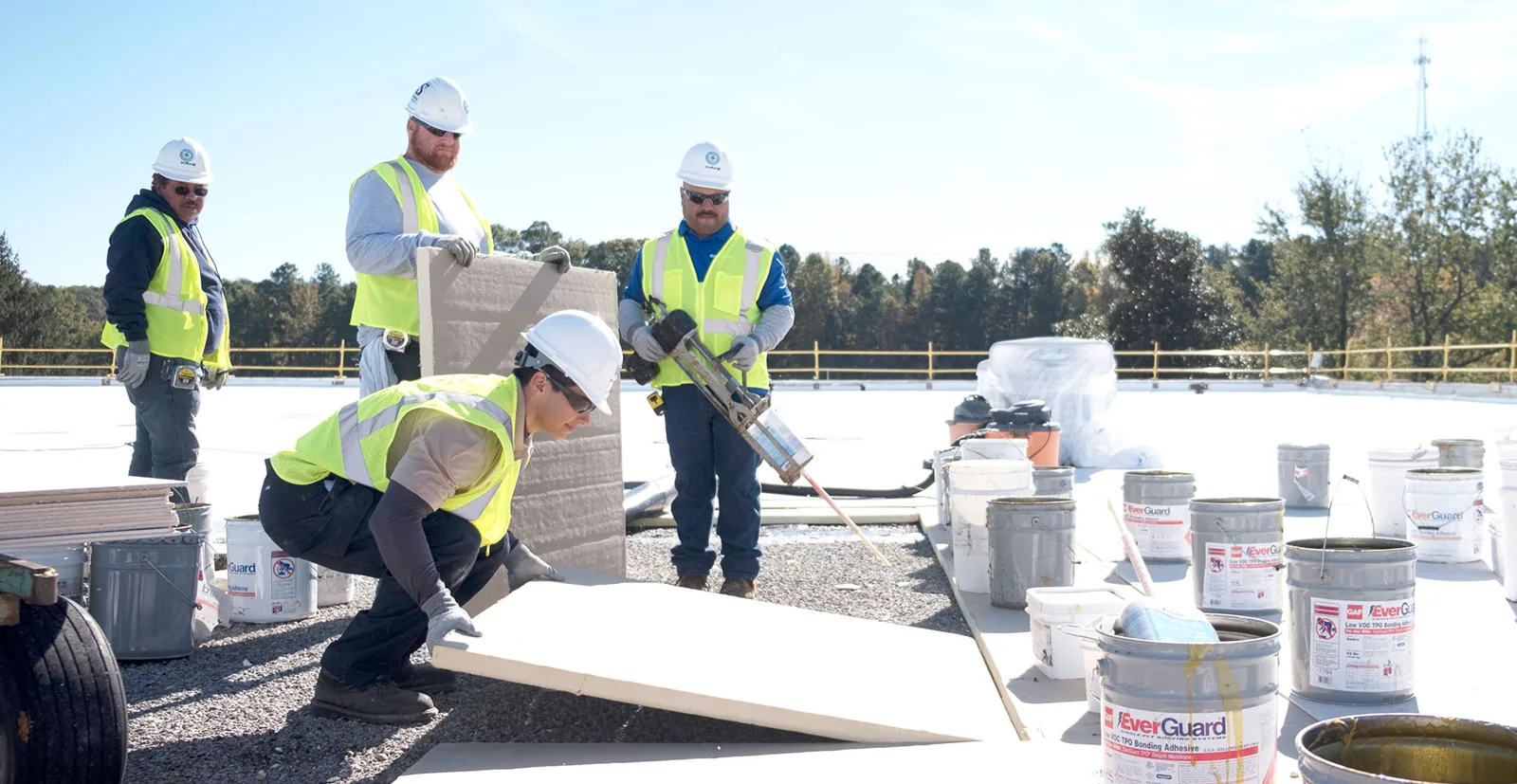
Plants in this corridor run strict entry rules, and they should. Every person on the roof goes through a site safety orientation, carries the right badge and follows a path agreed in advance. Hot work needs a permit, a fire watch and a clear zone around vents. Lifts need a plan that shows the crane pick, the swing radius and the lines that cannot be crossed. We submit those documents with the proposal, so the safety department can review them before the first truck arrives.
Where a unit cannot tolerate open flame, the system changes. Torch-applied roofing gives way to heat-welded or adhered single-ply membranes and cold-applied repair materials, and the laydown area moves outside the restricted zone. Scheduling also respects the plant's changeovers: the night shift gets quiet work, and the loudest steps wait for the day crew to be out of the area.
Match the Membrane to What Vents Onto It
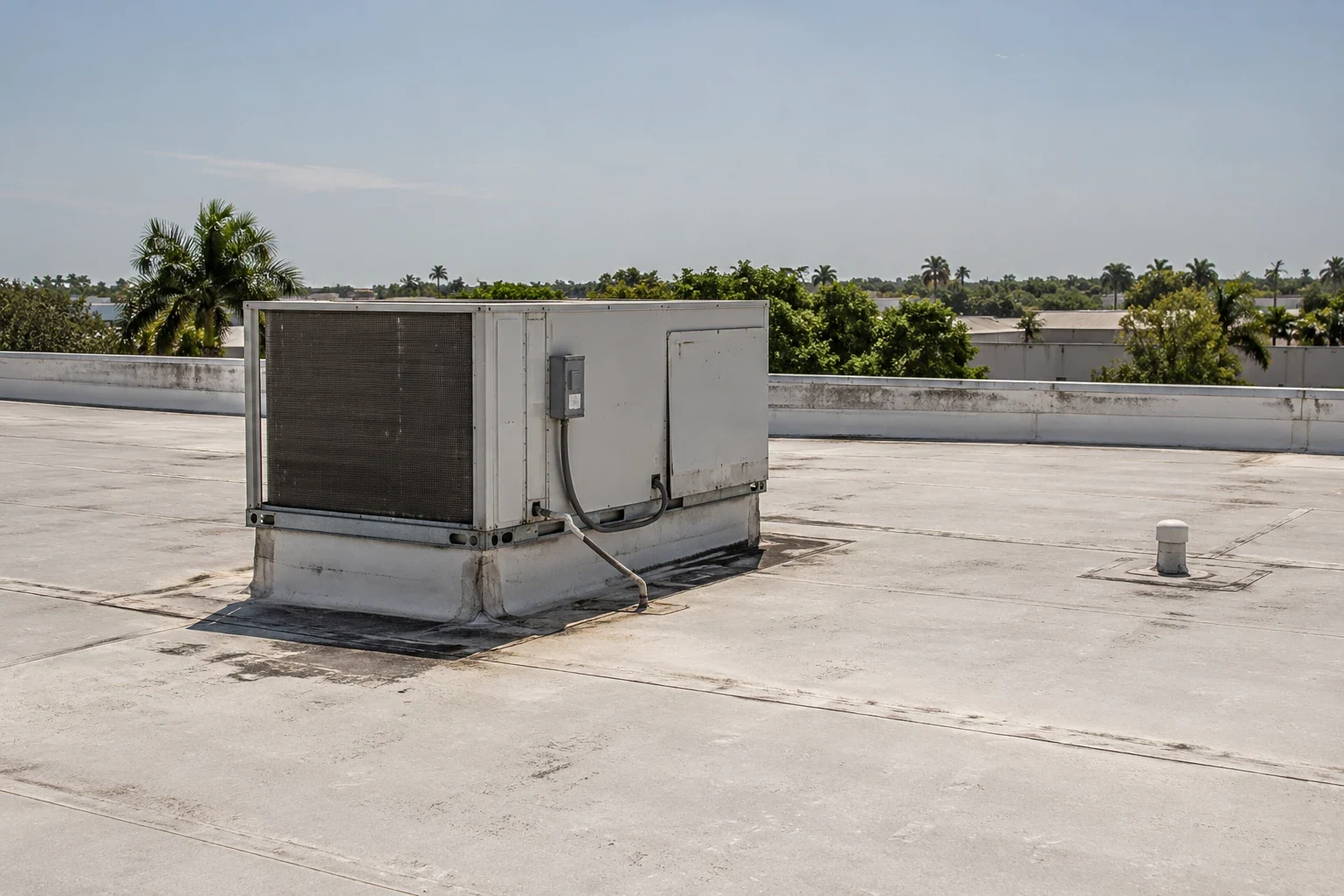
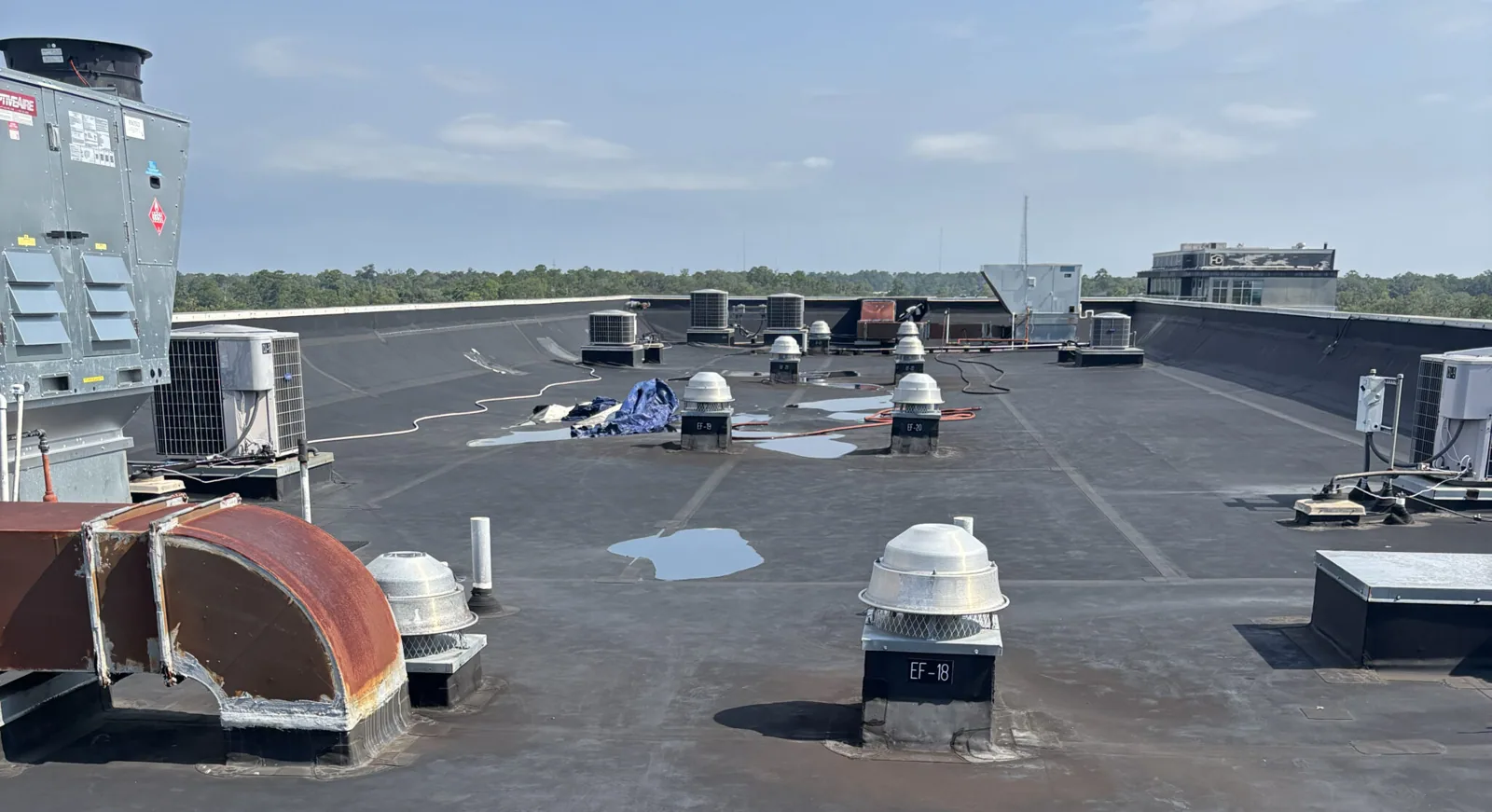
A plant roof is a working surface. Grease, solvent vapor, cooling-tower drift, flue gas and condensate land on it every day, and a membrane that suits an office building may soften, swell or craze in that exposure. Chemical resistance is the first filter. PVC roofing tolerates many of the exhausts a plant produces, and KEE roofing adds plasticizer-resistant formulations for fats, oils and aggressive vapors. We read the vent inventory and ask what comes out of each one.
The metal around the membrane takes its own damage. Humid bay-side air and process vapors corrode edge metal, fasteners and curbs faster than the membrane wears. We specify corrosion-resistant fasteners and finishes, flash around the vents with prefabricated details where the geometry allows it, and leave a walkway so maintenance crews do not wear paths through the sheet.
Standardize Across Plants Without Ignoring Each Plant's Rules
Companies with plants in the Bayport Industrial District, along the SH 225 corridor and beyond want to buy roofs the same way every time. We write a common roof specification and a common reporting format, then adjust it to each plant's entry rules, hot work policy and outage cycle. A good multi-site roof program treats those local rules as inputs, not obstacles.
The result is a portfolio view the corporate engineering group can read: which roofs are sound, which are wet, which need coating and which are on the replacement list. Plants differ in what they make and what they vent, but the reporting stays consistent, so the corporate team can compare a plant near Deer Park with another in a different part of the system on equal terms.
Write the Recovery Plan Before the Next Storm Arrives
Gulf Coast manufacturers watch the forecast with a production lens. When Harvey struck in August 2017, Gulf Coast refineries holding roughly 12 percent of U.S. capacity went down, and the January 2023 EF3 tornado left sporadic roof loss along its path through Pasadena and over the Ship Channel. A plant that wakes up to open roof areas needs a roofer already on its contractor list, with a call chain and materials ready.
We help the plant write that chain in advance. It names who gets the first call, what happens at the gate, which areas get temporary dry-in first, and what records the insurer expects. Our emergency roof repair response is built to run at any hour, and the plant's insurance and restoration contacts see the same file. The logistics and 3PL operators that ship the plant's product want the same recovery date, so the file states one.
Before a line returns to full production, the roof handoff should make the status of every temporary measure unambiguous. We identify protection that must stay until a later repair, remove loose materials and debris, and confirm that drains and access routes are clear. If a rooftop unit or curb was part of the work, list the commissioning contact and the point at which the mechanical contractor can safely resume service. Keep any open roof item visible with an owner and due date rather than closing the work order prematurely. The plant manager can then restart against a clear roof status, not an assumption made at the end of a long shift.
Commercial Roofing Questions
Can a roof replacement run in parallel with a unit turnaround without lengthening it?
Roofing sits outside the turnaround's critical path when the plan keeps it there. We keep roof crews, cranes and laydown areas off the work zones the turnaround needs, then sequence the roof around gate capacity and crane availability. If the turnaround slips, the roof sections already opened are closed before the crew stands down.
What does a plant safety team need to see before a roofing crew gets badges?
A written scope, a crew list, a hot work plan, a lift plan, proof of insurance and an orientation schedule cover the usual set. We provide them with the proposal so the safety department can reject, change or approve early. Last-minute document requests are what push start dates, and a complete package prevents most of them.
Our exhaust is acidic and oily. Will a standard TPO sheet survive it?
Not always. Some exhausts attack a standard single-ply sheet, which then softens or cracks around the vent. We ask for the vent inventory and the chemistry behind it, and we test or choose a chemical-resistant membrane for the affected zones. A hybrid roof, with a different sheet near the exhaust, is a normal answer on a plant with mixed vents.
How is product protected when a section of membrane is opened above a clean area?
Staged openings keep the exposure short. We open only what can be closed the same day, cover the deck with temporary protection if weather turns, and agree with the plant on which spaces get plastic or deck catchment. In sensitive areas the interior team can monitor from below while the crew works above.
What happens to the schedule when a storm approaches mid-project?
Every open section is closed before the forecast arrives, and loose material is secured or removed. We watch the same forecasts as the plant, and our crew leader calls the stand-down early rather than late. After the storm, a walk of the new work and the old roof finds any damage before the next shift.
Keep Reading
Related Roofing Work in Pasadena
Walk the Plant With Us
Bring us to the site with your plant manager and safety lead. We will walk the roof, the vents and the gate procedure so the work plan fits the production calendar from day one.