
Commercial Roofing Services
Infrared and Core-Cut Moisture Surveys in Pasadena, TX
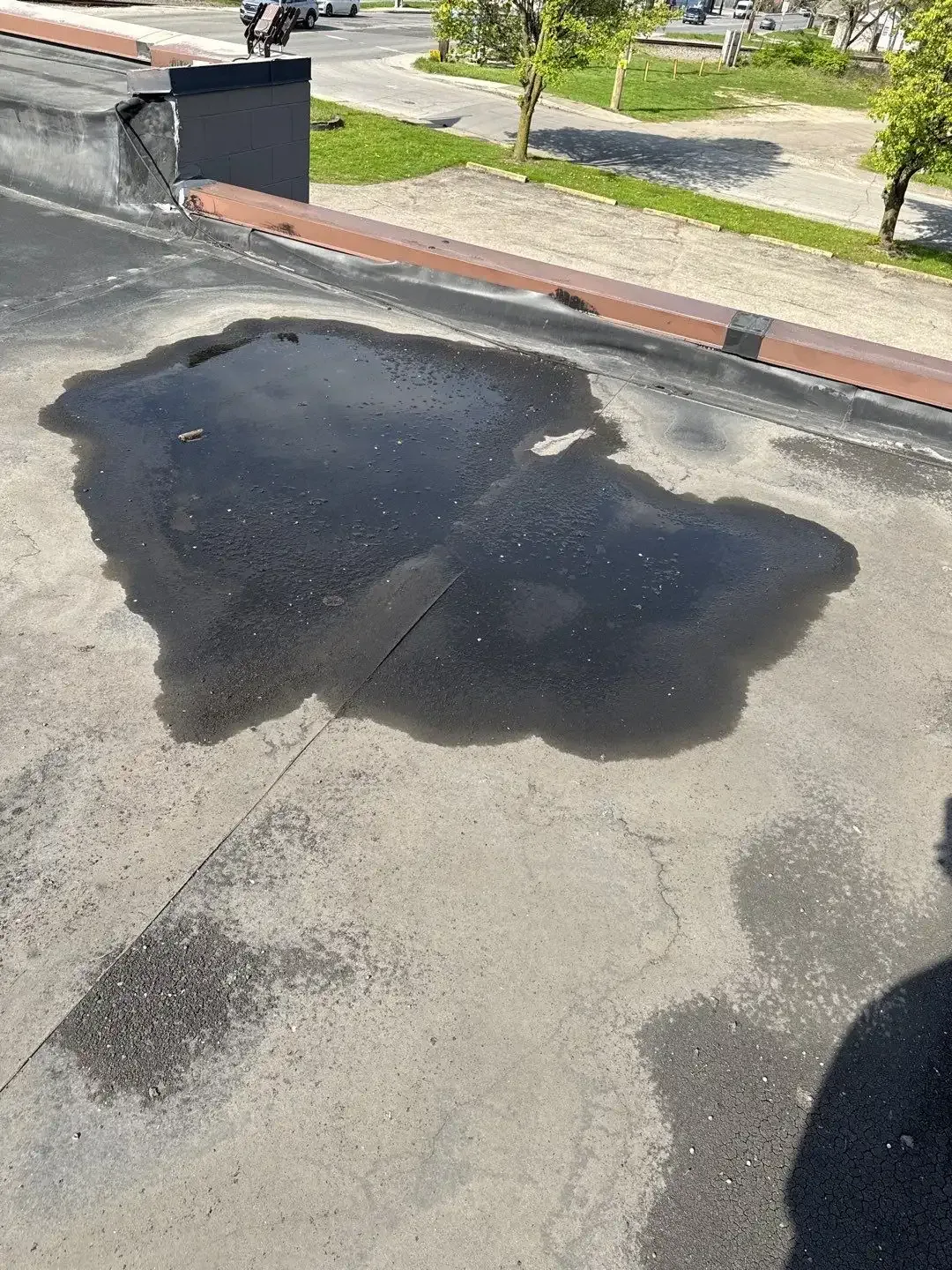
A membrane that looks perfect from the parapet can sit on insulation that is soaked through. Water gets in through a pinhole at a seam, spreads sideways under the surface and quietly adds weight, corrosion and heat loss for years before a ceiling stain gives it away. A cold storage building or a hospital cannot afford that kind of surprise, and a warehouse owner planning a reroof needs to know how much of the old system is worth keeping.
An infrared and core-cut moisture survey answers that question with data. In Pasadena, TX, where heat and heavy rain pile up on low-slope roofs, the survey separates dry insulation from wet, maps the wet zones, and gives the owner a measured basis for choosing repair, recover or replacement.
Scan at Dusk When the Roof Gives Up Its Heat
The method relies on a simple physical fact. Wet insulation holds heat longer than dry insulation. After a clear, sunny day, the roof soaks up solar energy, and in the evening, as the surface cools, wet areas stay warmer and show up as bright patches in an infrared camera. We scan the roof in the hours after sunset, when the contrast is clearest, and mark the suspect areas.
Conditions matter. The roof surface has to be dry, the sky clear and the wind light. Rain the day before or standing water on the surface muddies the picture, so we reschedule when the conditions are wrong. A scan in poor conditions produces confident-looking images that are not reliable, and we would rather return than hand over a bad map.
Cut Cores to Prove What the Camera Suggests
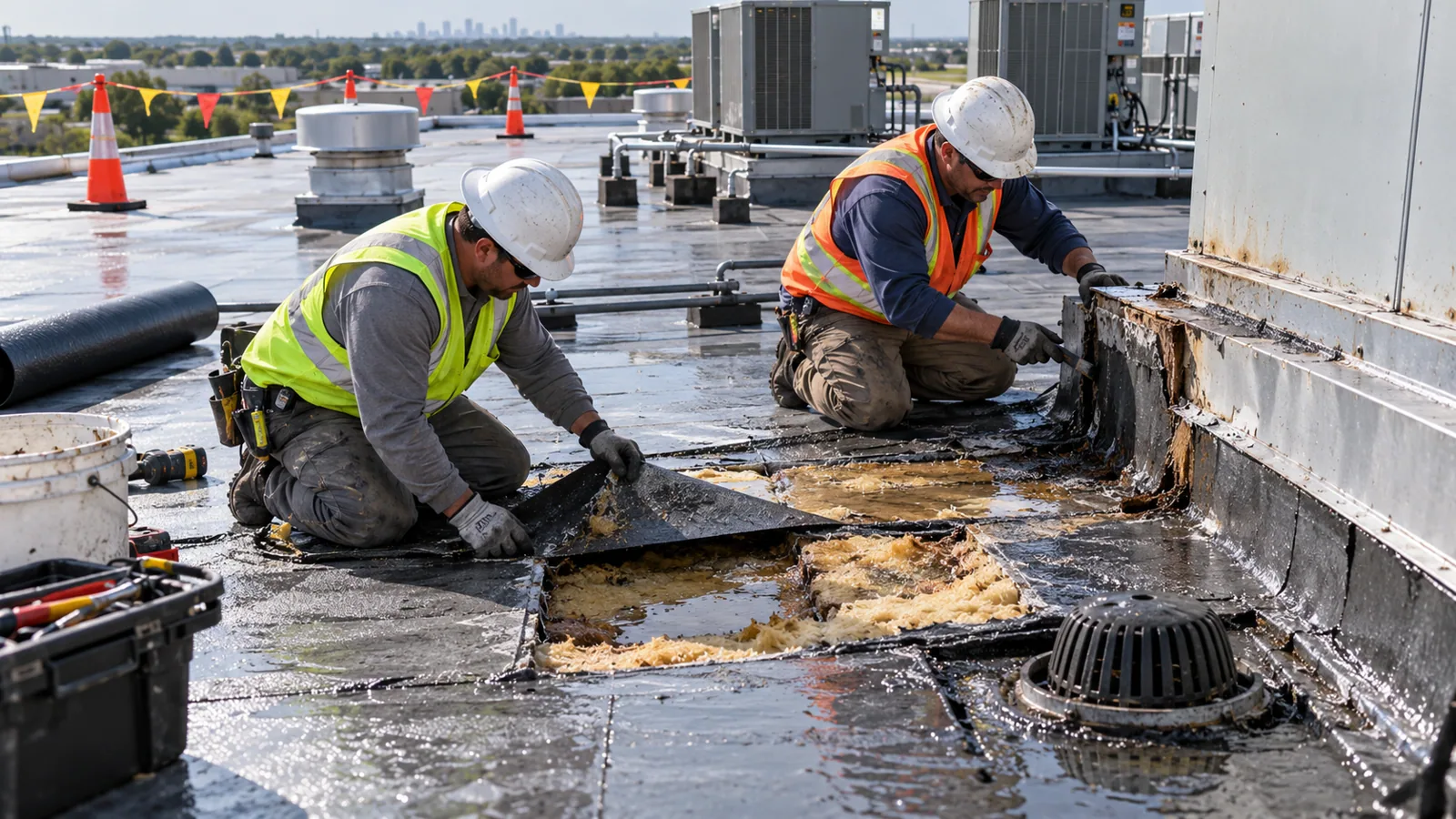
Infrared finds anomalies. It does not prove water. A temperature difference can also come from thicker insulation, a patched area, a change in membrane color or a buried duct. So at selected spots, inside and outside the suspect zones, we cut small test cores through the roof and look at what is there.
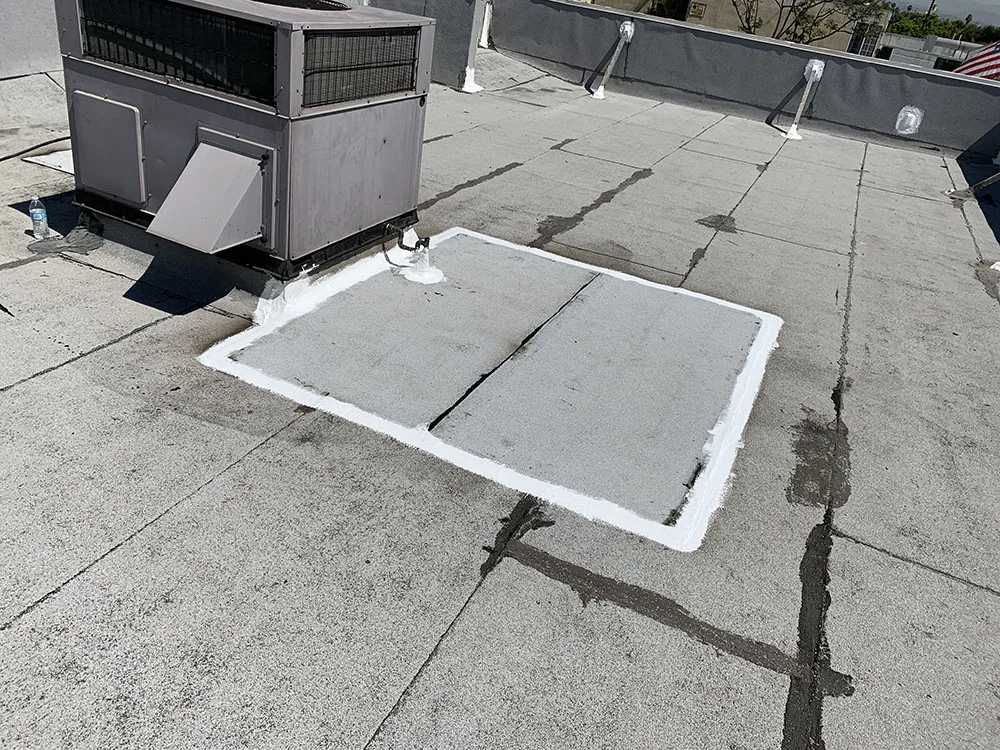
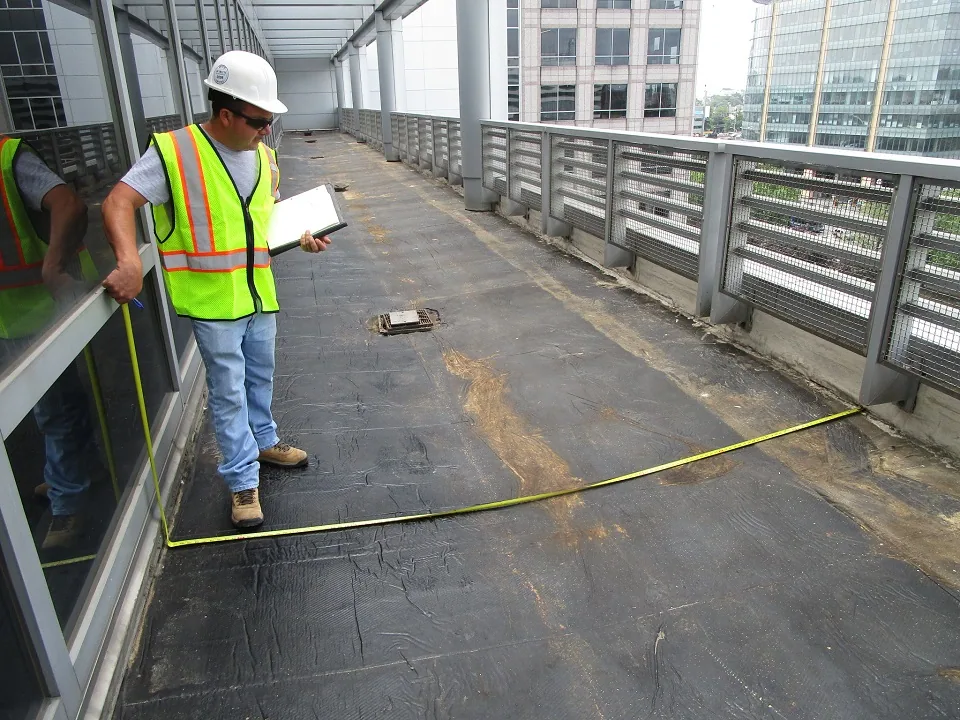
Each core shows the thickness and condition of the membrane, the insulation and the deck. We read moisture directly, check for corrosion on steel deck and note the number of layers. Every core is patched and sealed the same day with compatible material and logged on the roof plan. The scan tells us where to look, and the cores tell us whether the story is true.
Turn the Moisture Map Into a Decision
A survey has no value until it supports a choice. When wet insulation is small and local, we cut out and replace those areas, then continue with commercial roof leak repair on the entry points. When the roof is mostly dry and the deck is sound, the data supports a roof recover that keeps the existing system in place.
When saturated insulation covers a large share of the roof, extending its life with patches only buys time, and a full replacement becomes the honest recommendation. The map shows the owner exactly where that line falls, with photos and core readings to back it. That removes much of the guesswork from capital planning and from the conversation with a lender, insurer or tenant.
Respect the Limits of Gulf Coast Conditions
Houston gets roughly 50 inches of rain over about 104 rainy days a year, and morning humidity in summer runs above 90 percent. Those conditions shape when a scan works. A roof that stays damp from morning dew or recent storms will not give clean readings, and a dark ballasted roof cools differently from a white membrane. Highly reflective roofs and some coated surfaces reduce the contrast we depend on.
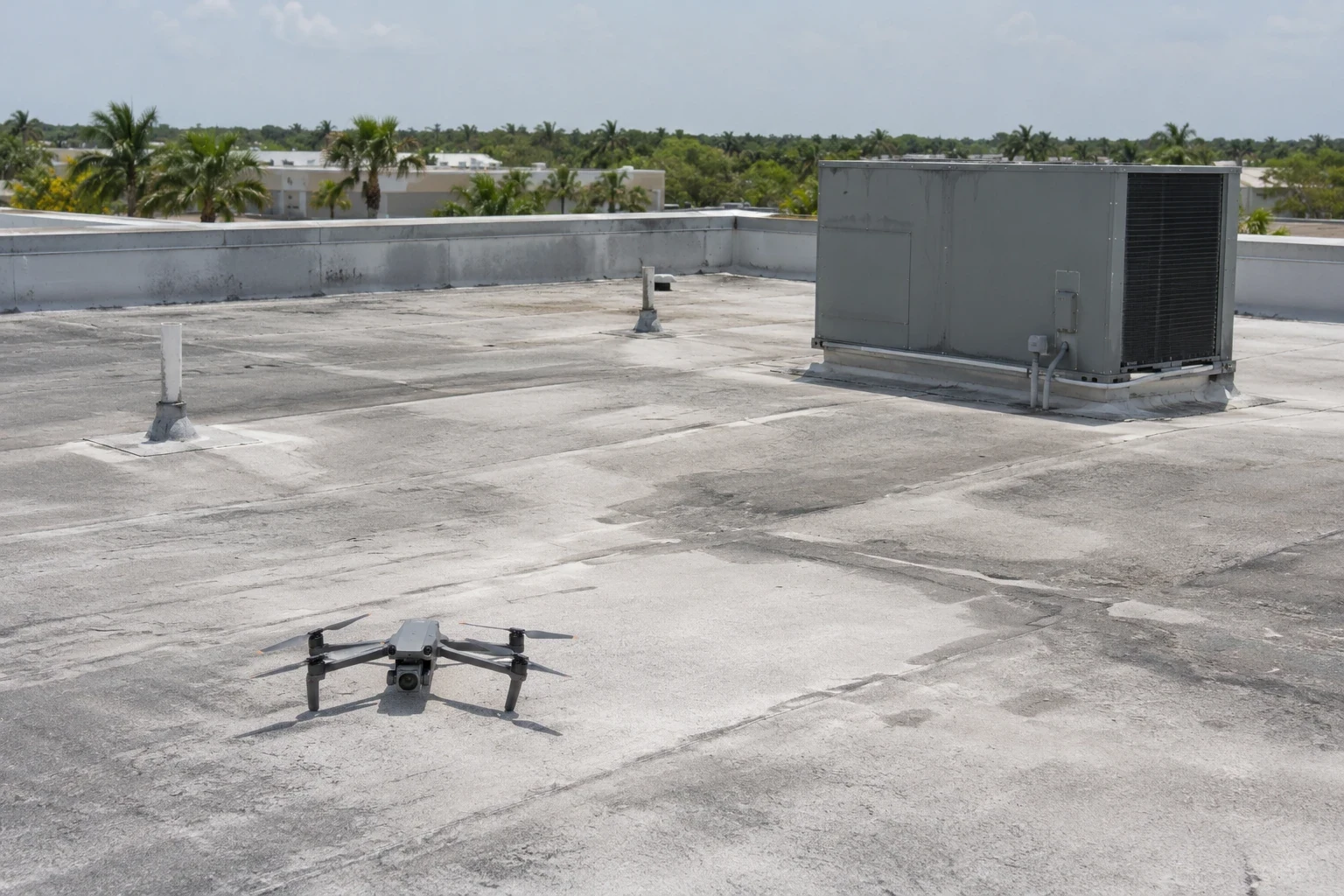
For roofs where infrared is a poor fit, we lean more heavily on moisture meters and core cuts. We also pair the scan with aerial imagery from our drone roof inspection work on very large roofs, so the thermal map and the visual map overlay on one plan. Metal roofs are generally better served by close visual inspection than by infrared.
Use the Findings for Claims, Warranty and Sales
The survey supports more than a repair decision. After a storm, a before-and-after scan shows whether water entered the system, and that record carries weight in a roof insurance claim. In a purchase or refinance, it gives a buyer a realistic view of the roof's remaining life, the core of a due diligence roof survey.
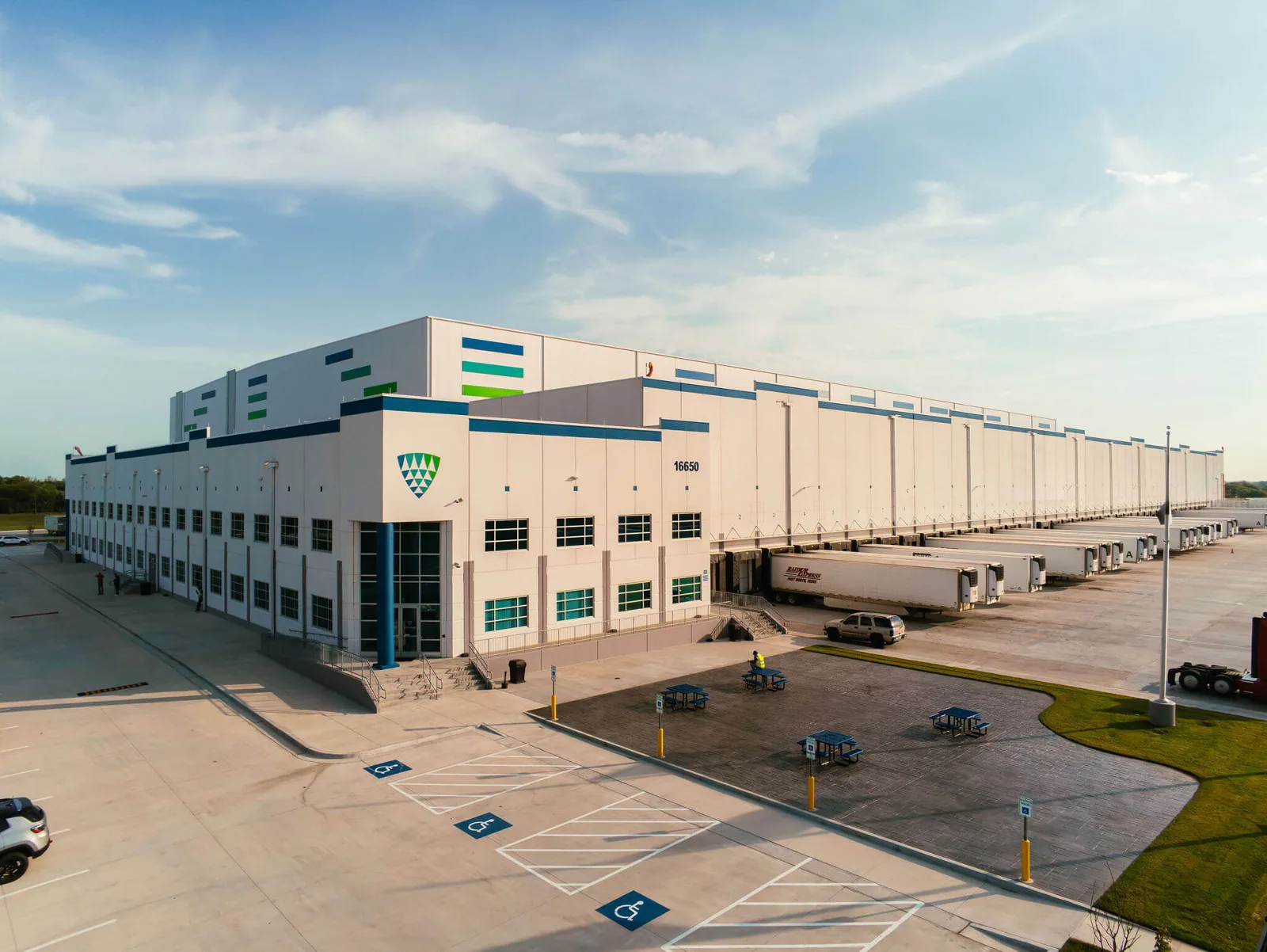
Buildings where wet insulation is costly, such as cold storage and food facilities, benefit from regular scans, because trapped moisture there can lead to ice, condensation and damage inside the building envelope. A baseline scan after a new roof is installed also gives the owner a clean reference point for the years that follow.
Plan the Night Work Around the Operation
Because the best scans happen after dark, the logistics differ from a daytime inspection. We coordinate roof access with the facility team, check lighting and fall protection, and complete the site safety orientation before the crew steps onto the roof. For industrial buildings along the Ship Channel, such as those in Galena Park, we agree on an access window with the plant or tenant so the roof is clear of daytime traffic when the scan begins.
The survey plan should state the roof type, recent weather, expected scan window, and the locations where cores may be permitted. A thermal pattern is a lead for investigation, not a moisture finding by itself; confirm selected anomalies with cuts or another suitable test. Mark the sample location and describe the layers removed so the repair team can close each opening with compatible materials. Keep areas with different construction or shade conditions separate when interpreting the image. The final map should show confirmed wet zones, untested anomalies, and sound areas distinctly. That separation keeps a repair allowance tied to evidence and avoids removing dry material without reason.
Keep an untouched copy of the original thermogram beside the annotated report. Future reviewers can compare the image with the test result and understand how each repair boundary was set.
Commercial Roofing Questions
Is infrared enough, or do I need core cuts too?
Infrared maps likely wet areas efficiently, but it cannot prove them. If the survey will drive a recover or replacement decision, we cut cores to confirm. For a quick screening of a small roof, a scan and a few moisture readings may do.
Will the core cuts damage my roof?
Not when the work is done right. Cores are small, and each one is patched and sealed the same day with materials compatible with the membrane. We log every location so the patches are easy to find at the next inspection. Done correctly, a core is a minor repair, not a new leak.
What roof types work best with an infrared survey?
Low-slope membrane roofs over insulation, including TPO, PVC, EPDM, modified bitumen and built-up systems, respond well. Reflective surfaces, ballast and very thin assemblies reduce contrast. Metal panel roofs are usually better inspected visually.
How often should I repeat a moisture survey?
A baseline after installation, a scan when leaks start to repeat, and another after a severe storm are the common triggers. Older roofs with known problems may justify a regular schedule so that wet areas are tracked before they spread.
What will the report tell me about replacement?
Start with how much insulation is wet. The report maps wet and dry zones, shows core photos and states how much of the roof can stay. That lets you compare the cost of local repair against recover or replacement using the roof's real condition, not an estimate based on appearance.
Keep Reading
Related Roofing Work in Pasadena
Schedule the Scan and Learn What Is Under the Membrane
Tell us about the building and its roof history. We will plan an evening scan that fits your operation, confirm the findings with cores and give your facility director a map to plan from.