Service Areas
Commercial Roofing in Alvin, TX
A roof recommendation should begin with what the owner sees, not with assumptions about the town. In Alvin, we respond to leaks, wind damage, aging membranes and planned capital work by checking the actual building, its operating schedule and the roof assembly. Alvin incorporated in 1893 as the first city in Brazoria County. Today, thoughtful growth, roads, utilities and economic development remain part of how the community plans for the future.
Those municipal facts establish Alvin as a city service area; they do not tell us whether a particular roof is metal, single-ply or built-up. We document what is installed, what is failing and what must remain in service below it, then present repair and replacement options that fit the property owner’s priorities.
Find the source before choosing the repair
When water is active, we first protect occupants, inventory and equipment. We follow the interior evidence to the roof, then inspect seams, penetrations, drains, parapets and transitions. A stain may appear several feet from the opening because water follows a deck flute, insulation joint or conduit. We record likely paths rather than patching the closest visible seam.
Moisture readings help establish whether insulation is wet. A test cut, with the owner’s approval, can show the number of roof layers, attachment and deck condition. We close the test opening watertight before leaving and include photographs in the report. The owner can then compare a focused repair with a larger area of restoration or replacement. Our commercial roof inspections and leak repairs document those findings for the owner.
Plan for the building that is there
As Alvin plans for land use, housing, transportation, parks, infrastructure and economic growth, existing properties may be renovated and new businesses considered. Those plans do not establish the age or type of any individual roof. We evaluate each roof in place, including additions, patched areas, rooftop equipment and drainage changes.
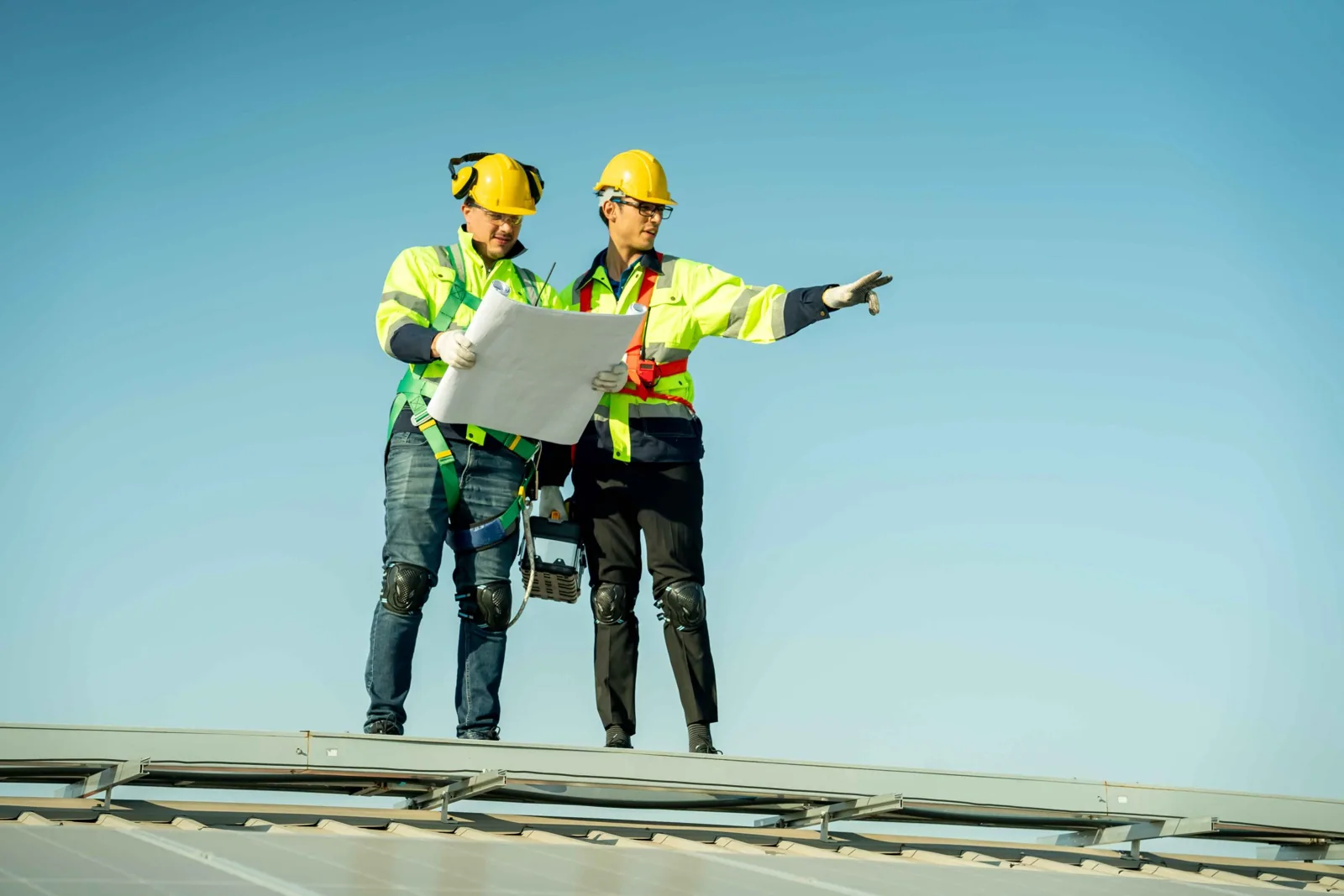
For a property with several roof sections, we map each plane and note where construction eras or systems change. That makes it easier to phase capital work and distinguish a localized failure from a building-wide problem. If an owner is planning a renovation, we can coordinate curb locations, insulation, drainage and tie-ins with the project team before new equipment or walls make the details harder to reach.
Owners planning an addition or interior renovation should bring the roofing lead into the coordination early. New walls, mechanical equipment and penetrations can change water flow and make tie-ins more complex. We review proposed curb locations, roof elevations, insulation transitions and construction sequencing with the project team. That does not replace the architect’s design, but it helps the roofing scope identify details that need to be resolved before the contractor is ready to dry in.
Prepare for rain, heat and wind
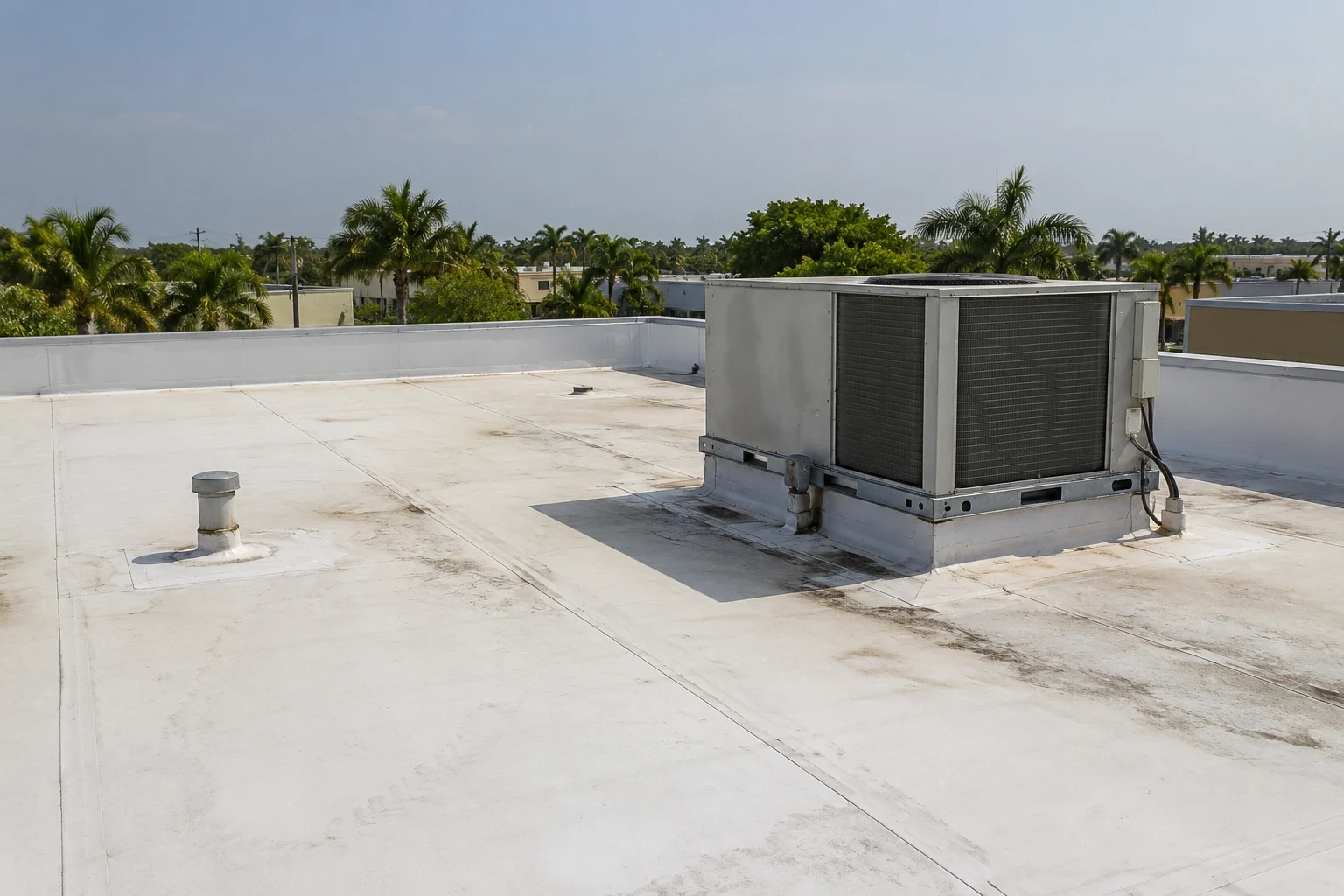
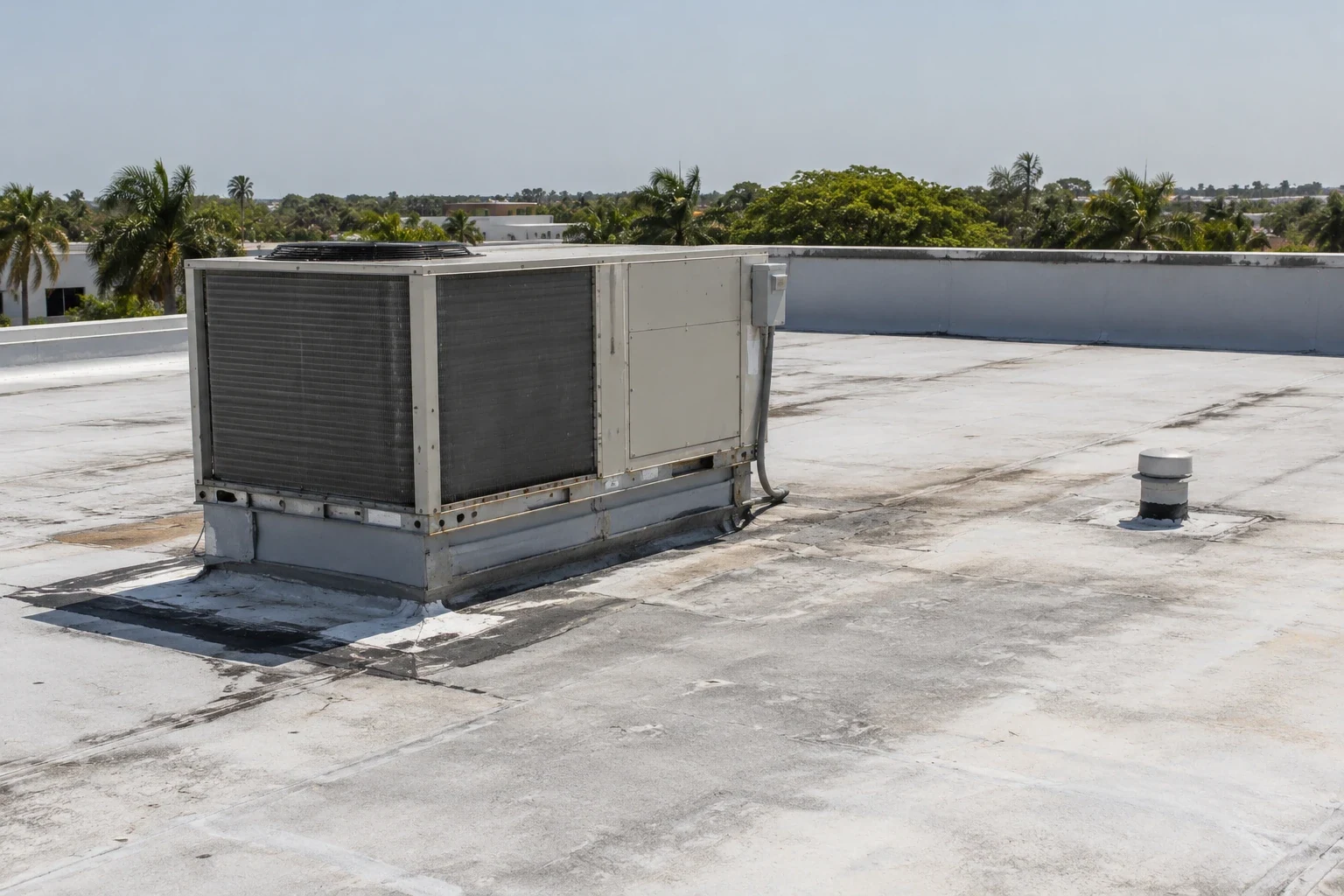
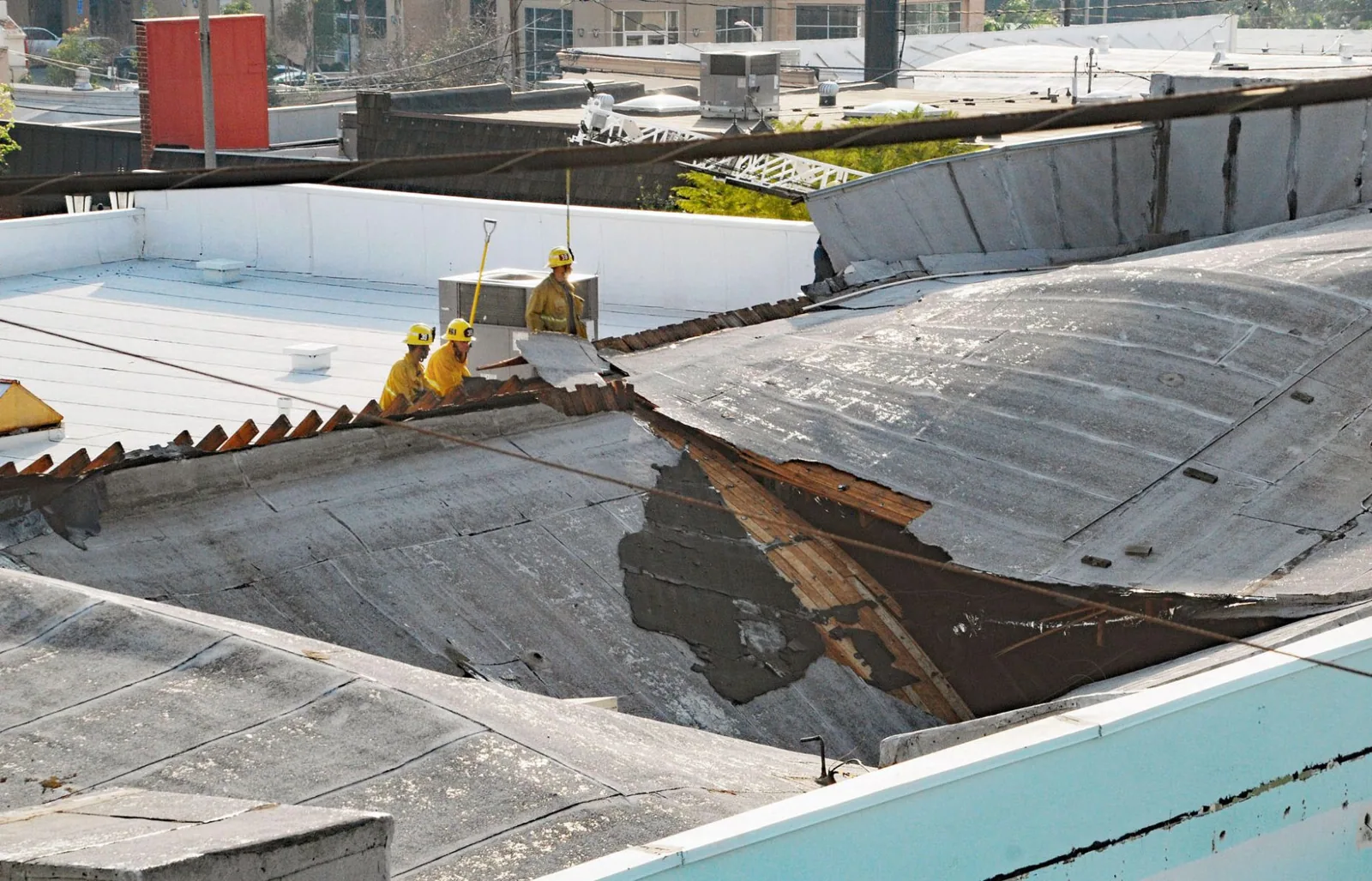
South Texas heat and heavy rain put repeated stress on low-slope roofs. We check whether water can reach its outlets, whether flashing is tight around penetrations and whether prior repairs remain bonded. After wind, we inspect corners and perimeters for lifted metal, displaced coping, loose fasteners and punctures caused by debris. The storm report separates urgent openings from cosmetic or longer-term maintenance items.
Before a storm, the owner can reduce avoidable risk by clearing drains through qualified maintenance, securing rooftop materials and confirming who can authorize emergency access. During a reroof, our crew keeps work areas small enough to close against weather each day. If forecasts change, we adjust sequencing and protect exposed insulation instead of leaving an open section unattended.
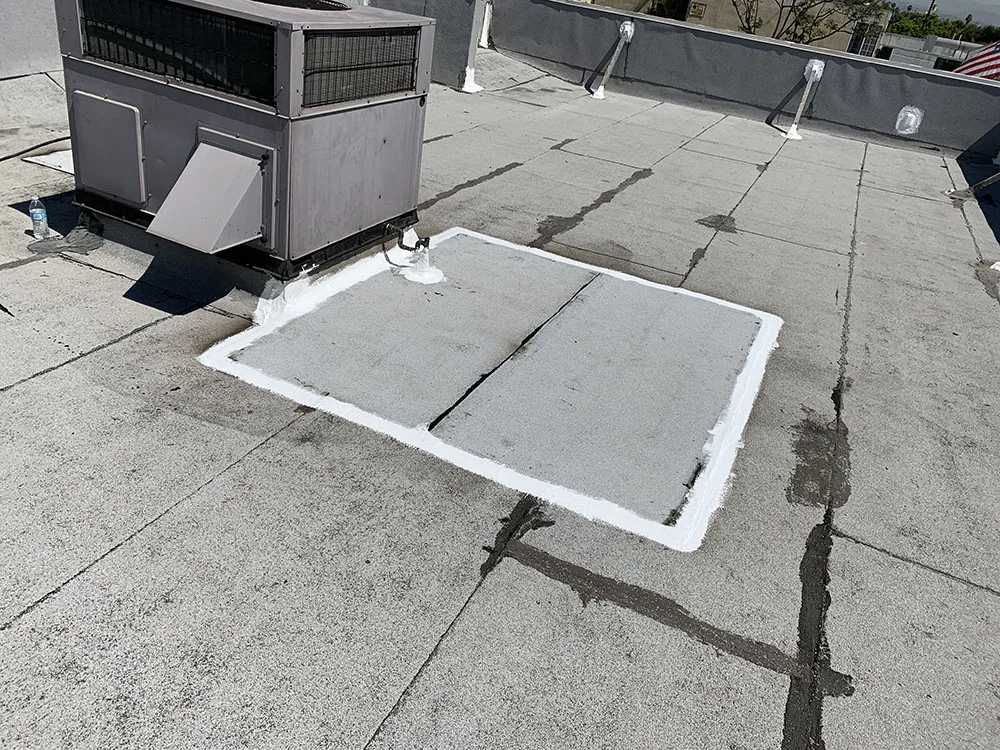
After a storm, the order of work matters. We first document the condition, protect any opening, and identify whether the roof is safe to access. Then we separate temporary measures from permanent repair and provide photographs for the owner’s records. If the membrane is intact but water entered through a curb or edge, repairing that detail may be enough. If the assembly is wet or detached across a wider area, we map the extent before recommending more work.
Select a system from verified conditions
Single-ply membranes, modified bitumen, built-up roofing, coatings and standing-seam metal each fit different roof conditions. We identify deck, slope, existing layers and drainage before recommending a system. A coating may restore a sound, dry assembly, but it will not correct saturated insulation or structural movement. A recover can preserve serviceable layers if the assembly is compatible and height limits allow the added build-up.
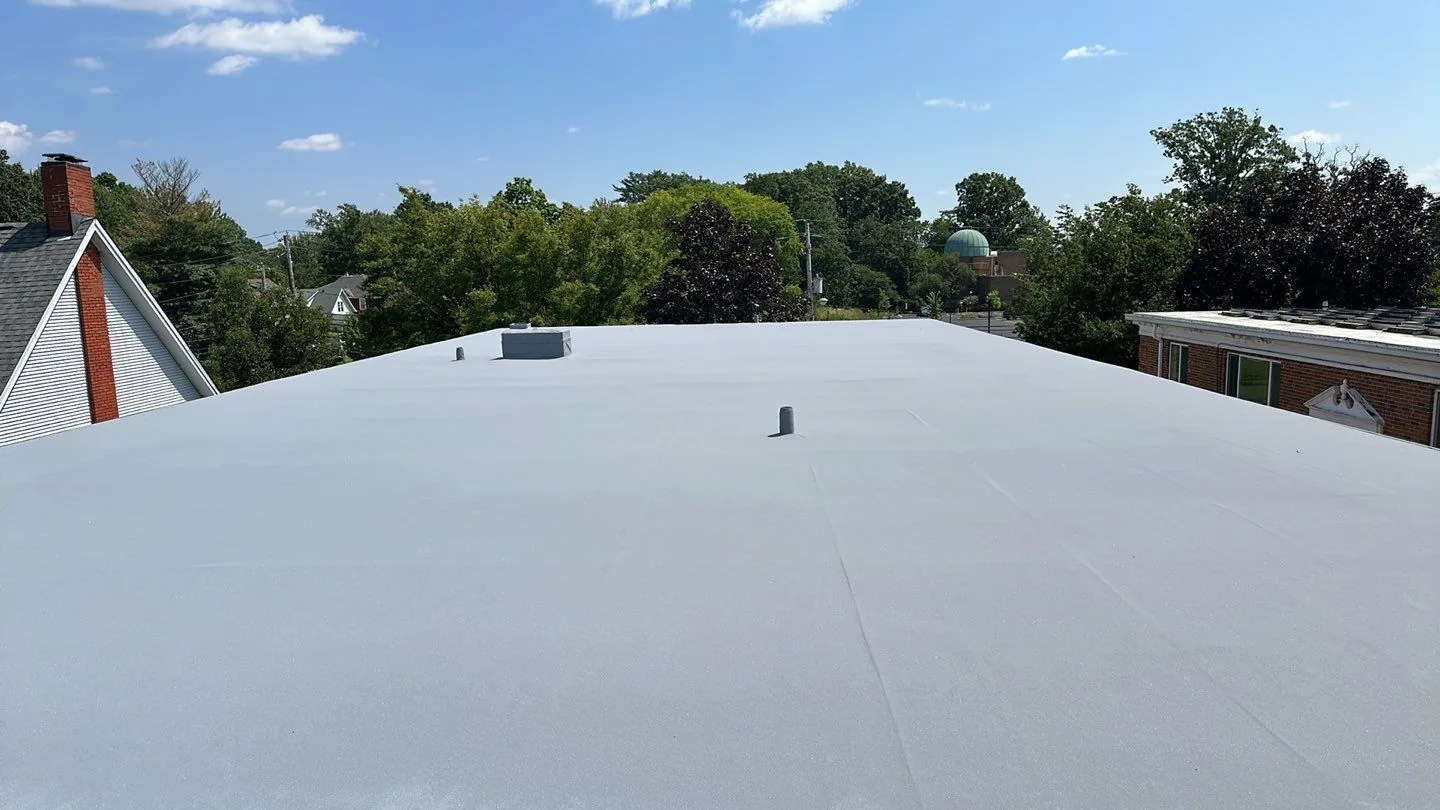
A replacement proposal describes removal, insulation, membrane, edge details, curbs, drains, safety controls and daily dry-in. It also identifies concealed conditions that could change the scope. Owners can compare lifespan, disruption and cost on the same basis, rather than choosing from product names alone. Review our commercial roof replacement and TPO roofing information before the site walk.
Cost depends on more than roof area. Tear-off layers, crane access, occupied operations, deck repairs, insulation thickness, edge metal and drain modifications can all change labor and material. We list those factors in the scope and separate allowances for concealed conditions. That gives the owner a basis for comparing options and keeps a low initial number from hiding likely extras. Where a phased project is practical, we identify how each phase can be closed and warranted.
Keep business moving during roof work
Before work starts, we confirm hours, deliveries, entrances, roof access and who receives daily updates. The crew stages materials in an approved area, protects equipment and keeps walkways open. For noisy tasks, we can sequence sections around meetings, customer traffic or production. When a building has multiple tenants, one property contact helps coordinate notices and approve access to shared roof areas.
Each day ends with a debris sweep, a drain check and a secure temporary closure over unfinished work. If we uncover wet insulation or damaged decking beyond the scope, we photograph it and request approval before expanding the work. Clear communication gives the owner time to make a decision without leaving the building exposed.
Build a useful roof history
Routine maintenance records conditions before they become emergencies. We inspect seams, edges, penetrations, drains and earlier repair areas, then provide dated photos and a prioritized list. A consistent record helps owners budget work, support warranty obligations and notice recurring leak paths. A post-storm visit can be more focused when the baseline condition is documented.
As Alvin plans for growth and infrastructure, a roof plan is one practical part of managing a commercial property. We can lay out immediate fixes, near-term repairs and replacement timing based on the roof we observe. Nearby service includes Friendswood and Pearland. Explore preventive maintenance, storm damage repair and warehouse roofing.
Before a replacement, owners should also confirm any roof access controls, required inspections and equipment that must stay powered. Bringing those decisions forward helps the crew sequence demolition and closure without disrupting the building or leaving a weather opening overnight.
Commercial Roofing Questions
Is Alvin within your commercial service area?
Yes. Alvin is a nearby incorporated city within the Pasadena market’s service radius. We confirm dispatch location and access with the property contact.
Can a recover avoid a full tear-off?
Sometimes. We first verify moisture, attachment, deck condition and compatibility; a recover is not appropriate over wet or unstable roofing.
What records should I collect?
Roof plans, repair tickets, warranty terms, leak photos and access rules help us focus the visit. We can still start without those records.
How do you plan work during business hours?
We agree on entry routes, deliveries and quiet periods with the owner, then phase roof sections so safe interior operations can continue.
Keep Reading
Related Roofing Work in Pasadena
Arrange a commercial roof assessment
Share the building’s use, roof history and any active leak when you call. We can schedule an inspection and prepare a scope tied to the conditions found in Alvin.