
Roof Systems
TPO Single-Ply Roofing in Pasadena, TX
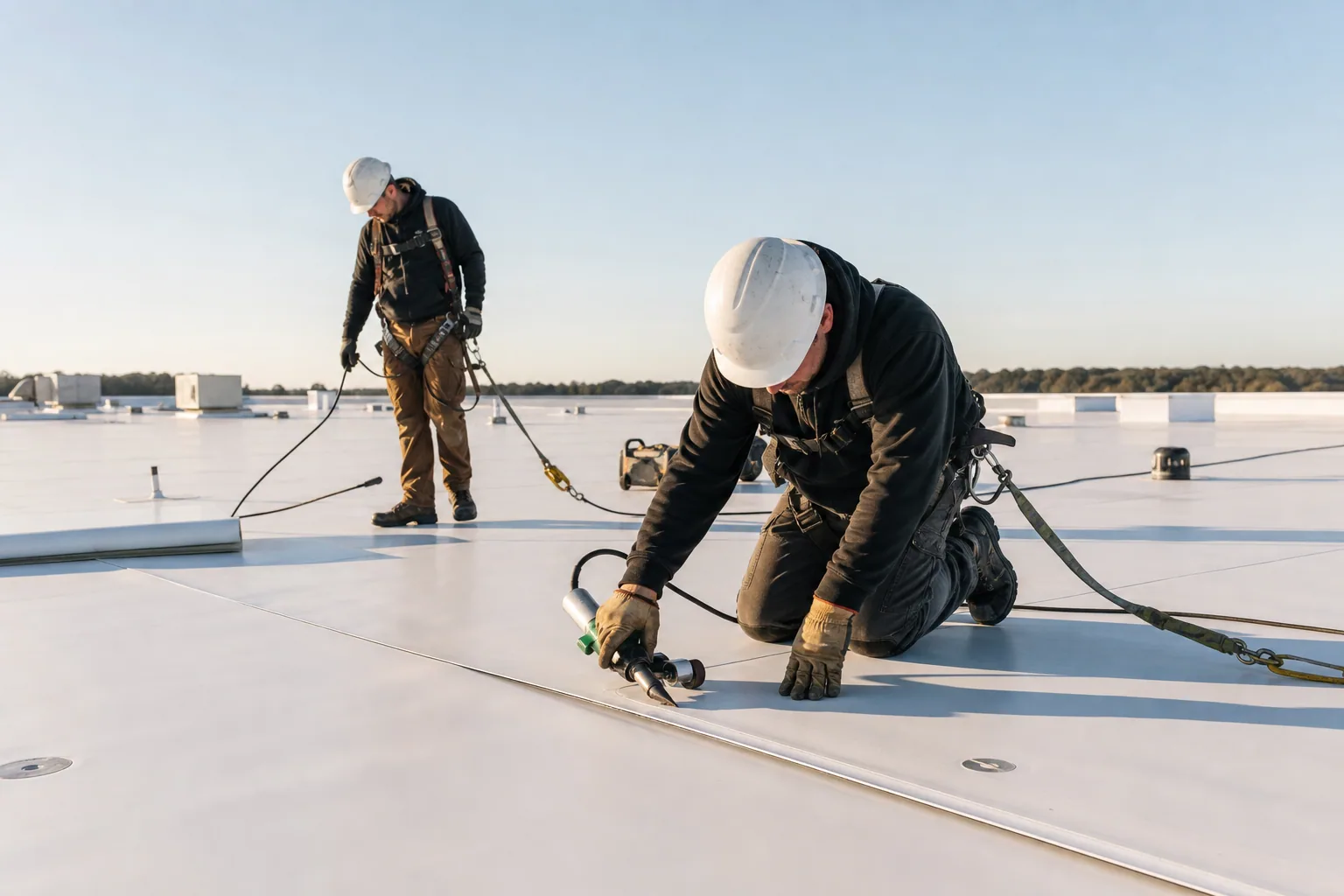
Trucks pull away from the dock doors at dawn, the night shift goes home, and the roof takes the full weight of the sun with nobody looking up at it. That is the working life of a TPO membrane on a warehouse or distribution building in Pasadena, TX. Thermoplastic polyolefin is a white single-ply sheet whose seams are fused with hot air, and in a metro area where Houston and Hobby both hit 109 F in summer 2023 and Hobby strung eighteen triple-digit days together, a reflective surface does real work for the cooling load underneath.
It is not a magic sheet. Formulations differ from one manufacturer to the next, seam quality depends on the person holding the welder, and any membrane laid over wet insulation fails early no matter what the chemistry says. We treat TPO the way a facility director does: as a surface that has to survive sun, standing water, gusts and every trade that services the rooftop units, and still be simple to repair in year ten.
Pick the Attachment Method Before You Pick the Sheet
TPO goes down three ways: mechanically fastened through the insulation into the deck, fully adhered with bonding adhesive, or loose-laid under ballast stone. On a steel deck with a long span and a short schedule, fastened systems stage quickly and add little load to the structure. Fully adhered sheets suit buildings where fastener tips cannot show below, such as a finished office suite or an open-structure space with product racked directly underneath.
The method also sets the wind performance. Fastener density climbs at corners and perimeters, and adhesive coverage has to be complete in those same zones. We draw the attachment pattern on a plan, mark the corner and edge zones, and stage fasteners and adhesive away from the drive aisles so material staging never blocks a truck lane. Where the old roof is sound and dry, a roof recover over a cover board can keep the existing assembly working as a lid while the new sheet goes on.
Weld Seams in Heat That Tests the Welder
A TPO seam is only as good as the surface it was welded on. Dust and dew weaken the bond, and Houston-area summer mornings often start with humidity over 90 percent. We hold welding until the sheet is dry, clean the overlap, and set the welder temperature and speed from a test weld made that day on that roof, because a dark rooftop in August is a different machine environment from a cool morning in February.
Every seam gets probed by hand along its full length. A probe finds the pinhole or the cold weld that a visual walk will miss. Hot-air welding does not use an open flame, but many plants still treat any heat tool as hot work, so we ask for the hot work permit requirements before we plug anything in. The probe results go into the closeout file.
Fit the Insulation to the 2024 Energy Code
Pasadena's permit office enforces the 2024 energy code on new construction, additions, remodels and changes of occupancy that affect energy load, and the review includes a cover inspection and a final one. A TPO reroof that arrives with a new insulation package or a change of use should be put to the permit office before the plan is locked, not in the last week.
Insulation thickness is the roof's part of that review, and a thicker board raises the roof edge height, which changes flashing heights at curbs and doors, so the thickness is settled before the curb details are drawn. Where the goal is lower rooftop heat gain, a cool roof installation built on a white TPO sheet and a dry, properly sized insulation layer gives the facility team something measurable to track after the work is done.
Hold the Perimeter Against Derecho and Hurricane Gusts
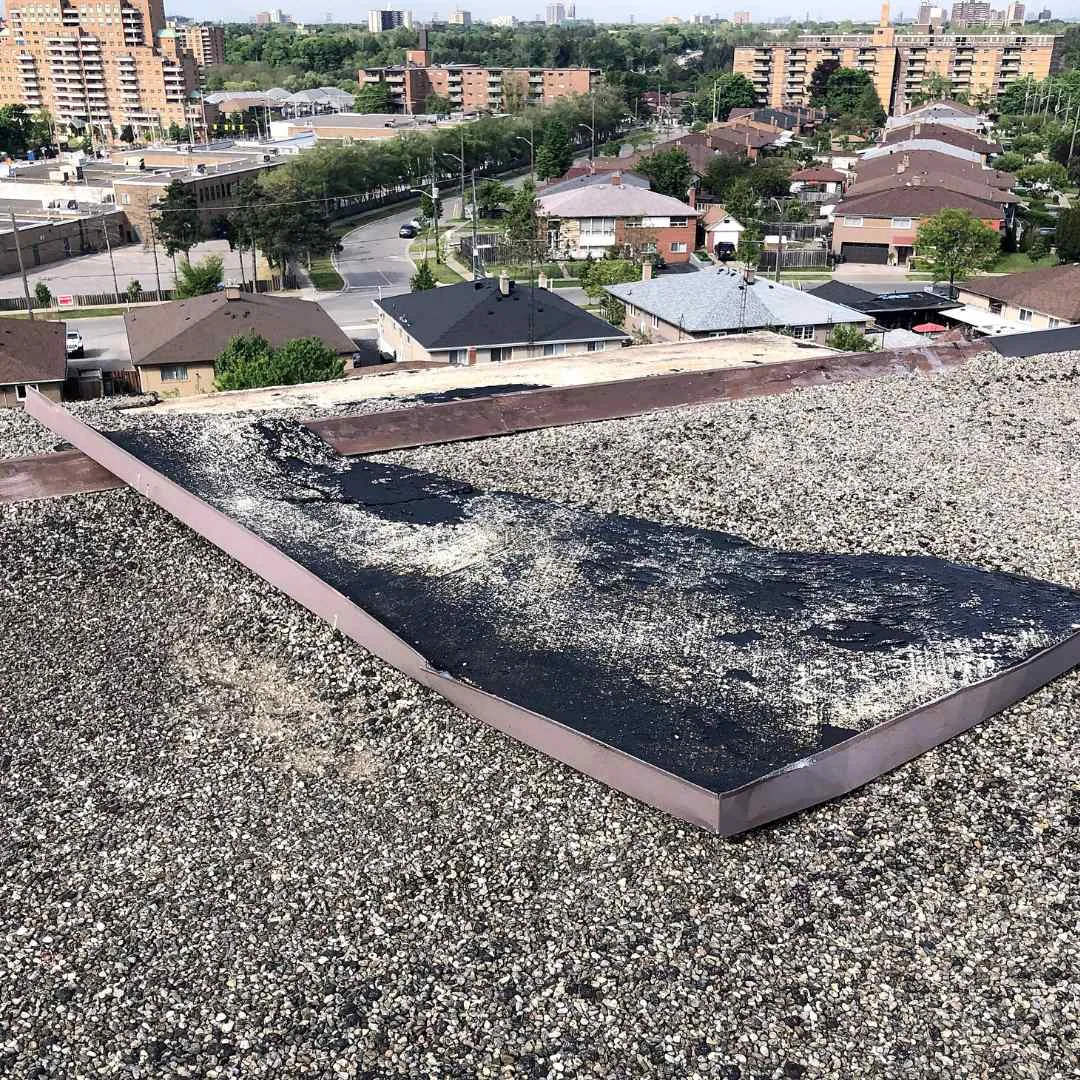
Single-ply roofs lose their grip at the edges first. The May 2024 derecho recorded a 78 mph gust at Highlands while surveyors put winds near downtown around 100 mph, and a June 2023 thunderstorm line set a 97 mph record at Bush Intercontinental, higher than Hurricane Ike managed there. Beryl followed in July 2024.
We build the edge as a system: a continuous cleat or properly fastened edge metal, extra fasteners or adhesive in the corner zones, and membrane terminations that cannot peel back on their own. East of State Highway 146, the bayside buildings of La Porte fall under state windstorm insurance rules, and the roof has to pass an inspection to stay insurable. After any gust event, a look at the edges is part of wind damage roof repair.
Phase the Tear-Off Around the Docks and the Night Shift
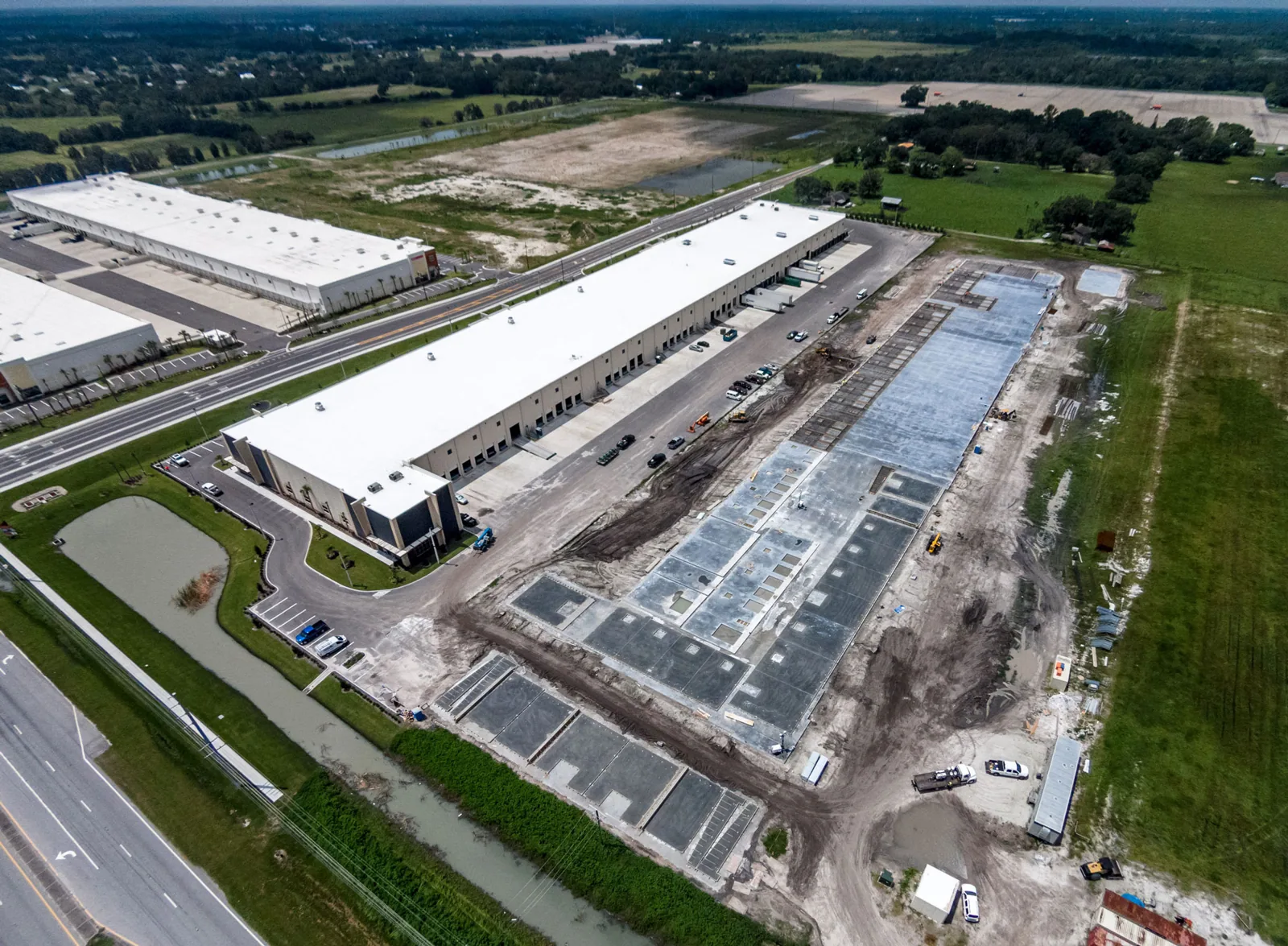
Pasadena describes its industrial district as 10,000 acres, and Silver Eagle bought 100 acres at Beltway 8 and Highway 225 for a distribution facility. A building of that kind has the same constraint as any dock-heavy building: trucks need lanes, forklifts need clear aisles and the racking cannot get wet.
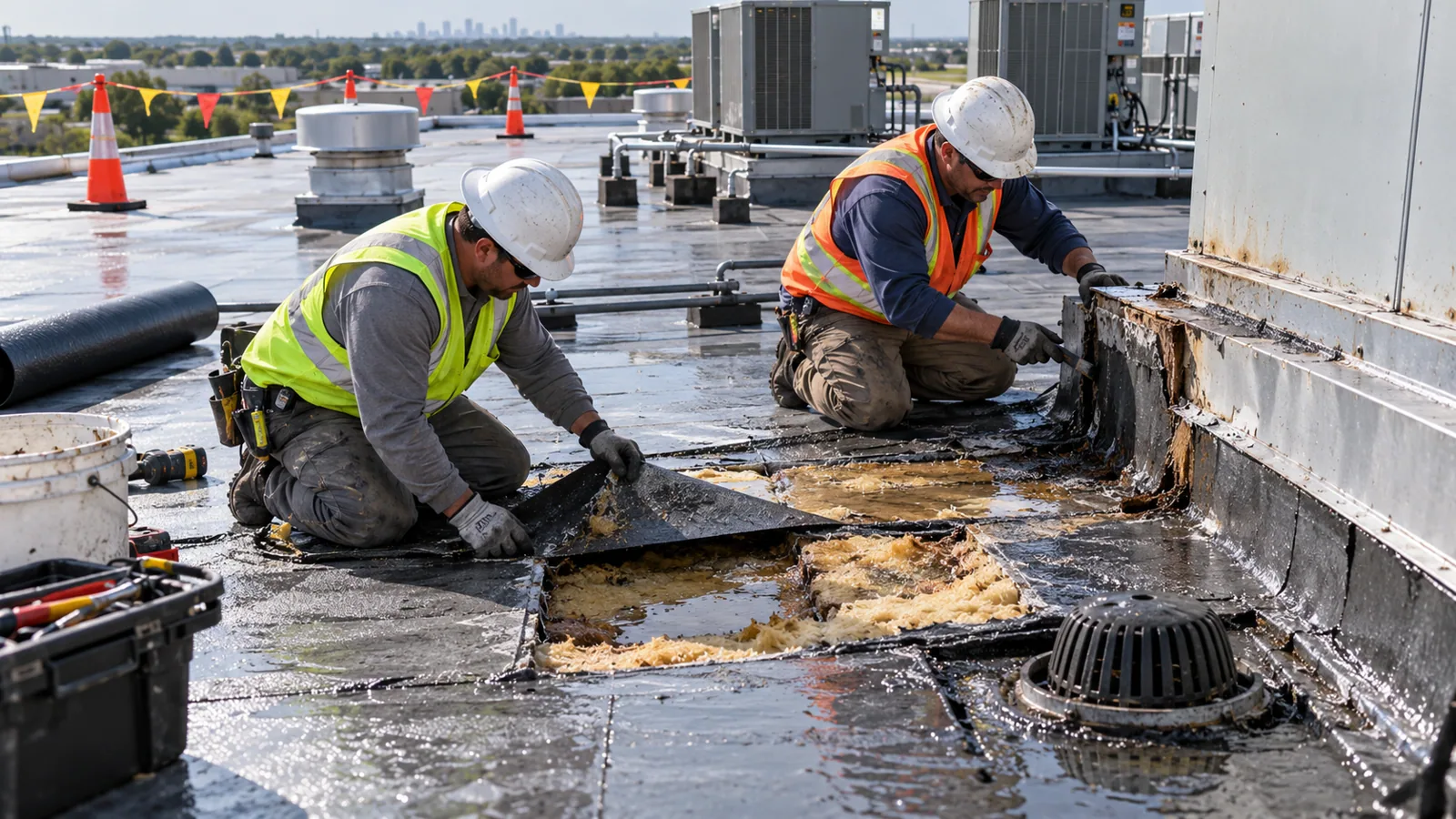
From there it is a sequence. The crane pick for insulation and rolled membrane comes first, the laydown area sits away from truck turns, and the tear-off is cut into bays small enough to dry in before the afternoon storms build. This is the same method we use for reroofing an occupied building, and it is the right method for a distribution center roof where downtime costs more than the roofing does.
Leave a Seam Map and a Watch List at Closeout
When the last section is welded, the file is what the owner keeps. We photograph terminations, drains, curbs and edge metal, record the seam probe results by area, and note where walk pads protect the routes technicians use to reach the rooftop units.
Warranty paperwork depends on the manufacturer's system, so we collect it with the inspection records and keep both in the owner's roof warranty management file. Clean, sound TPO can later accept silicone or acrylic restoration. Roofs that see grease or chemical exhaust may do better with PVC roofing. Compare EPDM roofing by seam and repair needs.
Commercial Roofing Questions
Does a white TPO roof actually lower cooling costs in a humid market like this one?
Partly. A reflective sheet sheds heat that a dark membrane would absorb, which helps the rooftop units most during the long run of days at or above 90 F that Houston logs each year. Humidity is a different load, though, and reflectivity does nothing for moisture removal. Dirt and algae also dull a white surface over time, so treat any savings estimate as a range and plan a wash during maintenance visits.
How thick should the sheet be on a roof with a lot of rooftop equipment?
Thicker sheets take foot traffic and dropped tools better, and the extra material is cheap compared with a repair crew mobilized for a worn path. Thickness does not replace walk pads, though, so we lay them along the routes technicians use to reach units and disconnects.
Can TPO go over an old built-up or modified bitumen roof?
Often, once the insulation is proved dry and the code layer count allows it. A cover board goes down first to separate the new sheet from the old surface and to firm up the substrate. Infrared scanning and core cuts tell us whether the old roof can stay, and if wet insulation shows up in many areas, a tear-off is the safer path.
Will a TPO roof east of SH 146 pass the windstorm inspection?
Passing comes from documented attachment, edge metal and corner reinforcement that match what the state windstorm inspectors expect for the building. We plan those details before the sheet is ordered and photograph them as they go in. Work in La Porte, Seabrook or Morgan's Point gets scheduled so the inspection happens before the area is covered or the tenants return.
Does TPO hold up when large hail does reach the Houston area?
Large hail is uncommon here, though an April 2013 storm line dropped golf-ball stones across the region and 4.5 inch hail near Hitchcock. Thicker TPO over a firm cover board resists bruising better than a thin sheet over soft insulation. After a hail event we inspect for fractures and punctures, and our hail damage roof repair work documents each hit for the carrier.
Keep Reading
Related Roofing Work in Pasadena


Walk the Site With Us Before the Membrane Is Ordered
Bring the plans, the dock schedule and any shutdown windows. We will walk the roof with your facility director and build a TPO plan that fits how the building runs from the first day.