
Commercial Roofing Services
Cool Roof Installation in Pasadena, TX
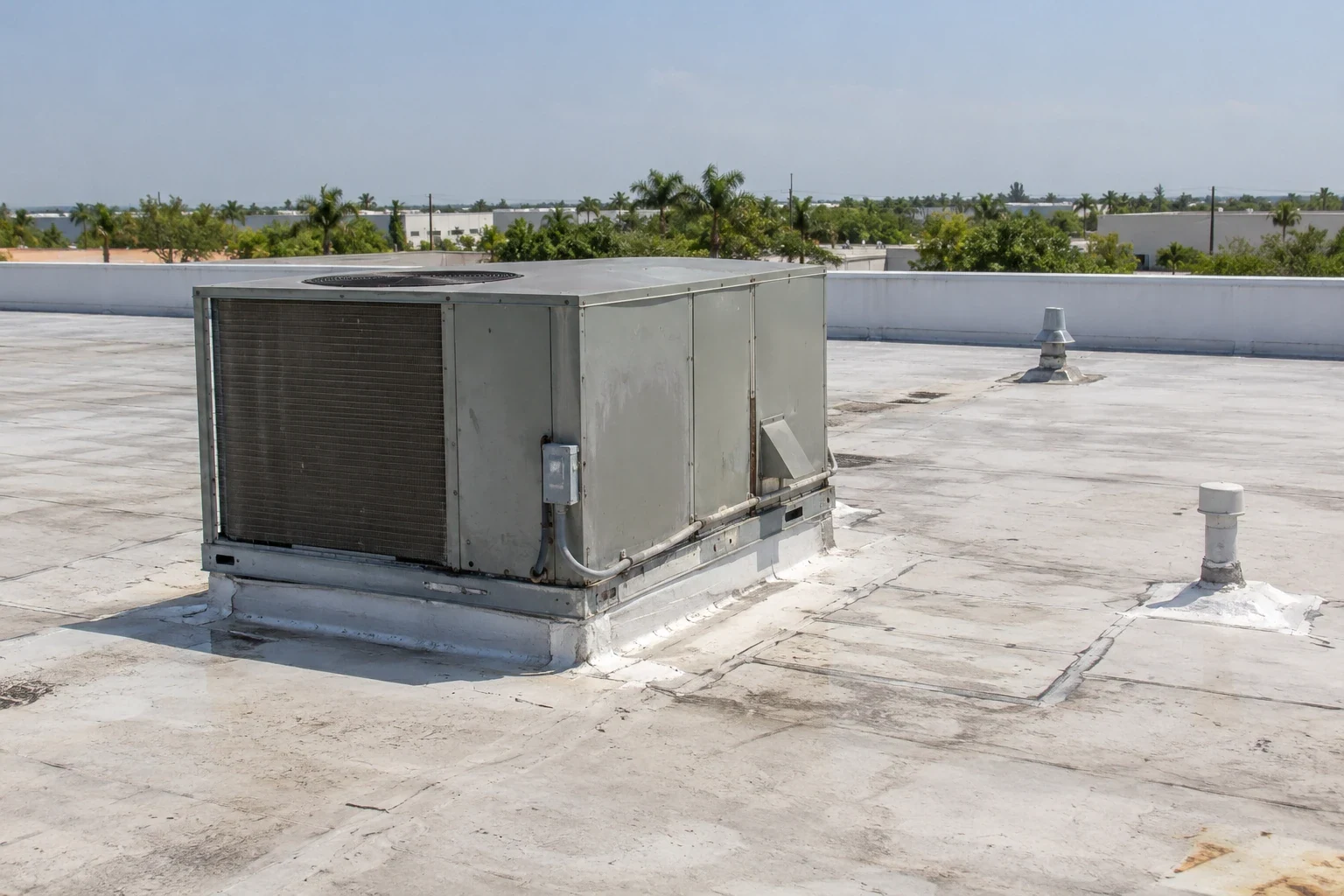
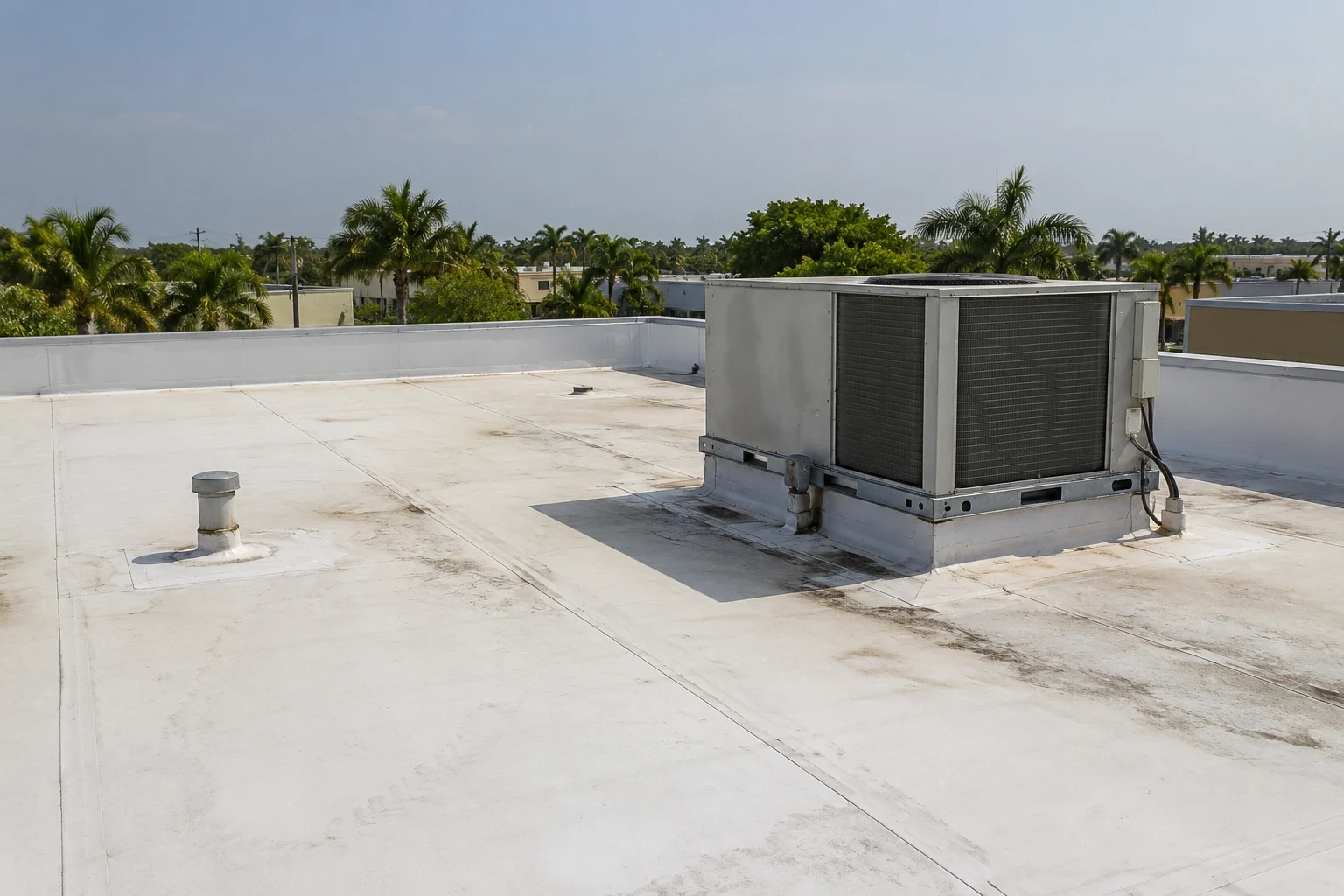
By ten on an August morning, the air under a warehouse deck in Pasadena, TX is already warm, the dock doors keep cycling, and the roof overhead is taking more sun than any other surface on the building. A cool roof changes that exchange. It reflects more of the sunlight that lands on it and gives back more of the heat it does absorb, so the membrane runs cooler, the cooling plant below works less, and the sheet itself ages more slowly.
It is not a paint color. It is an assembly decision, made with the insulation, the drainage and the operating plan of the building in the same conversation.
Measure the Heat Load Before Choosing a Surface
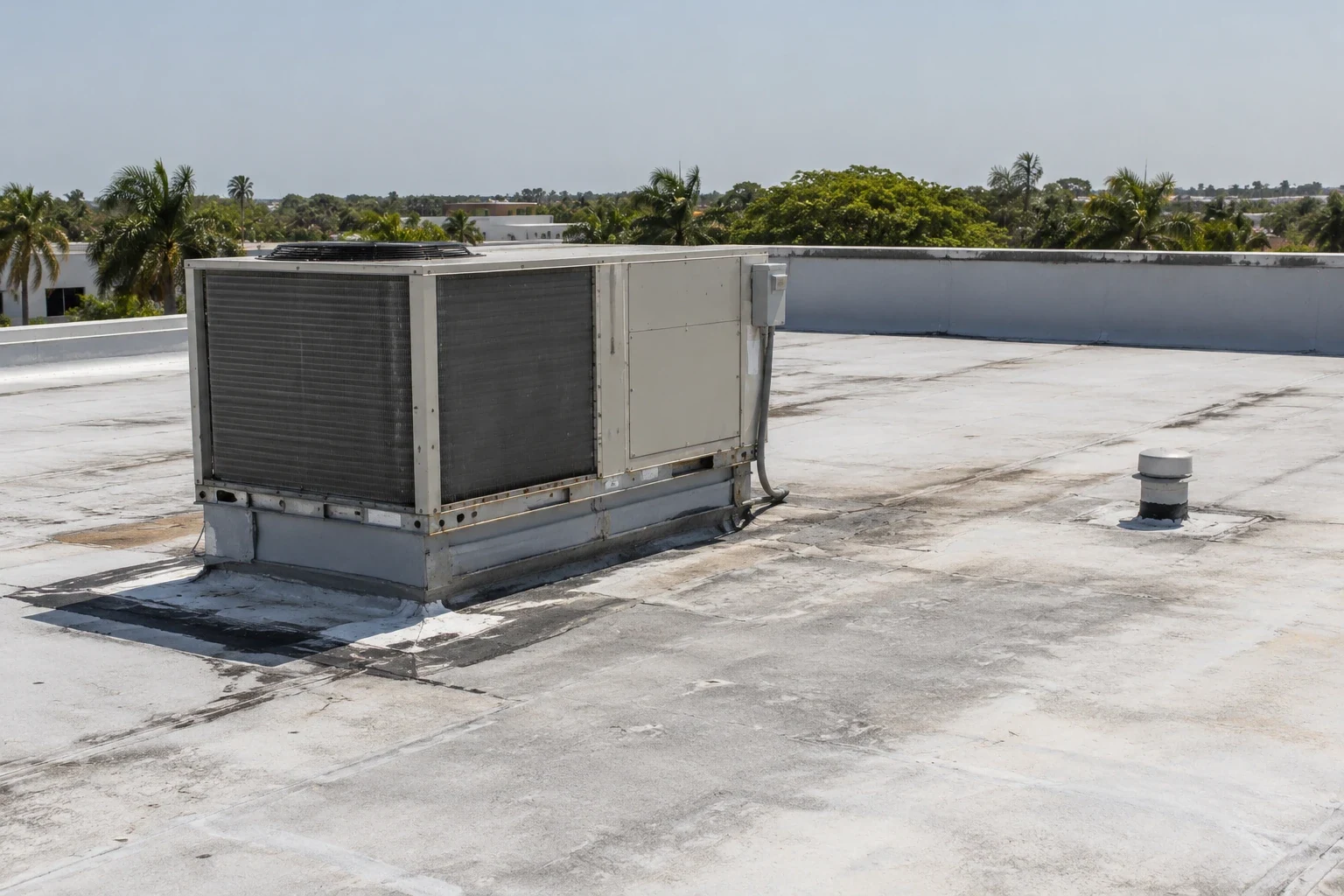
Reflectivity pays back where there is cooled air to protect. Houston's August afternoons that average near 95 F, the 102 or so days a year that reach 90 F, and morning humidity above 90 percent all push cooling equipment hard, and a dark membrane adds to the load. Over a conditioned office block, a medical suite or a plant control room, a reflective surface earns its keep quickly. Over an open, unconditioned shed, the gain is smaller, and we say so. A warehouse with a cooled dock or a heated office wing sits somewhere in between, which is why the first step is a walk through what the space under the roof is used for.
Match the Reflective Surface to the Roof You Already Have
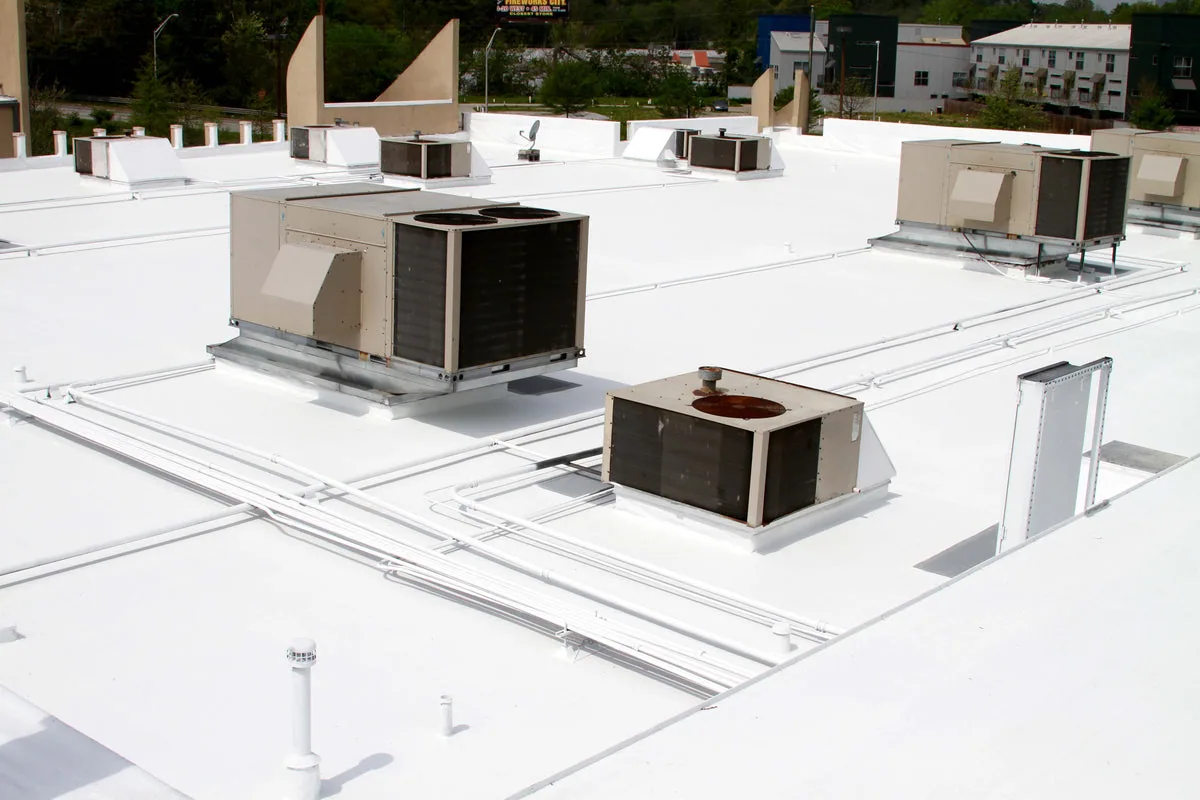
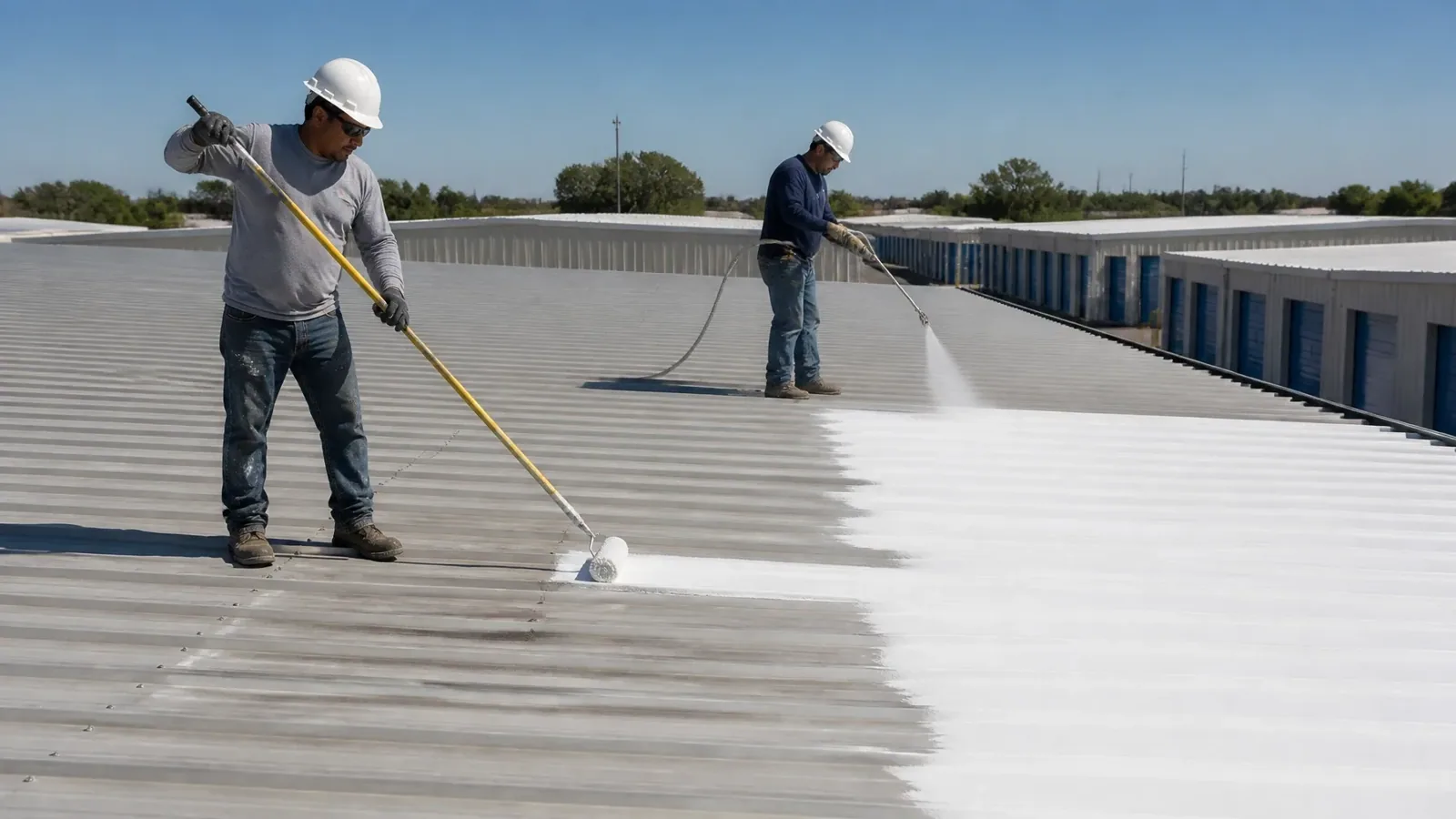
White TPO, PVC and KEE membranes are reflective as they leave the factory, and a white EPDM exists for the same purpose. Over an existing sound roof, a reflective coating can do the job without a tear-off. Silicone tolerates standing water far better than acrylic, so a roof that holds a puddle after a June downpour points toward silicone coatings, while an acrylic suits a roof that drains cleanly. Spray foam with a reflective topcoat is a third route for roofs that need insulation as well.
Each path has a different surface prep, a different cure window and a different tolerance for dirt. Choose after the survey, not before.
Prove the Insulation Is Dry Before Anything Reflective Goes On
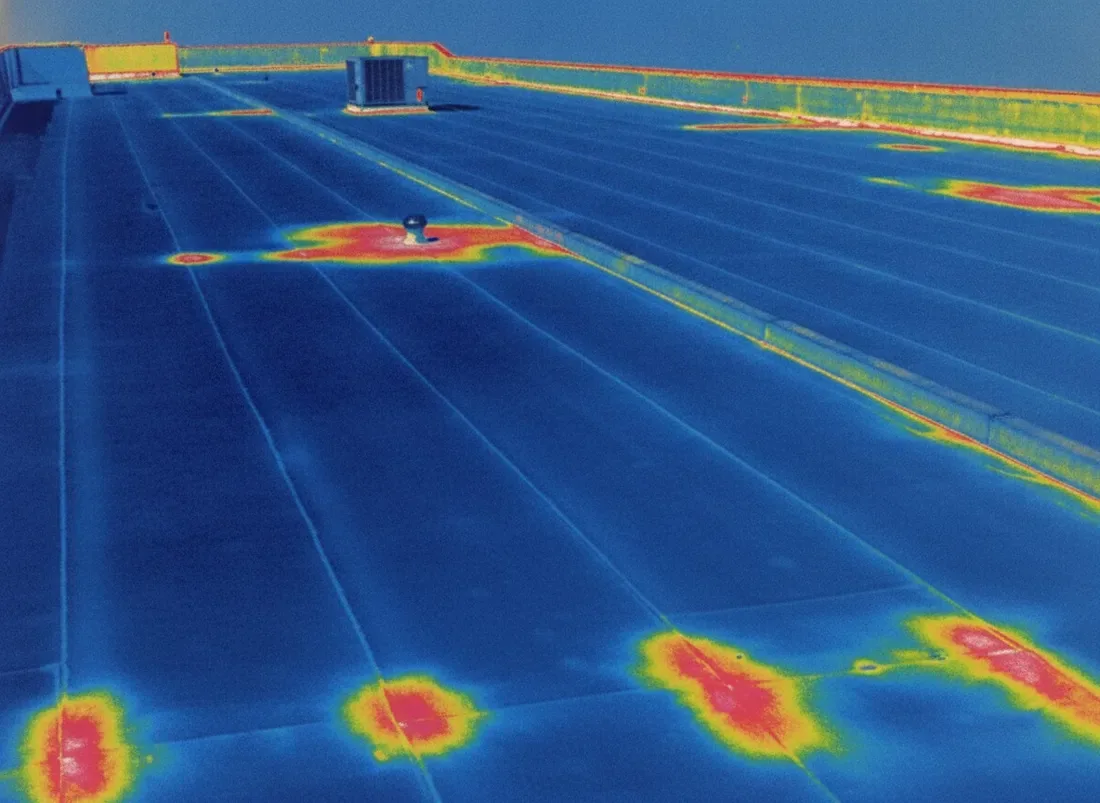
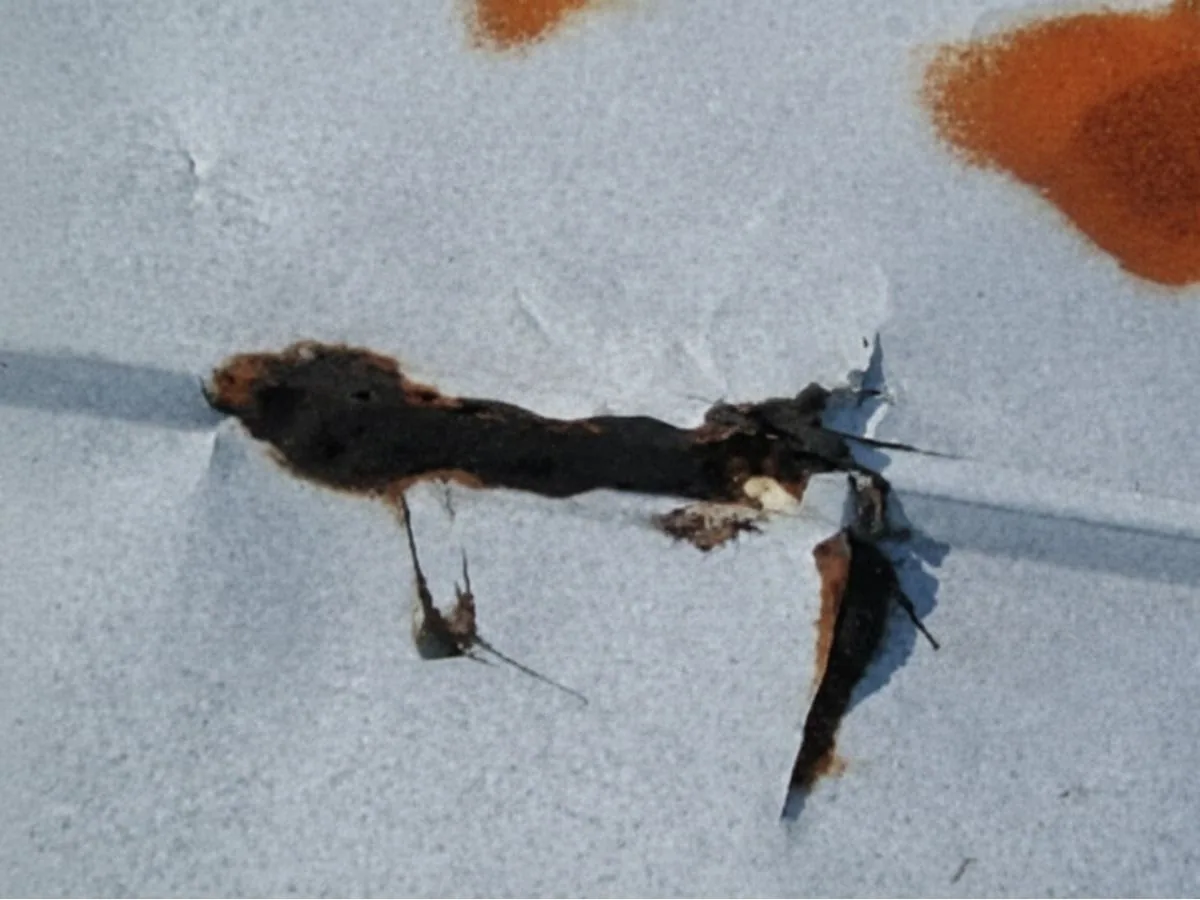
A bright surface over wet insulation is a wasted investment. Houston's rain falls on roughly 104 days a year, adding up to about 50 inches, and water that finds a way into the roof does not leave on its own. Before a recoat or a recover we run an infrared moisture survey and cut a few cores to confirm what the camera suggests. Wet sections are removed and replaced first, because trapping moisture under a coating produces blisters and a short life. Tapered insulation at low spots keeps the new surface from becoming a pond that the sun bakes every afternoon.
Check the Energy Code and the Windstorm Rules Before the Permit
Since early February 2026 the city permit office has held projects to the 2024 energy conservation code whenever the work touches energy load, from new buildings and additions to remodels and a change in how a space is used. An energy inspection is built into the permit, once partway through and once at the end. Whether a given reroof falls inside that rule is a question for the permit office, and we put it to them with the scope in hand rather than guess.
Additions and new construction are the plainest cases, and the roof assembly is drawn to the code before the permit goes in. East of SH 146 the windstorm program of the Texas Department of Insurance adds its own inspection to the roofing work, so the schedule has to leave room for both.
Phase the Install Around Dock Traffic and Afternoon Storms
On an operating building, the installation plan starts with the ground. We agree which bays and lanes stay open, where the material is staged, and where the crane sets up for the pick that carries rolls and insulation to the deck. Then we work in sections small enough to dry in before the storms build off the Gulf. Heat-welded membranes need dry seams and a calm window, and coatings need a dry surface and a cure period before rain, so June, the wettest month, shapes the calendar as much as the shutdown window does.
Hot afternoons also limit crews. A night shift takes the hottest stretches off the schedule, and a cooler sheet is easier to weld.
Keep the Surface Clean, Reflective and Inspected
Reflectivity fades. Humid air grows mildew, runoff leaves streaks, and a roof beside the SH 225 refinery corridor collects whatever the air carries. A routine wash restores much of the brightness, and a preventive maintenance visit confirms that seams, drains and edges are still tight. Summer 2023 put Houston and Hobby airport at 109 F and gave Hobby 18 straight triple-digit days, a reminder that heat and UV damage is slow, constant and easy to overlook until a membrane starts to craze or shrink at the edges.
A reflective surface is only one part of the energy decision. Establish a baseline for roof condition, insulation, drainage, and rooftop equipment before estimating any change in cooling demand. Confirm whether the selected system is compatible with the existing membrane and whether ponding, shade, or soiling could affect performance. The owner should compare expected maintenance and cleaning needs along with initial installation cost. During work, protect HVAC intakes and coordinate shutdowns with the building operator. At turnover, identify the products installed, the areas treated, and the inspection steps needed to preserve reflectivity without using methods that could damage the membrane.
Commercial Roofing Questions
Does a reflective roof help a warehouse that is not air-conditioned?
Less than it helps a cooled building, and that is worth saying plainly. The membrane still runs cooler and ages more slowly, but the savings on cooling are small when there is little cooling to save. A cooled dock, an office wing or refrigerated storage changes the answer. We look at what sits under the deck before we recommend paying for a reflective surface.
Will a white roof stay white after a few humid summers?
Not without washing. Mildew, grime and dust dull the surface, and runoff leaves streaks at drains and parapets. A scheduled wash returns most of the brightness, and an annual walk shows whether seams or edges are letting dirt collect. Humid bay-side air in Pasadena favors mildew, so we write the cleaning cycle into the maintenance plan from the start instead of waiting for the roof to look grey.
Do I have to follow the 2024 energy code on a reroof?
The permit office reviews energy performance on projects that alter a building's energy load, and it inspects twice before occupancy. A reroof that adds insulation or changes the assembly may land inside that review, so ask before the scope is final. We bring the proposed assembly to the counter and carry the answer back to the facility director.
Can I coat my existing roof white instead of replacing it?
Sometimes, provided the roof is dry and sound. The survey confirms whether the insulation is wet, whether seams and flashings are intact and whether the surface will accept a coating. When it will, a reflective restoration coating stretches the roof's life and cools the surface in one visit. When it will not, a recover or replacement is the right answer.
How long does a cool roof install take on a building that stays open?
The length follows the number of sections the site can release to us each day. A building with a quiet weekend and a night shift releases more than a building with trucks at every dock around the clock. We build the schedule from your operating hours, add rain days for the Gulf Coast calendar, and show the plan to your facility team before anyone mobilizes.
Keep Reading
Related Roofing Work in Pasadena

Show Us the Hottest Corner of the Building and the Schedule It Keeps
Tell us what runs under the roof and when the dock traffic peaks. We will walk the site with your facility director, test the roof for moisture, and build a reflective roof plan that fits your operation from the first day.