
Commercial Roofing Services
Commercial Roof Leak Repair in Pasadena, TX
Water on a warehouse floor is rarely directly under the hole in the roof. It runs along the deck flutes, drops through a joint between insulation boards, travels down a wall cavity, and finally shows up at a ceiling tile thirty feet from where it entered. A facility manager who patches where the stain appears will be patching again after the next storm.
Leak repair on a commercial roof in Pasadena, TX is a tracing job first. We work backward from the interior evidence, read the roof for the details most likely to fail, and prove the entry point before any material goes down. Then we stop the water, protect what sits below, and leave a record that shows exactly what was found and fixed.
Trace the Water Backward From the Stain
The first step is a conversation and a walk through the space below. Where did the water show, when did it start, and did it follow rain or wind? Stains that appear only in heavy wind-driven rain point to flashing or edge metal. Stains that appear after any rain point to the field of the roof or a drain.
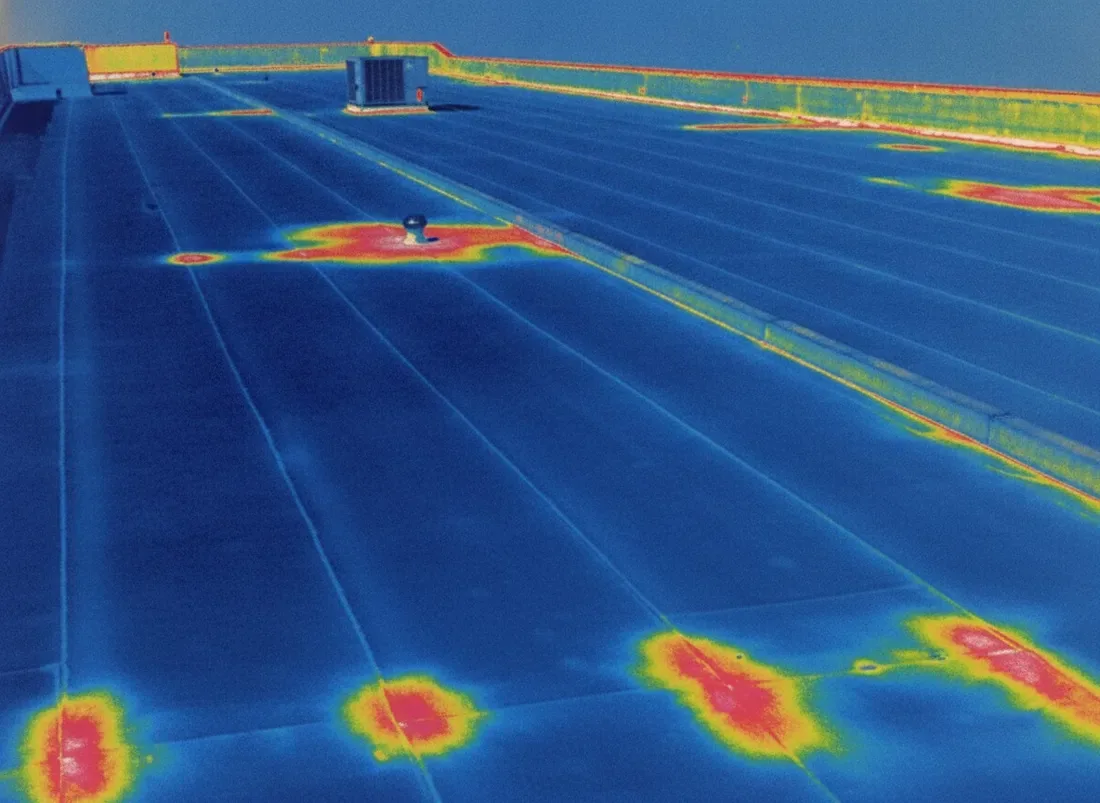
On the roof, we trace the deck slope, check laps and seams uphill from the stain, and bring in an infrared moisture survey when the path is not obvious. Insulation that has absorbed water holds a heat signature after sunset, and that signature leads back toward the source. Where it is safe, a controlled water test isolates one detail at a time until the leak shows itself.
Test the Details Before Blaming the Field
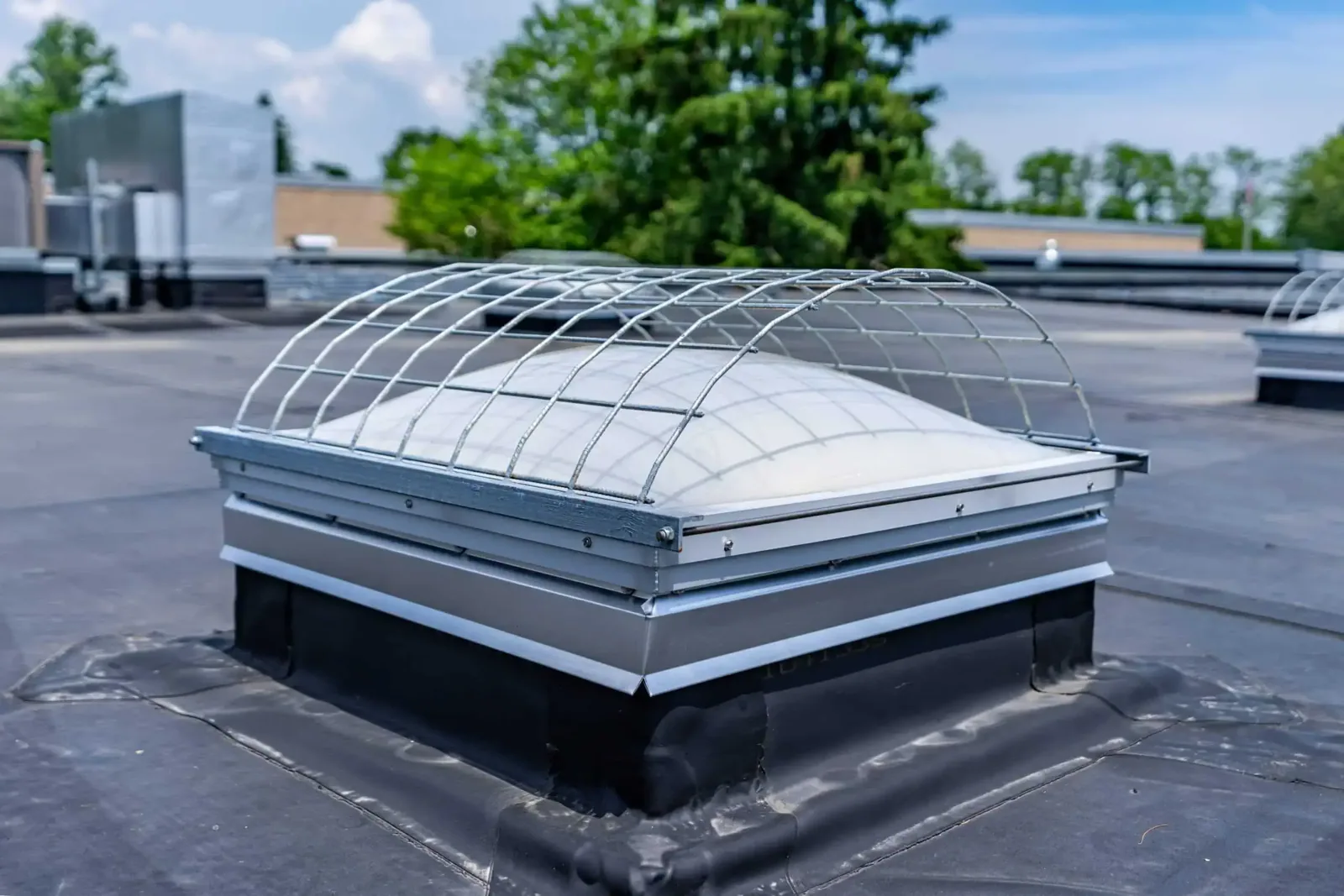
Most commercial leaks start at a detail, not in open membrane. Penetrations for pipes and conduit, skylight and penetration flashing, rooftop units sitting on equipment curbs and supports, drains, scuppers, expansion joints and parapet terminations all carry more stress than a flat expanse of membrane.
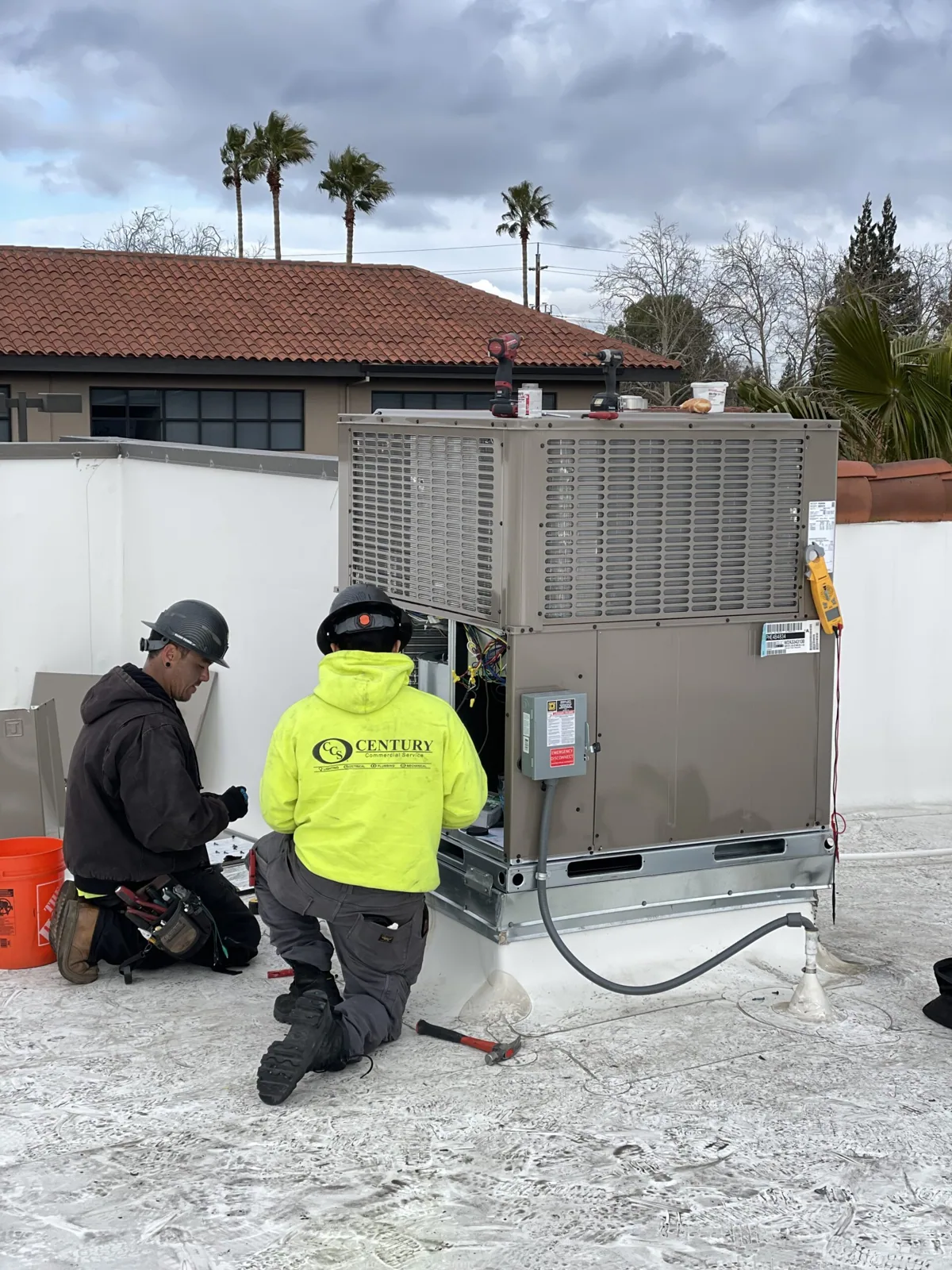
Each one gets a close look. We press on sealant to see whether it has hardened, check fasteners for backing out, look for cracked boots and open laps, and probe the base flashing for gaps. A rooftop unit that gets serviced often has probably had its curb flashing disturbed. Finding that pattern saves the owner from replacing a membrane that was never the problem.
Stop the Water Now, Then Repair It Properly
There are two phases. The first is containment: a temporary seal, patch or tarp that keeps water out until conditions allow a permanent fix. If the leak is active during a storm, the work follows the same priorities as our emergency roof repair response, with dry-in first and polish later.
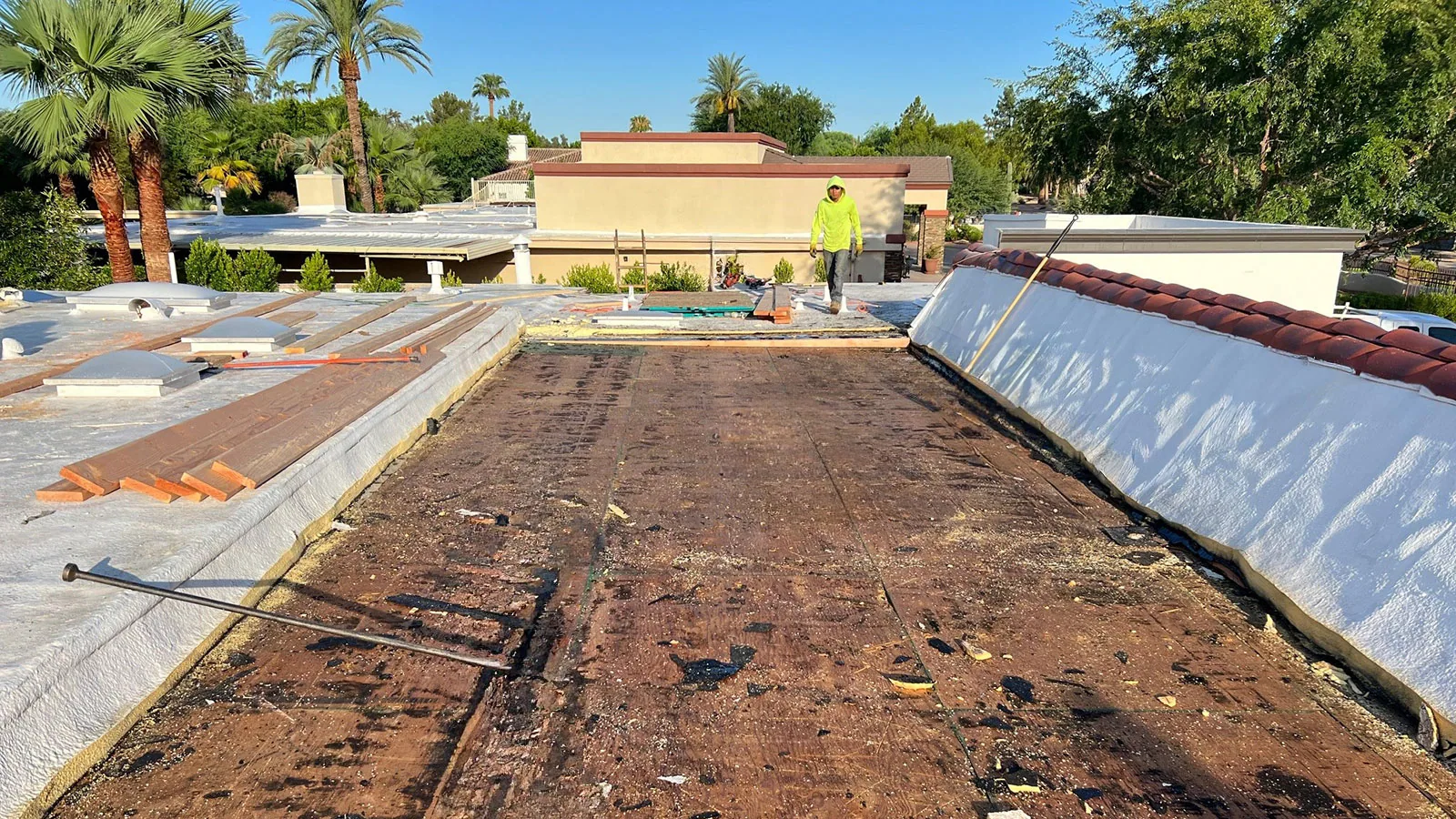
The second phase is the real repair. That means removing wet insulation around the entry, replacing it with dry board, and restoring the membrane with a compatible patch or flashing. Skipping that step is the most common reason a leak returns. A dry-looking membrane can hide a wet sponge of insulation underneath, and that moisture will find the next small gap.
Protect the Interior While the Roof Work Runs
Roof leaks create two problems at once: a hole above and damage below. While the roof crew works, we ask what is under the entry point. Racking with stored product, a server closet, a production line, a classroom or an electrical panel each needs a different level of protection. Plastic sheeting, drip diverters and quick moves of sensitive items can prevent a roof leak from becoming an interior loss.
Photograph everything. Dated photos of the stain, the entry point and the repair give the owner a clean record, and if the loss rises to an insurance matter, our roof insurance claim assistance turns those photos into usable documentation. Wet ceiling tile and insulation should come out quickly, because Gulf Coast humidity encourages mold within days.
Plan for Rain Bursts, Heat Cycles and Standing Water
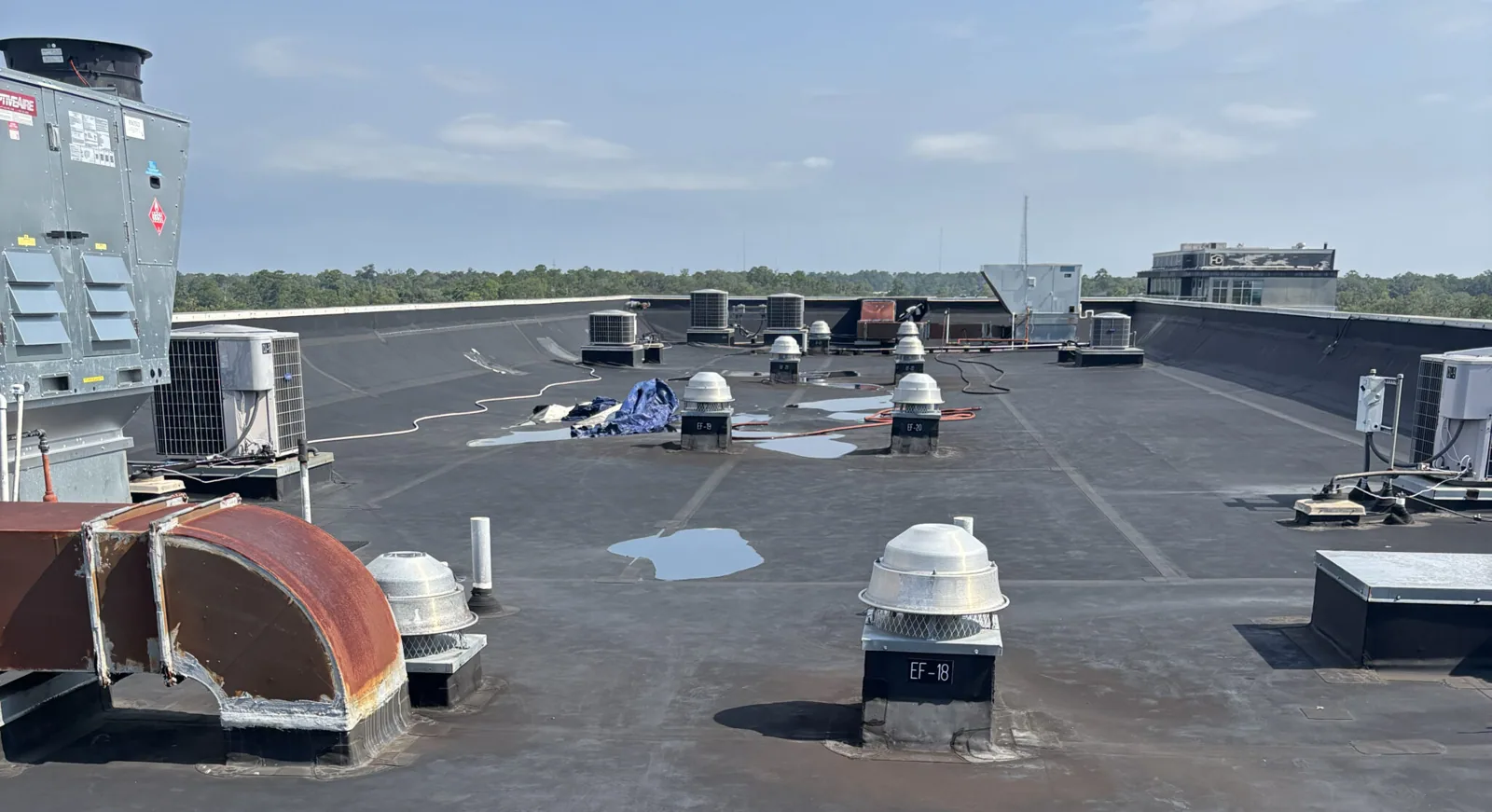
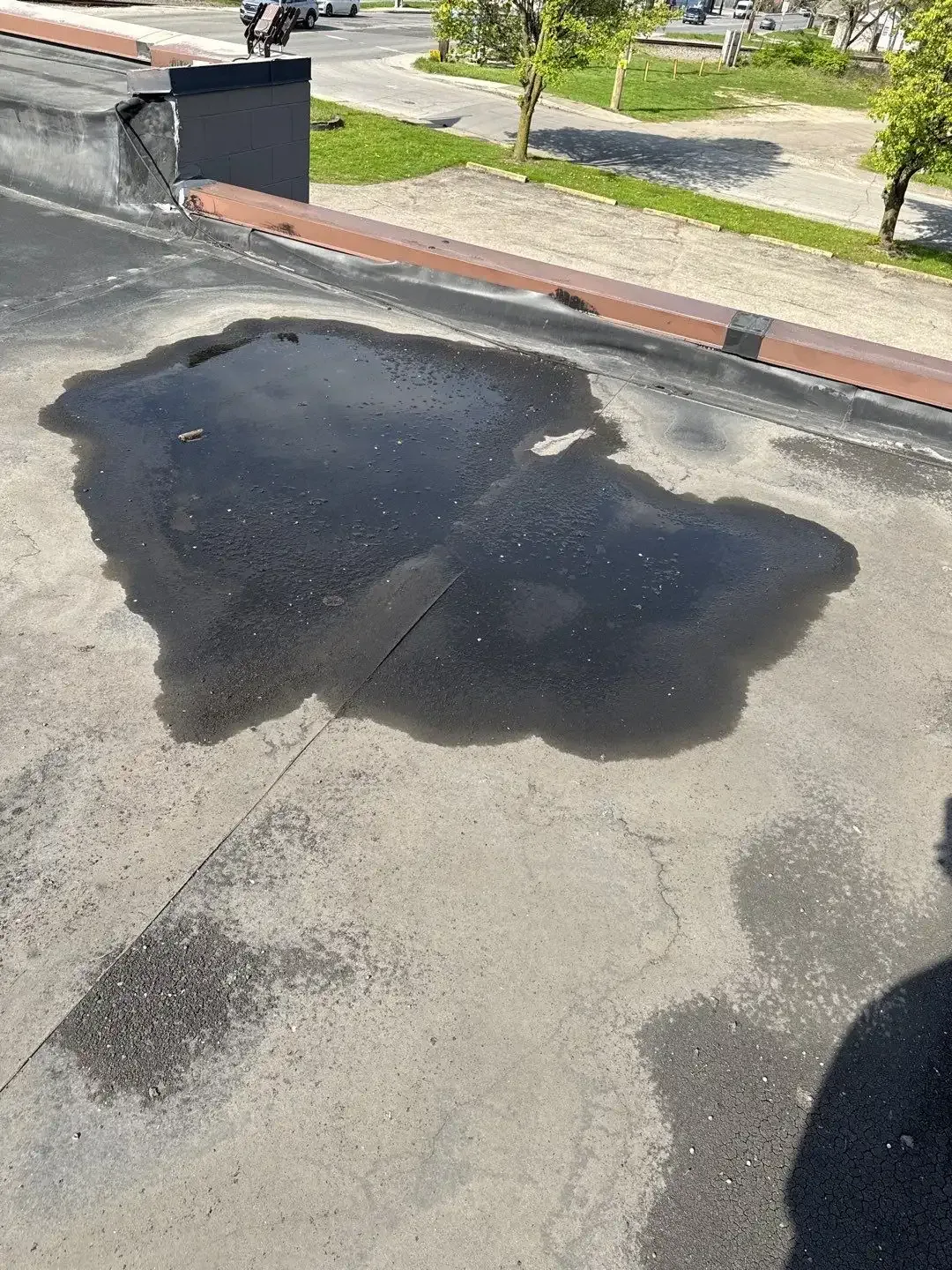
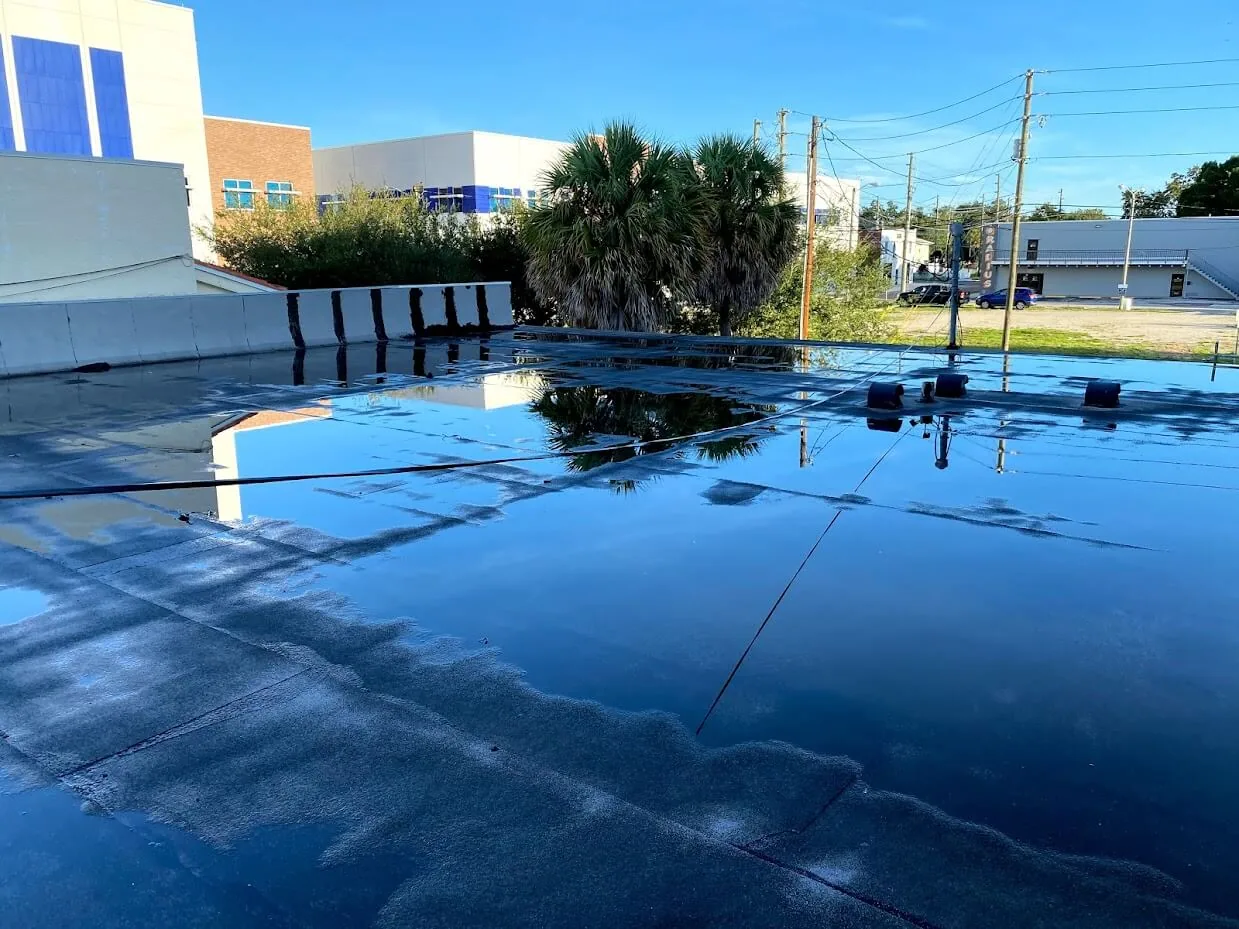
Houston collects about 50 inches of rain across roughly 104 rainy days, and June is the wettest month. Along the Pasadena Freeway SH 225 corridor, where refineries, chemical plants and tank farms line the highway, a roof that leaks in a downpour often leaks because a drain is slow to clear. That makes ponding water repair part of many leak calls.
Heat plays its part too. With more than 100 days a year at or above 90 F, membranes expand and contract daily, which opens seams and loosens sealants. A leak that appears in August may have started with a small gap opened by thermal movement months earlier. The repair has to account for the cause, not only the symptom.
Retest and Record the Fix
Once the repair is done, we retest where practical. A controlled flood of the detail, a moisture scan after the next rain, or a ceiling check the following day confirms that the water is gone. If the interior shows any change, we return before the owner has to call.
The file records the entry point, the cause, the repair and the photos. If the same area leaks again, that file speeds the next decision, and the owner can see whether the problem is a one-off or a sign that a membrane puncture repair or a larger scope is due.
A useful repair ticket records the weather, the interior symptom, and the roof zone before the crew changes anything. Keep separate notes for the point where water appeared and the detail that allowed entry; those locations often differ. After the repair, repeat the same controlled water test when conditions allow, then photograph the finished seam, flashing, or drain. Tell the facility contact what could not be verified, such as a concealed cavity or an inaccessible curb. This gives the next inspection a clear starting point and helps the owner recognize whether a later stain is new, residual, or tied to another roof area.
Commercial Roofing Questions
Why does my roof leak in one spot but the stain appears somewhere else?
Deck flutes, insulation joints and wall cavities carry water sideways, sometimes a long way before it drops. That is why we trace from the roof level as well as from the stain, and why a moisture scan often finds the entry point faster than visual inspection alone.
Can a leak be fixed while it is still raining?
A temporary seal can, as long as the roof is safe to work on. Crews do not work on a wet, windy or lightning-prone roof. When conditions are unsafe, we dry-in with a tarp or seal from the safest access we can find and return for the permanent repair once the roof is dry enough for adhesives and welds to bond.
How do I know the repair will hold?
A repair holds when the cause was fixed and not only the symptom. We confirm the entry point, remove wet insulation, repair with compatible materials and retest where practical. There is no absolute promise in roofing, but a repair built on a proven source and a dry substrate holds for the long term far more often.
Should I call my insurer before or after the repair?
Before, if storm damage may be involved. The insurer usually wants to see photos and the original condition. We document before we touch anything, make only the repairs needed to protect the building, and keep damaged material when the claim requires it.
What if the leak keeps coming back after repairs?
Trapped moisture or a missed second entry point is the likely cause. A repeat leak after a patch points to one or the other. We recommend a full moisture survey and review the repair history, then decide whether a larger repair or replacement is the better use of money.
Keep Reading
Related Roofing Work in Pasadena

Show Us the Stain and Let Us Find the Entry Point
Tell us where the water appears and when. We will meet your facility director on the roof, trace the leak to its source, and plan the repair so interior operations keep moving.