
Commercial Roofing Services
Commercial Roof Repair in Pasadena, TX
A hospital campus on the Spencer Highway medical corridor does not close for a roof repair, and neither does a plant, a grocery or a school during exam week. The repair has to fit the building. That is why planned repair work gets its own approach, separate from an emergency call: there is time to find every defect, sort them, and schedule the fixes into the quietest windows the building offers.
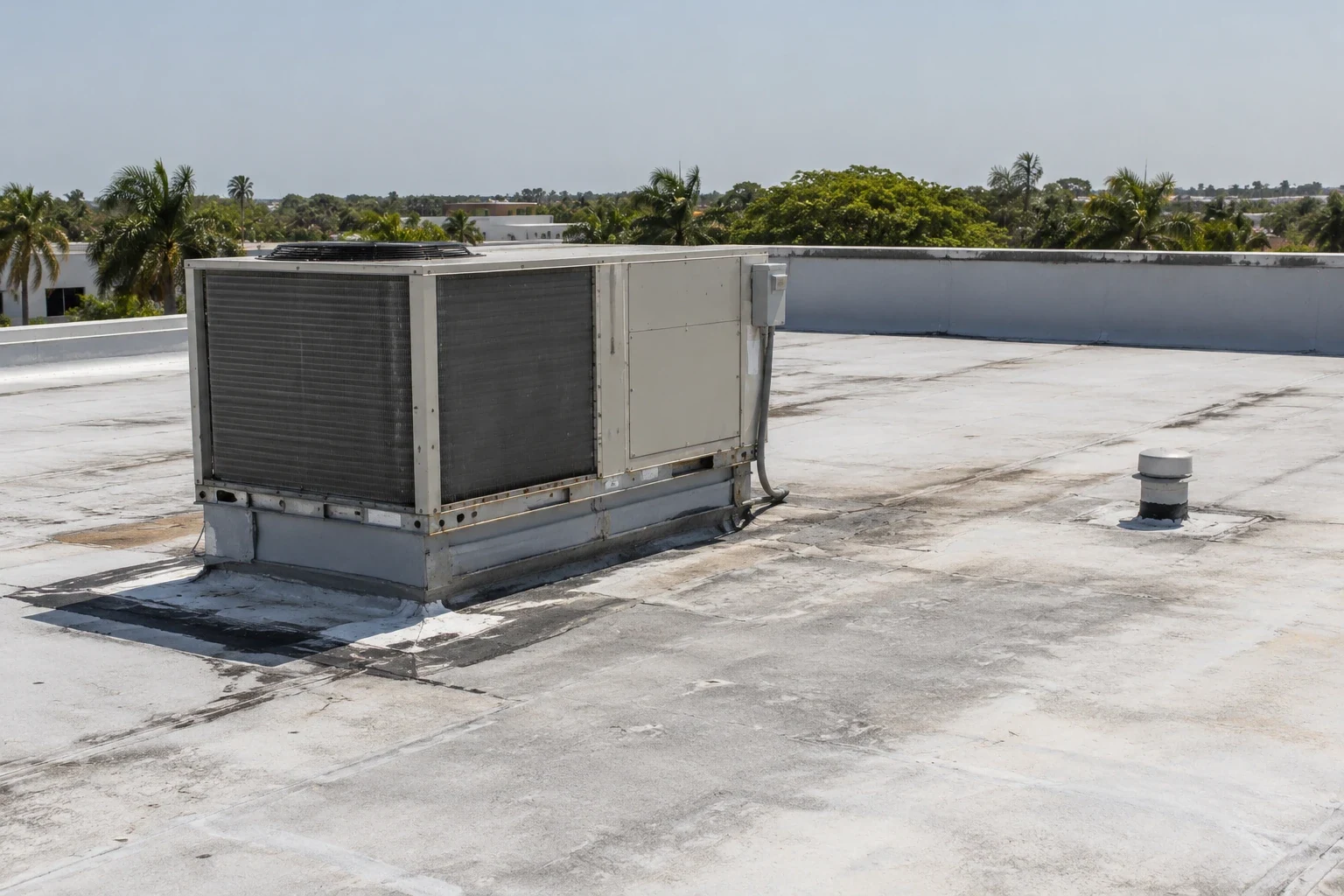
In Pasadena, TX, a commercial roof carries heat, UV, heavy rain and bay-side humidity every year. Membranes split at seams, flashing pulls away from walls, sealant dries out at penetrations. A split seam caught in spring is a one-day repair. The same seam found after a summer of afternoon storms often has wet insulation behind it. We write a repair scope that ranks each defect by what water will do next, then execute it in an order that protects the interior first.
Sort Every Defect by What Water Does Next
A roof survey usually turns up more items than the budget covers, so the order matters. We rank by consequence. An open seam failure over a production floor comes before a cosmetic blister over a storage room. Flashing at a parapet wall, where water can run straight behind the cladding, outranks a shallow scuff on a walk path.
Each item in the report carries a photo, a location on the roof plan, a likely cause and a repair method. Active leaks come first, then flashing failures, then membrane defects, then maintenance details. The facility director can approve the whole list or a first tier of it, with the rest scheduled for the next window.
Match the Repair Method to the Membrane
A good patch uses the same chemistry as the roof it is joining. Heat-welded thermoplastic membranes, like TPO and PVC, take hot-air welded patches on clean, dry surfaces. Cured rubber membranes accept splice tape and primer systems, and our EPDM roofing repairs follow the manufacturer's cleaning steps closely because a contaminated surface will not bond. Modified bitumen takes cold adhesive or torch-applied patches depending on what the building will allow.
Metal roofs call for fastener replacement, panel seam work and compatible sealant, not a coat of mastic over a loose screw. If the wrong material goes on, the repair may hold for a month and then peel. We confirm what the existing membrane is before we load a truck.
Schedule Hot Work and Access Around the Operation
Repairs are small, but the permit and safety steps still apply. Where heat is used for welding or torch detail, a hot work permit is issued and a fire watch stays on the roof after the last flame. Every crew member completes the site safety orientation, and each lift plan names where the lift goes and how material is staged.
Timing follows the building. A distribution building may want the roof work during the night shift, while a school wants it over a weekend. A refinery-adjacent office may close access during a turnaround, and we fit the repair around that instead of arguing with it. Material staging stays out of the drive aisles, and any tarp or temporary seal comes down at the end of each day or goes under written watch.
Weigh Repair Against Coating, Maintenance or Replacement
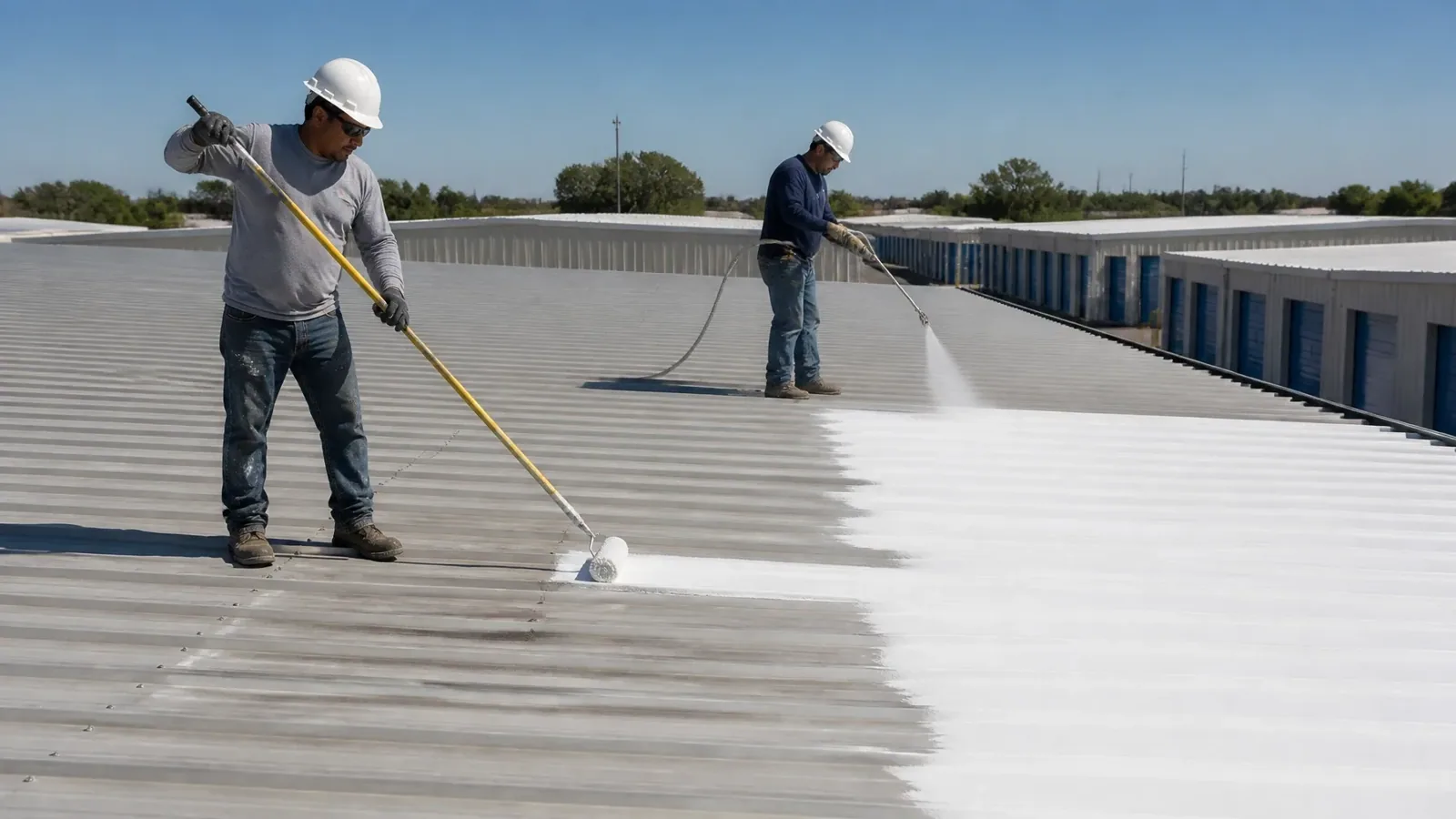
Not every roof should be repaired forever. When defects are scattered and the membrane has life left, repairs plus a preventive roof maintenance routine make sense. When the membrane is chalking and failing broadly but the insulation is dry, roof coating restoration can extend the roof's service at a fraction of replacement scope.
When the insulation is saturated, repair dollars stop earning their keep. We say so, show the survey, and help the owner plan the replacement into the capital budget instead of paying for a third round of patches. A repair scope that hides a replacement conversation does the owner no favors.
Repair for Heat, Ponding and Bay-Side Air
Pasadena sits between the Houston Ship Channel to the north and Galveston Bay to the southeast, and the air stays humid through the summer. Houston records about 102 days a year at or above 90 F, and it averages roughly 50 inches of rain, so membranes flex and dry out in an endless cycle. Seams and sealant take the brunt of it.
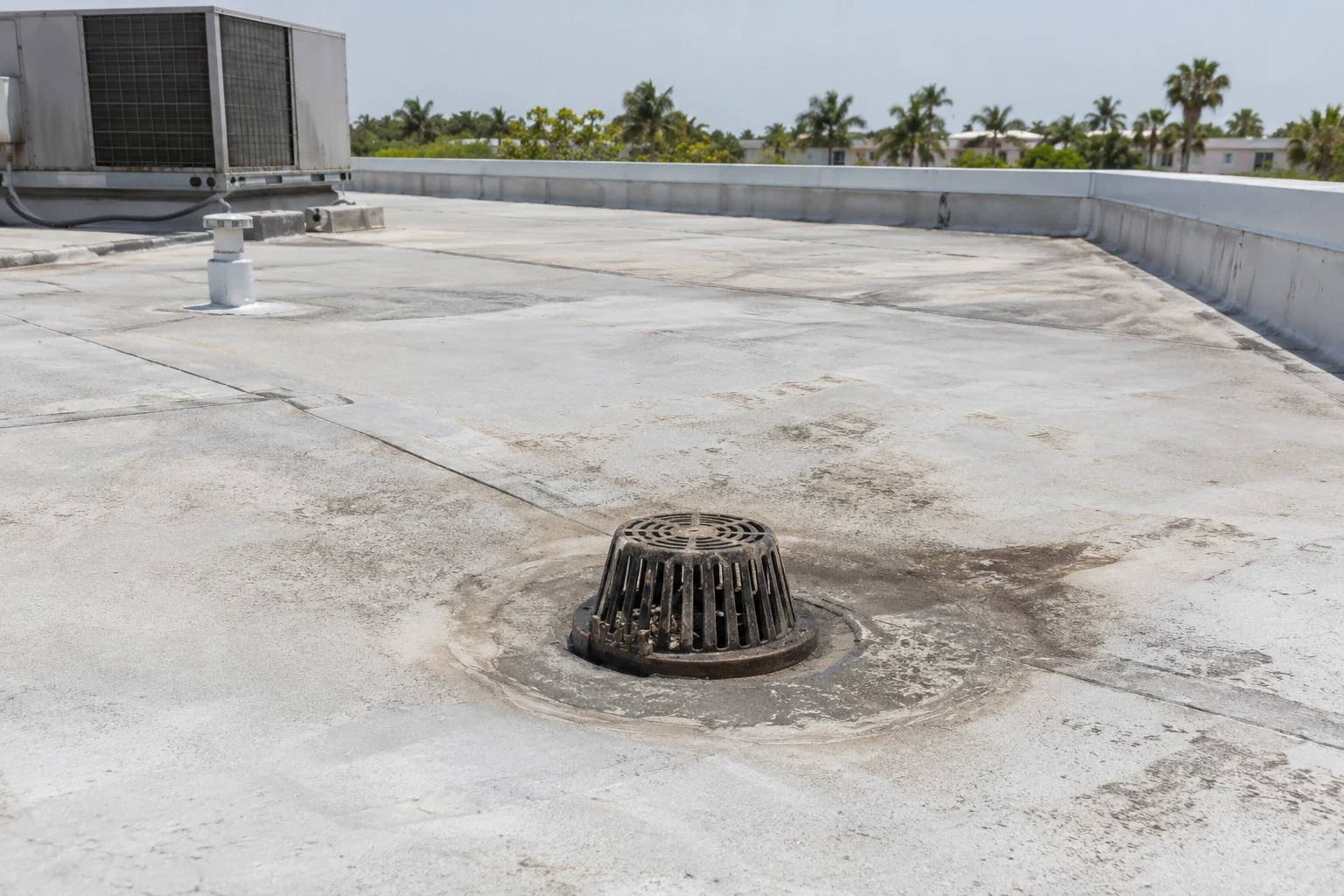
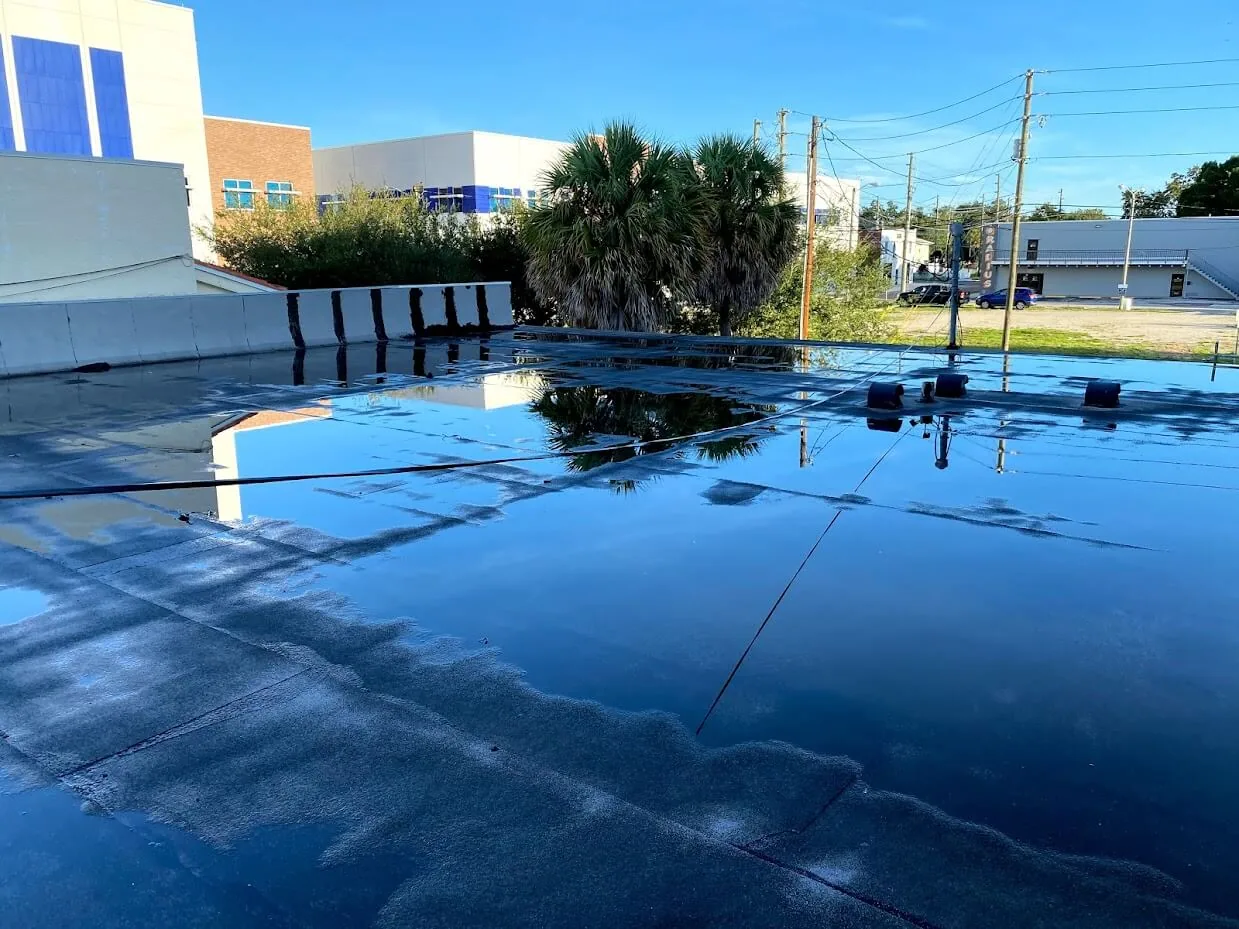
Ponding is the repeat offender. Water that stands for more than a day or two speeds up membrane wear and loads the structure, so a repair scope should include clearing roof drains and scuppers and checking whether low spots need ponding water repair. A patch next to a clogged drain will fail again by the next season.
Leave a Photo Record and a Watch List
After the last patch is cured, we photograph each repair against its entry in the report, so the before and after sit side by side. The facility team gets a short watch list: the two or three spots most likely to need attention after the first hard rain, and the interior ceilings worth checking. Nothing about it is complicated, and it saves a call in the middle of the night.
That record also feeds the next budget cycle. When the same detail keeps failing in the same place, the file shows it, and the owner can decide whether to redesign the detail instead of repairing it a third time.
Commercial Roofing Questions
Our plant has a turnaround coming in the spring. Should roof repairs wait for it?
Only the repairs that need the process shut down. Work over live process equipment, beside vents that cannot be isolated or under a hot work restriction fits best inside the turnaround, when the unit is down and the permits are already moving. Everything else, especially an active leak, goes ahead now, because a seam left open until spring has a full season of Gulf rain to work with.
A repair at the same roof drain has failed twice since summer. What changes on the third visit?
The question shifts from what to patch to why the water stays. We check whether the drain body has settled below the surrounding deck, whether the strainer keeps clogging, and whether wet insulation around the sump is softening the base of the repair. A patch beside standing water will keep failing until the water leaves, so the fix may be a tapered cricket or a reset drain rather than more membrane.
Tenants in our medical office building sit right under the leak. Will the repair disturb them?
Most repairs are quiet, with limited fumes and no open deck, so many tenants never notice. For spaces that cannot take any disruption, such as an exam room or a lab, we schedule off hours, protect the air intakes, and use low-odor materials where the manufacturer's system allows them.
A classroom wing starts leaking in October. Repair it now or wait for summer break?
Water inside a school does not wait for the calendar. The active leak gets a permanent repair now if the weather allows, or a temporary seal and a scheduled return if it does not, with the noisy steps kept to evenings and weekends. Larger work the survey turns up, such as a section that needs replacing, is then planned for the summer window when the building is empty.
The roof is still under a manufacturer warranty. Who should make the repair?
Read the warranty terms before anyone climbs up. Some manufacturers require repairs to follow their approved details or to be made by an approved installer, and an off-spec patch can hand them a reason to question a later claim. We read the terms first, follow the manufacturer's repair details and photograph each patch so the roof's file stays complete.
Keep Reading
Related Roofing Work in Pasadena
Walk the Roof and Rank the Repairs With Us
Tell us how the building runs and where the leaks or stains appear. We will walk the roof with your facility director, rank every defect, and schedule the repair work into the windows that suit your operation.