
Roof Systems
Built-Up Roofing (BUR) in Pasadena, TX
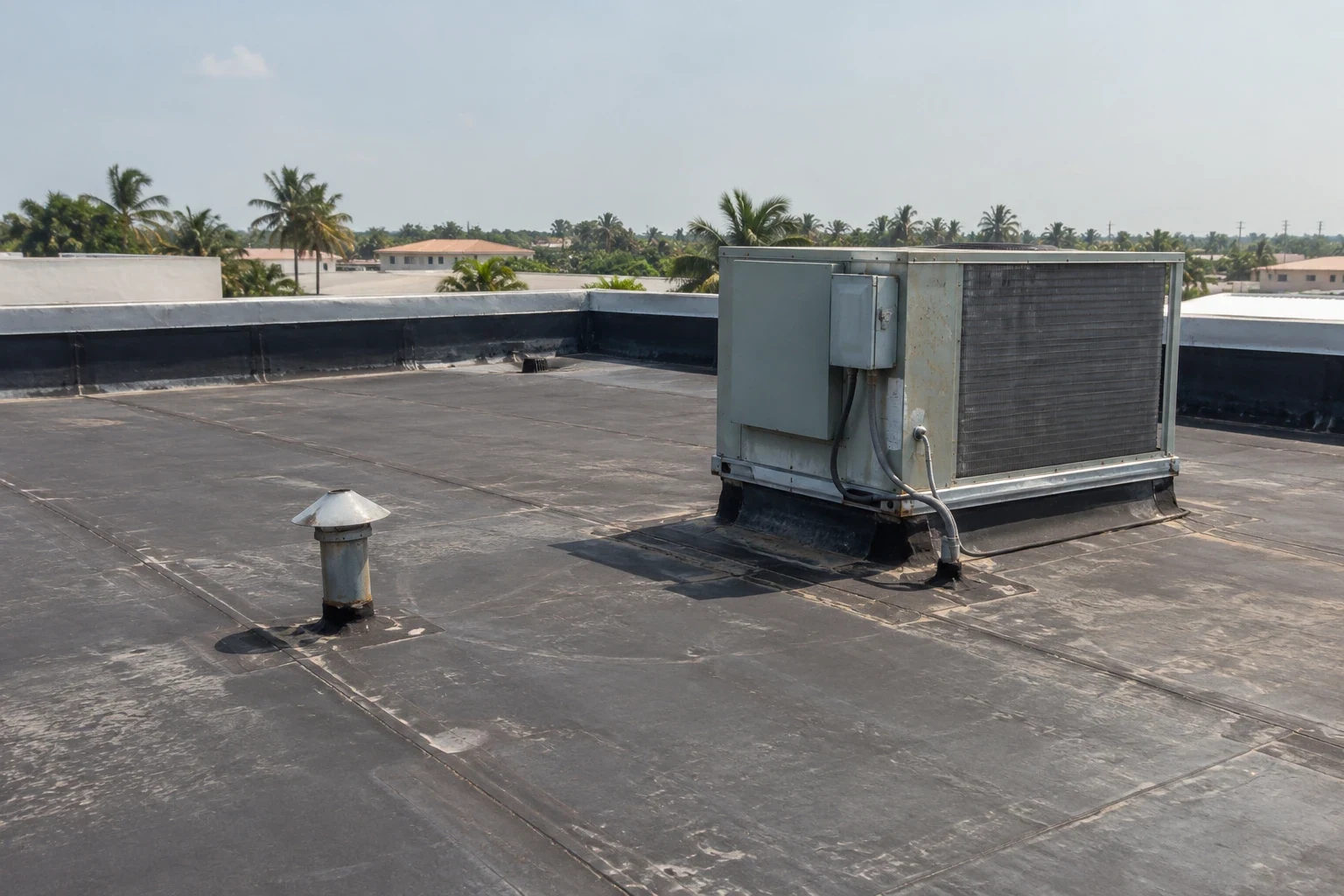
A control building at a Ship Channel plant does not look like much from the road, but nobody inside wants a drip over the electronics, and technicians walk its roof all year to reach the vents, the conduit and the antenna mounts. That kind of roof needs layers, not a single sheet. Built-up roofing, usually shortened to BUR, stacks several plies of reinforcing felt, each one bonded with hot asphalt or cold-applied adhesive, and finishes with a cap sheet, a mineral surface or a layer of gravel.
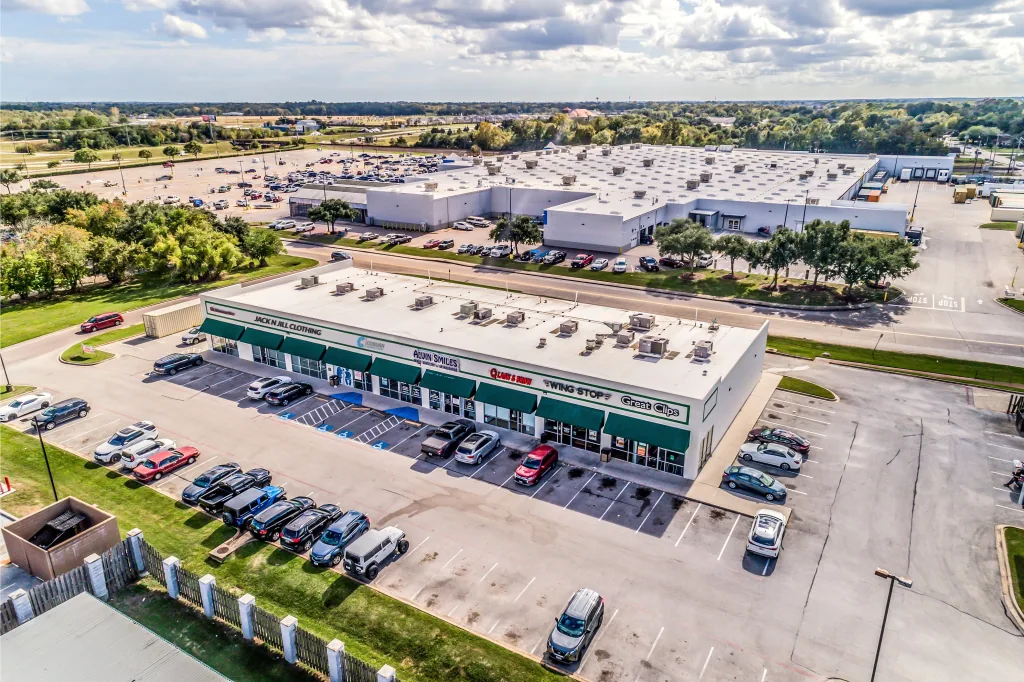
It is a slow roof to build and a stubborn one to wear out. Pasadena, TX has industrial plant buildings and medical campuses where that profile applies: crowded penetrations and steady rooftop traffic. We maintain existing BUR roofs and install new ones where the traffic and the building justify the extra work.
Count the Plies Before Counting the Years
A built-up roof is read in cross-section. The deck, the insulation, the cover board, a base sheet, two or more reinforcing plies and a top surface each play a role. Because the plies overlap and are bonded to each other, a single puncture rarely creates a direct path to the deck. That redundancy is why BUR earned its reputation on busy rooftops.
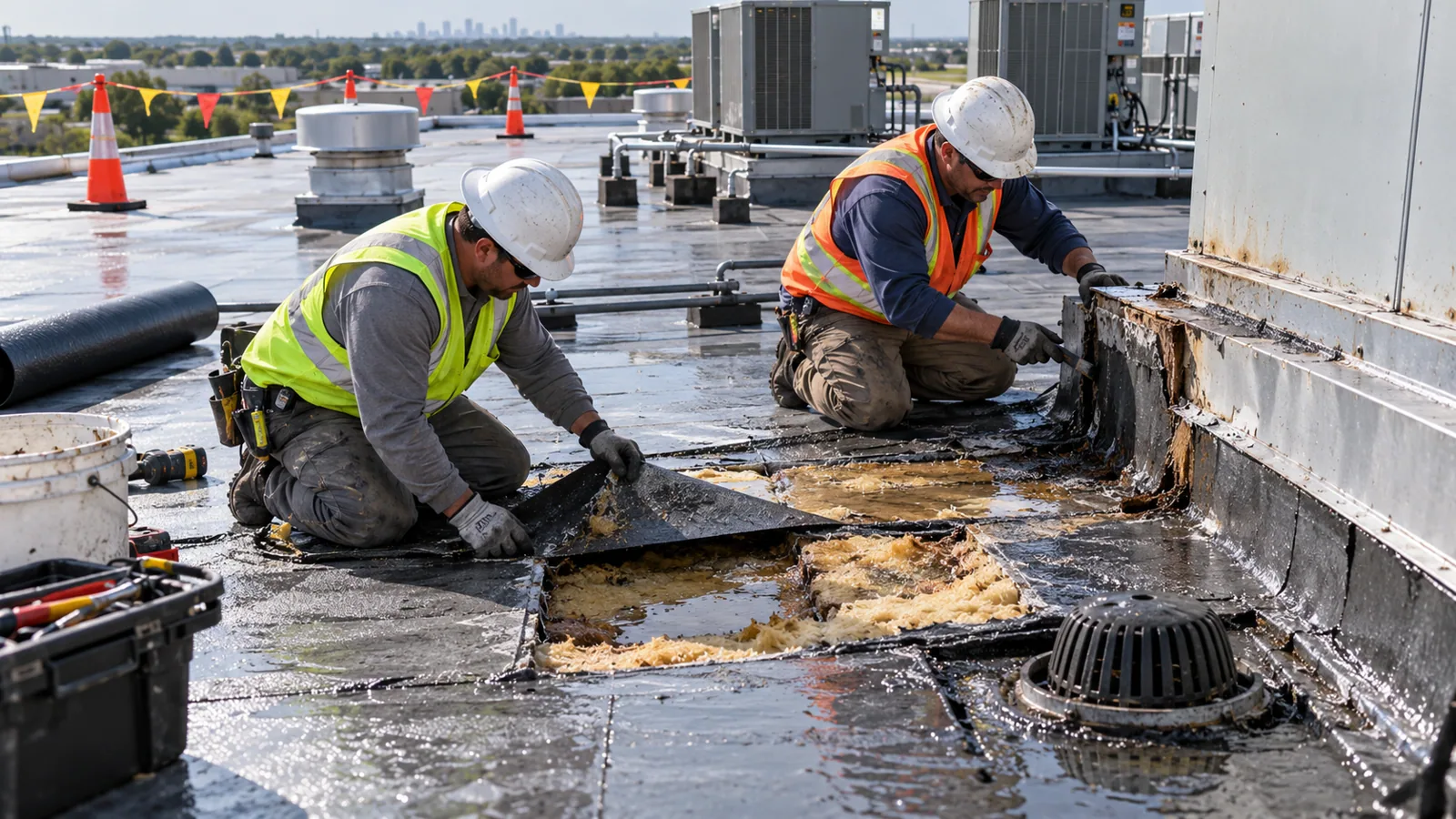
When we survey an existing roof, we cut a small core to count the plies, check the bonding and look for moisture between layers. The core shows whether the roof has aged evenly or has hidden trouble. Core cuts also feed the decision about modified bitumen roofing as a replacement system, since a modified sheet keeps a layered feel with a faster installation.
Place the Kettle and the Fire Watch Before the Crew Arrives
Hot asphalt is heated in a kettle at ground level and carried to the roof through a hoist or a pumped line. That heat, and the fumes, drive the planning. The kettle location has to clear air intakes, parking, fuel storage and pedestrian routes, and the hot work permit, fire watch and site safety orientation have to be in place before it is lit.
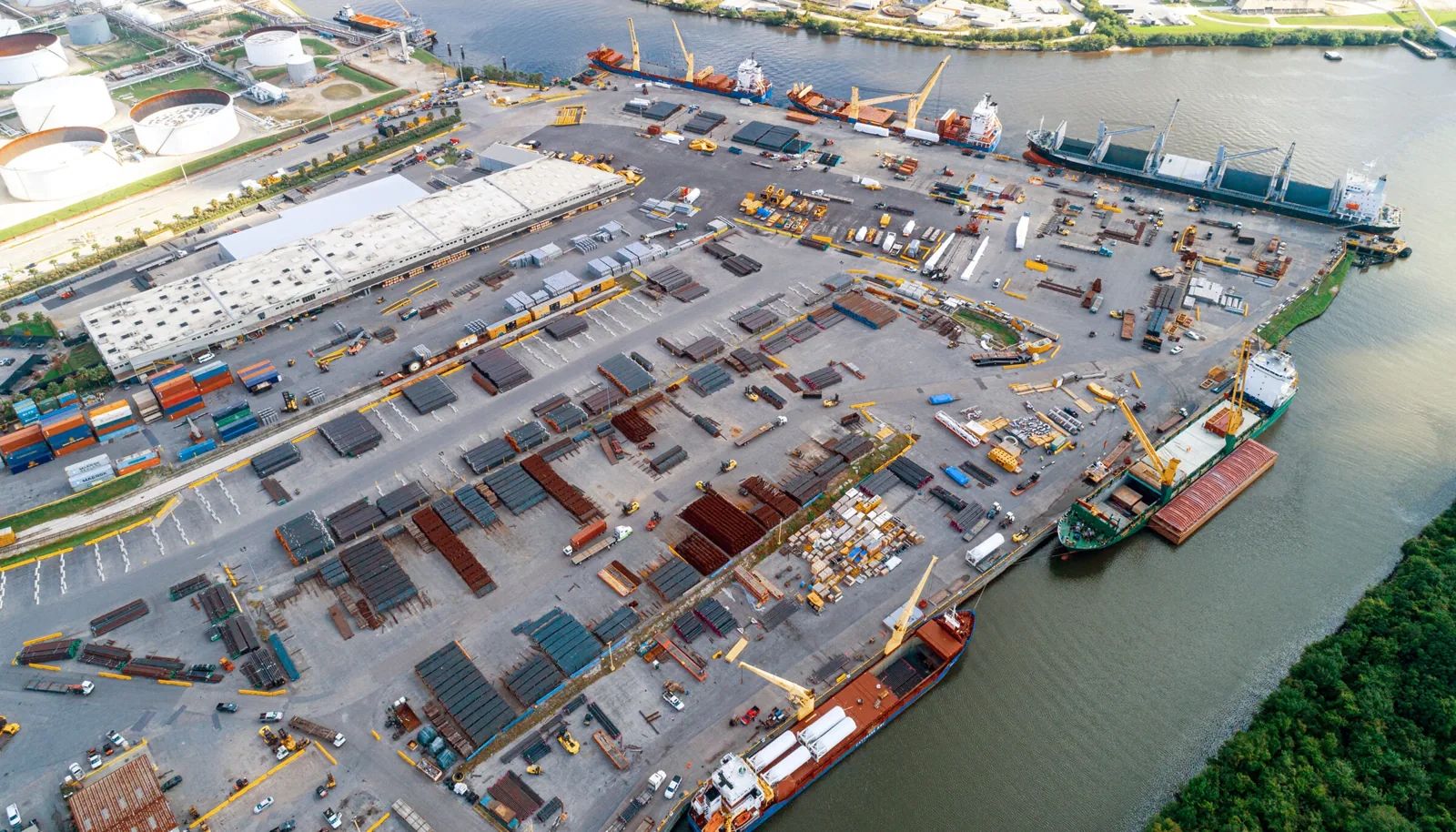
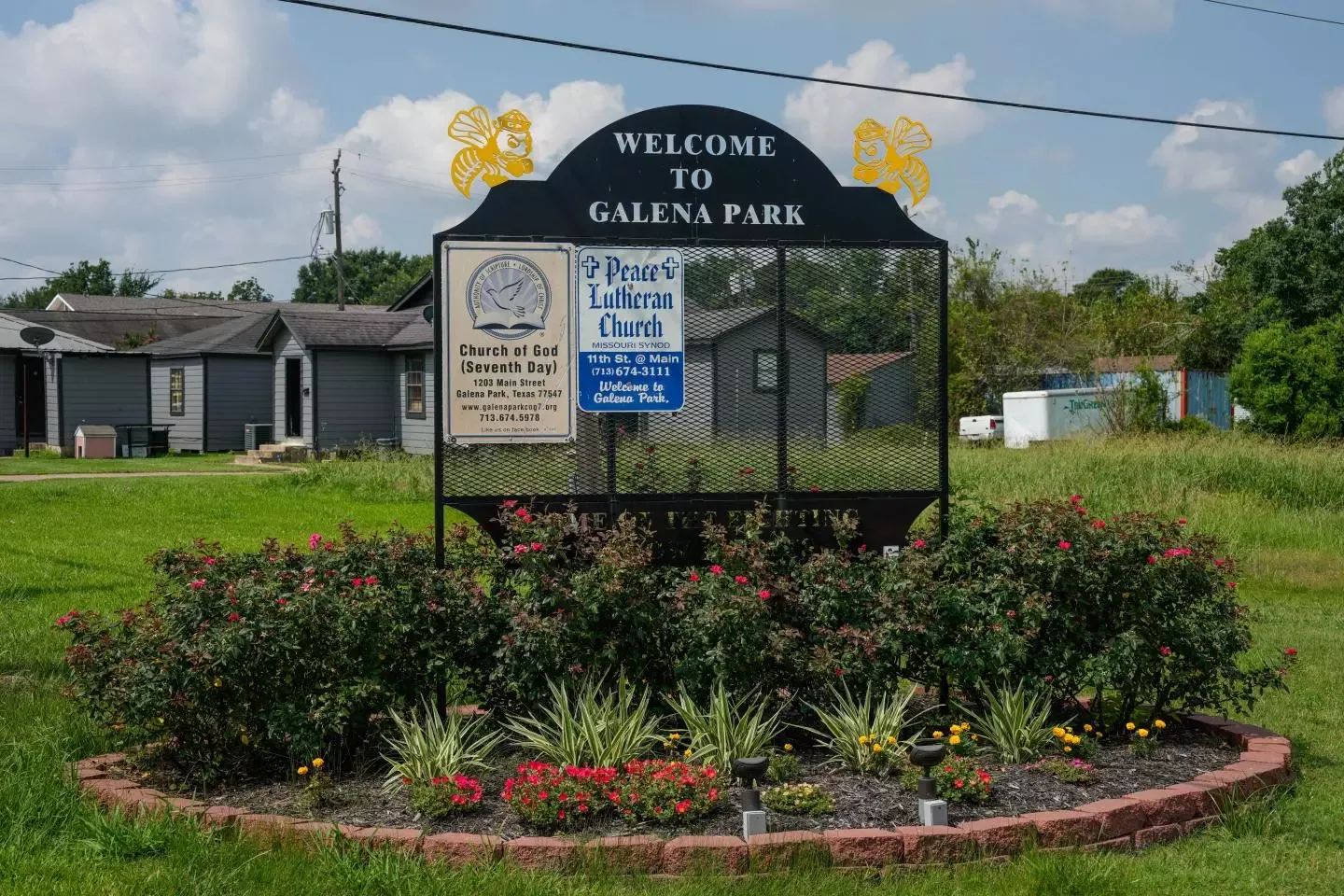
Industrial neighborhoods add their own rules. In Manchester, a six-square-mile community beside the Ship Channel with operations by Goodyear, LyondellBasell and Valero, and in Galena Park, a petrochemical and refinery center since the early 1900s, kettle placement can be limited by neighboring hazards. Where hot asphalt is not allowed, cold-applied adhesives take its place, and the schedule shifts to match the slower cure.
Decide What Happens to the Gravel
A gravel-surfaced BUR roof carries a layer of stone that shields the asphalt from sun, adds fire resistance and spreads foot traffic. It also makes a mess in strong wind. The May 2024 derecho and a June 2023 storm line that set a 97 mph gust record at Bush Intercontinental showed what a Gulf Coast gust can do, and loose aggregate becomes a projectile at that speed.
Near an airfield, loose stone is worse. Ellington Airport covers 2,362 acres with three concrete runways, and on a roof in the Alvin area, loose stone is an aviation hazard. Smooth-surfaced cap sheets, coated surfaces or gravel embedded in the bitumen all solve the problem. We confirm the surface choice against wind exposure and adjacent properties before the roof is specified.
Check the Deck Before Adding Weight
BUR is heavy. Multiple plies of felt, hot asphalt and a gravel surface add real load, so the deck has to be sound. On steel deck, corrosion can thin the metal beneath a leak, and bay-side humidity does not slow it. On a wood or concrete deck, rot and spalling can hide below the insulation. We look at the underside of the deck wherever access allows and probe the top side during tear-off.
If the old roof is dry and the structure can carry more, a roof recover may be possible over a cover board. If layers have already accumulated, or the deck is compromised, a full tear-off is the safer plan. Either way, the decision is based on measurements, not on how the roof looks from the ladder.
Trace Blisters and Ponding Through a Wet Year
Houston's rain adds up to roughly 50 inches a year, falling on about 104 days and peaking in June, so water will often sit on a flat BUR roof. Standing water leaves its mark as algae, ridging and a darkened, slick surface. Blisters mean trapped moisture or air between plies, and alligatoring means the asphalt has aged and cracked.
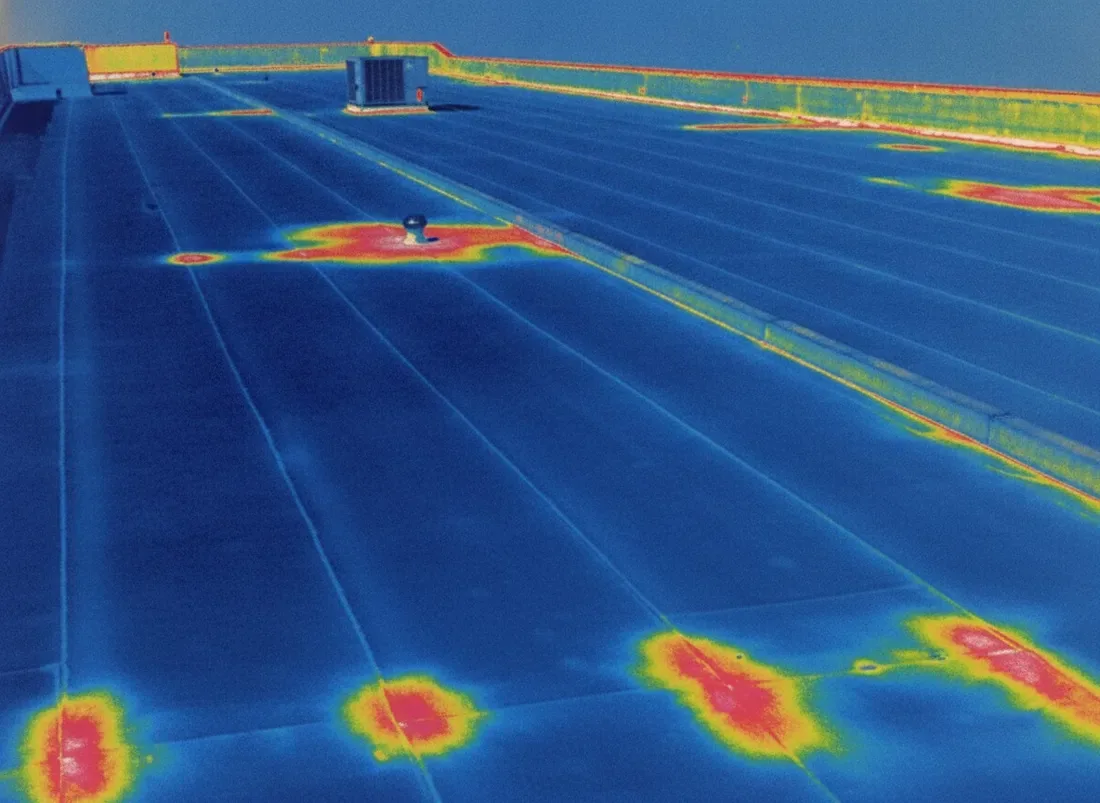
We run an infrared moisture survey to find wet insulation, mark the blisters that should be cut and repaired and note any slope problems that keep water on the roof. A blister repair that goes over wet insulation will return. Fixing the source first protects the owner's money, and the survey map is the record that shows the choice was made on evidence.
Plan the Replacement Date Before the Leak Picks It
Even a durable roof has an end date. A building owner who tracks the condition of every BUR roof can budget a replacement on purpose instead of on an emergency basis. Our written condition reports record ply count, surface condition, drain performance and moisture, and they put a rough replacement window on a calendar.
That plan belongs in the owner's roof capital planning file, where the roof's age and condition sit next to the budget. When the time comes, a commercial roof replacement can keep BUR, move to a modified bitumen sheet, or switch to a single-ply membrane. The right path depends on traffic, hot work limits and the building's tolerance for odor and noise.An EPDM roofing option uses a different sheet and seam approach, so the deck and repair history matter in the comparison.
A BUR evaluation should identify the deck capacity, existing ply count, surfacing, and areas where the bitumen is brittle or displaced. Core samples can clarify the assembly, but each test opening needs an approved patch detail and a record of what the cut exposed. Before kettle work, map hot-work boundaries, fire-watch coverage, hose routing, and the location of combustible materials. Discuss odor and access impacts with occupants, especially where outdoor air intakes could draw in fumes. The closeout file should show the installed plies and aggregate or cap surface by zone. Those details help the owner compare future repair, recover, and replacement options.
Commercial Roofing Questions
Is built-up roofing still a sensible choice when single-ply is so common?
For roofs that see steady foot traffic and a crowd of penetrations, yes. The layered construction gives it staying power under boots and tools. For a clean, lightly used roof, a single-ply sheet is lighter and faster to install, so we compare both on the specifics of the building.
What are the bubbles on my gravel roof, and should I worry?
Blisters are pockets where moisture or air has pushed plies apart. Small ones that are intact can wait for monitoring, but large or split ones let water into the insulation. We mark every blister, cut and repair those that are active and record the others for follow-up.
Does the smell of hot asphalt travel into the building?
It can, which is why intakes get mapped, sealed or shut down for set hours before the kettle is lit. We also keep the kettle and the fuel tank away from the building face. Where fumes are not acceptable, cold-applied BUR assemblies are available.
Can an old gravel roof take a new membrane over it?
Sometimes. The gravel must be removed or covered with a suitable board, and the old plies must be dry and well-bonded. Moisture mapping and core cuts come first, and a deck check follows. If anything fails those tests, a tear-off becomes the recommendation.
How should I choose between staying with BUR and switching systems at replacement?
Start with the traffic on the roof and the operation inside the building. Heavy rooftop access and many penetrations favor layers, while an uncluttered roof can use a lighter membrane. Hot work rules, odor limits and the structure's weight allowance narrow the field further.
Keep Reading
Related Roofing Work in Pasadena
Let Us Cut a Core and Count the Plies With You
Tell us the building, the roof's history and the rooftop traffic. We will walk the roof with your facility director, pull the evidence and plan the next step around how the site runs.