
Roof Damage Repair
Wind Damage Roof Repair in Pasadena, TX
A plant on a turnaround cycle books its contractors months ahead, and a gust front never reads that calendar. When wind lifts a membrane edge on a production building in Pasadena, TX, the roof turns into a second job that competes with the first one for crane time, safe access and the few days a unit is down. Wind repair goes well when the sequence is settled before the next squall line builds off Galveston Bay.
Wind seldom removes a whole roof. It opens one corner, bends a length of edge metal, works a few fasteners loose or shoves a run of ballast out of place, and the next rain does the rest. Our first visit maps what moved. Then we write a ranked plan that stops water first and rebuilds the securement second.
Read the Roof for Where the Gust Got In
Houston-area wind does not need a hurricane to hurt a roof. A squall line on June 21, 2023 clocked 97 mph at Bush Intercontinental Airport, the strongest gust ever logged there and above the 82 mph that Ike set. On May 16, 2024 a derecho blew across Greater Houston with about 100 mph winds estimated downtown. The June squall line damaged buildings across Harris County, and the derecho blew out high-rise windows downtown.
We start at the windward corners and the long edges, because a gust enters where the membrane is attached least well and the air pressure is highest. From there we trace the damage inward: a ridge of wrinkled membrane, a peeled cap sheet, a row of exposed fastener plates. The path of the damage usually shows how the wind moved across the building, and that path tells us how far to open the roof.
Rank the Failures by How Far Water Can Travel
A wind loss produces a long punch list, and not every item threatens the interior equally. We rank each defect by what the next storm can do with it.
- Open corners and torn membrane, where rain reaches insulation and decking at once.
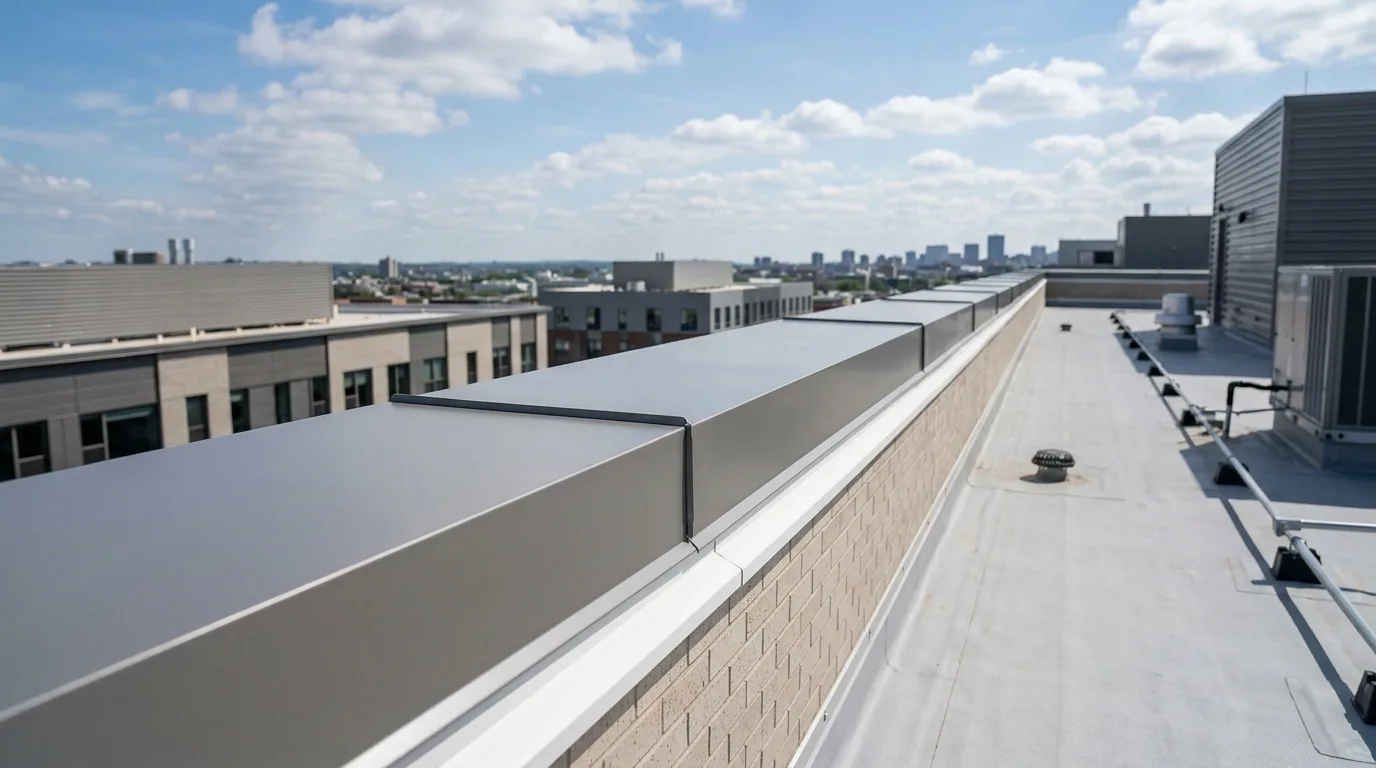
- Displaced edge metal and coping, which exposes the membrane termination and invites a second round of uplift.
- Rooftop equipment panels, hood covers and curb flashings that were knocked loose and now funnel water into the building.
- Fastener pull-out or adhesion loss in the field, found by probing and by pull checks rather than by eye.
- Ballast or loose-laid sheet that has shifted, leaving bare membrane exposed to sun and debris.
Anything in the first three groups gets a temporary dry-in the same day we find it, with mechanical attachment that can hold in a gust, not a smear of mastic.
Stage the Crane Pick and Material Around the Dock Work
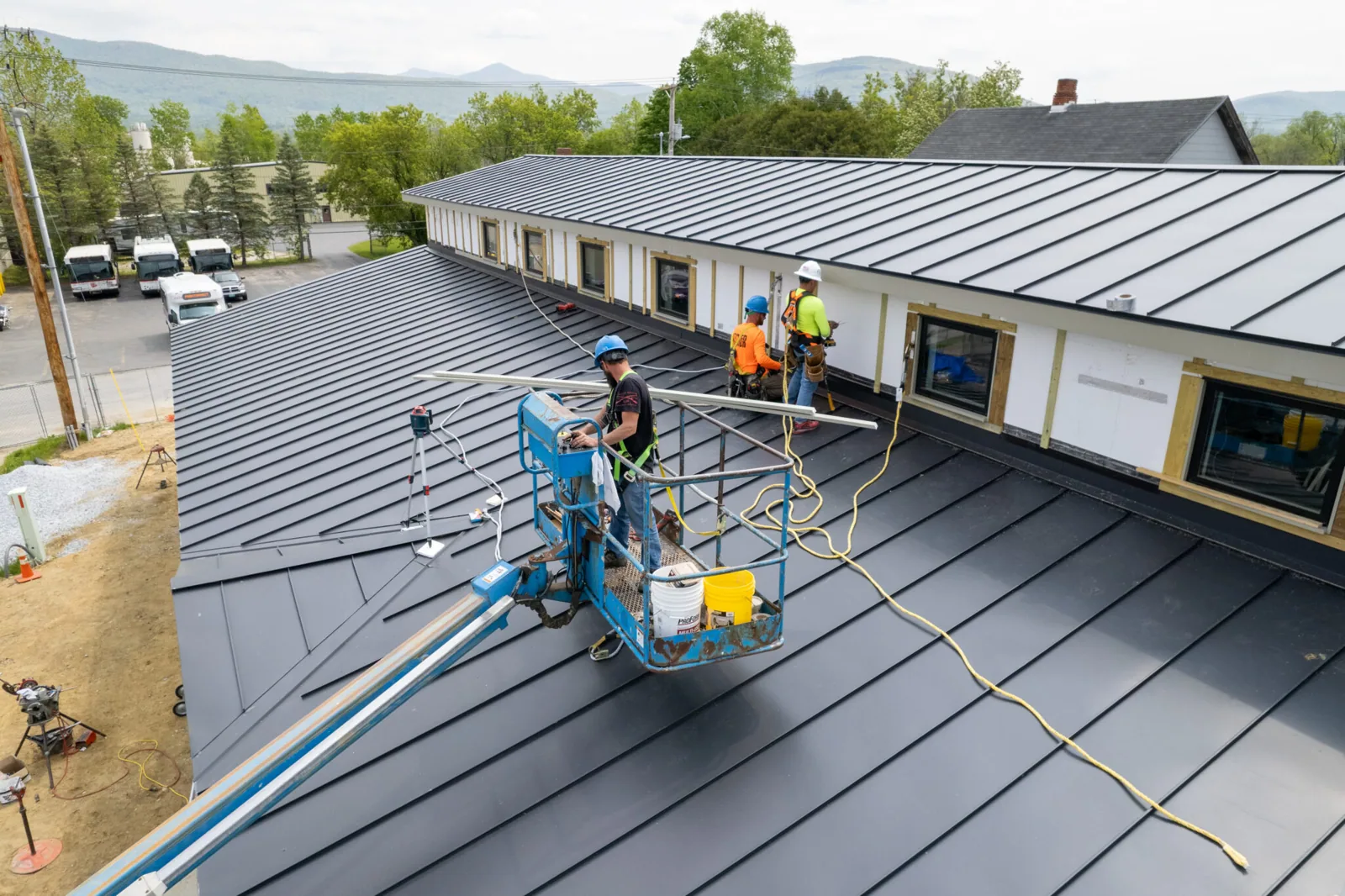
At a distribution building the trucks do not stop for a repair, and at a plant the permit office is already juggling hot work requests. Perimeter repair crews also need the part of the site everyone else uses: the apron beside the dock doors and the access lanes along the walls. So the lift plan comes first. We pick the laydown area, fix the crane location away from forklift routes, and confirm what the site safety orientation requires before a single roll of membrane leaves the truck.
Where the schedule allows, we move the loud and staged parts of the work to a night shift or a weekend window and keep the day shift to inspection and dry-in. The rule that governs reroofing an occupied building applies to wind repair too: close off only the section being worked, dry it in before the afternoon storms, and move on.
Rebuild the Perimeter Securement Before the Season Turns
A repair that only replaces what blew away invites the same loss at the same corner. Once the damage is mapped, we look at why this edge failed. Sometimes a fastener pattern was thin along the perimeter. Sometimes an older edge detail never matched the membrane that replaced it, or the substrate had gone soft. Sometimes the metal panels lost clips at an eave and started working loose from the structure.
The permanent repair puts denser attachment into the perimeter and the corners, replaces compromised edge metal with correctly fastened sections, and adds cover board or new adhesion where the substrate needs it. In the Bayport Industrial District, which sits beside the Bayport Terminal in the Galveston Bay wind zone, roof work on the east side of SH 146 falls under the Texas Windstorm Insurance Association rules and is inspected through the Texas Department of Insurance windstorm program if the building is to stay insurable.
Record the Loss While the Evidence Is Still on the Roof
Carriers ask which event caused which damage, and a roof that has seen a derecho, a hurricane and an ordinary thunderstorm in the same few years makes the answer harder. We photograph each defect before anything is touched, mark it on a roof plan, and note the wind direction that fits the pattern. That record supports the work of claim documentation and separates fresh damage from older wear.
The same file helps with the repair itself. If a nearby tornado path is part of the story, such as the January 2023 storm that crossed Fairmont Parkway, a separate set of tornado damage notes keeps the two events from blurring. When a hurricane is also in the record, the roof gets the wider review that hurricane damage demands, and a leak that cannot wait is handled through emergency roof repair first.
Commercial Roofing Questions
How can I tell wind damage from a roof that was already tired?
Pattern gives it away. Fresh wind damage clusters at corners and along the windward edge, with creased membrane, bright metal where a cap lifted and clean tear edges. Older wear spreads evenly, with dirt in the cracks and weathered ends. Photographing both zones separately lets the carrier see where one stops and the other starts.
Our building sits inland from the bay. Does it still need wind-focused repair?
The 2023 and 2024 storms show why it does. The June 2023 squall line recorded its 97 mph gust at Bush Intercontinental Airport and damaged buildings across Harris County, so an inland warehouse off Beltway 8 sees the same uplift forces at its corners as a building near the water. Repair detailing at the edges matters on both.
Can the loading docks stay in service during perimeter repairs?
Usually, yes, with some limits. We schedule edge work away from active dock doors, set barriers and spotters where trucks swing wide, and complete one wall at a time so only part of the apron is affected. If a dock must close for a crane pick, that happens in a planned shutdown window rather than during peak shipping hours.
What does a temporary repair need in order to survive until the permanent one?
Mechanical attachment, first of all. Sealant and tape alone often peel in the next gust, which makes the loss bigger. We secure torn membrane with fasteners and battens or temporary sheet pinned beyond the damaged area, then check it again after the first rain so the permanent repair starts from sound material.
Who separates this loss from earlier storm damage on a claim?
The dated photo record does most of that work. We document the roof condition at each visit, including areas that look fine, so a later adjuster can compare conditions before and after a specific event. Keeping those visits on file also helps when an owner has more than one storm on the same roof.
Keep Reading
Related Roofing Work in Pasadena

Walk the Perimeter With Us After the Gust
Tell us how the building runs and where the damage is. We will walk the edges with your facility director, rank the repairs, and set a plan that fits your dock schedule or shutdown window.