
Industries We Serve
Roofing for Property Management Companies in Pasadena, TX
A management company does not own the roofs it answers for. The owner holds the title, the tenant holds the lease, and the manager holds the phone that rings before seven when a ceiling tile lets go over a break room. Roofing for that manager has to work for all three at once, and it has to leave one clean set of records that any of them can pick up.
The buildings on that phone list sit along arteries such as Spencer Highway, Fairmont Parkway and the Beltway 8 corridor in Pasadena, TX. Each one arrives with its own tenant mix, its own rooftop units and its own history of patches nobody labeled. We plan the roof work the way a manager plans a month: which leak belongs to which suite, which approval has to reach which owner, and which building can wait a budget cycle without taking on water in the meantime.
Sort the Work Orders Before Anyone Climbs the Ladder
Leak calls reach a manager in the tenant's words: a stain, a drip, a smell, a flickering light. By the time they reach a roofer they have lost the building, the suite and often the date. So the first job is a sort. We pull a building's open work orders, plot every one on a roof plan, and look for the pairs that sit under the same drain, the same curb or the same seam. Four complaints from four suites often turn out to be one failed flashing.
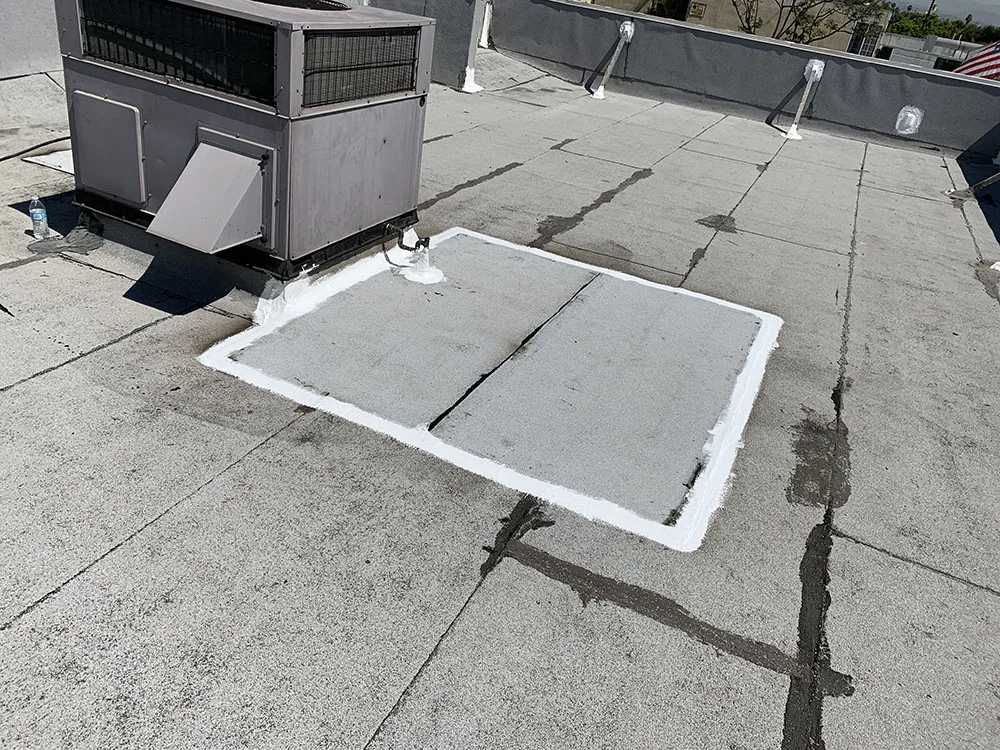
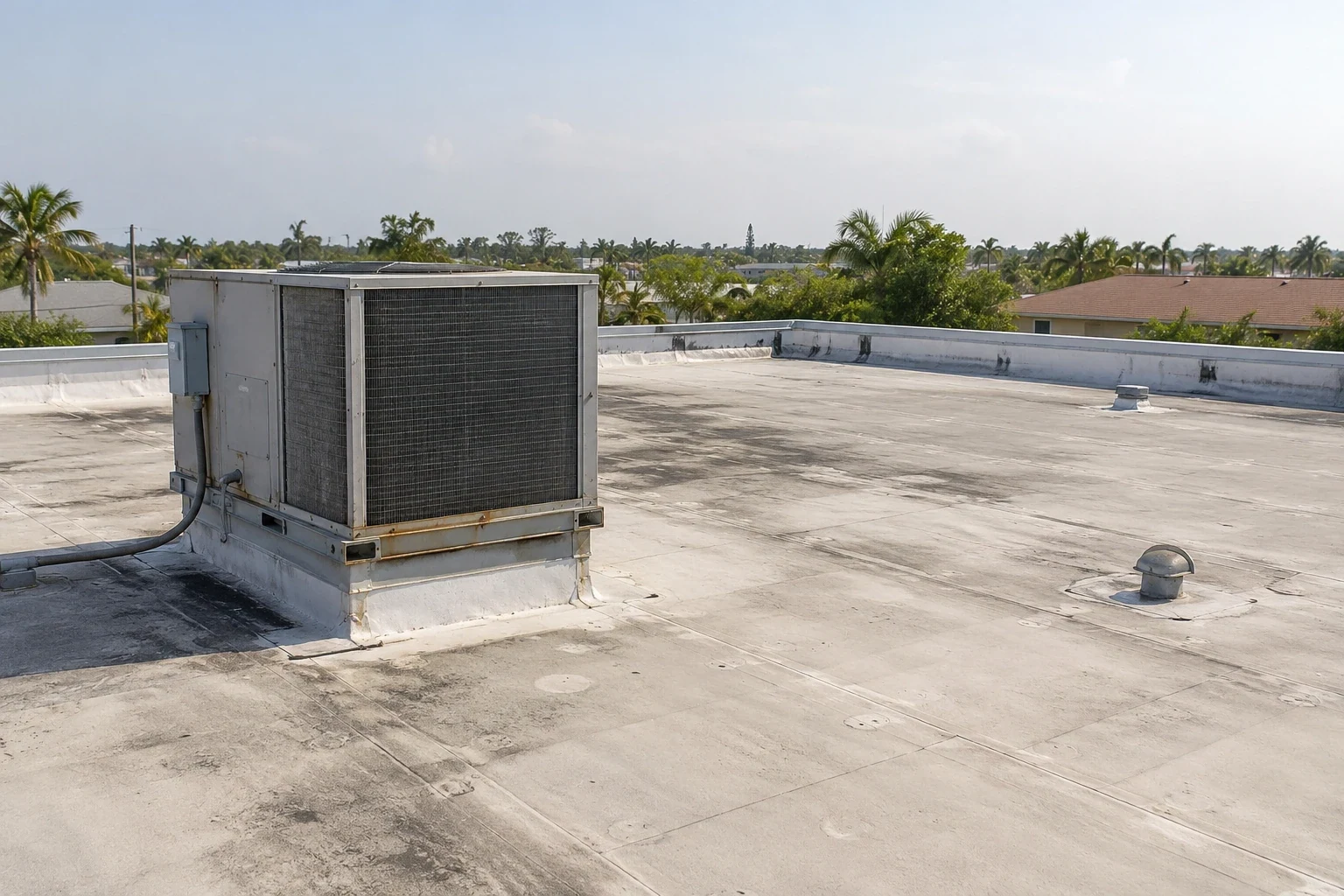
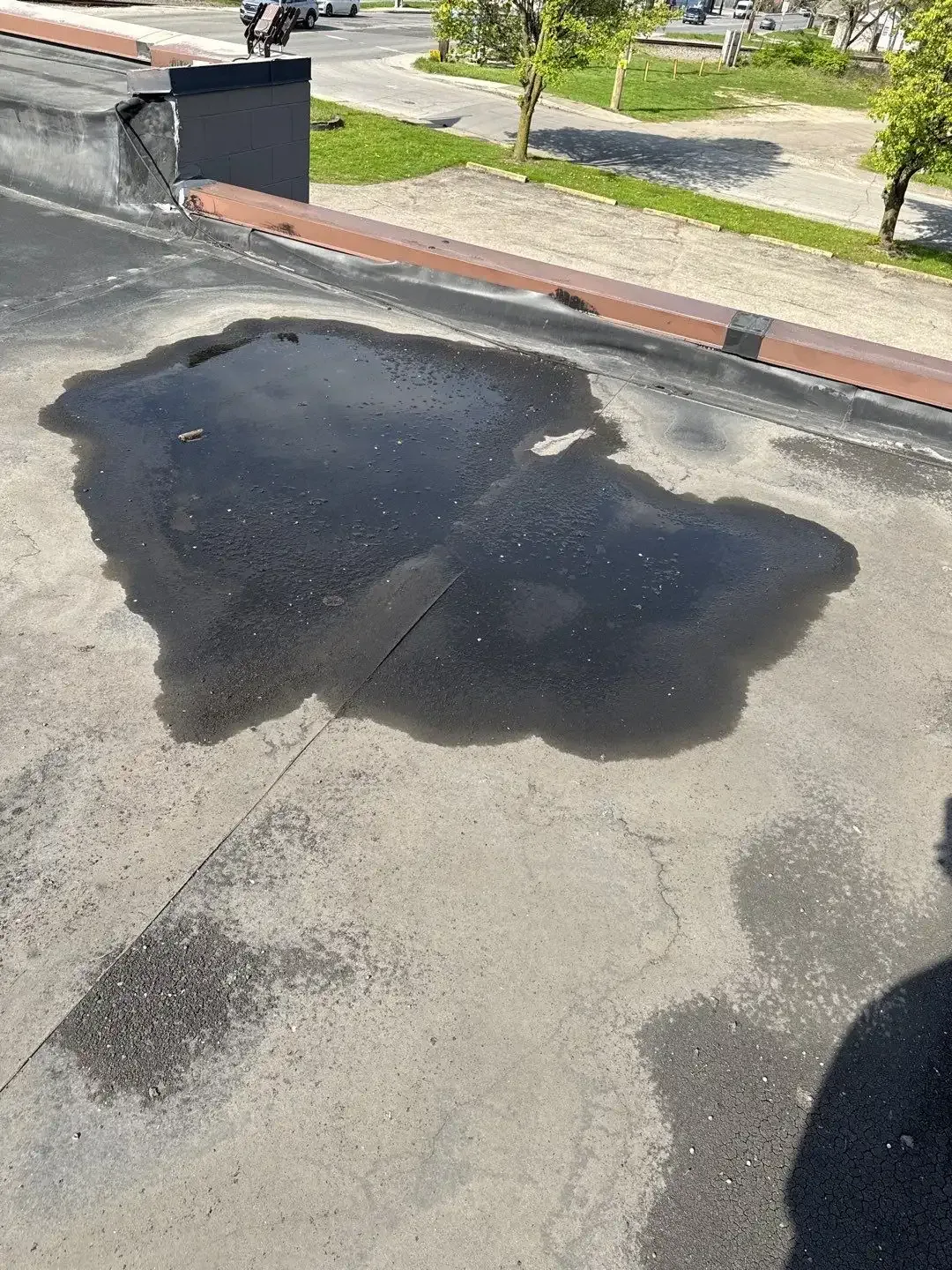
That sort also separates roof defects from everything the roof gets blamed for. A rooftop unit with a clogged condensate line stains a ceiling the same way a split seam does. A commercial roof leak repair visit that starts at the plan, not at the stain, finds the cause on the first pass and spares the manager a second tenant call.
Write Scopes an Owner Can Approve From the Inbox
Owners rarely visit their roofs, and they approve what they can read. A scope that lands in a manager's inbox should show each roof area with photographs, the condition we found, the repair or replacement we recommend, and the cost drivers behind it: deck condition under the membrane, the extent of wet insulation, the penetrations that need new flashing, and what access costs on a building with tenants below.
We split the work into tiers: stop the water now, correct what will fail within the year, and plan what belongs in a later budget. A written roof condition report carries that structure for every building, so the manager forwards one file instead of a thread. Where an owner wants options, we price the repair beside the coating and the replacement and say what each one buys.
Notify Tenants and Keep the Loud Work Off Their Clock
Tenants judge a roof project by what reaches their suite. A retail tenant notices a lot closed to customers. An office tenant notices a drill overhead during a client call. A restaurant notices dust near its exhaust fan. We ask the manager which suites carry those sensitivities, then build the sequence backward from them: the loud tear-off on mornings before opening, the fastening away from conference rooms, the laydown area and material staging kept off the customer parking rows.
Notices go out ahead of mobilization in plain words, with dates, hours and a phone number that reaches someone on the roof. Work on occupied buildings goes better when the tenant hears about it from the manager first and not from the sound of a crane pick. Where a tenant cannot tolerate daytime noise, a night shift is priced as its own line, so the owner sees the tradeoff and chooses it.
Spread the Capital Work Across Budget Years
A portfolio never needs every roof at once, though it can feel that way after a storm. The order comes from condition, not from age alone. An older roof with dry insulation and clear drains can outlast a younger one with a trapped leak, so we pair the hands-on walk with infrared and drone passes where the surface is hard to read. Wet insulation moves a building to the top of the list. A sound roof with surface wear moves toward coating or maintenance.
The result is a multi-year sequence a manager can defend to an owner: replace these, restore those, maintain the rest, and revisit in a set month. That is the working core of roof capital planning, and it keeps a surprise from pulling money away from a tenant improvement already promised. Owners who hold buildings as investments, including real estate investors and REITs, read the same plan as a reserve schedule.
Stage Every Building for the Next Gulf Storm Season
Pasadena managers have seen enough weather to keep a checklist. The January 2023 EF3 tornado crossed the Fairmont Parkway corridor at roughly half a mile wide and damaged businesses along its path. The May 2024 derecho put Greater Houston through winds that surveyors put near 100 mph downtown, and Beryl arrived that July with its eastern eyewall over the area. Before each season we clear the drains, secure loose edge metal and equipment covers, and photograph every roof so a dated picture exists for each building.
The checklist also records which buildings sit east of SH 146. In that part of Pasadena, and in Shoreacres, Morgan's Point, La Porte and Seabrook, roofing work falls under the Texas Windstorm Insurance Association area, and the Texas Department of Insurance windstorm inspection has to pass for the building to stay insurable. After a storm, those photographs turn a claim conversation into a comparison. Roof insurance claim assistance starts there, and so does any call with the insurance and restoration professionals the owner brings in.
Commercial Roofing Questions
A tenant reports a stain in the same ceiling spot every spring. How do we tell whether the roof or the rooftop unit above is at fault?
Rain timing separates them. A roof leak shows up during or soon after a storm, while a condensate line or unit curb problem tracks the cooling season and appears on dry, humid days too. We read the stain against the weather log, then check the unit's drain line, the curb flashing and the nearest seam in that order. If the unit is at fault, the photographs go to the HVAC vendor with the finding.
Who pays when a tenant's HVAC contractor damages the membrane?
The lease language assigns that cost, and the roof file is what supports the claim. Photographs taken before a service visit and after it show whether the damage is new, and they also keep a manufacturer's terms intact, which is the practical side of roof warranty management. We walk off the roof after any other trade has been up there and log punctures by location, so the manager can bill the right party instead of absorbing the repair.
How should a manager rank a long list of buildings when the budget covers only a few?
Moisture beats age. A building with wet insulation is losing performance and damaging the deck, even if the surface looks acceptable, so it moves up. Next come roofs with active leaks over sensitive tenants, then roofs with failing drains or open seams. Roofs with clean surveys and dry cores drop to the maintenance tier, where the budget stays small and predictable.
What should a manager have in hand before hurricane season starts?
A one-page sheet for each building covers most of it: roof area map, drain locations, rooftop equipment list, the date of the last inspection and a recent photo set. Add the contact numbers for the owner, the adjuster and the on-call roofer. On the morning after a named storm, that sheet saves the first hour, which is when the temporary dry-in choices get made.
Do buildings east of SH 146 need different handling from those west of it?
East of SH 146 in Pasadena and its neighboring bay communities, windstorm coverage runs through the Texas Windstorm Insurance Association, and roofing work there goes through windstorm inspection to keep that coverage. West of the highway, the same wind still arrives, but the paperwork path differs. We ask for the building address first so the schedule includes any inspection before the crew mobilizes.
Keep Reading
Related Roofing Work in Pasadena



Walk the Portfolio With Us
Send the building list and the last few work orders. We will walk the sites with you and your facility staff, so the roof plan fits how each property runs from the first day.