
Property Types We Roof
Office Building Roofing in Pasadena, TX
An office building runs on its tenants' calendars, and the loudest voice is always the suite with a client meeting at nine. A roof project there is a communications job wrapped around a construction job. The property manager needs to know when the crane sets, which entrance loses its canopy for a day, when the noisy tear-off happens, and whom to call when a tenant phones the front desk about dust.
Pasadena, TX, keeps its commercial life on a few main arteries, with Fairmont Parkway, Spencer Highway and Beltway 8 among them, and Gulf Coast weather tests the roofs along them. We plan an office roof so tenants hear about the work before it starts, hear very little during it, and find a drier ceiling when it ends.
Set Quiet Hours and Notify Tenants Before the Crane Sets
Notice comes first. A letter to every tenant lists the work dates, the noisy phases, the areas that lose access and a single phone number for questions. Lease terms vary, so we ask the property manager which suites have quiet-hour clauses, which have sensitive operations such as a call center or a lab, and which tenants can take noise at any hour.
Tear-off is the loud part, so where leases require it we schedule that work for early mornings or low-occupancy days and finish the sound-heavy tasks before the suites fill. Reroofing an occupied building goes smoothly when the notice, the schedule and the noise plan all say the same thing.
Account for Every Rooftop Unit, Curb and Condensate Line
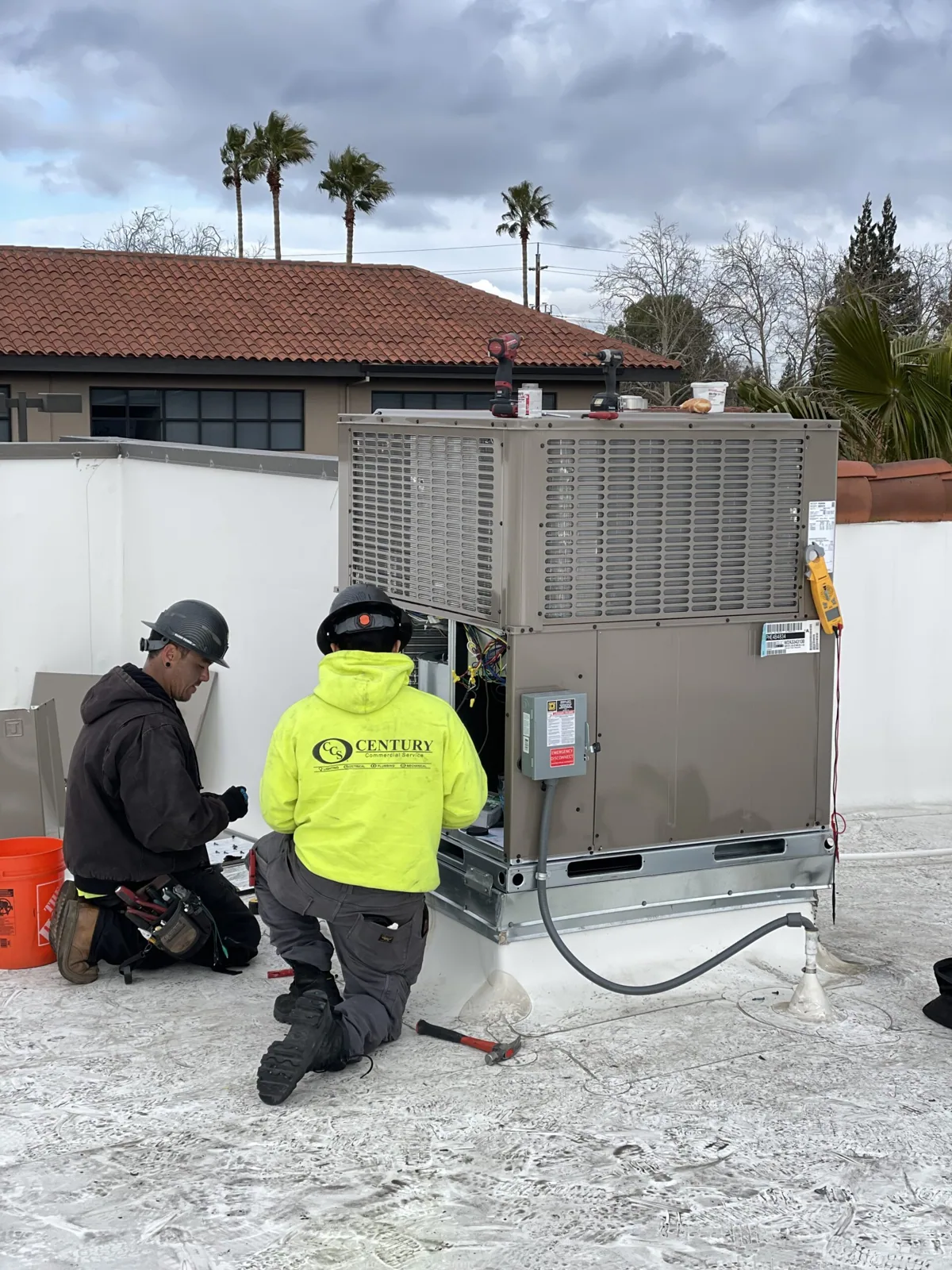
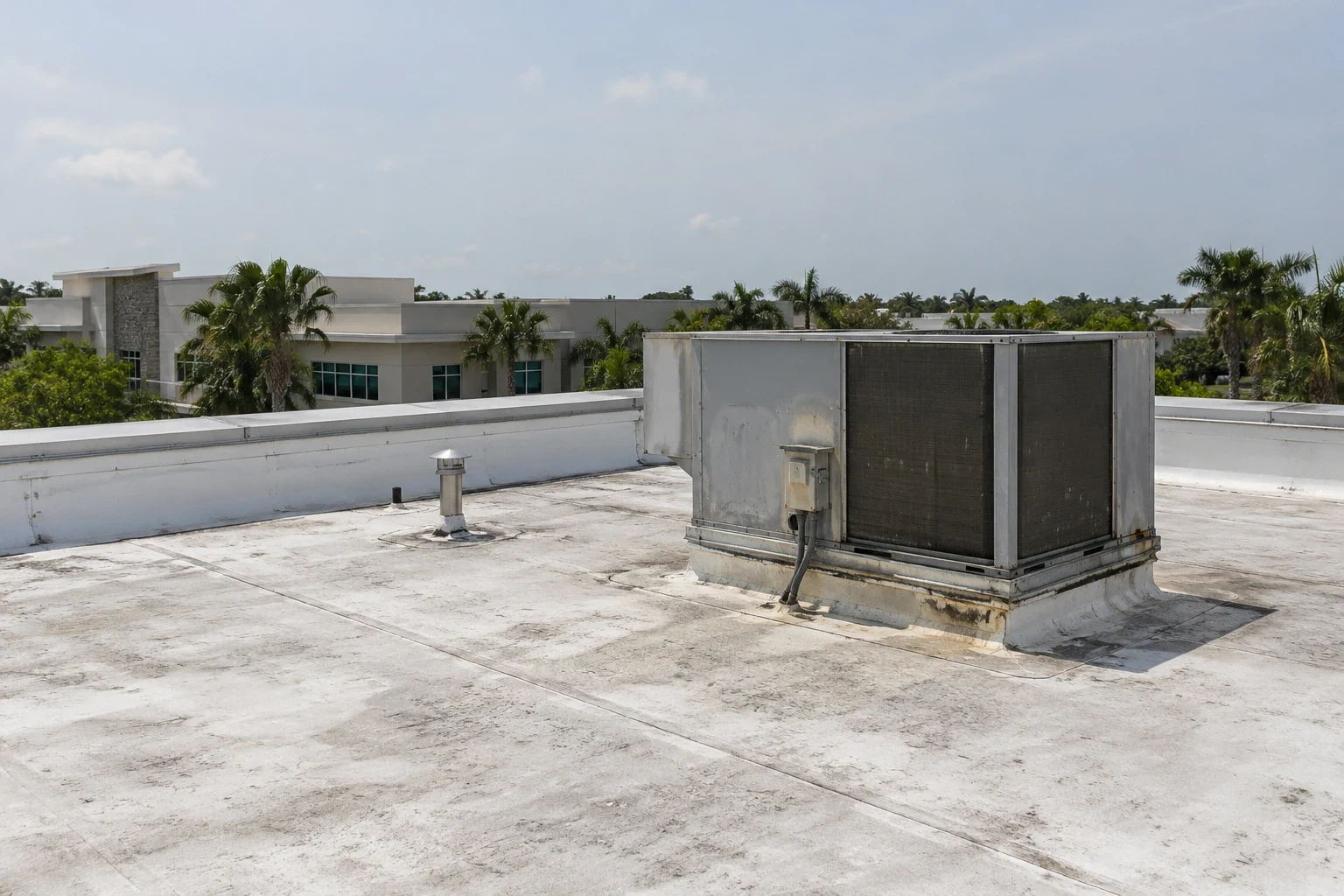
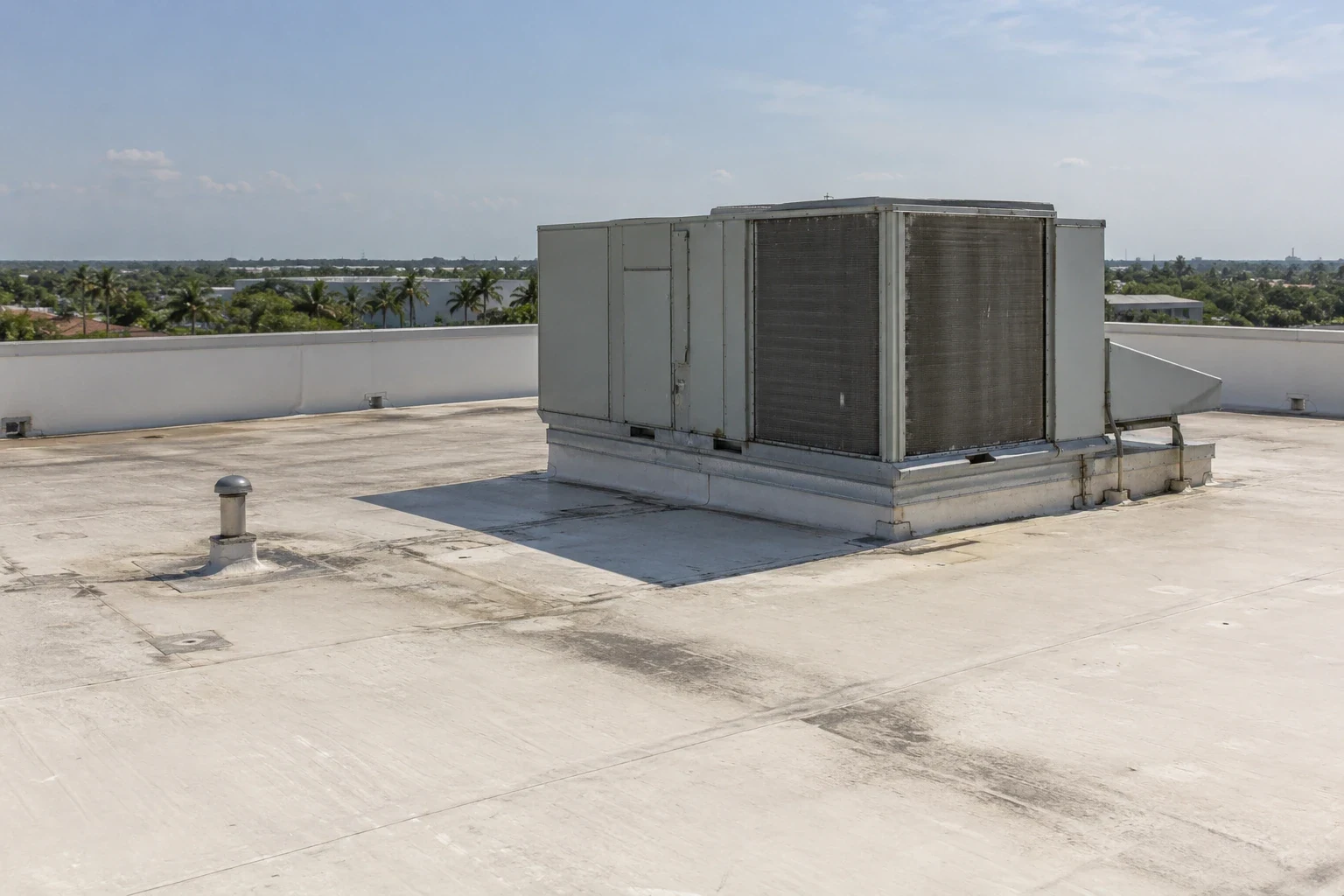
Office roofs carry more mechanical equipment than most owners count. Rooftop units, exhaust fans, makeup air, condensate lines and conduit all pass through the membrane, and the roof around each one is a flashing detail waiting to fail. Units replaced over the years can sit on curbs that no longer match the opening, leaving gaps that ordinary sealant cannot hold.
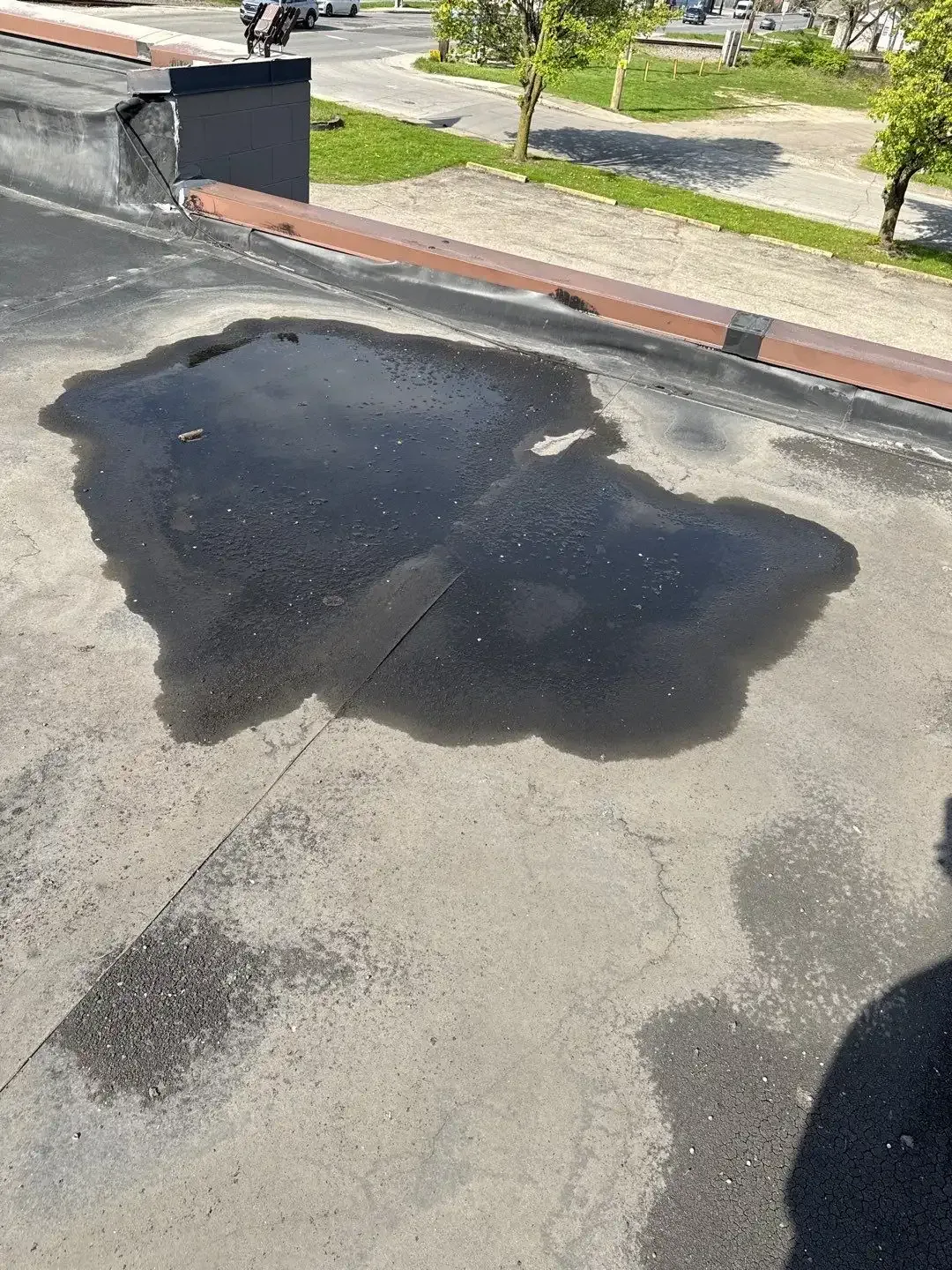
Before the crew starts, we map each unit, record its curb height and condition, and decide whether it is lifted, raised or replaced during the project. Properly built equipment curbs and supports keep water off the unit and out of the ceiling. Condensate that drains onto the membrane stains the surface and ponds in low spots, so we route it to a drain or a splash pad instead of the field.
Protect the Parking, the Entrances and the Walkways
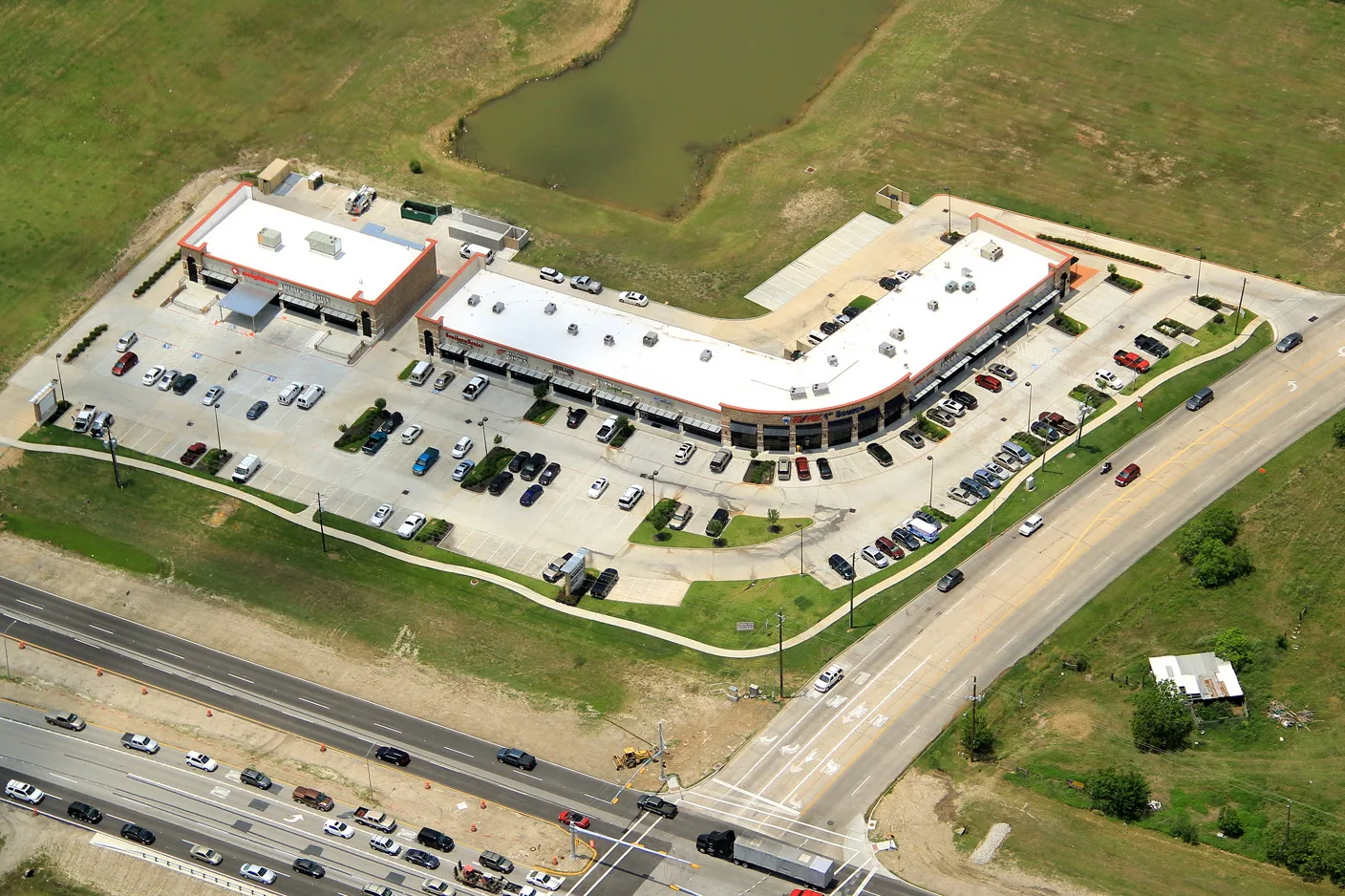
The ground plan matters as much as the roof plan. A crane needs a pad, material needs a laydown area, and both have to sit where they do not block fire lanes, accessible stalls or the main entrance. We mark off a work zone, route tenants and visitors away from overhead work with barriers and covered walkways, and use debris chutes or enclosed hoists so nothing falls near pedestrians.
Staging usually takes a section of the lot for a few days. We agree on the stalls with the property manager ahead of time and put them in the tenant notice. Where a building shares its lot with neighbors, the same approach protects shared drive aisles. A clean site at five o'clock matters as much as a dry roof.
Read the Roof After Hail, Wind and Debris
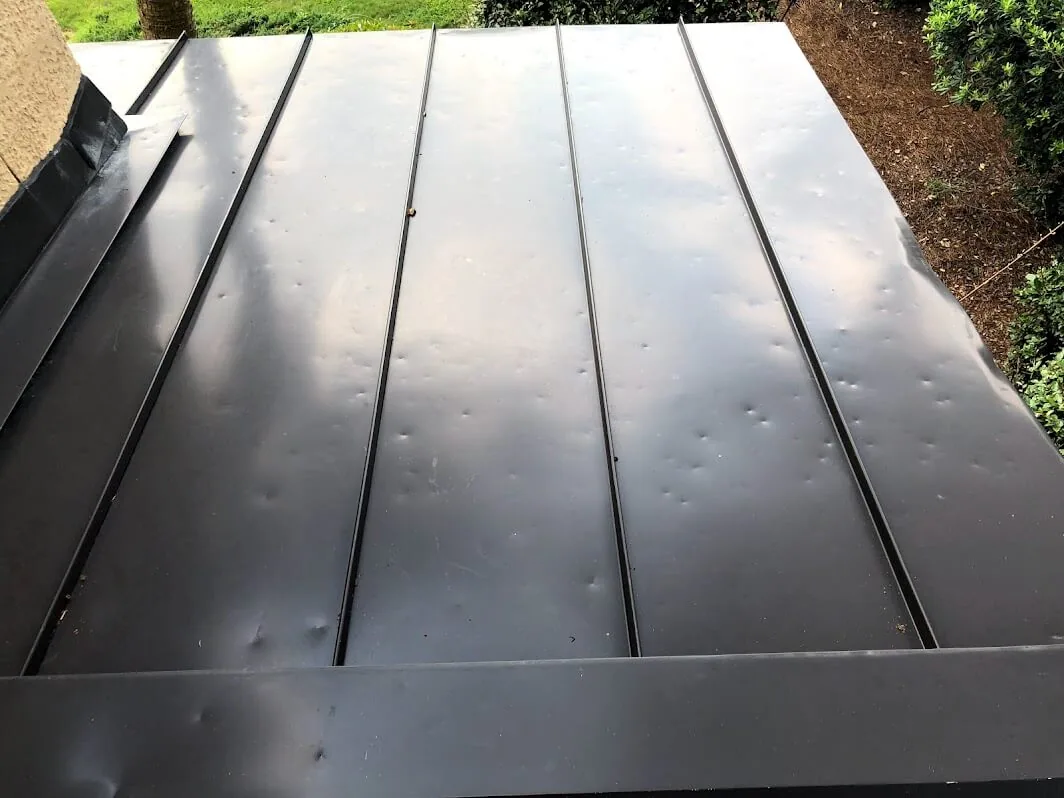
Office roofs in the Houston area face a mix of storm types. The January 2023 EF3 tornado crossed Fairmont Parkway and damaged several businesses, along with Pasadena Memorial High School. The May 2024 derecho blew out high-rise windows in downtown Houston, and golf-ball hail reached the Houston region in April 2013, with 4.5 inch stones near Hitchcock. Each event damages a roof in a different pattern.
After a storm, we inspect from the roof and from the interior: bruised or punctured membrane, displaced flashing, bent edge metal, dented units and clogged drains. A roof can look intact from the parking lot while fastener plates have pulled and seams have opened. Dated photographs support a hail damage roof repair scope and any insurance claim that follows.
After a storm, map observed conditions by roof material and elevation before combining them into a repair scope. A dented unit, displaced coping, and an open membrane seam call for different checks, even when they occurred during the same event. Compare the reported interior leak with the nearest roof transition and document any test that separates impact from a pre-existing condition. If the surface appears intact, inspect attachment, laps, and flashing rather than treating a ground view as conclusive. A dated condition map helps the owner return to the same locations after temporary protection and keeps the repair decision tied to what the inspection actually found.
Meet the Energy Code and Cut Heat Gain
Cooling is a steady cost for any office owner. Houston runs at 90 F or hotter on more than a quarter of the days in a year, and the roof is the surface that takes the sun all day. A white membrane and the right insulation thickness lower the load on rooftop units, and sometimes lengthen their service life.
Energy review is part of the permit now. A tenant buildout or change of use that shifts a building's energy load can trigger the 2024 IECC check the city began enforcing on February 2, 2026, including a cover and a final energy inspection, so we confirm early whether the roof scope is caught by it. Buildings east of State Highway 146 add a state windstorm inspection to the checklist.
Put the Roof on the Capital Calendar
The roof is a capital item owners often discover too late. We build a condition report with photographs, remaining life and the next likely repair for each building, so the property manager can bring a plan instead of a surprise to the owner or lender. Tied to roof capital planning, that report turns the roof into a line on a multi-year budget.
Owners with clinic tenants will find the planning overlaps with a medical office roof, where quiet hours and infection control add rules. A building with a server room can borrow the access and change-control habits of data center roofing.
Commercial Roofing Questions
How do we keep tenants from complaining during a reroof?
Tell them early and tell them the same thing every time. One written notice, one phone number, a posted schedule and a morning check-in with the property manager remove most of the surprises that generate calls. The rest comes from keeping the noisy work inside the hours the leases allow.
Can one building in a multi-building office park be reroofed without disturbing the others?
Yes, and the buildings stay independent. Each roof has its own work zone, crane pad and drains, so tenants next door see barriers and a lift at most. We stage materials in one place and move them by cart to hold down lot traffic.
What should a property manager ask a roofer before approving a bid?
Ask who supervises the roof every day, how openings are closed each night, what the plan is for tenant notice and noise, and how rooftop equipment will be handled. Bids that list quantities for curbs, drains and deck repair are easier to compare than a lump sum.
Is a leak over one suite a sign the whole roof is failing?
Not necessarily. A single recurring leak often traces to one curb, one drain or one flashing detail, and a targeted repair can end it. The deciding factor is how far the water has spread under the membrane, which an infrared scan and a few core cuts reveal.
Does a roof project affect our building's air handling while it runs?
Only if the plan lets it. Units that must be lifted or shut down are scheduled with the mechanical contractor, intakes are protected from dust and adhesive vapors, and tenants are told which hours the air handling will be affected.
Keep Reading
Related Roofing Work in Pasadena


Bring the Property Manager and the Tenant Calendar
Bring the lease notice requirements, the quiet-hour clauses and the rooftop equipment list. We will walk the roof, then write a plan your tenants can read and your lender can file.