
Roof Damage Repair
Heat and UV Roof Damage Repair in Pasadena, TX
The hottest hour on a roof in Pasadena, TX comes in mid-afternoon, just as the second shift settles in and the rooftop units below are working hardest. The membrane takes sun from above and exhaust heat from beneath, and it does so on more days than most owners count: Houston logs about 102 days a year at or above 90 F, with an August average high near 95 F. The summer of 2023 set heat records at Houston and Hobby, and both airports touched 109 F.
Heat damage rarely announces itself. It shows up as a surface gone brittle, seams that have opened a hair, flashing pulled off a wall, and a roof that leaks only in the right rain. Found early, the repair is small.
Read the Surface for What the Sun Has Done
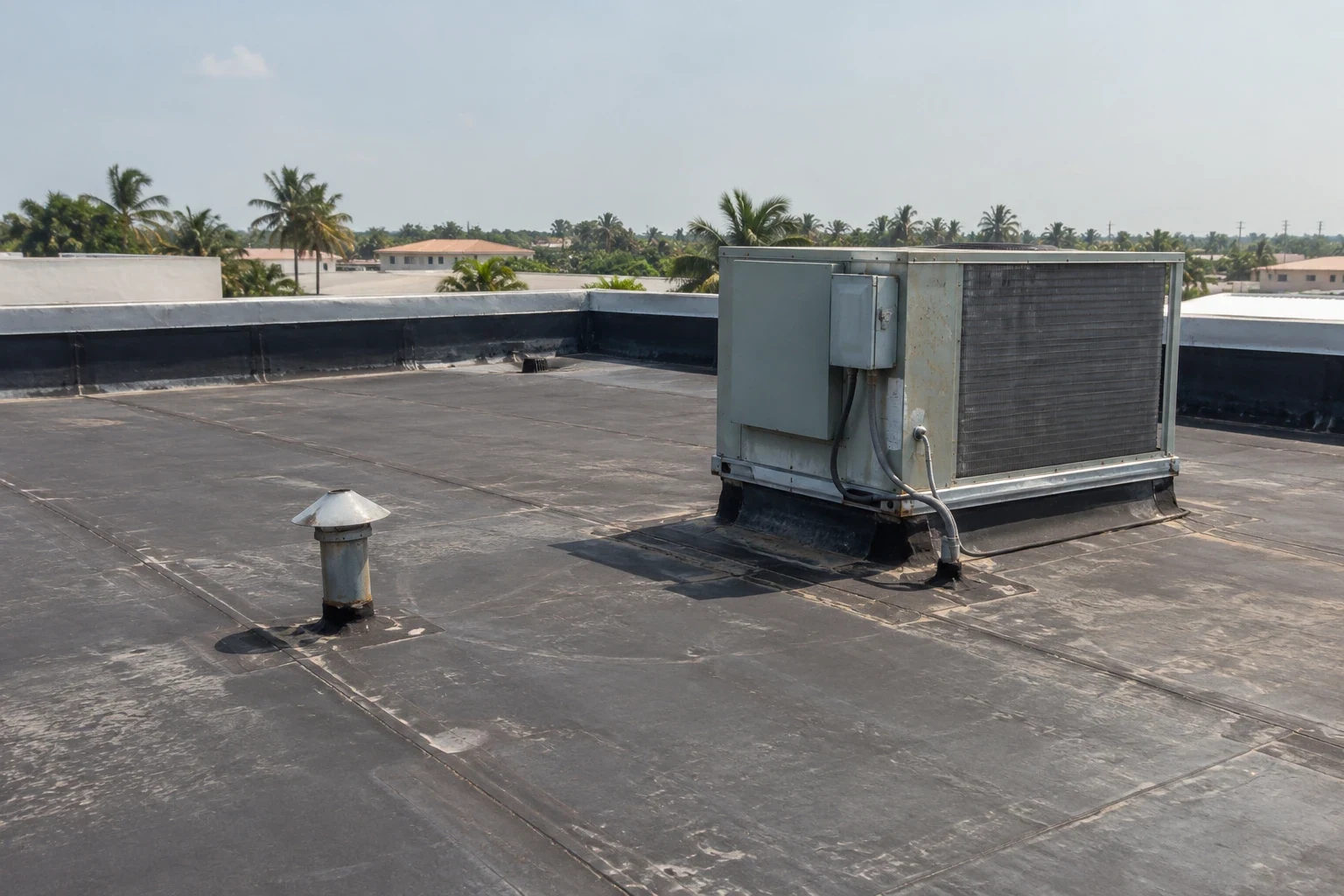
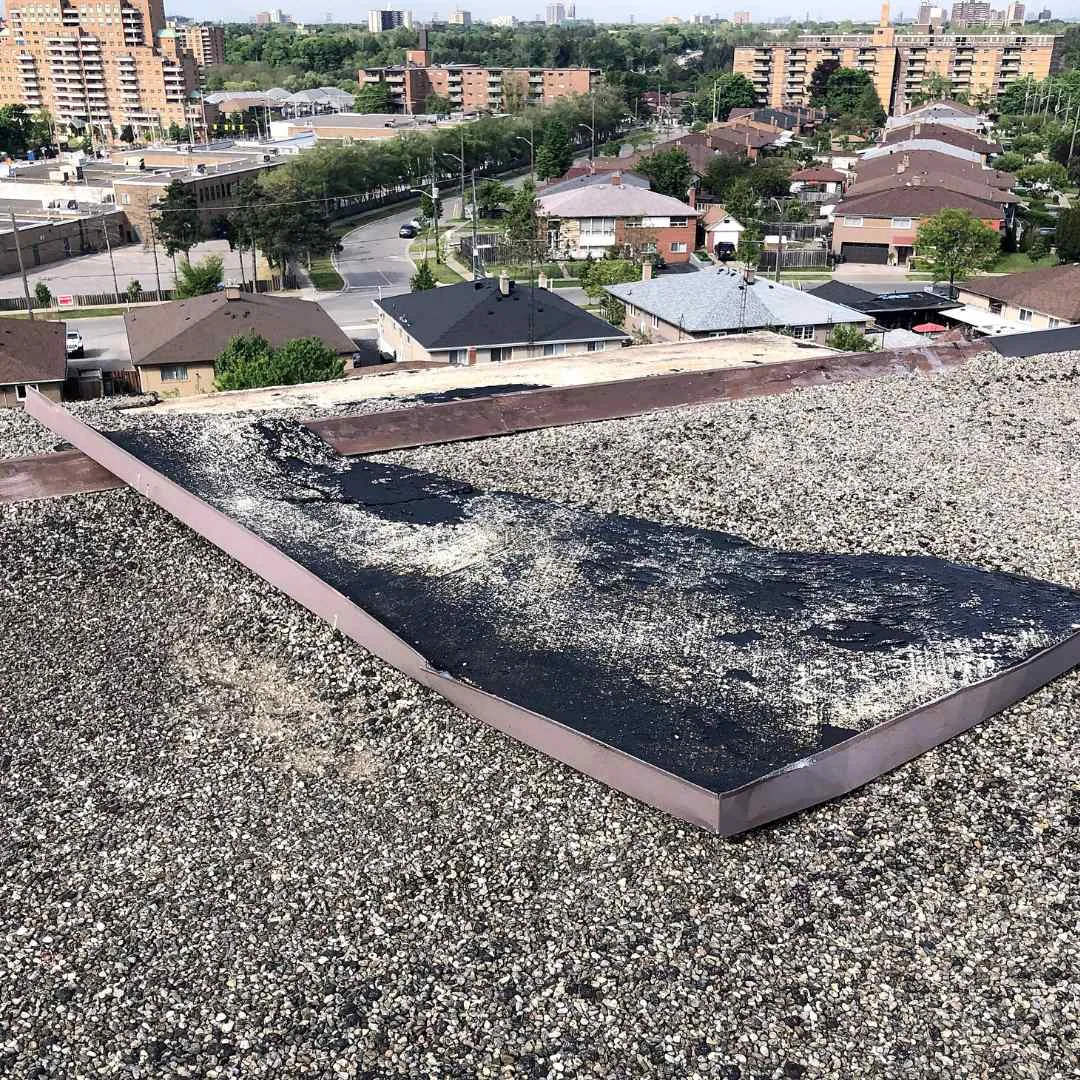
Heat and UV work on a membrane in stages. A thermoplastic or rubber sheet first dulls or chalks, then crazes into fine cracks, then loses the plasticizer that kept it flexible and begins to shrink. Shrinkage matters more than it sounds. The sheet pulls against its flashing, tugs at corners and curb walls, and opens the laps. On modified bitumen the asphalt oxidizes, the surface granules wear away, and bare asphalt cracks into a pattern that looks like reptile skin.
We probe each of these signs instead of judging from the ladder. A seam probe, a screwdriver tip and a flexed corner of sheet tell us whether the surface is only weathered or has lost its give. A dark membrane absorbs the most heat, so a roof that has faded from black to gray raises one question: how deep the aging runs. Surface cracks that stop at the top layer can be treated. Cracks that reach the reinforcing scrim mean the sheet is finished.
Follow the Daily Swing Instead of the Seasons
Houston gets barely a tenth of an inch of snow in an average year, so freeze-thaw is not what wears out a roof here. The wear comes from movement every day. Sheet and metal expand through the afternoon and pull back overnight, with morning humidity above 90 percent on the way in and full sun on the way out. Laps, boots, expansion joints and fasteners get flexed thousands of times, and sealants stiffen until they split.
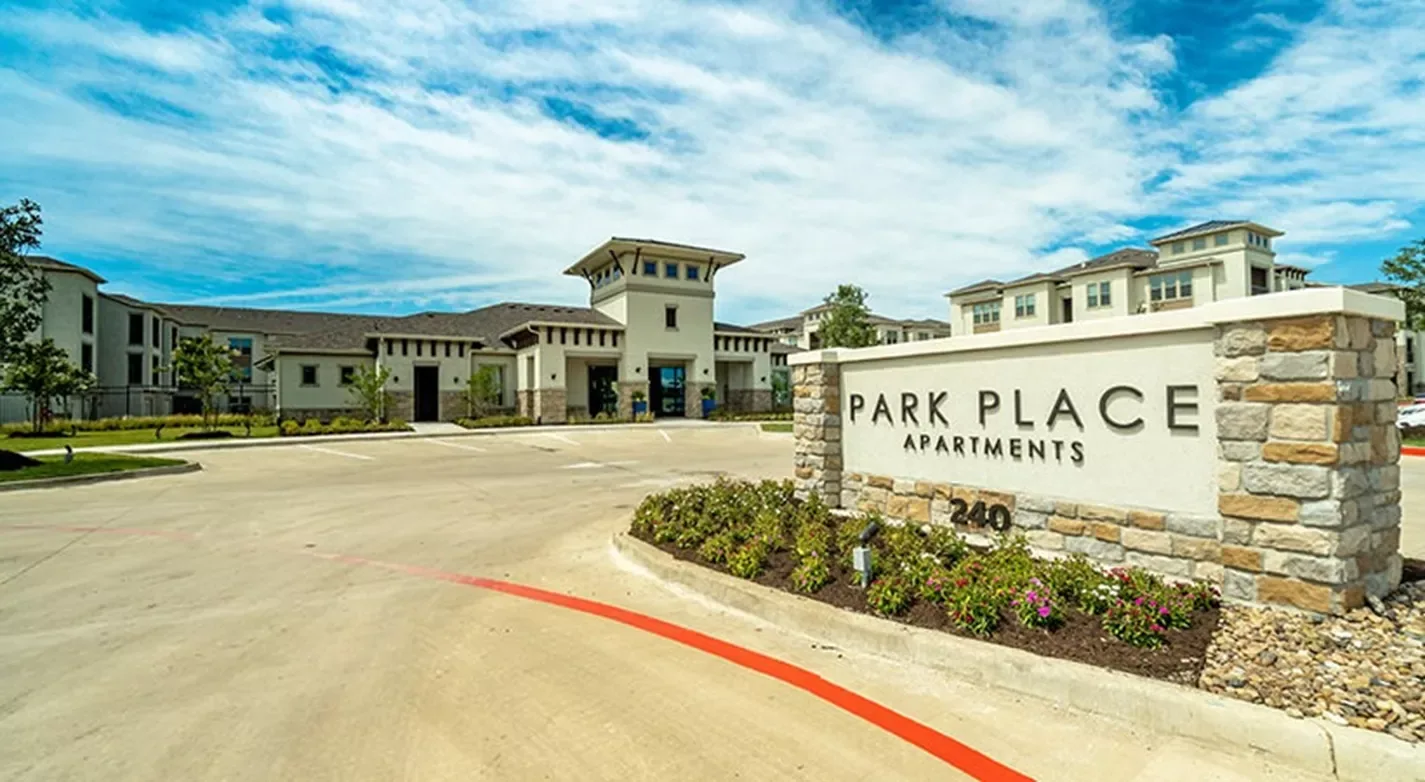
Hobby recorded 18 straight triple-digit days in 2023, and a roof near Park Place that year ran the same loop day after day with little rest. Metal roofs show it differently: panels slide on their clips, fasteners back out a little at a time, and exposed laps open. Walls that terminate a membrane suffer first, since the membrane tries to shrink and the wall does not.
Test for Moisture the Heat Is Cooking
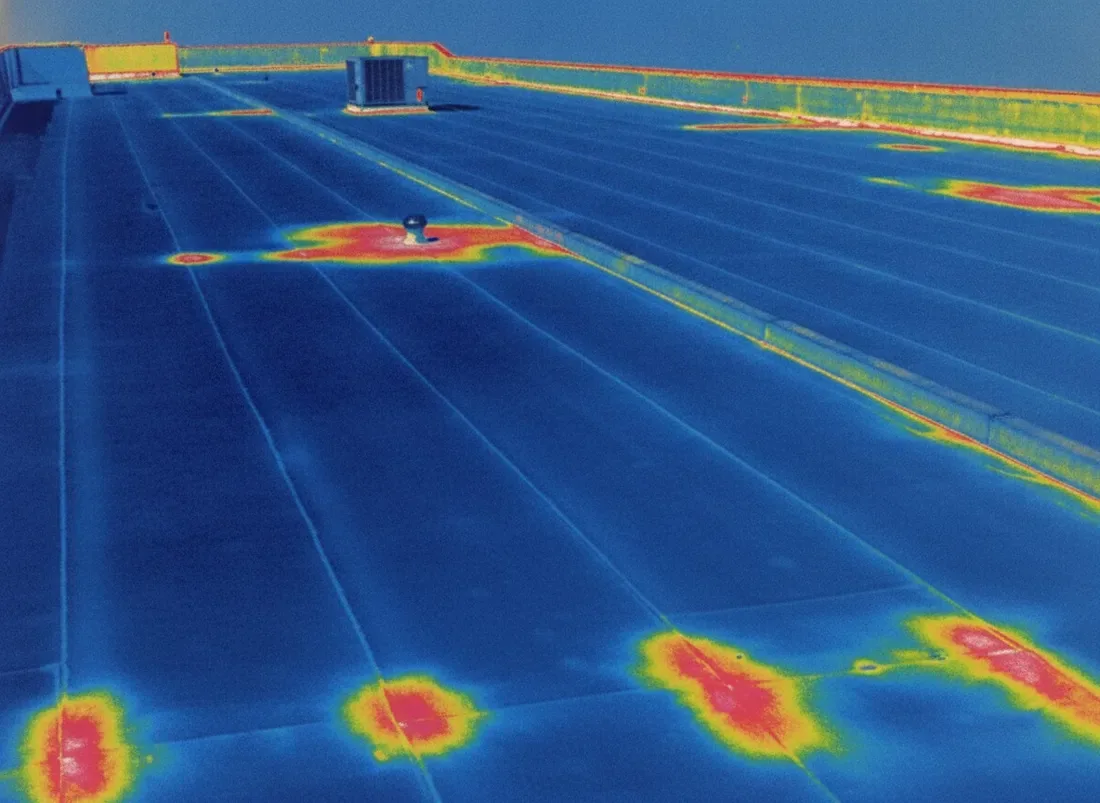
Water trapped in a roof assembly and a sun-loaded surface make a poor pair. Vapor builds beneath the sheet, lifts it into blisters, and weakens the bond to the insulation. A blister may look harmless until a boot heel splits it, so we cut samples where the surface raises doubt and confirm the moisture content before any repair is priced. An infrared moisture survey at dusk finds wet boards by the heat they hold after the surface cools.
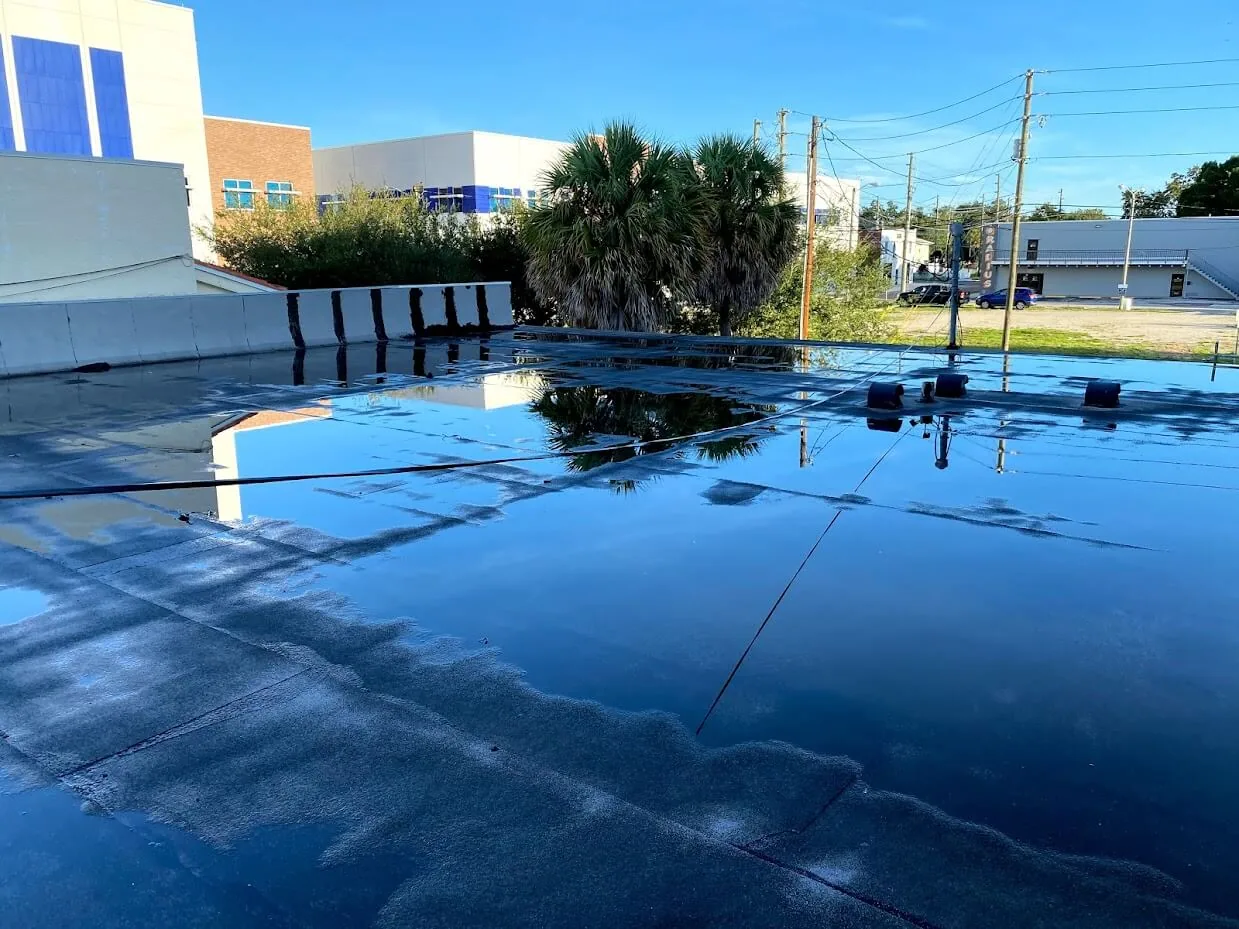
Standing water multiplies the damage. Houston receives roughly 50 inches of rain over about 104 days, and a low spot that holds water cooks under the sun, grows algae and ages the membrane faster than the field around it. A clogged drain or a slight deflection of the deck is usually behind it, and that is where ponding water repair starts. Along the Ship Channel and the Bayport plants, the same humid air also corrodes edge metal and fasteners, so we check them in the same pass.
Choose Restoration Only When the Roof Is Dry
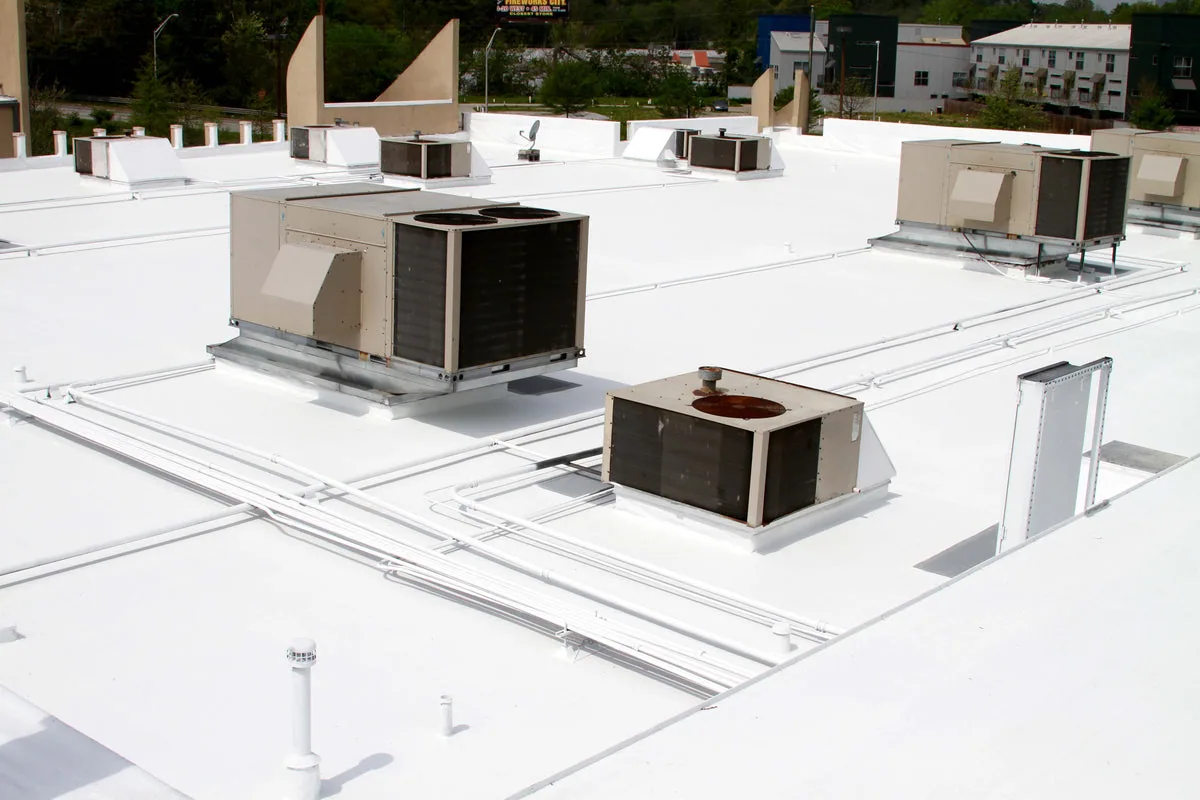
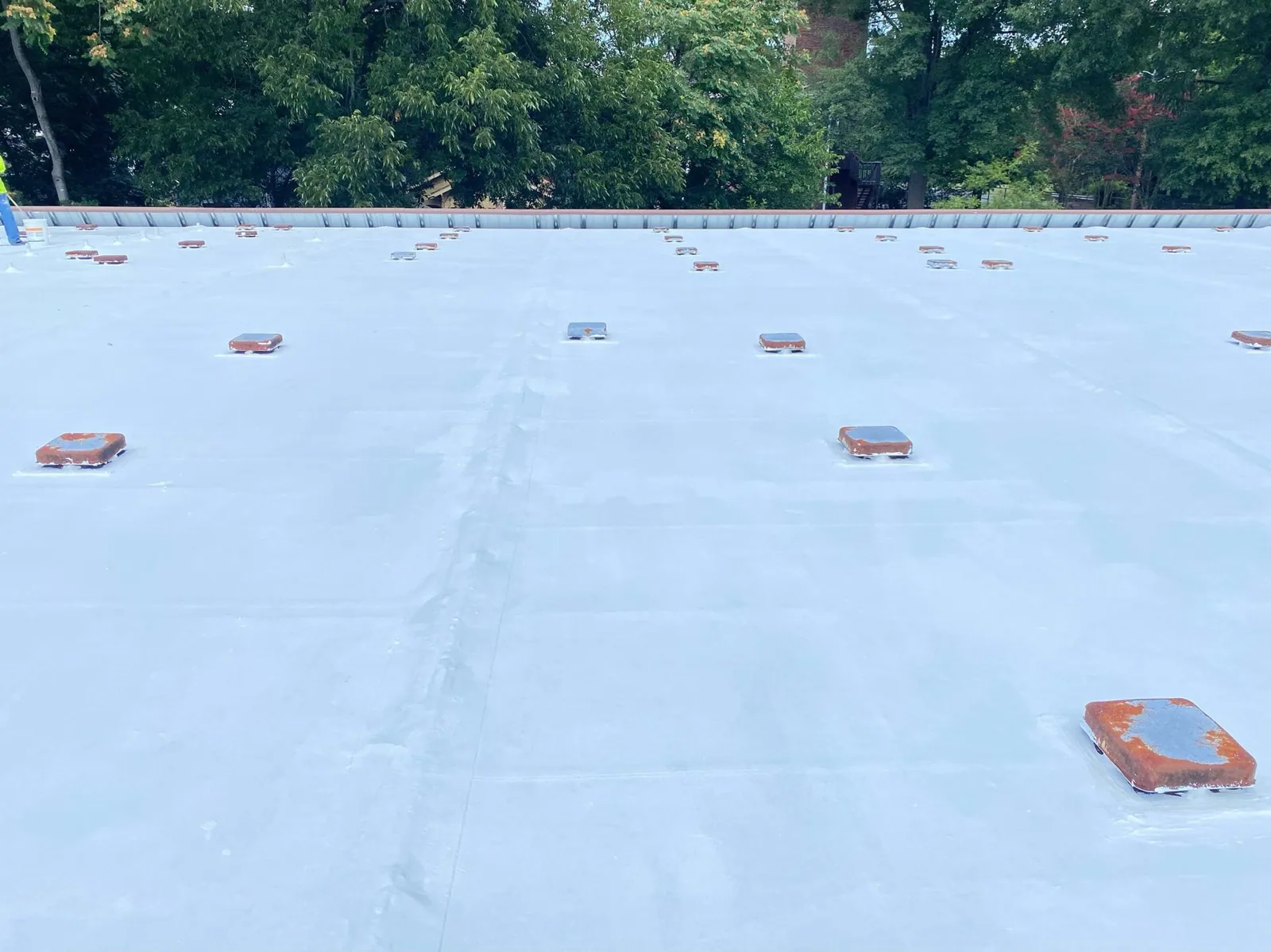
A reflective silicone coating or an acrylic coating can carry a sound roof several more summers and shed heat that a worn dark surface would soak up. The condition is a dry assembly. Blisters are cut out, seams reinforced, flashings rebuilt and the surface cleaned and primed, and only then does the coating go on, inside the temperature window the product allows. Coat over wet insulation and the roof only looks finished.
When the insulation is saturated, or the sheet has shrunk past repair, the better money goes into replacement, and that is the moment to weigh a cool roof installation with a white membrane. Pasadena's permit office enforces the 2024 energy code on remodels and changes of occupancy that touch a building's energy load, so whether a reroof with new insulation falls under it is a question to settle before the order is placed.
Schedule the Work Around the Heat and the Shifts
Adhesives, primers, welds and coatings all have a surface temperature range, and a membrane that is too hot to bond is also too hot to kneel on. So the sequence follows the sun. Crews start at first light, close open sections before midday, and watch for the afternoon cells that build off the Gulf. On buildings that cannot take daytime noise, such as a distribution site or a plant near SH 225, the work moves to the night shift. Water, shade and rotation for the crew are part of the plan, not an afterthought.
Material staging works the same way. Adhesives and coatings stay out of direct sun, rolls come up in a crane pick timed to the work front, and the laydown area sits clear of dock lanes. Any torch work needs its hot work permit. After closeout, preventive roof maintenance keeps drains open and re-seals laps before the next July.Where heat has weakened laps, a separate wind damage roof repair review checks whether gusts have opened the same seams further.
Commercial Roofing Questions
Our white membrane is only a few summers old and looks dingy and chalky. Is that heat damage?
Dirt and algae grow fast in humid air, so a dull surface is often cleanable. Chalking that rubs off on a glove, fine cracks at the surface or a sheet that has pulled away from a wall point to real aging. A seam probe and a cleaned test patch separate the two.
Why does the roof under our exhaust stacks fail before the rest of the building?
Process and exhaust heat adds to the sun, and the sheet nearest the discharge gets both. On a manufacturing roof the worn zone usually follows the stacks and relief vents. We scope that area separately, add a protective layer or a heat-rated detail, and keep the rest of the field on its own schedule.
Can a reflective coating go over a dark roof that already has blisters?
Only after the blisters are cut open, dried, repaired and tested for moisture. Coating over a blister traps whatever is inside and sets up a failure. Once the repairs are done and the roof tests dry, the coating bonds the way it should.
We get almost no snow here, so why do roofs age so fast?
Daily heat does the work that winter does elsewhere. Humid mornings and hot afternoons stretch and relax the membrane every day, while UV breaks down its surface. Summer 2023, with 109 F recorded at both Houston and Hobby, showed how far that heat can go.
Does heat repair on a hospital roof change how the work is scheduled?
A building like the 350-bed trauma center on Spencer Highway never closes, so air intakes, odors and noise drive the plan. We coordinate with facilities staff on intake locations and shutdown windows, choose low-odor products and phase the work in small sections that dry in each day. The same thinking applies to any hospital roof.
Keep Reading
Related Roofing Work in Pasadena
Walk the Roof Before the Next Heat Wave
Call us to walk the site with you, probe the membrane and map the wet spots, so the repair plan fits your shifts before summer sets the schedule.