
Service Areas
Commercial Roofing in Deer Park, TX
A refinery that has run since 1929 puts gate hours, permits and crane scheduling into the conversation on any roof job near the plants. Anyone who roofs in Deer Park, TX learns that rhythm first, and then learns the weather.
The Deer Park refinery processes roughly 275,000 barrels a day on about 2,300 acres along the Houston Ship Channel. The Shell Chemicals plant opened in 1941, and Dow Chemical and Lubrizol Specialty Chemicals also operate in town. The same city has schools, a library, a church, a nursing home and retail, and in January 2023 an EF3 tornado cut across it. We repair, recover and replace commercial roofs here, and the plan always begins with how the building runs.
Plan Industrial Roofs Around Permits and Process Hours
On a plant or a building that serves one, the roof is a work area inside a controlled site. Workers need badges and a site safety orientation, hot work needs a permit, and some zones are off limits at certain times. We gather those rules in the first meeting and write the schedule against them, so no one learns on mobilization day that the crane has to wait for a gas test.
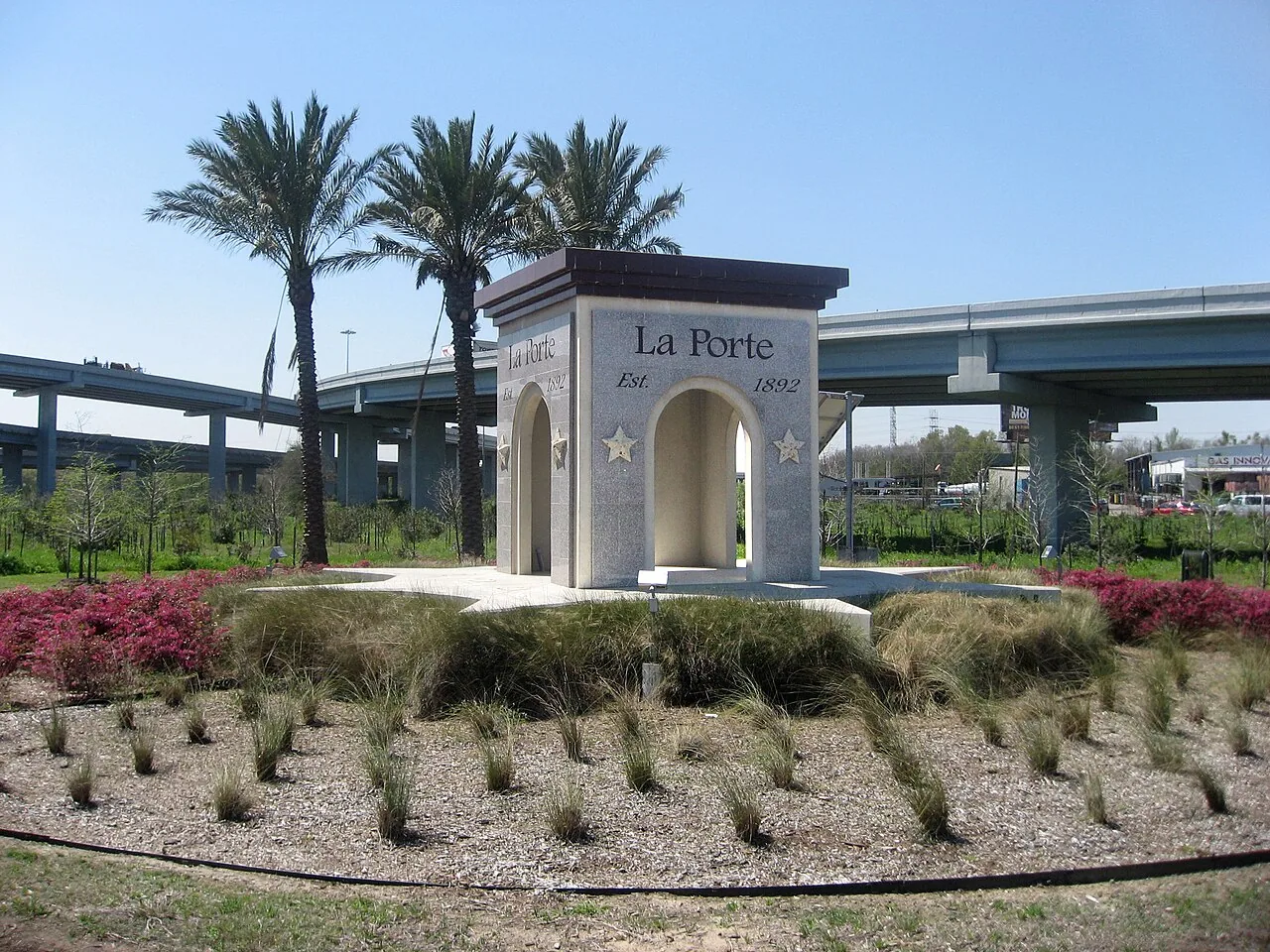
Staging gets equal attention. The laydown area goes where it blocks no truck lane, material comes in during approved delivery windows, and each tear-off section is sized to be dry before shift change. State Highway 225 runs through Deer Park on its way from Pasadena to La Porte, and buildings beside it face the same plant-gate and permit planning as the rest of the SH 225 corridor.
What we look for on a first walk is simple to say and slow to do well: how water leaves each roof, which penetrations carry exhaust or condensate, whether the edge metal still holds, and how the deck feels underfoot. Those four checks decide whether a repair will hold, whether a recover is sensible or whether the roof has reached the point where replacement is the cheaper path. The owner gets the findings in writing, with photographs, before any contract is signed.
Read the Roofs the 2023 Tornado Tested
The EF3 tornado of January 24, 2023 carried peak winds near 140 mph and cut a track of roughly 18 miles through Pasadena and Deer Park. It damaged a Walgreens, the public library, St. Hyacinth Catholic Church, San Jacinto Manor and Deer Park High School South. That is five building types, and each one calls for its own dry-in plan.
Owners in town can still learn from that path. Look for lifted edges, displaced coping, torn flashing, dented panels and debris-punctured membrane, and for the quiet damage under a surface that looks fine, like loosened fasteners and wet insulation. Tornado damage roof repair begins with a safe inspection and a dry-in. We photograph conditions before debris is cleared, so the insurance file shows what the wind actually did.
Protect Nursing Homes, Churches and Public Buildings First
San Jacinto Manor evacuated 62 residents after the tornado damaged it, a measure of how quickly damage to a building people live in becomes a relocation problem. A nursing home, a church or a library cannot simply relocate for a month, so the roof plan has to protect occupants first and finish quickly second.
For a senior living building the plan includes quiet hours, protected resident routes, fenced work areas and daily dry-in. A church needs the work set around services, funerals and weekday programs, and may combine low-slope and steeper sections that call for different details. A roof over public space needs clear barriers and a tidy site at the end of every day, and a tear-off that will not finish before dark gets a temporary seal rather than a hopeful forecast. Documentation matters as well, since these owners often answer to boards, congregations or governing bodies.
Time School and Retail Work to the Calendar
Deer Park ISD runs 14 campuses, and Deer Park High School South was among the buildings the tornado damaged. A district with that many campuses needs a sequence, and the sequence should follow roof condition, not alphabet or geography. Summer break is the best window, but it falls in hurricane season, so we size each tear-off to dry in the same day and keep temporary protection ready.
Retail follows a different clock. A pharmacy or a shopping center loses sales when the front lot is a staging yard or the roof is leaking, so we phase the work by tenant bay and run noisy operations before opening or after closing. A shopping center roof shared by several tenants needs one leak-response plan across all the leases from day one.
Specify for Humid Air, Heavy Rain and Summer Heat
Deer Park shares the Houston region's climate. Summers run hot and sticky, with August afternoons near 95 F, and the Houston area absorbs about 50 inches of rain a year. Humid air off the Ship Channel is hard on fasteners, edge metal and exposed steel.
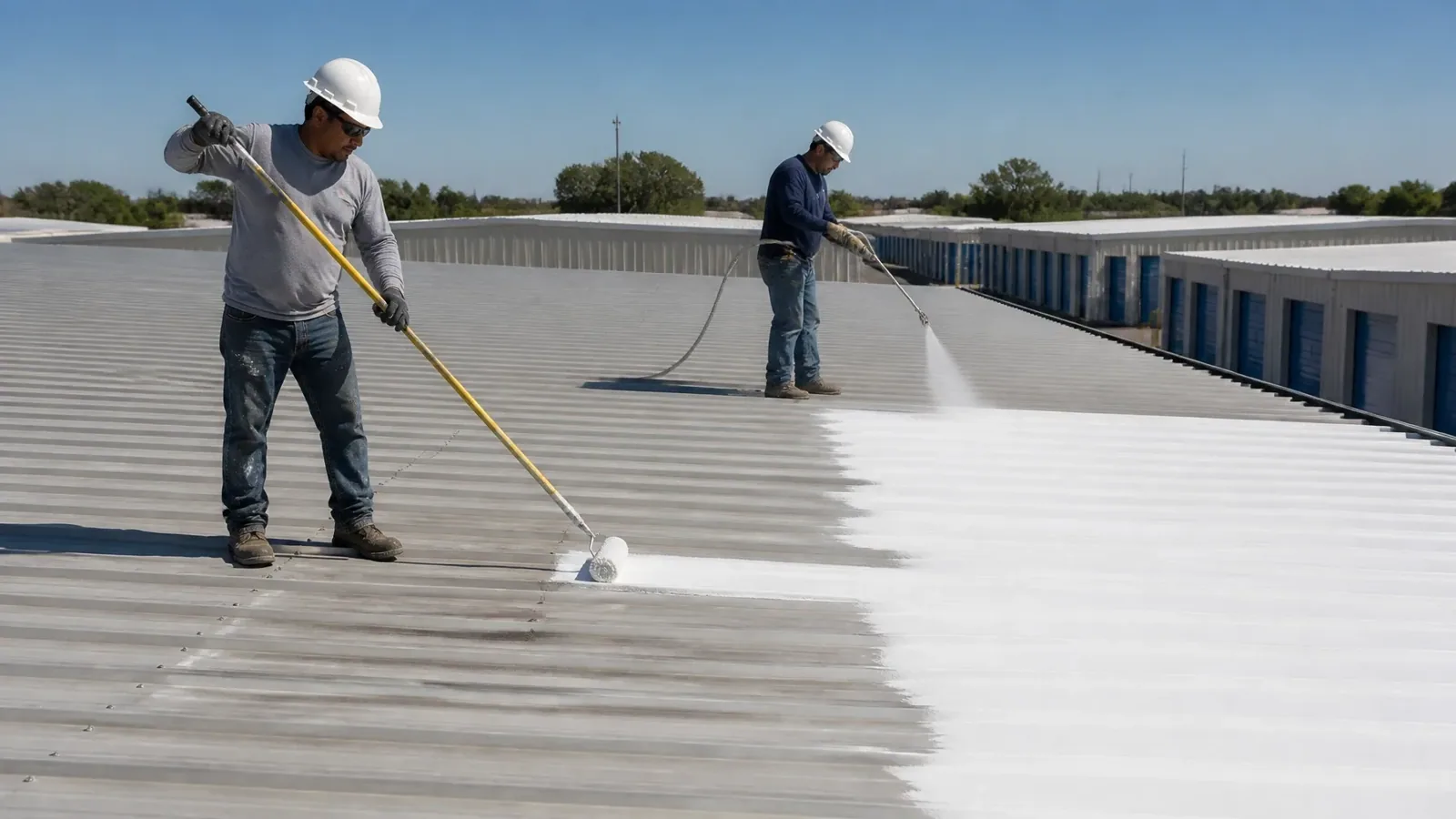
Roofs here live in a constant cycle of heat, UV and drainage stress. Membranes should have good heat-weld strength, and drains and scuppers need to stay open. A restoration coating can extend the life of a dry, sound roof and add reflectivity, but a moisture survey comes first, because coating over wet insulation just seals the problem in. Storms such as the May 2024 derecho across Greater Houston and Hurricane Beryl were reminders that wind resistance has to be part of every decision.
Commercial roofs in Deer Park may sit above industrial operations, civic buildings, shops, or occupied residential services, so the work plan should reflect the property rather than the city name. Verify local access, operating hours, and any hot-work or escort requirements with the owner. For schools and care facilities, establish protected pedestrian routes and interior notice procedures before staging materials. For process buildings, coordinate roof work with the site's permit and shutdown systems. Record the assembly and drainage condition by building. This creates a useful closeout whether the owner is managing one facility or comparing several properties across the surrounding area.
Commercial Roofing Questions
What should a nursing home ask a roofer before work begins?
Ask how residents will be protected, what hours are quiet, how rain is handled overnight and who is on site each day. A good plan names the dry-in routine and the contact for after-hours problems before the first panel comes off.
Can a storm-damaged roof wait for the insurance adjuster?
The building cannot, so emergency protection comes first. We tarp or dry in openings and photograph conditions for the claim, then repair permanently once the carrier has what it needs. Keeping receipts and photos from the first day helps the claim.
Is coating a reasonable option for an older roof here?
It can be, if the insulation is dry and the membrane or metal is still sound. Moisture mapping confirms that. Coating also adds reflectivity against the heat, but it will not fix wet insulation, rusted fasteners or failed seams.
How do you keep a plant-side roof job from slowing the plant?
We follow the site's rules on access, permits and hours, and we keep the roofing footprint small. Staging stays out of truck lanes, and noisy or hot work lands in the windows the operator approves.
Which kinds of damage hide after a tornado or derecho?
Loosened fasteners, lifted seams, bent edge metal and wet insulation under an intact surface. These rarely show from the ground, which is why a hands-on inspection, often with a drone pass and moisture scan, follows every major wind event.
Keep Reading
Related Roofing Work in Pasadena


Walk the Building With Us
Tell us how your building runs and we will walk the roof with you. The plan that comes out of that walk will fit your people, your schedule and your site rules.