
Property Types We Roof
National Guard Armory Roofing Near Pasadena, TX
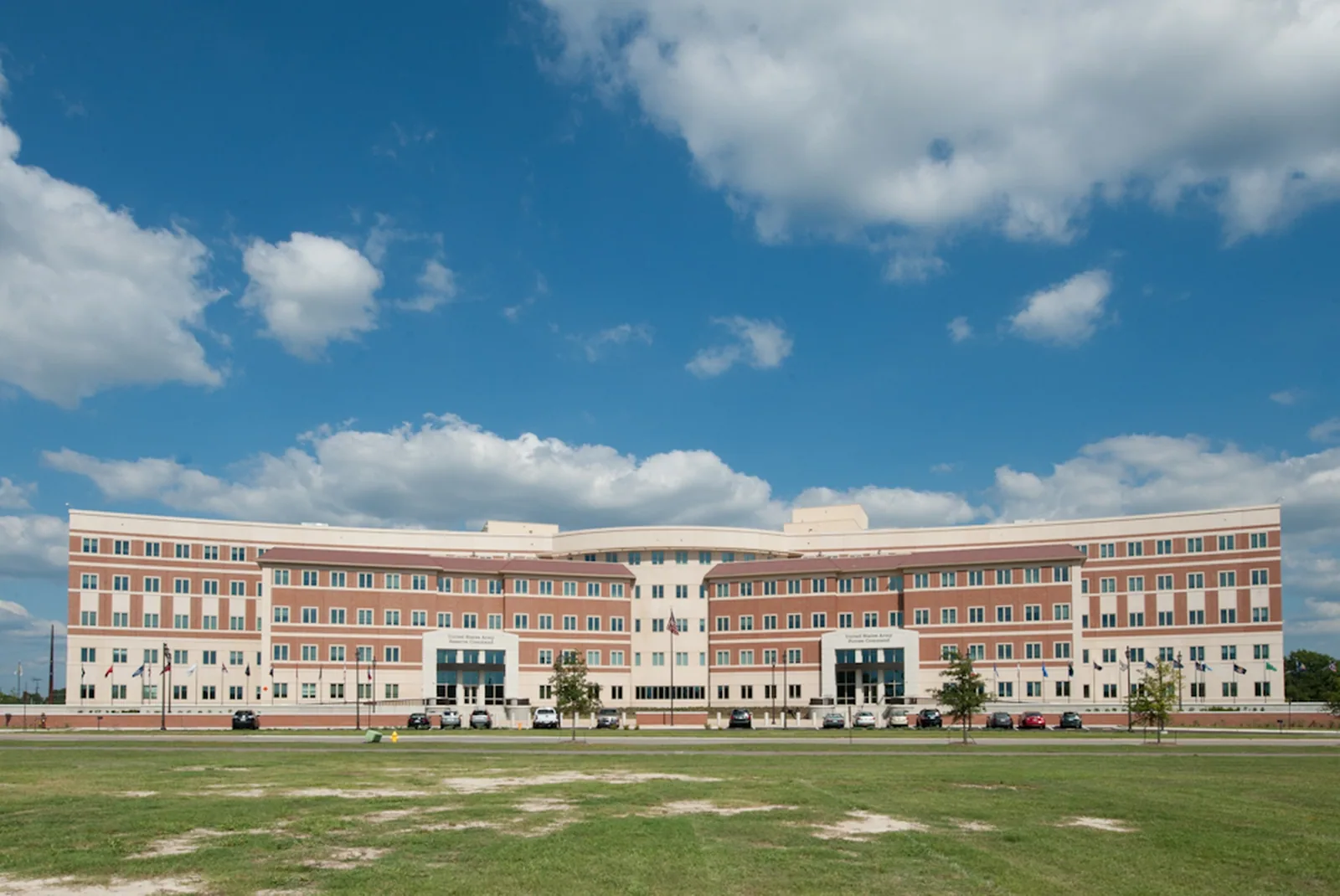
An armory spends most of the month with a handful of people in it and a drill hall echoing around them, and then one weekend the unit shows up with trucks, gear and a schedule to keep. The roof has to serve both versions of the building. It has to keep the hall dry for the quiet weeks, and it has to be fully sound before the doors open for the loud ones. The Armed Forces Reserve Center in East Houston, about 7 miles south-southeast of Pasadena, TX, was designed to receive Texas National Guard units that had been at readiness centers in Baytown, Pasadena and Ellington Field, and Ellington Field itself has a second reserve center with an assembly hall and offices.
That is the building we plan for: wide, mostly open, often full of equipment, and run by a small staff between drills.
Cover the Drill Floor Before Opening a Single Section
The drill hall is the largest room in the building and the one with the most to lose. Water that comes through a long-span roof spreads across a floor quickly, and a floor that has taken on moisture needs time to dry before a unit can use it. So the plan starts on the inside. Protection goes down across the floor, racks and storage get covered, and a wet-vacuum crew stays on site until the last section is closed.
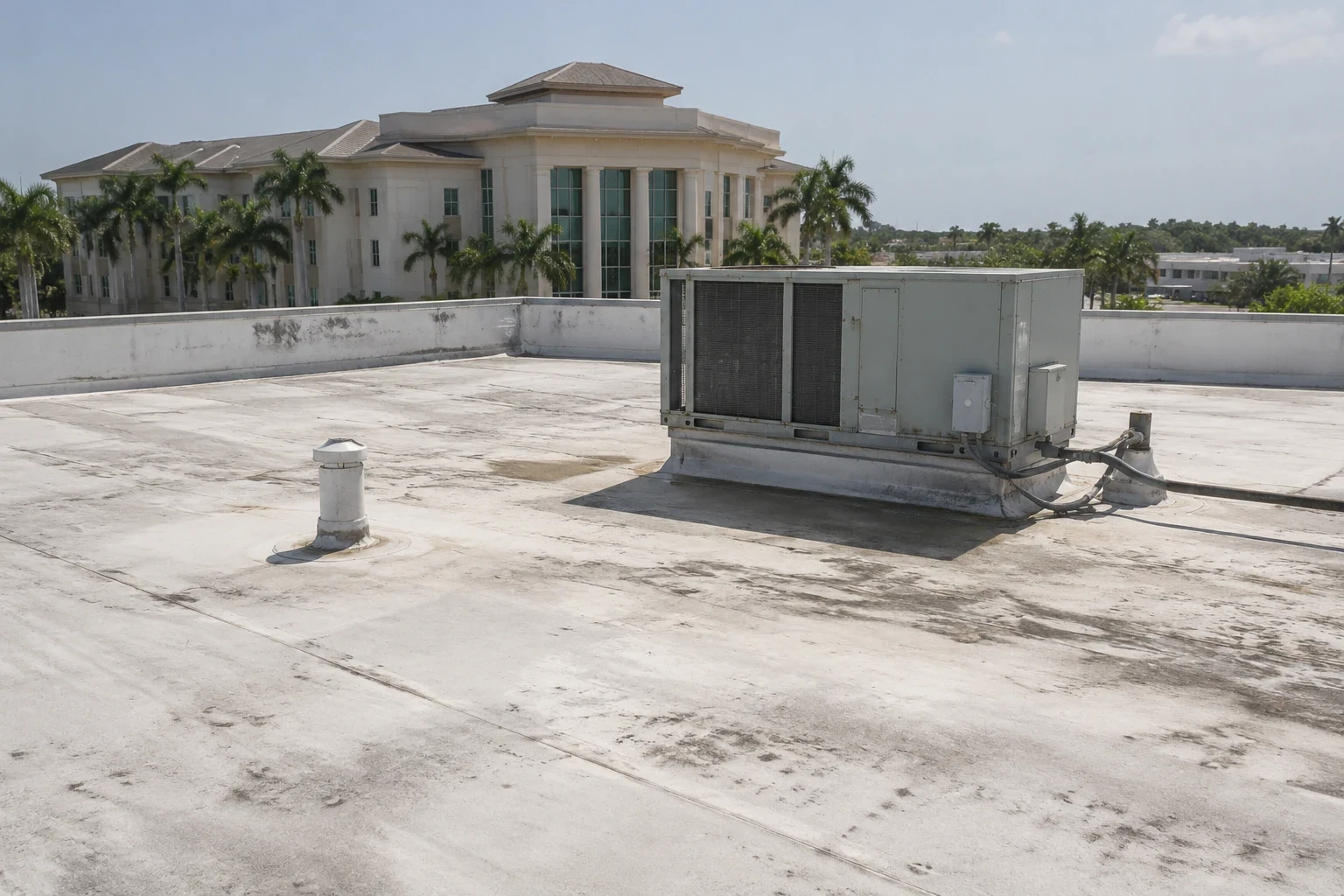
Above the hall, long spans collect water at midspan, and a low spot there shows up as ponding after every rain. Our survey marks the low areas, checks the drains and scuppers, and notes where a tapered insulation package would send water to an outlet. Where the existing roof is sound but the surface is worn, a recover or coating can be done in sections without ever taking the whole hall offline. EPDM roofing is one of the systems that suits a large, quiet drill hall roof because it goes down in sheets that can be closed section by section.
Plan Around Secure Rooms and Escorted Interior Access
Armories contain rooms that a roofing crew does not enter without an escort, and the roof plan has to be drawn with that in mind. We identify the secure spaces first, locate the ladders, hoists and material staging outside them, and agree in advance on what happens if a leak appears above one. The answer is simple: stop work in that area, close the roof opening and call the building contact, who opens the room with an escort when the protection goes up.
Access follows the same pattern. Vehicle gates, key control and alarm resets are handled by named people, the crew list is fixed early, and each worker completes a site safety orientation before arriving on the roof. Photographs of the work are limited to the roof and the exterior, since the interior is not ours to record. The same access discipline runs through military installation roofing in general.
Brief the Full-Time Staff Who Run the Building Between Drills
The people who know an armory best are the ones who open the doors on a Tuesday. A small full-time staff handles maintenance requests, contractor access and the calendar for the hall, and they are the first call when something leaks. We ask them for the history: where the roof leaked before, which repairs were made, which rooms have been repainted after a stain. Their answers save a day of survey time.
That small staff cannot babysit a roof either, so the details we choose have to be inspectable and forgiving. Clear photo records, a simple drain schedule and a preventive roof maintenance visit before each hurricane season give them what they need without adding to their list. An armory answers to some of the same approvals as Army installation buildings and the same public-owner questions as any government building roof, but the staffing is leaner and the roof file carries more weight.
Detail the Kitchen Exhaust and Classroom Wings Separately
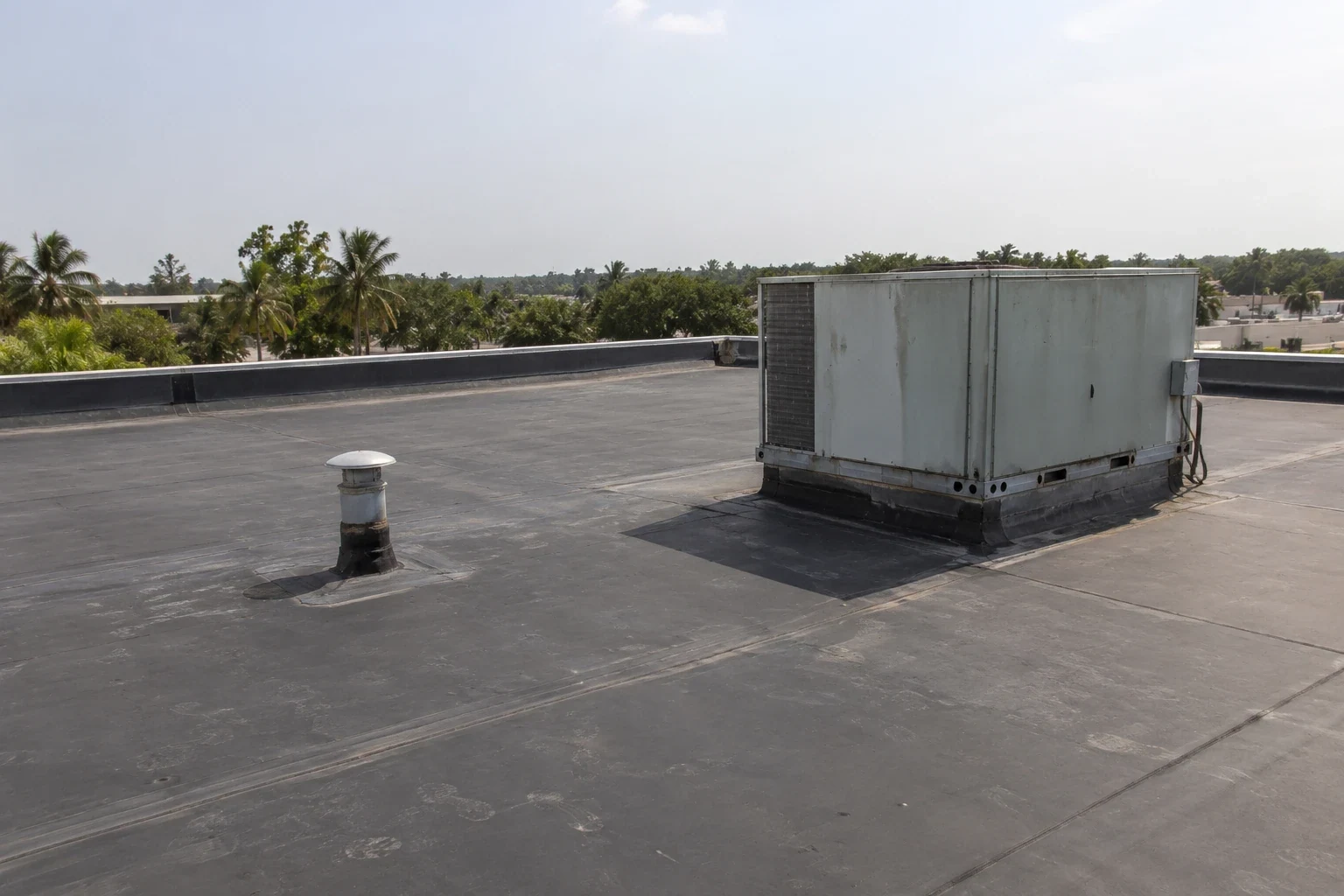
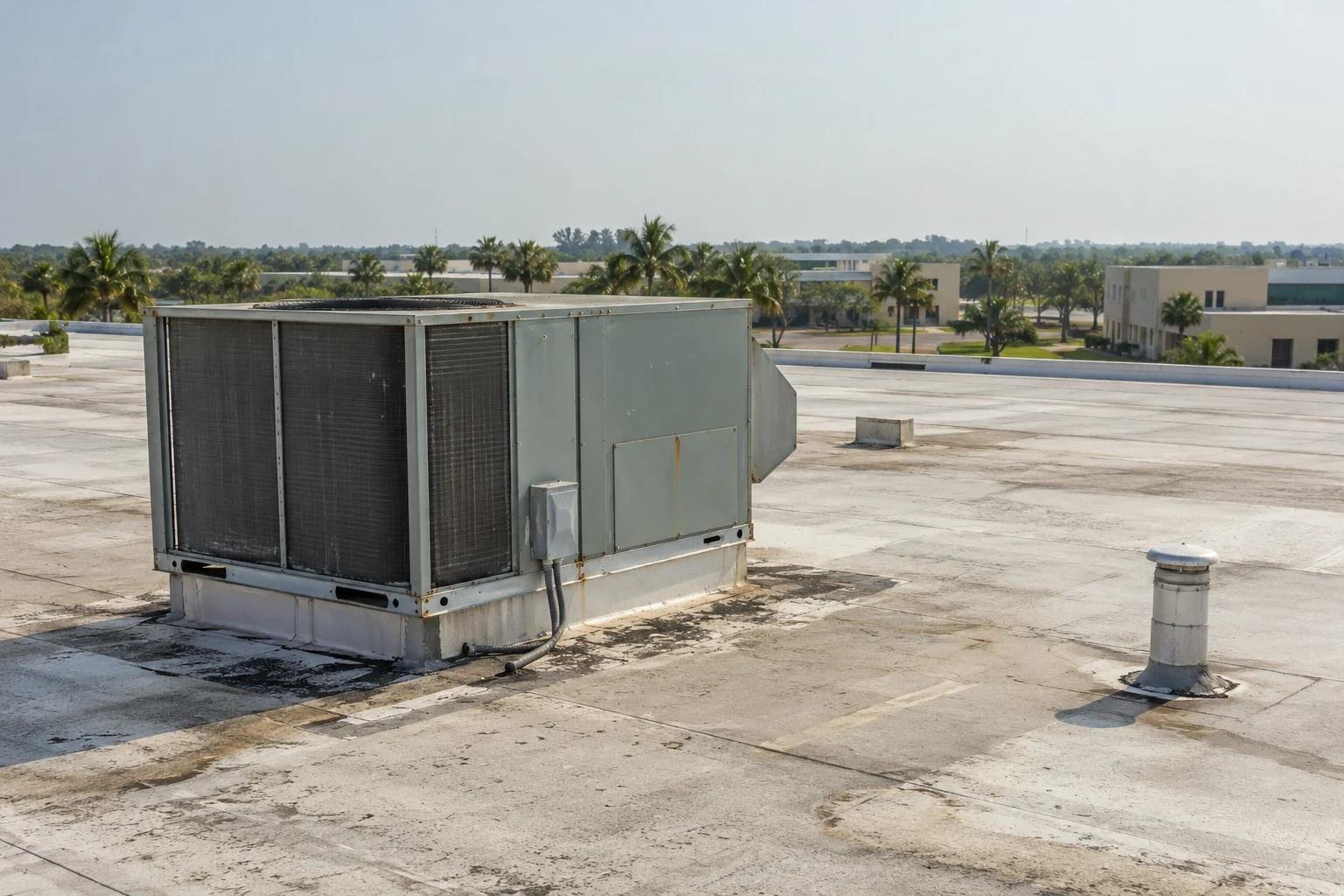
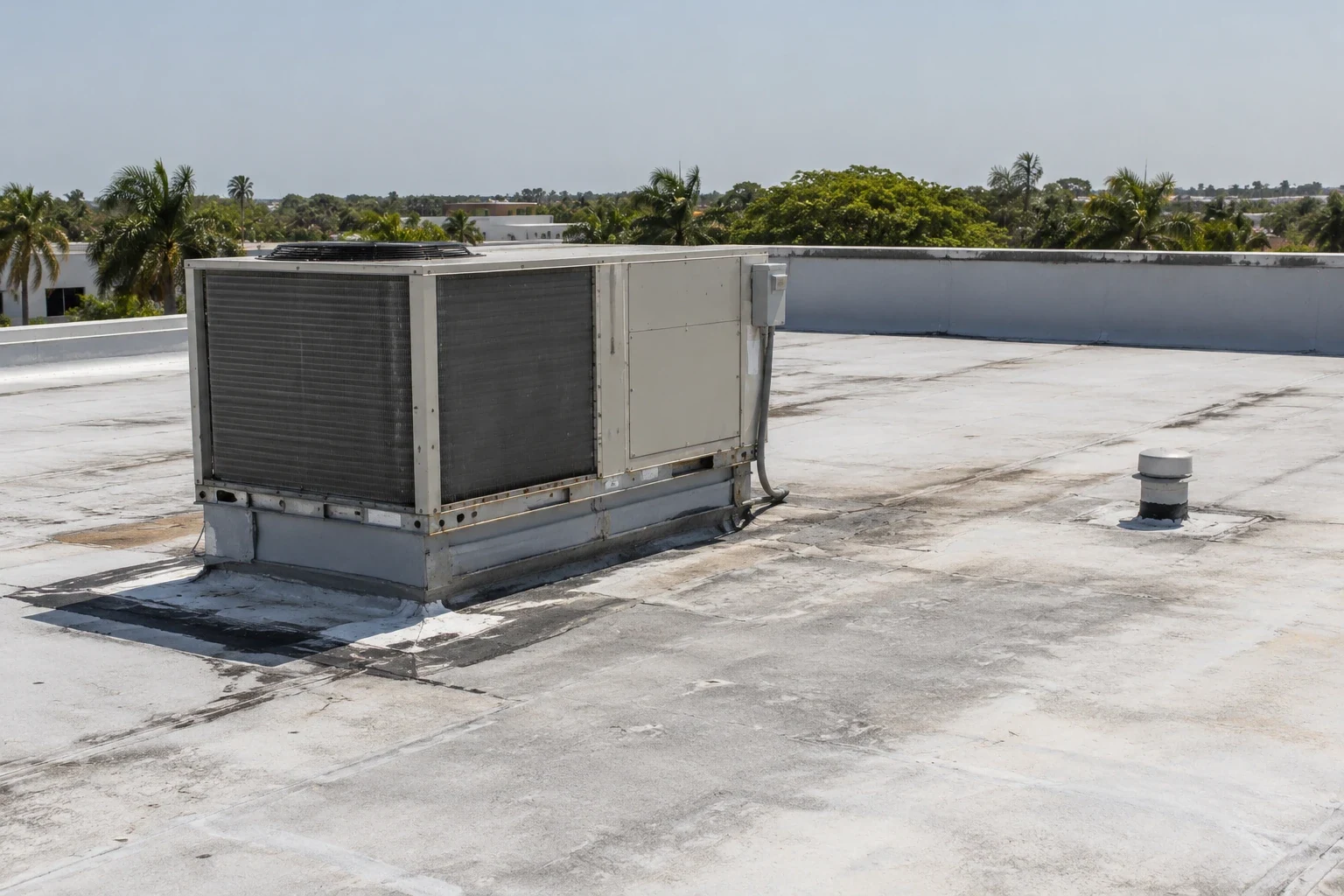
Many armories pair the open hall with wings of classrooms, offices and a kitchen. Each wing has its own roof height, its own equipment and its own tolerance for water. The kitchen exhaust fan puts grease, heat and vibration on one patch of roof, and its curb flashing and membrane need a detail that handles all three. The classroom wing may hold rooftop units whose condensate lines and refrigerant runs cross the membrane in several places.
We count every penetration before pricing the work. Each one gets its own flashing, tested for fit and watertightness before the unit goes back into service. Where the wings share a wall with the hall, the junction gets extra attention, since movement between a tall hall and a lower wing is where flashing works hardest and fails first.
Keep the Building Ready as a Staging Point in Storm Season
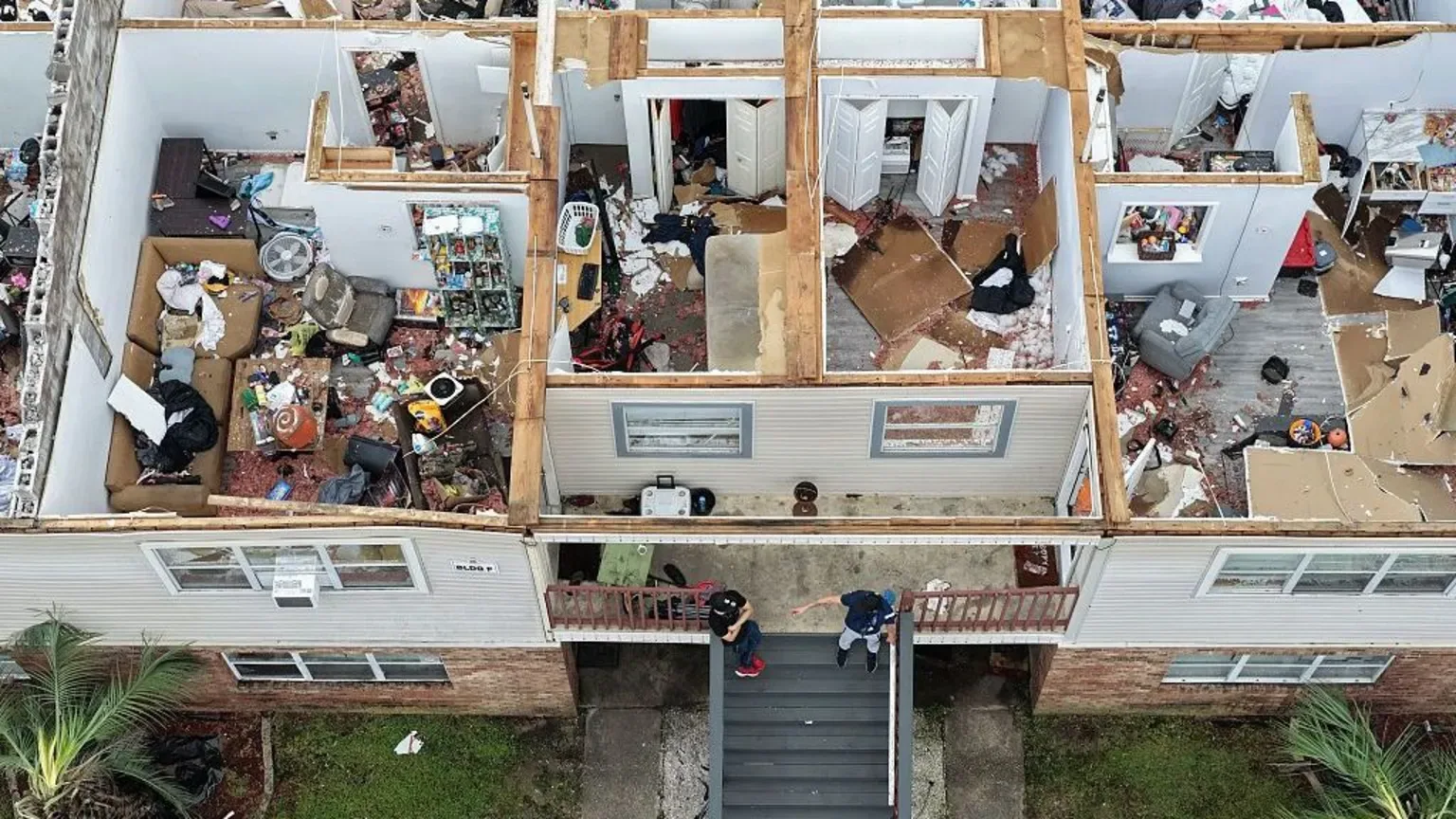
Guard units are called up when storms hit, and their buildings are expected to work at the worst possible time. Hurricane Ike in 2008 and Hurricane Beryl in 2024 left millions without power. On January 24, 2023 an EF3 tornado left a near-continuous run of damage from Pasadena through Deer Park to Baytown. An armory that serves as a staging point cannot be the building with a wet floor and a torn edge.
So we inspect before the season: edge metal, flashings, drains and rooftop equipment tie-downs, with fixes made while the weather is dry. Once a storm passes, hurricane damage roof repair opens with a same-day look at openings and a temporary dry-in. Baytown was one of the three cities on that tornado track, and both Baytown and Pasadena had Guard readiness centers, a reminder that one event can cross several communities that host Guard buildings.
Armory work should be divided around both drill use and the staff who maintain the building between scheduled activities. Identify secure rooms, storage areas, kitchens, classrooms, and assembly spaces before planning roof access. Confirm which staff can escort contractors and what information may appear in progress photographs. When a project overlaps a drill weekend or community use, establish a stop-work and cleanup plan that leaves the facility ready for its next function. Record the roof assembly and repairs by building zone rather than by a single site-wide summary. That gives full-time staff a practical maintenance record even when project decisions were made by a separate facilities office.
Commercial Roofing Questions
Who holds the keys and alarm codes during a roof project on an armory?
The building's full-time staff do. They open gates, reset alarms and escort the crew where needed, so we schedule work around their hours and give them a daily list of who is on site and where.
How is the roof above an arms room or secure space handled?
It is treated as a protected area. We plan the work so the crew never enters the room, and we agree in advance on the escorted procedure to follow if water appears, including who opens the door and how interior protection goes up.
What fails first on the roof of a long-span drill hall?
Midspan ponding and the perimeter. Water collects in the middle of a long span where the deck deflects, and wind attacks the edges. Those two spots are where we focus the first survey walk.
How soon after a hurricane should an armory roof be checked?
Before anyone is sent back in. A same-day look at edges, drains and openings catches damage that would let water reach the drill floor, and it gives the unit a basis for deciding whether the building is ready to use.
Why does a kitchen exhaust fan on an armory roof need its own detail?
Grease, heat and constant vibration load a small area of the membrane harder than any other part of the roof. A purpose-built curb and flashing keep that patch watertight, and a regular cleaning schedule keeps grease from eating the sheet.
Keep Reading
Related Roofing Work in Pasadena
Walk the Drill Hall and Secure Spaces With Us
Bring the building contacts, the access rules and the drill calendar. We will walk the roofs with your staff and plan a sequence that keeps the hall dry and every secure room undisturbed.