
Property Types We Roof
Manufacturing Plant Roofing in Pasadena, TX
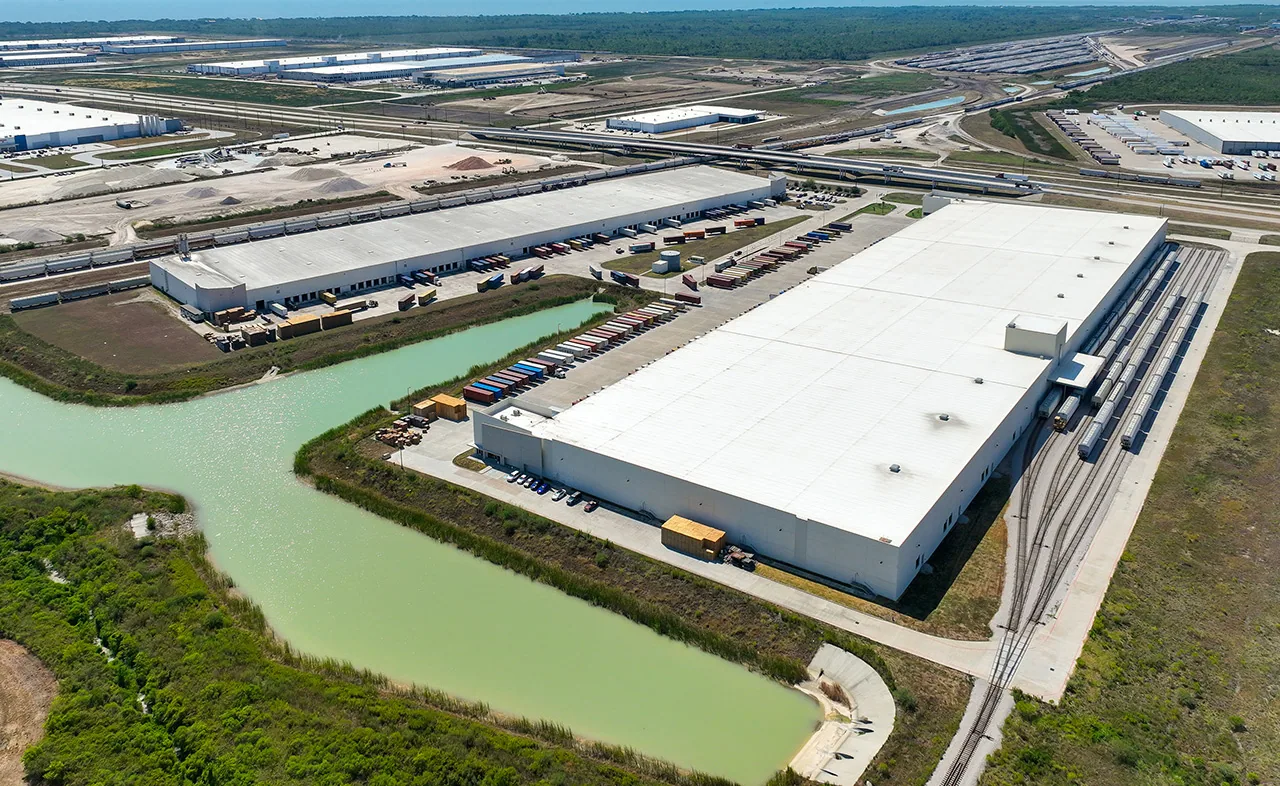
Plants plan in turnaround cycles, and the roof gets whatever window the process side leaves over. A unit goes down for a few weeks, contractors flood the site, and every crane, scaffold and permit competes for the same gate. A roof project that arrives without a lift plan and a clear place to stage material is the one that gets pushed to the next shutdown, with another year of leaks in between.
For a manufacturing plant in Pasadena, TX, the roof also sits in the middle of the Ship Channel's industrial belt, in humid bay air, under whatever the stacks and vents put into it. We plan the work on the ground with the maintenance manager and the safety lead first. The membrane decisions come after we know what the building makes, what it exhausts and when it stops.
Line Up Hot Work Permits and Site Orientation Early
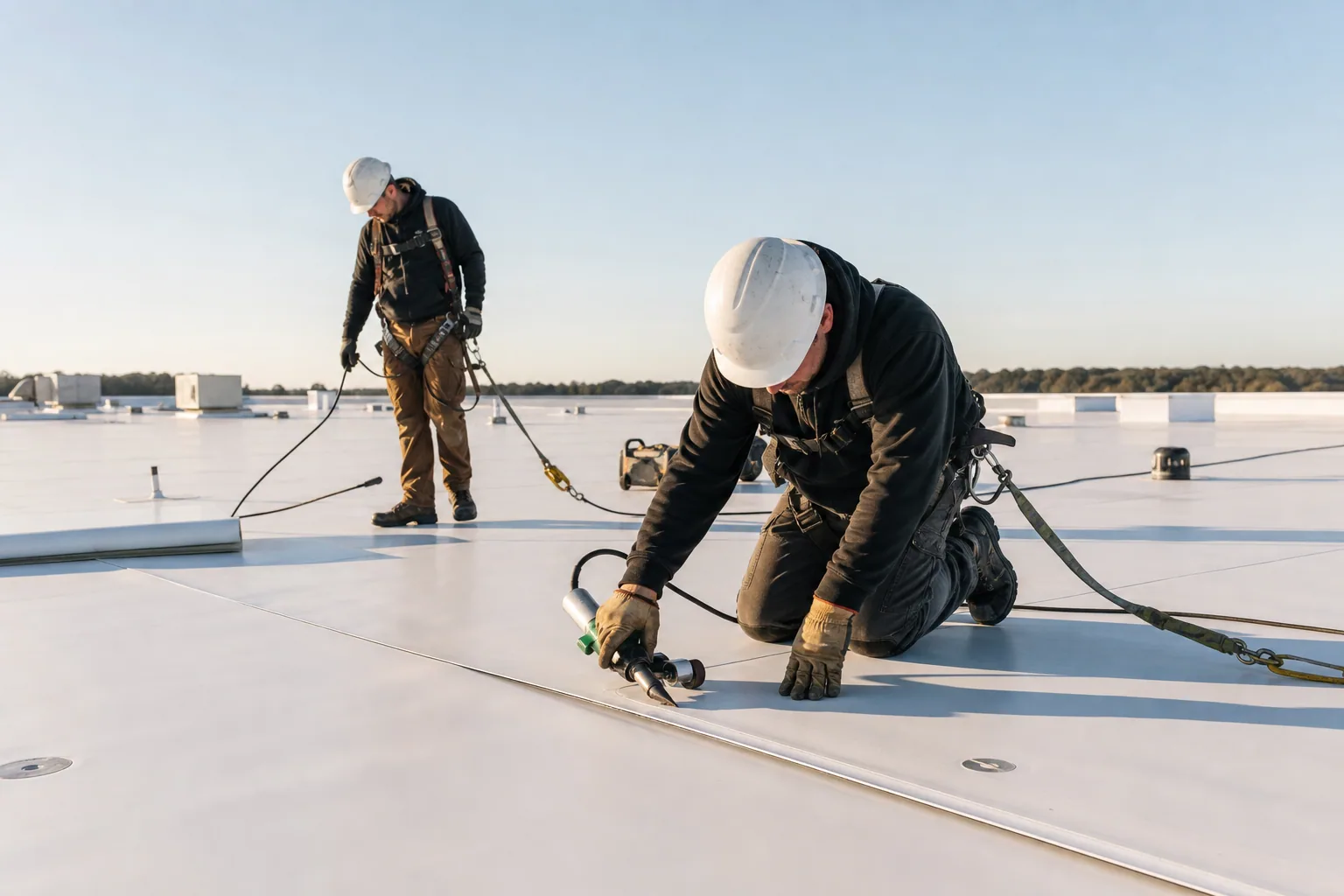
Plant sites have their own rules, and the rules set the schedule. Hot work permits control any torch, heat gun or hot-air weld on the roof, and some areas of a plant restrict them entirely, which pushes a job toward cold-applied adhesives or mechanically attached systems. Every person who steps onto the site completes a site safety orientation, and many plants add escorts, badging, gas monitoring or restricted zones around process equipment.
We ask for the permit procedure, the orientation schedule and the list of no-go areas before pricing the work, because each one changes labor hours and method. A good plan lists the permits needed by day, who signs them, and what the crew does on a day when a permit is not issued. That list belongs in the project file next to the roof drawings.
Match the Membrane to What the Stacks Put on the Roof
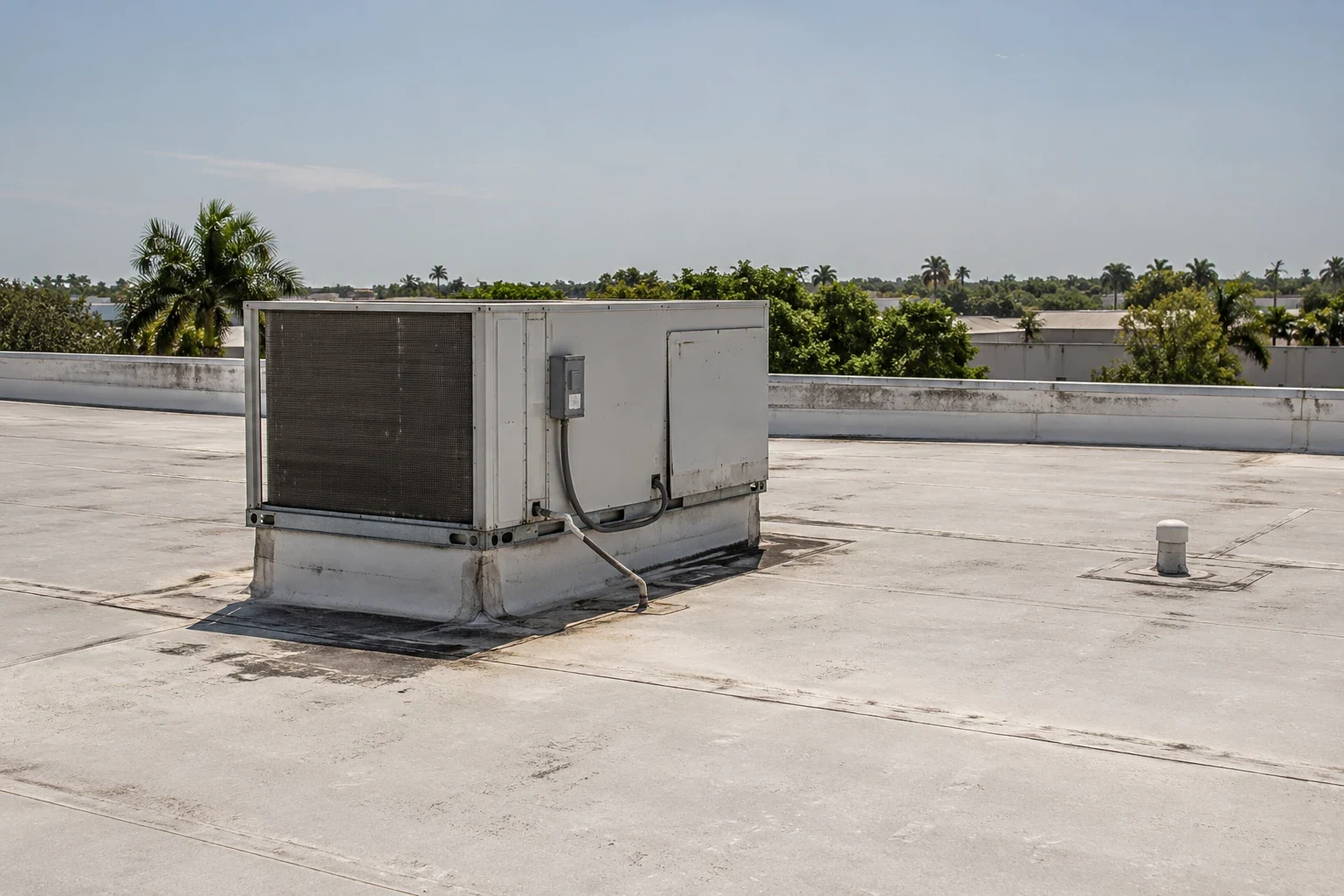
A plain office roof sees weather. A plant roof sees weather plus whatever the process releases: oils, solvents, grease from kitchen exhaust, condensate from process vents, fine dust from cutting or blending. Some of those soften seams or swell the surface of common membranes, and the damage looks like age when it is really chemistry.
Where exposure is real, PVC and KEE membranes resist many oils and chemicals better than standard options, and we say so in the scope. We ask the plant for vent locations and the substances involved, plan walk pads where maintenance crews cross the roof, and keep exhaust discharge points away from field seams wherever the layout allows.
Stop Corrosion at the Metal, Not Just the Membrane
Pasadena lies low, about 30 feet above sea level, with the Ship Channel along its north edge and Galveston Bay to the southeast, so the air stays humid much of the year. Add industrial exhaust and the metal on a plant roof takes a beating: fasteners, plates, edge flashing, coping, curb flashings and the top of the steel deck itself. A membrane can be sound while the attachment underneath has thinned.
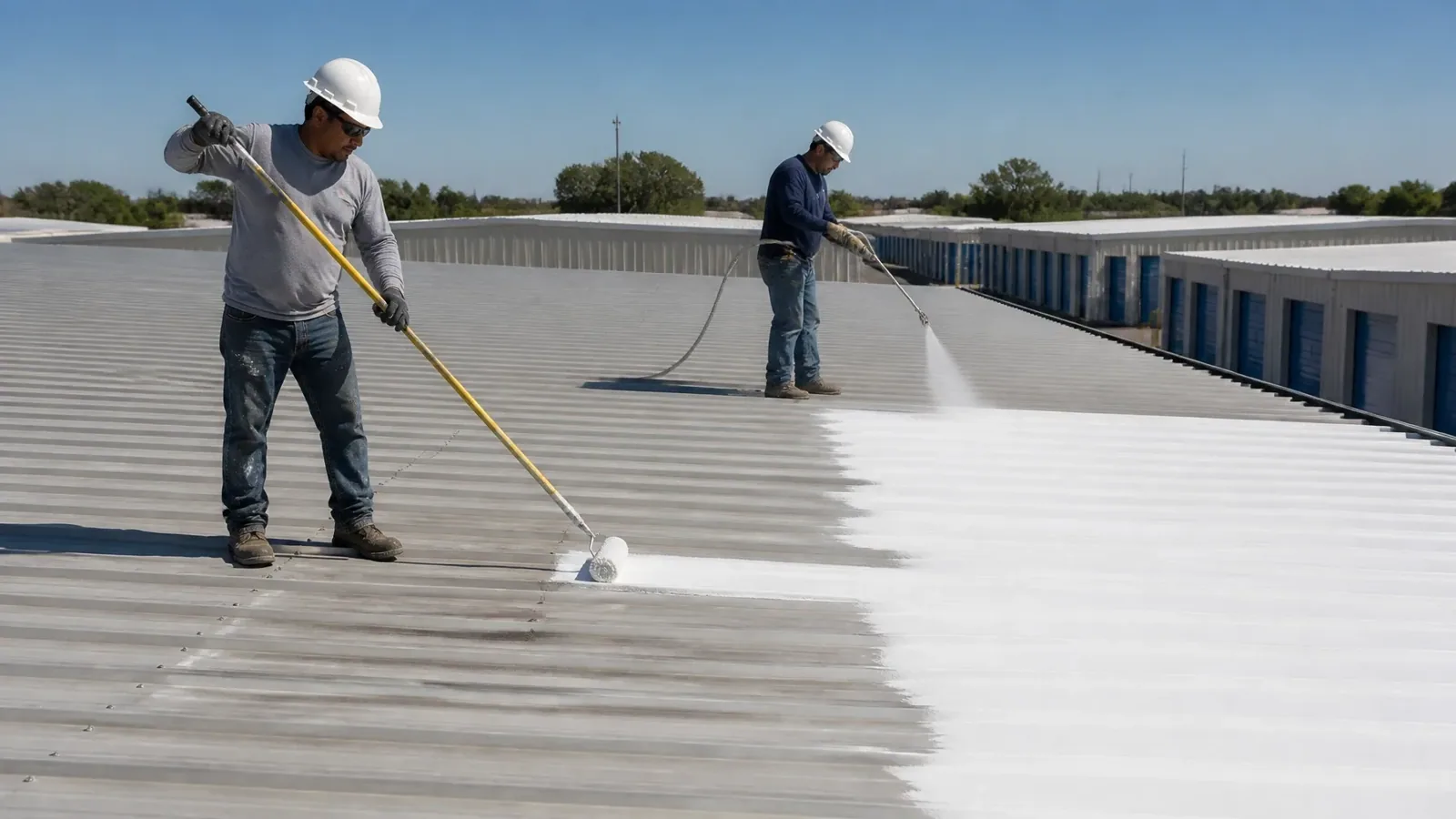
On a plant near the Bayport Industrial District or the SH 225 corridor, we pull sample fasteners and check the deck during any survey, specify coated or stainless components where the exposure justifies them, and form edge metal in a profile that sheds water rather than trapping it. Early coating restoration can protect a roof that is aging evenly but not yet failing. It cannot bring back a deck that has already rusted through.
Fit the Roof Into the Shutdown Window
When a plant gives us a shutdown window, the work has to be ready to start on day one. That means material staged in advance, the lift plan approved, the crane pick set for the quietest hour at the gate, and the crew's orientation already complete. We break the roof into areas the window can absorb and finish each one to a watertight stage before moving on, so an overrun never leaves a half-open roof over a running process.
Where the building runs all year, we work area by area with no shutdown at all, using temporary protection over production lines and agreeing on quiet periods for noisy tear-off. A full replacement may stretch over several windows, and the plan gives each window a clear, tested stopping point.
Plan for the Storms This Industry Has Already Lived Through
Hurricane Harvey in 2017 shut down about 2.25 million barrels a day of Gulf Coast refining capacity, roughly 12 percent of the U.S. total, and showed how one weather event can stall refining across the Gulf Coast. The January 2023 EF3 tornado cut across Pasadena and Deer Park with winds near 140 mph, and the May 2024 derecho followed with estimated winds near 100 mph in downtown Houston. A plant that depends on dry buildings treats events like those as a planning input.
That means walking the roof before storm season, securing loose items, checking edge details and keeping a repair crew's number where the shift lead can find it. After a hurricane or a tornado, tornado damage repair and wind repairs begin with a safe assessment and a dry-in, then move to permanent work on a schedule the plant can plan around.
Record the Roof Alongside the Plant's Other Assets
Plants already keep asset registers for pumps, boilers and conveyors, and the roof belongs on the list. At closeout we photograph terminations, drains and penetrations, record the system and attachment, and hand the maintenance manager a package that fits an existing register.
A plant with an attached warehouse or a flex industrial building can then see all of its roofs in one planning view through roof asset management, with age, condition and the next scheduled work shown side by side.
Commercial Roofing Questions
Can a roof project run during a turnaround, or does it compete with process work?
It can run, as long as it asks little of the same resources. The roof crew needs the gate, a crane pad and a few permits, not process labor. A plan that names the gate time, the lift plan and the laydown area ahead of the turnaround keeps the roof out of the critical path.
Why does a plant roof age faster than the same membrane on an office?
Chemistry adds to weather. Exhaust, condensate and humid bay air work on seams and metal while heat and UV work on the surface, so a membrane that lasts on an office can wear out sooner at a plant. Our inspections at a plant look at chemical staining and metal condition as well as the field.
What do we need to provide so a hot work permit does not hold up the job?
Give us the permit procedure, the name of the issuer and the lead time needed before the work date. If torch or hot-air welding is restricted near certain process areas, we switch to cold-applied or mechanically attached methods there rather than wait for an exception.
Should we replace or coat a plant roof that is only partly worn?
The deciding factor is moisture in the insulation and the condition of the deck. Where both are sound, a coating or a targeted repair can carry a plant to its next turnaround. Where either is not, money spent on the surface is wasted on a roof that still has to come off.
How should a plant get its roofs ready for hurricane season?
Start in spring, not in June. Clear drains and scuppers, tighten edge metal and loose curbs, remove debris and spare equipment from the roof, and confirm who calls whom when a storm is named. A roof that was looked at in April holds up better in September than one nobody has seen since last year.
Keep Reading
Related Roofing Work in Pasadena
Bring the Shutdown Calendar and Walk the Roof With Us
Bring the maintenance manager, your permit procedure and the dates of the next turnaround. We will walk the plant and the roof together and fit the work to your operation rather than the other way around.