Roof Systems
PVC Roofing Systems in Pasadena, TX
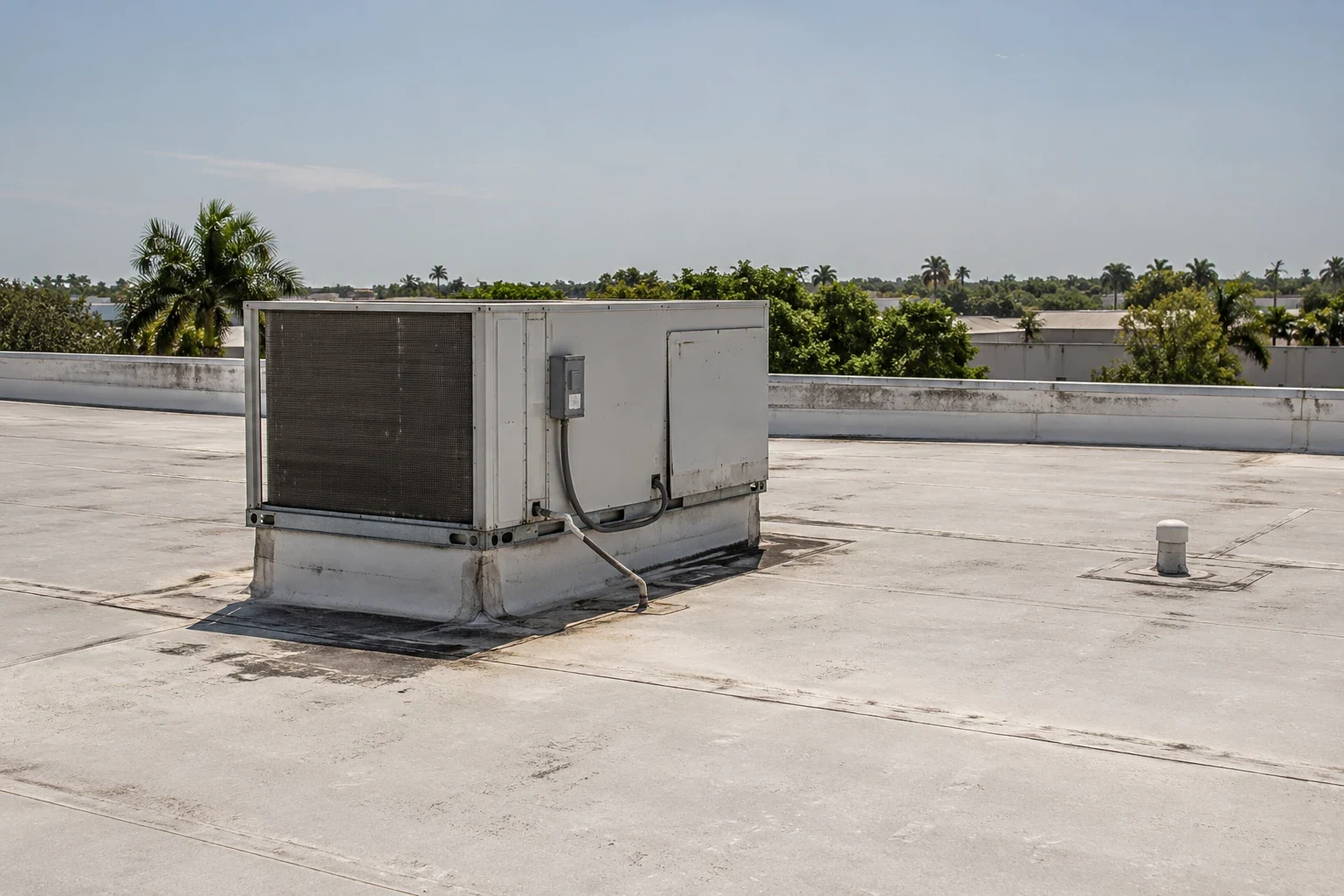
Exhaust leaves a building through its roof, and whatever the exhaust carries ends up on the membrane. A plant vents process air, a kitchen hood throws grease, a lab fan pushes out solvent vapor, and the condensate from all of it runs across the same sheet that is supposed to keep the building dry. That is the case for PVC roofing in Pasadena, TX, where the Bayport Industrial District alone hosts more than 60 chemical plants and the Ship Channel forms the city's northern edge.
Polyvinyl chloride is a single-ply membrane with hot-air welded seams, a reinforcing scrim and a flexible, chemically resistant surface. It costs more per square foot than most alternatives, and on a clean roof with no exhaust it may be more sheet than the building needs. On a roof that stays wet with something other than rain, it is often the sheet that is still intact when the others have gone soft.
Match the Membrane to What Lands on the Roof
The first walk is about exhaust, not leaks. We trace every fan, stack and hood on the roof, note which ones throw oil, grease, solvent or acidic condensate, and mark the drainage paths that carry it downslope. A membrane under a kitchen exhaust takes a different beating from one under a clean air handler. A restaurant roof may need nothing more than grease baskets and a PVC sheet. A plant roof may need a closer look at what the exhaust actually contains.
PVC resists many fats, oils and chemical splashes that soften other single-ply sheets, while a related alloy, KEE membrane, is built for even heavier fat and oil exposure. Neither is a cure for a poor design. If an exhaust fan dumps onto a low spot and ponds there, the answer is a curb extension or a diverter, not a thicker sheet.
Weld Flashings From Pre-Formed Pieces, Not Cut Scraps
Penetrations decide how long a PVC roof lasts. Pipe boots, vent stacks and conduit supports multiply on an industrial roof, and every one is a place where a hand-cut flashing can open at a corner. We use pre-formed boots and corners where the geometry allows, weld every flashing seam with the same hot-air process as the field sheet, and probe each weld before the next detail begins.
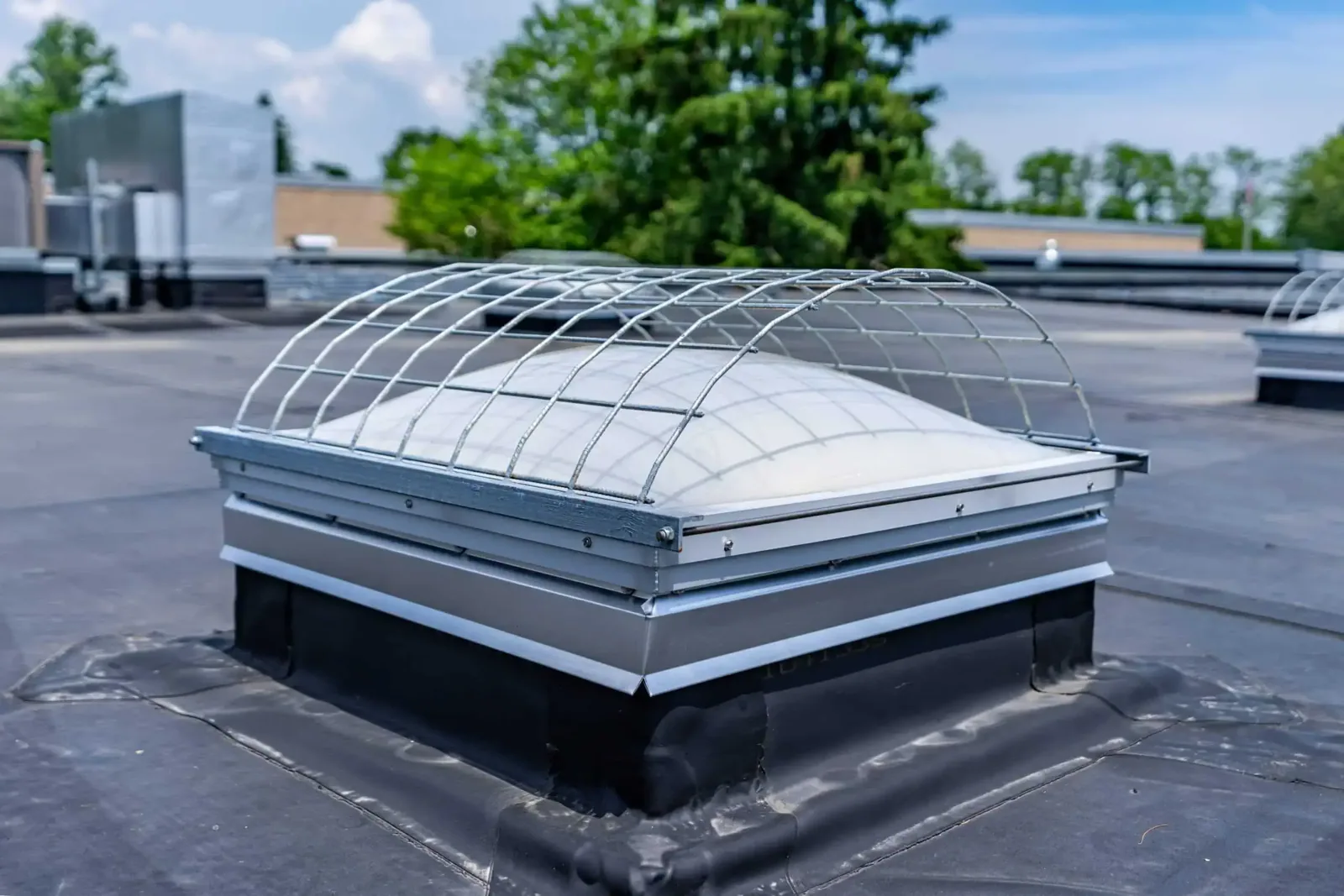
Sleepers, pipe racks and equipment platforms are the other weak points. Where a support stands directly on the membrane, we put a protection layer under its feet and make sure the detail can be inspected from the surface. Skylight and hatch curbs get the same care: skylight and penetration flashing is welded to the field sheet, never caulked and left.
Control Corrosion Around the Sheet
PVC does not rust, but everything fastening it down can. Pasadena is low ground, and the air that drifts in off the channel and the bay is humid and, near the plants, sometimes chemical. Edge metal, termination bars, screws and exposed deck all corrode faster here than they would inland, and a failing fastener shows up as lifted membrane long before anyone sees the rust.
On a manufacturing plant roof in the Bayport Industrial District, we specify coated or stainless fasteners, isolate dissimilar metals and prime any exposed steel deck before insulation goes over it. Galena Park and Manchester, where petrochemical operations sit along the Ship Channel, put the same fastener question to any roof nearby. A corroded deck cannot hold fasteners, so deck repair is priced into the plan before bid day.
Fit the Roof Into the Turnaround, Not the Other Way Around
A process facility runs on a turnaround cycle, and the shutdown window is the one block of time when heavy equipment can move and unit operations pause. Roof work that fits inside it saves the plant from running a second mobilization. Roof work that does not fit has to share the site with live process areas, which means more restrictions on crane swings, hot work, vehicle routes and radio use.
We build the sequence on paper first. That means a lift plan for the crane pick, a laydown area outside the restricted zones, a material staging route, a hot work permit request for any heated detail, and a safety orientation for anyone stepping onto the deck. Hot-air welding is not an open flame, but plant rules vary, so we ask. Phasing then follows the roof's drainage, so each section closes before the next is opened.
Pin the Sheet Down for Hurricane Uplift
Wind finds a PVC roof at the edges. Ike came up the bay in 2008 and Beryl's eastern eyewall crossed the region in July 2024. Harvey in 2017 also idled a big slice of Gulf Coast refining, which says plenty about how the industrial coast takes a storm. A sheet that is properly fastened or adhered, with a continuous edge and heavier reinforcement in the corners, rides out gusts that peel a marginal installation.
East of State Highway 146, windstorm insurance rules add a state inspection to the roof schedule. Seabrook sits in that zone, and so do La Porte and Morgan's Point. We prepare the attachment records before the inspection, not after. Work after a storm follows the same logic as hurricane damage roof repair: dry in first, document everything, then repair to the original standard.
Test Every Weld and Hand Over the Record
A PVC roof ends with a probe walk. Every seam and flashing weld is checked by hand, the results are logged by area, and any weld that fails is reworked and re-probed. We photograph terminations, drains and equipment supports and give the facility director a plan marked with the locations of the exhaust-affected zones.
That plan becomes the maintenance guide. A yearly look at the grease and chemical zones, plus a commercial roof inspection after any major storm, catches small defects while they are still cheap. For a building that later needs a lighter or lower-cost sheet over a dry area, TPO roofing is a fair comparison, and we price both when the roof is evaluated.
Commercial Roofing Questions
Is PVC worth the extra cost over TPO on a roof with kitchen or process exhaust?
Where exhaust drops grease, oil or chemical condensate on the sheet, usually yes, because a membrane that softens or swells fails years before its time. On a roof that sees only sun, rain and dust, TPO is often enough. We map the exhaust locations first and price both options so the owner sees the gap in numbers.
Can a new PVC sheet be welded onto an old PVC roof during a repair?
Only after a test patch. Aged PVC can lose plasticizer and take on dirt, and a cleaned surface that welds well in one area may not weld in another. We make a trial weld and pull it, and if the old sheet will not fuse, we use a mechanical termination or a different repair approach.
What permits does heat-welding PVC need on a plant roof?
Each site writes its own rule. Hot-air welding does not use a flame, but many facilities still treat any heat tool as hot work and require a permit, a fire watch and a site safety orientation. We ask for the rules at the first walk and build the permit lead time into the schedule.
Does the corrosive air near the Ship Channel hurt PVC itself?
No, the sheet is resistant. What suffers is the metal around it: edge flashing, fasteners, termination bars and deck. We choose coated or stainless hardware for roofs near the channel and the bay and inspect those metal parts first at every visit, because their failure is what lets the membrane lift.
What do you do with a half-finished PVC tear-off when a named storm is forecast?
Close every open edge before anything else. That means sealed tie-ins to the old roof, ballast on loose sheet, temporary flashing at curbs and drains, and a dry-in check by a lead tech. Material left on the roof gets tied down or removed. When the storm passes, we inspect the whole area before work resumes.
Keep Reading
Related Roofing Work in Pasadena
Walk the Exhaust Zones With Us Before the Sheet Is Chosen
Bring your plans, your turnaround calendar and a list of what vents through the roof. We will walk the site with your facility director and fit a PVC plan to the way the building runs.