
Property Types We Roof
Data Center Roofing in Pasadena, TX
A data center runs on a promise written in nines of uptime, and a roof leak is the one threat that arrives from outside the power and cooling plan. Rain does not respect redundancy. Water that finds a seam above the white space or the switchgear room can undo years of engineering in an afternoon, which is why facility directors in this field treat the roof as a critical system and not a finish.
For a data center or telecom building in Pasadena, TX, the stakes sit on top of a hard climate: heavy summer rain, heat that taxes cooling plants, and storm seasons that have knocked out grid power for millions. We plan a data center roof the way the building is run, with change control, access procedures, a fixed number of penetrations and a written method for every task above the equipment.
Clear Security, Escort and Change Control Before Mobilizing
Access is the first schedule item on a mission-critical building. The crew is badged, escorted and logged, tools and materials are inspected at the gate, and any work above live equipment goes through the same change-control process the building uses for its own maintenance. Each person completes a site safety orientation, and the facility team often wants a written method of procedure for the work, with a rollback plan if the weather turns.
We ask for those procedures during the first walk and build the roof schedule from them. Material staging is agreed in advance, with a laydown area outside the secure perimeter wherever possible and the crane pick set for a time when the yard is quiet. A job that starts with its paperwork in hand rarely stalls at the gate.
Protect the White Space and the Electrical Rooms First
The roof plan ranks the space below it. Over the data hall, the switchgear room and the generator and UPS rooms, we open the smallest sections, keep temporary protection staged before the first cut, and finish each section to a watertight stage the same day. Drains, scuppers and rooftop piping are located away from the critical zones wherever the layout allows, so the first failure point is not over the equipment.
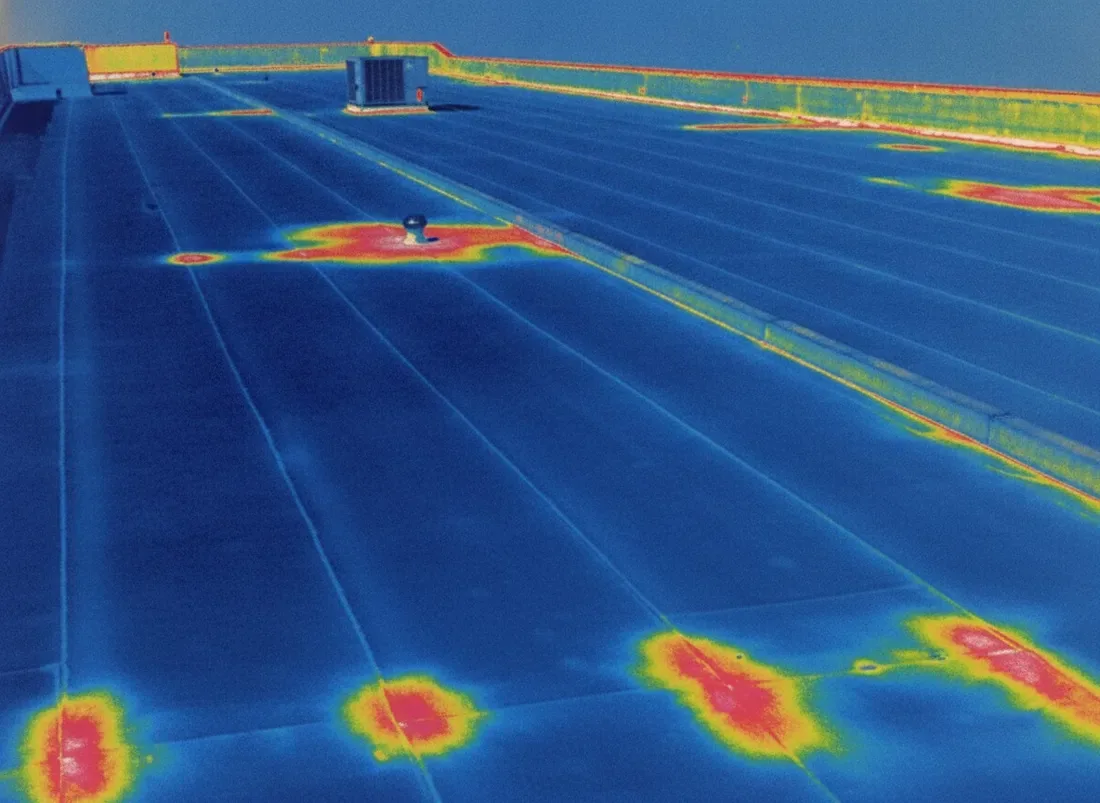
Where a roof is already leaking over sensitive space, an infrared moisture survey finds water in the insulation before it shows inside, and a prompt leak repair closes the entry path. We also coordinate with the building's leak detection, so its alarms and our roof work point at the same location.
Plan Chillers, Dry Coolers and Generator Exhaust on the Roof
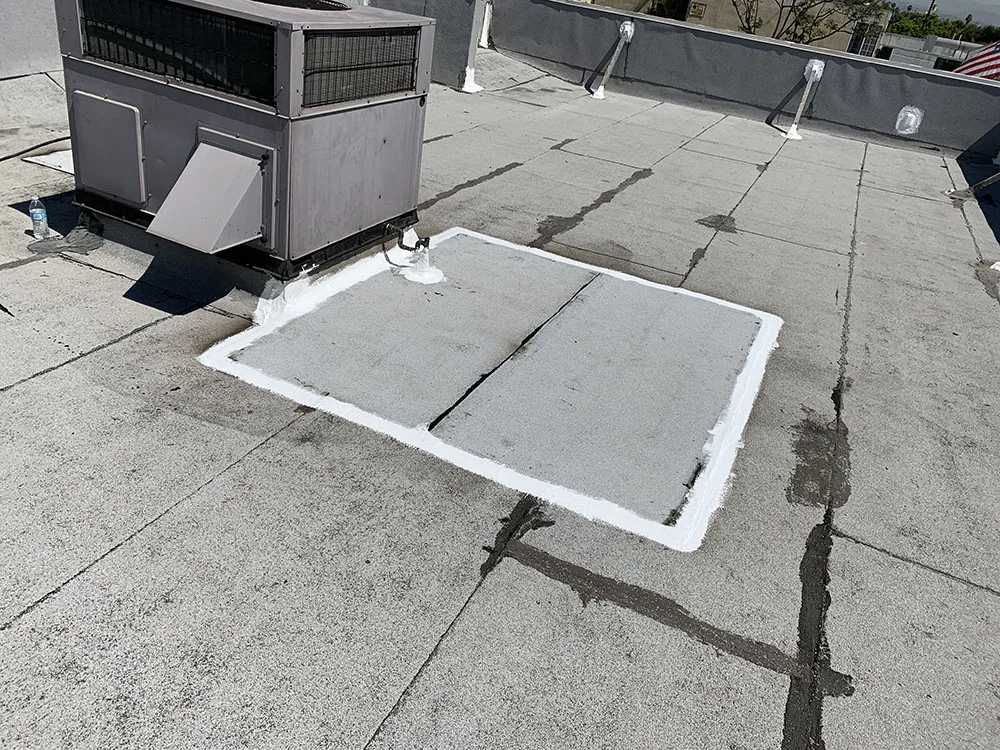
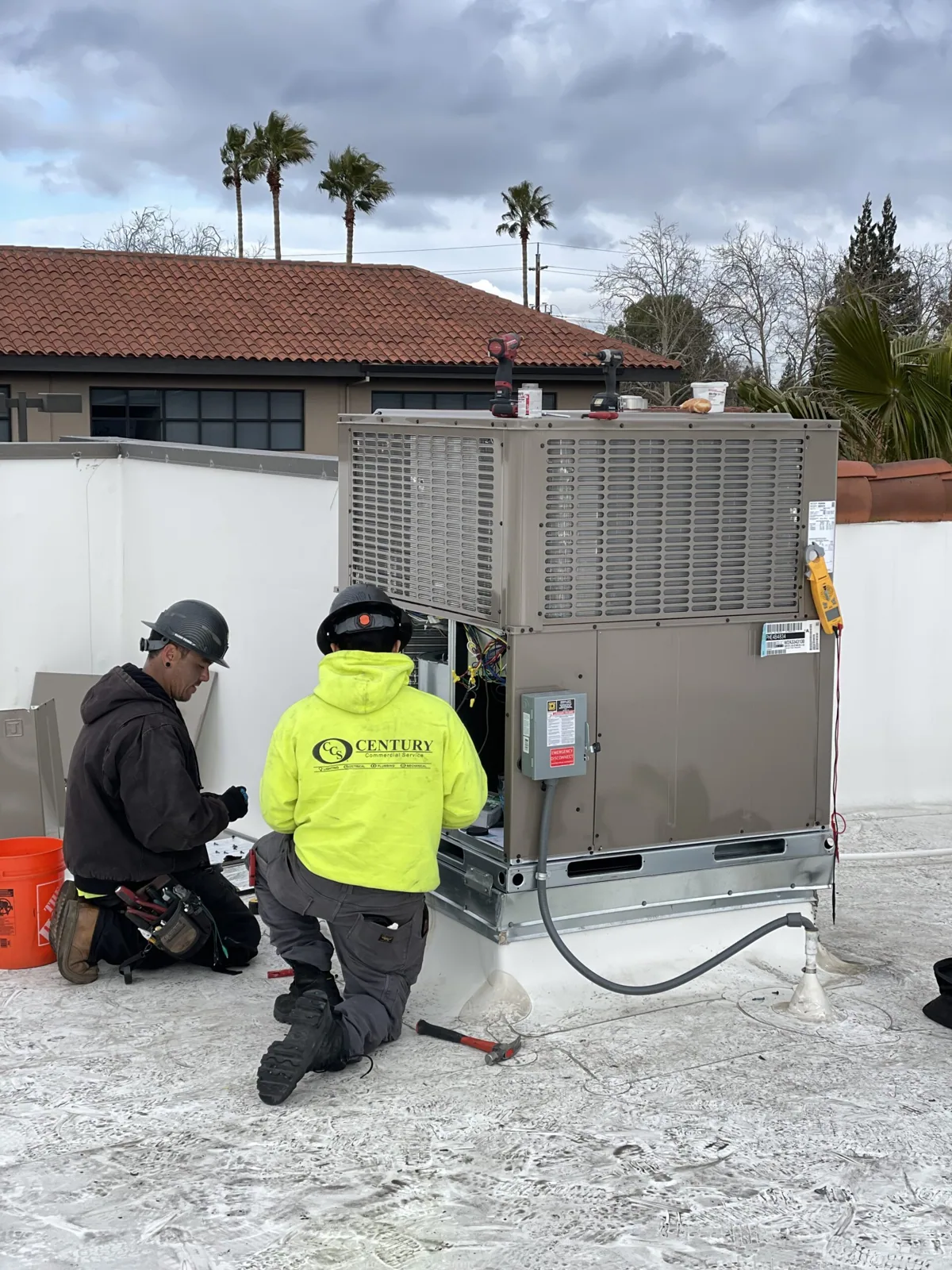
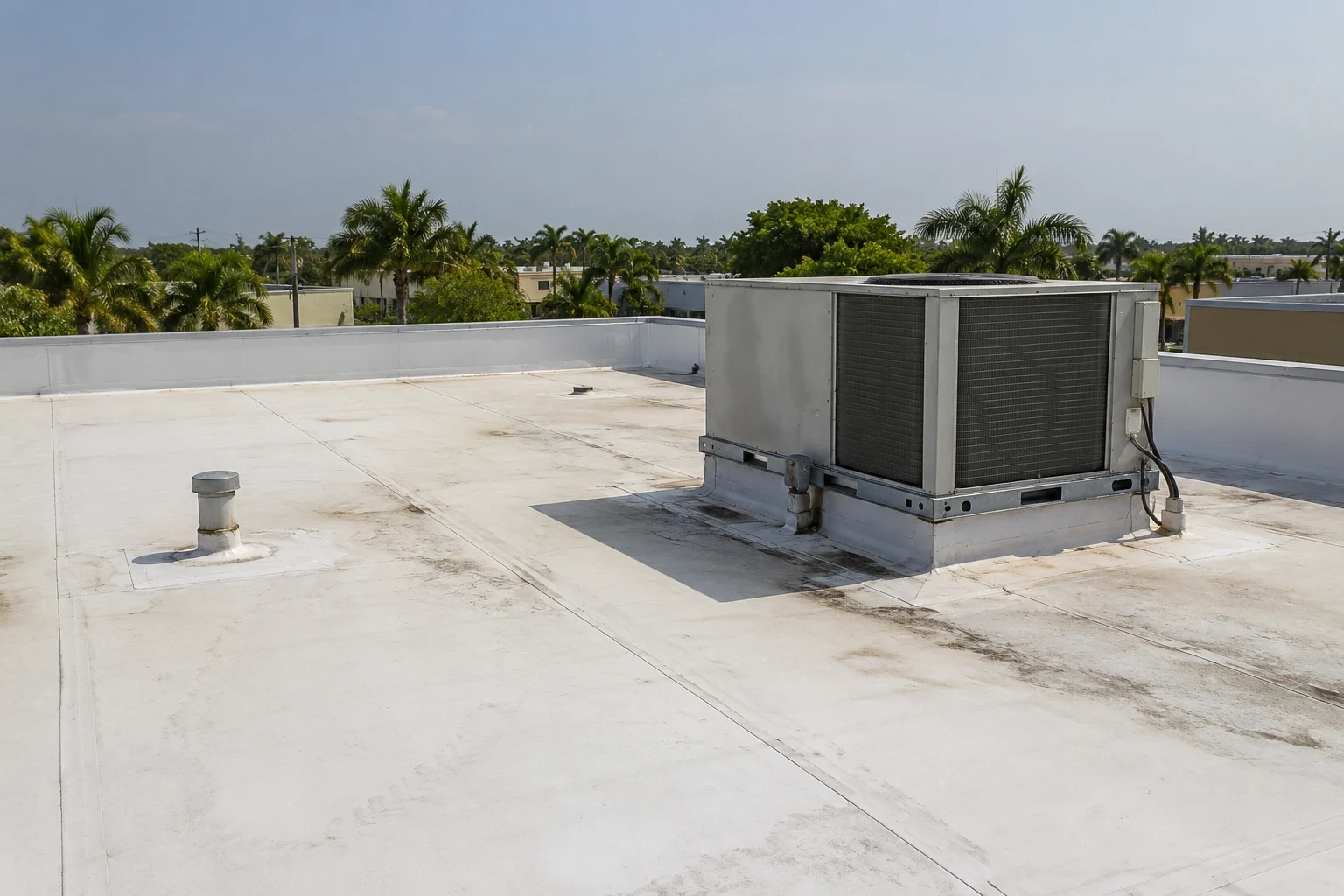
Cooling plant and exhaust equipment often live on or beside the roof of a data center, and the roof has to carry them. Heavy equipment means structural checks, properly built curbs and supports, vibration isolation and walk pads on every service route. Refrigerant and condensate lines pass through the membrane and need flashing details that can be inspected and, if needed, replaced without cutting into the surrounding roof.
Heat matters here too. Summer 2023 was the hottest on record at Houston, with 109 F reached at both major airports, so equipment running flat out adds heat to the roof around it. We use heat-reflective membranes and plan clearances so air can move around the equipment pads instead of trapping hot air against the sheet.
Choose Methods That Respect Hot Work and Fire Code Limits
Pasadena's City Council adopted the 2024 International Fire Code, along with current NFPA standards including NFPA 101, effective January 19, 2026. Hot work controls under the fire code, plus a data center's own fire protection system, usually take open flame off the table. We plan around that with adhesive or mechanically attached single-ply systems such as TPO or EPDM, cold-applied flashing, and a hot work permit procedure for any rare exception, with a fire watch and written sign-off.
Early-warning smoke detection and clean-agent suppression make the interior sensitive to dust and fumes as well. We coordinate adhesive use and tear-off dust with the facility team and, where needed, close air intakes and dampers during the operation so nothing from the roof reaches the white space.
Prepare for the Outages That Storms Keep Producing
Backup generators exist because the grid goes down, and this coast gives it plenty of reasons. Beryl's landfall in July 2024 cut electricity to over 2.7 million customers across Texas, the derecho about two months earlier did the same to more than a million in Greater Houston, and a line of severe thunderstorms in June 2023 put a 97 mph gust on the Bush Intercontinental gauge, the highest ever recorded at that airport. The EF3 tornado of January 2023 cut across Fairmont Parkway at about half a mile wide, and the Houston/Galveston forecast office issued its first-ever Tornado Emergency for it.
A facility running on generators for days cannot also be dealing with a torn roof. Uplift-rated attachment, secured perimeters and a roof checked before the season are part of the continuity plan, and after a storm our hurricane damage roof repair response begins with a safe assessment and a dry-in. A site east of State Highway 146 sits in windstorm-insurance territory, where state inspection of the roofing work comes with the job.
Leave a Record That Fits Change Control
When the work ends, we hand over the as-built roof plan, photographs of every penetration and termination, and the product data, in the format the facility team already uses for change records. The owner can see which parts of the roof sit over critical space, which curbs carry equipment and which details need attention at the next review.
Where a data hall shares a roof with office space, the same record covers both, and the planning habits carry over from a hospital where the building cannot stop either. Owners buying or refinancing such a property can also use due diligence roof surveys to understand the roof's remaining life before they commit.
Commercial Roofing Questions
Can the roof be replaced while the data hall stays live?
Yes, in sections and with controls. The crew works over one zone at a time, interior protection is staged before each cut, and the building's own leak detection stays armed. Your change-control process says which zones are open on which days.
How many roof penetrations are too many over critical space?
Fewer is better, and every one needs a detail that can be inspected. Over the white space we hold penetrations to the ones the building cannot do without and place the rest over lower-risk areas. Count them at design, because each one is a future leak point.
Does a data center need a different membrane than an office building?
The membrane is often the same, and the details are not. A reflective single-ply is common because it keeps surface temperatures down and installs without flame. What changes is the number of curbs, the way equipment is supported and how repairs are staged around live space.
What does a hurricane mean for a facility on generator power?
It means the roof cannot be the thing that fails. If grid power drops for days, the generators run and the roof has to keep water out the whole time. Edge securement, drain clearance and a pre-season inspection keep that from becoming a second emergency.
How should we document the roof for a lender or an insurer?
The deciding factor is a record they can check. A condition report with dated photos, a plan marking penetrations and critical zones, and any survey results give an insurer or lender something concrete, and they make a later claim easier to support.
Keep Reading
Related Roofing Work in Pasadena
Share the Change-Control Rules and Walk the Roof With Us
Bring the facility director, your access procedures and the maintenance calendar. We will walk the roof together and write a work plan that keeps water and dust away from critical space.