
Industries We Serve
Roofing for Logistics and 3PL Operators in Pasadena, TX
A third-party logistics operator sells one promise to every customer: the pallet leaves in the condition it arrived. Rain on the wrong bay breaks that promise, and the claim does not go to the roofer, it goes to the operator who signed the storage contract. The roof over a 3PL building is therefore part of the service the company sells, even though most of its customers will never look at it.
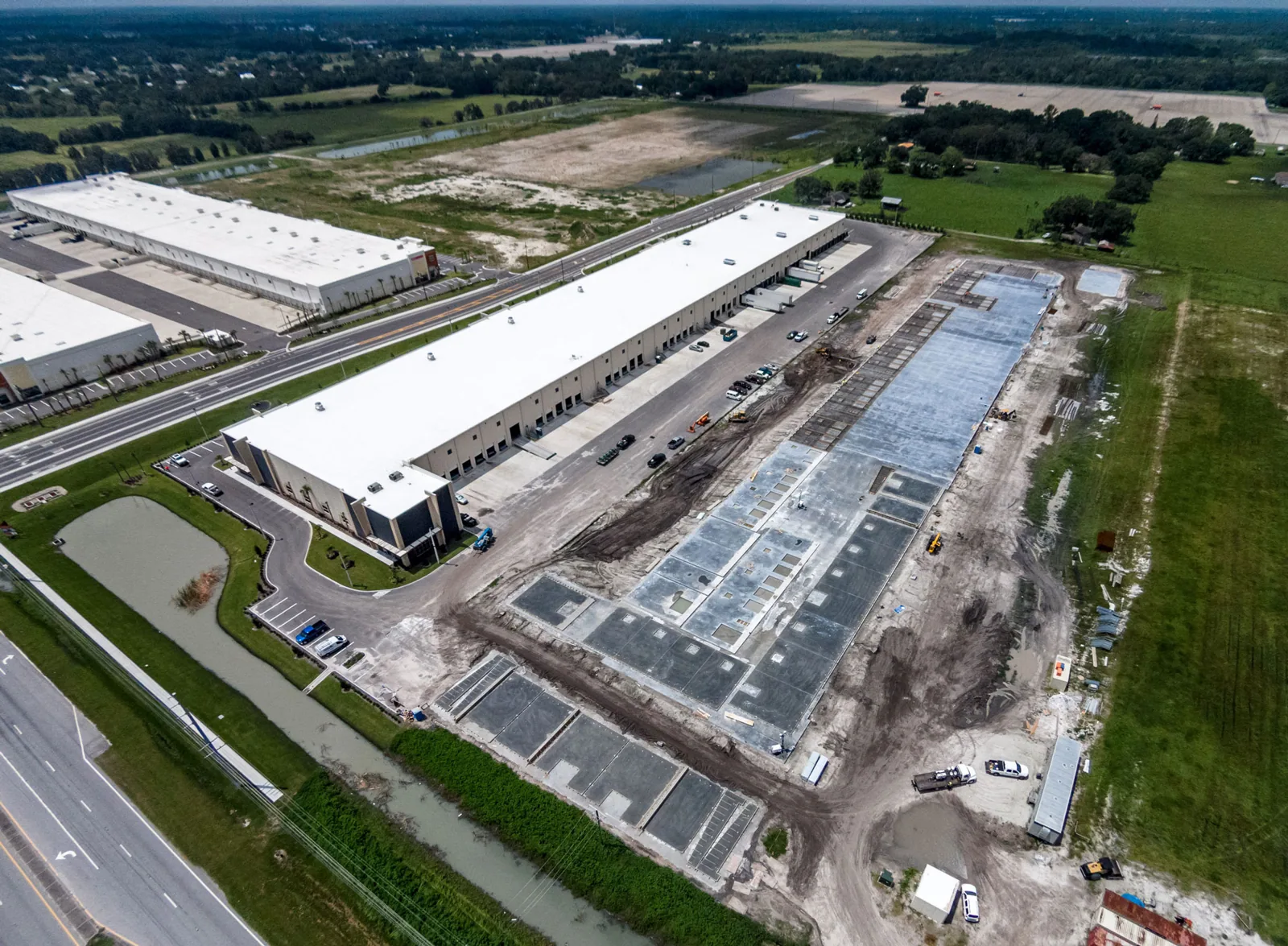
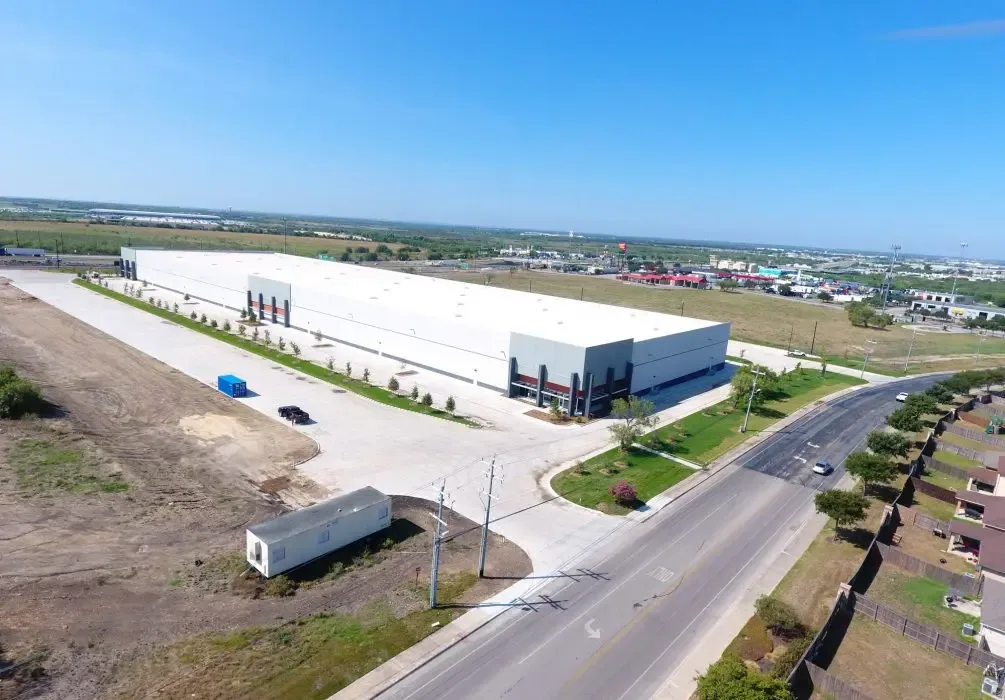
In Pasadena, TX that promise is tested by geography. Port Houston's Bayport Container Terminal sits in the city's industrial complex, and Silver Eagle Distributors bought 100 acres at Beltway 8 and SH 225 for a distribution facility. Operators here need a roof plan that treats inbound volume, dock traffic and Gulf weather as one schedule.
Protect the Product You Hold for Someone Else
Every aisle in a 3PL building belongs to somebody different, with a different tolerance for water and different insurance. We begin by asking which customers occupy which bays, what they store, and what a wet pallet costs them in contractual terms. Electronics, paper goods, food-grade packaging and chemicals all react differently, so the roof plan ranks the bays beneath the membrane the same way the warehouse manager ranks them on the floor.
That ranking sets the order of the work and the protection that goes in under it. A distribution center roof gets inspected over the sensitive bays first, and any repair there is done with temporary cover staged before the weather turns. When the operator relocates a customer's stock for a day, we sequence the roof work so that the relocation happens once, not three times.
Plan the Work Around Dock Doors and Port Surges
Container arrivals do not follow a roof calendar. Port Houston's public terminals, Bayport among them, moved roughly 4.1 million TEUs and about 53 million short tons of cargo in 2024, and a warehouse that handles that freight feels each surge as full docks, so the quietest weeks are not always the ones on the wall calendar. We ask for the inbound forecast and plan the open sections to match it.
The mechanics are straightforward. The crane sets up outside the truck court, the laydown area stays off the dock apron, and the crew opens a section only when the forecast and the dock schedule both allow it. Work on occupied buildings with trucks at every door relies on a daily huddle between the foreman and the dock supervisor, and a night shift is available for the loud steps near doors that cannot close.
Document the Roof at Move-In and Again at Every Renewal
Many logistics operators lease their buildings, which puts the roof in a gray zone between tenant and landlord. A condition report taken when the lease begins fixes the starting point: seams, flashing, drains, penetrations, patches. When a leak appears three years later, the argument is about what changed and not about what the roof looked like from the start. The roof condition report we prepare is written so either side can use it.
The same record serves the landlord. Real estate investors and REITs that own industrial space can read the report as a reserve input, and a tenant that maintains drains and reports leaks promptly makes the case for a roof repair or replacement far stronger. A short list of tenant duties, such as clearing outlets and keeping equipment off the membrane, reduces the odds of a dispute.
Keep Dock Temperatures Down and Edges Tight in Port-Side Wind
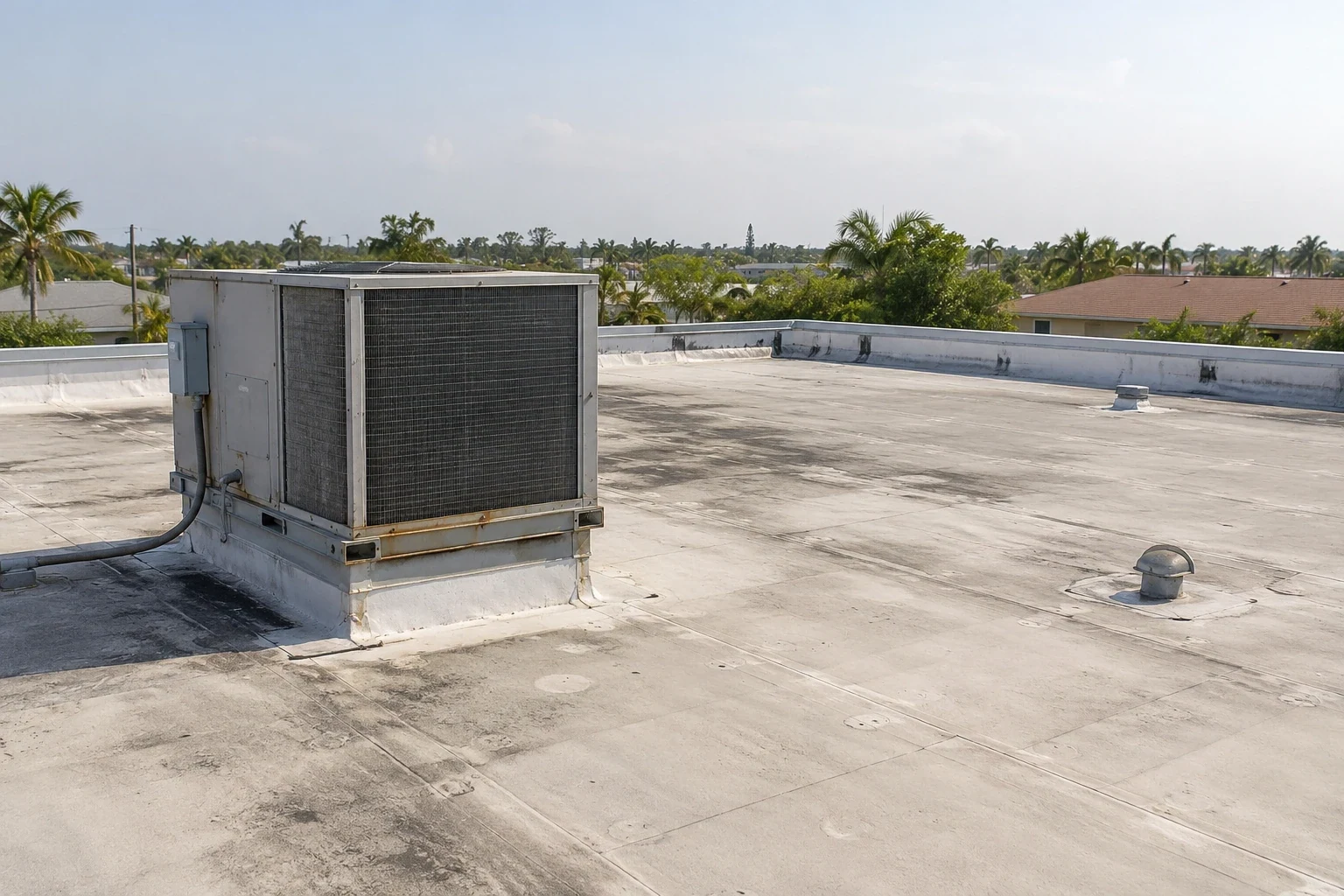
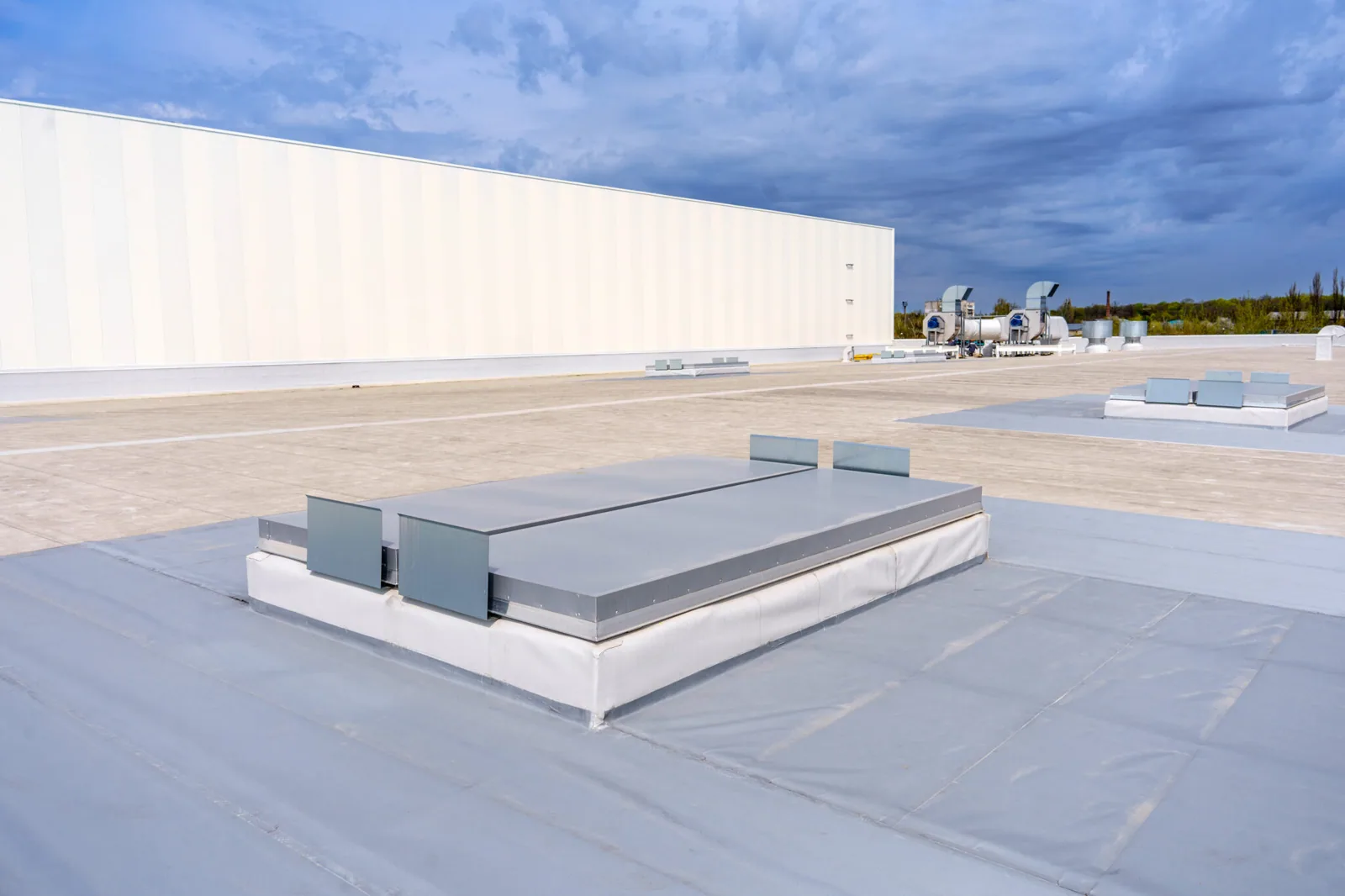
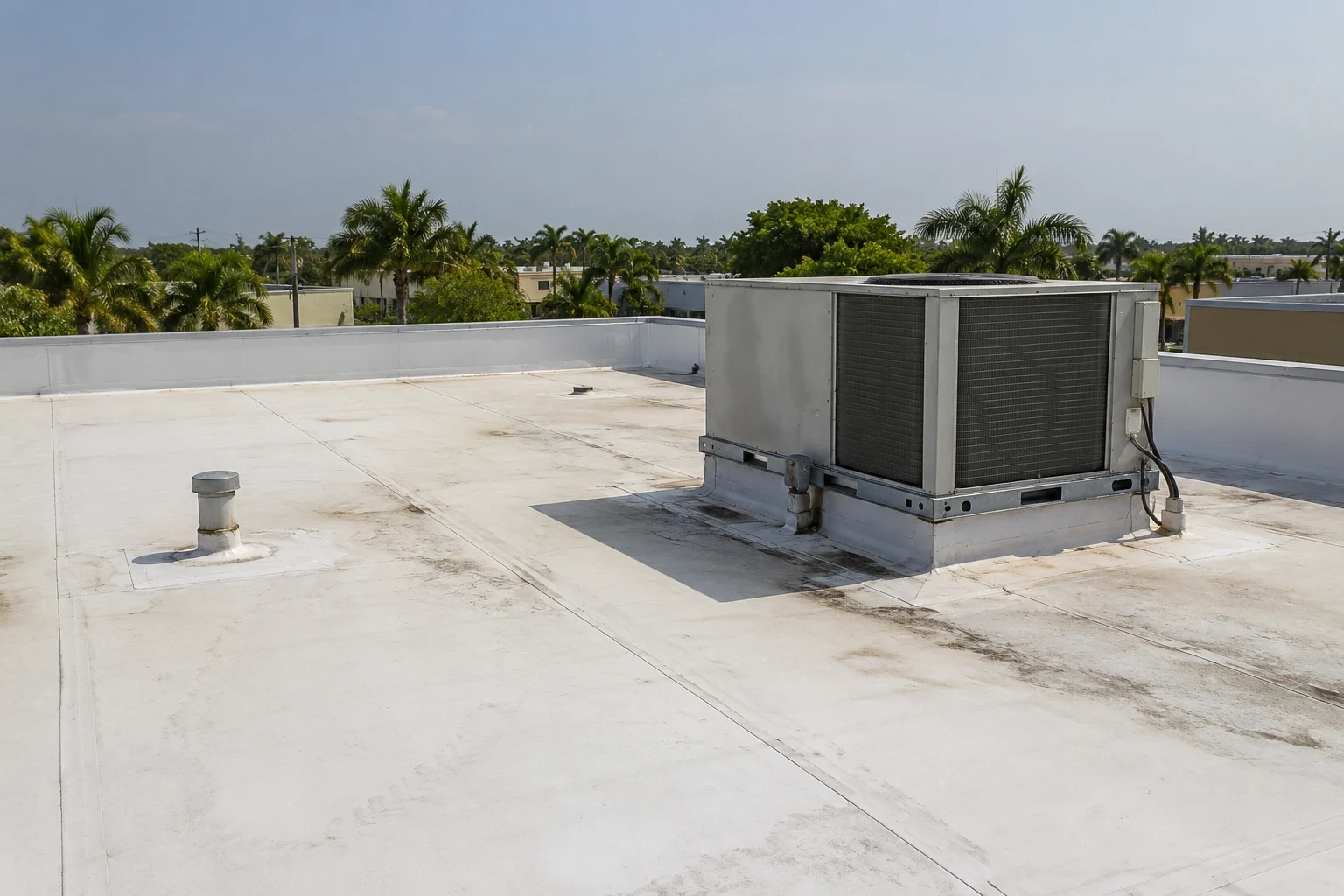
Summer 2023 set the heat record for Houston and Hobby, with 109 F peaks and a run of 18 triple-digit days in a row at Hobby. A dark roof over a dock-door warehouse adds to that heat load, and refrigerated trailers and warehouse staff both feel it. A reflective cool roof installation lowers the surface temperature, and a white TPO roofing system keeps the membrane out of its worst thermal cycling.
Wind tests the edges. Bush Intercontinental Airport logged its highest gust ever, 97 mph, during a line of June 2023 storms, ahead of Ike's 82 mph, and a derecho followed in May 2024. Long low-slope roofs on open sites catch that wind at the perimeter, so we focus on securement: edge metal, perimeter fastening density and the fasteners at transitions and curbs. The tie-down details are written into the project documents and photographed on the roof.
Replace in Blocks and Report by Building
An operator with several buildings near the Shoreacres or along SH 225 can plan those roofs together. A multi-site roof program groups the buildings by condition and by lease cycle, schedules replacements for the roofs that cannot be repaired economically, and keeps coating and maintenance for the roofs that can. The operator sees a calendar, a budget range per building and a closeout report in the same format every time.
Reports go by building, because each building has a different landlord, customer set and insurance. Photographs, drain maps, penetration counts and the date of the last moisture survey sit in one file. When the next peak season arrives, the operator can answer a customer's audit question about the roof in a single email, and the manufacturers that ship through the building get the same answer.
Commercial Roofing Questions
What is the plan if a leak starts over a customer's racking in the middle of the night?
Move first, tarp second. The operator's night supervisor moves product out from under the drip while our crew is called, and the roofer's first job is a temporary cover over the affected area, not a full repair. We agree on that call chain in advance, together with the keys, the access route and the pallets that go first.
Can roofing be scheduled away from the weeks when container volume spikes?
Port surges are visible enough to plan around. Operators usually know the vessel calendar and the customer promotions a few weeks ahead, and we build the open-section schedule from those dates. When an unexpected surge lands mid-project, the crew closes the sections it has opened and moves to a part of the roof that does not sit over the loading docks.
The lease puts roof repair on the landlord, yet our customers' contents get wet. What should we have on file?
Evidence decides a contents claim, and the best evidence is a dated condition report plus a log of every leak report. Photographs of the roof and of the wet area, along with the times you notified the landlord, make a claim for contents far easier to support. The landlord fixes the roof under the lease; the file protects what was sitting underneath it.
How hard does the wind hit buildings near Beltway 8 and the Bayport terminal?
On June 21, 2023 Bush Intercontinental Airport recorded a 97 mph gust, and Hurricane Beryl's eastern eyewall crossed the Houston region in 2024, so the design question is real. Open sites with long, low roofs expose the perimeter first. We check edge metal, fastener patterns and the membrane attachment, and fix the weak points before the next season.
Does a lighter, more reflective roof actually lower the temperature on the dock floor?
A reflective surface cuts the heat the roof takes in, which lowers the load on the ceiling and on the cooling equipment. The effect on the dock floor depends on insulation, door traffic and ventilation, so we describe the roof's contribution fairly. A cool roof also helps the membrane last, which is often the larger benefit.
Keep Reading
Related Roofing Work in Pasadena

Walk the Building With Us
Join us on the dock floor and the roof for a walk with your operations lead. We will learn the customer map and the door schedule so the roof plan fits the operation from day one.