
Service Areas
Commercial Roofing in Dickinson, TX
A low-slope roof in a town that averages 60 inches of rain a year is rarely dry for long, and in Dickinson, TX the drains, seams and flashings do their work all year. Dickinson Bayou runs through the city, the ground sits at only 9.8 feet above sea level, and Hurricane Harvey in 2017 flooded roughly 90 percent of the city. A commercial owner here has to read water before anything else, and a roofing plan has to do the same.
Low-slope and metal roofs are the work, and for a retail strip, a school, a warehouse or a medical office the first question is the same: where does the water go, and how fast? The work plan follows from that answer. It covers sequence, material staging, crane pick, rain-day protection and a closeout file the owner can keep.
Trace Every Drop From Deck to Downspout
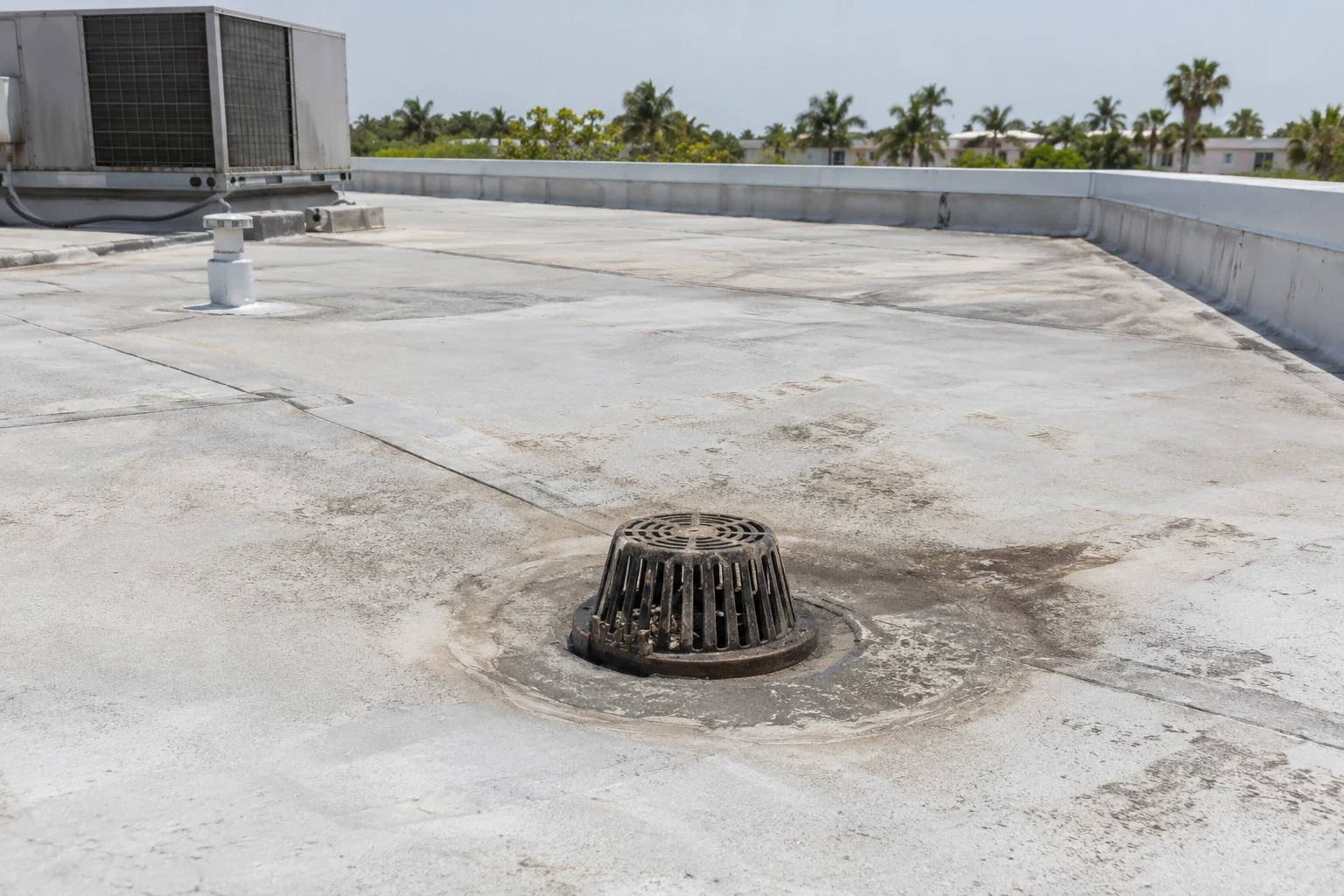
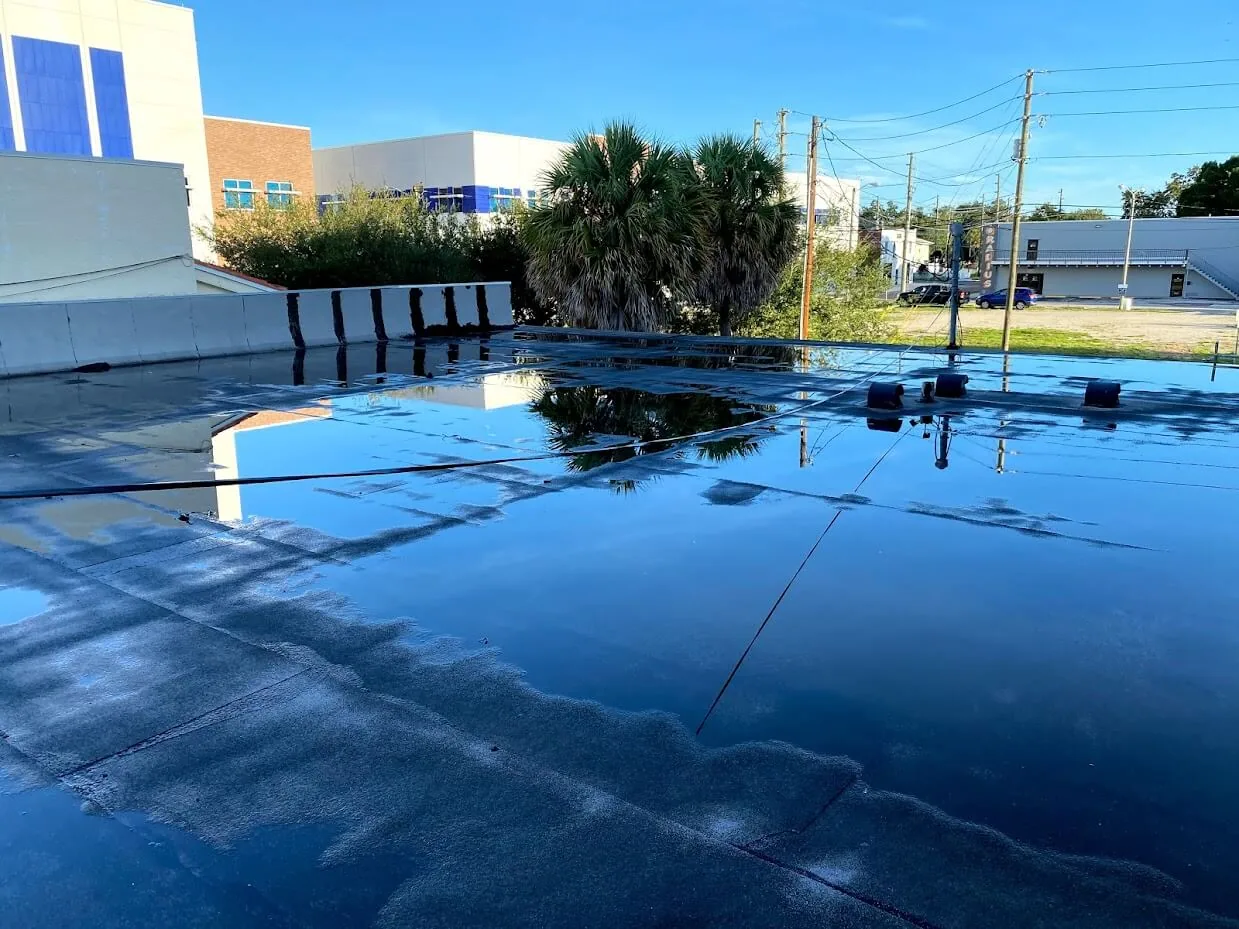
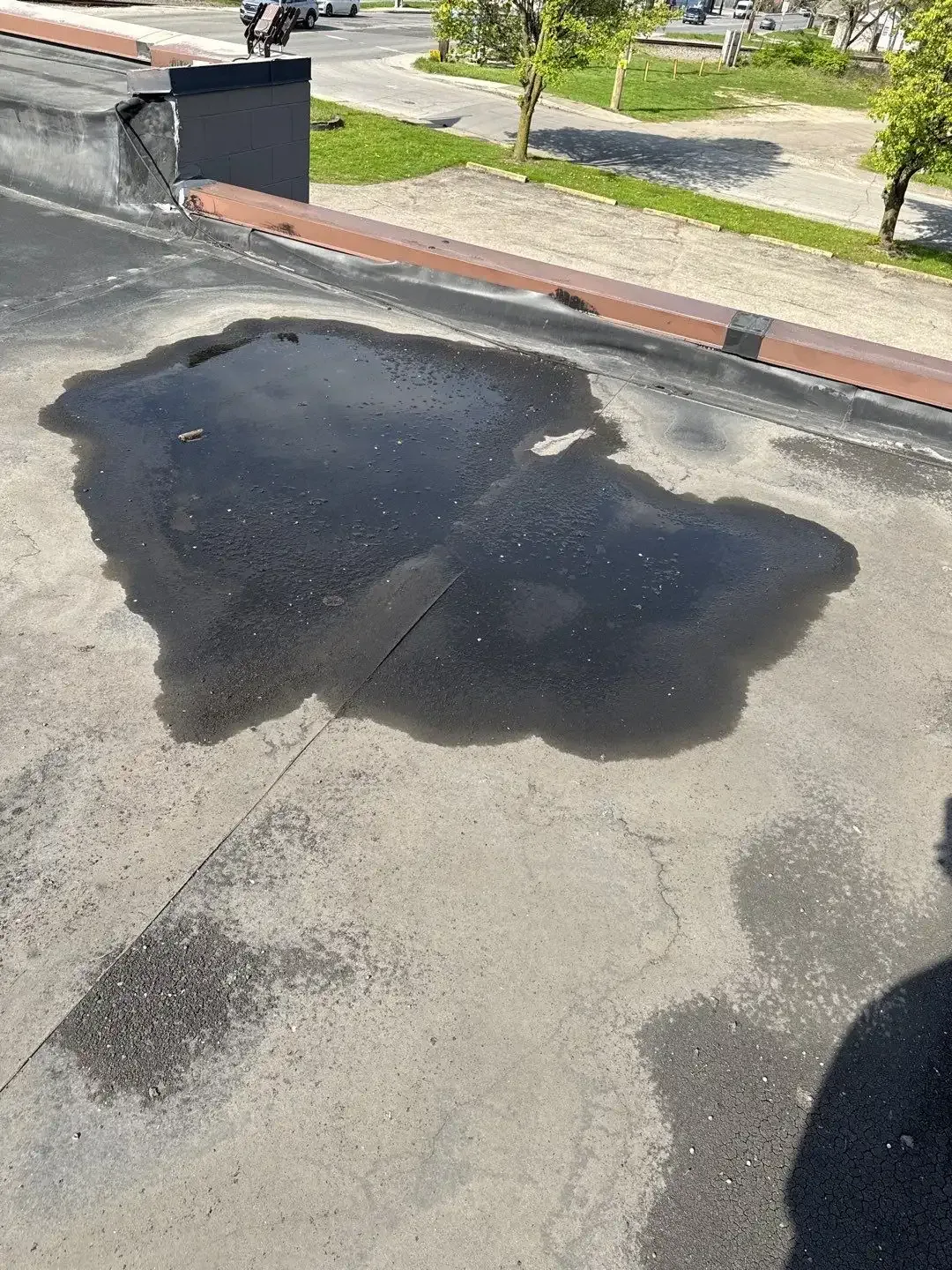
Sixty inches of rain a year is roughly ten inches more than the Houston average of about 50. A roof that holds water for even a couple of days after a storm has a low spot, a blocked drain or a sagging deck, and standing water is where seams open, membranes fatigue and algae and debris collect. So the first thing we do on a Dickinson roof is walk the slope lines with a level and a hose test, noting every drain and scupper, every strainer and every place the water slows down.
Fixes run from simple to structural. Clearing and re-seating a drain costs little. Adding tapered insulation to push water toward an outlet takes more time and a cover board. A roof with chronic ponding water may need a new drain location, and that is a design decision the owner should see priced next to the cost of doing nothing.
Sort Flood Losses From Roof Losses Before Filing
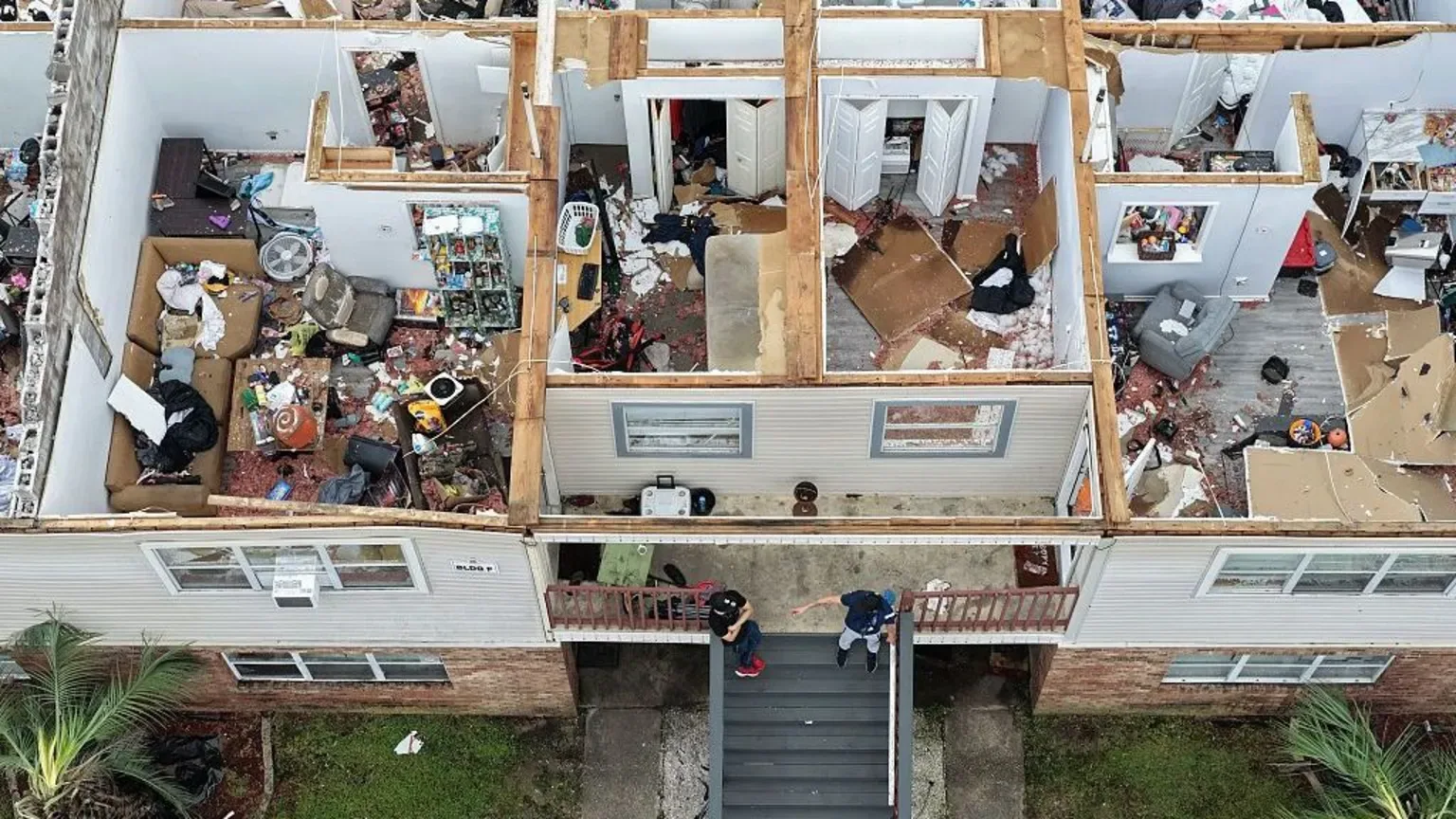
When Harvey flooded roughly 90 percent of the city, the damage began at the ground and worked upward. Floodwater does not climb to a roof, and a storm loss on the deck and the loss on the ground floor are different events with different causes. That separation matters when a claim is written, because carriers and policies treat wind, rain entering through the roof and rising water separately.
We help owners keep the roof side of the file clean. Dated photographs of the membrane, the flashings and the rooftop equipment taken before a storm let an adjuster see what changed afterward, and a post-storm walk records fresh punctures, lifted seams and torn edge metal. With roof insurance claim assistance, that record becomes a written scope the carrier can price. An owner who rebuilt the ground floor after Harvey should also confirm the roof above it, because moisture that got in earlier can sit in insulation until the next hot spell shows it.
Brace the Edges for Storms That Come Ashore at Galveston
Hurricane Ike made landfall at Galveston in September 2008, about 19 miles southeast of Dickinson, and moved on toward Houston along Galveston Bay. A hurricane does not need a direct hit to pull on a roof, because uplift builds along edges and corners wherever the wind finds them.
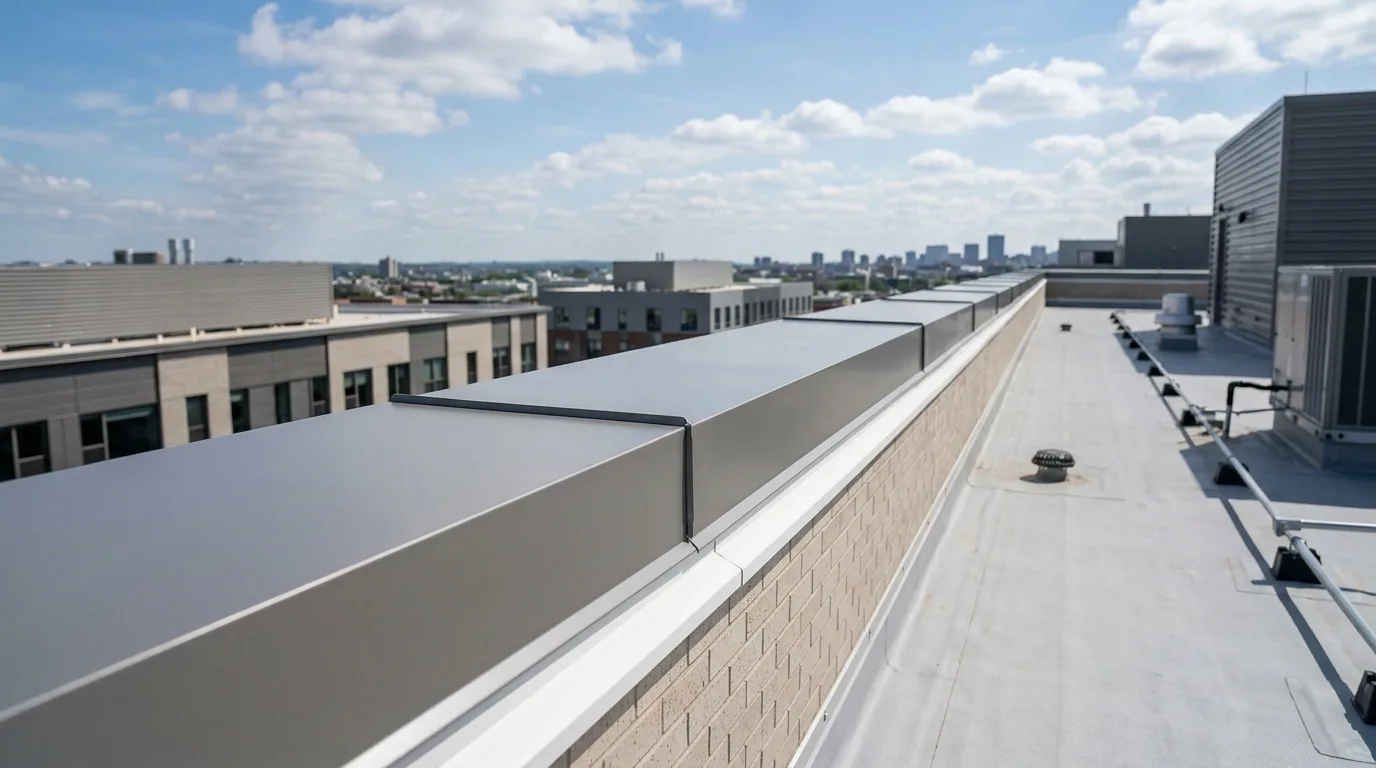
We therefore check edge metal and coping, fastener patterns and perimeter securement first on any wind-exposed building, then work inward. Hurricane Beryl in July 2024 put its eastern eyewall over the Houston region, and the May 2024 derecho showed that straight-line wind can reach roofs far from the coast. After either kind of event the right sequence is a walk, a photograph set and a temporary dry-in where needed, followed by hurricane damage roof repair scheduled in an order the building can live with.
Specify Membranes That Tolerate a Wet Year
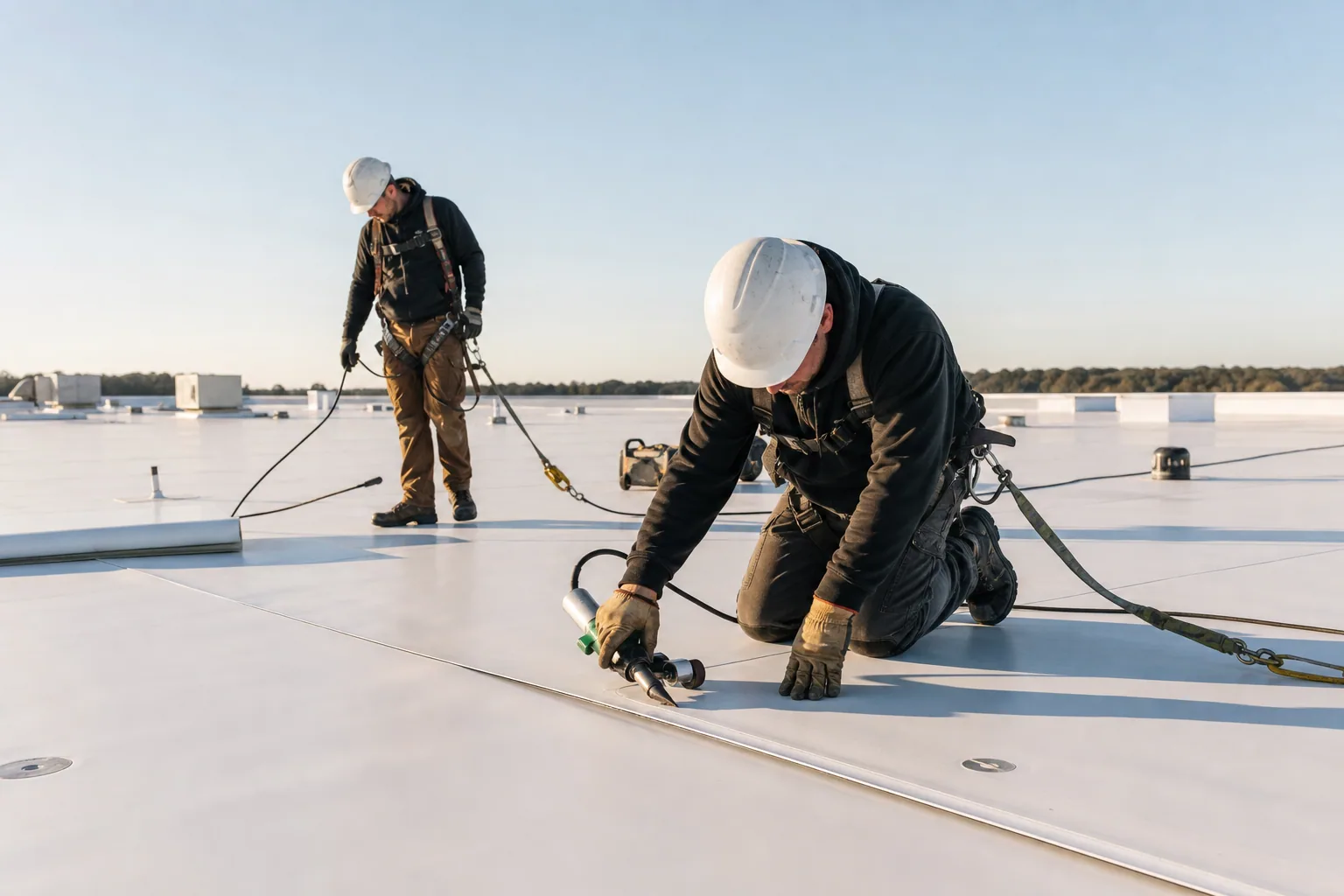
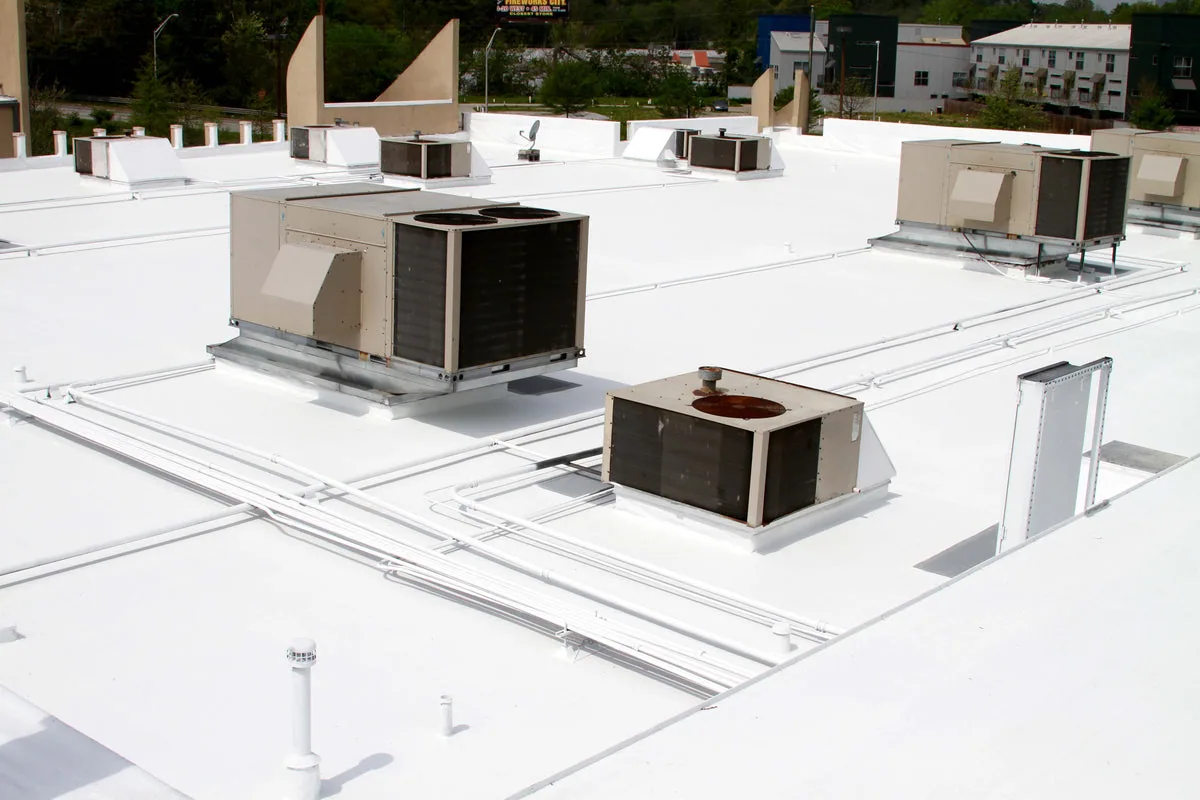
Not every system forgives standing water. A seam that is heat-welded and a membrane with a low water absorption rate cope better when puddles linger, which is why PVC roofing and some thermoplastic options are often considered for flat roofs that drain slowly. EPDM works well with careful seam treatment, and silicone roof coatings can extend a sound roof that holds water in a few places, since silicone is formulated to tolerate it where many acrylics are not.
Heat belongs in the same conversation. Summer mornings across the Houston area start with humidity above 90 percent and August afternoons average near 95 F, and a dark membrane under that load expands and contracts every day. Metal roofs add a corrosion question at fasteners and laps in damp air. Each choice is priced against the tear-off needed, the insulation that must be replaced, and the shutdown window available to the owner.
Look for These Signs on the First Walk
The roof tells its history in small details. We look for algae streaks along a drainage line, rust on fasteners, soft spots underfoot where wet insulation has lost strength, and seams that have lifted at the low end of a slope. Inside, stained ceiling tiles, a musty smell near a wall or a rooftop-unit curb that shows rust trails point toward the roof opening that needs attention. An infrared moisture survey after sundown maps wet insulation that the surface does not show, and it saves tearing off dry material.
Owners come away with three things: a photographed condition record, a short list of repair, recover and replacement options, and a clear statement of what drives the schedule. Rain is the first driver, followed by crane time, material lead time and tenant hours. When the building cannot close, the roof opens in sections that are covered by evening.A portfolio crossing into League City needs its own drainage and storm-readiness record for each roof.
Commercial Roofing Questions
The ground floor flooded in a storm. Does that mean the roof was damaged too?
Not on its own. Floodwater rises from the ground and the roof is hit by a different set of forces, so the two losses are documented separately. A roof walk after the event still pays for itself, because moisture that entered earlier can sit in insulation and show up weeks later.
How long can water stand on a flat roof before it becomes a problem?
Water that is still there two days after the last rain marks a low spot, a blocked drain or a sagging deck. Seams and membranes fatigue faster in those areas, and algae grows where the roof stays wet. A level survey and a drain check identify which of the three is at work.
What should a roof file hold if another Harvey is possible?
Photographs dated and shot from fixed positions, a roof plan with drains and curbs marked, the membrane type and age, and a list of past repairs. That packet lets an adjuster tell new storm damage from old wear, and it shortens the argument over what each policy covers.
Can a recover go over a roof that has been wet for years?
Only after the insulation is tested. Trapped moisture beneath a new layer cannot escape, and it spreads. Infrared scanning and core samples show how much of the assembly is wet, and if the answer is a large share, a tear-off with new insulation costs less over time than a recover that fails early.
How does a roof job keep to schedule in a wet year?
Rain days are the main variable, so the sequence is built in small sections that dry in daily and a forecast check is part of each morning briefing. Material stays covered in the laydown area, and the crane pick moves to a dry day. The tenant sees a roof that is closed every evening.
Keep Reading
Related Roofing Work in Pasadena
Walk the Roof With Us Before the Next Rain
Tell us how your Dickinson building runs and where the water collects. We will walk the roof and the drains with you, so the work plan fits your operation before the first crane booking.