
Roof Damage Repair
Ponding Water Roof Repair in Pasadena, TX
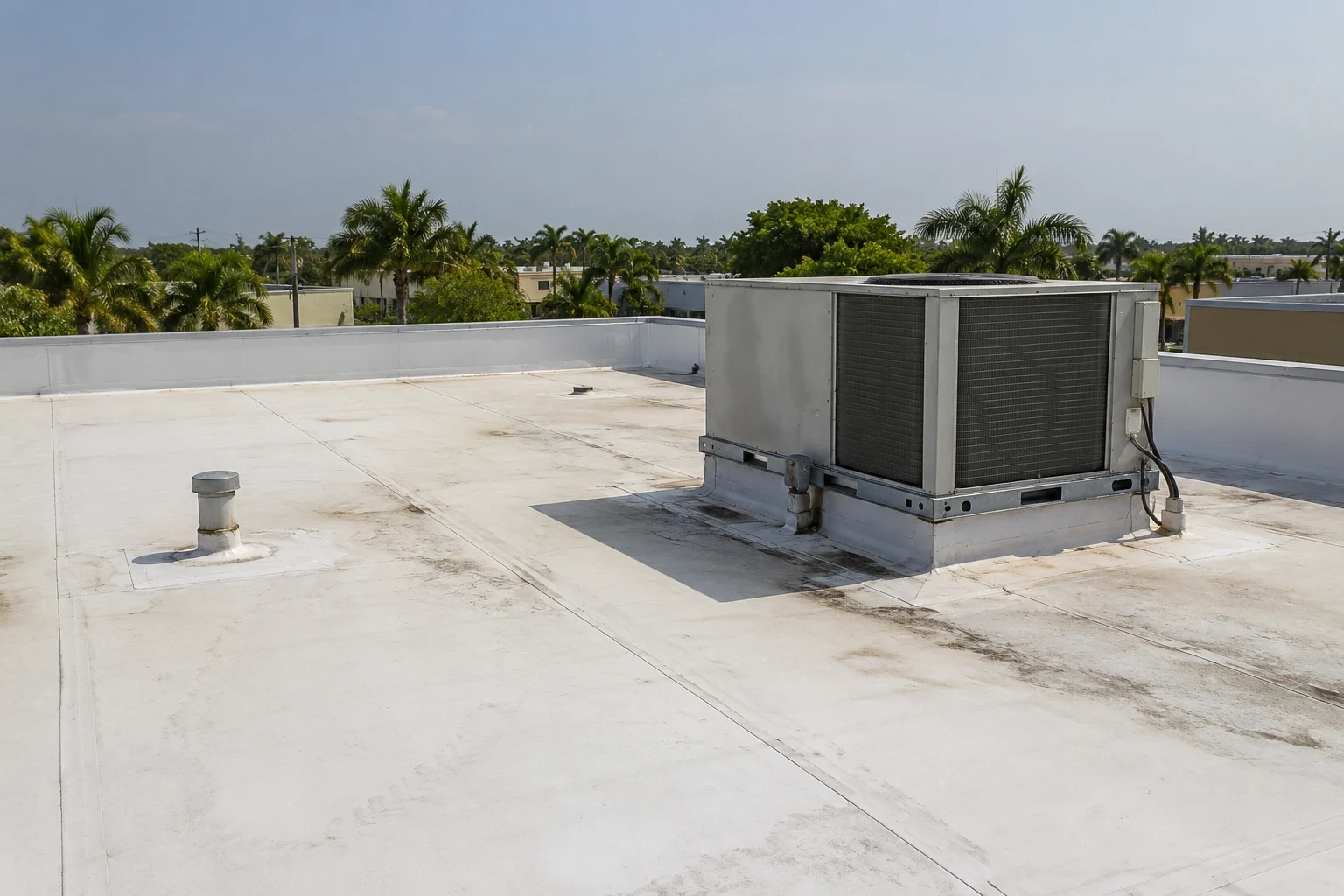
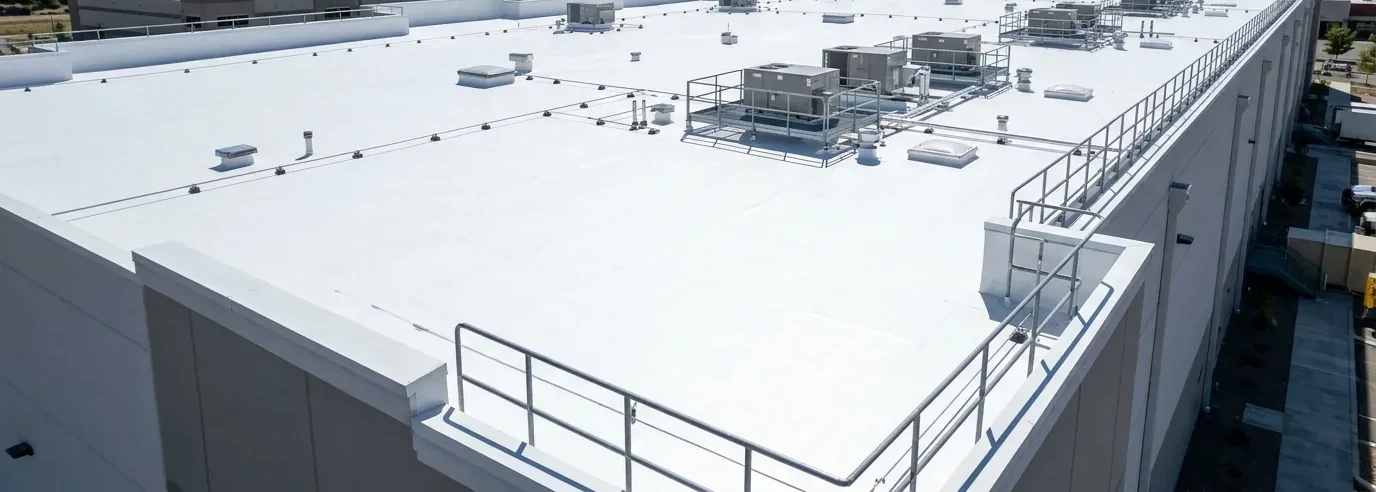
A warehouse roof drains toward its scuppers on paper. The Tuesday after a June cloudburst, the roof shows where the paper was wrong. Pools that are still sitting at the low spots forty-eight hours later mean the building is carrying water it was never meant to carry, and the membrane under it is aging faster than the dry field around it. In Pasadena, TX, where the Houston-area climate brings rain on more than a hundred days in a typical year, that is a standing condition, not a rare one.
Ponding repair is a drainage problem first and a membrane problem second. We measure where water stops, find out why, and choose the correction that changes the path instead of just patching the wet spot.
Measure What the Roof Holds After the Rain Stops
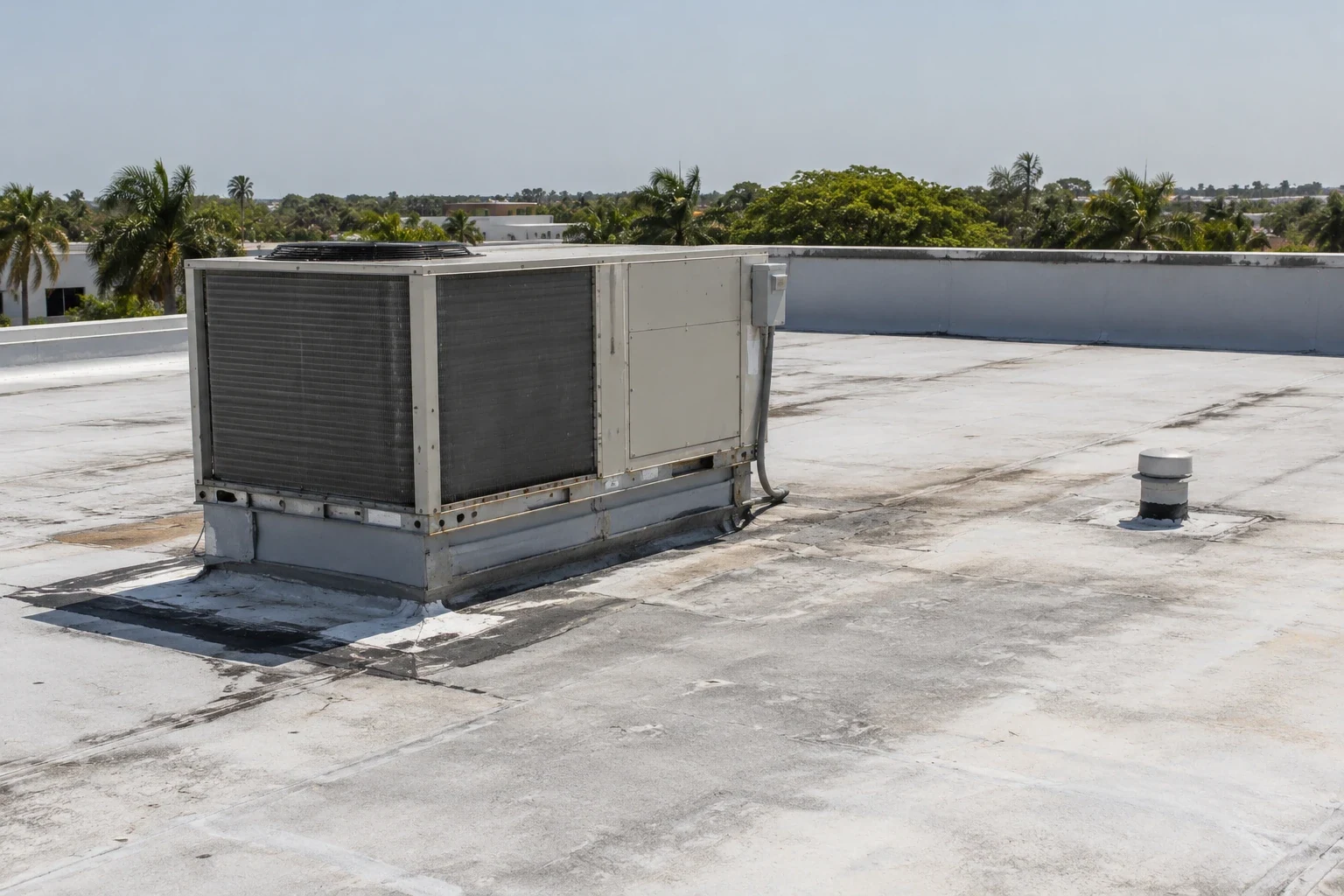
The best time to survey ponding is the morning after a real storm, before the sun clears the roof. We walk the field with a level and a tape, mark the edge of every pool and record its depth at the center. A shallow film that dries by afternoon is a cosmetic concern. A pool that covers a seam, a lap or a flashing termination is a different animal, and so is any area where the water lingers into a second day.
Rain falls on roughly 104 days of a Houston year, about 50 inches in all, with June the wettest stretch, so a roof gets many chances to show us its low points. Harvey, in August 2017, dropped more rain than any tropical cyclone the country had recorded, and a roof with a marginal drain has no reserve left under that much water. Drainage has to work for the worst week of the season, not the average one, and that is also how we judge hurricane damage repair on a roof that drains slowly.
Trace Each Pool Back to Its Cause
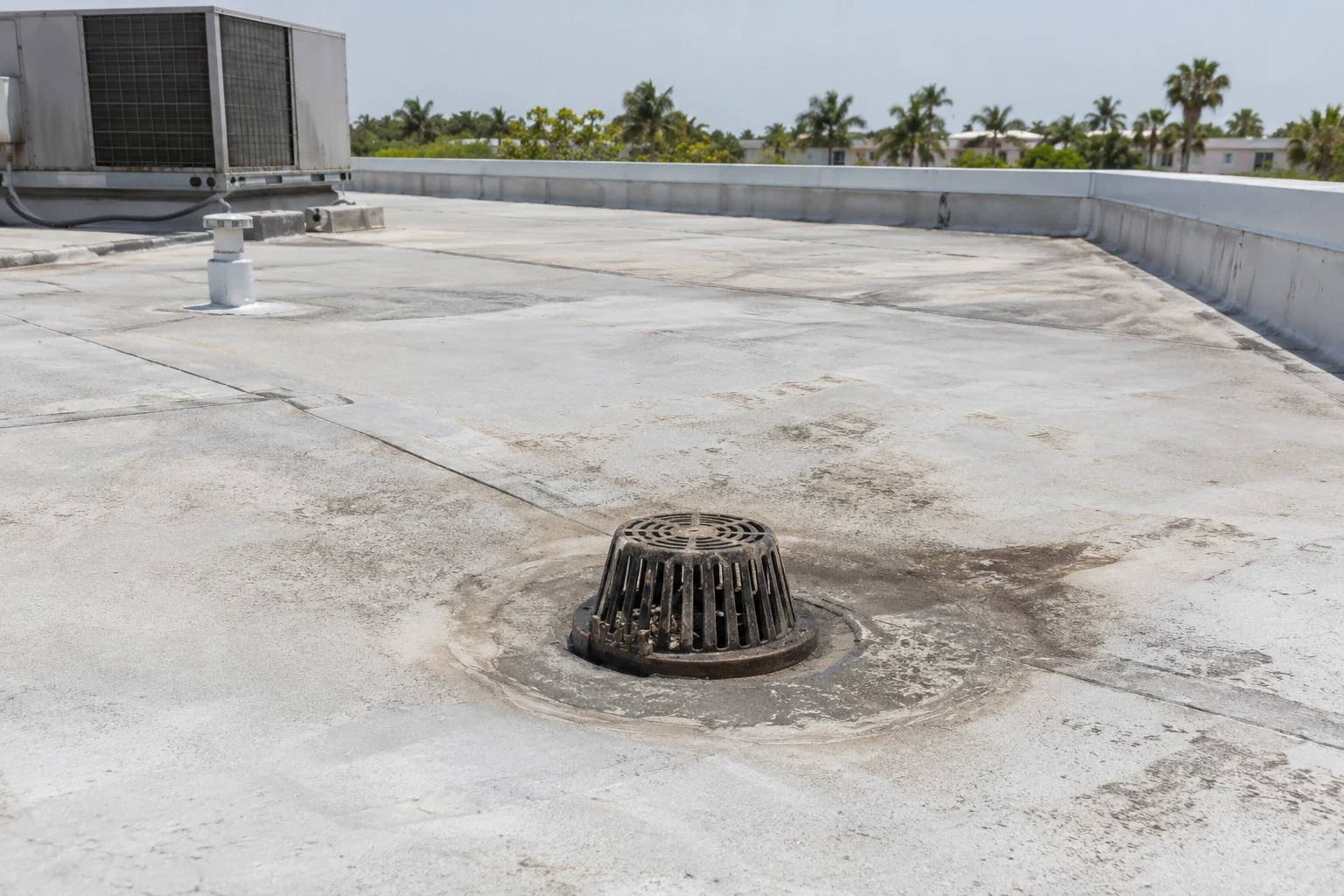
Ponds have a short list of origins, and the repair follows the origin. Decks deflect between support lines, especially when equipment was added after the original design. Insulation compresses under foot traffic or under a heavy unit. Drains sit above the surrounding membrane because of how a past reroof was stacked. Sumps clog with grit, leaves and roofing debris, so the roof drains slowly even when the design was right. In some cases the slope was simply never there.
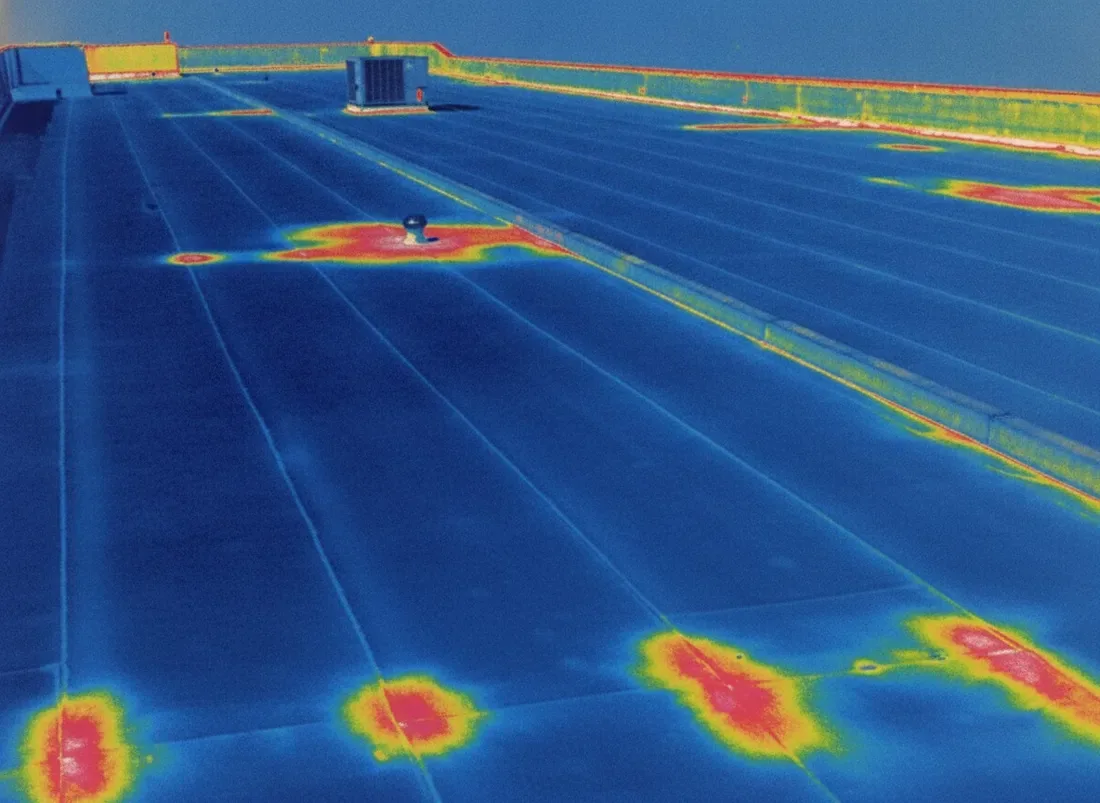
We separate those causes by comparing the height of each drain with the pond beside it, probing for soft insulation, and sighting along purlins and joists. An infrared moisture survey adds the next layer: standing water often leaves wet insulation beneath it, and wet insulation changes the repair from surface work to a tear-out of the saturated section.
Choose the Correction That Changes Where Water Goes
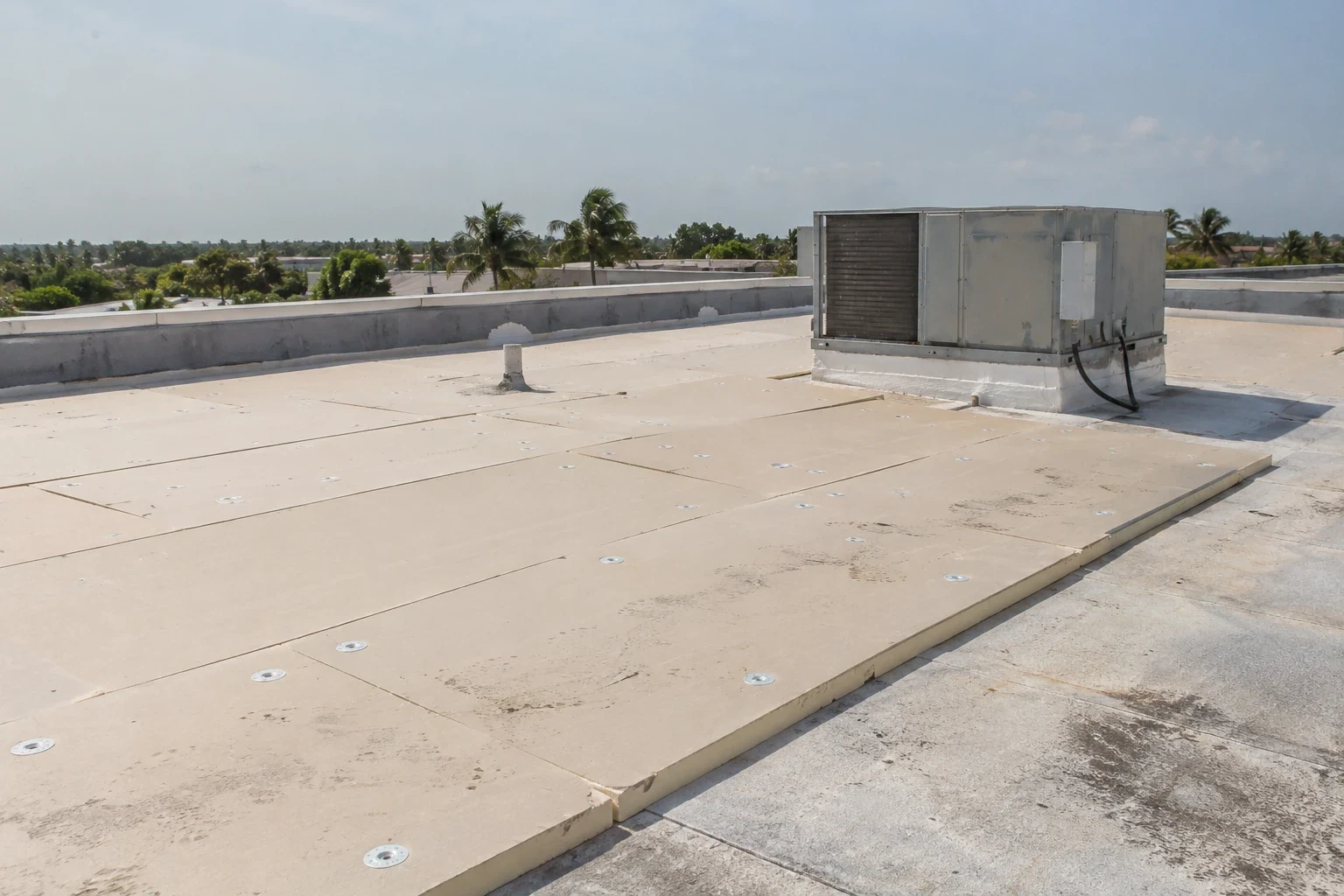
Water needs a downhill path, and the repair gives it one. Where the deck is flat but sound, tapered insulation and crickets build the slope back on top, and a new cover board and insulation layer carries the membrane across. Where a drain sits too high, we lower the sump or add a drain at the low point. Where a downspout line is the bottleneck, we clear it first and then reassess.
Membrane that has been submerged for long stretches takes its own attention. Seams under standing water, particularly on thermoplastics like TPO, are inspected for softening and probed for open edges, and any failure found is handled under the same plan as a seam failure repair. Patching a pond without fixing its cause just buys a few months.
Keep Drains and Scuppers Moving Between Storms
The cheapest ponding repair is a clear drain. Wind blows leaves, shingle grit and packing debris from nearby buildings into the sumps, and a plant roof beside the Houston Ship Channel collects its share of both. A routine visit before each wet season pulls strainers, rinses out the line, checks overflow scuppers and walks the field for new low spots.
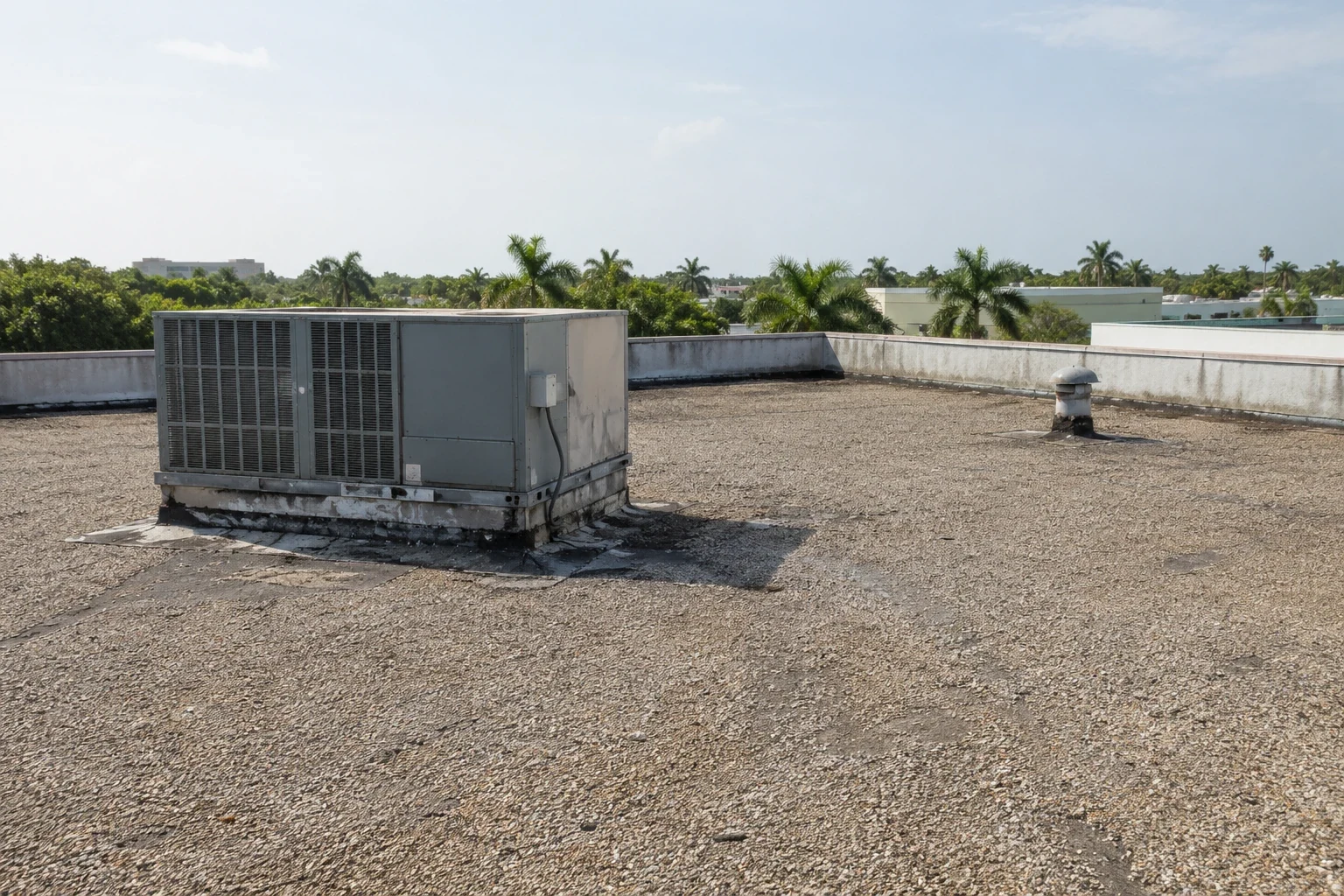
That visit belongs in a written maintenance program with dates, photos and a note of which pools came back. For built-up roofs and other multi-ply systems, the notes are even more useful, because they show whether a depression is growing. We also review the drain and scupper details themselves, since a clamping ring or a split gasket can leak even when the water flows freely.
Phase the Correction Around Tenants, Terms and Forecast
Slope correction touches a lot of roof, so the phasing matters. On a Pasadena ISD campus the work belongs in the summer window, and June, the wettest month of the year, falls right in the middle of it. We open small areas, stage tapered insulation in a laydown area on the ground, and dry in each section by day's end. Medical buildings, such as those along the Spencer Highway medical and education corridor, often permit rooftop noise only at set hours, so the loudest steps move to those slots.
Closeout means more than a clean roof. We re-survey after the first heavy rain, photograph the former pond areas and hand over a drain map the building engineer can use. If any pool returns, we want to know within the first season, not the third.
The repair should be checked under conditions that reveal whether the water path changed. Photograph the area before work, measure the low point, and note the nearest drain, scupper, or overflow. After correcting the cause, repeat the measurement and compare the result after a suitable rainfall or controlled test. If the water remains, document its depth and duration and return to the drainage or structural question rather than adding another patch. Keep a record of any tapered material and drain work beneath the finished surface. The owner can then tell whether a later pool reflects a new obstruction, a changed roof plane, or incomplete correction.
Commercial Roofing Questions
At what point does standing water on a flat roof become a repair item?
Two days after the rain is the usual line. A puddle gone by morning is normal on a low-slope roof, but water that is still there on the second day is aging the membrane and loading the deck. Pools that repeatedly return to the same spot deserve a correction no matter how shallow they look.
Will tapered insulation fix a pond if the deck has sagged?
Tapered insulation fixes the water path, not the deck. It builds slope over the low area so water flows to a drain, and it works well on a deck that is sound but flat. If the deck has structural movement, a structural review comes first, and the roof correction waits for the engineer's answer.
Does ponding affect the manufacturer warranty on my roof?
Warranty language on standing water differs by manufacturer and by product line. Some documents limit coverage where water stays on the membrane for a set period. We read the current warranty before proposing the correction and describe in writing how each option fits it, so the choice is made with the terms in front of you.
Our school campus only has the summer to work. Can ponding corrections fit?
Summer works, with a catch. The window is also the wet season, so we open the roof in sections that can be sealed up before the afternoon storms and keep a crew ready to cover if a cell builds early. Material staging and the lift plan are settled before the last day of classes.
Why would a roof that drained fine when it was installed hold water now?
Roofs move. Decks deflect under new equipment, insulation compresses where crews walk, and sumps fill with grit that slows the flow. A past reroof can also sit slightly above a drain flange and trap water at the outlet. A survey after a rain shows which of those reasons is acting on your building.
Keep Reading
Related Roofing Work in Pasadena
Walk the Low Spots With Us After the Next Rain
We will meet your facility director on the roof, mark every pool, trace its cause and set a correction plan that fits your operation and your calendar.