
Service Areas
Commercial Roofing in Galveston, TX
A port that spans 850 acres and handles containers, bulk cargo and cruise ships for Carnival, Royal Caribbean and Disney runs on a vessel calendar, and roof work for any owner near it has to be booked against that calendar. Galveston, TX holds that port, an 84-acre UTMB campus and the headquarters of American National Insurance Company, and each of those operations has people, cargo or equipment under its roofs that cannot get wet.
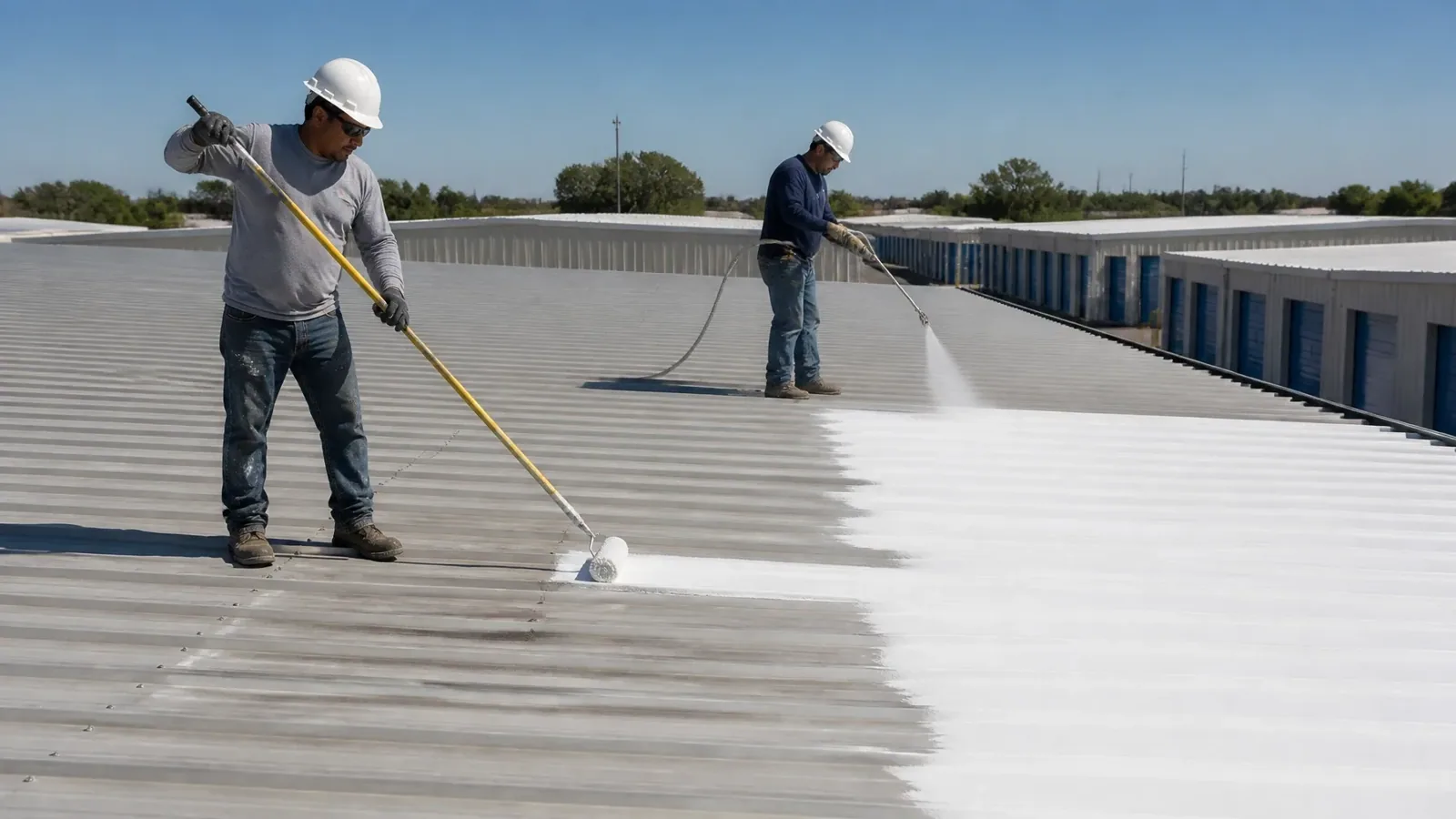
We repair, recover, coat and replace low-slope and metal roofs for buildings like these. The plan starts with how the building runs. Which bays stay in service, where the crane can set up, how much membrane can be opened before the afternoon weather, and what the closeout file has to show. Then we write the sequence, the staging and the safety orientation to fit.
Keep Material Staging Clear of Cargo and Passenger Traffic
Port operations move on timetables that a contractor does not control. Trucks queue, vessels berth, passengers arrive in waves, and a delivery of insulation and membrane that blocks a lane costs someone money within minutes. So we ask for the gate rules, the badging lead time and the hours when roads and lots are busiest, then place the laydown area and crane pick where they do not touch that traffic. Loads are released one at a time from an off-site holding point when the site cannot store them.
Warehouse and shed-type roofs near cargo handling add a second concern, which is what lies under the deck. Product, racking and equipment set the tolerance for open roof area. A warehouse roof can often be worked in strips that are dried in daily, while a roof over sensitive equipment may need a temporary cover and a night shift. We write that decision into the plan before mobilization, not after the first leak.
Ask Early Whether Historic Review Applies to the Roof
Galveston has six historic districts and more than 60 structures on the National Register. An owner of a building inside one of those districts or on that list should ask the city, before any material is ordered, whether exterior changes to the roof need review. The answer can change the membrane color, the edge metal profile and the way a parapet is capped, and it is far cheaper to learn it at the start than to learn it from a stop-work notice.
Roofs on older buildings often hide more detail than newer ones. If the building has parapets, built-in gutters or tight access, flashing work becomes the center of the job, and a good commercial roof inspection records each termination in photographs before a plan is priced. Where the building will keep the same silhouette, a roof coating restoration over a sound membrane may preserve the look while adding years of service. Where it will not, replacement is scoped with the review in mind.
Plan for Wind and Salt Behind the Seawall
After the 1900 hurricane, Galveston built a 17-foot, 10-mile seawall, and Hurricane Ike made landfall here in September 2008 with extensive building damage. The wall answers surge. A roof faces a different load, which is wind pulling upward at edges and corners and carrying salt, spray and debris across the membrane. Sand and grit scour a surface, fasteners loosen when the deck flexes, and edge metal that was tight in spring may be lifting by fall.
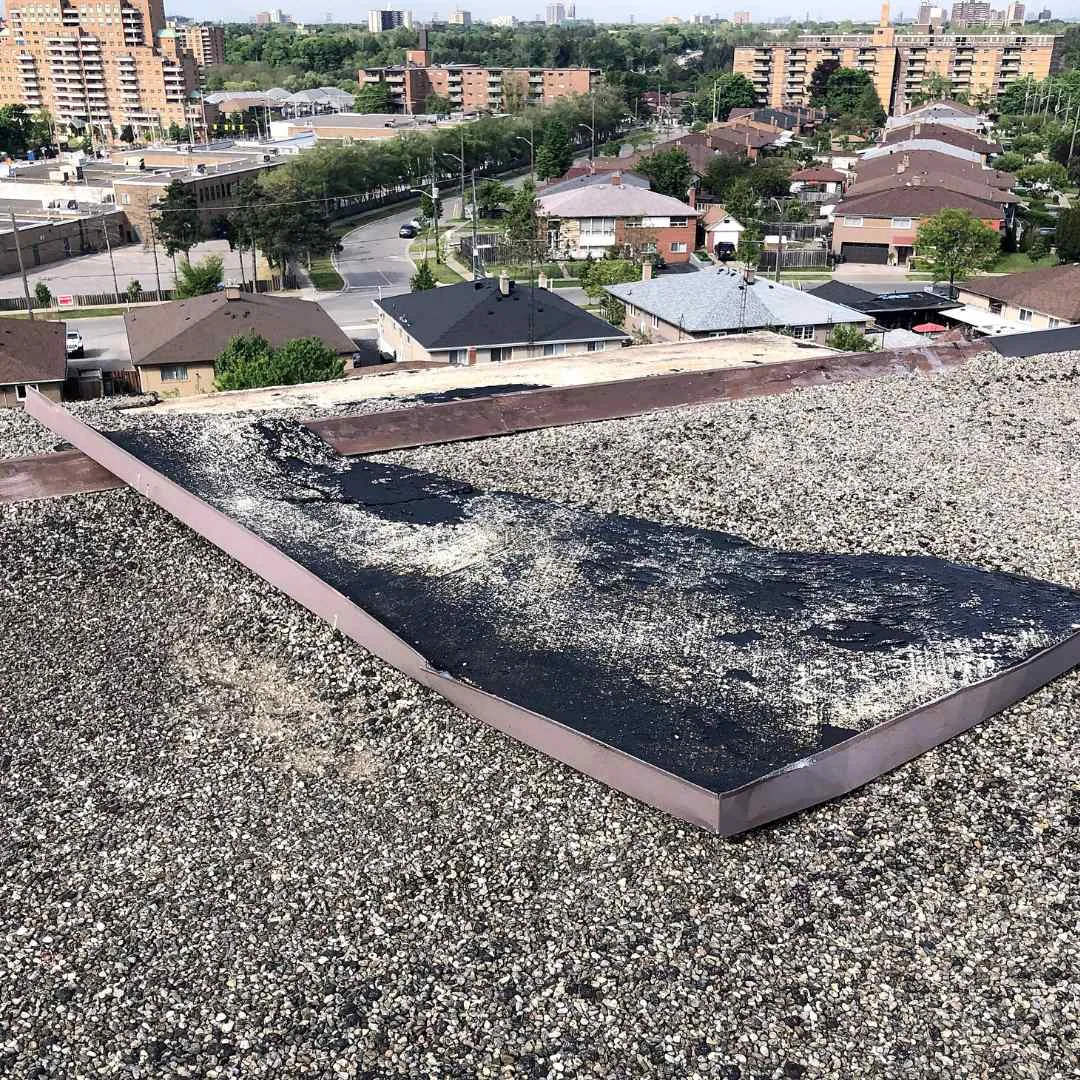
On a Galveston roof the inspection starts at the perimeter. Coping, drip edge, gutters and the first row of fasteners all carry the load, so those parts get checked for corrosion, movement and sealant failure. A repair that restores the field of the roof but leaves a loose edge behind has not solved the wind problem, which is why we scope wind damage repair from the outside in. Summer heat adds to the load, since Houston's August average high sits near 95 F with damp mornings, and salt air speeds corrosion on any bare metal in that moisture.
Phase Work Over Working Floors in Institutions and Offices
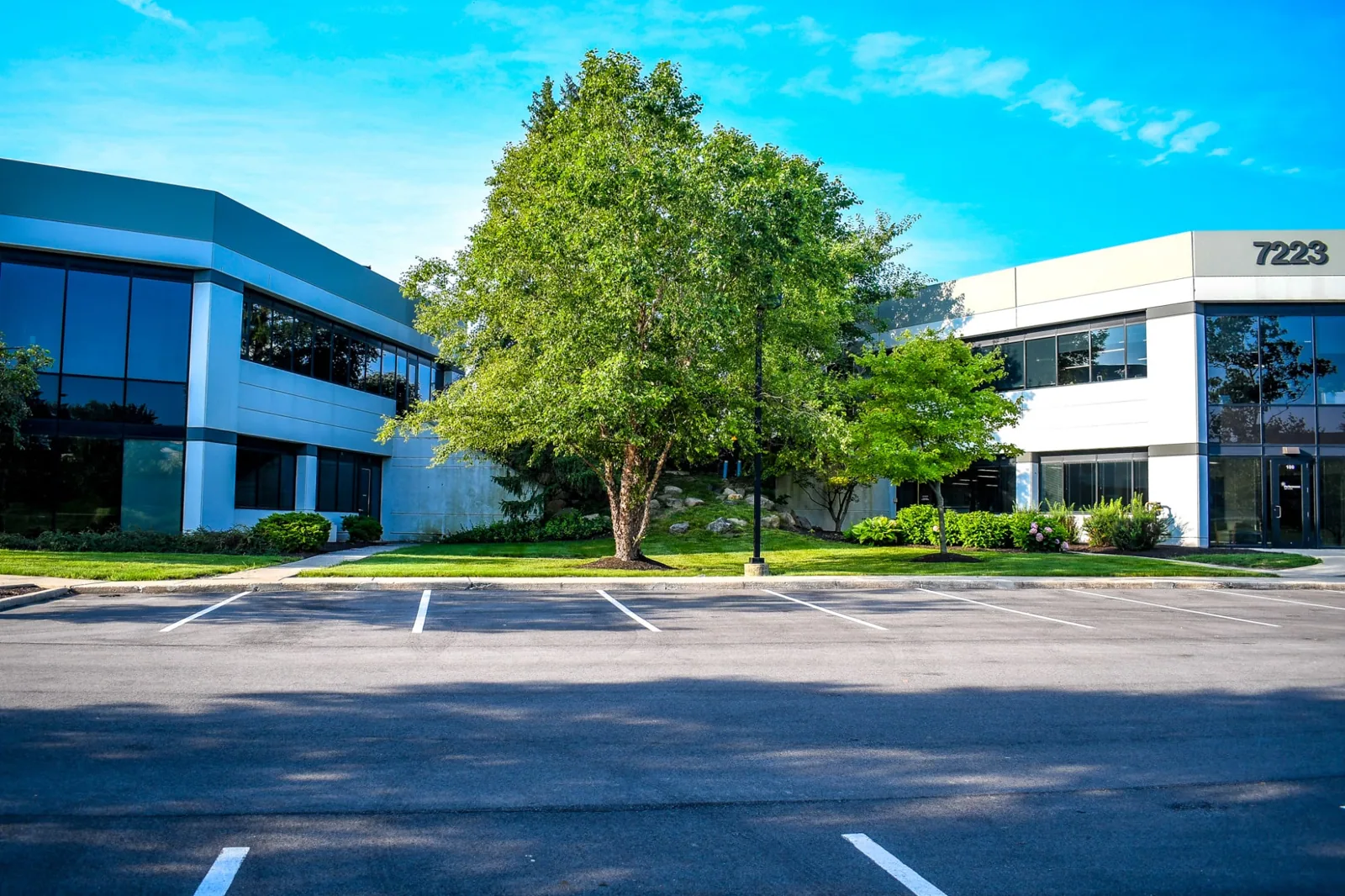
UTMB's 84-acre campus and a corporate headquarters have one demand in common, which is that people and equipment sit under the roof all day. A tear-off above an occupied floor needs a plan for dust, noise and falling debris, a protected path for the haul, and a conversation with the facility director about which hours are quiet. We typically open a roof in sections no larger than the crew can close by evening, coordinate crane picks with the owner's operations, and keep rooftop air intakes protected.
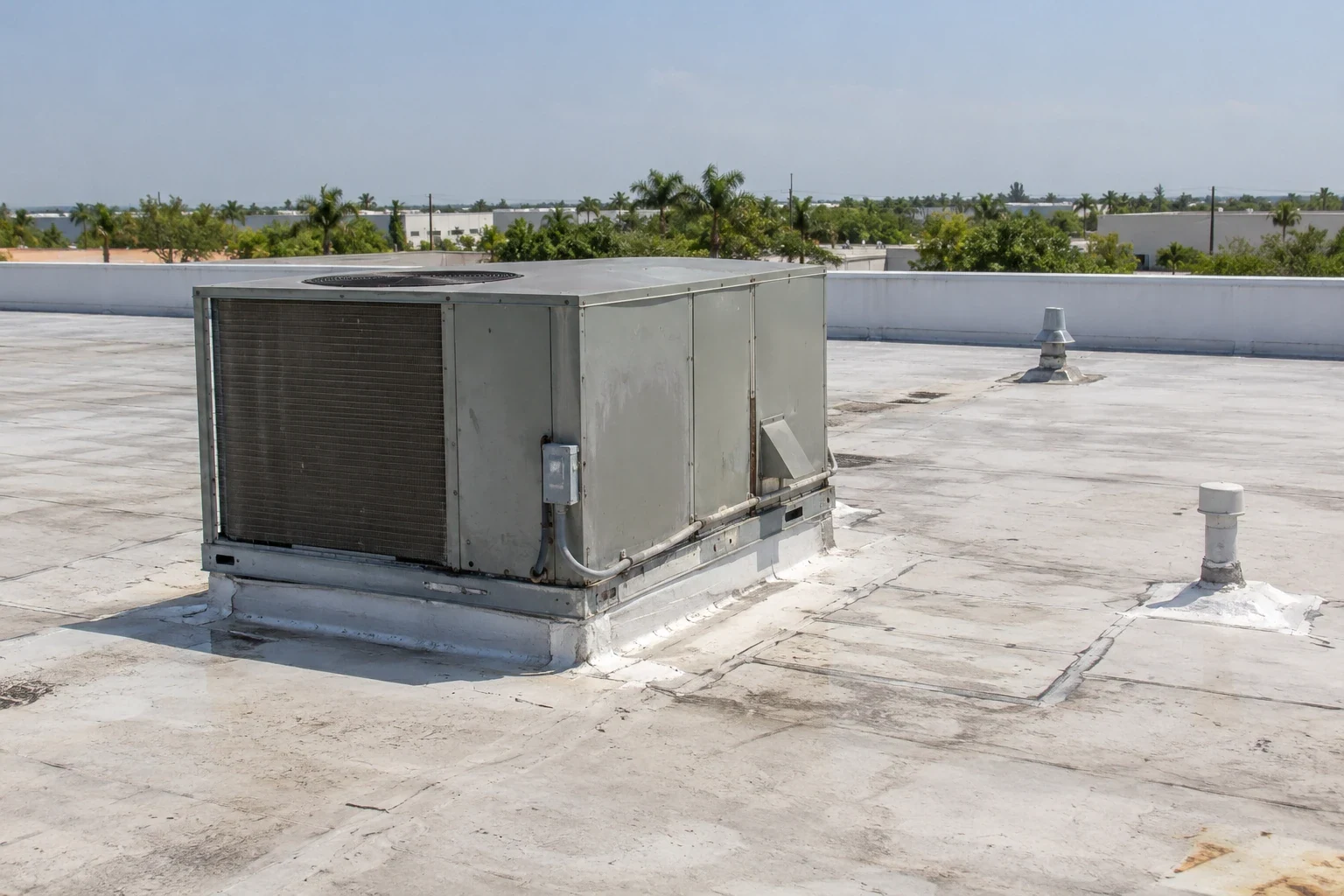
For an office roof the usual questions are drainage, rooftop equipment and access, because mechanical units wear a path across the membrane and leak at their curbs. A planned occupied building reroofing sequence keeps the work behind barriers and finishes one zone before opening the next, and an office building roof gets walkway pads where service traffic runs. The closeout walk produces a photographed record and a punch list the owner can file.
Record the Roof Before Another Ike Arrives
A claim after a hurricane is won or lost on what the roof looked like before it. We take dated photographs of drains, curbs, seams and terminations from the same positions on every visit, tie them to a roof plan and keep the file with the owner. After a storm, a repeat of that walk gives the carrier a side-by-side view, and our roof insurance claim assistance turns it into a scope. Owners in nearby Texas City and Dickinson have storm exposure of their own and should hold the same record.
Emergency tarping and temporary dry-in are available at any hour for a roof that opened up, and we plan the permanent repair as a second step once the building is safe.
Commercial Roofing Questions
Does a roof on a registered historic building need a different plan?
The first step is a question to the city about whether exterior roof work needs review. If it does, the membrane color, edge metal profile and parapet detail are agreed before material is ordered. If it does not, the building is still planned around its older details, such as tight access and flashing where the roof meets walls and trim.
How is roof work scheduled next to cruise and cargo operations?
Around the vessel calendar, not against it. We learn the berth schedule, the peak passenger hours and the gate rules, then set deliveries and crane picks into the quiet hours. Material that cannot be stored on site waits off-site and arrives one load at a time, so lanes stay open.
Does the seawall mean salt air matters less for a roof?
No. The wall holds back water at the shoreline and does nothing for wind or spray on a roof. Fasteners, laps, cut metal edges and rooftop unit frames still corrode, and we plan scheduled walks to reseal and recoat them before rust reaches the insulation.
What should be photographed before a hurricane warning?
Every drain, curb, seam, edge metal run and penetration, taken from the same positions each time. Add a roof plan with those positions marked and the membrane type and age. An adjuster can then separate new storm damage from older wear without a debate over what was already there.
Which damage can hide on a storm roof that still looks sound?
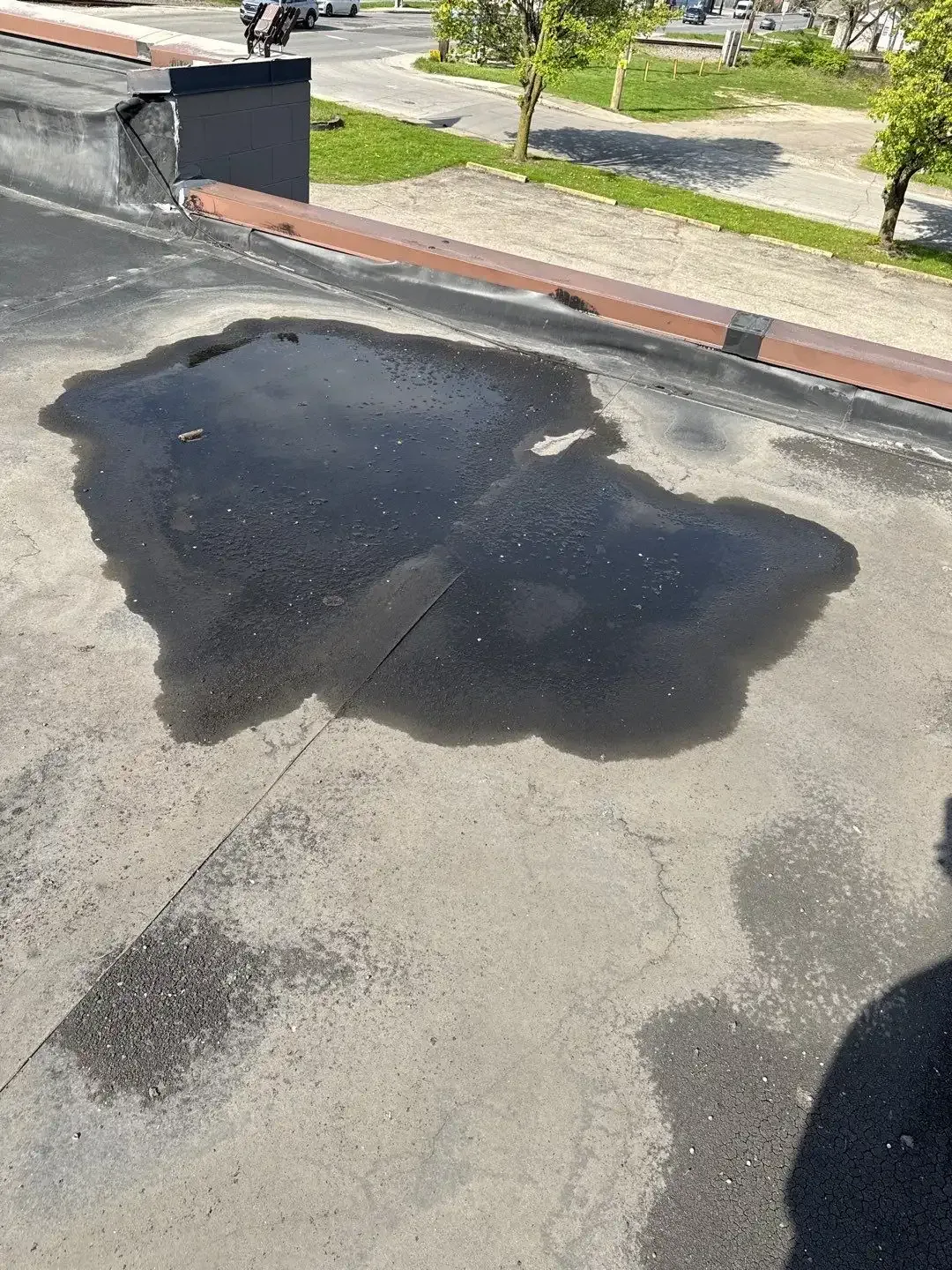
Loosened fasteners, lifted edge metal, cracked sealant at penetrations and punctures under blown debris. Water enters through those small openings and spreads along the insulation. An infrared scan after sundown shows where the membrane is wet, and we use it to scope repairs before the next rain.
Keep Reading
Related Roofing Work in Pasadena


Walk the Site With Us Before the Vessel Calendar Fills
Tell us how your Galveston building runs, which hours are quiet and where the water collects. We will walk the roof with you so the work plan fits your operation from day one.