
Service Areas
Commercial Roofing in League City, TX
Medical buildings book their days in short blocks, and a ceiling tile stained brown in the middle of one is a scheduling emergency before it is a roofing one. UTMB operates a 110,000 square foot Specialty Care Center on 35 acres in League City, which tells a roof contractor what kind of work this city asks for: occupied buildings, strict hours, and little tolerance for dust, noise or an open deck on a rainy afternoon.
League City is Galveston County's largest city, about 23 miles southeast of Houston, with Clear Creek ISD headquartered here and the National Weather Service Houston/Galveston forecast office located in town. The roof work we plan for these owners is mostly a question of sequence. Which area is protected first, where does the crane stand, how much roof opens before the afternoon cells arrive.
Protect the Clinical Floor First
On a building that sees patients, the first meeting is with the people who run it: the facility director, the infection control lead and whoever manages the schedules. Roof work above occupied clinical space can move dust, odor and vibration into rooms where none of those are acceptable. So we ask where the air intakes sit, which suites are most sensitive, and whether a section can be closed off from the inside during the work.
Some buildings give us a weekend window. Others give us nothing but nights. A night shift costs more per hour, and it also removes most of the risk to the people below, so we price it next to the daytime version and let the owner choose. We keep noisy tear-off away from exam hours and carry debris down a separate route from patient entrances.
Offices, retail centers and school buildings in the city have their own rhythms, and the same questions apply with different answers. The point is to learn the building before the roof is touched.
Plan Around a City With Many Building Types
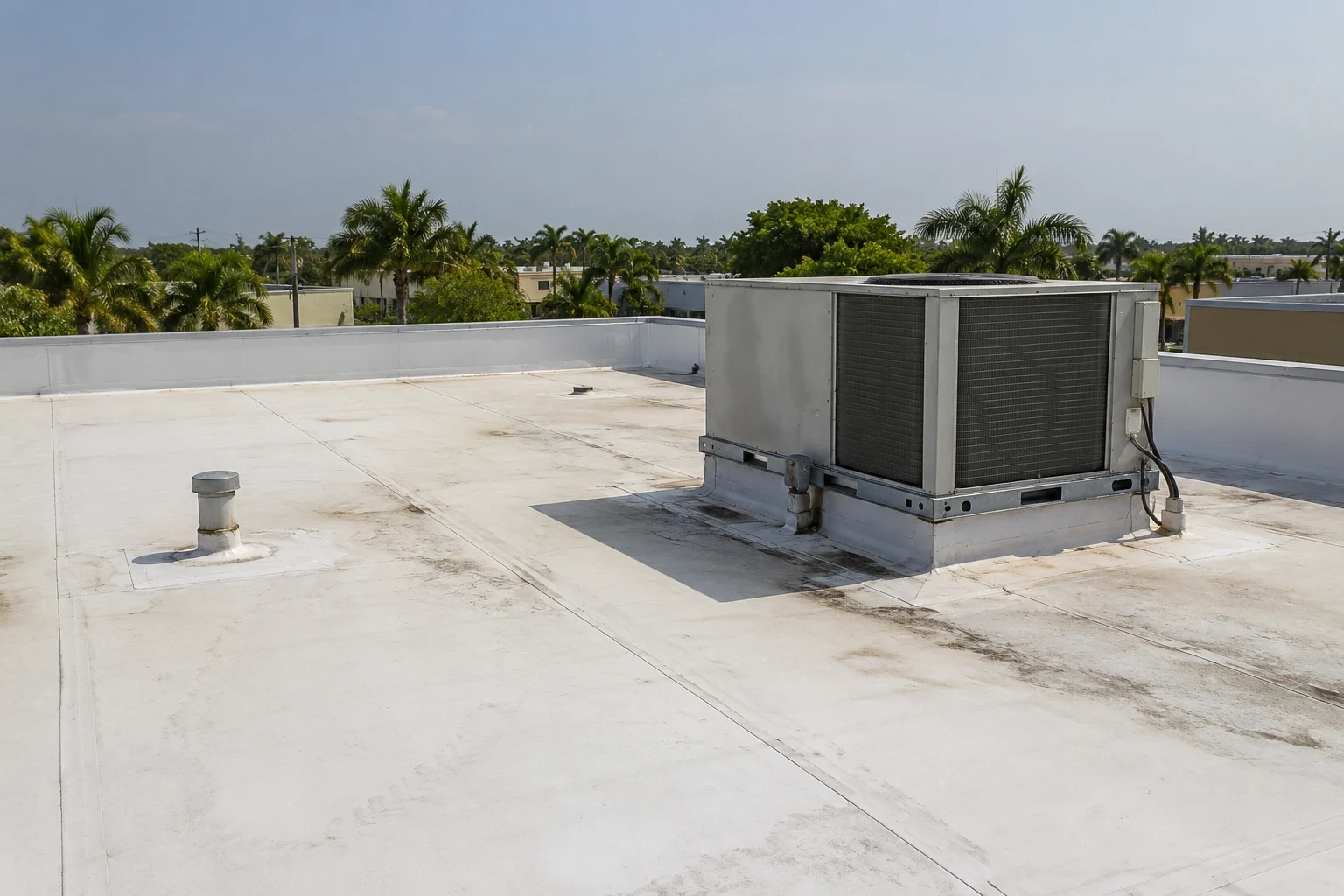
A city of 114,392 residents holds more kinds of commercial roof than one plan can cover, so the first thing we establish is what is actually up there. A low-slope membrane over insulation over a steel deck needs one scope. A standing seam metal panel needs another. An older built-up roof with gravel is a third. A commercial roof inspection sorts the building into one of those groups before anyone writes a price.
The National Weather Service forecast office in town is a building that has to keep working through the very storm that tests its roof, and any owner whose building cannot go quiet in bad weather faces the same problem. Repairs are scheduled for the dry weeks, temporary dry-in material is staged before storm season, and the rooftop equipment that keeps the building running gets protected first.
At the water's edge, Kemah sits on the Clear Lake channel with League City to its west and south, and the planning concerns change a little with the wind off the bay.
Choose a Membrane That Handles Heat and a Stray Hailstone
Summers around Houston are hot and humid, with an August average high near 95 F and about 102 days a year at or above 90 F. Summer 2023 was the hottest on record at Houston and Hobby, and both airports touched 109 F. Under those conditions a light-colored TPO membrane earns its place on a low-slope roof by reflecting heat and welding into continuous seams. Where a building needs extra puncture resistance, thicker sheets and a cover board over the insulation make a real difference.
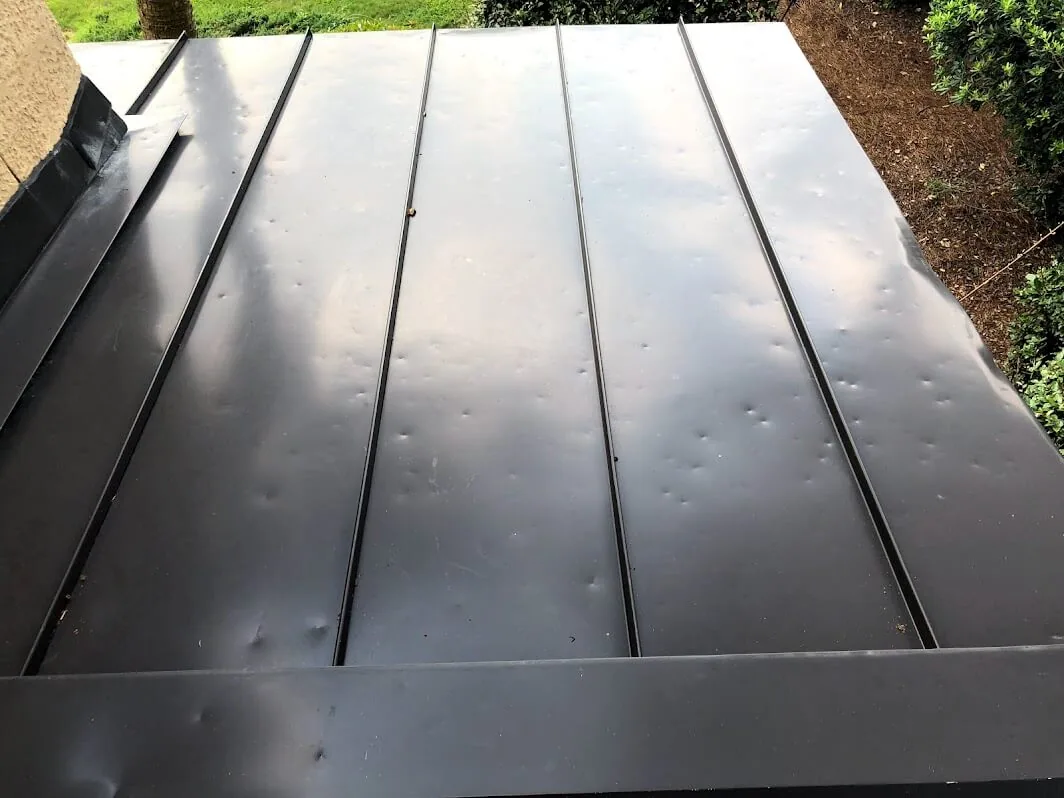
Hail is the occasional visitor. On April 2, 2013, severe thunderstorms produced golf ball size hail across the Houston region and 4.5 inch hail near Hitchcock in Galveston County, so large hail does reach the county from time to time. It does not arrive every year. When it does, the damage is bruising in the insulation and fractured membrane that looks fine from the ladder, which is why we confirm with a moisture scan, not with a quick visual pass. The repair itself follows the pattern of hail damage repair: find the bruise, cut it out, and restore the layers.
Weigh Wind, Rain and Hail Separately After a Storm
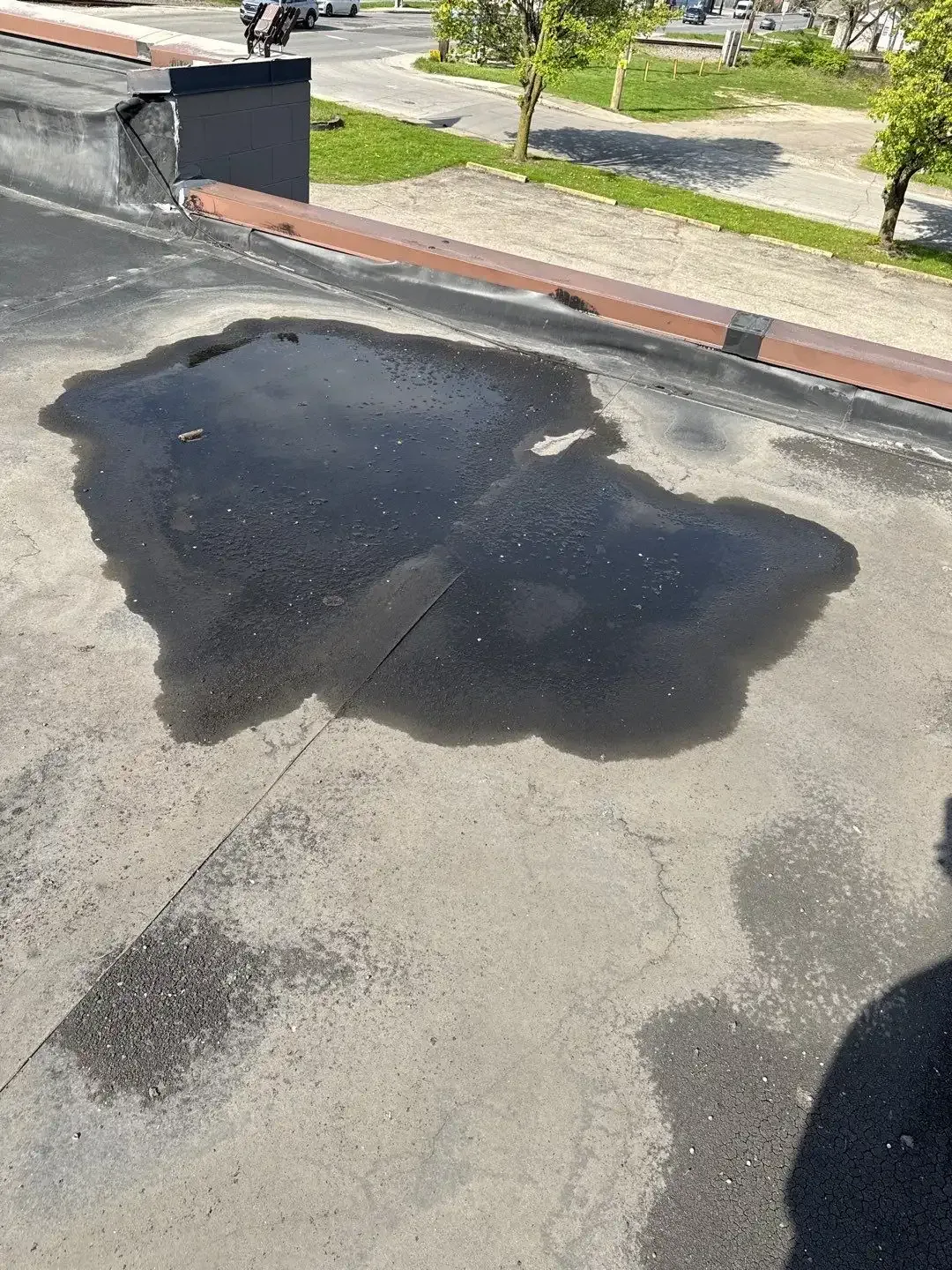
Not every storm hurts a roof the same way. A straight-line wind event, like the June 21, 2023 thunderstorm line that produced a 97 mph gust at Bush Intercontinental Airport, lifts edges and curls membrane. A tropical rain event, like Hurricane Harvey in 2017, tests drains, scuppers and flashing. Hail bruises. Each one leaves a different pattern, and each one leads to a different repair.
So we sort the damage by cause before we write the scope. Uplift gets perimeter securement and new edge metal. Water that got in gets traced with a moisture survey, so we repair the roof where it is wet, not where the stain happens to appear on the ceiling. Hail gets documented with photographs and test cuts. The claim paperwork is only as strong as that sorting, and carriers read it carefully.
Close Each Phase With a Written Handoff
On a phased job, every handoff is a small closeout. Before the crew leaves a section, the area is swept, the temporary protection comes down, and the facility director gets a short note with photographs of what was done and what was found. At the end, the same notes become the roof file: what is under the membrane, where the drains are, which flashings were replaced and which were left alone.
That file is what lets an owner spend capital in the right order. Price and schedule are driven by the same short list every time: how much insulation is wet, the condition of the deck, the number of penetrations, the crane reach, tenant hours, and material lead times. A school building with a summer deadline adds one more. If the owner manages several buildings, the file feeds a capital plan that spreads the spending across years. The same approach carries to owners in Friendswood with more than one building.
Commercial Roofing Questions
How can a roof over a working clinic be replaced without disturbing patients?
By treating the inside as part of the job. We coordinate with the infection control lead, seal the work area from below where required, move noisy work to off hours, and keep debris routes away from patient entrances. The roof is opened in small sections and dried in each day.
Hail was reported in the county. Does our roof need to be checked?
A check makes sense if a storm with hail passed near the building. Bruised insulation and cracked membrane are hard to see from the ladder. A moisture scan and a few test cuts give a clear answer, and the photographs help if a claim follows.
Which is cheaper over time for a medical building, a recover or a full tear-off?
Recover costs less up front when the insulation is dry and the deck is sound, since it skips removal and disposal. Tear-off costs more but resets the roof's age and exposes the deck. A moisture survey and a few core samples show which path is honest for your building.
Our school building needs work, but the budget will not stretch to the whole roof. What then?
Split the scope. The worst sections, drains and flashings go first, and a written plan schedules the rest. The roof file shows which sections are failing and which have years left, so each summer's money goes where it protects the most.
Why do you ask about air intakes and rooftop units before pricing the work?
Because that is where dust and fumes go. Intakes near the work area need protection or a temporary shutdown plan, and units that sit on weak curbs may need new supports before the membrane is touched. Those items change both schedule and cost, so we find them on the first walk.
Keep Reading
Related Roofing Work in Pasadena



Walk the Building With Us
Bring the facility director, the schedule and any leak log you keep. We will walk the roof and the interior route together so the work plan fits your operation from the first day.