
Roof Systems
Silicone Roof Coating Systems in Pasadena, TX
A school campus gives a roofer one real window, and it opens when the buses stop in early summer. Pasadena ISD runs dozens of campuses across southeast Harris County, and a campus roof has to be handed back before students return. That window also lands in the wettest stretch of the Houston calendar, since June is the city's wettest month. A silicone coating suits that squeeze because it goes over the roof already in place, cures in daylight without a tear-off, and keeps standing water from soaking into the membrane it protects.
The sequence is what makes it work. The coating is the last step, not the first.
Confirm the Roof Can Take a Coating
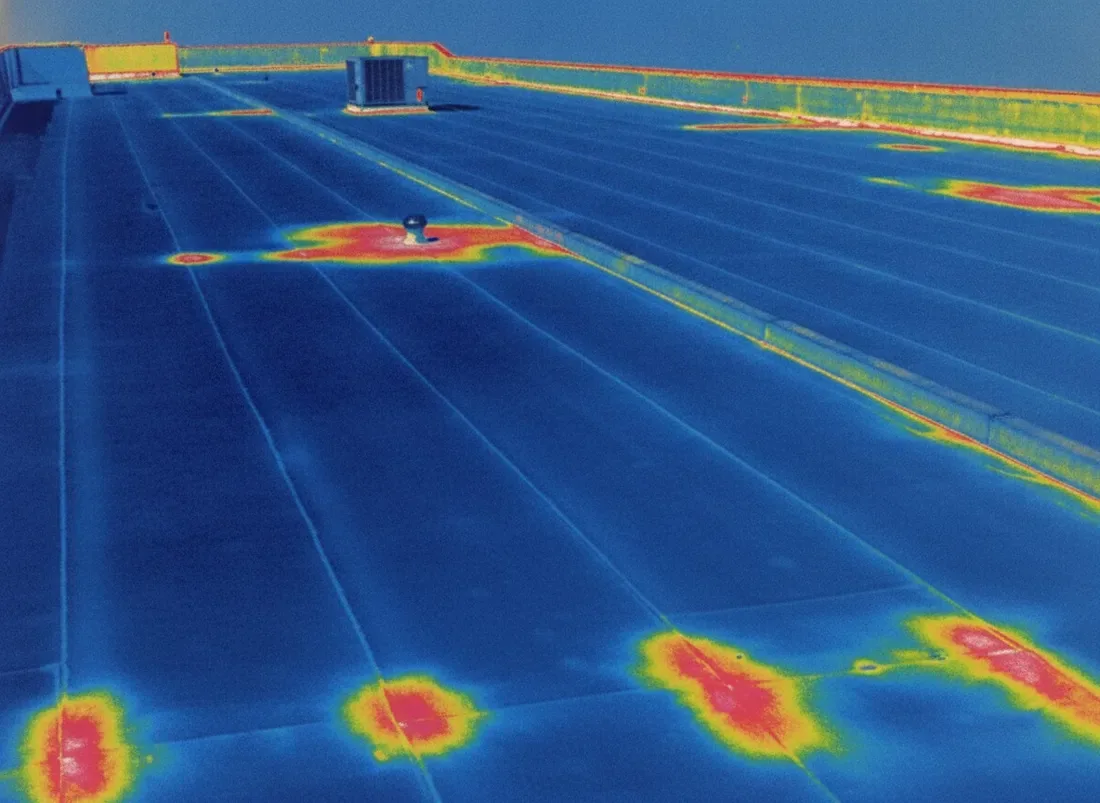
Silicone bonds to a sound, clean surface, and it cannot rescue a roof that is wet inside. We begin with a hands-on commercial roof inspection and then run an infrared moisture survey, marking every area where insulation has taken on water. Metal, modified bitumen, built-up, aged single-ply and spray foam surfaces can all be coated once they are dry and firmly attached. Before any material is ordered we apply a small test patch and pull it, because a coating that lifts at the edge of a patch will lift across the whole field. If the survey shows wide wet zones, the right answer is a repair of those areas first, or replacement. A roof along the Fairmont Parkway corridor, where the January 2023 EF3 tornado cut through, gets a closer look at every puncture and loose edge before anyone talks about color or coverage.
Age matters less than condition. A well-kept roof twice the age of a neglected one is often the better candidate, and the report says which one you have.
Wash, Repair and Prime Before the First Coat
Most coating failures trace back to preparation, so we give it the longest part of the schedule. The crew pressure washes the roof to remove the film of dust and residue that builds up in an industrial area, then waits for it to dry completely. Open seams get resealed, loose flashing is refastened, rusted metal is treated, and fabric reinforcement goes over laps and penetrations that move. Primer goes on where the substrate calls for it. Dried-out sealant and cracked pipe boots come off rather than getting buried under a coat that hides them. The roof that comes out of preparation should look plain and finished.
Stage Material and Crew Around the Occupied Floor
Silicone ships in drums and pails that weigh far more than they look, so material staging gets its own plan. We pick a laydown area clear of dock traffic, decide whether a hoist or a crane pick carries the pails up, and set the pallet loads so the structure is never asked to carry more than it was built for. Spray gear needs a wind check at the edges, and rooftop intakes get covered so fumes and mist stay out of the building. On a plant in the Bayport Industrial District the crew also completes the site safety orientation and carries any hot work permit the owner requires for adjacent repairs. Foot traffic is light and the work is quiet, so a night shift on the floor below keeps its rhythm.
Let Water Sit Without Damaging the Roof
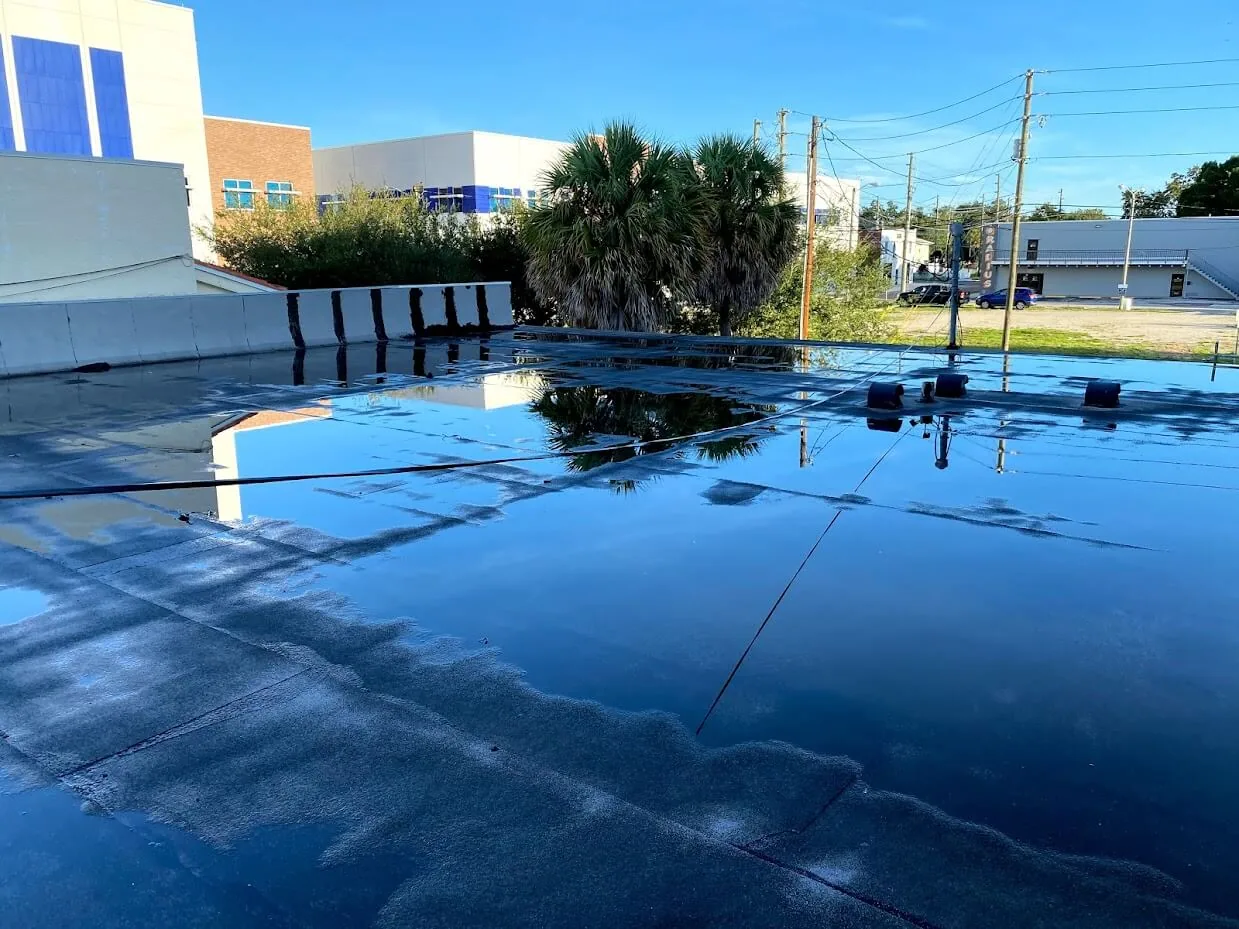
Houston picks up some 50 inches of rain a year, spread over about 104 rainy days, and Hurricane Harvey in August 2017 became the wettest tropical cyclone on record in the United States. Flat roofs in that climate hold water in low spots for days. Most coatings soften or break down when they stay wet, while silicone resists immersion, which is the reason owners pick it for roofs that pond. It does not fix the cause. A birdbath that keeps returning points to a clogged drain, a sagging deck or a missing scupper, and the work includes ponding water roof repair and drain correction where it is needed. Coating over a drainage defect only buries it.
Count on Reflectivity Through Heat and Bay Air
An August afternoon in Houston averages a high near 95 F, and the summer of 2023 reached 109 F at Houston and Hobby. A white silicone surface reflects a good share of that sun, so the deck and the space under it run cooler, and thermal movement in the membrane eases. Owners chasing the goals of cool roof installation often reach the same result with a coating on the roof they already own. The coating also stays stable under UV for years, but it pulls in dirt, and a roof beside the Ship Channel or the Deer Park refinery will look grey well before it fails. We tell owners that early so the appearance does not trigger a premature call. Washing in the maintenance visit brings back most of the reflectivity.
Close Out With Thickness Checks and a Recoat Plan
The finish is measured, not eyeballed. During application the crew checks wet film thickness against the product's coverage rate, and afterward we photograph terminations, drains and curbs and mark the field on a simple plan. Wind rules stay unchanged: a coating adds no uplift strength, so a roof east of State Highway 146 still needs its windstorm inspection handled before pricing. That is the part of closeout owners tend to miss. The roof then moves onto a yearly preventive roof maintenance visit, which spots wear before the silicone thins. The first recoat date is written into the handover, so budget planning does not start from a leak.Compare acrylic roof coatings when the existing roof and drainage exposure support that alternative.A full membrane replacement such as TPO roofing is another option when coating is not a sound fit.
Silicone selection should follow an evaluation of the existing membrane, retained water, and the repairs needed before coating. Define where primer is required and specify a test patch if the substrate or prior coating is uncertain. A coating can accommodate some water exposure, but it does not correct blocked drains, unstable insulation, or a roof that cannot carry the work. Track wet-film or dry-film checks by zone and protect completed areas from foot traffic until the product permits access. Provide the owner with a roof map showing treated surfaces, excluded details, and future inspection points. That record helps distinguish coating wear from a new leak source.
Commercial Roofing Questions
Can silicone go straight over my old TPO or metal roof?
A test patch settles it. We clean a small area, apply the coating, and check adhesion after it cures. Metal and aged single-ply often accept it with the right primer, while some surfaces need a different prep, so we pull the patch before ordering any drums.
How do I tell a coating job from a roof that is past saving?
Wet insulation is the dividing line. When the scan shows small, isolated wet areas, we cut those out and coat the rest. When the wet zones spread across the deck, corrosion usually follows, and replacement is the sounder spend.
Will the roof be slippery for my maintenance crew afterward?
Silicone is slick when it is wet, and that is the trade-off for its water resistance. We add granules or walking pads on the routes to equipment and hatches, and brief your technicians on dry-day access before they climb.
How soon can rain hit a fresh coat?
Most of the answer sits in the forecast and the product. Silicone cures with moisture from the air, so humid Gulf mornings suit it, but a heavy downpour right after application can wash out an uncured edge. We look at the radar before we open any section.
Can a coating job fit inside a summer break at a school?
Usually it can, if the repair work is front-loaded. Preparation takes the most days, and the coating itself moves fast on a clean, dry roof. With a firm start date and a few spare weather days, a campus roof can be handed back before staff return.
Keep Reading
Related Roofing Work in Pasadena

Walk the Roof and Pick the Coating Window Together
Send the building address, the roof type and the dates your operation can spare. We will walk the roof with your facility director, test a patch and lay out a coating sequence that works around the people under it.