Roof Damage Repair
Hurricane Damage Roof Repair in Pasadena, TX
A building east of State Highway 146 runs two schedules at once: the construction calendar and the insurer's. In Pasadena, TX the Texas Windstorm Insurance Association designated area covers risks east of that highway, and roof work inside it goes through a Texas Department of Insurance windstorm inspection to keep the property insurable. After a hurricane, those two clocks collide with a third one: a plant trying to restart, a hospital keeping its beds dry, a warehouse with product on the racks.
Hurricane repair works when the order is fixed in advance. Dry the building first, document the loss second and rebuild to the inspection standard third, with each step planned around the way the facility actually operates.
Know Which Side of SH 146 the Building Sits On
The association's line follows SH 146: coverage applies to risks on the east side of the highway, across parts of Pasadena and the neighboring towns of Shoreacres, Morgan's Point, La Porte and Seabrook. Next to Port Houston's Bayport Terminal, the Bayport Industrial District lies in the Galveston Bay wind zone close to La Porte and Seabrook, so the question of which side of SH 146 a given building stands on comes up early. The address decides which inspection track the repair follows and which documents the file must hold at closeout.
Buildings west of the line are not exempt from wind. They simply answer to a different insurance structure. We confirm the address with the owner and the agent before the scope is written, because a repair planned to the wrong track costs weeks. At Morgan's Point, on Galveston Bay at the Ship Channel inlet, the same early question saves rework.
Triage Wind, Water and Debris Separately
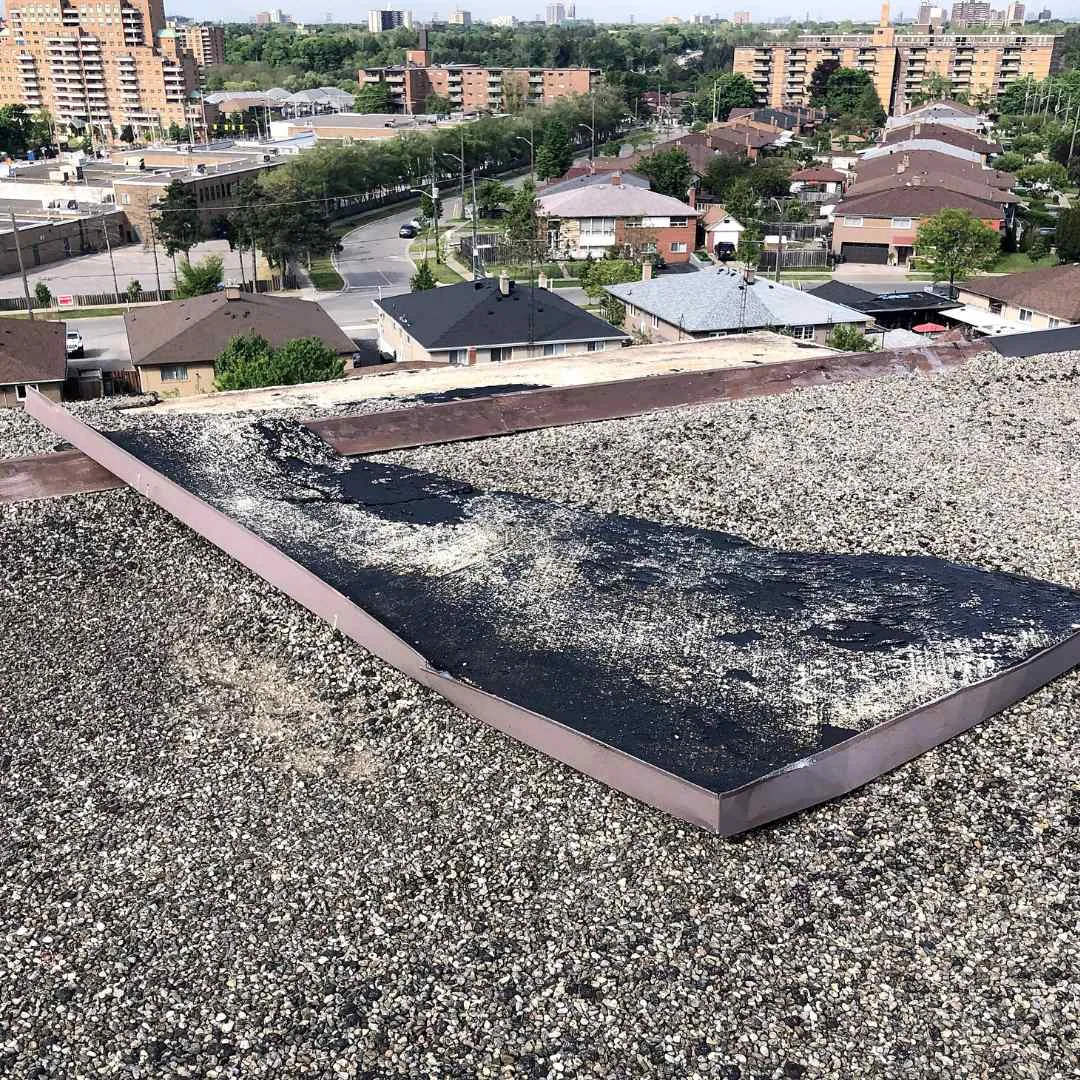
Hurricanes damage roofs in three ways, and they overlap. Wind lifts membrane edges, strips metal and peels panels. Wind-driven rain forces water behind flashings and through seams that stay dry in ordinary storms. Debris from signs, trees and neighboring buildings punches through membranes and dents equipment. A hurricane roof usually carries all three.
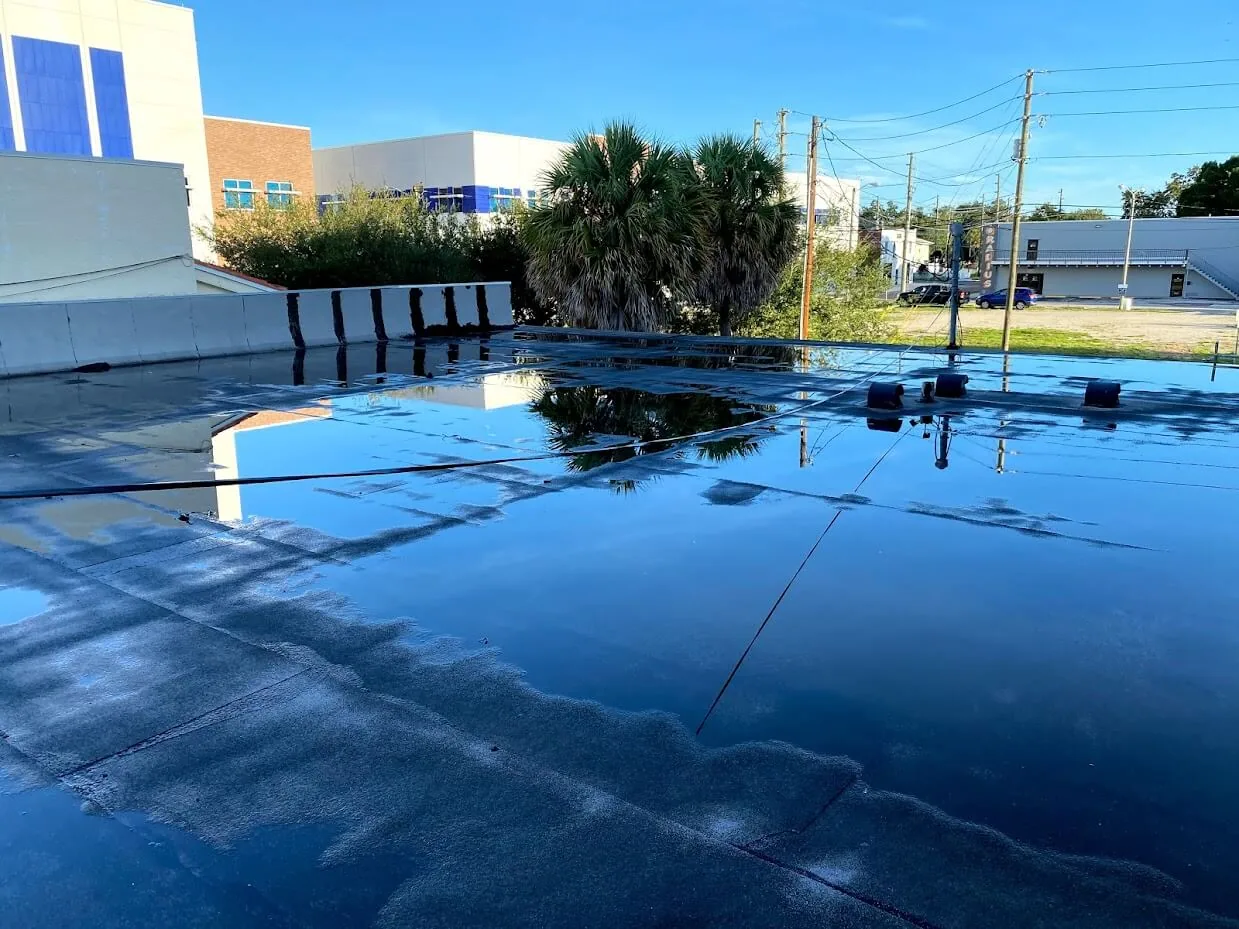
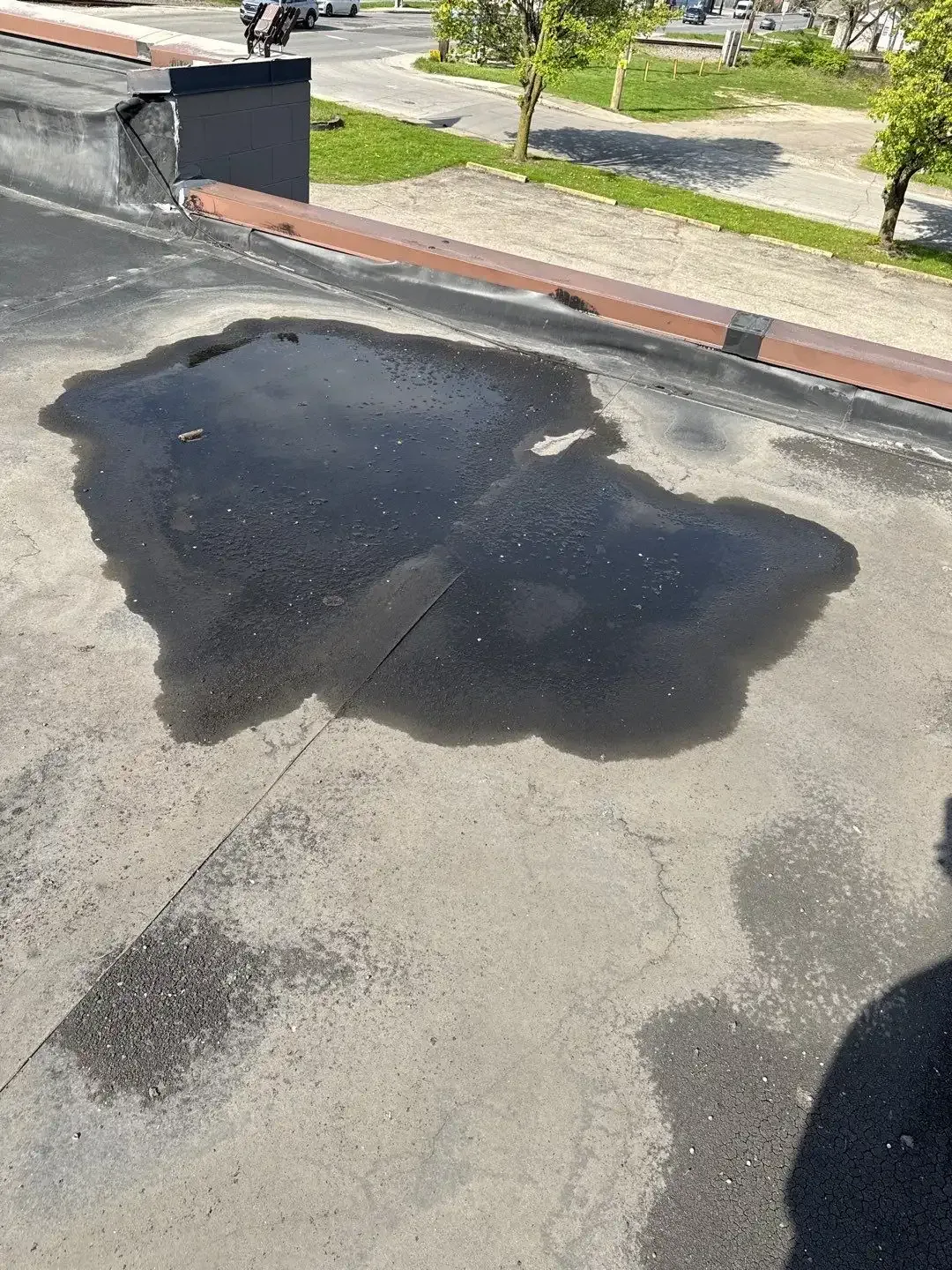
Hurricane Ike came ashore at Galveston in September 2008 and then followed the bay shore up the eastern flank of the Houston area. Its wind removed part of the roof at Reliant Stadium and damaged the roofs of several hangars at Ellington. Hurricane Beryl, a Category 1 storm in July 2024, tore a gap in the NRG Stadium retractable roof. A storm rated modestly can still open a large-span roof, which is why category numbers tell an owner very little about the damage underneath. The rain that follows the wind collects wherever a roof drains slowly, so ponding water gets checked on the same visit.
Stage the Dry-In Before the Next Outer Band
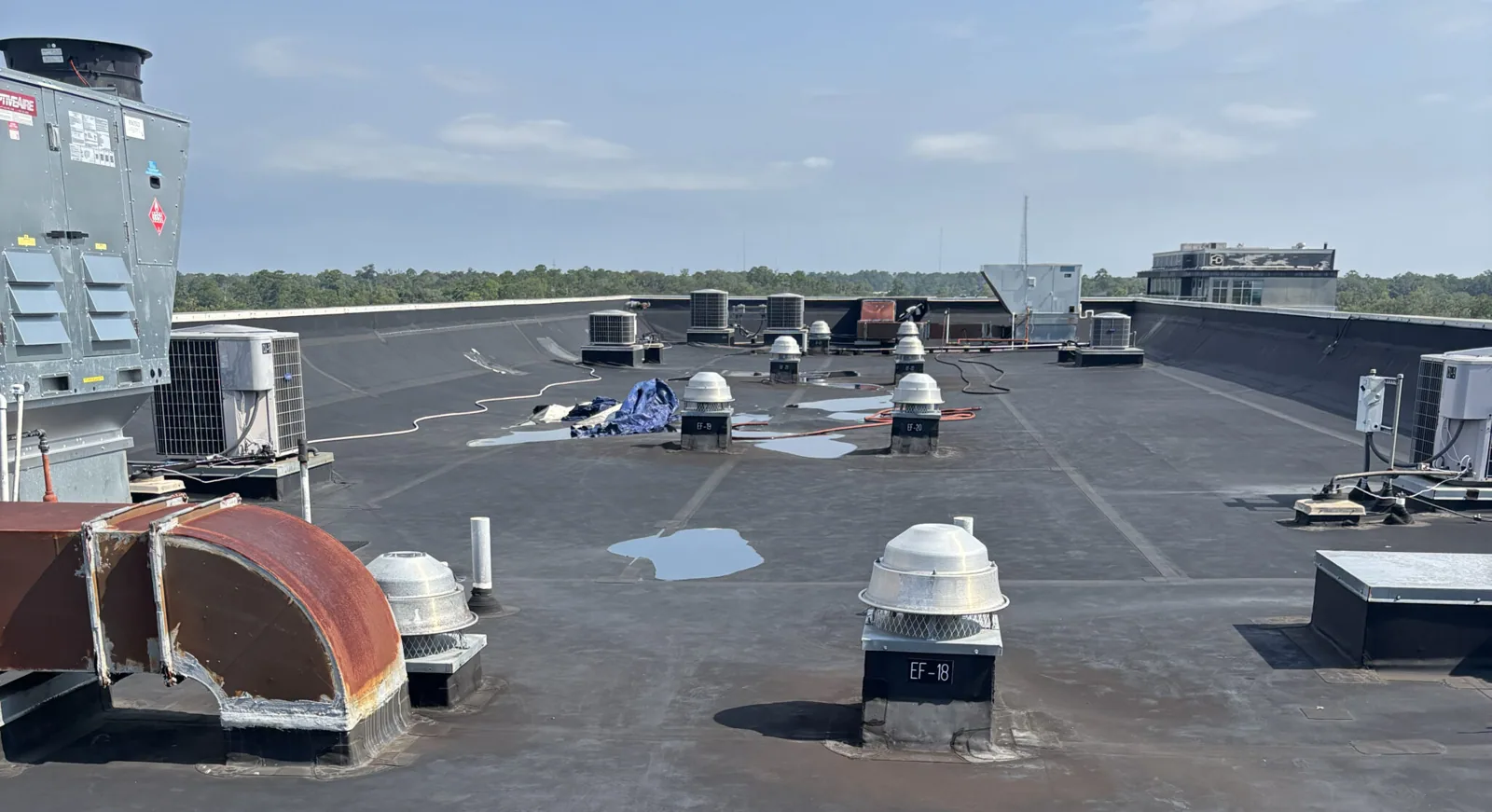
The first week after landfall is about stopping water. Crews tarp open decks, secure loose membrane with temporary battens, close roof penetrations and clear drains so the next round of rain has somewhere to go. We prioritize by consequence: spaces with equipment, product or patients first, empty storage later. The work follows the same logic as emergency roof repair, with the added problem that crews, cranes and materials are in short supply across the region.
Power and access matter too. After Hurricane Beryl, more than 2.7 million customers statewide lost power, so a lift plan has to account for generators, fuel and traffic signals that may be down. Material staging happens near the building, and the temporary work is built to survive a second wet week, not a single night.
Rebuild to the Windstorm Inspection, Not Just to the Eye
A roof that looks restored may still fail the inspection. The inspector checks attachment, edge metal, flashing and the paperwork that shows what was installed. So the permanent repair is built to a written scope: fastener patterns at corners and perimeters, cover board or substrate repair where wind lifted it, new edge metal secured to the inspection standard and sealed penetrations. Photographs at each stage record the work before it is covered.
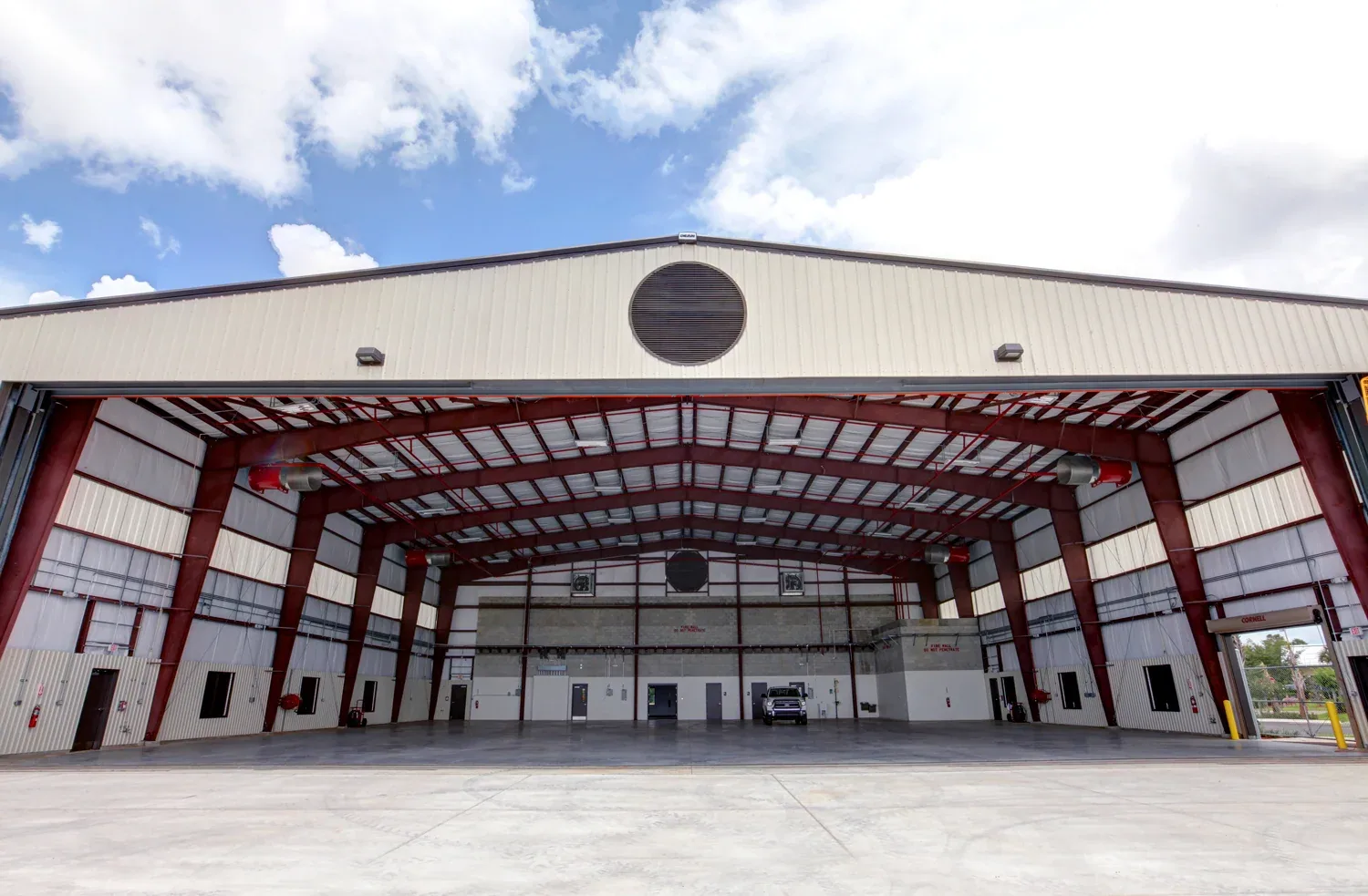
The claim record runs alongside. Dated images, material lists and the cause-of-loss notes feed the insurance claim assistance file, and the same record answers the question of how much damage belonged to this storm and how much to an earlier wind event. On hangars and other large spans, an aircraft hangar roof brings door openings and clear-span framing into the repair from the first walk.
Prepare the Roof Before the Season Opens
Hurricane Harvey in August 2017 shut down about 2.25 million barrels per day of Gulf Coast refining capacity (about 12 percent of national capacity), and the roofs on those sites faced the same weather as everyone else's. A roof needs a shutdown checklist of its own: clear the drains, tie down or remove loose items, confirm that rooftop equipment is secured to its curbs and check that edge metal and coping are fastened.
A preventive maintenance visit before June covers all of it, and owners with several sites can run that same check across the portfolio. Ike's surge in Seabrook, which left residents without power and water for up to a month, and the extensive building damage the storm caused in Galveston show how much a bayfront property can lose, so the earlier the weak points are found, the more options the owner has.
A hurricane response should separate immediate water control from the later decisions about repair and replacement. Map the areas opened by wind, the locations exposed to rain, and any equipment or edge details that shifted. Before moving debris or making permanent repairs, photograph conditions where it is safe and permitted to do so. Check the roof's windstorm inspection requirements with the appropriate reviewer before selecting materials or closing concealed work. The owner should retain temporary-protection dates, inspection records, and the permanent repair log together. This sequence keeps the building protected while preserving the information needed to explain what changed and what remains vulnerable before the next storm season.
Commercial Roofing Questions
Can a Category 1 storm like Beryl really damage commercial roofs?
Category is a poor guide to roof damage. Beryl came ashore as a Category 1 with its eastern eyewall over the Houston region, and it still tore a gap in the NRG Stadium retractable roof. Gusts, duration, building height and edge details shape the outcome far more than the label.
Our building is just west of SH 146. Does the windstorm program apply?
The designated area covers risks east of that highway, so the address on your policy is the guide. A building to the west answers to a different insurance structure, but the roof sees the same wind. Bring the policy to the first walk and we will line up the repair scope with it.
How soon after landfall can we expect a crew?
Longer than in a normal week. Every owner in the region needs a dry-in at once, and cranes, fuel and material are stretched thin. Owners who set up a repair plan and a site contact before the season starts give the crew a head start, since the roof and the access route are already known.
What can the roof do for us before a storm arrives?
Clear the drains first, then secure loose items and confirm that rooftop equipment is fastened to its curbs. Walk the perimeter and look for lifted edge metal. Anything that can become debris should come off the roof, and photographs taken beforehand establish the starting condition.
Should we repair right away or wait for the adjuster?
Dry-in comes first, because policies expect the owner to prevent further loss. Photograph everything before it is touched, keep receipts for temporary work and let the adjuster see the damaged areas where possible. Permanent repairs can wait for the agreed scope, while temporary protection should not.
Keep Reading
Related Roofing Work in Pasadena
Plan the Dry-In With Us Before the Season
Walk the roof with our team and your facility director. We will mark the weak points, map access for the crane and trucks, and agree on a storm plan before the next forecast.