
Property Types We Roof
Naval Facility Roofing Near Pasadena, TX
A shore facility keeps the ship's calendar, not the roofer's. Shops, warehouses, training buildings and offices at a naval site are scheduled around what is tied up at the pier, what is on the flight line and when the reserve units drill, and the roof sits over all of it. Near Pasadena, TX, the Navy's local footprint is the Navy Reserve presence at Ellington Field, about 7 miles south-southeast, but the conditions that shape naval roofs are everywhere here: the Houston Ship Channel forms the city's northern edge, Galveston Bay lies to the southeast, and the air off both is damp, warm and hard on metal.
That is the real subject of naval roofing. Corrosion first, schedule second, paperwork third. The membrane is whatever the specification calls for. The metal around it has to outlast the membrane.
Match Every Metal Part to Humid Bay Air
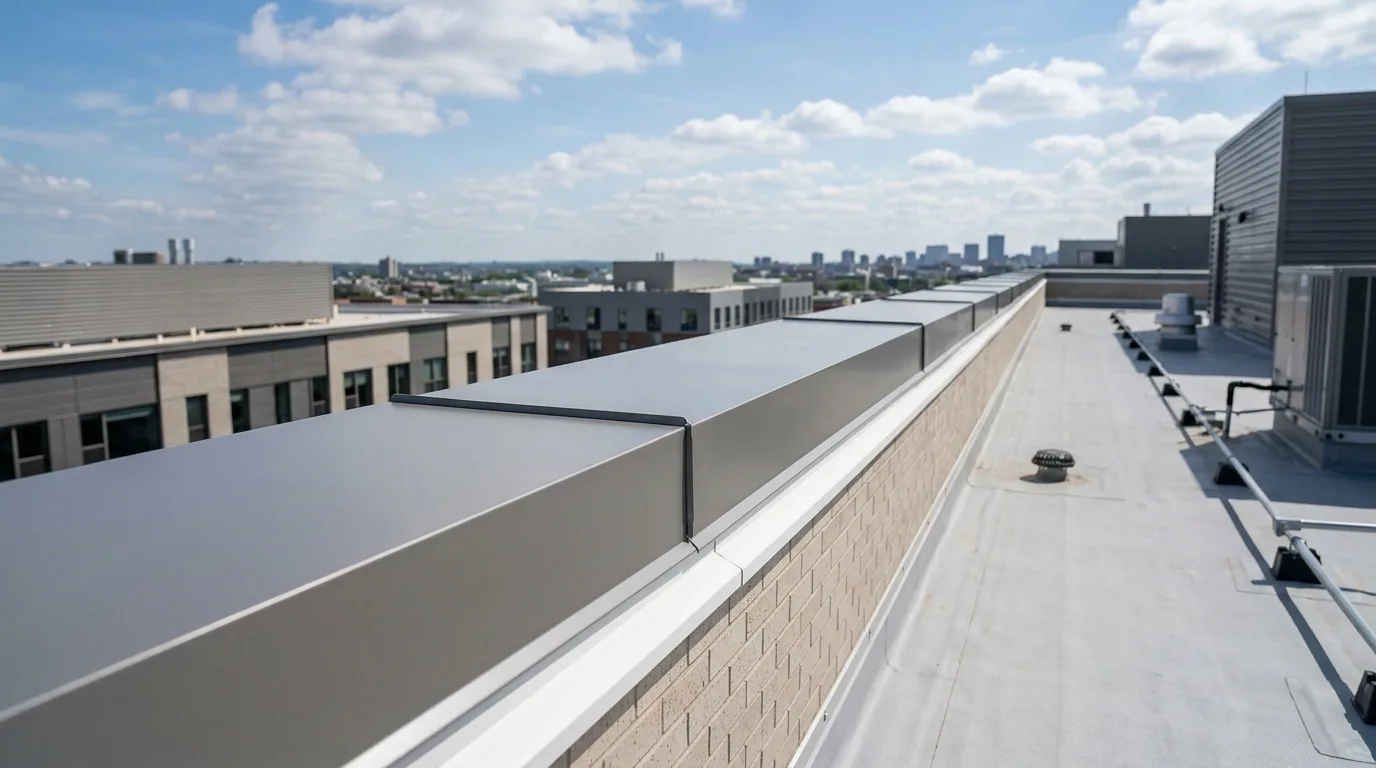
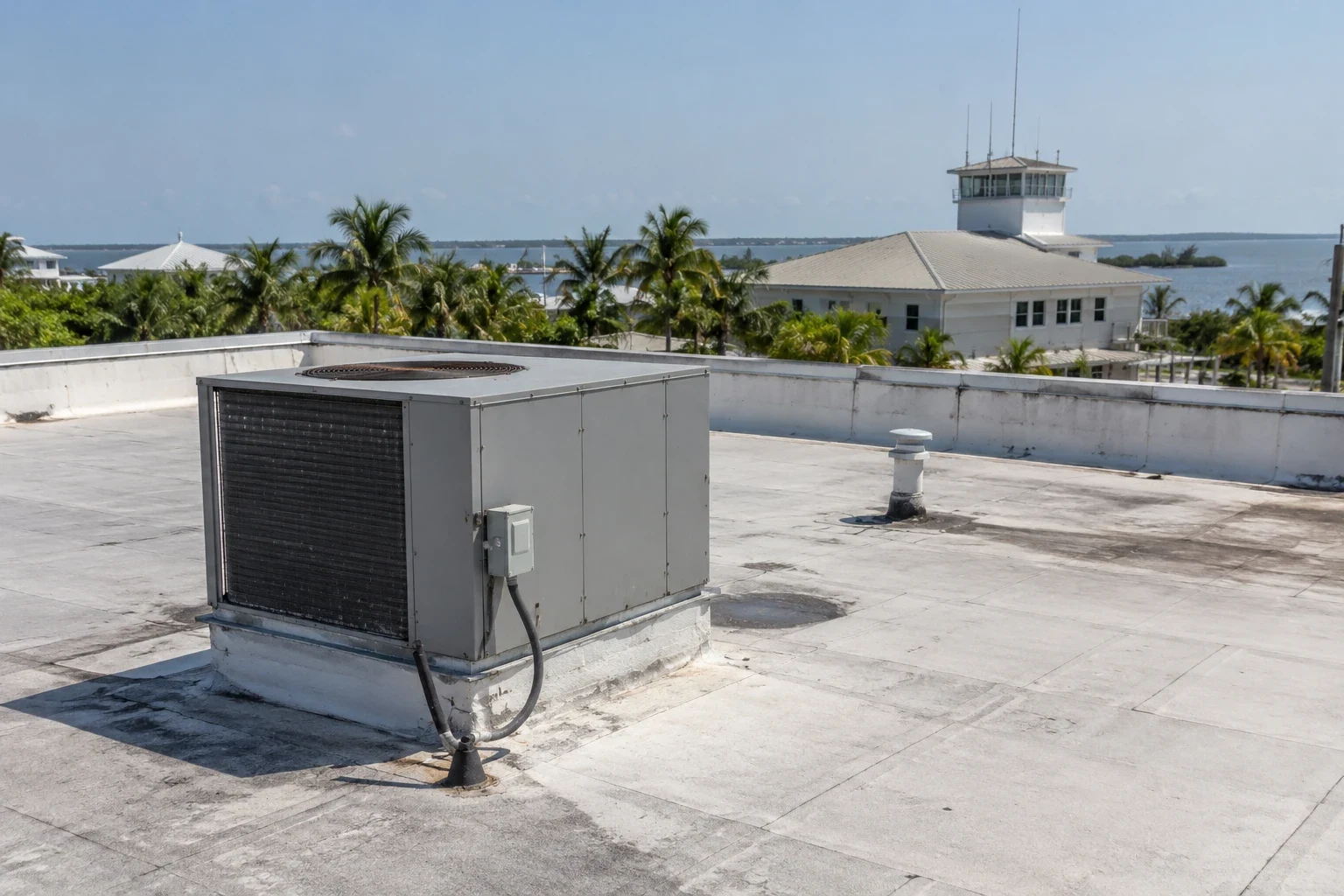
Pasadena lies only about 30 feet above sea level, with the Ship Channel on its north side and the bay along its southeast edge, and the air moving through it carries moisture and corrosive residue onto every exposed edge. Fasteners, coping, scuppers, curb flashings and equipment supports are the first parts to show it. Rust blooms at cut edges, screws back out as the threads lose their bite, and a membrane tears at a flashing that has quietly lost its grip.
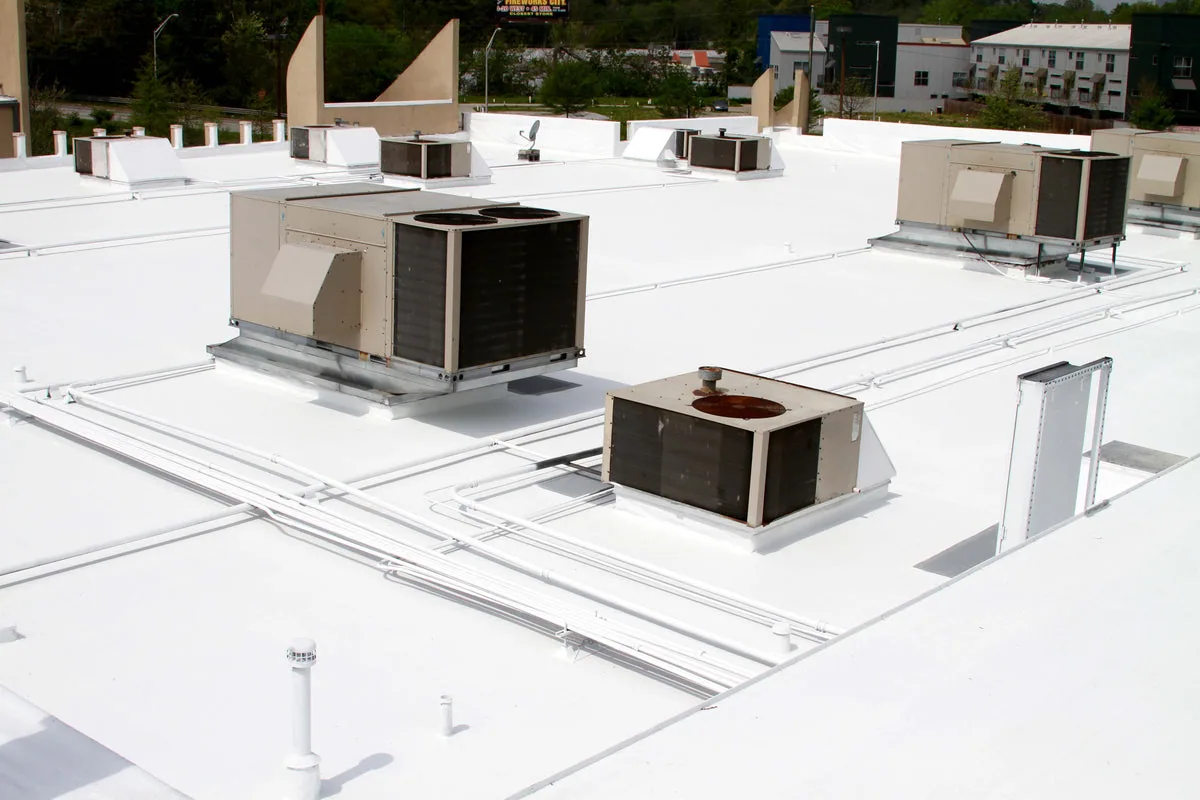
Material choice answers most of it. Stainless or coated fasteners, factory-finished metal in a heavier gauge, isolation between dissimilar metals and sealants rated for constant dampness all slow the process. Where an old roof is sound but its metal is tired, edge metal and coping replacement can extend the roof without a full tear-off, and a silicone roof coating sheds ponded water without softening. Each metal detail is photographed, so the next inspector can compare rust patterns from one year to the next.
Sequence Around the Pier, the Shop Floor and the Drill Calendar
Shore buildings serve different masters. A pier-side warehouse is staffed when ships load and unload. A maintenance shop is busy when equipment comes in for service. A flight-line hangar answers to the flying schedule. A reserve training building fills on drill weekends and sits quiet in between. The roof plan sorts the buildings by day and hour, then picks the work window that disturbs the fewest people.
Large equipment is the next constraint. A crane pick on a waterfront site may share space with cargo handling, rail or truck lanes, and the lift plan has to show where the boom swings, where the laydown area sits and who stops operations while a load is overhead. A pier-side warehouse roof and a hangar roof have little in common beyond the weather over them, so each gets its own crane pick, its own material staging and its own closeout. Buildings at Coast Guard stations follow the same logic with a different operating rhythm.
Hold Hot Work Back Wherever Fuel or Ordnance Is Near
Naval sites keep fuel, ordnance, solvents and compressed gases that ordinary commercial buildings do not. A torch or a welder beside any of those is a safety event, not a roofing step. Hot work permits are written for the specific building, fire watch continues after the last spark, and restricted areas can bar tools or phones altogether. When the controls are tight, we change the method instead of arguing about them: welded or adhered single-ply, cold-applied adhesives with ventilation, and mechanical attachment all replace open flame.
Fumes get the same treatment. Air intakes for shops and hangars are mapped before material arrives, and odorous products are held back until the intake can be shut or shielded. The crew completes a site safety orientation at the start, and the fire marshal sees the work plan before the first permit is requested.
Resist Uplift and Flying Debris Where the Gulf Comes Ashore
Hurricane Ike came ashore at Galveston on September 13, 2008 as a Category 2 storm and then moved north along the east side of Houston beside Galveston Bay. Reliant Stadium lost part of its roof, downtown windows blew out and millions lost power. Waterfront roofs have long fetch, little shelter and every loose object upwind as a projectile. The roofing criteria tie wind uplift to the exposure of the site, and an open waterfront sits among the toughest exposures.
That puts weight on perimeter securement: edge metal fastened into solid blocking, coping joints sealed, equipment strapped to its curbs and drains sized for storm rain. Barbours Cut Terminal at Morgan's Point sits on Galveston Bay at the Ship Channel inlet, a working waterfront where bay wind and damp, corrosive air work on every exposed roof edge. After a storm, hurricane damage roof repair begins with a photographed walk of the edges before anyone looks at the field.
Keep Water Moving Through a Fifty-Inch Rain Year
A typical Houston year brings about 50 inches of rain spread over roughly 104 wet days, June being the wettest month, and in August 2017 Harvey dropped more rain than any tropical cyclone ever recorded in the country. A low-slope roof on a naval shop has to pass that water to a drain every time, and a drain with a clogged basket turns a membrane into a shallow pond within an hour of a heavy cell.
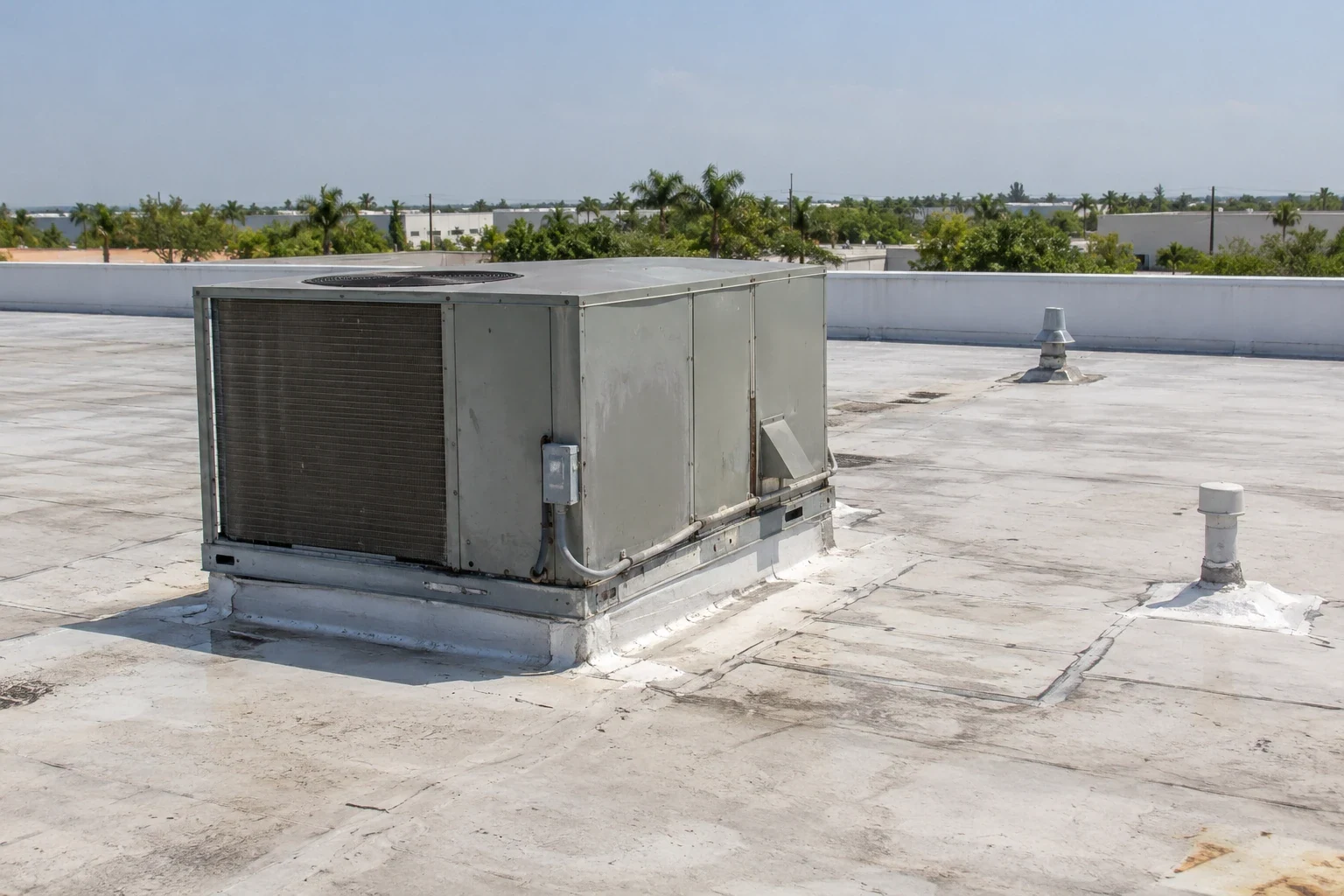
We trace the flow on each roof area, mark every low spot, and choose between added crickets, new roof drains and scuppers or a tapered insulation package. Standing water after a storm deserves a plan of its own, and ponding water roof repair gets scheduled before the next wet season, not after it. Drainage is among the first things a military installation roofing scope on the Gulf side of Texas has to settle.
At a waterfront or naval facility, material choice should consider the exposure at each building rather than applying one specification across the site. Inspect fasteners, metal edges, rooftop supports, and penetrations for corrosion or movement, then record whether the condition is active or historical. Schedule hot work only after the facility has cleared permits, nearby operations, and required fire protection. Keep cranes and deliveries clear of operational routes and secure loose materials against changing weather. The final roof map should distinguish repaired, replaced, and monitored areas. Facility staff can use that record to plan inspections around equipment service and to catch corrosion before it affects the membrane connection.
Commercial Roofing Questions
Why does a waterfront federal building need different metal from an inland one?
Moisture-laden air speeds corrosion at every cut edge, fastener and dissimilar-metal contact, so details specified for an inland building wear out first on a bay-side roof. Stainless fasteners, heavier finishes and isolation layers keep the edge metal intact for as long as the membrane lasts.
How does a maintenance shop stay productive during a reroof?
By opening the roof in strips that dry in before the afternoon storms, with temporary protection set over the work bays first. The loudest steps move to hours when the shop is idle, and equipment stays clear of the area below the crane pick.
How do fuel and ordnance storage nearby change the choice of roof system?
They push the choice toward methods with no open flame: welded or adhered single-ply, mechanically attached systems and cold-applied adhesives. A building near a fuel point also gets a tighter fire watch and a permit that names the exact hours of the work.
What does a corrosion log look like at closeout?
A set of dated photographs of each edge, curb and fastener line, with the location marked on the roof plan. The next inspection repeats those photographs from the same spots, which turns a vague sense of rust into a measured change over time.
Do reserve drill weekends open or close the work window?
Both, depending on the building. A training hall is empty during the week and full on drill days, while a shop may be the reverse. We schedule each structure against its own calendar instead of using one date for the whole site.
Keep Reading
Related Roofing Work in Pasadena
Walk the Shore Buildings With Us Before Scope Is Set
Share the building list, the fire and fuel restrictions and the drill calendar. We will walk the roofs with your facilities team and write a plan that puts corrosion control and the operating schedule ahead of the paperwork.