Roof Systems
Metal Roof Retrofit and Restoration in Pasadena, TX
Corrugated panels, a row of roll-up doors and a screw every foot or so: that is the profile of a small-bay industrial building, and the roof over it has been taking Gulf weather one fastener at a time. In Pasadena, TX the heat swings are daily, the air is humid and the wind arrives in violent gusts. Each of those pulls on the same fasteners, and the rubber washers under their heads give up first.
An exposed-fastener metal roof does not usually fail all at once. A few screws back out, a lap opens, rust starts at a cut edge, and a leak appears over the one bay where someone stores paper or electronics. A retrofit is the answer that keeps the building in service while the roof is rebuilt on top of itself. Restoration is the lighter version for roofs that are still sound underneath.
Find Out Why the Screws Are Backing Out
Backed-out screws are a symptom. Panels expand and contract with each day's heat, and a fastener driven tight on a cool morning can loosen by afternoon. Washers crack under UV, holes enlarge, and some screws were never aimed at the purlin in the first place. Rust at the screw head tells us moisture has been working at that spot for a long time.
We walk the roof with a screw gun and a probe, mark every loose fastener and lap, and look at the underside of the panel from the interior. Staining along the purlins or beneath the ridge shows where water has traveled. A cluster of leaks along one line often traces to a single failed detail, and a systematic approach finds it faster than a panel-by-panel patch. When a leak is active, commercial roof leak repair stops the water first.
Choose Between Re-Fastening, Coating and a New Panel Over the Old
Three paths exist for a worn metal roof. The first is to replace failed fasteners with larger, corrosion-resistant ones, reseal laps and flashings, and monitor. The second is a coating system: after cleaning and rust treatment, a fluid-applied layer seals the surface and the screw heads together. The third is a retrofit, with new framing and panels installed over the existing roof.
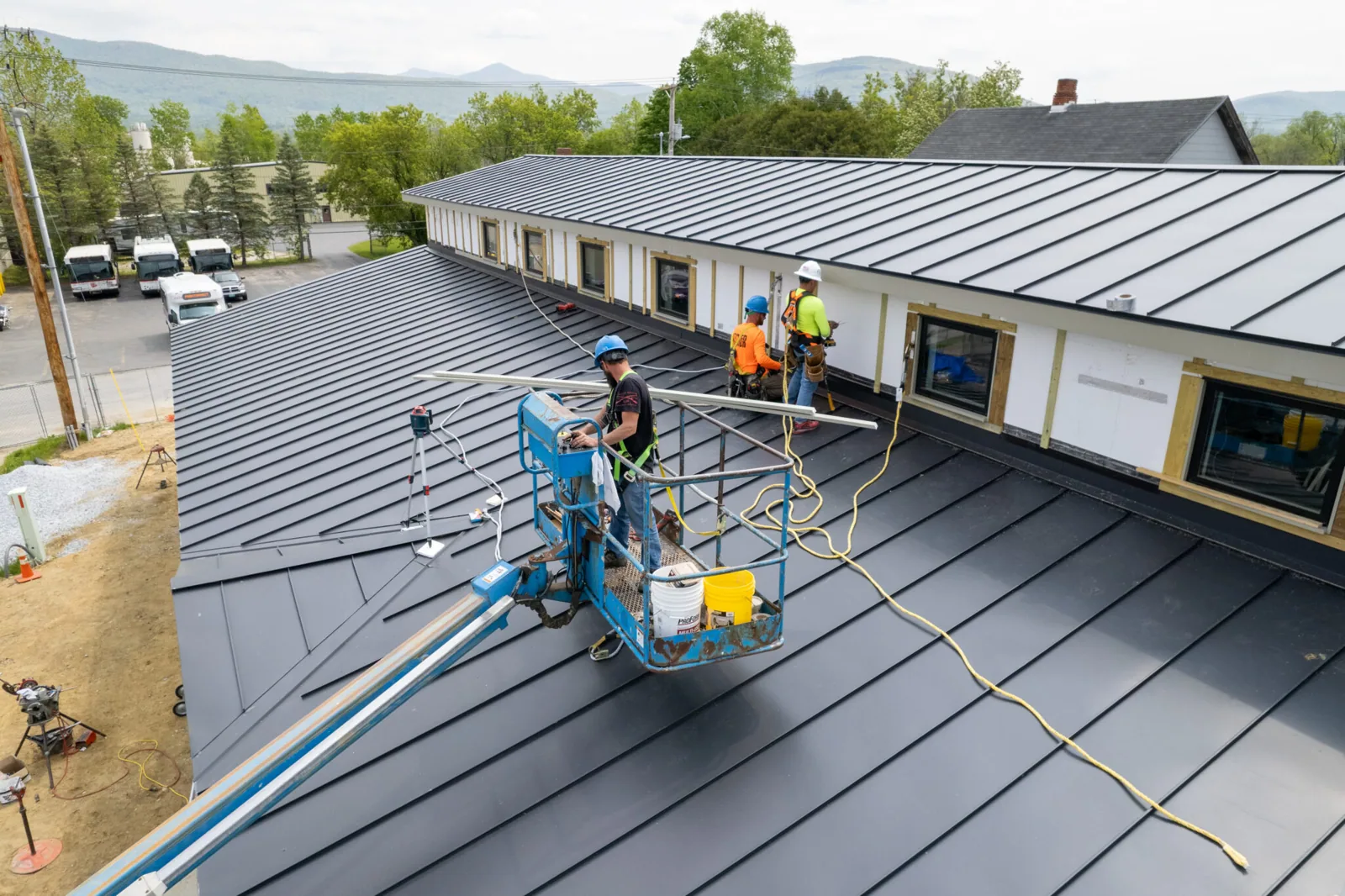
Each path fits a different condition. Light rust and loose fasteners suggest the first two, and a reflective silicone roof coating can protect the surface when the panel steel is sound. Heavy corrosion, perforated panels or a roof near the end of its service life point to the third. A new standing seam metal roof over sub-framing gives a hidden-fastener surface and a long, quiet service life without tearing the old panels out.
Check the Purlins, Insulation and Condensation Path
Under a metal roof, the surprises are structural. Purlins can corrode where a leak has lingered, and the thin blanket insulation common in metal buildings can soak up water and stay wet for years. Wet insulation holds moisture against the underside of the panel and speeds rust. Condensation can mimic a leak, so we separate the two before pricing anything.
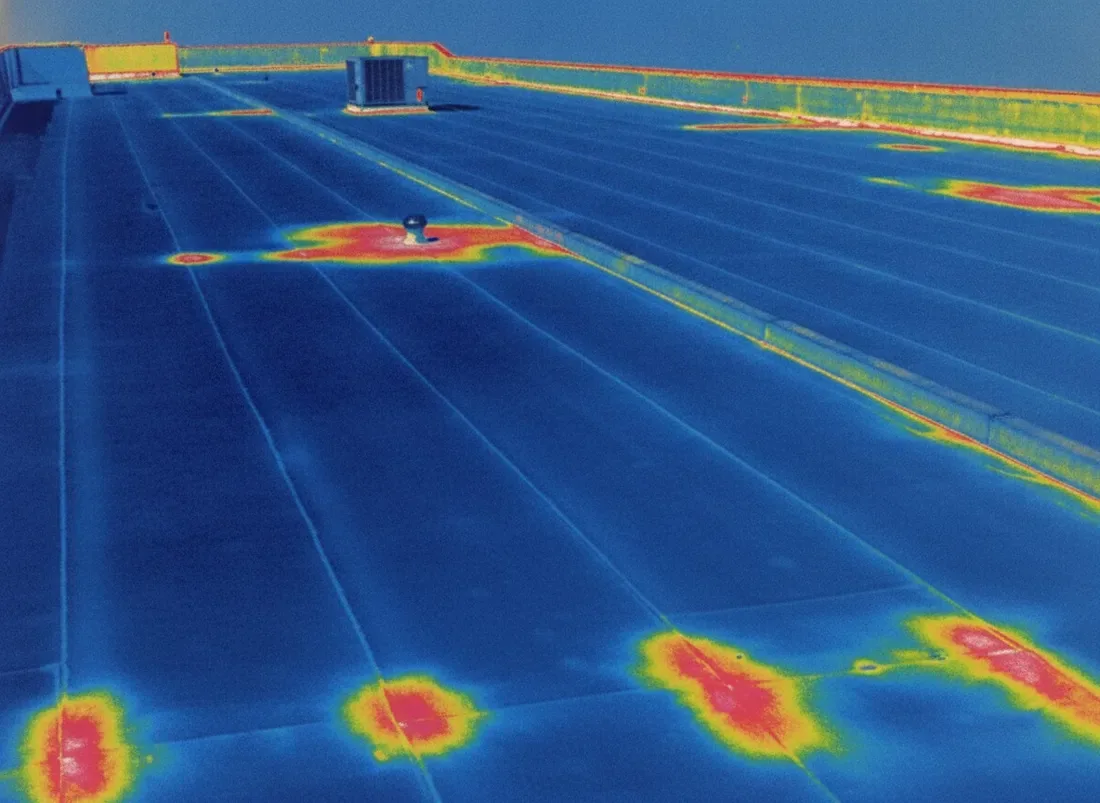
An infrared moisture survey helps with the insulation question on roofs that have accessible thermal contrast, and a hands-on check of purlins settles the structure. Retrofit framing adds weight, so we confirm that the frames and columns can carry it. If the structure cannot, the answer is a lighter restoration, not a heavier retrofit. We would rather say that on day one than discover it after the sub-framing is up.
Keep the Bays Working Under the Old Panels
Jacinto City sits east of the I-10 and 610 East Loop interchange along a Missouri Pacific rail line, a mixed commercial and residential city near the Ship Channel industrial area. A business in a place like that cannot count on a dark week while the roof is rebuilt. A retrofit suits it because the old roof stays in place as a weather barrier while the new one goes on.
The sequence is simple. The crane pick lifts sub-framing and panels to the roof, the laydown area stays clear of dock doors, and each bay is closed the same day it is opened. A flex industrial roof can often be finished without moving stock, and material staging happens on the quiet side of the lot. Night shift tenants are told what noise to expect and when.
Detail the Ridge, Eaves and End Laps for Gulf Gusts
Wind finds a metal roof at the ridge, the eaves and the end laps. Surveyors put the May 2024 derecho at about 100 mph downtown, and Hurricane Beryl brought its eastern eyewall across the region in July 2024. In Channelview, where petrochemical plants and Ship Channel logistics sit beside homes and a 1992 F4 tornado marks the area's history, a roof can change quickly on a bad afternoon.
Retrofit details focus on those weak points: closures at the eaves, sealed end laps, heavier fastening at corners, and edge trim that ties back to the structure. Buildings east of State Highway 146 answer to state windstorm insurance rules, so the attachment record gets extra attention there. A loose ridge cap is cheap to fix before a storm and expensive afterward.
Record the Roof So the Next Decision Is Easy
A good retrofit leaves a clean file: photographs of the old roof before framing went on, fastener types and spacing, panel profile and gauge, flashing details and the location of every penetration. The same file helps if an insurer later asks what the roof looked like before a storm.
For owners with several metal buildings, those records feed a portfolio view of roof condition reports. Buildings with sound panels get a coating cycle, buildings with failing fasteners get re-fastening, and buildings with deep corrosion move to retrofit. The work becomes a sequence on a calendar instead of a string of leaks, and the maintenance visits catch loose screws before the first stain appears.
Commercial Roofing Questions
Can new panels go straight over the old corrugated roof?
Not directly. A sub-framing system, usually purlins or hat channels on spacer clips, sits above the old panels and carries the new roof. That keeps the new fasteners out of the worn panels and gives insulation room to be added. The structure must be able to carry the added weight.
How many times can screws be replaced before the roof is beyond saving?
Larger-diameter screws can restore grip once or twice, but each pass enlarges holes and exposes more steel to moisture. If panels are already thin or rusted around the holes, re-screwing becomes a short bridge. We count how many fasteners have been replaced already and weigh that against the next step.
Will a coating stop a rusty metal roof from leaking?
Coatings seal laps, screw heads and small rust spots, and they slow further corrosion. They cannot bridge large holes or restore structural strength. We prepare the surface, treat rust and patch openings first, then apply the coating system, so it bonds to sound steel.
Does a retrofit change the building's insulation and energy rules?
It can. The new framing cavity makes room for added insulation, and Pasadena's permit office applies its 2024 energy code to remodels that change a building's energy load. We raise the energy paperwork at the first meeting so inspections do not hold up the tenants.
Why does my metal roof drip when it has not rained?
Condensation. Warm, humid Gulf air meets cool panel undersides at night, and water forms on the metal and drops onto the floor. Ventilation, vapor control and insulation fix it, not sealant. We check the pattern of drips against weather and humidity before calling it a leak.
Keep Reading
Related Roofing Work in Pasadena
Show Us the Screws and We Will Walk the Roof
Tell us the building, the tenants and the roof history. We will walk the metal roof with your facility director and plan a repair, restoration or retrofit that fits how the building runs.