
Property Types We Roof
Flex and Light-Industrial Roofing in Pasadena, TX
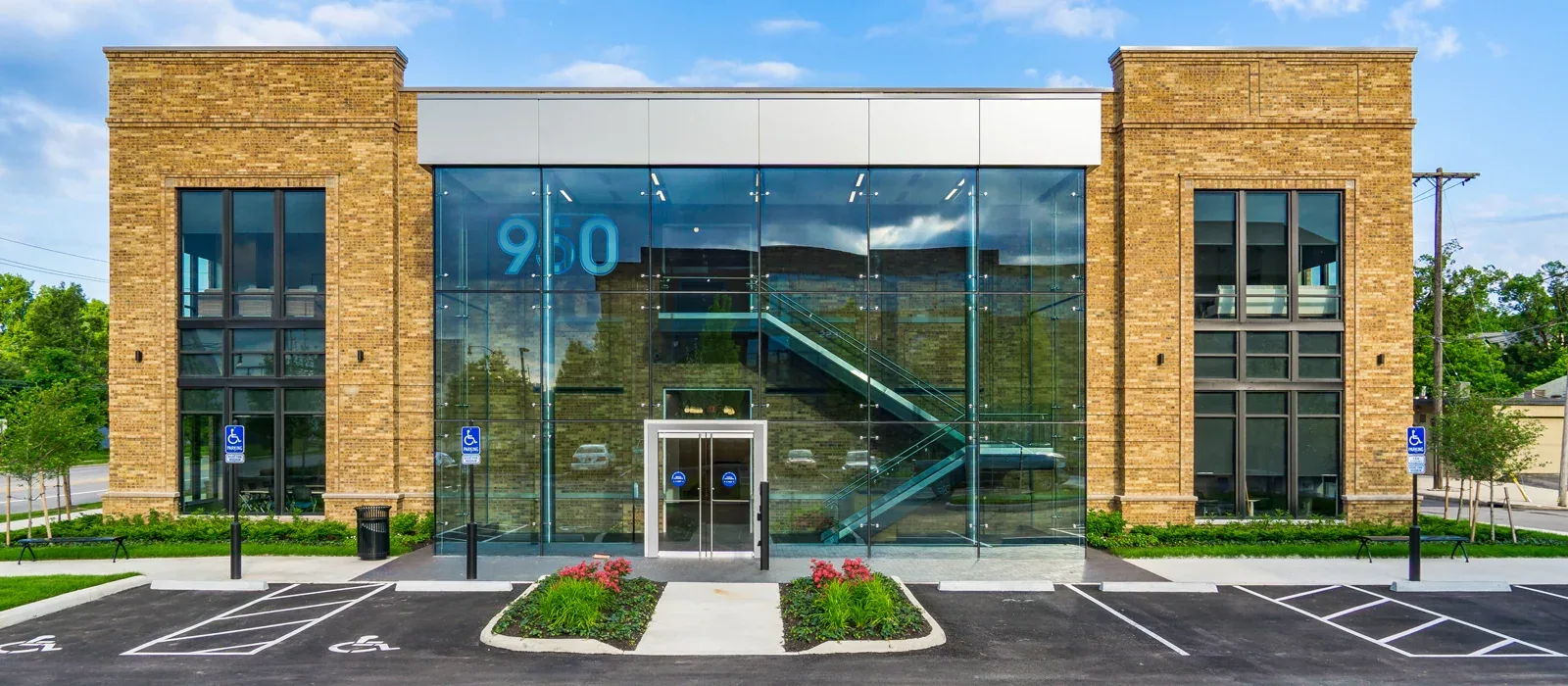
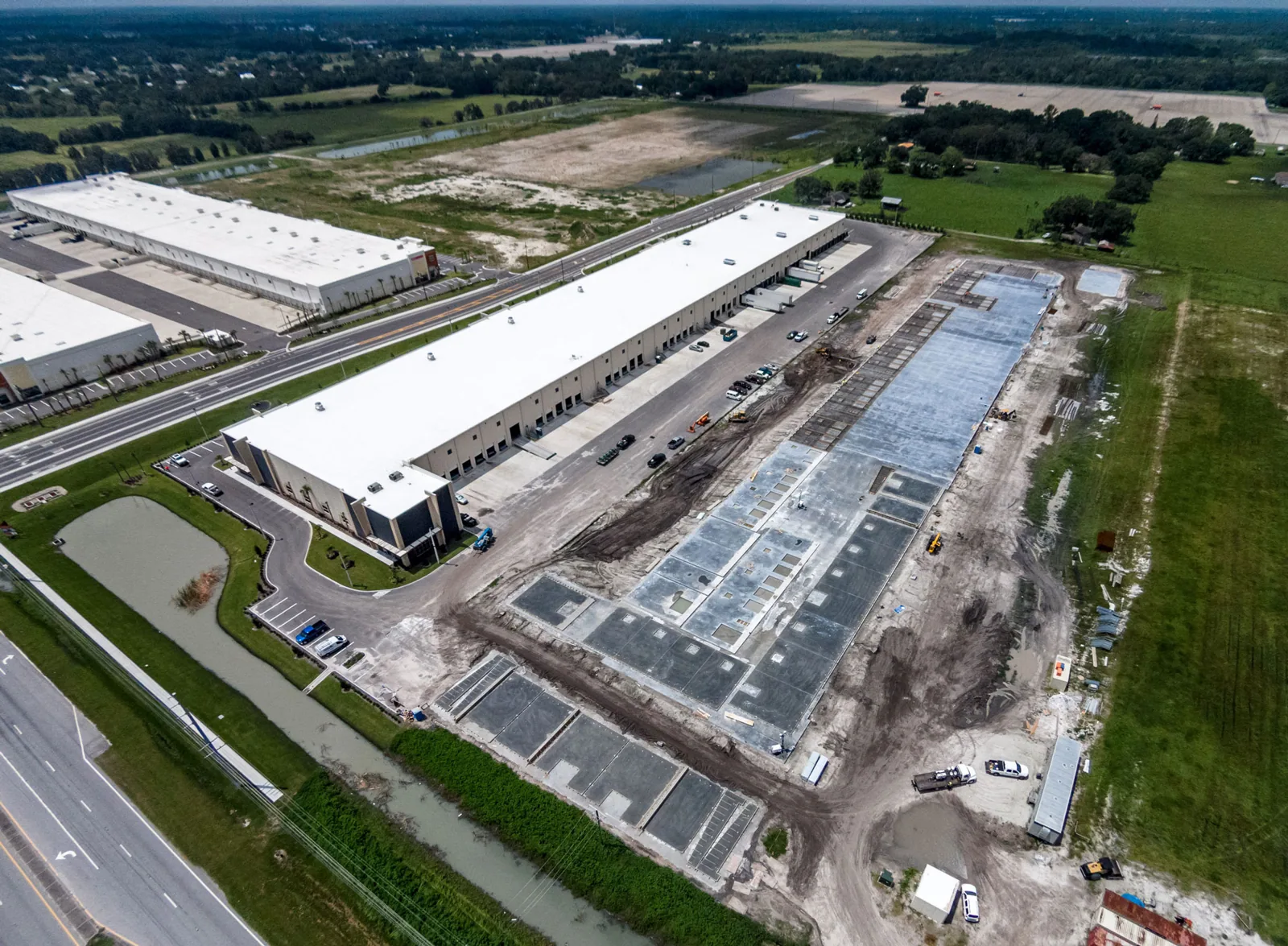
A flex building has two jobs under one roof. The front is an office suite with glass, carpet and a reception desk, and the back is a shop or storage bay with a dock door, a floor drain and a forklift. The tenant may be a contractor, a lab, a distributor or a small manufacturer, and the next tenant may be none of those. The roof has to serve every version of the building the lease can produce.
Around Pasadena, TX the industrial corridors are SH 225, the Pasadena Freeway, and Beltway 8, along with South Houston next door, where manufacturing grew inland after the Houston Ship Channel was developed. A flex roof in this area faces Gulf rain, long summers and the 2023 tornado that crossed Pasadena. We plan flex roofs the way a property manager needs them planned, with tenants working, leases turning over and the rent roll depending on dry space.
Split the Roof Into the Office Front and the Shop Back
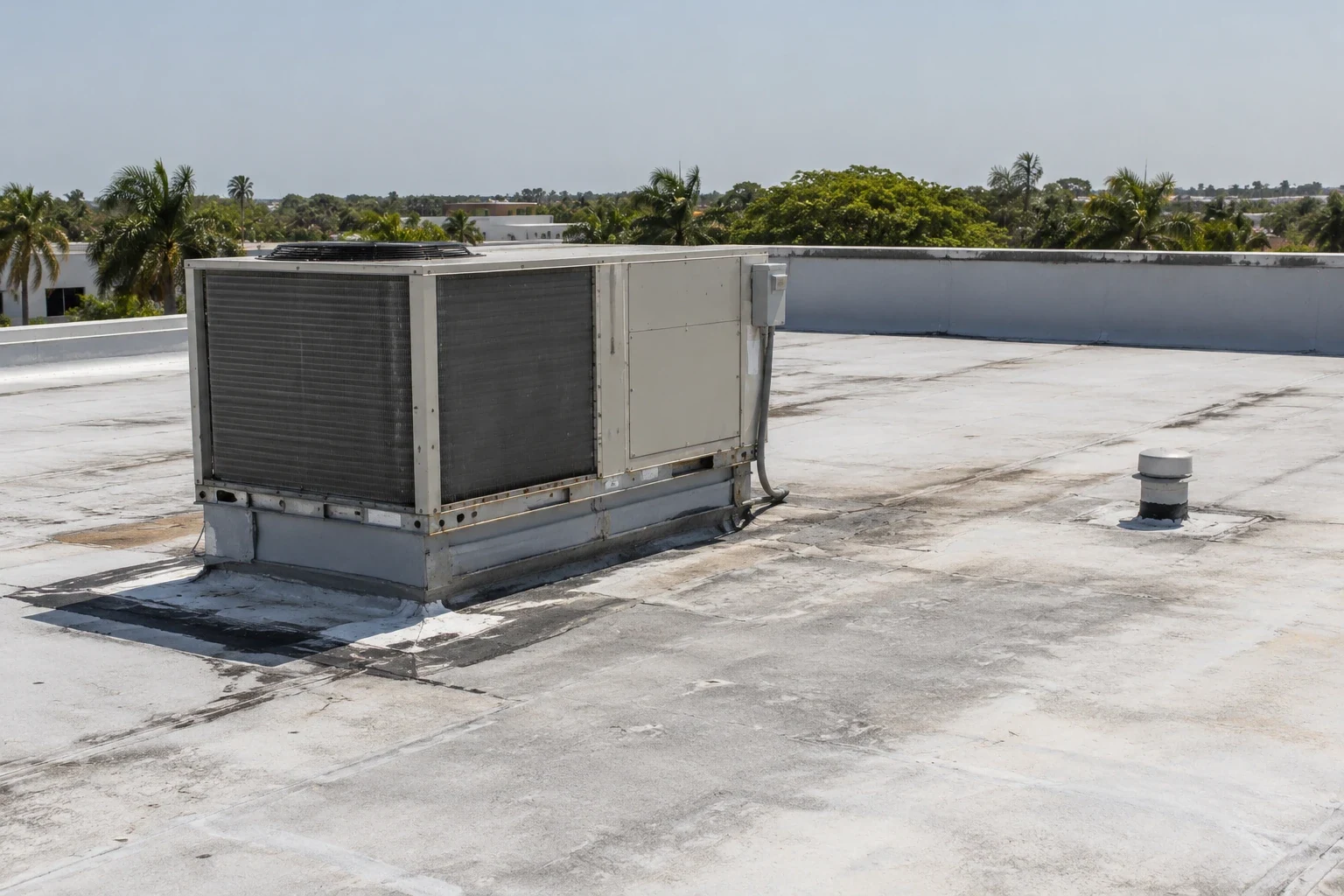
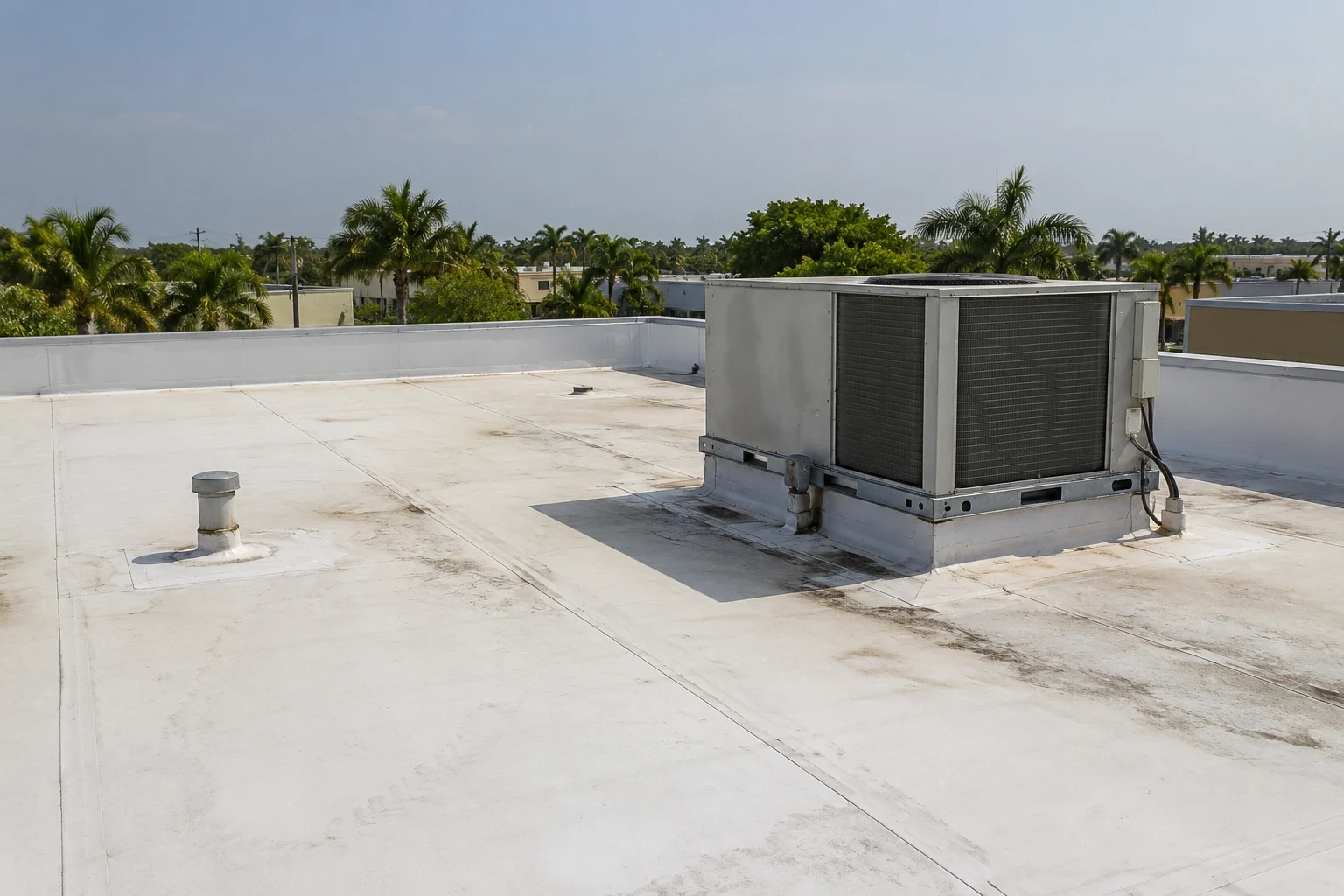
The front and the back of a flex building ask different things of the roof. The office side carries most of the rooftop air conditioning units, a lower parapet and a ceiling that people sit under all day. The back carries exhaust fans, skylights or smoke vents, and a deck that covers a floor full of inventory. A leak over the carpet ends a lease conversation. A leak over the shop floor ends a day of production.
The joint between the two is where a lot of trouble starts. The roof often changes height, or a section was added later, and a wall flashing at that transition must handle thermal movement, water running down the taller wall and foot traffic from technicians. On the first walk we check that junction, then each unit curb, then the drain lines. The pattern tells us whether the roof wants a repair, a coating or a full replacement.
Draw the Roof for the Next Tenant as Well as This One
Flex tenants come and go, and every change can alter the roof. A tenant who adds a process exhaust fan, a dust collector or a larger air handler adds curbs, penetrations and weight. A lab or a food user may add ventilation that blows grease or chemical vapor across the membrane. We keep a record of every penetration and note which ones were added by tenants, so the owner knows what to fix before the lease ends.
A tenant fit-out can also trigger permits. The City of Pasadena Permit Department, as of February 2, 2026, asks for 2024 International Energy Conservation Code compliance on projects that change a building's energy load, from remodels to a change of occupancy, and finishes with an energy inspection before the tenant moves in. That can reach the roof insulation. When we plan a reroof, we price the insulation to meet the energy code, so a later tenant improvement does not force a second look at the envelope.
Sequence the Work Bay by Bay Among Tenants With Different Schedules
A flex building often holds several tenants, each with different hours and different tolerance for noise. The property manager knows which tenant has deliveries at six, which one meets clients in the afternoon and which one runs a night shift. We issue a written schedule to the property manager at least a week ahead, and each tenant gets a notice that says which bay will see work, what time and how long.
The roof is worked in sections that match the demising walls, so a tenant at one end never loses roof protection because of a crew at the other. Crane picks sit in the rear yard, away from the front parking and the trucks. Work like this is the daily practice for property management companies, and the same sequence applies whether the building has two tenants or many more. A tenant with a loading door that cannot close is always told first.
Repair the Details That Tenants and Technicians Damage
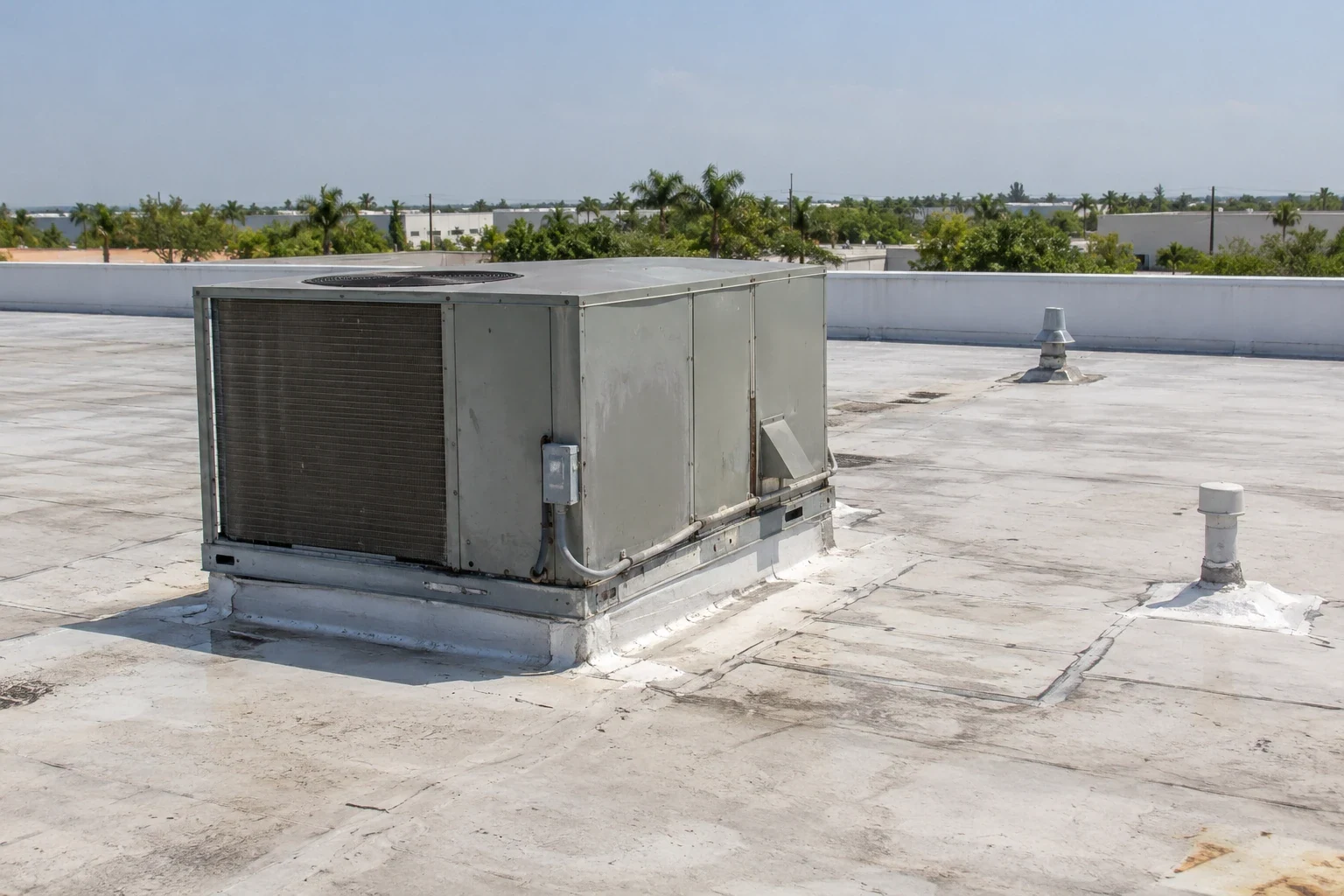
The membrane on a flex roof rarely wears out first. It gets cut. A technician steps off the walkway, a cable installer pulls a line across a seam, an exhaust fan is added without a curb, and a satellite dish gets bolted through the sheet. Each one is a small leak that shows up two bays away in the next heavy rain.
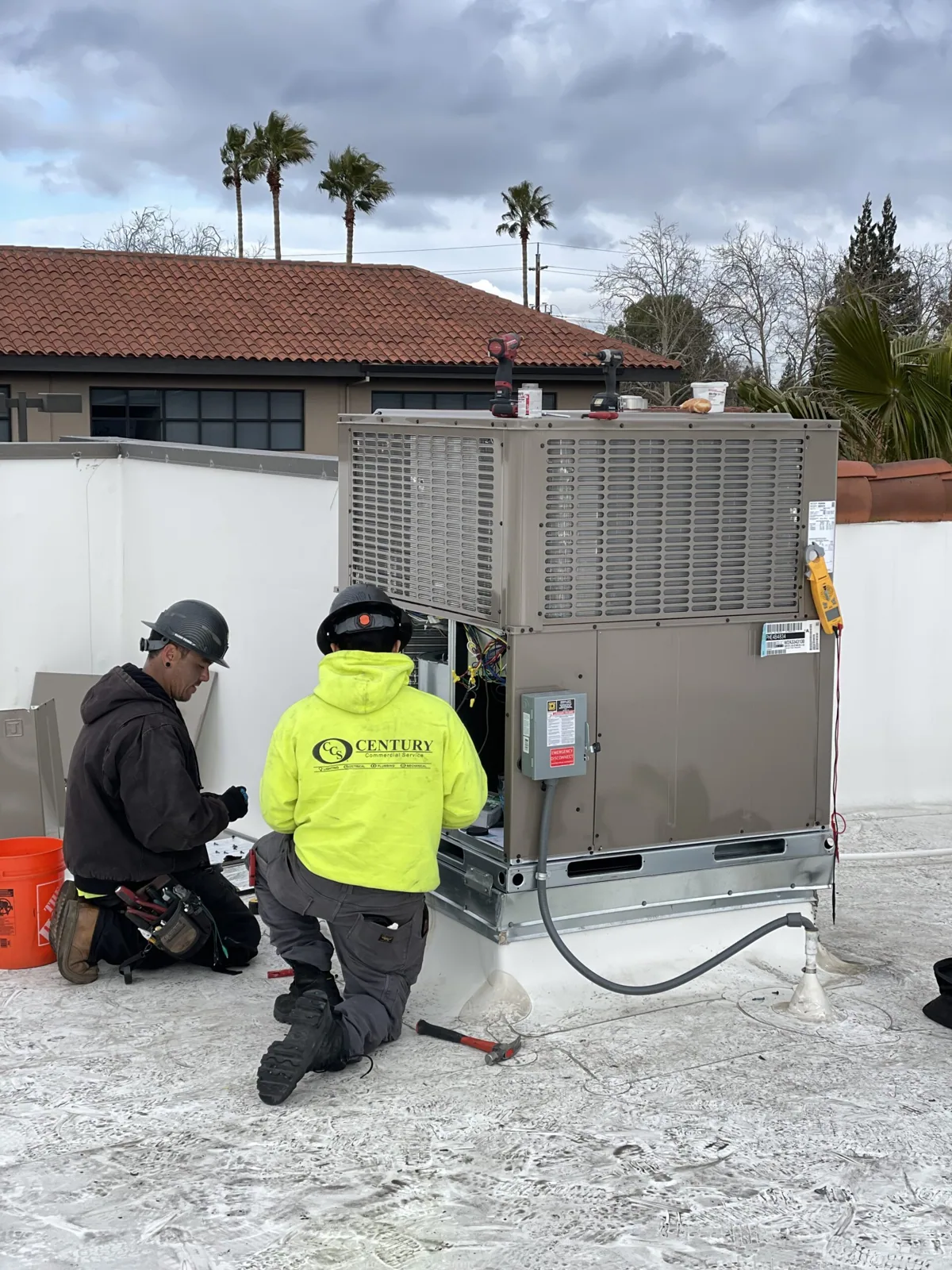
We repair these with flashed and sealed penetrations, and we rebuild units on proper rooftop equipment curbs and supports where the original work was improvised. Walk pads protect the routes technicians use every filter change. A recurring visit under a preventive roof maintenance agreement catches fresh damage before it spreads, and the owner gets a dated record of what each tenant's contractor touched.
Brace the Edges and Drains for Corridor Weather
Along its path through Pasadena the January 2023 EF3 tornado left sporadic roof loss, and the May 2024 derecho produced a measured 78 mph gust at Highlands. Flex buildings are long and low, with a large perimeter in proportion to their area, so wind finds edge metal and coping quickly. We inspect and secure the perimeter before storm season, and we choose attachment patterns that respect the uplift at corners.
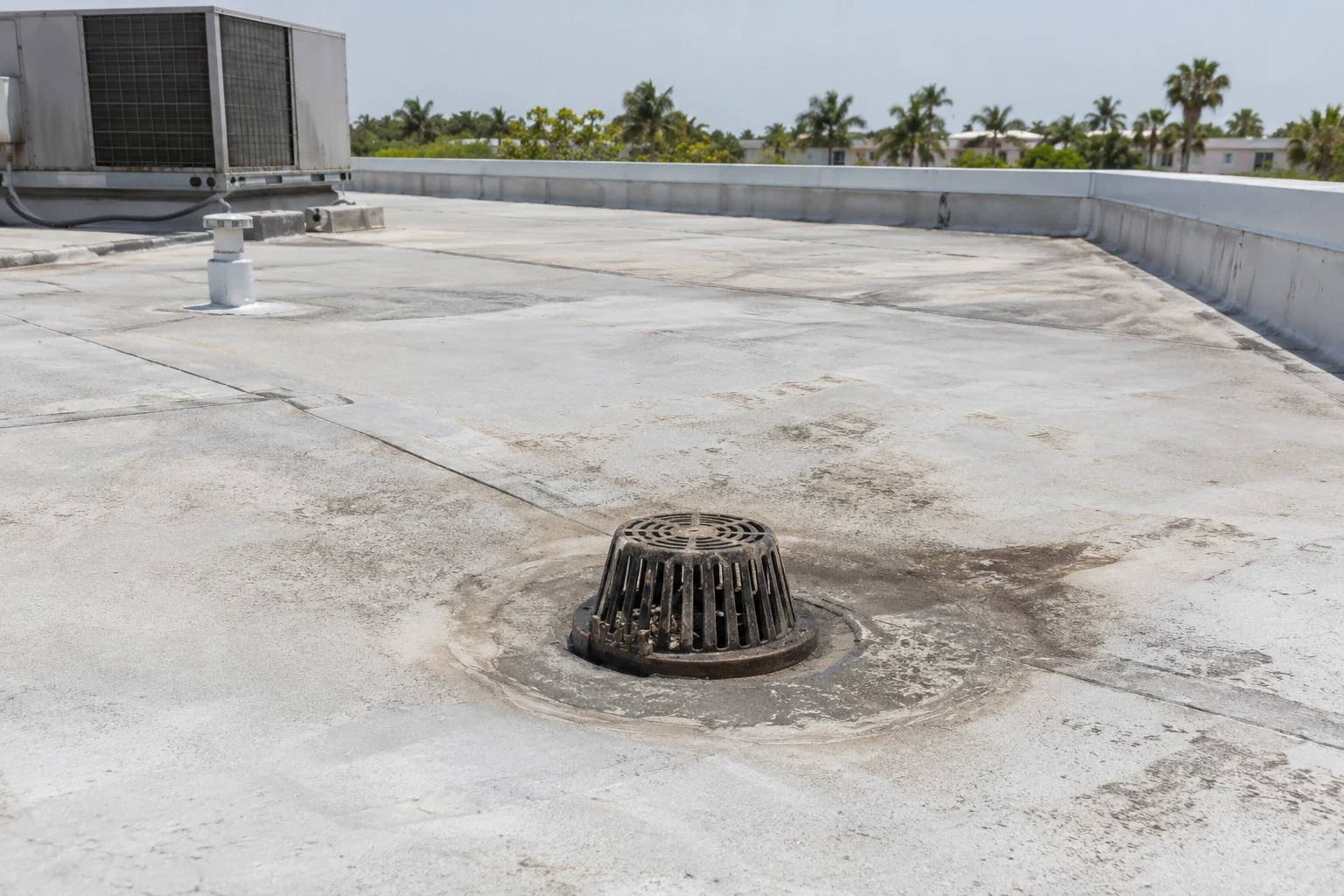
Rain is the other constant. Houston receives about 50 inches a year, with June the wettest month, and a flex roof with few drains will pond fast when one clogs. Our roof drain and scupper work checks the sumps, the overflow height and the downspout connections. A clogged drain over a shop floor shows up as a wet floor, whether the building stands in South Houston, in Galena Park or along SH 225, which is why a flex roof earns a drain check each spring.
Pick a Membrane That Suits the Tenant Mix
Most flex roofs do well with a white TPO roofing system, since it reflects heat, welds into continuous seams and costs less to repair than many alternatives. Where tenants vent grease, solvent or chemical vapor, a different membrane may serve better, and the choice is made with the property manager and the owner before the lease terms set the use. The next step is to check how much of the old insulation is wet, because that determines whether a recover is possible.
Owners who also hold a warehouse or a distribution center can fold their flex buildings into the same plan, with one condition format and one calendar.
Commercial Roofing Questions
Who pays for a flex roof, the landlord or the tenant?
The lease language controls it, and the answer varies between buildings. Many leases make the landlord responsible for the membrane and structure, while tenants pay for damage they cause and for their own rooftop equipment. We write repair scopes so each item can be assigned to the right party, and we photograph everything.
Do we need to tell every tenant before the crew arrives?
Yes, and the notice should be specific. A short letter with the dates, the bays affected, the hours of the loud steps and a contact name prevents most complaints. The property manager sends it, and we provide the schedule and the crew contact.
Can part of a flex roof be recovered and part replaced?
Usually, if the moisture survey supports it. A section with dry insulation can take a recover, while a wet section is torn off to the deck. The transition between the two is detailed with care so the roof acts as one system. The survey draws the line between the two, not the age of the building.
How does a tenant fit-out change what the roof needs?
New equipment is the usual trigger. A heavier air handler, a dust collector or an exhaust fan adds loads and penetrations, and some changes bring in the permit office and its energy inspection. Telling the roofer before the unit is ordered avoids a rebuilt curb after the fact.
What should the owner keep on file after a flex reroof?
Keep the scope, the product data, photographs of flashing and curb details, the moisture survey and the maintenance schedule. A new property manager or buyer will ask for these, and a complete file speeds a sale or a refinance.
Keep Reading
Related Roofing Work in Pasadena

Walk the Building With Your Property Manager
Bring the tenant list, the lease roof clauses and the leak log. We will walk the office front, the shop bays and the roof above them, then build a work plan that keeps every tenant open.