
Service Areas
Commercial Roofing in Jacinto City, TX
A commercial reroof in Jacinto City, TX is a neighborhood event, because the city mixes commercial and residential blocks inside 1.85 square miles. Trucks, a crane and a crew do not disappear behind an industrial fence here. People live nearby, and the work has to be planned with that in mind: start times, noise, dust, parking and the path debris takes from roof to dumpster.
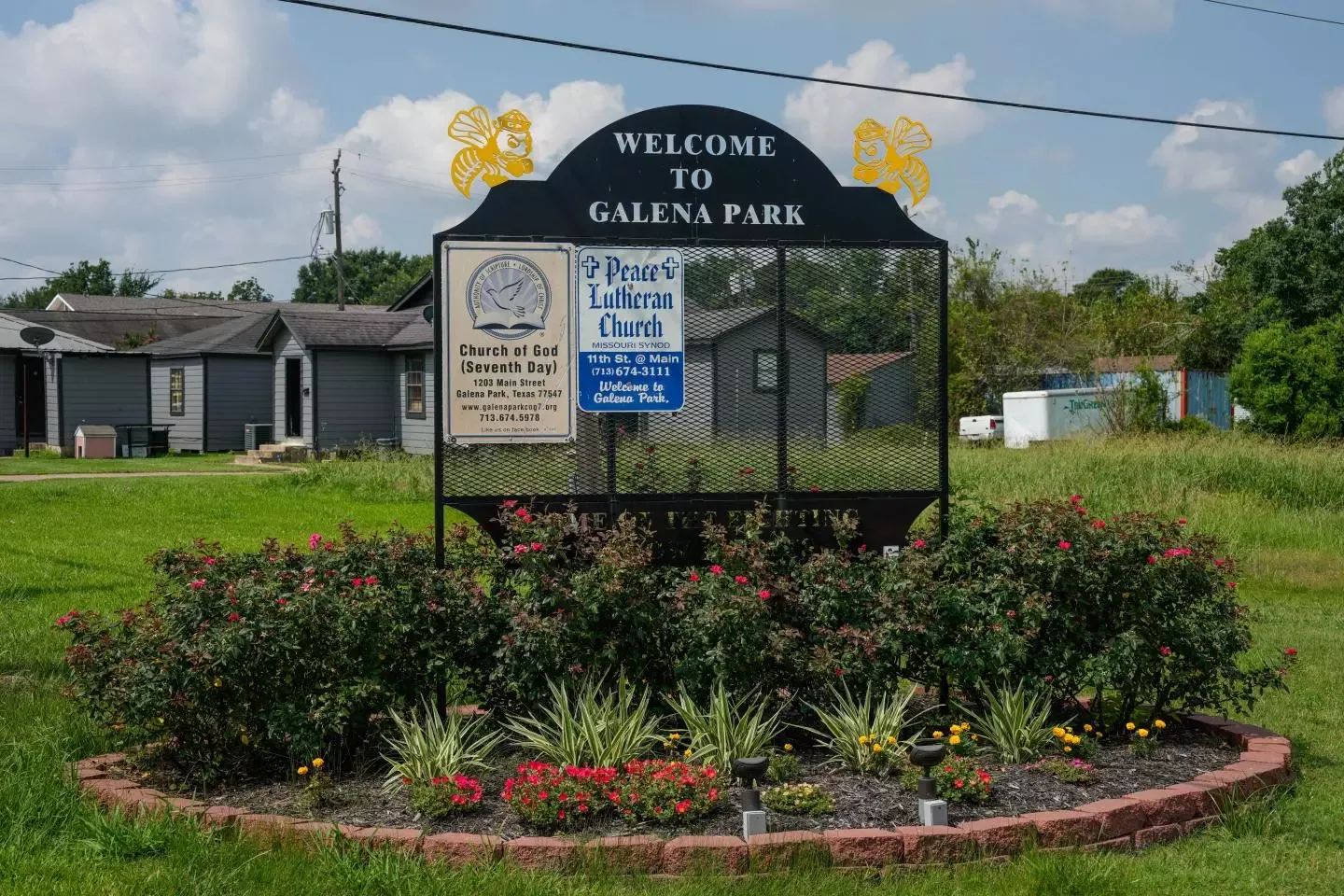
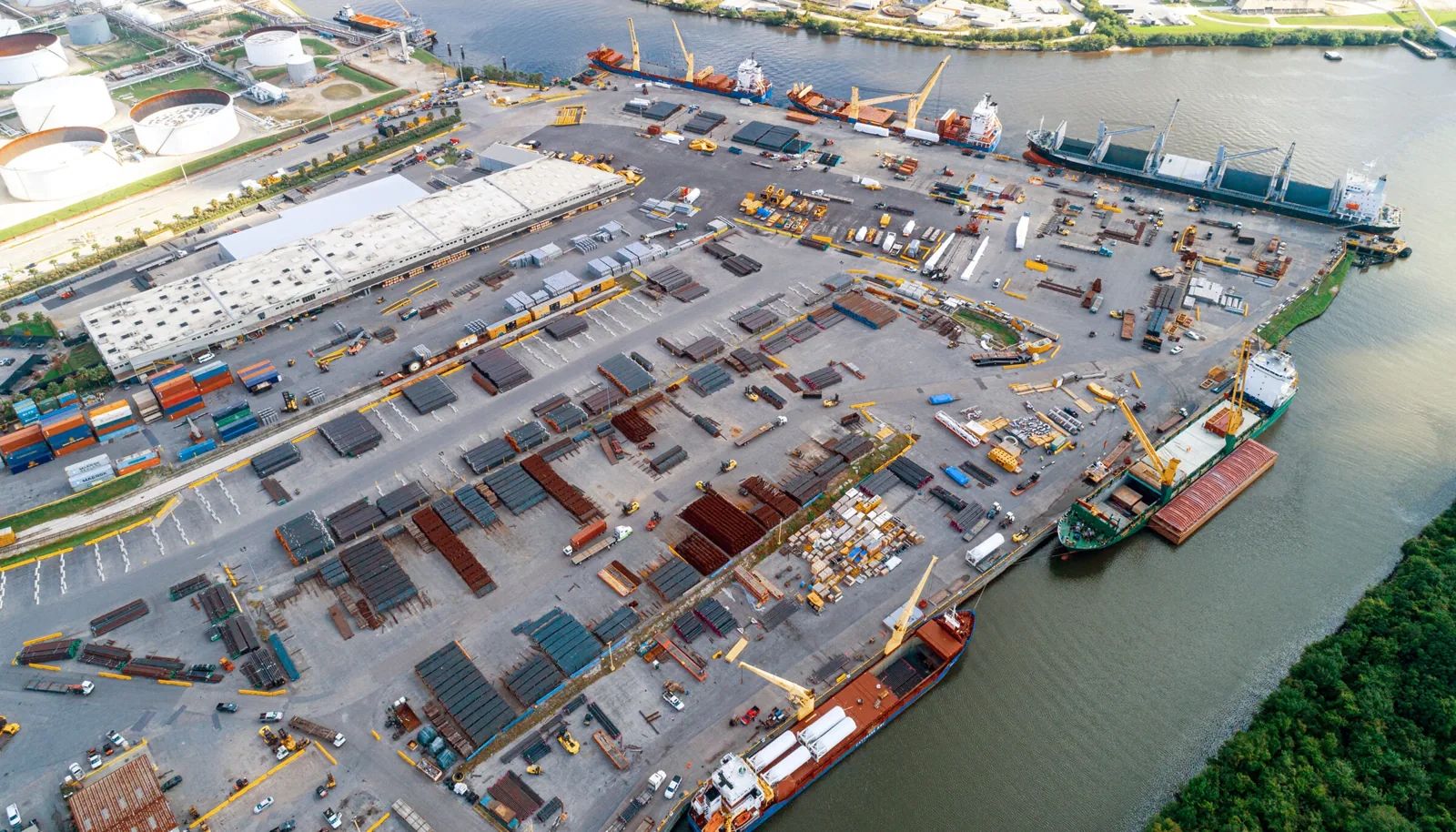
The city lies east of the I-10 and 610 East Loop interchange, bordered by Houston and Galena Park, and it sits along a Missouri Pacific rail line near the Ship Channel industrial area. That position puts commercial buildings within reach of both housing and the industrial area. The roof plan has to serve both: gentle on the neighbors, tough enough for the weather and the grit that comes with the location.
Tell the Neighbors Before the Crane Arrives
A short notice delivered a week ahead prevents most of the complaints a roofing job can generate. It says when work starts and stops, which parking spaces will be coned off, and who to call. The same notice goes to adjoining owners and to tenants, with a phone number that rings a person who can act.
Hours stay inside daytime limits where homes sit close, which rules out the night shift for loud lifts. The crane pick happens as early as permitted hours allow and ends before the street fills. Hot kettles, if the system needs one, sit upwind of the nearest homes, and debris goes down a chute into a covered container, not over the edge. A dust sweep and a magnet pass each evening keep fasteners out of tires and yards.
Keep Every Tenant Open While the Roof Changes
Where a building holds several tenants, the roof cannot be treated as one job. We divide it into sections tied to the spaces below, finish and dry in one section before opening the next, and tell each tenant the day their ceiling is under work. Interior protection goes up over inventory and counters, and a person walks the units after each day to check for drips.
That is the heart of occupied building reroofing: work is sequenced from the spaces that tolerate disruption most to those that tolerate it least. A tenant with refrigeration or sensitive equipment gets its section on a calm weather day with the longest dry window. A tenant who closes early on Wednesdays gets the noisy work then. Phasing like this adds a little time on the calendar and removes most of the friction.
Plan for Rail Crossings and Industrial Grit
Freight rail near the Ship Channel industrial area can hold a crossing, so a delivery window needs slack, and drivers need a second route in mind. We confirm every truck by phone and release it from a staging point only when the laydown area and the crane are ready. A stalled train then costs the crew a short wait, not a stalled day.
Rail and industrial surroundings can leave grit, soot and exhaust residue that clogs strainers and dulls a membrane's surface, so drains and gutters deserve a check more often than a quiet suburban roof would need. Galena Park, which borders Jacinto City, and Manchester, beside the Ship Channel, share that industrial setting, so an owner with buildings in several of these places can run one maintenance calendar.
Count the Layers Before Choosing Recover or Tear-Off
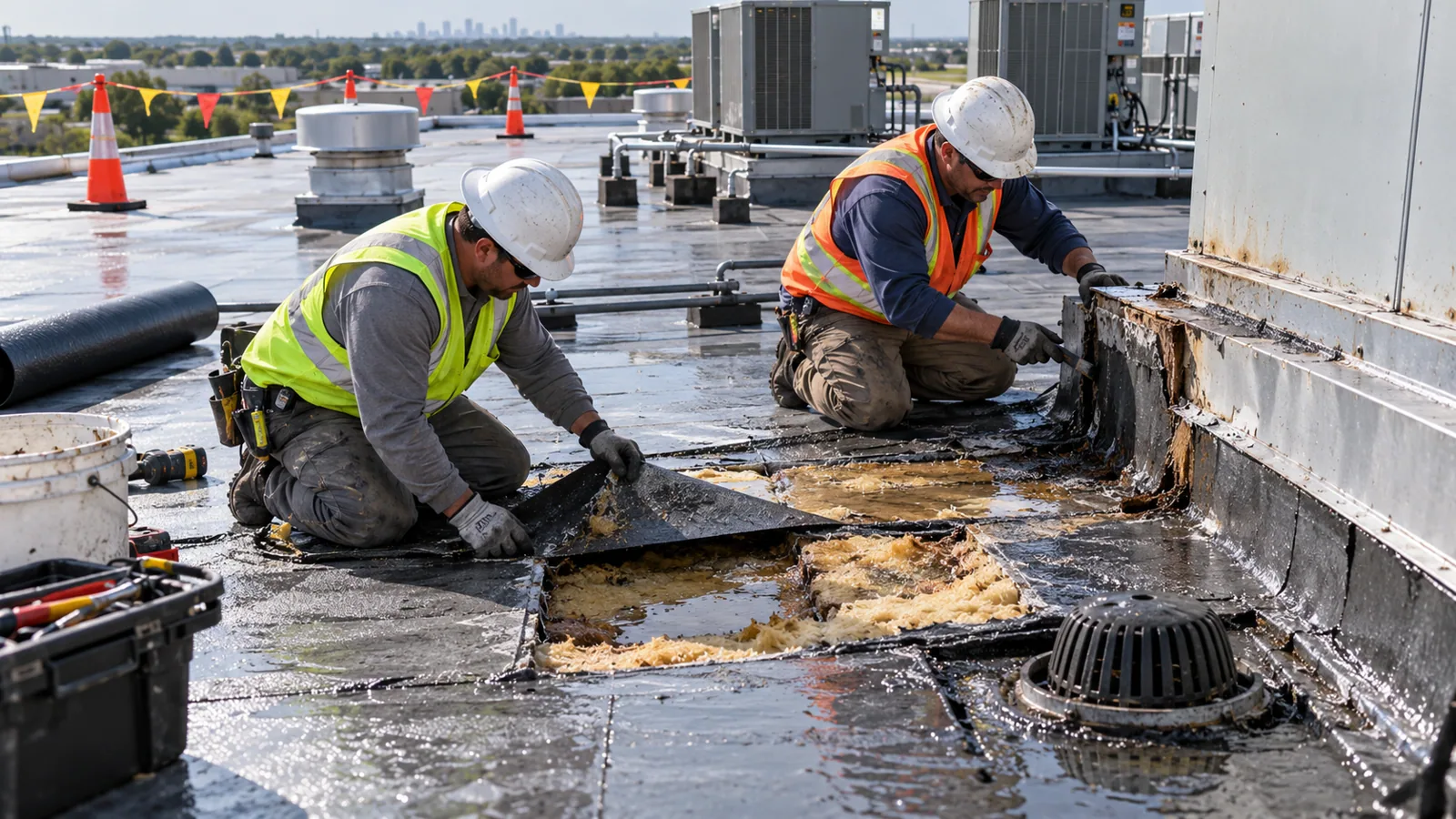
Jacinto City dates to 1941, when it was laid out as a subdivision for shipyard and steel mill workers, and that date says nothing about the roof over any one building. A roof may have been replaced recently or may carry layers added over the years. Only a test cut shows how many there are, how wet the insulation is and what condition the deck is in underneath.
That information decides the options. A roof recover goes over a sound, dry existing roof and saves tear-off, dumpsters and time on site, which matters when neighbors are close. Too many layers or any wet insulation rules it out. We pair the test cuts with a commercial roof inspection, so the owner chooses from facts and not from a hunch about age.
Match the System to Heat, Rain and Storm Wind
Heat arrives early and stays: Houston logs about 102 days annually at 90 F or above, August highs average near 95 F, and mornings often start above 90 percent humidity. Houston's rainfall of near 50 inches a year falls on about 104 days, so water gets many chances to find a low spot on a flat roof, and the heat works the seams every afternoon.
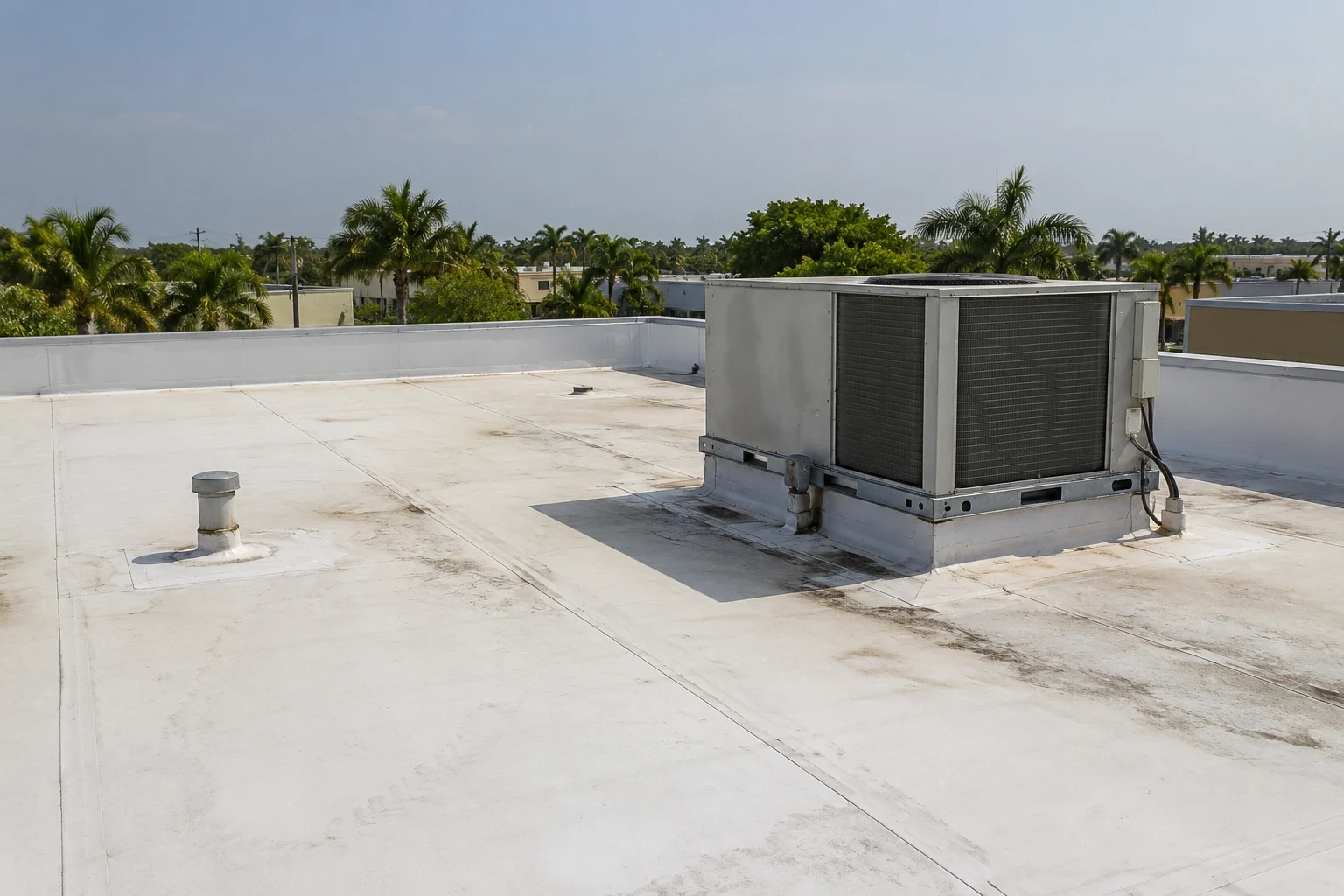
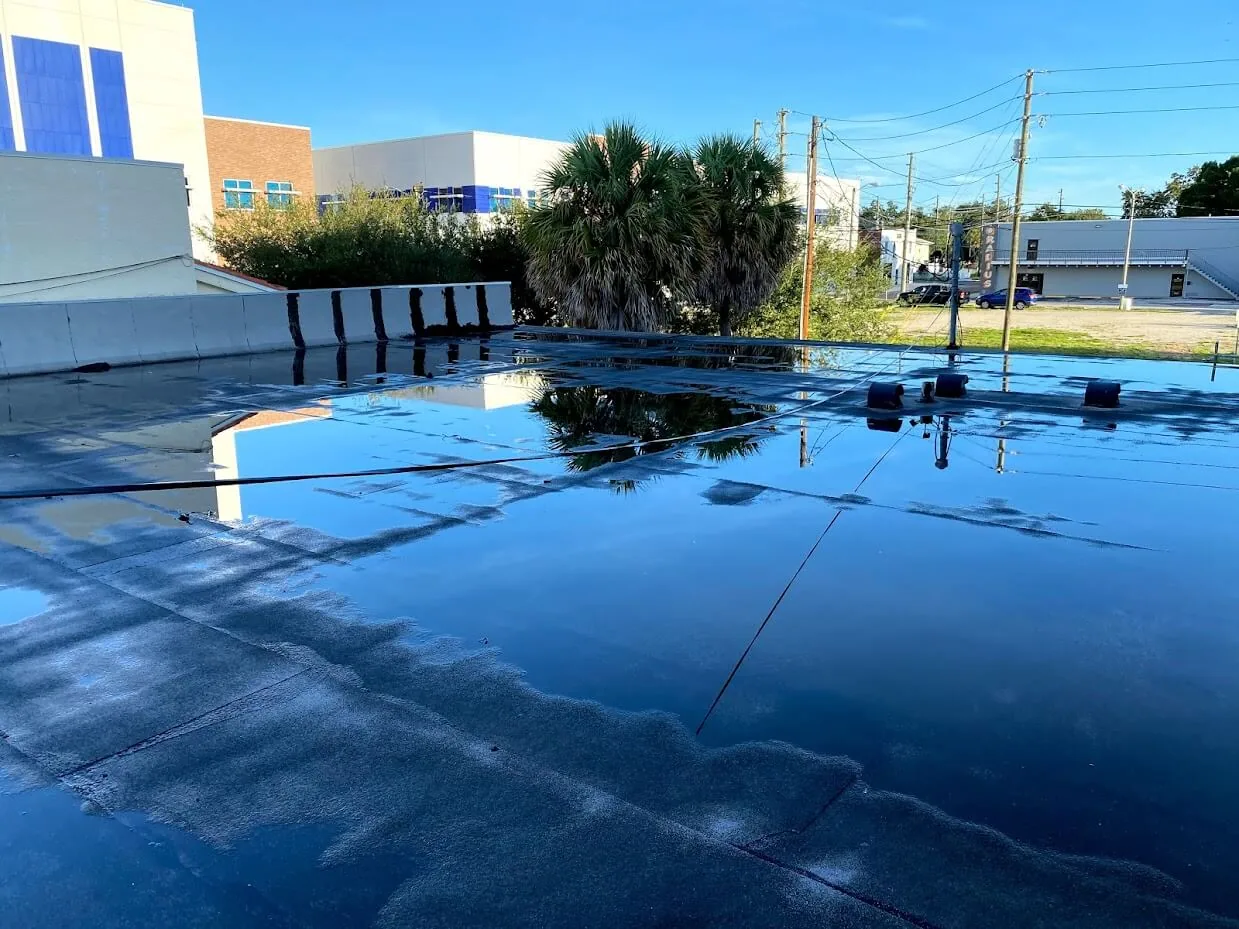
A white TPO sheet handles the heat well, and tapered insulation sends water toward the drains. Where water already stands, ponding water repair corrects the slope rather than adding another patch. Wind matters too: Bush Intercontinental's record 97 mph gust in June 2023 and the high-rise windows lost in the May 2024 derecho show how hard Houston wind can hit. Edge metal and perimeter securement get a closer look than the field of the roof.
A property in Jacinto City may border homes, commercial uses, rail routes, or industrial activity, so notices and staging deserve attention before work starts. Identify where a crane can set up without blocking a crossing, driveway, or emergency route. Keep dust, noise, and debris controls specific to the neighboring use rather than relying on one generic site plan. If the roof has multiple layers, document each test opening and patch before deciding between recover and removal. At turnover, provide the owner with a simple map of repaired areas and a contact path for reporting new water entry. These steps make a project easier to manage where neighbors are close to the work.
Commercial Roofing Questions
Houses sit close to our building. What hour and noise limits should we expect?
Daytime only, with the loudest lifts early and a firm quitting time. Night work is out when homes are near. We also keep equipment idling to a minimum, route trucks away from residential streets where possible, and post a phone number that connects to someone on site. A letter to neighbors a week before mobilization removes most of the friction.
Can a multi-tenant building keep every tenant open through a reroof?
Usually, if the work is split into sections that match the spaces below. Each section is opened, finished and dried in before the next, and tenants are told when their ceiling is next. The exception is a space with sensitive equipment, which may need a short closure or a day-long protection plan around it.
How can we tell how many layers sit on an older roof?
A test cut shows it. We take small cores through the roof in several places, record each layer, check the insulation for moisture and look at the deck below. Combined with an infrared scan after sunset, the cores give a map of wet and dry zones, and the owner can see which sections can be recovered and which need tear-off.
Does rail and industrial grit mean drains need more attention?
Often it does. Soot and grit settle in strainers and gutters faster than leaves alone would, and clogged drains turn into ponds in a hard rain. We add drain checks to every maintenance visit and clear the strainers before the wet season. If a roof is ponding, the underlying fix may be a drain upgrade instead of repeat cleaning.
What is the lowest-cost way to stop a leak that keeps coming back?
Find out why it returns before spending on a patch. Recurring leaks usually trace to flashing at a curb, a failed seam or standing water, and a moisture scan shows whether the insulation is also wet. A targeted repair at the real source, paired with drain work, usually does more than a surface coating over the stain would.
Keep Reading
Related Roofing Work in Pasadena


Walk the Block With Us
Call and we will walk the roof, the tenant spaces and the street with you, so the work plan fits how your Jacinto City building and its neighbors run from day one.