
Commercial Roofing Services
Skylight and Penetration Flashing in Pasadena, TX
The lobby skylight, the kitchen exhaust fan and the plumbing vents have one thing in common: each is a hole in the roof that somebody has to keep sealed. On a commercial building those holes add up fast, and every one is a place where flat membrane stops and hand-built detail work begins.
That is why penetrations leak more than fields do. Membrane lies down easily across open roof. Around a curb or a pipe it has to fold, weld or seal into corners, and it has to keep doing that through years of Pasadena, TX sun and sideways rain. The work is detail, patience and sequence.
Find Every Opening Before Fixing the First One
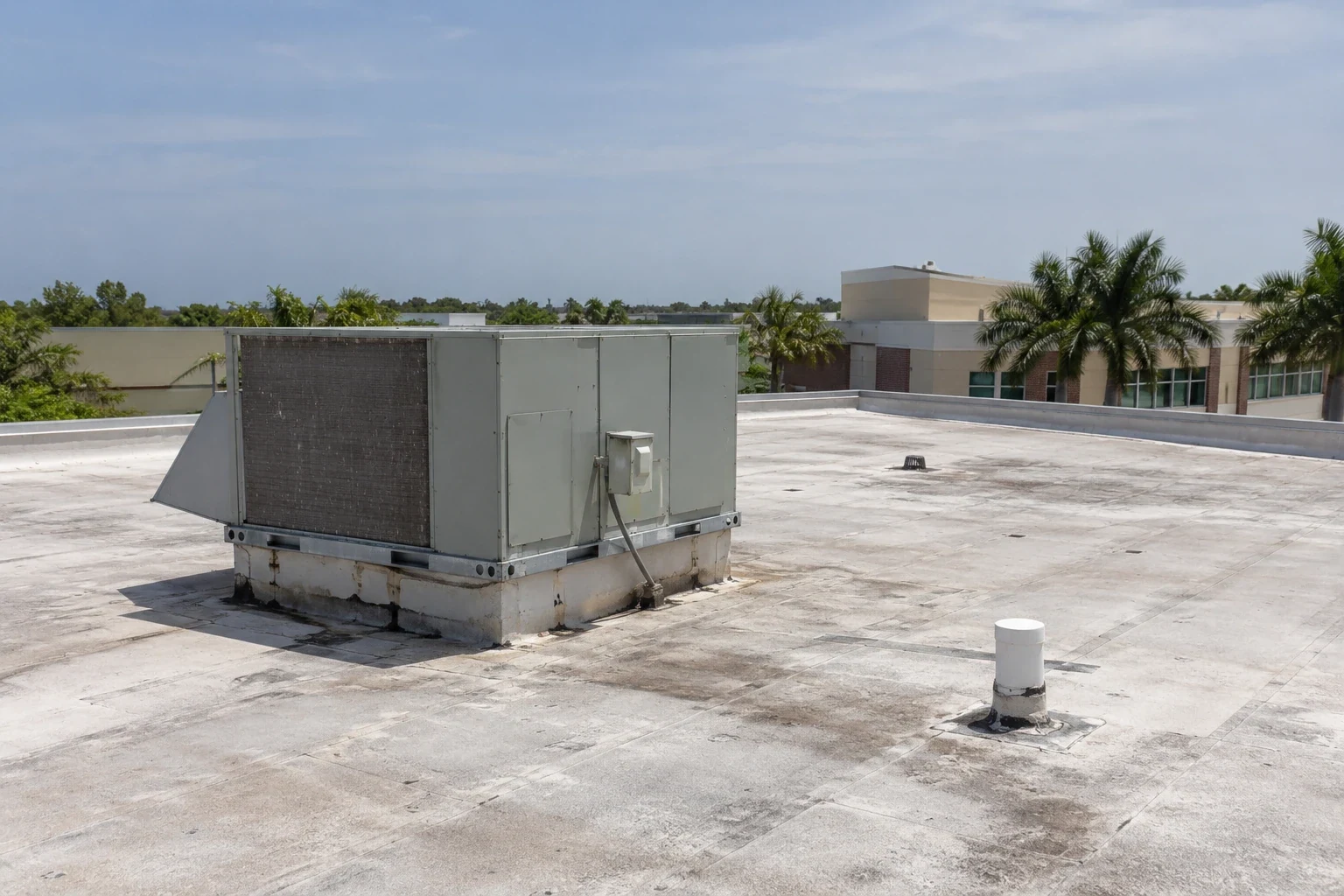
A roof built over decades collects penetrations the way a utility room collects pipes. Original vents, later HVAC curbs, abandoned conduit, a satellite mast, a gas line added for a new unit. We start with a numbered inventory on the roof plan: what each opening is, who uses it, what flashing it has and what shape that flashing is in.
The inventory is part of a thorough commercial roof inspection and it often turns up openings nobody remembers, including dead pipes that can simply be removed and sealed over. Fewer openings mean fewer leaks, so removal goes on the list before repair does.
Tell a Leaking Skylight From a Sweating One
Water under a skylight is not always a leak. On humid mornings, cool glass can collect condensation that runs down the frame and drips, and that looks like a roof problem to a building occupant. We check the glazing gaskets, the frame corners, the curb flashing and the glazing material before deciding. Yellowed, crazed plastic glazing that has been in the sun a long time also lets in water at its edges.
If the water entry is real, the repair depends on where it is. A bad gasket may need replacement. A failed curb flashing needs rebuilding, the same way any commercial roof leak repair traces water back to its entry. A skylight at the end of its service life may be better replaced than patched again.
Rebuild Each Detail in the Membrane's Own Method
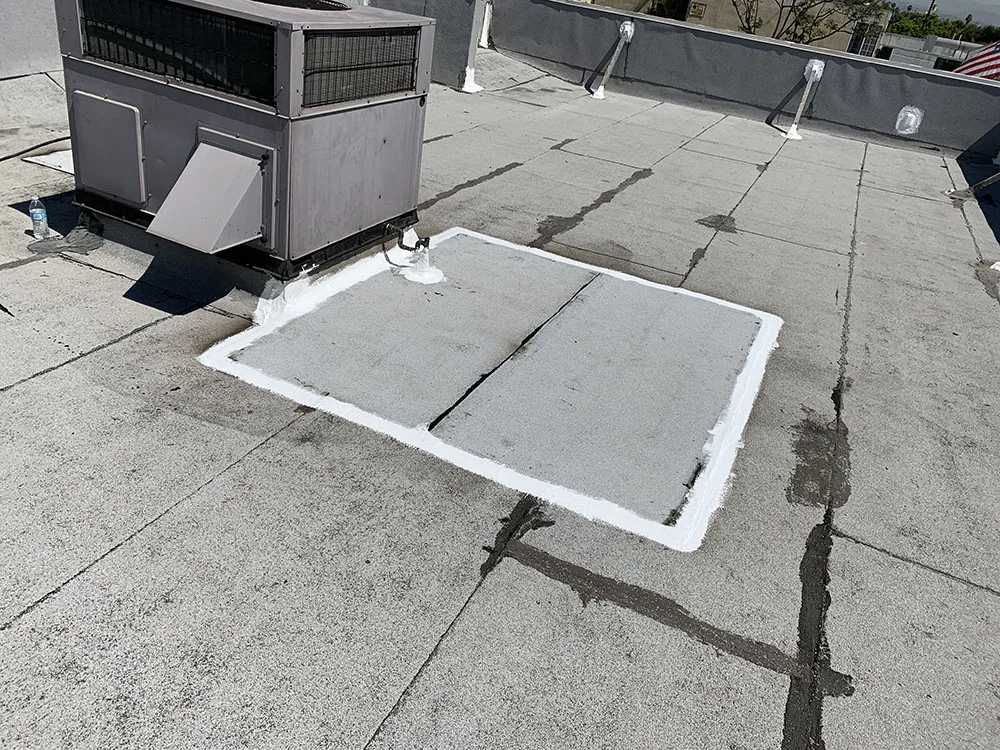
Mastic and caulk are bandages. A durable fix uses the roof's own system. On a heat-welded membrane such as TPO, pipes get premolded boots welded to the field and curbs get welded corner patches and a termination bar. Rubber membranes use cured flashing tape and lap sealant. Modified bitumen and built-up roofs use reinforced flashing plies set in the right adhesive.
Each repair is water tested before the crew moves on, because a flashing that looks right can still wick water at a corner nobody can see from above.
Each curb gets the right height above the roof surface, a counterflashing or termination at the top and sealed corners where the stress concentrates. Pitch pockets are a last resort, and where we find one we replace it with a manufactured boot or a curb wherever the pipe layout allows. This is the same discipline as flashing failure repair, applied to every opening on the roof.
Control Access Around Glass and Open Curbs
Skylights are fall hazards, and a new crew on an unfamiliar roof needs to know where they are. Every job starts with a site safety orientation, screens or guardrails over openings, and a rope-off route to the work area. Torch or heat welding needs its hot work permit, and a fire watch stays after the last pass.
Inside, the work plan protects whatever sits below. A skylight over a lobby, gym or sales floor gets a temporary cover while the old unit is out, and the crew stages glazing and crane picks so the opening is closed on the same day it is cut. Dust, noise and open weather are the three things the people below care about, and each has a plan.
Sequence the Other Trades Who Cut Holes in the Roof
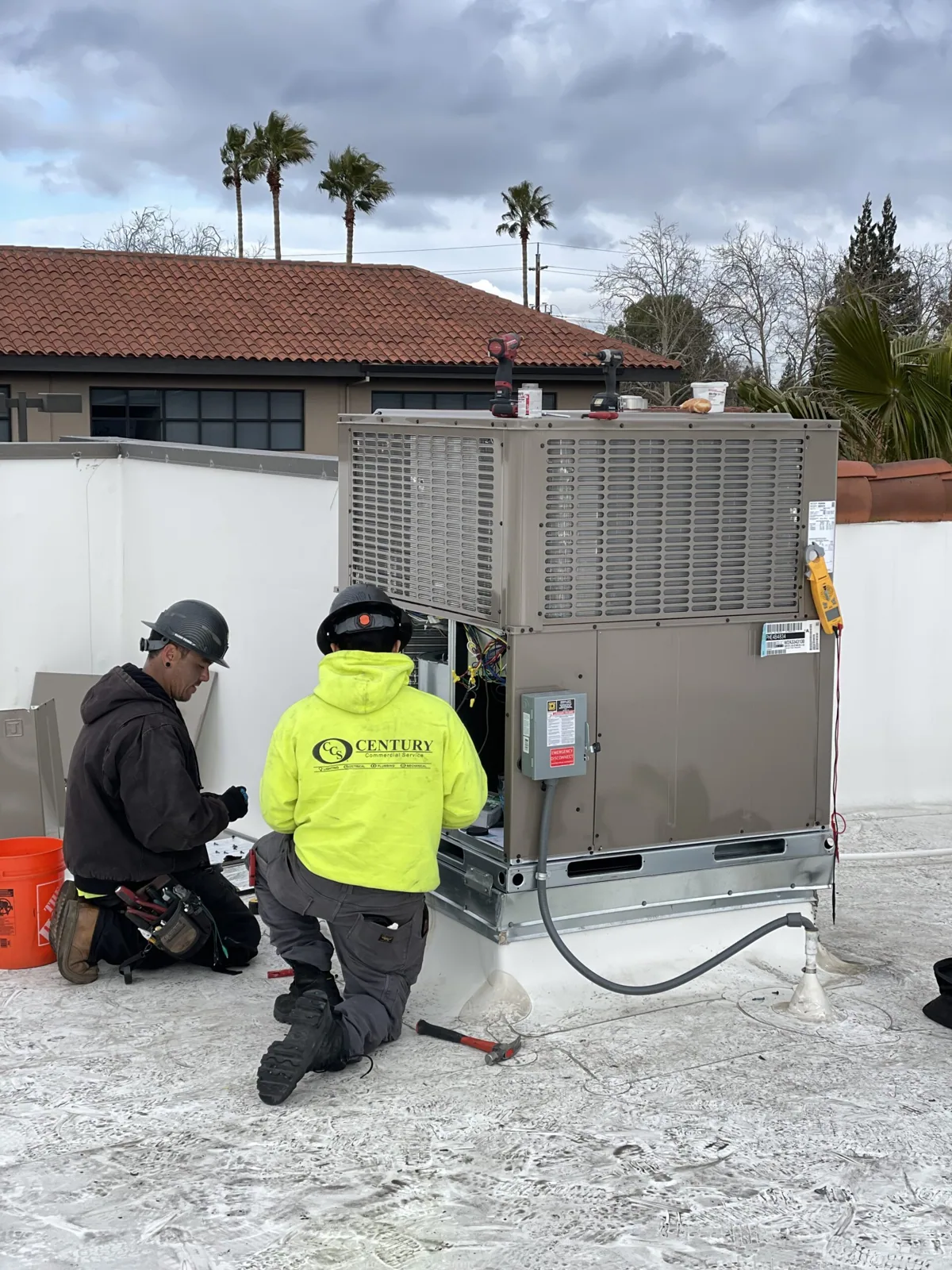
Most new penetrations come from other contractors: an HVAC replacement, a new exhaust fan, a conduit run for a security camera. When they cut the deck without a roofer present, the flashing is often improvised. We prefer to set the curb and flashing in the same window the trade installs the equipment, so the roof is sealed before anyone leaves.
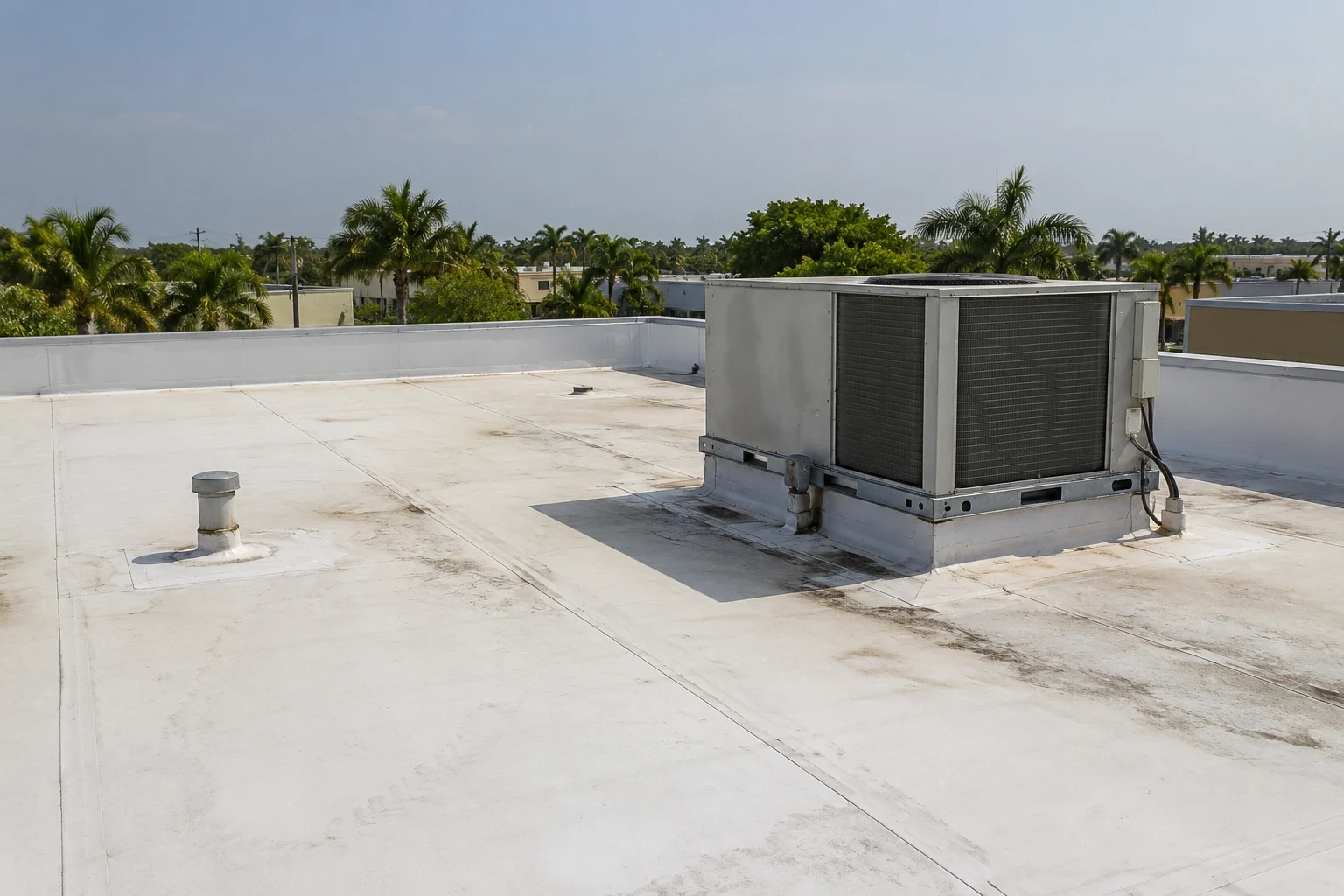
That coordination also protects the roof record. When a unit lands on a new equipment curb and support, the penetration is logged on the roof plan, photographed and flashed to the system's detail. The next facility manager inherits a map instead of a mystery.
Plan Details for Heat, Wind and Sideways Rain
Sealants age fastest where the sun hits hardest. Houston reaches 90 F or hotter on roughly 102 days a year, and summer 2023 brought an all-time high of 109 F, so any detail that depends on sealant alone has a limited life, and the cost of that shows up as a call in late summer. Wind adds another test. The January 2023 EF3 tornado crossed Fairmont Parkway and caused roof damage to Pasadena Memorial High School, among other buildings. In any wind event, skylights, vent hoods and loosely supported units are among the pieces that shift or tear.
Along the Fairmont Parkway corridor and elsewhere, we check frames, hold-downs and flashing heights with storms in mind. The same attention applies to school roofs, where summer break leaves a short window for glass and curb work before classes resume.
Before a skylight repair, determine whether water is entering at the curb, glass frame, sealant joint, or an adjacent membrane detail. Condensation inside the building can resemble a roof leak, so compare the timing of the symptom with interior humidity and weather reports. Protect the opening below before removing any glazing or curb material, and keep the work area clear of loose fasteners and sealant debris. Document each penetration by type and roof zone; a later rooftop installation should be added to the same register. Closeout should identify the tested detail, the materials installed, and any adjacent component that remains outside the repair scope.
Commercial Roofing Questions
Why does the leak show up away from the skylight?
Water that enters at a curb travels along the deck, down a flute or along an insulation seam before it drips. The stain can sit several feet from the entry point. Tracing it takes a moisture scan, a water test on the suspect detail or both, so the repair lands at the true source.
Can a skylight be removed and the opening closed permanently?
Yes. The opening is framed, decked, insulated and covered with membrane to match the roof, and the interior ceiling is finished from below. This removes a long-term leak point and reduces glare and heat gain, though the people below lose the daylight.
How long does sealant last around a pipe or curb?
It varies with the product, the sun and the movement at the joint. Heat and UV break sealant down, and pipes that expand and contract wear it faster. Treat any sealant-only detail as a maintenance item to inspect each visit, not a permanent repair.
Our HVAC contractor wants to cut a new opening. What should we ask for?
Ask that the roofer be on the schedule before the cut is made, that the curb be flashed to the roof system's detail, and that the penetration be photographed and added to the roof plan. Those three items protect the roof and keep the manufacturer's record complete.
Does a new skylight need a permit or a wind rating?
Local rules and the building's use can bring both into play. In the windstorm zone east of State Highway 146, roofing work goes through a state windstorm inspection. We confirm what applies to the address before ordering glazing.
Keep Reading
Related Roofing Work in Pasadena


Walk the Roof With Us and Count the Openings
Tell us which skylights or curbs leak and when the building can spare the access. We will walk the roof with your facility director, log every opening and plan the repairs in order.