
Commercial Roofing Services
Rooftop Equipment Curbs and Supports in Pasadena, TX
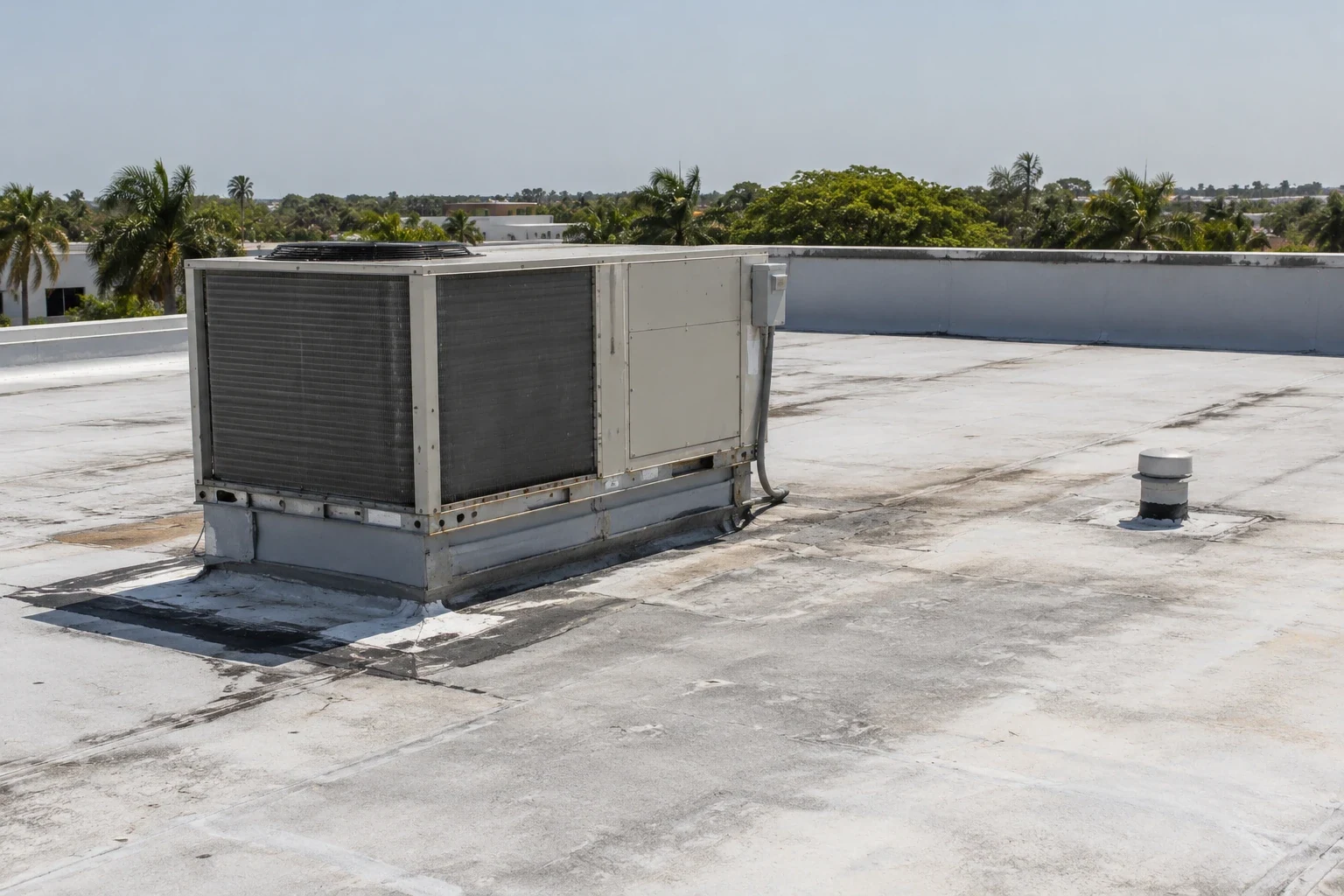
The control building at a chemical plant cannot lose its cooling for an afternoon, and the rooftop unit that provides it sits on a curb the roofer has to keep watertight long after the mechanical crew has gone home. Curbs, equipment rails and pipe supports are the places where a roof meets the machinery it carries, and they are where most chronic leaks begin. On a plant roof in the Bayport Industrial District, the roofer and the mechanical contractor have to plan the same day together.
The work is easy to describe and hard to schedule. One crane pick, one shutdown window, one set of flashings that must be right before the unit lands.
Count Every Curb, Rail and Pipe Support Before Anyone Quotes
Start with a survey of everything that stands on the roof. We record each rooftop unit, exhaust fan, pipe stand, conduit run and antenna mount, then note its curb height, its flashing condition and whether it still serves a live system. Some of what stands on a roof no longer serves a live system, and each abandoned unit is a curb that still needs flashing. Removing a dead unit and closing the opening properly costs less over time than flashing around it for another decade. The count also separates items that can wait for a planned shutdown from items that cannot.
Roofs with several unexplained stains often have one forgotten curb behind them.
Rebuild the Curb Flashing Before the Unit Goes Back
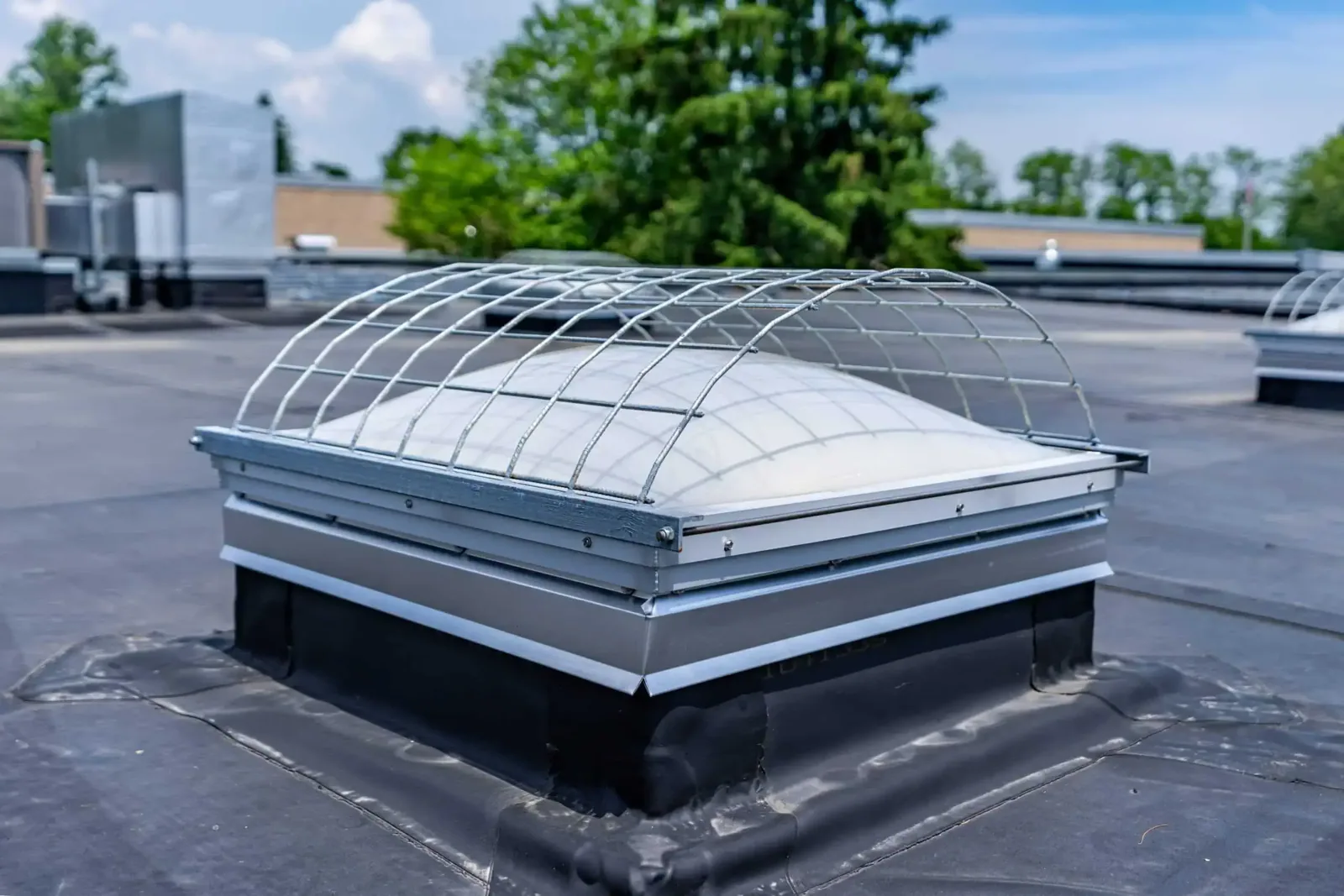
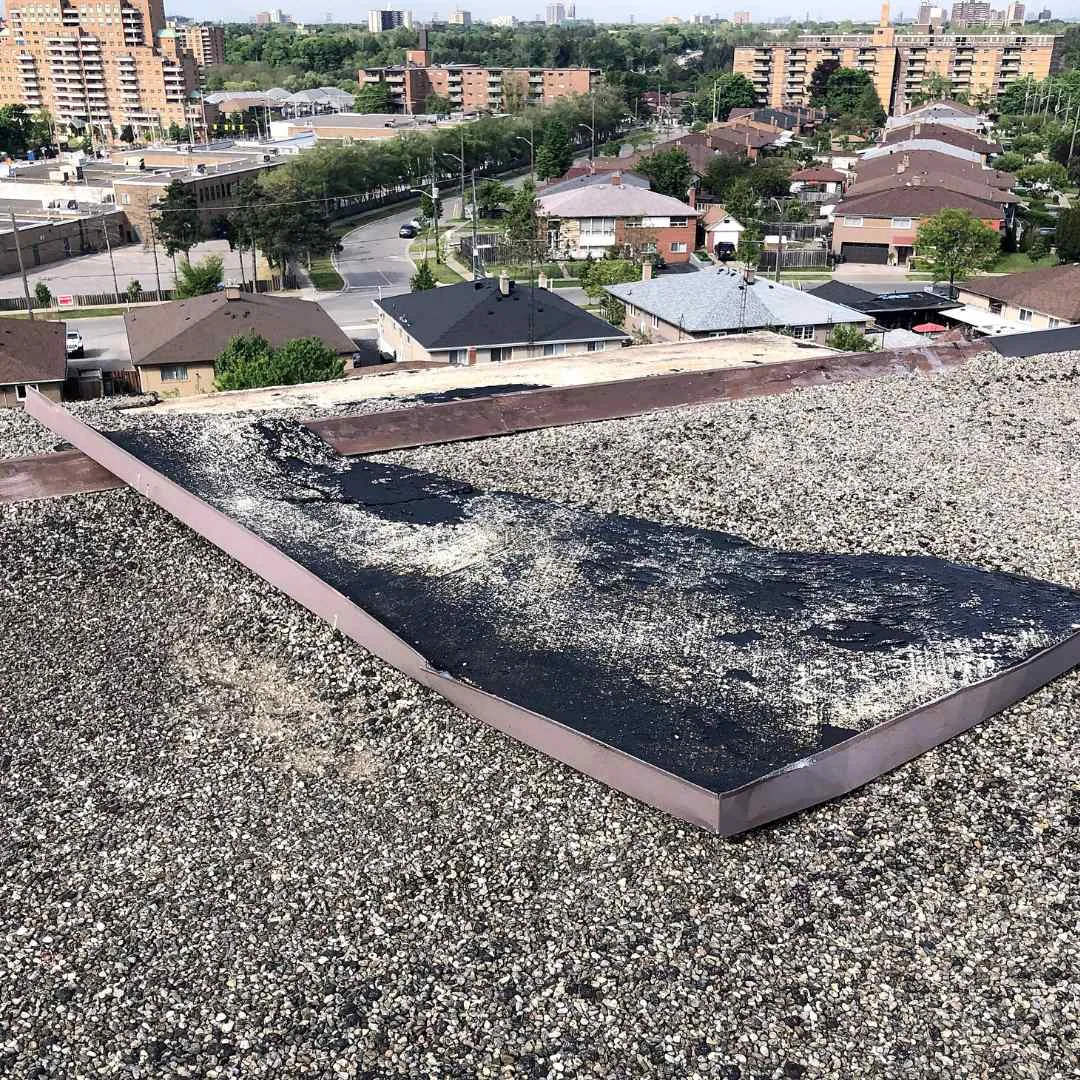
A curb usually leaks for ordinary reasons. The flashing height is too low to clear ponding water, the membrane was never fully bonded to the curb wall, the counterflashing has pulled away from the sheet metal, or the sealant at the corners has cracked in the sun. When a unit is already coming off the roof, that is the cheapest moment to strip the old flashing, check the wood nailer and the insulation inside the curb, and flash it again in the roof's own system. Heat-welded TPO and PVC take prefabricated corners, while EPDM and modified bitumen call for their own detailing. Penetration flashing is the same craft at a smaller scale.
Once a unit is set on a poor curb, nobody reopens it for years.
Set Pipe and Conduit Supports That Do Not Puncture the Sheet
Process plants and large mechanical systems run pipe across the roof, and every support is either a point load or a hole. Rigid posts fastened through the membrane leak, and they also work loose as the pipe grows and shrinks with the heat. A better answer is a support that rests on the roof surface over a protective pad, spreads its weight through the insulation and cover board, and leaves the membrane unpierced. Where a structural post cannot be avoided, we flash it in a pocket or boot sized to let the pipe move. Walkway pads along the routes that mechanics walk protect the sheet from daily foot traffic between units.
Lift the Unit on a Written Plan Over a Protected Roof
A crane pick on an operating site needs a lift plan before anything else: boom reach, swing radius, the deck capacity under each pick, and the laydown area where the old and new units will sit. Near the refineries, chemical plants and tank farms that SH 225 passes, the crane may have only one workable position, and the pick moves to a night shift or a weekend when the dock lanes cannot be blocked by day.
The roof needs its own protection plan. Plywood or protection board along the crane path and under the laydown area spreads the load so heavy traffic does not crush insulation or tear the sheet. We coordinate the disconnect and reconnect with the mechanical contractor so the building is without that unit for the shortest possible window, and we stage the finished curb flashing so the opening is closed before the unit is set.
Tie Equipment Down for Gulf Wind and Humid Bay Air
Wind has crossed this market repeatedly: the January 2023 tornado along Fairmont Parkway, Hurricane Beryl in July 2024 and the May 2024 derecho. A unit held to its curb by a few screws, on a curb held to the deck by little more than its own weight, lifts, and a loose unit tears the sheet around it. Restraint from unit to curb and curb to deck belongs in the plan, along with wind damage repair readiness for the first storm after the work.
Humidity matters too. Galvanized fasteners and bare sheet metal corrode in bay air, so we choose coated or stainless hardware and add the curbs to every inspection. Houston logs about 102 days a year at or above 90 F, so units run hard, and condensate lines that drip onto the membrane need a splash pad or a tie-in to a drain.
Photograph Every Flashing Before the Equipment Hides It
Once a unit is down, nobody can see the flashing under it, so we photograph each finished curb and support before the lift. The closeout file lists every curb, rail and support with its location, the detail used and the date, which gives the facility team a map for later inspections and gives an insurer or a roofing manufacturer a clear record. Then we add the equipment to the preventive maintenance walk, because mechanical technicians are the heaviest foot traffic on most roofs and the usual source of dropped tools and scuffed membrane.
Mechanical trades belong in the roof's maintenance plan.
Commercial Roofing Questions
Who is responsible for the curb when the HVAC contractor swaps a rooftop unit?
Whoever touches the flashing owns the leak, so the split should be written down before the lift. The mechanical contractor normally handles the disconnects and the unit, and the roofer handles the membrane, counterflashing and sheet metal at the curb. When two trades share a curb without a clear agreement, the leak that follows turns into an argument. We schedule alongside the mechanical crew so neither trade waits on the other. A manufacturing plant roof carries many units, so the written split matters even more there.
Can an old curb be reused, or does it need replacing?
A curb with sound framing, enough height and clean sheet metal can be reflashed and kept. One that is rotted, rusted through or too short to clear standing water should be replaced when the unit is. We check the wood nailer, the insulation inside the curb and the height above the finished roof before recommending either path. The cost gap between reflashing and replacing is small next to water reaching a control room or a server closet.
What happens to the building's cooling while a rooftop unit is out?
That belongs to the mechanical contractor, and the roof plan has to fit around it. Temporary cooling, a short shutdown window or a phased swap on buildings with several units keeps occupied spaces workable. On the roof we pre-build the curb details and stage materials so the opening is never exposed longer than the swap itself. The hospital on the Spencer Highway medical corridor and plant control rooms are where this planning pays off most.
Will heavy equipment damage the roof during a crane pick?
Not when the route is protected in advance. Protection board along the crane path and under the laydown area spreads the load, and a walk of the whole route after the pick finds anything cut or crushed. We patch a puncture with the roof's own membrane the same day, before the afternoon storms build off the Gulf and push water into the insulation.
Does adding equipment to the roof affect my windstorm inspection or insurance?
Work east of SH 146 sits inside the Texas Windstorm Insurance Association area, where the state's windstorm program has to inspect roofing work before the building stays insurable. If a curb job disturbs the roof covering, confirm with the permit office and the inspector before the lift whether it counts as roofing work. Elsewhere in Pasadena, insurers still value a photo record of restraints and flashing, and a later leak repair goes faster when the record exists.
Keep Reading
Related Roofing Work in Pasadena


Put the Unit Schedule on the Table and Let Us Plan the Lift
Send the equipment list or point us to your mechanical contractor. We will walk the roof with your facility director, plan the lift and the flashing together, and fit the work to your shutdown windows and night shift.