
Commercial Roofing Services
Occupied Building Reroofing in Pasadena, TX
A campus with more than 15,000 students, like San Jacinto College Central Campus on Spencer Highway, runs on a class calendar, and a roof plan has to be written against that calendar rather than the other way round. Classes meet, labs run, and the loading area stays busy while the deck overhead is opened up and closed again. The same holds for a trauma center, a shopping center with major tenants open to the public, or a plant with a control room that never darkens.
Reroofing an occupied building is a logistics job with a roofing job inside it. The people under the deck set the rules, and the crew works within them.
Interview the Occupants Before Drawing the Phasing
We start with questions that have nothing to do with membrane. Which rooms cannot tolerate noise, odor or vibration? Where are the air intakes that could pull fumes inside? Which hours are quiet, and which are not? A hospital wing, a testing lab, a daycare suite and a call center each answer differently, and the answers change what we install and when. We walk the space below the roof with the facility director, note every sensitive area, and mark the roof plan so the crew knows which zones carry restrictions on adhesives, hot work or heavy foot traffic.
The best phasing plan is the one every tenant has read.
Phase the Roof in Sections That Dry In Every Day
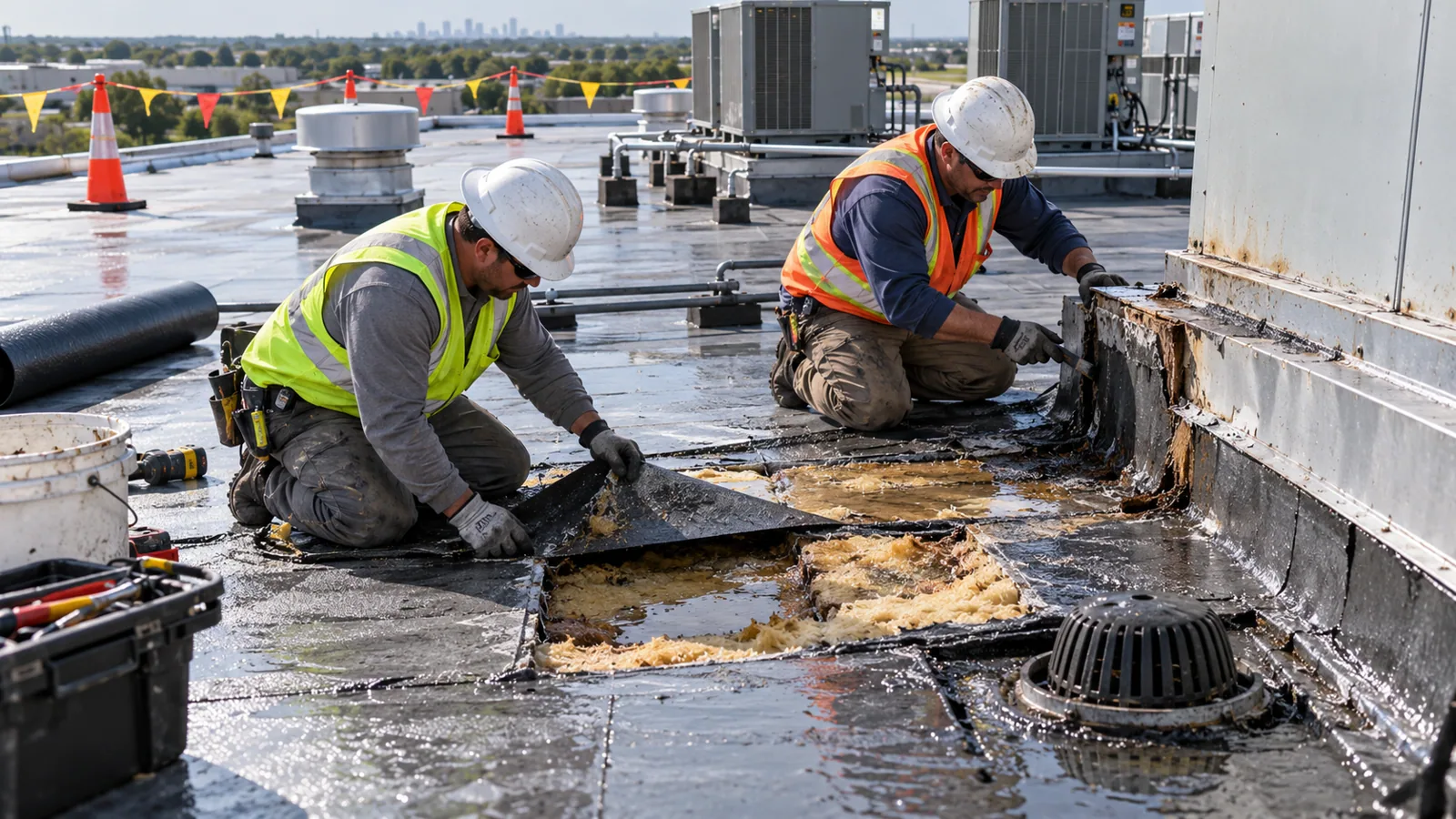
The rule on an occupied roof is simple: nothing stays open overnight. We divide the roof into sections sized to what a crew can tear off, install and tie in before the afternoon storms build off the Gulf, which in a wet June can mean a smaller section than the schedule would like. Temporary tie-ins between old and new roofs are sealed every evening and inspected each morning. Forecasts are watched hour by hour. On a recover, the old roof stays in place and the building stays drier, while a full tear-off and replacement demands tighter section control and more protection below, since the deck is exposed for the length of the shift. Crews track the dew point and the first cloud buildup, because a section that cannot be closed by quitting time should never have been opened.
Protect the People and Property Under the Deck
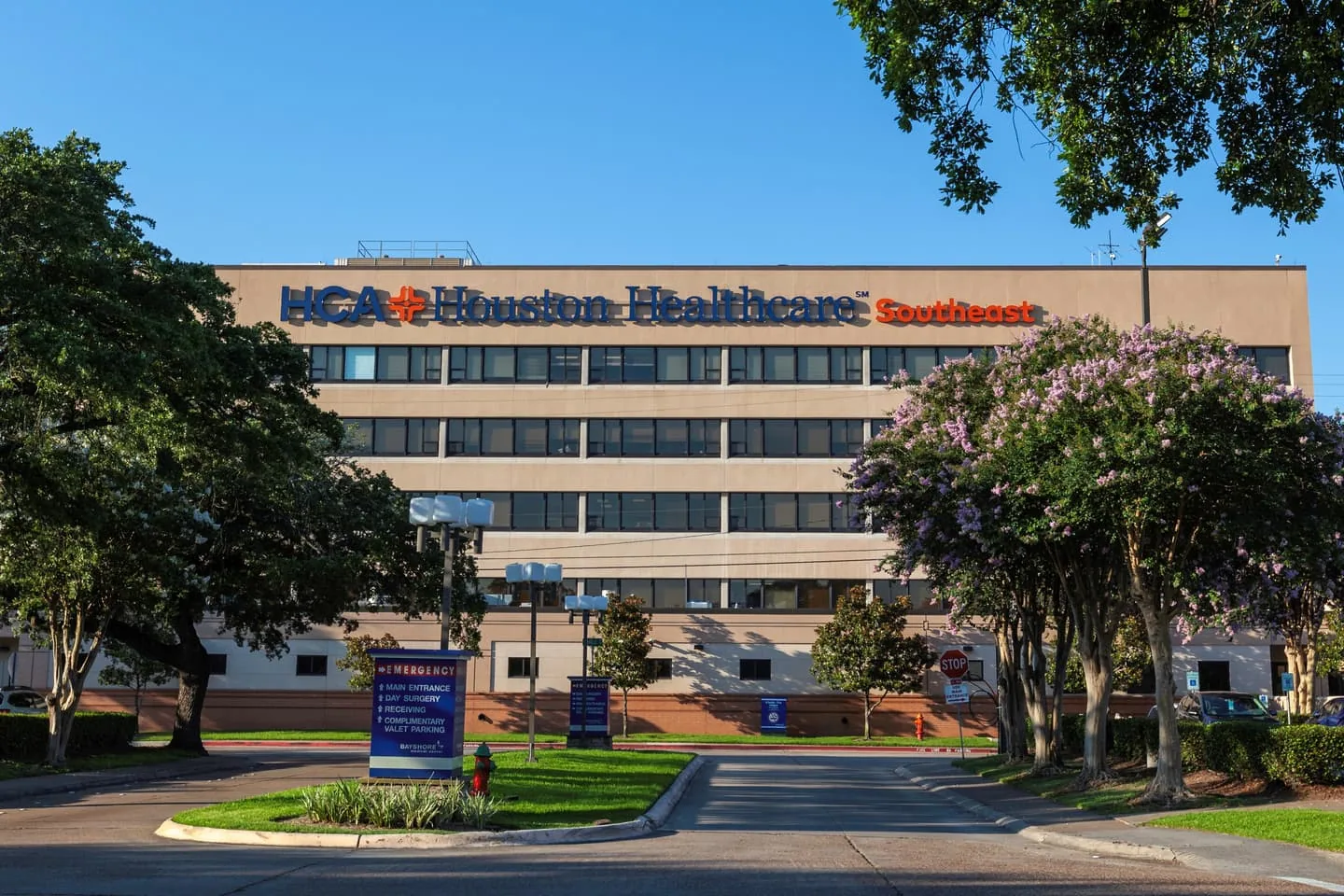
Protection is a separate scope. Overhead protection goes over entries and walkways where debris could fall, interior areas under active work get covered or cleared, and racking, ceiling tile, equipment and records are moved or shielded before the first cut. In patient areas, infection control rules from the facility team govern dust and debris, and the roofing plan follows them rather than negotiating around them. A 350-bed hospital and Level III trauma center like the one on the Spencer Highway medical corridor keeps its rooms in use all day, which is the standard hospital roofing is planned against. Corridors, stairwells and loading entrances stay clear, and any interior area under a roof opening is checked at the start and end of every shift.
Control Noise, Fumes and Access Around the Daily Routine
Mechanically fastened systems are loud, adhered systems carry odor, and torch-applied work calls for a hot work permit and a fire watch. We choose the method that suits the occupants, then pick the hours. Night shift work protects a daytime operation and a school in session, while weekends serve an office park. Material staging gets its own plan, with a laydown area away from fire lanes, a crane pick over a protected route, and a site safety orientation for every worker who steps on the property. A school or a retail center can add a daily briefing so the front office, security and the crew all work from the same page.
Change control also needs a clear path. Name who can approve an after-hours shift, move a crane pick, or pause work when a tenant reports an unexpected conflict. Keep the request, decision, and revised schedule together so the field crew and the building contact work from the same direction. A changed work window can affect drying time, deliveries, security staffing, and the next tenant notice. We review those dependencies before confirming the new sequence, then communicate the change to the people who rely on the original plan. That prevents a quick accommodation from creating an access or weather-protection gap elsewhere on the roof.
Plan for Storm Season and Summer Heat With People Below
Hurricane season and the Gulf storm pattern dominate the calendar. Houston receives about 50 inches of rain, June is the wettest month, and Hurricane Beryl put its eastern eyewall over the Houston region in July 2024. A loose roll or an open edge becomes a hazard to the building and to everyone under it, so we secure materials ahead of every forecast. Summer heat adds its own demands: with roughly 102 days a year at or above 90 F, crews work early, rotate on hot decks and shift the loudest work away from the afternoon. Work east of SH 146 also faces a state windstorm inspection, and any hurricane damage found during tear-off is logged for the claim.
Close Out With the Tenants as Well as the Paperwork
The last step is a walk with the people who live under the roof. We test the new tie-ins, scan for moisture, and ask each tenant or department head to confirm that their space stayed dry, quiet and clean. Punch-list items are fixed on a schedule they can see, and the last photographs show each section as it was left, edge by edge, so the next inspection starts from a photographed record. For property management companies with many tenants, a project is finished only when the occupants file no complaint and the facility file holds a photo record of every phase.
Commercial Roofing Questions
How do tenants find out what is happening on the roof each day?
Give them one point of contact and a short briefing before the shift starts. The site lead tells the front office which sections are open, where the noisiest work happens and when it ends, and anything unexpected goes to the facility director immediately. Tenants who know the day's plan tend to bring problems early, while they are still small, rather than after the work is finished.
How does a reroof run over a hospital floor or a clinic?
Infection control and air handling come first. The facility team marks the air intakes, quiet zones and restricted hours, and the roofing plan follows those rules for dust, fumes and noise. A trauma center on a corridor like Spencer Highway keeps its rooms in use during a roof job, so the crew works in small sections, with overhead protection at every entry and a sealed edge at the end of each shift.
What if a storm moves in while part of the roof is open?
Every section is built to be closed within the shift. Tie-ins are sealed in the evening, materials are strapped or removed ahead of a forecast, and the crew watches radar for the line that forms along the coast on summer afternoons. If something does arrive early, temporary cover goes on first and the permanent repair follows once the roof is dry and safe to work.
Is night work worth the added cost on an occupied building?
Night work earns its cost wherever daytime noise or dock traffic would stop the business. It can also keep the crew out of peak heat and give the membrane cooler conditions for welding. Lighting, security and neighbor noise rules add cost, so we compare it with a weekend schedule and show the difference before the owner chooses.
How will I know the new roof is tight over the tenant spaces?
Test it before the crew demobilizes. We check tie-ins and penetrations, scan for moisture where it matters most, and walk the interior with the tenant after the first heavy rain. An emergency line stays open all week, including holidays, so a surprise gets a response rather than a voicemail.
Keep Reading
Related Roofing Work in Pasadena
Walk the Floors and the Roof Together With Us
Tell us who works under the roof and when they need it quiet. We will meet your facility director, walk the interior and the deck, and write a phasing plan that your tenants can read and trust before the first section opens.