
Roof Damage Repair
Hail Damage Roof Repair in Pasadena, TX
A school district with dozens of campuses across southeast Harris County cannot afford to learn about hail by watching ceiling tiles. Yet large hail reaches the Houston-Galveston area only occasionally, so a facility team facing a loss often starts with an argument about whether the storm reached the roof at all. That argument is easier to win with evidence than with memory.
Hail damage repair in Pasadena, TX is therefore as much about proof as about patching. We establish what fell and when, read each roof system for the marks that hail leaves, separate harmless dents from functional damage and build a repair plan the owner can take to a carrier or a board.
Prove the Storm Reached the Roof
The Houston-Galveston record does include large hail. A round of severe storms on April 2, 2013 sent golf-ball hail across the Houston region and stones near 4.5 inches across near Hitchcock, in Galveston County. That event is a reminder that large hail does reach this part of the coast on occasion, and that it travels in narrow swaths. A report from Hitchcock says nothing about a roof off Beltway 8, and clear skies at one airport say little about a cell that crossed another part of the county.
So we build a storm record specific to the address: dated radar and ground reports, photographs of neighboring rooftops, the condition of vehicles and soft metals on the property, and the first-hand accounts of staff who were on site. Then we walk the roof for physical evidence. If the marks and the dates agree, the claim has a spine.
Read the Bruise by Roof System
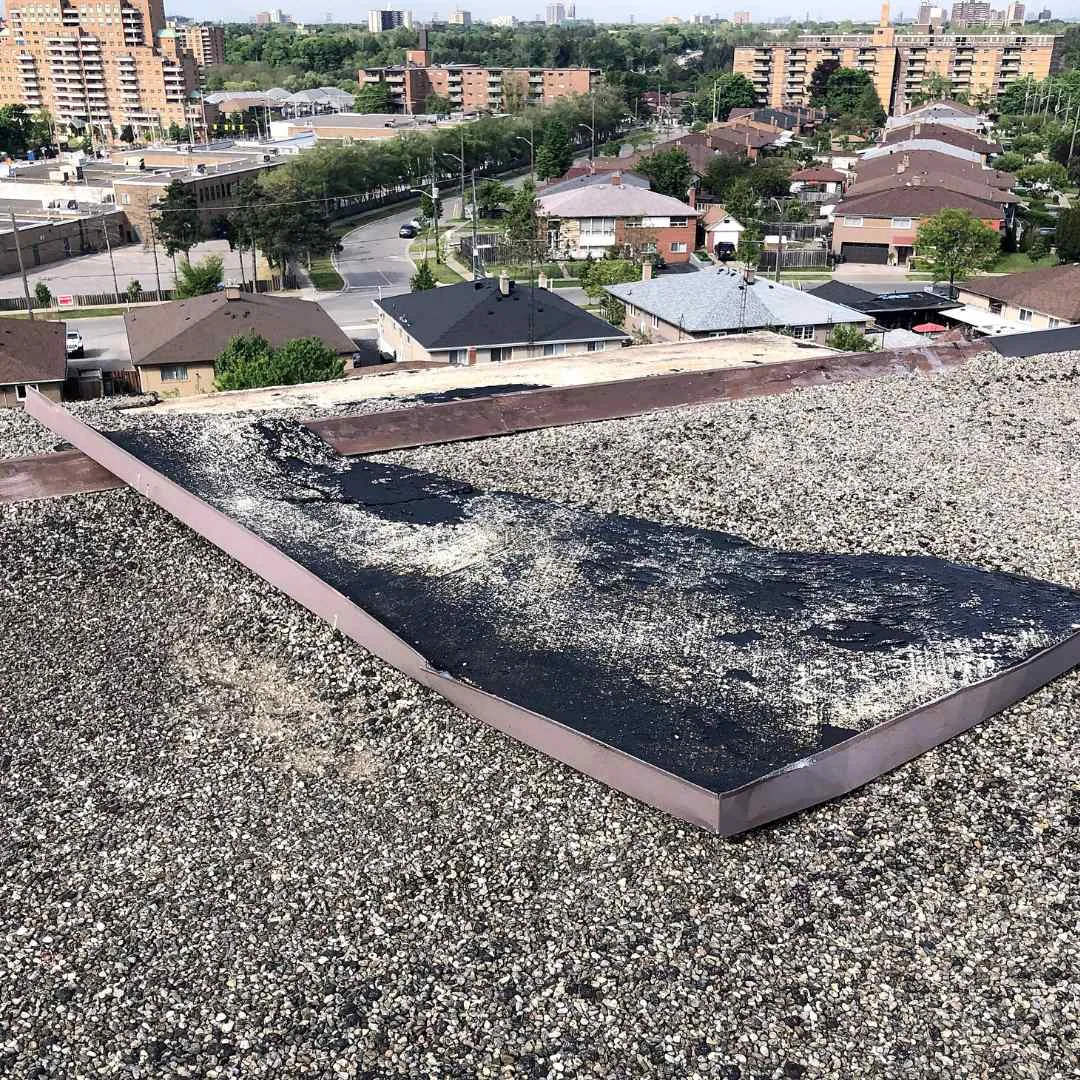
Hail leaves a different signature on every membrane. Thin thermoplastic sheets, such as TPO, can fracture at an impact point, showing a small crack ringed by a bruise. Modified bitumen and built-up roofs lose granules and, in severe cases, crack through the surface plies. Spray foam shows crushed pockets and broken coating. Coated roofs can chip or craze at the point of impact. Metal panels dent, and exposed fasteners and edge metal show small deformation.
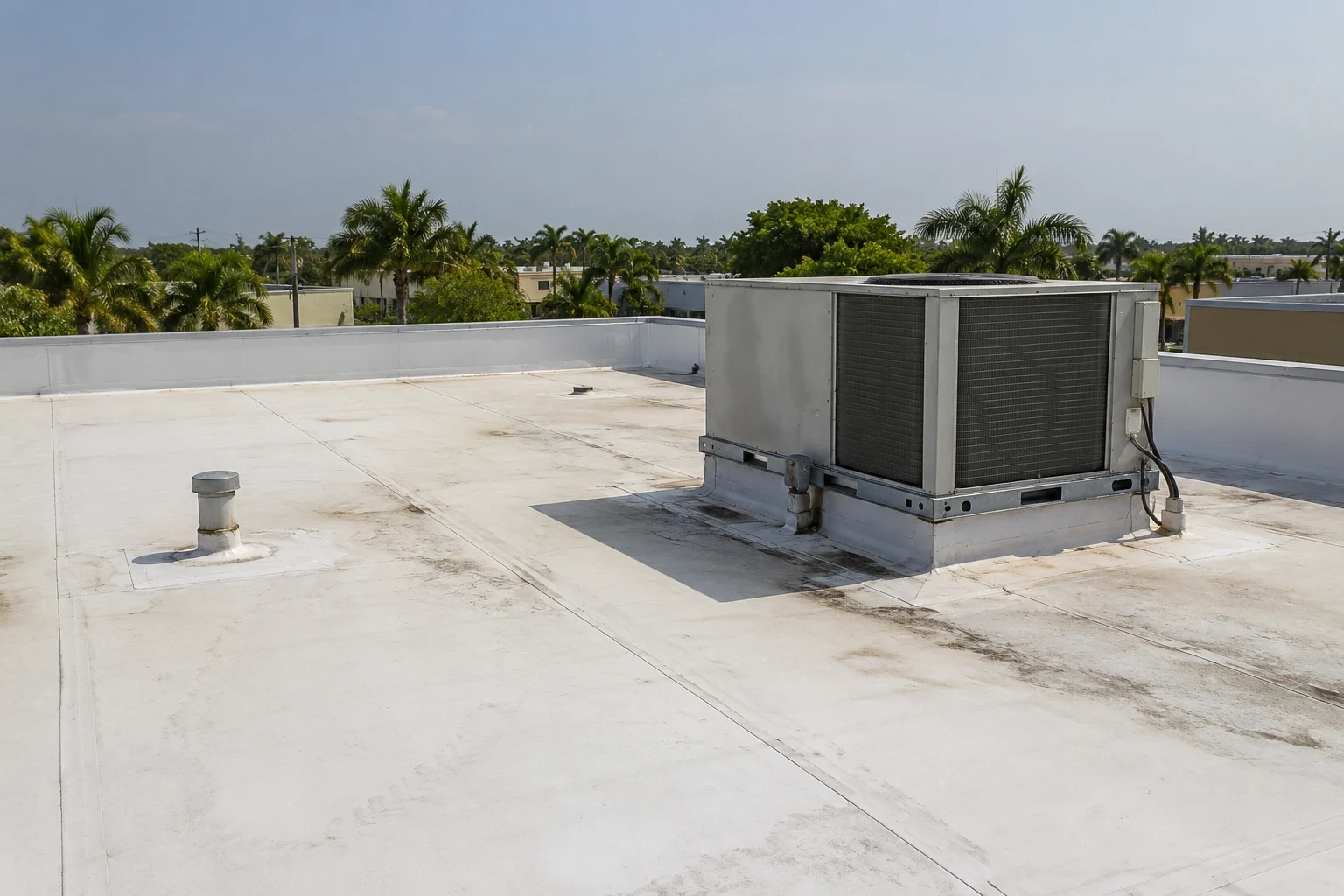
Rooftop units, vents and skylights tell their own story. Bent condenser fins, dented hood covers and cracked domes confirm that something struck the roof from above and give a rough sense of the intensity. We photograph those items against a scale and note direction, because they help separate a hail strike from foot traffic or wear.
Separate Cosmetic Dents From Functional Loss
Not every dent is a failure. A dented metal panel that still sheds water, holds its coating and keeps its seams tight may be cosmetic damage, and a good adjuster or engineer will say so. Functional loss is another matter: a cracked membrane, an exposed substrate, a fractured fastener plate or a seam opened by impact. Those are real leak paths, and they call for repair whether or not water has shown up inside.
We test the difference. Probes and cores check whether a bruise has reached the insulation, and an inspection with a written report records the number and location of each strike per roof section. Where a suspect area is large, an infrared scan finds moisture that hail-driven cracks have let in. The result is a defensible list, not a guess.
Timing is the quiet variable. Heat and UV age a bruise fast, and Houston has touched 109 F, so a crack that is hairline in April can open by August. Walking the roof soon after a storm, before the next heavy rain, keeps the marks readable and keeps a small repair small. Dry-in comes first on any opening we find, and the permanent repair follows once the scope is agreed.
Pick the Repair Path From the Insulation Outward
Once the damage is mapped, the question is how much of the roof should be touched. If a handful of cracks sit over dry insulation, spot patches restore the surface. If bruising is widespread, a restoration coating or a recover overlay over sound, dry insulation can repair the whole surface without a tear-off. When hail has cracked the roof and water has soaked the boards, replacement is the honest recommendation.
Sequence follows the building. Schools take the work in the summer window, clinics and distribution buildings take it in sections that match their quiet hours, and every opening is dried in before the afternoon cells build. Because hail lands on the same roofs that carry wind damage and foot-traffic punctures, the scope notes which marks came from which cause.
Hand the Carrier a File That Reads Clearly
Insurers want dates, locations, photographs and a repair method, and they want them without gaps. We assemble the storm record, the test results, annotated photos and a repair estimate in one package that supports the insurance claim process. For a district office, the same package works as the record for a board packet. We also flag older wear separately so a sound claim is not diluted by items that hail did not cause.
Along the Spencer Highway corridor, where HCA Houston Healthcare Southeast, San Jacinto College Central Campus and Pasadena ISD all operate, a file with dated photographs and counted strikes hands any reviewer the same facts we saw on the roof.
Hail assessment should use a consistent sampling plan across roof zones and distinguish punctures, fractures, coating loss, and dents that do not impair function. Photograph test locations with scale and direction, then record the roof system and the method used to assess it. Compare exposed equipment and metal edges only as context; damage on one material does not establish damage to a different membrane. If core testing is needed, obtain approval and document how the opening was restored. The repair recommendation should identify the evidence for functional loss and separate it from cosmetic marks. That makes the scope clearer for owners who need to decide between monitoring, targeted repair, and replacement.
Commercial Roofing Questions
Hail is uncommon here. Will a carrier still take a roof claim seriously?
Carriers look at dated storm reports and physical evidence on the roof, not at how rare the event is. A claim built on a documented storm, measured impact marks and a clear repair method gets the same review as one in a hail belt. The weak claims are the ones that lack dates and photographs.
How can I tell whether dents in metal panels are cosmetic?
Check the seams, fasteners and coating, not the dent itself. If the panels still shed water, the coating is unbroken and the laps are tight, the dents are probably cosmetic. A broken coating or an opened seam changes the picture, and so do dents that crowd a fastener line.
Can hail bruises show up as leaks months later?
Yes. A bruised membrane may hold for a season and then crack when the next hot spell stresses the weak spot. Because the leak appears long after the storm, the dated photo record and the early inspection matter. They let you link the failure back to the original event.
Does a new coating cover hail damage or fix it?
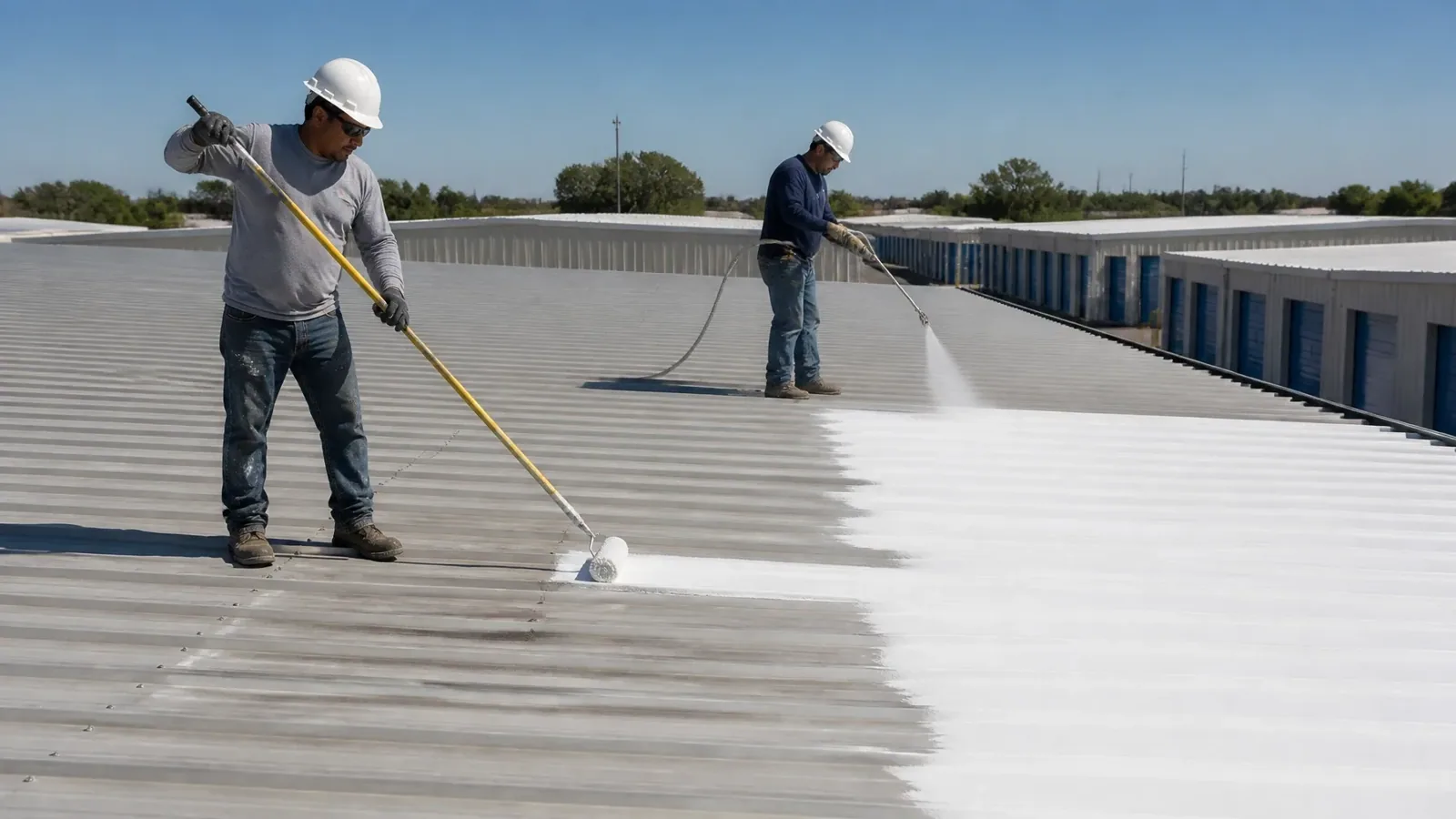
A coating fixes it only when it is applied over sound, dry material after cracks and bruises are repaired. Rolled over broken membrane, it hides movement and cracks again along the old line. We repair the damage first, test the substrate and then coat.
Hail was reported in a neighboring county. Does that help my claim here?
Hail travels in narrow bands, so a report from another county tells you very little about your roof. What counts is evidence at the address: a dated storm record close to your site and the marks on the building. We gather both before anyone sends a claim.
Keep Reading
Related Roofing Work in Pasadena



Walk the Roof With Us After the Storm
Tell us the date of the storm and how the building operates. We will inspect the roof with your facility director, document every strike and set a repair plan that fits your schedule.