
Roofing Capabilities
Roof Capital Planning in Pasadena, TX
A distribution building's capital plan gets written in the fall, approved in the spring and spent in the one stretch of the year when the docks slow down. The roof competes in that plan with dock levelers, lighting and yard paving, and it rarely argues well for itself, because a roof that is failing slowly looks fine from the parking lot.
Roof capital planning in Pasadena, TX gives the roof a place in the schedule and a reason in the budget. For each building we work out how much life the system has left, what the owner can do about it and when the work should happen, so the request that reaches the finance committee carries a range, a window and a consequence instead of a hunch that the roof is old.
Read the Remaining Life Before Anyone Prices a Fix
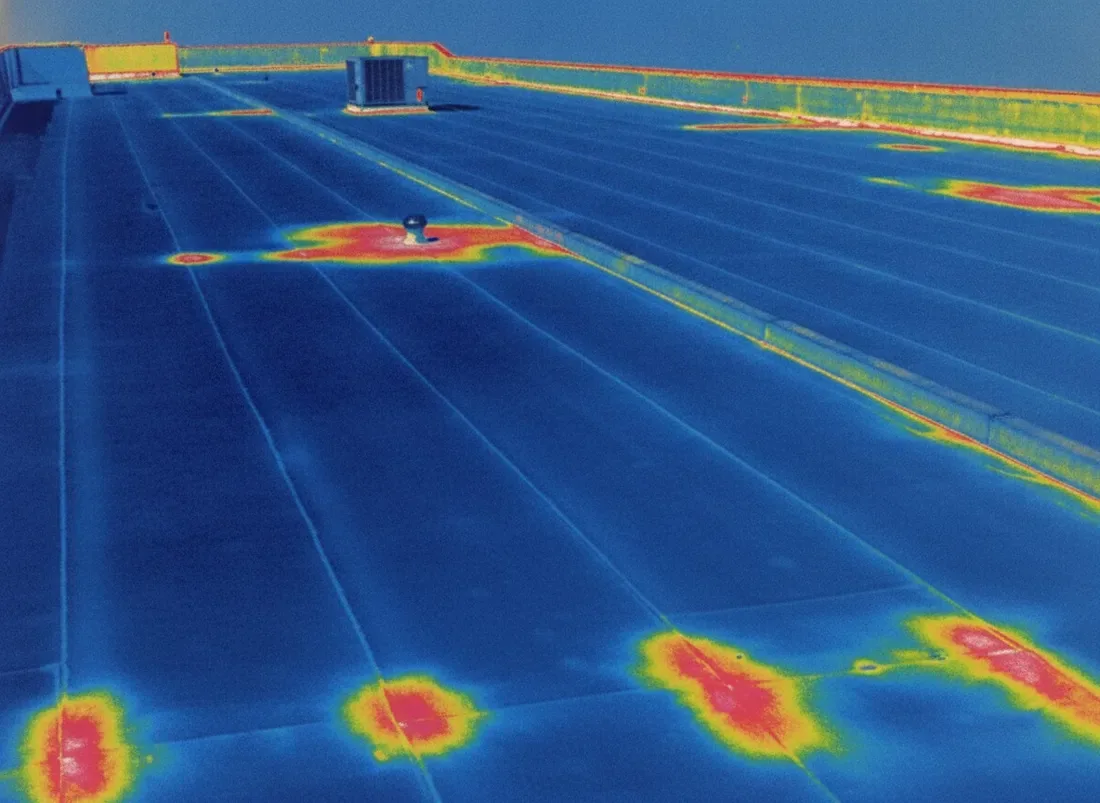
Age alone misleads. A single-ply roof on a shaded, well-drained building can outlast a younger one on a dark exposure with standing water. So we look at what actually spends a roof's life: seam condition, flashing, surface wear and how much of the insulation has taken on moisture. An infrared moisture scan and a handful of core samples tell the story that a walk across the surface cannot.
Southeast Texas leaves little margin. Rain falls on Houston about 104 days a year, and the August afternoon high averages near 95 F with mornings above 90 percent humidity. Water finds every weak seam, and heat works the membrane for the rest of the day. A roof that has taken several of those summers with open ponding is often further along than its install date says, which is why the remaining-life estimate leans on readings and not on paperwork.
Weigh Repair, Restoration, Recover and Replacement on Equal Terms
Four routes sit in front of most owners, and each fits a specific condition. Targeted repair suits a roof with isolated defects and dry insulation. Coating restoration suits a sound, dry membrane whose surface is wearing out. A recover adds a new layer over an existing roof that is dry and can carry it. Full replacement belongs where insulation is saturated, the deck is compromised or the system has reached its limit.
Price comparisons go wrong when the routes are not weighed on the same footing. A coating bid looks small beside a replacement until the wet insulation underneath is counted. We price every option against the same list of cost drivers: surface preparation, deck and insulation allowances, flashing and penetration count, edge metal, drainage corrections, access and staging on an occupied building, and the warranty the manufacturer will stand behind. The owner then sees what each choice buys in years of service and in disruption.
Place the Work in the Shutdown Window
The cheapest roof is the one that goes down when the building can spare it. A plant in the Bayport Industrial District schedules around turnarounds, a campus around summer break, a hospital on the Spencer Highway corridor around the departments it can phase, and a warehouse around the slow weeks after peak. Planning starts by asking the facility director where that window falls, then works backward: when materials must be ordered, where the laydown area and the crane pick go, how many roof sections open per day and how many dry in by quitting time.
Storm season sits on the same calendar. Hurricane season and the pop-up thunderstorms that build off Galveston Bay narrow the safe weeks for opening a membrane, and a plan that ignores them turns a good window into a wet one. We carry that into the schedule as float rather than hope. A capital plan that names the quarter, the sequence and the weather margin gives the owner a project that closes out when tenants and operations were told it would.
Hold Back Money for What the Tear-Off Finds
Every replacement carries unknowns until the old roof is open. Wet insulation spreads farther than a scan suggests, deck panels rust where a curb leaked for years, and old flashing at walls hides rot that a patch once covered. A plan that prices only the visible scope turns into a change-order argument in the middle of the job. We build the budget with unit allowances for insulation and deck, so the owner approves a rate and a ceiling and the work does not stop for a fresh approval.
Code and insurance add their own lines. Pasadena's Permit Department ties 2024 IECC compliance to projects that alter a building's energy load, from new construction to remodels and changes of occupancy, so an owner should ask early whether a given reroof counts and what insulation follows if it does. Buildings east of SH 146 also need the state windstorm inspection to stay insurable. And storms do not wait for the plan: the January 2023 EF3 tornado cut across Fairmont Parkway and left roof damage at Pasadena Memorial High School, a reminder that a reserve for unplanned work belongs beside the planned list.
Put the Case to the Board on One Page
Boards fund what they can compare. The one-page summary lists each building, the recommended action, the window, the budget range and the consequence of waiting another year, and it stays consistent with the underlying roof asset register so the numbers do not drift. Where warranty terms drive timing, such as a manufacturer's notice requirements, the plan flags them beside the roof, because a missed condition can cost an owner coverage worth more than the deferral saved. That is where warranty management meets the budget.
School districts and other public owners need one more layer, a scope clean enough to bid. Pasadena ISD operates dozens of campuses, and a district with that many campuses has to choose an order. A plan that ranks by condition, contents and consequence, and says so in plain words, is one a trustee can read and defend through budget season.
Commercial Roofing Questions
How far ahead should a plant on a turnaround cycle budget for a roof replacement?
Far enough that the roof lands in a turnaround window instead of competing with it for crews and permits. For most plants that means putting the roof in the plan two cycles before the work, with the scan and core samples done early enough to size the scope. The planning lead also covers material ordering and the hot work permit process, which a plant will not waive for a roofer.
A coating quote came in far below the replacement quote. When is that a fair comparison?
Only when the insulation under the existing membrane is dry and the seams and flashing are sound enough to hold a coating. A moisture scan answers that before anyone signs. If the scan finds saturated areas, the coating number is missing the cost of cutting those out, and the two quotes are not describing the same building.
What contingency belongs in the plan for wet insulation found during tear-off?
Carry a unit price for replacing insulation and deck by the square foot rather than a lump sum, and agree a ceiling before the job starts. The scan shows where moisture is likely, so the allowance can be sized to the building instead of guessed. The owner then pays for what is found, no more, and the crew keeps working while the extent is measured.
Does Pasadena's energy code change what a replacement has to include?
The City of Pasadena Permit Department asks for 2024 IECC compliance on projects that count as new construction, additions, remodels or changes of occupancy affecting energy load, with an energy inspection before occupancy. Whether a reroof falls in that group is a question for the permit office, and we raise it during planning so the insulation thickness in the budget matches the answer.
Is it better to replace several roofs in one year or stagger them?
Staggering protects operations, since each building loses its roof access once and the facility team handles one tear-off at a time. Bundling can reduce mobilization and let one crew work through a campus or a park in sequence. The choice follows the owner's capital cycle and tolerance for disruption, and the plan shows both versions side by side.
Keep Reading
Related Roofing Work in Pasadena



Walk the Buildings and Set the Window
Tell us which roofs are on the capital list and when each building can give up its roof. We will walk the sites with your facility director and return a plan that fits your shutdown windows and your budget cycle.