
Property Types We Roof
Big-Box Retail Roofing in Pasadena, TX
A big-box store is one enormous room with a ceiling most shoppers never think about. Beneath it sit the sales floor, the stockroom, the receiving dock and the sprinkler mains, and above it sits a wide expanse of low-slope roof, plus a dense field of rooftop units, vents and skylights. Every defect in that roof sits over something that cannot get wet.
In Pasadena, TX, commercial traffic moves along Beltway 8, Spencer Highway and Fairmont Parkway, and at Meadowbrook / Allendale, off I-45 South, Living Spaces and Dave & Buster's share a mall with Dillard's, JCPenney and Macy's. The roof work has to run while registers stay open, trucks keep arriving, and the next storm builds out over Galveston Bay.
Plan the Roof From the Sales Floor Down
The first walk on a big-box job is inside the building. We look at where the ceiling stains are, where buckets have been left, which departments sit under the oldest leaks, and where the store keeps merchandise that water would ruin: electronics, soft goods, paper, packaged food. That interior map becomes the priority list for the roof.
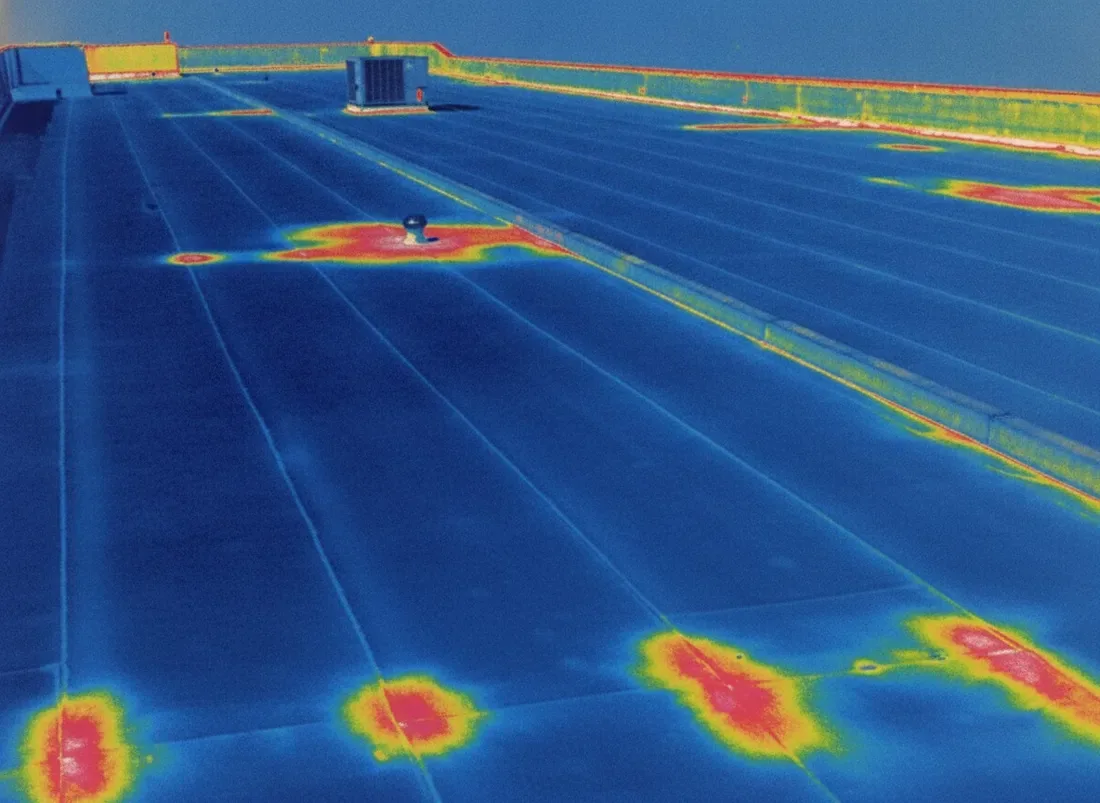
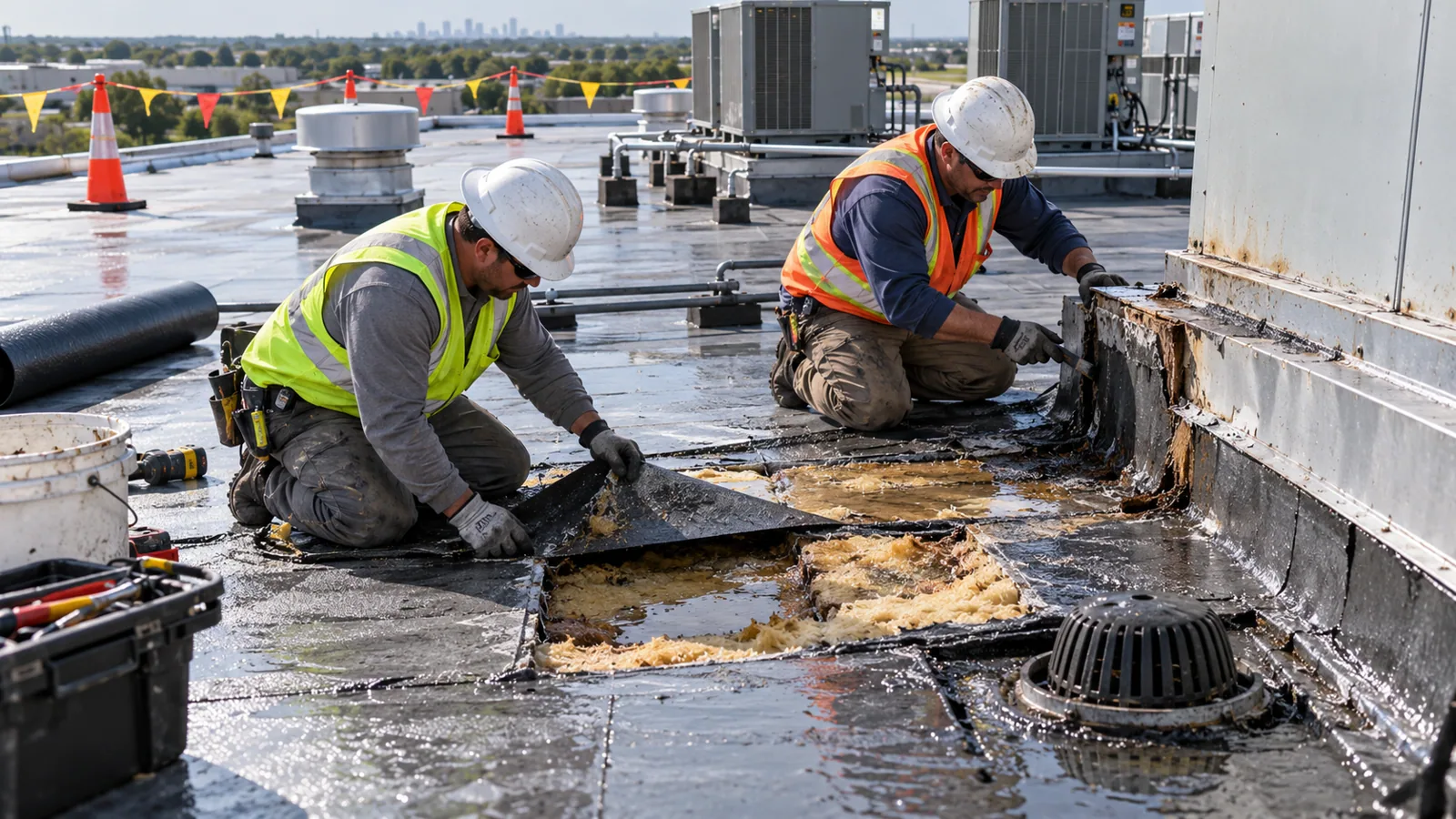
Then we go up and match what we see. A stain on the floor plan rarely sits under the hole in the roof, because water travels along the deck and insulation before it drops. A moisture survey across the roof shows how far the wet insulation reaches, which matters on a wide roof because replacing only the damp part costs far less than replacing it all. The store manager gets a color-coded drawing: dry, damp, saturated.
We also confirm where the sprinkler lines run and where the sales floor keeps lighting and fixtures, so fastener length is matched to what hangs below the deck.
Open the Roof in Sections Sized to the Afternoon Storm
The Houston area gets some 50 inches of rain over about 104 days a year, and June is the wettest month. A summer afternoon can go from clear to a downpour inside an hour. On a store with product below, the rule is simple: never open more roof than can be dried in by the end of the day.
We cut the roof into sections that match the crew size and the weather. Tear-off, insulation, cover board and membrane go down in one sweep, and the edge is sealed with a temporary tie-in at quitting time. The radar gets checked before every morning pick, and if a cell is building, the crew closes up the open section first and waits.
The same discipline applies to a roof recover over an existing membrane. A recover leaves the old roof in place and so keeps most of the store dry, but it works only when the insulation below is sound.
Stage Trucks and Cranes Outside the Fire Lane
A big-box lot has three kinds of traffic: customers, delivery trucks and the fire lane that circles the building. A roofing crew can interfere with all three if it is careless.
We work out the logistics with the store before mobilizing:
- A fenced laydown area at the edge of the lot, away from the main aisles and the cart corrals
- A crane pick scheduled for before opening or after close, with a spotter and a closed path below
- A dock schedule that keeps the receiving door clear when the freight truck arrives
- A hot work permit and fire watch if any heat tool is used near the building envelope
- A site safety orientation for every worker, with the store's rules on badges and restricted areas
Material comes in staged loads, not the whole job at once.
Move Water Off a Wide, Flat Roof
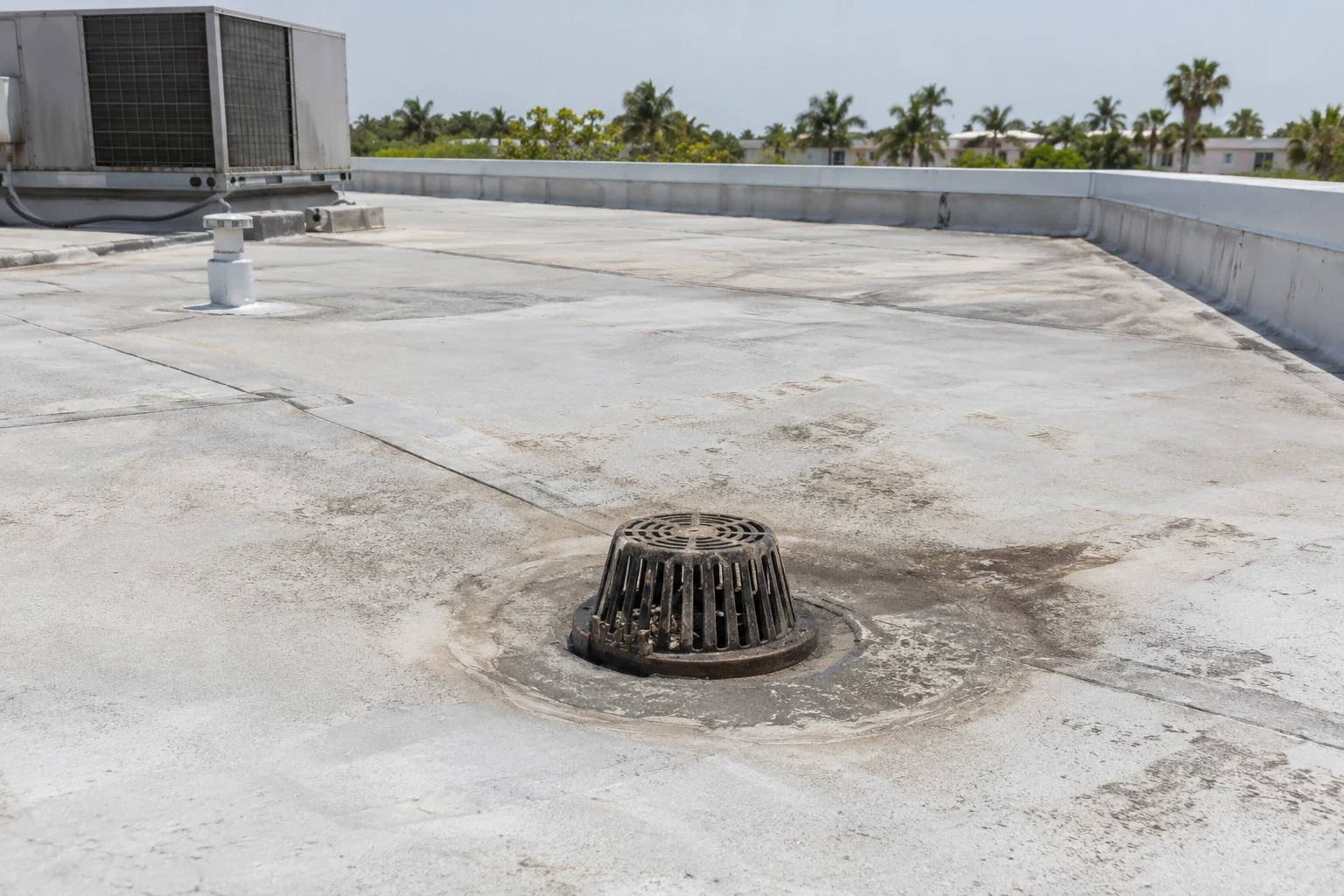
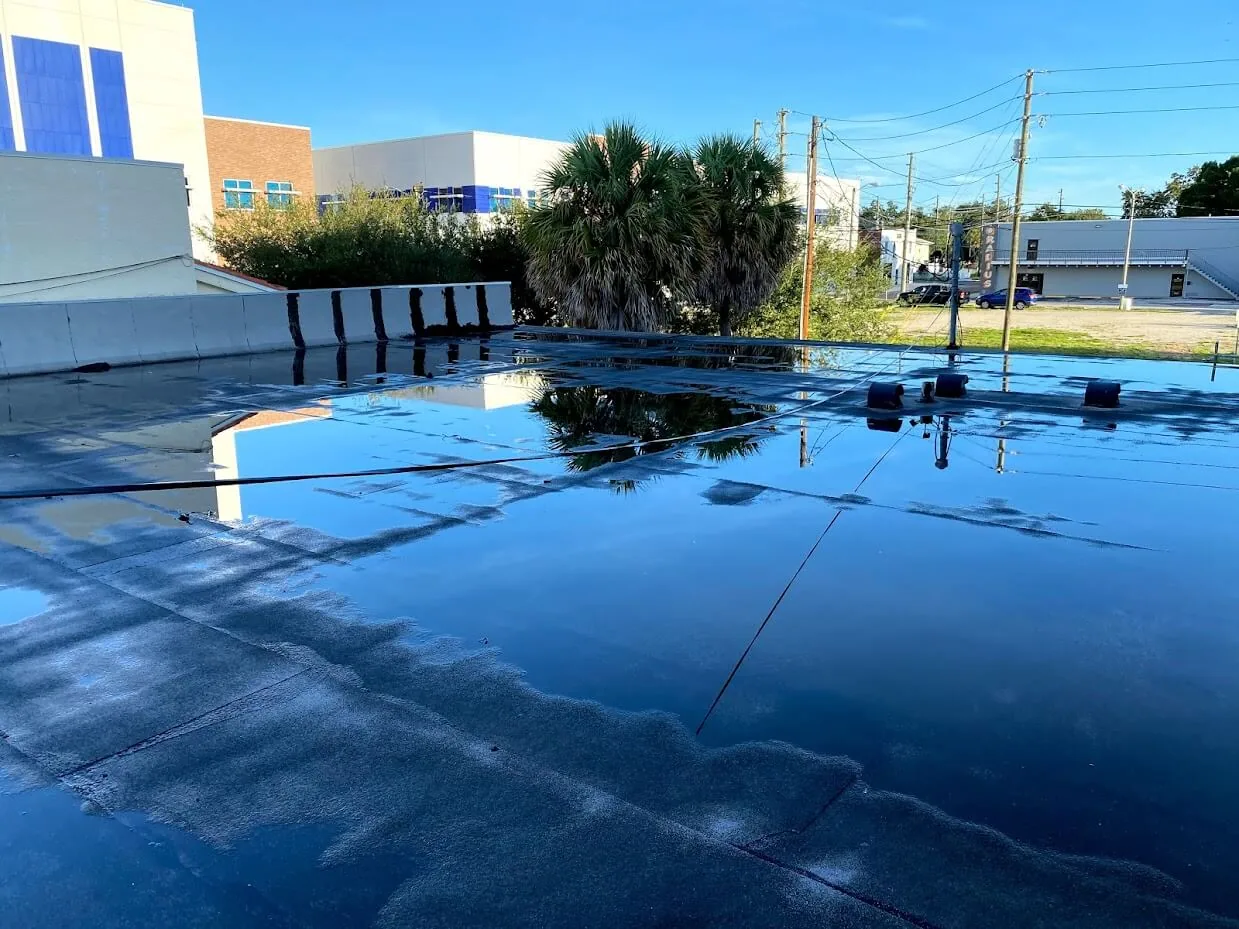
A wide low-slope roof is a big catch basin. Even a modest sag between drains holds water for days after a storm, and heat and UV turn that standing water into a fast-aging patch of membrane. Ponding is a constant concern on low-slope commercial roofs, and it is as much a design matter as a repair matter.
On a replacement, we check the drain count against the area, the slope of the deck and the location of every scupper. Tapered insulation can add pitch where the structure sagged. Roof drains and scuppers are cleaned, flashed and tested for flow. Where a roof already shows ponds, our ponding water roof repair starts with a flood test and a slope survey instead of a patch.
The stakes are real. Standing water leaves more of the sheet exposed to Houston's August highs, which average near 95 F, and the extra weight on a stressed deck does not help.
Brace Edges and Units Against Derecho and Hurricane Gusts
A big box is a flat sail. Wind lifts membranes from the perimeter and the corners first, and rooftop units catch gusts of their own. On June 21, 2023, a line of thunderstorms pushed a 97 mph gust through Bush Intercontinental Airport, past the old Hurricane Ike mark of 82 mph. A derecho followed in May 2024, and Hurricane Beryl's eastern eyewall crossed the Houston region that July.
The response is a roof built for uplift: fully adhered or mechanically attached membrane in a pattern that suits the corner and perimeter zones, edge metal with continuous cleats, and curbs strapped to the structure. After any big storm, we climb every inch of the roof and photograph the units, the edges and the penetrations, then repair what the wind opened before the next rain finds it.
East of SH 146, the finished roof must pass the Texas Department of Insurance windstorm inspection, so we collect the attachment photos as we go.
Leave the Real Estate Team a Roof File They Can Use
A big-box roof is usually part of a larger portfolio. The people who decide on it, whether a store operations lead, a landlord's asset team or a regional facilities manager, need information they can compare store to store.
Our closeout package includes the roof drawing with every unit and penetration marked, seam and flashing photos, the membrane and insulation details, and the warranty paperwork where one applies. For retail and restaurant chains with many stores, stores built to one prototype often share the same roof details from one location to the next, which makes budgets and calendars easier to build. A multi-site roof program can then schedule the oldest stores first.
Similar logic applies to a smaller shopping center that shares a lot with a big-box tenant, where the landlord and the retailer often need to agree on who handles what.A grocery store roof adds cold-product protection and delivery windows to that same occupied-site sequence.
Commercial Roofing Questions
How much of a big-box store can stay open during a reroof?
Usually all of it. Work moves across the roof in sections, with the area directly below protected and merchandise moved from the lines of ceiling that are being worked on. Departments with the most sensitive stock are scheduled last or handled after hours, and the store manager signs off on the daily plan.
Is a recover better than a tear-off on a large store?
Often, when the insulation tests dry. A recover saves time, cuts disposal and leaves the store weather-tight throughout. If the survey finds wet insulation across much of the roof, a tear-off in those areas is cleaner, because new membrane over wet board will fail early.
What does a roof like this cost per store?
Price moves with area, with how many rooftop units must be lifted and reset, and with the thickness of the new insulation. Drainage changes and edge upgrades matter too. We price from a measured plan and the survey results, not from a number per square foot guessed over the phone.
How are rooftop units handled during the work?
Each unit is either flashed in place, lifted by crane and set on a new curb, or isolated from the work area. Mechanical contractors disconnect and reconnect the lines, and we coordinate the shutdown with the store so the sales floor is never without cooling for long on a summer afternoon.
Will a new roof help with the store's cooling bills?
A white reflective membrane and extra insulation both help, particularly in the Houston area, which logs about 102 days a year at or above 90 F. The effect shows up on the cooling plant of a store with a big sunlit roof, and a moisture-free insulation layer keeps that benefit from fading.
Keep Reading
Related Roofing Work in Pasadena
Walk the Store and the Roof Together
Send us the store hours, the delivery schedule and your leak history. We will walk the sales floor and the roof with your facility lead, and write a sequence that keeps registers ringing and product dry.