
Service Areas
Commercial Roofing in Meadowbrook / Allendale, Houston, TX
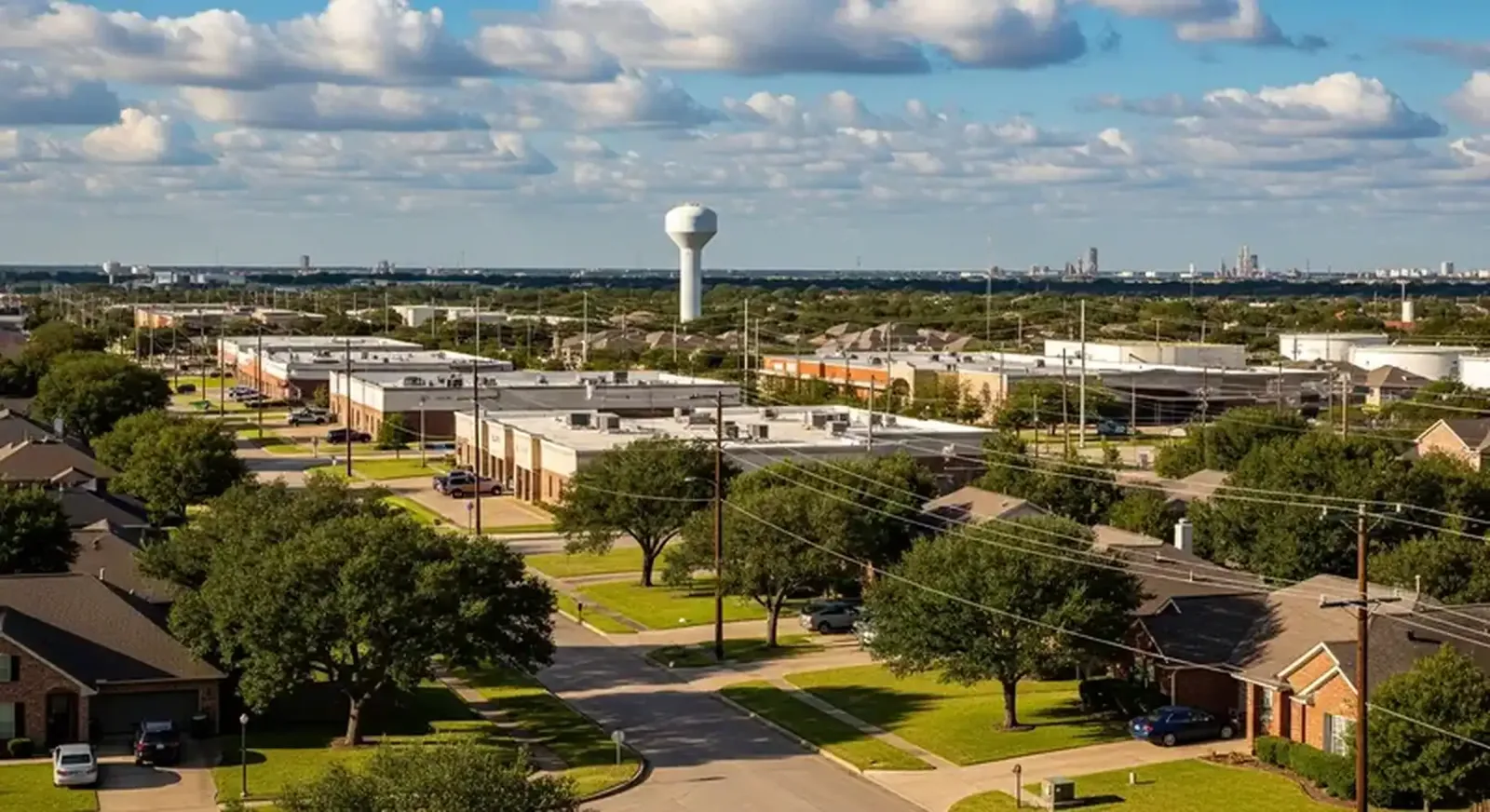
Meadowbrook / Allendale is a broad Houston super-neighborhood, not a single retail property or plant. It sits on Houston’s southeast edge, between Pasadena, South Houston, Loop 610, the Gulf Freeway and the Ship Channel. Chemical plants and industrial uses share the wider area with residential neighborhoods, so nearby properties have different operating needs.
We inspect the building in front of us before proposing work. That means tracing leaks, checking seams and drainage, confirming roof access and finding out which rooms, tenants or equipment need protection. A district description can orient service; it cannot substitute for a field inspection or establish a roof’s age, system or condition.
Work across a mixed-use area
The area includes chemical plants to the north, an industrial corner to the south and residential blocks between them. That mix makes site coordination essential. A roof over a small office may need quiet hours and clear customer access; an industrial building may require safety orientation, equipment protection and a defined delivery window. We ask the owner about those constraints before setting the sequence.
For multi-tenant properties, we verify who controls each roof section and where shared walls sit. We mark staging areas, loading routes, pedestrian paths and emergency access. The daily plan accounts for the building’s actual operation, not a guess based on nearby land use. A clear contact list helps each tenant know when work will happen and whom to call if interior conditions change.
The neighborhood contains homes built across several eras alongside industrial property. That makes communication especially important when work happens near homes or shared property lines. We plan loading and material handling to avoid blocking driveways or fire access, agree on start times and use barriers where material could fall. The owner or manager coordinates notices for tenants and neighboring occupants before the crew begins.
When the roof is over several occupants, we can sequence by tenant or building section, provided the assembly allows a watertight stop at each boundary. The project contact gets dates and notices for the work area, while the crew keeps a record of temporary protection and completed details. This creates a practical handoff for property staff who manage more than one roof.
Track the leak to a roof detail
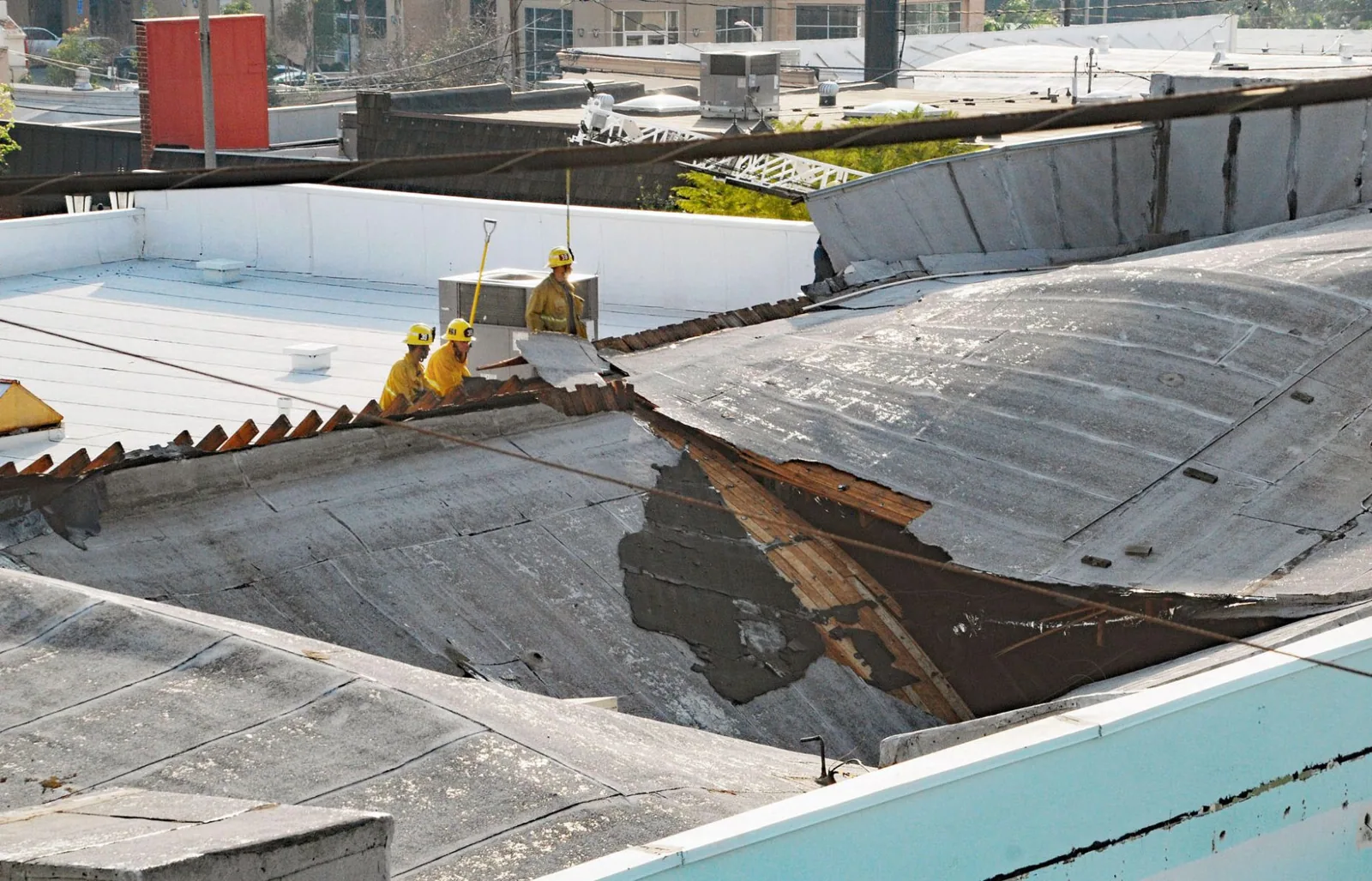
Water at a ceiling may have entered at a seam, curb, drain or wall transition well away from the stain. We compare the interior pattern with the roof surface, look for wet insulation and photograph the likely path. Where the evidence is unclear, moisture mapping or an owner-approved test cut can establish what lies below the membrane. We protect the opening and close it watertight before the crew leaves.
The report separates confirmed defects from areas to monitor. If water appears to come from plumbing, condensation or another source, we state that plainly. The owner receives a prioritized recommendation with photos and scope boundaries. A commercial roof inspection builds a baseline that can be compared after storms, repairs or equipment changes.
On a large roof, inspection is organized by zones. We mark drains, overflow points, HVAC curbs, expansion joints and wall transitions, then photograph each issue from a repeatable position. A moisture survey can help decide whether water is limited to one section or has traveled below the surface. If a test cut is needed, the owner approves the location and we close it watertight. The resulting map supports a focused repair and a more reliable budget.
Heat, rain and the roof assembly
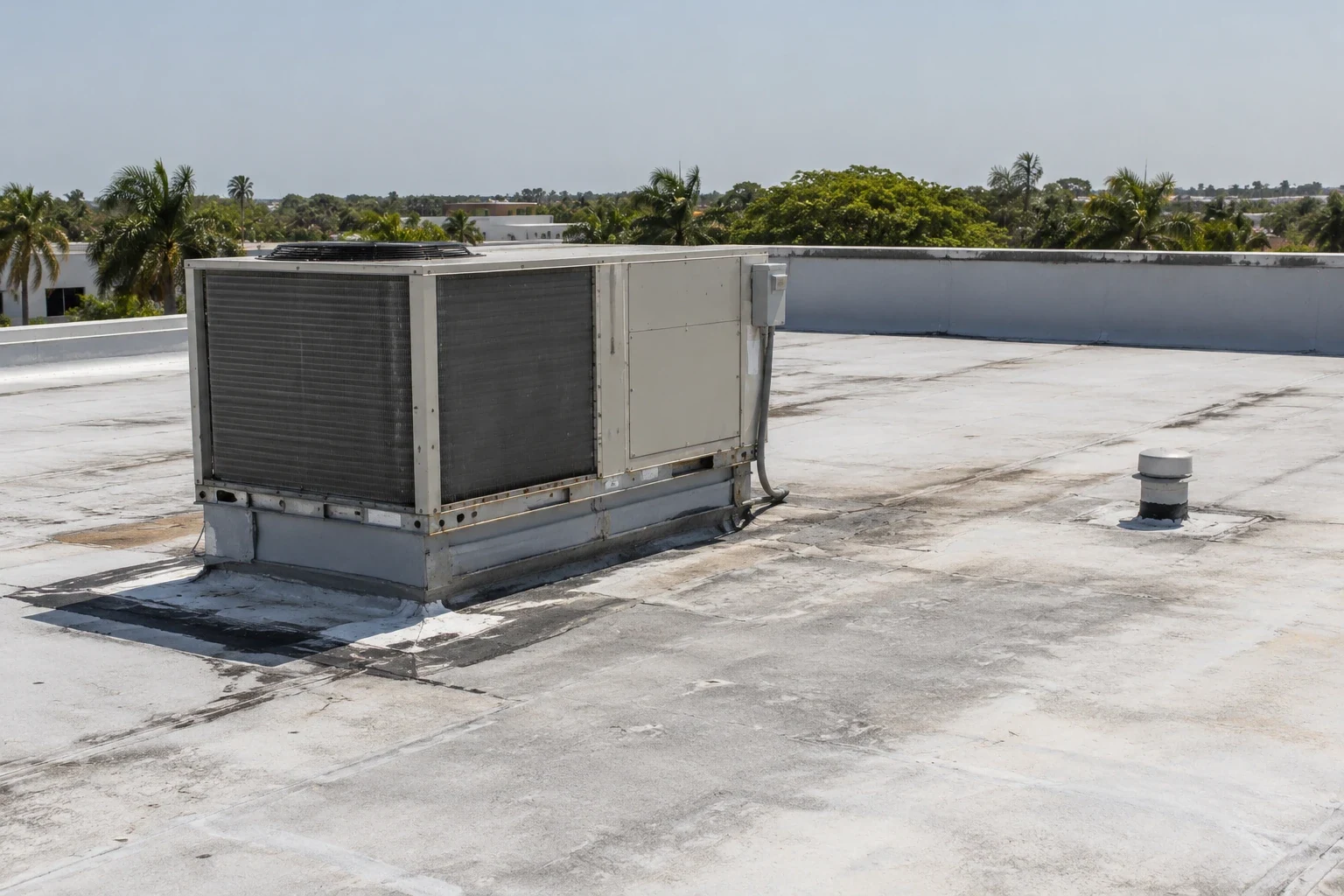
Houston heat expands and contracts roof components; heavy rain tests drainage and the quality of laps and flashing. We inspect edge attachment, sealants, penetrations, drains and ponding areas. Where rooftop units have been added, we check the curbs and service paths for damage from repeated maintenance traffic. Metal roofs need their own review of seams, fasteners and corrosion before restoration is considered.
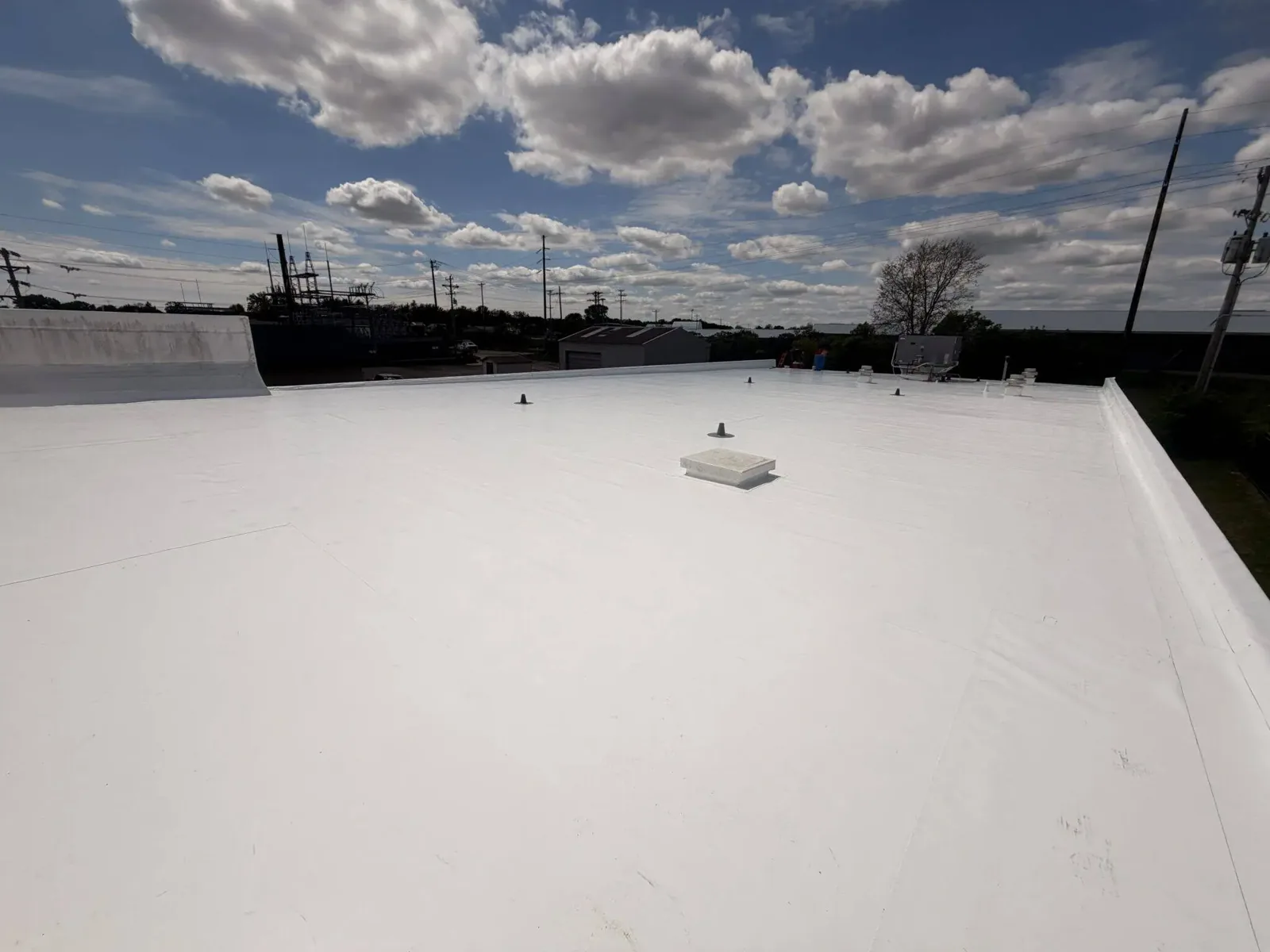
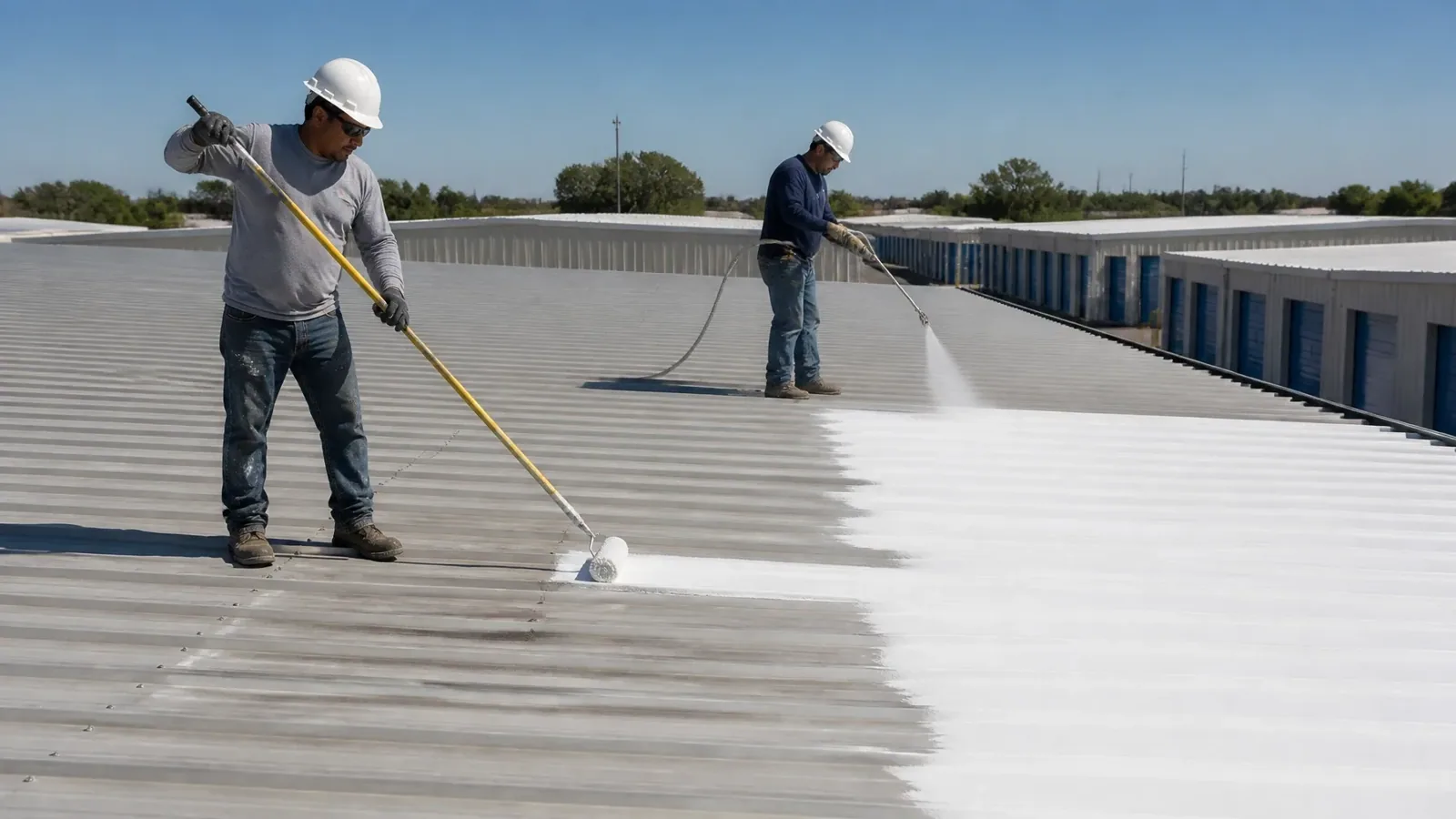
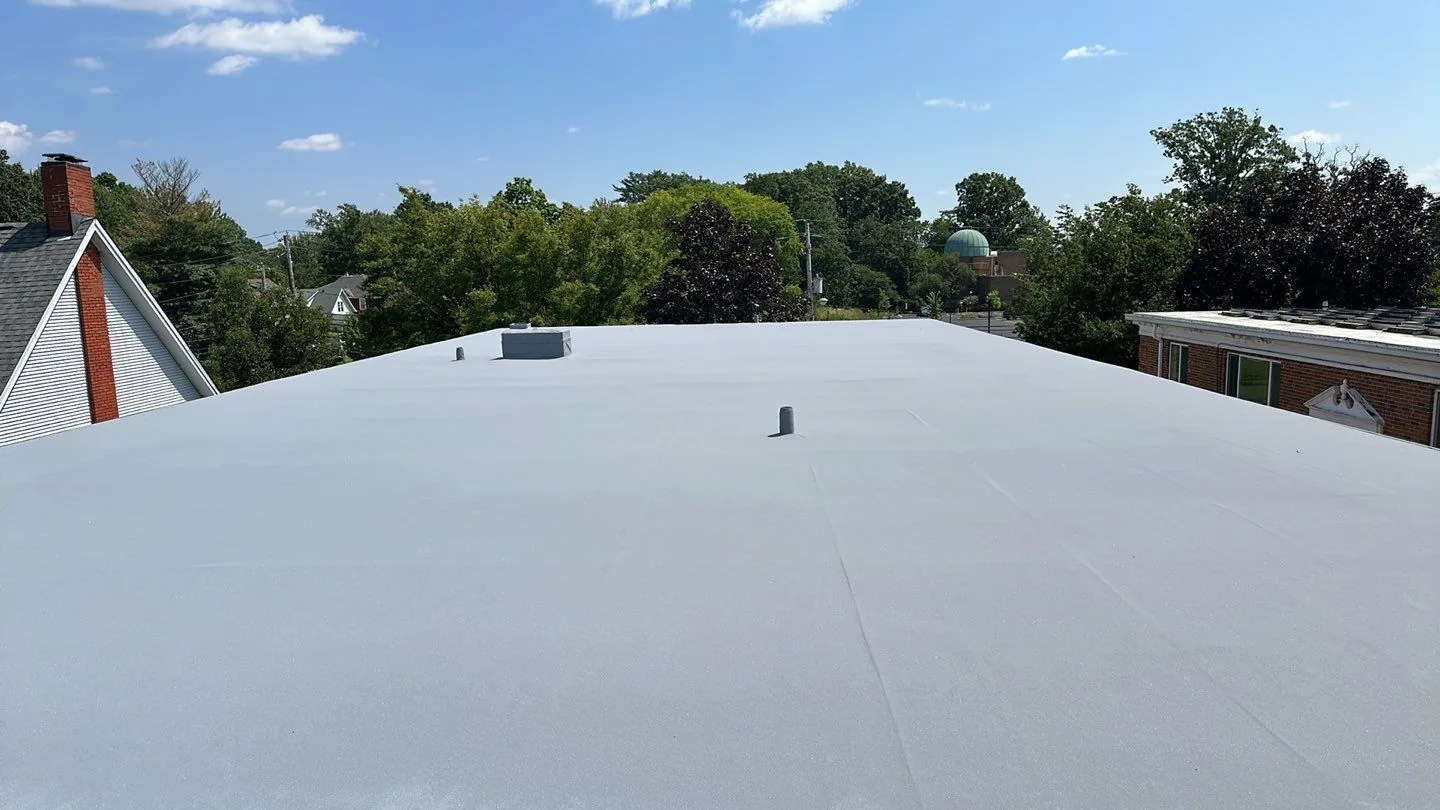
System choice depends on substrate, roof slope, existing layers, insulation and owner goals. A reflective membrane may fit some low-slope roofs; built-up, modified-bitumen and metal systems may make sense elsewhere. We do not recommend coatings over wet or failing material. The evaluation determines whether repair, recover or replacement offers the soundest result.
Compare repair, recover and replacement
A localized opening with dry, sound insulation is often a repair candidate. A recover may be appropriate when the assembly is compatible, dry and able to accept the added height. Replacement becomes more likely when moisture is widespread, layers are excessive or the deck needs attention. We verify those conditions through inspection and testing rather than using age alone as a reason to replace.
Every proposal states the areas included, preparation, insulation, system, edge work, penetrations, drainage and temporary protection. Unknown deck conditions are called out separately. That gives an owner a useful comparison of expected service life, cost and operational disruption. Learn about commercial roof repair, roof coating restoration and replacement.
Schedule around people and operations
Work sequencing starts with an access conversation. The owner identifies delivery hours, sensitive equipment, noise limits, restricted areas and the people who can approve a change. We place materials where they do not obstruct traffic or business, protect interior contents and keep entrances safe. When work crosses a shared roof area, property management coordinates tenant notices and responsibilities.
At the end of each shift, the crew removes loose debris, checks drains and closes the exposed section against weather. The owner gets a short status update and the next step. If conditions are found outside the agreed scope, we document them before proceeding. This discipline helps commercial operations continue while roof work moves forward.
Industrial work may require orientation, personal protective equipment, escort rules or a permit for specific tasks. Commercial tenants may instead need advance notice and a clear route for customers. We confirm which requirements apply to the building itself, set one point of contact and document the schedule before mobilization. No outside source or nearby facility determines the rules for an individual property; we follow the owner’s site procedures and the applicable code requirements.
Keep the roof record current
Maintenance visits help catch movement before a seam opens or water reaches the interior. We check drains, laps, edges, penetrations and previous repairs, using photos that can be compared over time. After severe weather, a targeted inspection identifies displaced metal, punctures or debris impacts while evidence is fresh. Items are ranked by urgency so an owner can address risk first and budget the rest.
The City’s neighborhood profile covers multiple land-use eras and active industrial areas, but each roof has its own history. We keep findings tied to the inspected structure and update the owner’s record with the work completed. Nearby locations include the SH 225 corridor and South Houston. Explore preventive roof maintenance, storm response and manufacturing-plant roofing.
Because the area spans several major roads and municipal boundaries, confirm the correct gate, tenant entrance or loading area before the crew arrives. A short pre-start review covers arrival instructions, deliveries and any street-side restrictions that could affect material handling.
Commercial Roofing Questions
Does the neighborhood profile determine roof condition?
No. City land-use descriptions orient the service area, while system type, age and damage are confirmed at each property.
How do you protect nearby occupied spaces?
We coordinate noise, staging, pedestrian paths and notices with the property contact, then close each exposed roof area before leaving.
Can industrial and office roof work be phased?
Yes. We map roof zones, prioritize urgent defects and sequence the work around equipment, deliveries and the owner’s schedule.
What does the inspection report include?
Expect condition photos, roof areas inspected, confirmed defects, recommended priorities and any uncertainty that needs testing before a final scope.
Keep Reading
Related Roofing Work in Pasadena


Arrange a commercial roof assessment
Tell us which part of the property needs attention and what operations must remain open. We will assess the roof and outline a workable sequence for the building.