
Property Types We Roof
Grocery Store Roofing in Pasadena, TX
A grocery store does not get to close for a roof. The dairy case runs all night, the bakery starts before dawn, the produce truck backs in at five, and shoppers are in the aisles by morning. Whatever happens above the ceiling has to happen without a warm cooler, a wet floor or a delayed delivery.
That is the nature of the building in Pasadena, TX, and the towns around it. South Houston, a small city served by Spencer Highway, has an H-E-B Mi Tienda that opened in 2006, and the Lewis Food Town chain was once headquartered there. Over a grocery sales floor sits a roof that carries compressor racks, condensers, exhaust fans and plumbing vents, and under it sits food that has a shelf life measured in days. The roof plan starts with the cold chain and works outward, much as it does for a cold storage building with a dock full of reefer trucks.
Protect the Cold Chain Before the First Seam Opens
Everything in a grocery store is ranked by what spoils. Open dairy cases, frozen aisles, walk-in coolers and the meat room come first, and the roof sections above them are scheduled with extra care. A leak onto a case lid, an electrical panel or a floor drain is a loss of product and often an inspection.
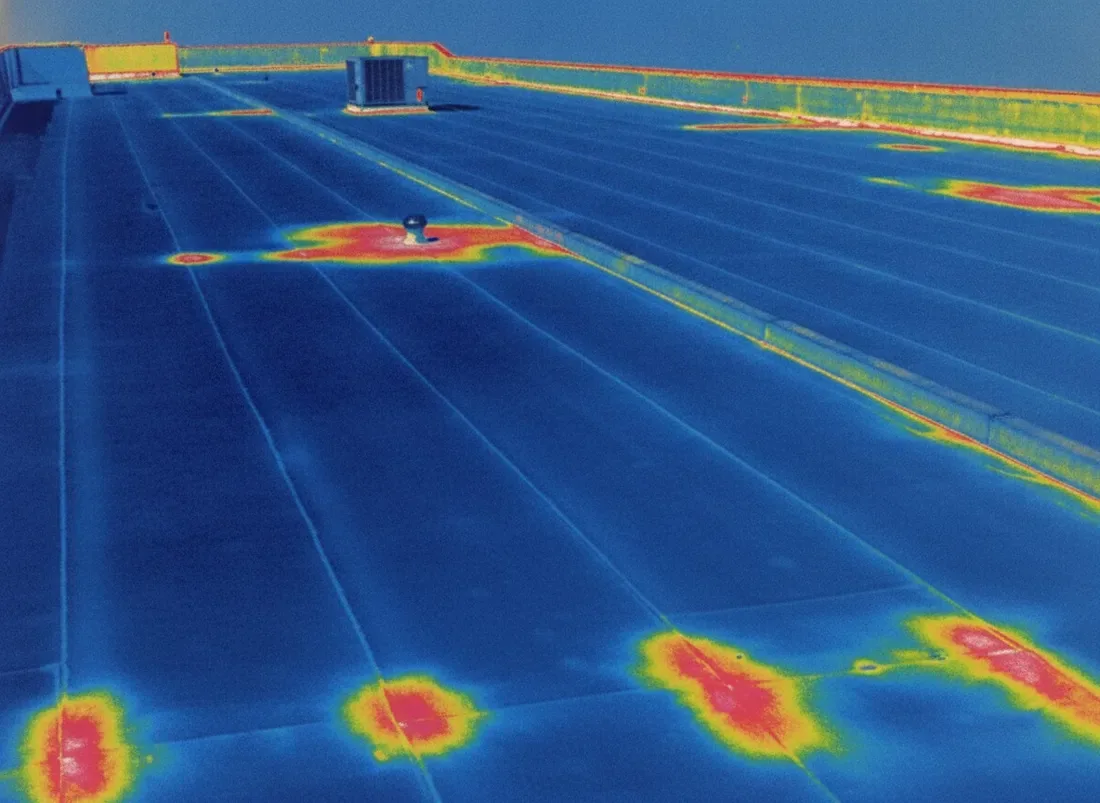
Before a reroof starts, we walk the store with the manager and the refrigeration contractor and mark each department by sensitivity. Roof sections over the highest-risk rooms are opened last and closed first, with temporary protection in place before the membrane is cut. A moisture survey across the roof shows where wet insulation hides above the coolers, which is often the real cause of a recurring ceiling stain.
If a walk-in sits near a leak, we also check the condensate lines and the drain pans. Water on a store ceiling sometimes comes from the equipment, not the roof, and an honest survey sorts the two.
Plan the Condenser Pads, Racks and Curbs
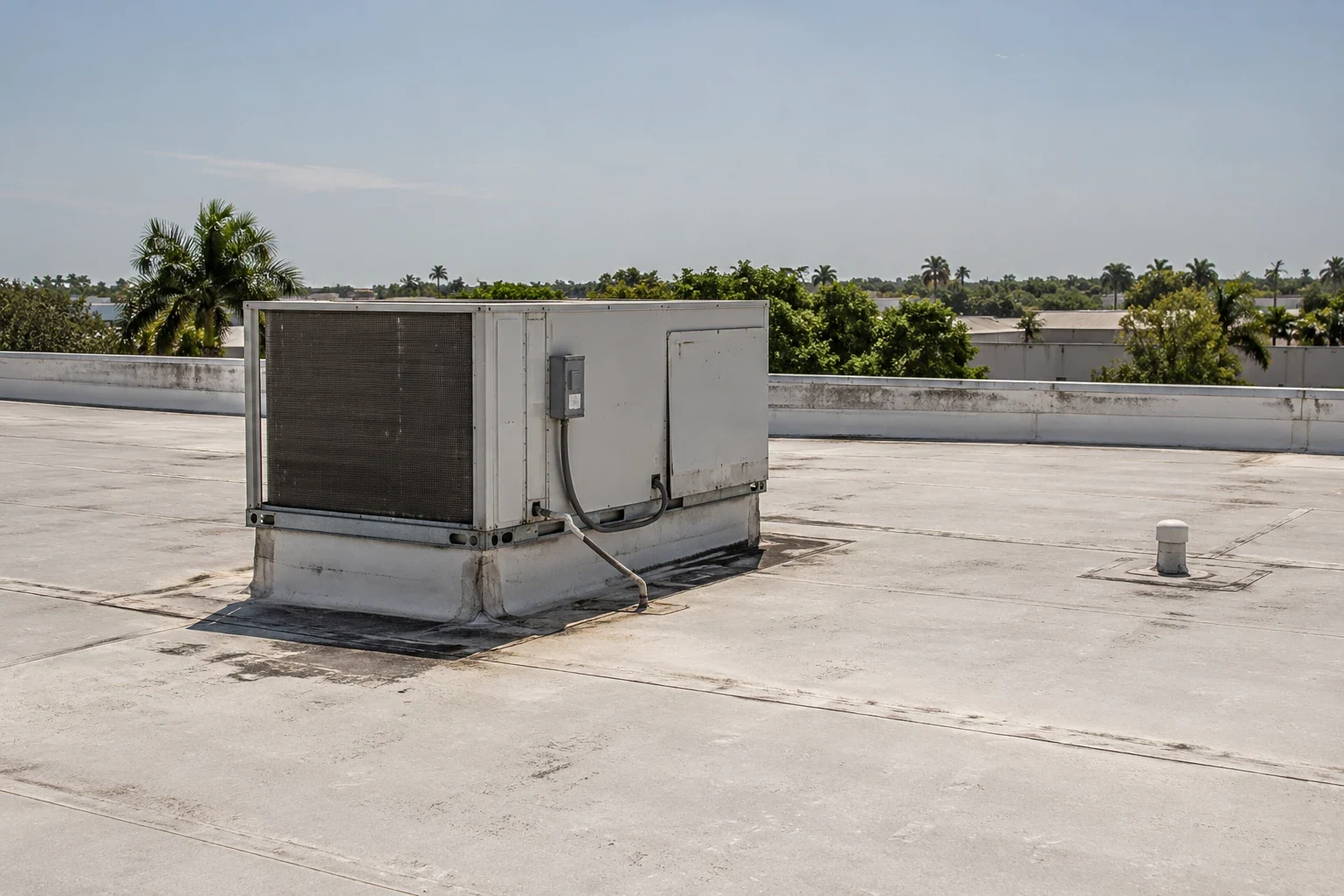
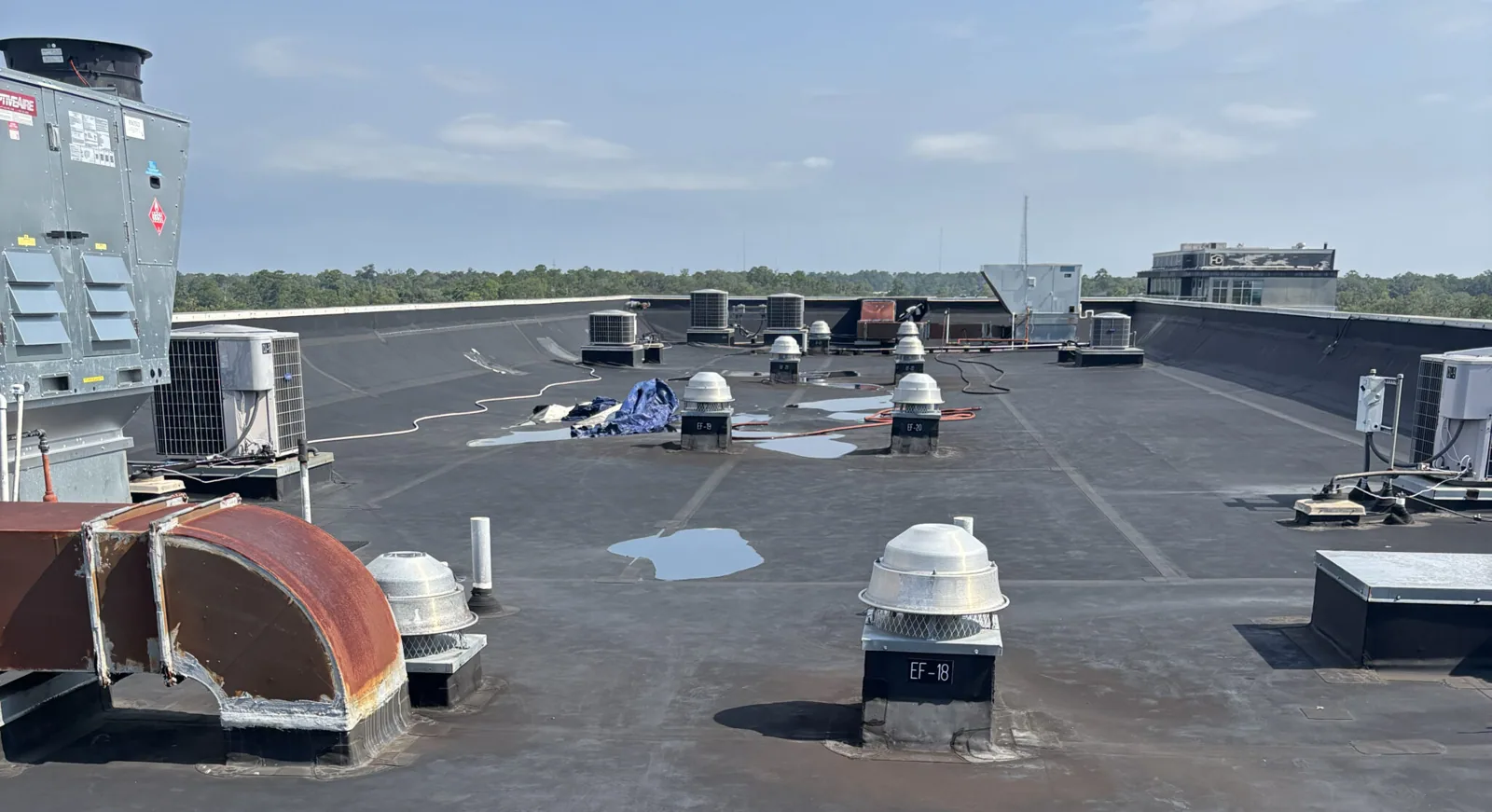
Refrigeration puts the heaviest equipment on the roof. Condensers reject heat, exhaust fans vent coolers and kitchens, and the refrigerant lines cross the roof in groups. Each support is a place where the membrane meets a hot, vibrating, sometimes wet piece of equipment.
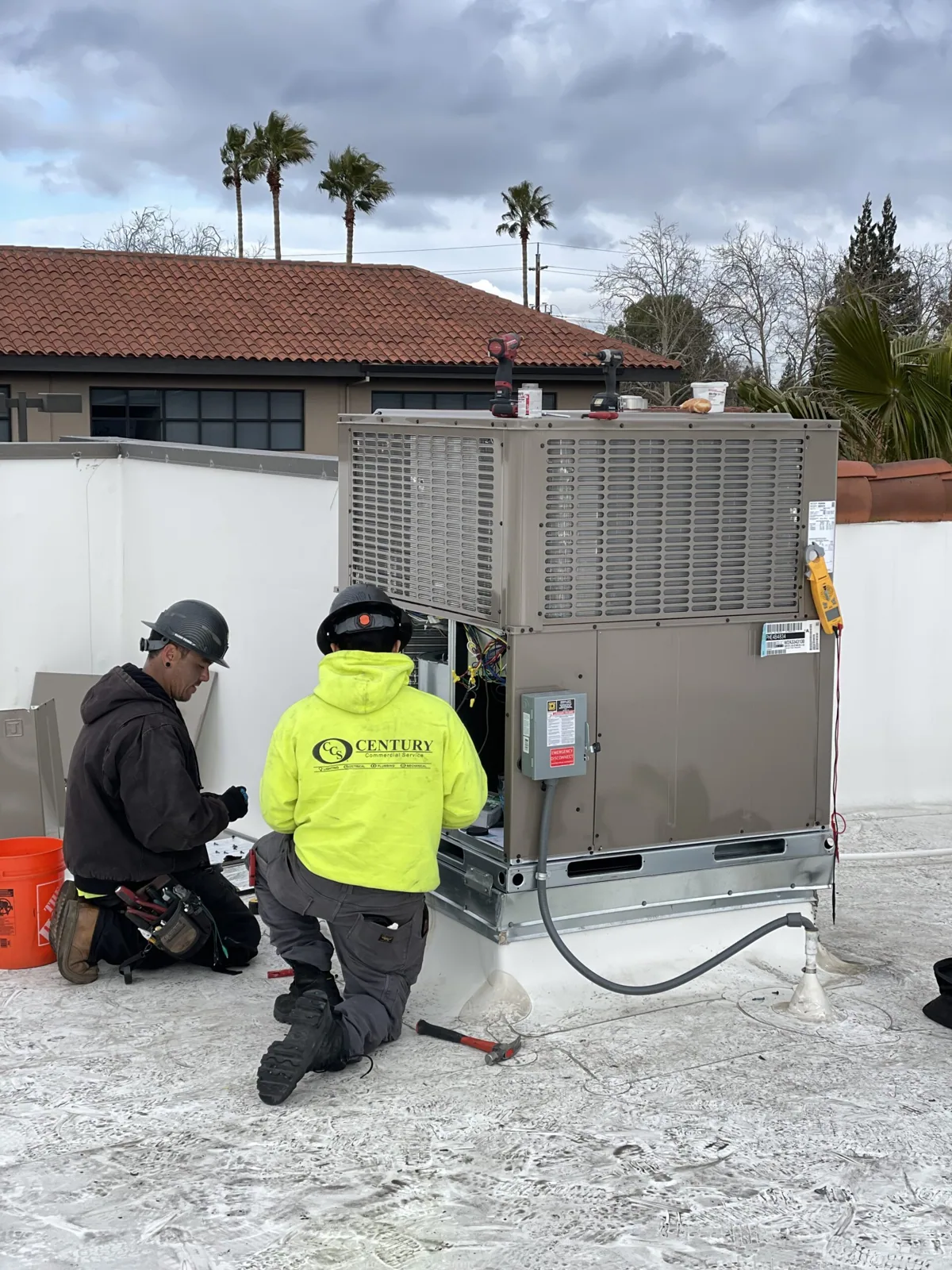
We map each unit, its curb and its pipe run. Rooftop equipment curbs and supports are checked for corrosion and height, because a low curb floods in a storm and a rusted support lets a pipe settle onto the sheet. Where equipment must be lifted, a mechanical and refrigeration contractor coordinates the shutdown, and we arrange the crane pick for a time when the store can manage the temperature swing.
Condenser decks wear first, since people step there to service the equipment. Walk pads, extra layers of membrane and clear service paths protect the sheet and tell technicians where to step.
Schedule Around Deliveries, the Bakery and the Night Crew
Many stores restock overnight and take their trucks in the early morning. A grocery store has a night shift of its own, so loud steps over the receiving dock go into the quiet windows between trucks, and the rest of the roof work runs while the aisles are calm.
We ask for the delivery log and the shift calendar before we write the sequence. The laydown area goes in a corner of the lot well away from the dock, and the crane pick is booked for mid-morning, after the morning freight clears. Debris gets lowered in covered bins, and the lot is swept before the evening rush.
A neighborhood store on a tight lot needs a roof crew with a small footprint. A larger store off a freeway has more room but more trucks to dodge. We plan both the same way: ground first, roof second, in the same spirit as a big-box store with a loading dock.
Keep Odor, Dust and Heat Out of the Food Zone
Food buildings are sensitive to air as well as shelves. Adhesive fumes, hot asphalt smoke and roof dust can all travel into a building through fresh-air intakes, and the deli or bakery may be the first to notice.
For that reason, cold-applied and heat-welded systems are preferred over torch-applied ones on an occupied store. We mark the intakes, shut them or shield them during adhesive and welding steps, and work downwind where we can. A hot work permit is mandatory when any heat tool comes out, and a fire watch stays on after the last flame. Scrap material and tear-off debris never sit above an open intake.
On the membrane side, the kitchen and deli exhausts leave grease on a roof over time. KEE roofing resists fats and oils well, and a standard sheet can be protected with grease containment at the fan. We evaluate the existing stain before choosing.
Prepare for the Outage and the Rain That Follows
Hurricane Beryl made landfall near Matagorda on July 8, 2024, and its eastern eyewall crossed the Houston region; more than 2.7 million customers across Texas lost power. Hurricane Ike's surge in 2008 left Seabrook's residents without power or water for up to a month. A grocery store is one of the first places a neighborhood turns to after a storm, and one of the first places a roof failure turns into a total loss.
So a grocery roof plan includes storm readiness: drains cleared before hurricane season, loose items secured, edge metal inspected and the roof logged with dated photos. If the store takes damage, emergency roof repair starts with a dry-in over the departments that matter most, while the insurance record is built in parallel.
Wind is the other half. The January 2023 EF3 tornado that crossed Pasadena and Deer Park damaged a Walgreens in Deer Park along with the public library and a nursing home, a reminder that a retail building in this part of the county carries real exposure.
Commercial Roofing Questions
Can a grocery store keep selling food during a reroof?
Yes, with the right sequence. The key is protecting the departments below the work, using temporary ceilings or covers where needed, and keeping intakes shielded from fumes. Perishable rooms are the last to be opened and the first to be closed. The store manager and refrigeration contractor sign off on each day's section.
How does refrigeration equipment change the roof plan?
It adds weight, penetrations and shutdown coordination. Condenser racks, refrigerant lines and exhaust fans each need flashing, support and a safe path for technicians. We schedule any equipment lift with the refrigeration contractor so temperatures stay in range and the store never loses a cooler to a roofing step.
What if the store leaks during a storm before the project starts?
We dry in the worst area first with a temporary cover, then trace the source by survey. Emergency repairs on a grocery roof aim to protect perishable rooms and electrical gear, and the photos and notes go into the insurance record. The permanent fix follows when the weather and the store allow.
Does a roof near the coast need special inspection?
Stores east of SH 146 are in the windstorm insurance zone, where roofing work goes through the Texas Department of Insurance windstorm inspection to keep the building insurable. Stores west of it follow a different insurance track. Either way, we document attachment, edge metal and flashing with photos before they are covered.
Will grease and heat shorten the life of a grocery roof?
They can, near kitchen and deli exhausts and on the hot condenser deck. Houston sees roughly 102 days a year of 90 F or hotter, and rooftop condensers add their own heat. Oil-resistant membranes, walk pads and regular cleaning keep those zones from aging faster than the rest of the roof.
Keep Reading
Related Roofing Work in Pasadena
Walk the Store and the Roof With Us
Bring the delivery schedule, the equipment list and whatever leak history the store has kept. We will walk the sales floor and the roof with your facility director and map a sequence that keeps the cases cold and the aisles open.