
Roof Damage Repair
Tornado Damage Roof Repair in Pasadena, TX
A nursing home that evacuated 62 residents has no roof schedule the next morning, only a list of rooms that can still hold people. That is the opening problem of tornado repair in Pasadena, TX: the building has to keep running, or find somewhere else to run, while the roof is judged. The EF3 of January 24, 2023 carried winds near 140 mph along a path of roughly 18 miles, and it left sporadic roof loss along the way. San Jacinto Manor in Deer Park was one of the buildings it damaged.
Roof repair after a tornado is partly roofing and mostly sequence. Structure first, then dry-in, then the record, then the permanent work. Skip a step and the next one costs more.
Trace the Path Across the Whole Block
Tornado damage does not spread evenly. The National Weather Service survey describes a near-continuous track of EF1, EF2 and EF3 damage through Pasadena, Deer Park and Baytown, with a width near 1,000 yards. Inside that band one roof loses its coping while the building beside it loses a few vent hoods. Where the storm crossed the Houston Ship Channel it left sporadic roof loss on the structures in its way, which is why a drive-by tells an owner so little.
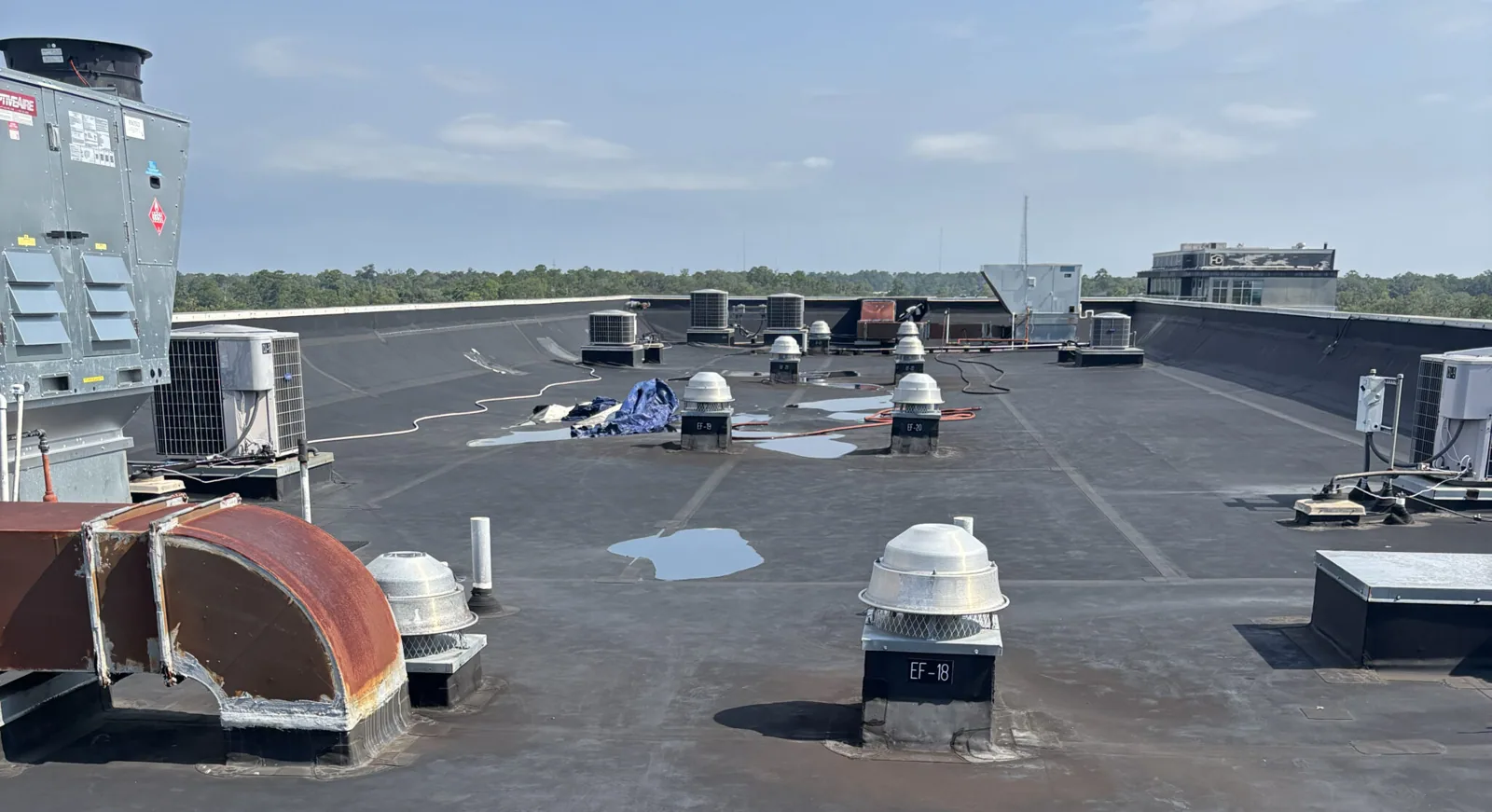
So we walk every roof inside the band and a margin on both sides, not only the ones that look torn. The heaviest damage tends to sit at windward corners, parapets and edge metal, then at rooftop units and their curbs. Flying debris adds a second layer: membrane punctures from boards, sheet metal and loose gravel, and dents in metal panels. We separate what the wind pulled from what the debris cut, because the two repair differently. Pasadena Memorial High School took roof damage where the storm cut across Fairmont Parkway.
Clear the Structure Before Anyone Works the Deck
A tornado can lift a steel deck off its supports without tearing the membrane above it. Fasteners withdraw, flutes open, and a roof that looks flat can sag between joists. Before a crew or an adjuster walks it, a structural engineer checks deck attachment, joist bearing and the walls that carry the parapet. Nobody stands on a roof that has not been cleared.
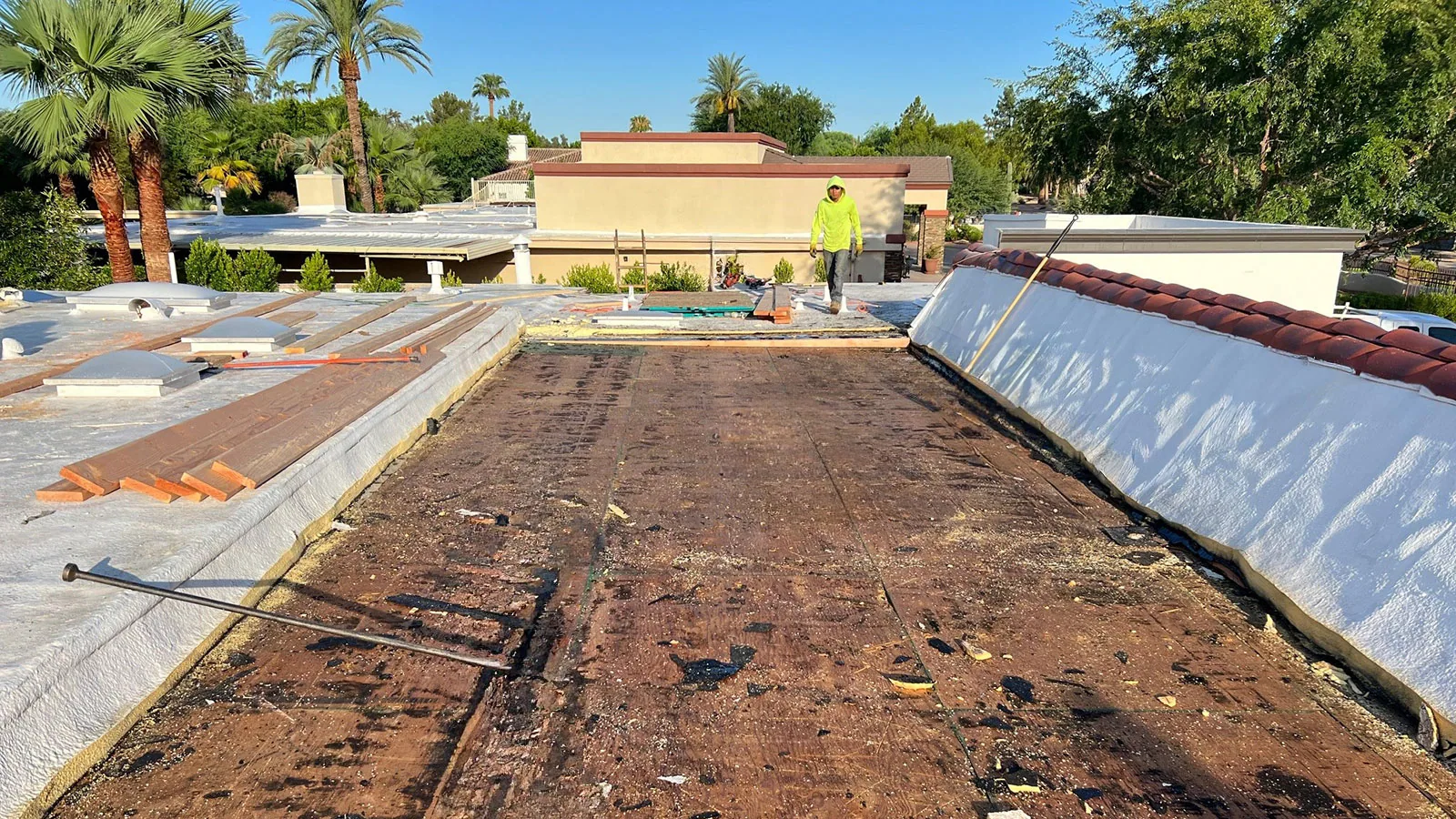
Then the field work starts in a fixed order. Each worker gets a site safety orientation, a sweep with magnets collects loose fasteners and metal scraps, and any torch or hot-air work over a damaged assembly waits for a hot work permit and a fire watch. Access comes before the first lift. We pick where the crane stands, which truck lanes stay open and where the laydown area goes so salvage and new material never block a fire route.
Dry In the Opening Before the Next Gulf Cell
Houston collects roughly 50 inches of rain across about 104 days a year, and June is the wettest month, so a torn roof seldom waits long for water. Emergency roof repair closes the breach first: temporary membrane or panels fastened to sound deck, edges battened instead of weighted with loose ballast, and the gaps around rooftop units sealed. The goal is a dry building by evening.
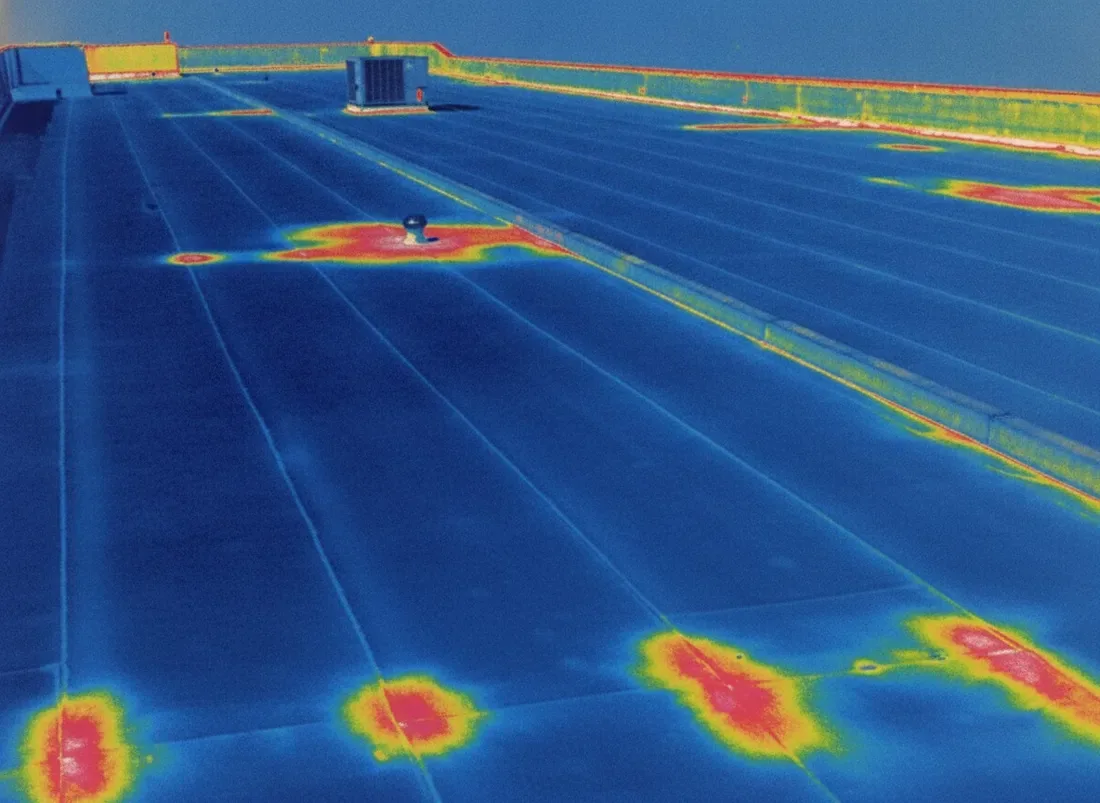
The wind lets water in, and the insulation keeps it. Rain that entered through a torn sheet soaks the board below and spreads sideways. Once the surface dries, an infrared moisture survey at dusk shows which boards still hold heat, and core cuts confirm the edge of the wet zone. We remove only what is wet. Leave soaked insulation under a new sheet and it blisters the membrane and feeds corrosion in the deck, and the humid air off the bay will not dry it out for you.
Sort the Repairable Sections from the Finished Ones
Three questions sort the work: how far the deck moved, how much insulation is wet, and what still holds the sheet that remains. Isolated damage with sound attachment around it gets a proper repair. Where fasteners have backed out across a wide area, or the membrane has shifted in the wind, a patch just hands the next gust a place to start, and replacing that section is the sensible call. Cost follows the same drivers: deck replacement, wet insulation removal, crane time, night shift hours and the work needed to protect whatever sits beneath.
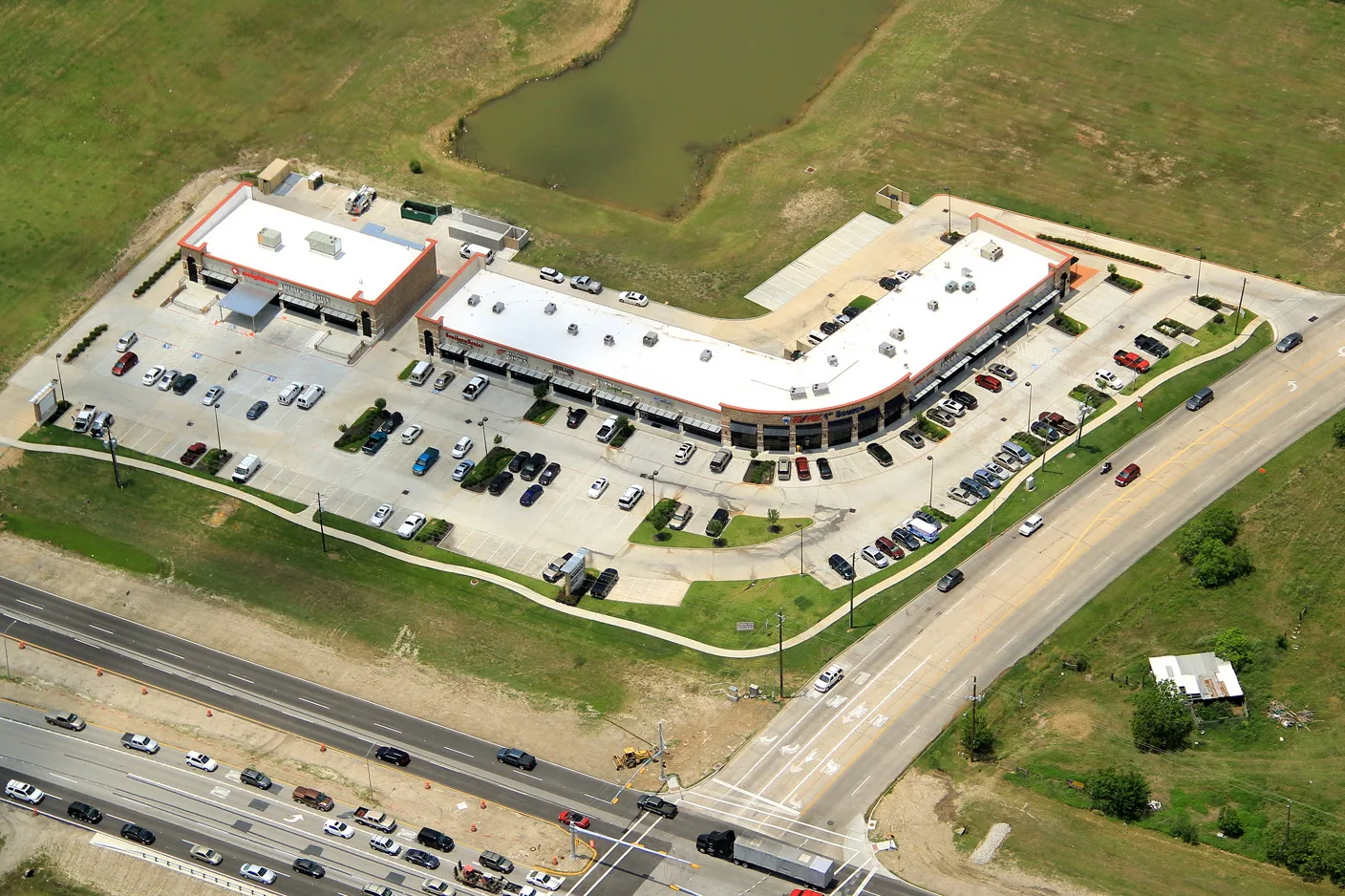
The building type sets the calendar. A school in the Pasadena ISD footprint wants its roof sections closed before classes and its exits clear. A plant or a warehouse wants phasing that keeps dock lanes and production lines running. Wherever we reopen the perimeter, the new edge gets heavier metal, tighter fastener spacing and corner reinforcement, because gusts like those of the May 2024 derecho, estimated near 100 mph downtown, find a weak edge first. That same perimeter securement has to face hurricane wind next.
Document the Loss While the Debris Is Still on the Roof
Carriers pay for what the file can show. Before anything is hauled off we photograph the debris, tag failed materials and mark the direction of loss on a roof plan. The same record separates tornado damage from old wear, which protects a legitimate claim from being argued down by pre-existing problems. A claim file built from that record keys the repair scope to the same plan, which is the groundwork roof insurance claim assistance depends on.
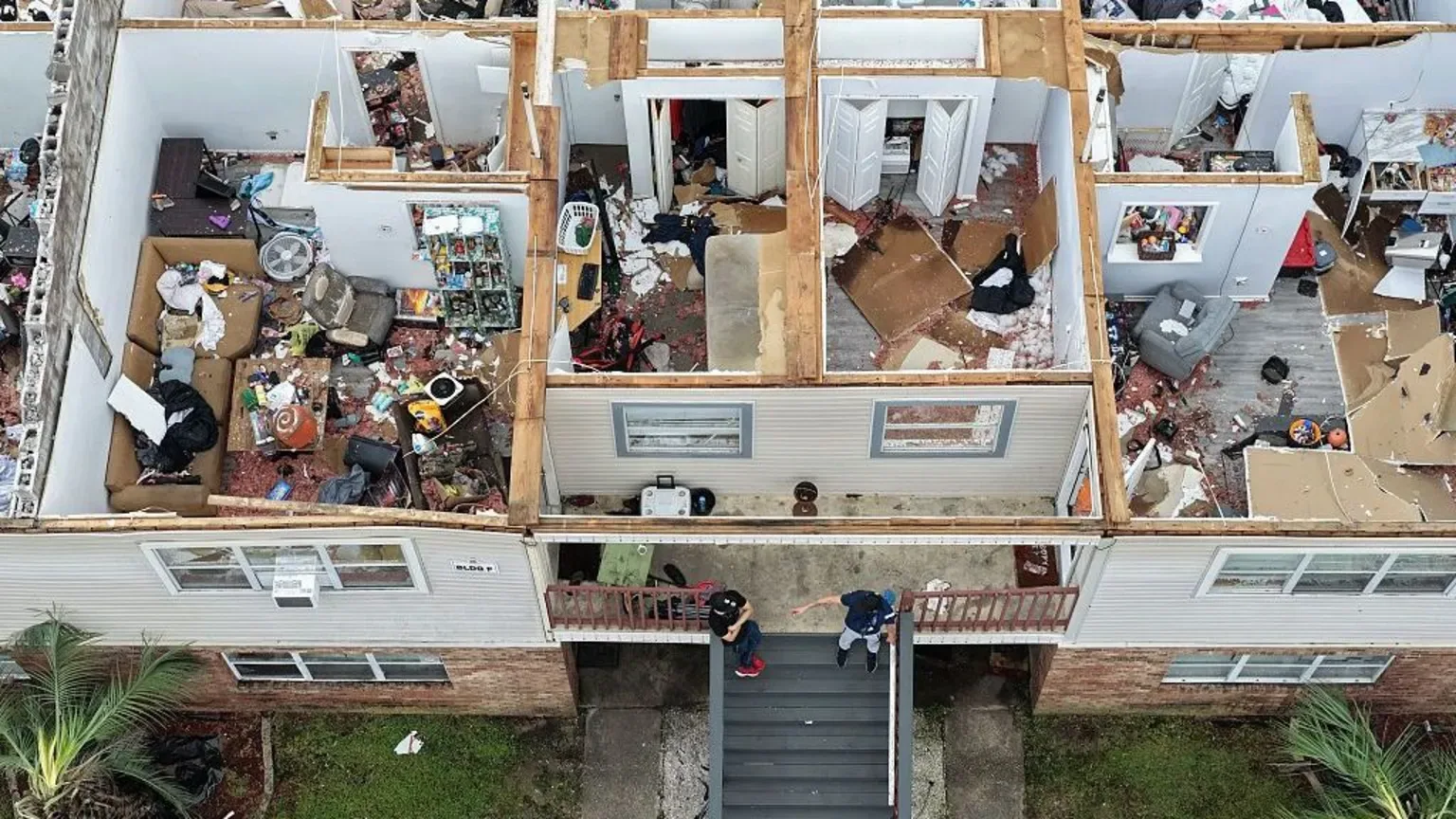
Tornado work reaches past the roof sheet. A wall that moved, a unit that shifted or a gutter line that tore each belongs in the record, along with the interior water that followed. Across Deer Park the same storm damaged a Walgreens, the public library and St. Hyacinth Catholic Church, each a different building type with its own roof to document. A claim for gust loss reads differently from one for a tornado, and the file should show which kind of wind damage the roof actually took.
Commercial Roofing Questions
Our roof looks fine from the parking lot and sits near the tornado path. Is a walk still worth it?
A lifted edge, a rooftop unit that shifted on its curb and a split pipe boot all hide well from the ground. The storm band ran about 1,000 yards wide, so buildings on its margin can carry damage with no visible tear. A walk, or a drone pass over the field, costs far less than a ceiling stain discovered in the next heavy rain.
A school and a warehouse took the same storm. Why would their repairs run differently?
Because one runs on a calendar and the other runs on docks. The school needs sections closed and walkways clear before classes, with noisy work held to hours the building can tolerate. The warehouse needs truck lanes open and forklift aisles clear, so the tear-off moves in bays small enough to dry in the same day.
Who clears the deck before our crew or the carrier's adjuster goes up?
A structural engineer. Decking that has lifted, fasteners that have withdrawn and parapet walls that have moved are not visible to a walking inspection, and a roof with a sagging span can fail under a person. We start with the engineer's clearance, then add a site safety orientation for every worker on the deck.
Will the carrier pay to upgrade the edge details, or only put back what was there?
That comes down to the policy wording. What the roof file can add is a written reason: where the old edge failed, what the replacement uses and why. That gives your adjuster and your broker something concrete to work from.
Does a tornado repair east of SH 146 need anything extra?
Roofing east of State Highway 146 in Pasadena, La Porte, Seabrook and Morgan's Point falls inside the Texas Windstorm Insurance Association area, so the work must pass the Texas Department of Insurance windstorm inspection and certification to stay insurable. We plan attachment and edge metal for that inspection from the first drawing.
Keep Reading
Related Roofing Work in Pasadena

Walk the Site With Us
Call and we will walk the roof, the dock lanes and the tenant schedule with you, so the repair plan fits how the building runs before anyone mobilizes.