
Roof Damage Repair
Fire and Smoke Damage Roof Repair in Pasadena, TX
A fire in a plant building ends when the fire department says it does. The roof's trouble starts there. Charred insulation, softened deck, soot on membranes that never saw a flame and suppression water now sit in the assembly, and the production floor below needs to know when it can reopen. Fire repair in Pasadena, TX is a scheduling puzzle as much as a construction one, with the Bayport Industrial District holding more than sixty chemical plants across about 7.3 square miles.
Fires start in kitchens, electrical rooms, rooftop equipment and during roofing itself. Whatever the cause, we begin the same way: make the roof safe, learn how deep the damage goes and build a rebuild plan the operation can live with.
Secure the Burned Roof Before Anyone Walks It
Nobody steps onto a fire-damaged roof until it has been released. The fire marshal, the investigator and the insurer may all need the area untouched, and a structural engineer should confirm that the deck can carry a person. Burned steel deck loses strength long before it looks damaged, and a roof that appears flat can hide a section ready to give way under a boot.
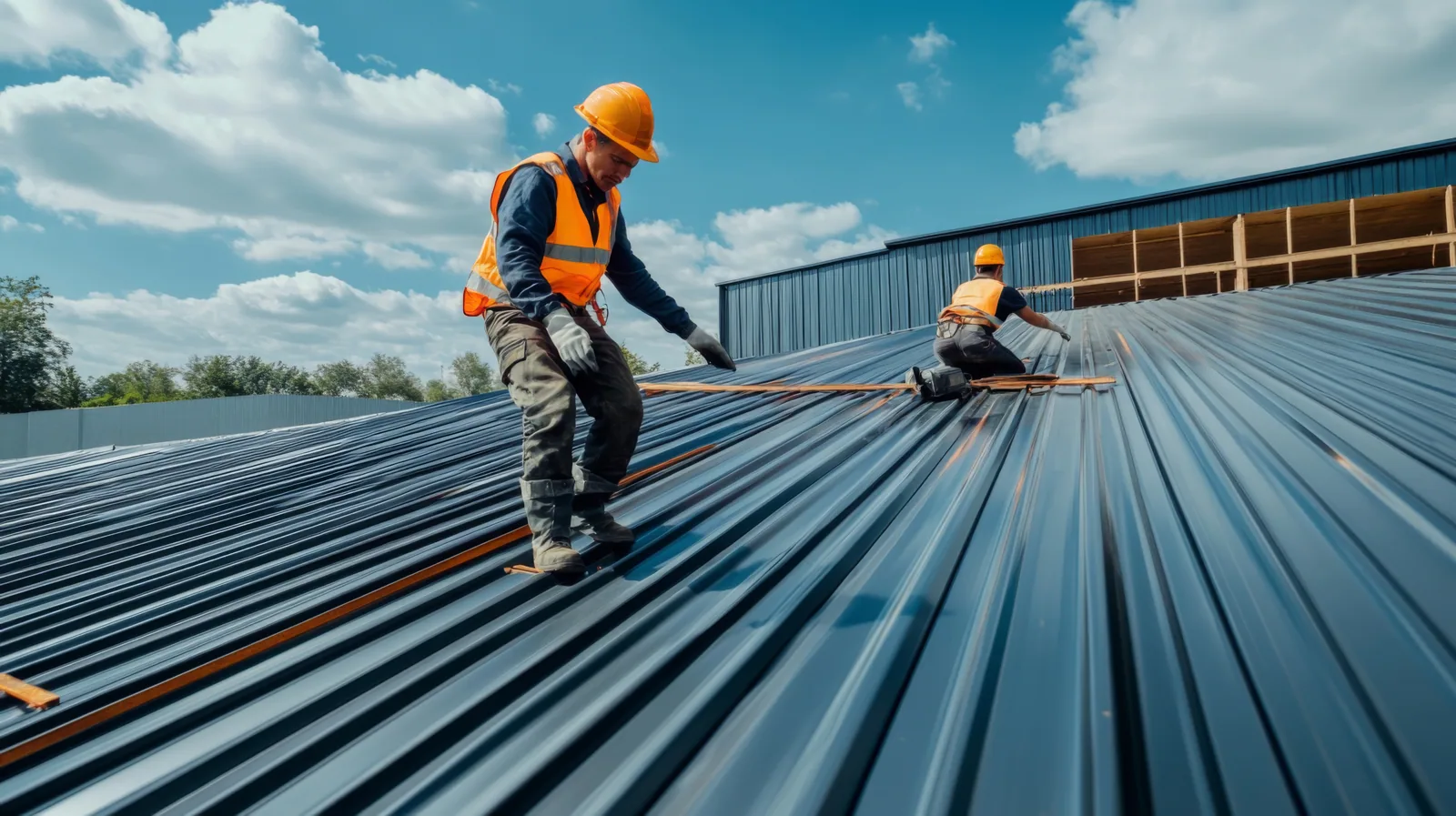
Once the site is released, our first visit is slow. We photograph every area before it is disturbed, stage barriers around weakened zones and set temporary dry-in over the opening. A tarp that is nailed to burned material will not hold, so the securing steps follow the engineer's map of sound bearing points. Only after that do we start separating one kind of damage from another.
Sort Heat Damage From Smoke and Water Damage
A fire leaves three kinds of injury on a roof, and each one has its own repair. Heat blisters, melts and shrinks membrane, chars insulation, warps metal panels and opens flashing seams. Smoke coats surfaces with soot and leaves chemical residue that can interfere with new adhesives and welds. Water from sprinklers and hoses soaks insulation and runs through the deck into the space below.
On a thermoplastic roof, the burned zone is usually obvious, yet nearby membrane may carry shrink and stress that only show up in a probe. On a metal roof, panels deform well outside the visible burn. The area marked for replacement is therefore drawn wider than the visible char, using a moisture scan and a hands-on check to find where sound material begins.
Test the Deck and Insulation Underneath
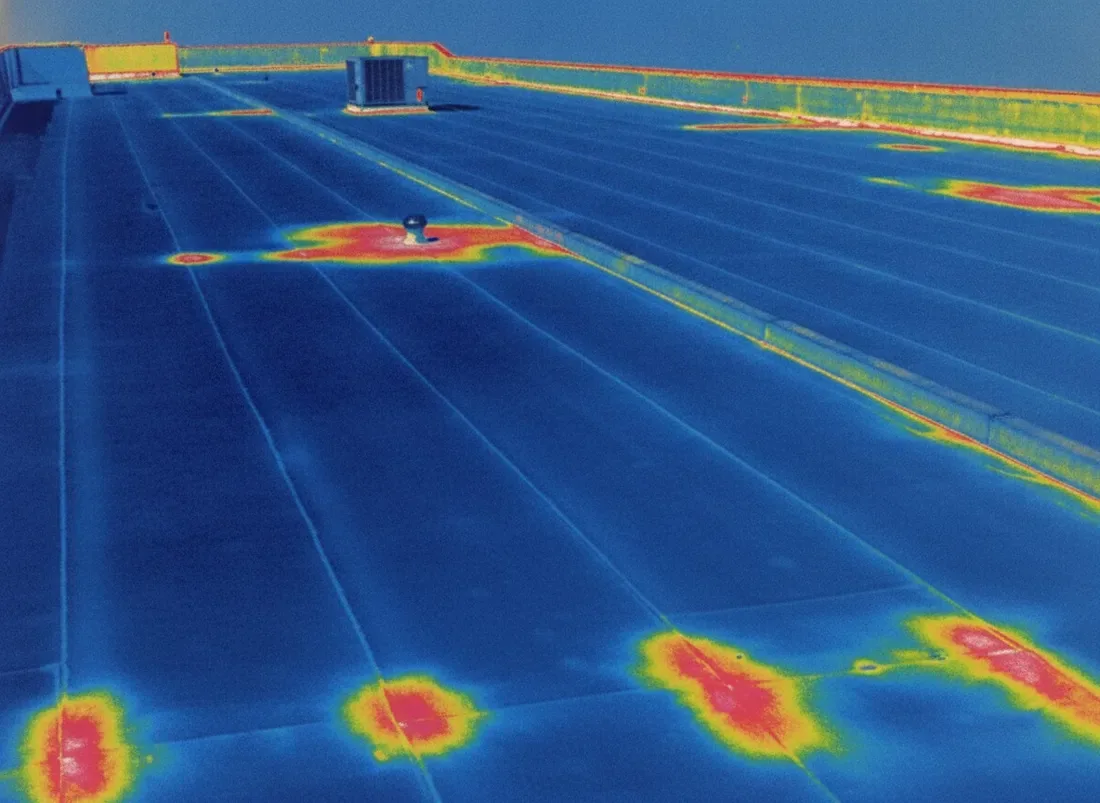
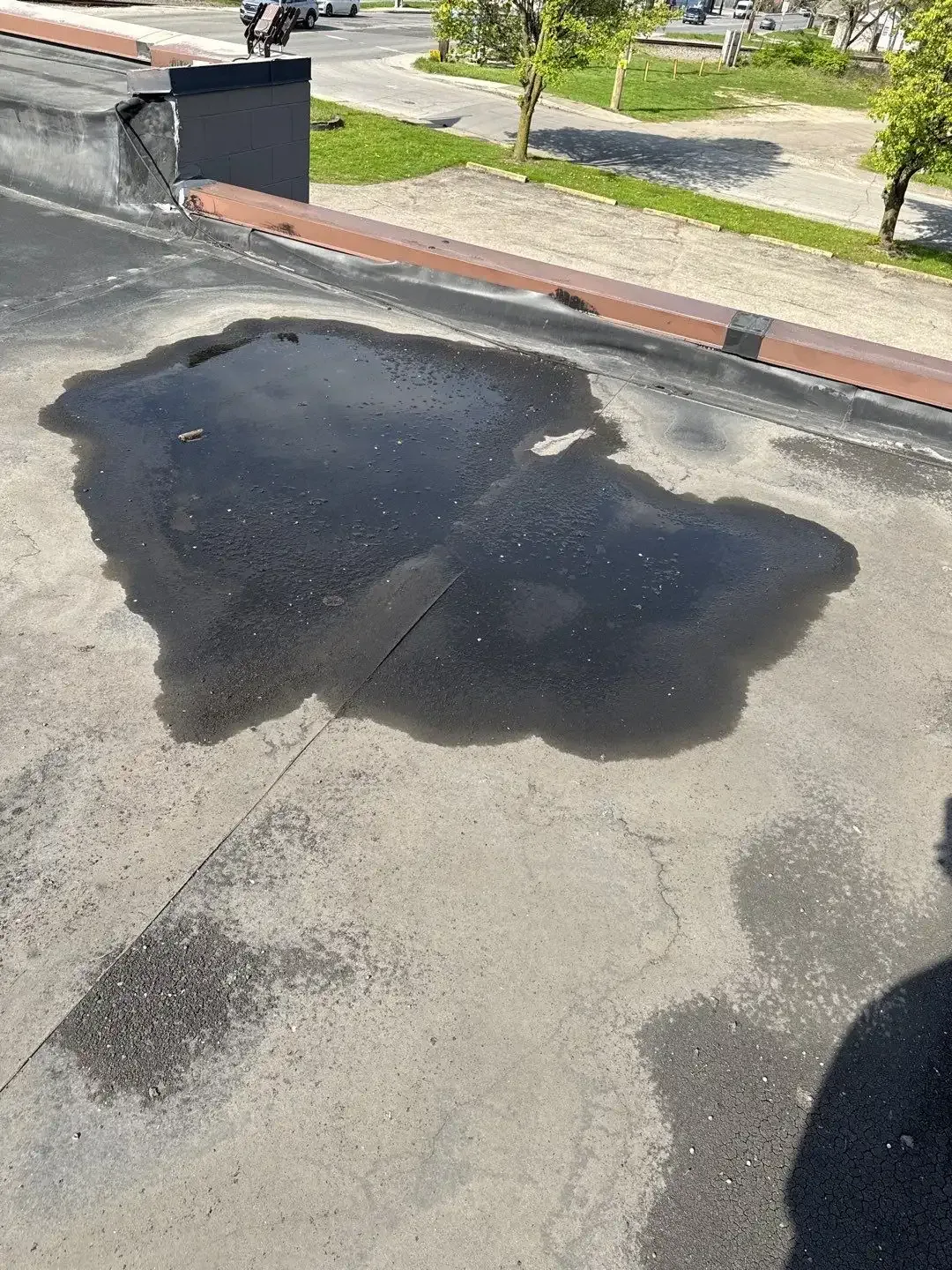
The cheapest-looking fire repair is a membrane patch, and it is usually the wrong one. What lies below matters more. Foam plastic insulation can shrink, melt or burn inside a board without showing at the surface, and a deck that took serious heat may need to be replaced rather than coated. We take cores, check fastener bite and use an infrared moisture survey to find water the fire fight left behind.
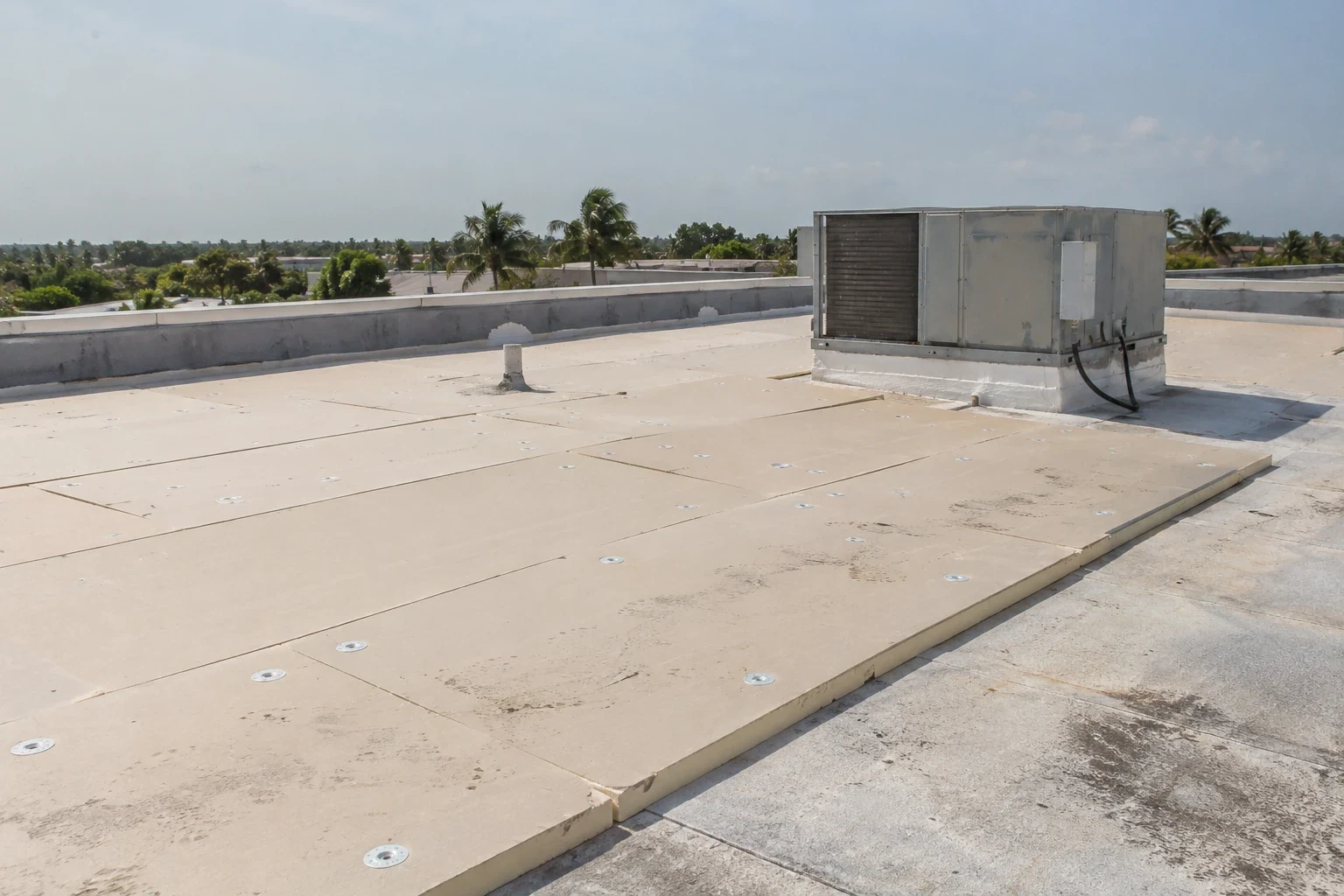
Where the damaged section is large, the rebuild typically includes new decking, a fresh layer of insulation and a cover board to protect the membrane. Bay-side humidity and Houston summers make wet insulation a corrosion risk for the steel deck, so the drying plan is part of the repair, not an afterthought. Heat-shrunk membrane often pulls its laps open, and those get the probing and welds used on any failed seam. Wall and curb flashing that blistered in the heat is rebuilt like any failed flashing detail.
Write the Scope Around Code and the Claim
The city moved to the 2024 International Fire Code in late October 2025, with NFPA 101 and other current NFPA standards alongside it, and the new rules took effect in January 2026. A rebuild after a fire often gets a closer look from the permit office, so the scope has to account for rated assemblies, penetrations and any changes the plan reviewer asks for. We write the scope to the code in force on the permit date and keep notes on each requirement.
The claim side runs in parallel. Photographs, moisture readings, deck test results and removed-material logs all feed the insurance claim record. The scope separates fire damage from older deterioration, such as a membrane already near the end of its service life, so the carrier and owner can discuss them plainly. That separation shortens the conversation and protects the owner's position.
Phase the Rebuild So the Building Keeps Running
Few owners can shut an entire facility for a roof rebuild. A hospital such as HCA Houston Healthcare Southeast on Spencer Highway runs around the clock, and a plant in the Bayport Industrial District or near the Deer Park refinery works to its own unit schedule. So we work in phases, opening one bay or one quadrant at a time, drying it in before the afternoon storms and moving on. The same phasing carries a full reroof of an occupied building.
Hot work on a burned roof gets extra care. We keep a fire watch, hold the hot work permit, post an extinguisher at every active area and favor cold-applied or mechanically attached assemblies wherever the plant or the insurer calls for it. Material staging is arranged so no pallet of insulation sits near the work zone, and the crew finishes with a final walk and thermal check. For a manufacturing plant, that closeout is what lets the line restart on a roof the insurer and the shift supervisor both trust.
After a roof fire, keep the assessment boundary clear between structural safety, smoke residue, water from suppression, and membrane damage. Do not treat a surface that looks intact as proof that insulation, vapor control, or deck connections remain serviceable. Coordinate access with the fire-response authority and the building's safety lead before testing or removing material. Record samples and test locations by roof zone so later scope decisions can be traced to evidence. The rebuilding plan should identify temporary cover, interior protection, and inspection hold points before permanent materials are installed. At turnover, list any area awaiting a separate structural or environmental determination rather than closing the file prematurely.
Commercial Roofing Questions
When can a roofer get on the roof after a fire?
Once the fire marshal, any investigator and the structural engineer have released the roof. Until then, the area is evidence and a hazard. We can brief your team on what we will photograph and secure the moment access opens, so the delay between release and dry-in stays short.
Does smoke harm a membrane that never touched flame?
Soot and chemical residue can sit on a clean-looking surface and interfere with the bond of any new patch, coating or weld. We test cleaned samples before repairing, and where residue persists, the affected membrane is removed rather than cleaned. A surface that looks fine is not proof it will bond.
How does a fire change what happens to the insulation?
Foam plastic boards can shrink, soften or char inside the assembly even when the membrane above looks intact. We remove and replace anything that took heat, and we dry or replace anything the suppression water reached. Leaving damaged insulation in place is the most common cause of a repair that fails within a few seasons.
Will the city ask for more than a like-for-like repair?
Possibly. The permit office reviews the scope against the codes in force, including the recently adopted fire code, so a plan reviewer may raise points about rated assemblies, penetrations or energy requirements. We discuss the likely items with your design team early, which shortens the review.
Can the building stay open under a fire-damaged roof?
Often, in part. After an engineer clears the structure and the dry-in is in place, unaffected zones can usually return to service while we rebuild in phases. A hospital wing or a production line below the repair may need protection overhead or a temporary shift of operations, which we plan with your facility team.
Keep Reading
Related Roofing Work in Pasadena
Walk the Burned Roof With Us
Call us once the site is released. We will brief your facility director on the safe steps, secure the opening and set a phased rebuild that keeps your operation moving.