
Roof Damage Repair
Flashing Failure Repair in Pasadena, TX
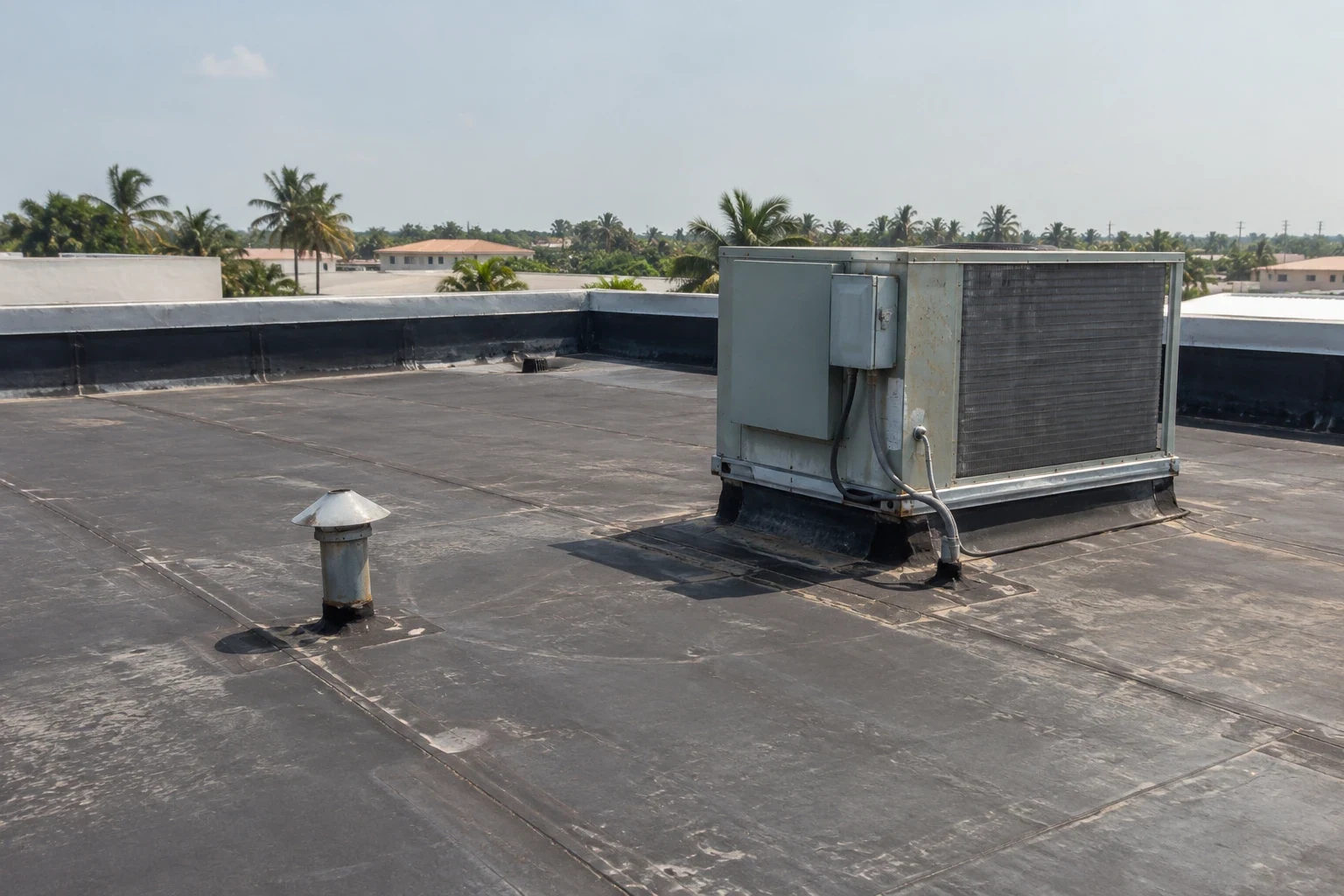
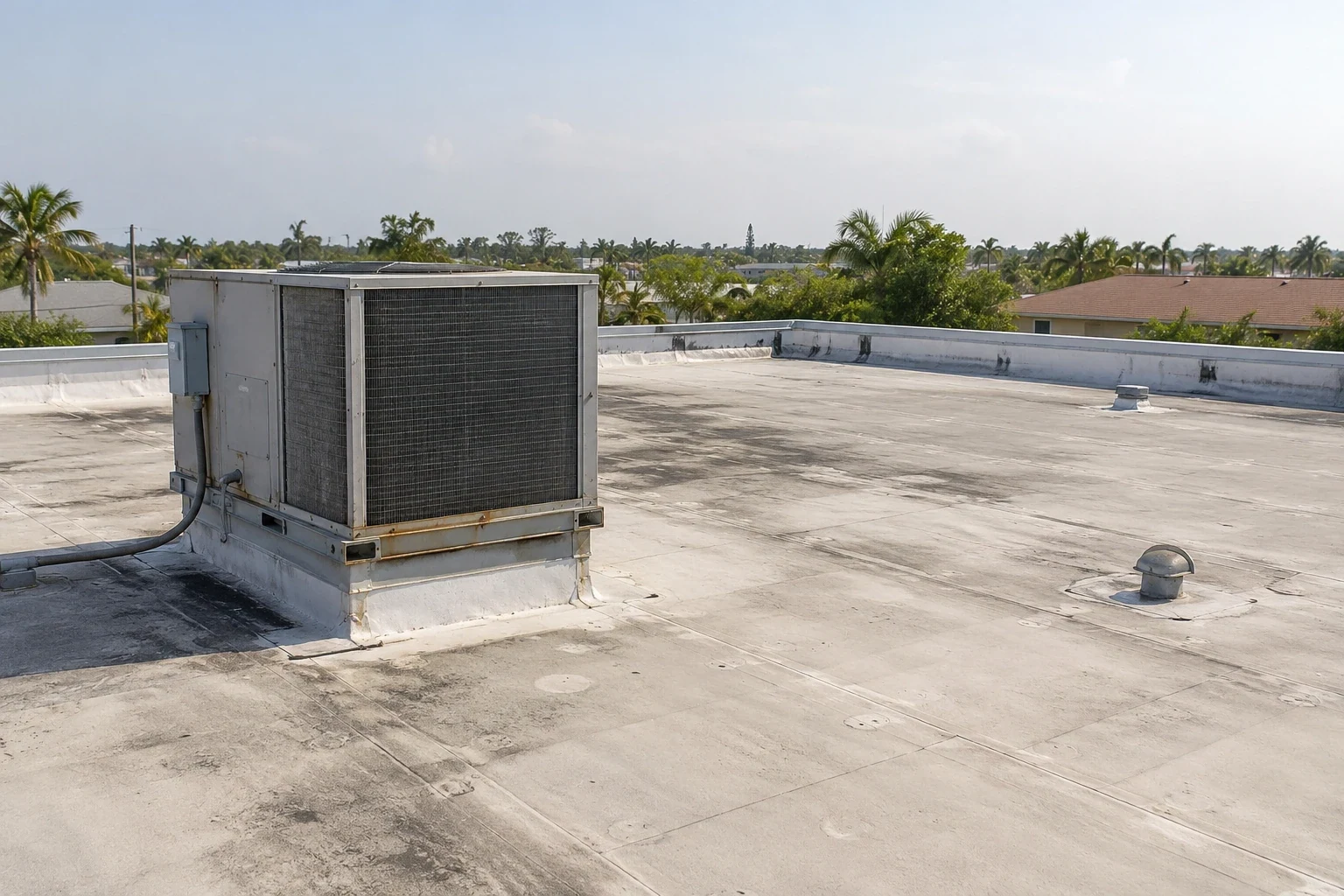
The mechanical yard on a hospital roof holds more edges than any other part of the building: curbs under air handlers, pipe boots, conduit supports, a parapet wall on three sides and a roof drain or two. Every one of those edges is a place where the membrane stops and a separate flashing piece takes over. That handoff is where roofs most often give out, and in Pasadena, TX the hot, humid summers and sudden storms test it every week.
Flashing repair is detail work, and the sequence matters. We find every failed termination, learn why it failed, and rebuild it so the same joint is not the first thing to open in the next storm season.
Inspect Every Termination Before Judging the Field
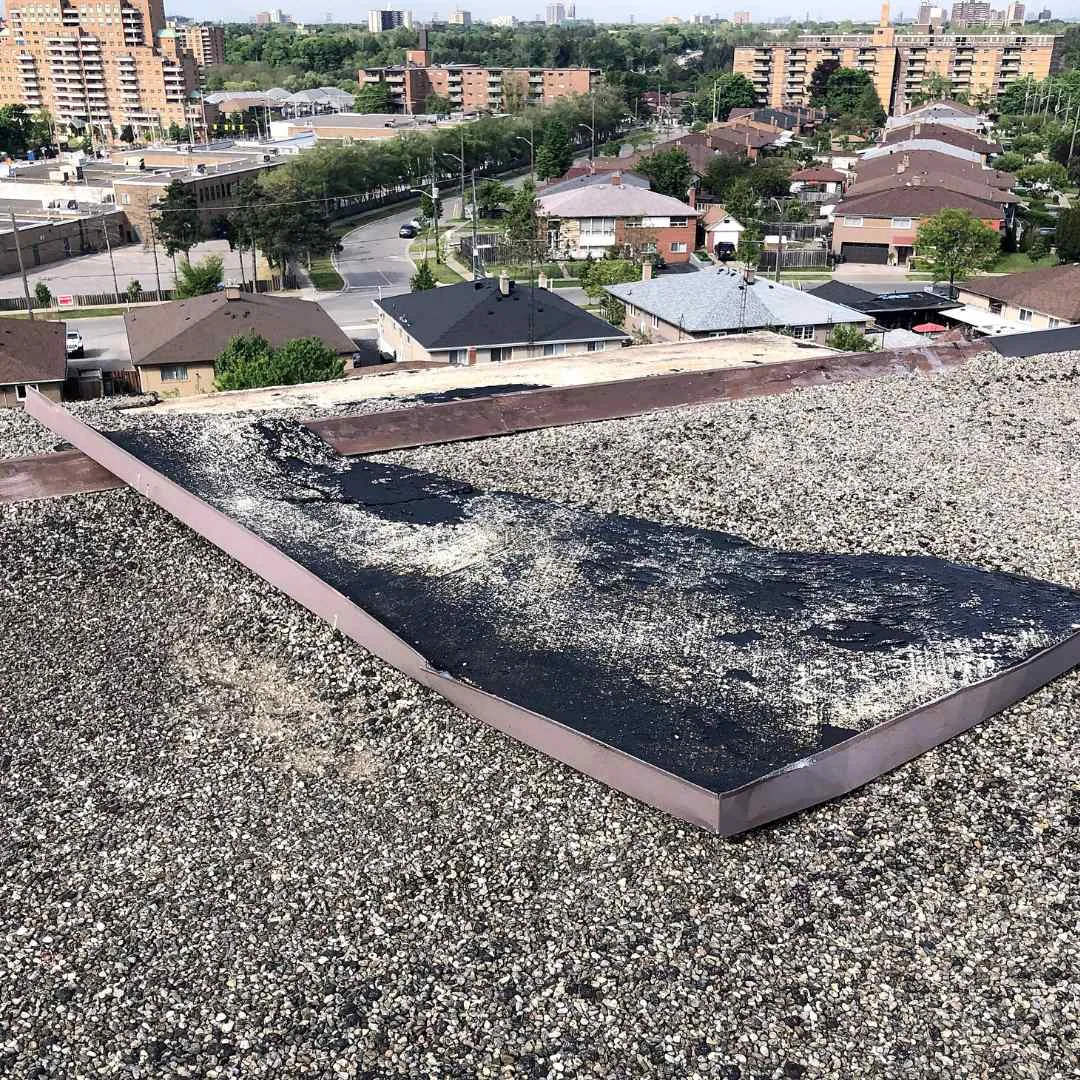
A roof field can look flawless while its edges are letting water in. So the survey leaves the open membrane and goes to the details: wall bases, counterflashing reglets, penetrations, curb corners, expansion joints and the places where one trade's work met another's. We press on the flashing laps, probe the sealant lines, and photograph every point where the surface is open, split or pulled back from its substrate.
Moisture often tells the rest. Stains in a ceiling, damp insulation beside a wall, or a dark band under a curb corner point to the exact detail that failed. A roof leak investigation that starts at the wet interior spot and works outward usually leads straight to a flashing line rather than a field defect.
Separate Heat Movement From Corrosion and Impact
Flashing fails for a short list of reasons, and each one points to a different fix. Heat is the first. The Houston area logs roughly a hundred days a year at 90 F or higher, and the airport matched its record 109 F as recently as late August 2023. Dark membranes and metal flange edges expand and contract through that heat, and a joint with no room to move eventually tears or peels, and the same movement shows up out in the field as a seam failure.
Corrosion is the second cause. Steel counterflashing and galvanized fasteners rust first where the coating was cut, and Pasadena sits between the Ship Channel and Galveston Bay, where Houston summer mornings run above 90 percent humidity. Impact is the third: a ladder, a hoist or a dropped tool dents the metal and opens a seam. Wind is the fourth, and a gust that lifts a counterflashing is handled as wind damage before anything is resealed. We note which cause is working on each detail, because replacing a rusted counterflashing with the same steel just restarts the clock. Stainless fasteners, coated metal and proper drip edges are the cheap upgrades that stop it, and we price them into the scope rather than offering them as extras later.
Match the Repair to the Wall and the Membrane
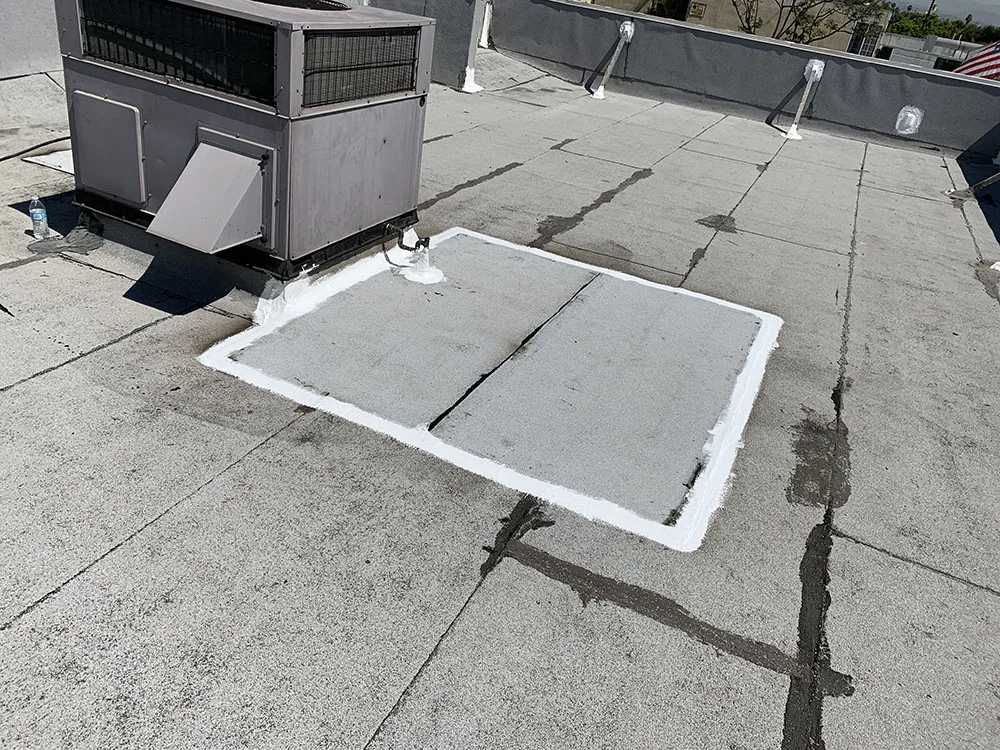
The wall behind the flashing sets the method. Over masonry, we cut a reglet or refasten a surface-mounted termination bar and re-seal the top edge with sealant rated for the movement. Against metal panels, the answer is often a new closure strip and a lapped counterflashing. At rooftop equipment curbs, the base flashing is rebuilt to extend over the curb face and tuck under the unit's own counterflashing.
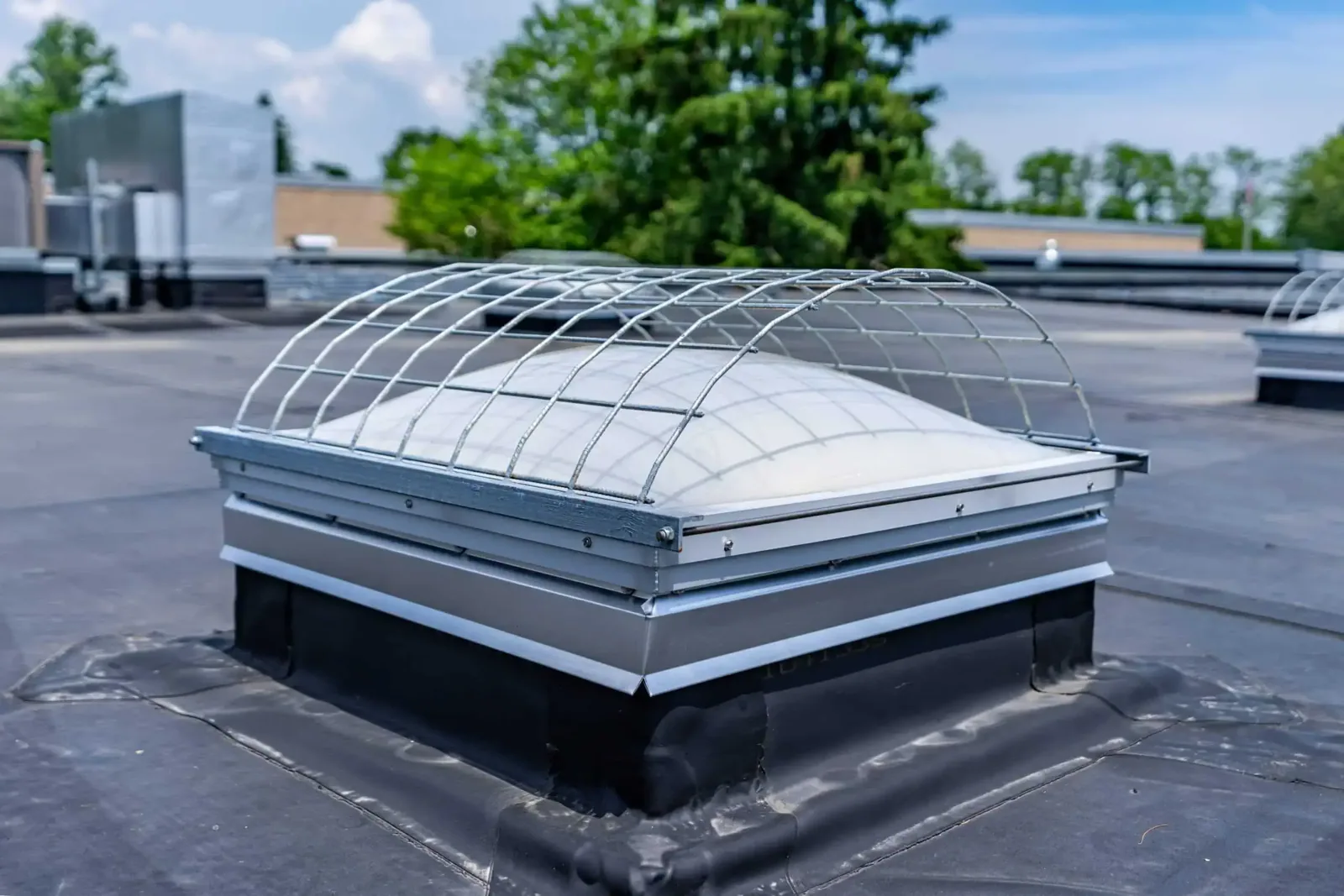
The roof system matters too. A modified bitumen wall flashing is torched or cold-applied in plies, while a thermoplastic base flashing is welded. Pipe penetrations and skylight domes follow their own path: prefabricated boots and curb kits replace the field-built corners that never sealed, the standard fix for skylight and penetration flashing.
Clear the Hot Work Permit Before the Torch Comes Out
Near refineries and chemical plants, as along the Pasadena Freeway corridor or inside the Bayport Industrial District, open flame is a controlled activity. A flashing job that needs a torch also needs a hot work permit, a fire watch, a site safety orientation for every person on the roof and sometimes a gas test in the area. That paperwork can take longer than the repair itself, so we request it early and plan the day around the permit window.
Where a facility will not allow flame, we change the method. Cold adhesives, self-adhered membranes and heat-welded thermoplastic flashings reach the same finished detail without a torch. We confirm which option the site accepts during the walk, so the material staging matches the day the permit is issued.
Access is the other half of the plan. Curbs and parapets sit at the very edge of the work area, so we set fall protection, plan hoist routes that avoid active entrances and keep scrap and sealant tubes off the walking surface. Order matters here: remove, dry-fit, then seal, never the reverse.
Close Out With a Photo Record of Each Detail
A flashing repair is only as good as the record that follows it. At closeout, we photograph each finished termination, mark it on the roof plan and list the sealant, fastener and membrane used. That log goes to the facility director with a short watch list of details still sound but showing early wear, so the next visit has a starting point.
For owners who manage several buildings, the same records feed the roof condition reports that rank sites by remaining service life. A parapet that was resealed this year and a parapet that has never been touched look the same from the ground, and the log is the only thing that tells them apart.
Flashing repairs should be recorded by transition because a wall termination, curb, and drain edge fail for different reasons. Identify the membrane type, metal condition, movement, and any prior sealant that must be removed before installing a compatible detail. Confirm that the wall surface can accept the repair and that water will not be redirected behind cladding. Where hot work is required, clear the permit and protect occupants and equipment before opening the assembly. Photograph the finished laps and terminations, then list any adjacent façade or masonry condition outside the roofing scope. This prevents a roof repair from being treated as a complete building-envelope diagnosis.
Commercial Roofing Questions
Can failed flashing be resealed with caulk instead of replaced?
Caulk buys a season at most, and only on metal that is still sound and clean. If the sealant joint has opened because of movement, a fresh bead reopens in the same place. We reseal when the flashing is intact and replace it when it has moved, corroded or lost its fastening.
How do I know whether a leak is the flashing or the wall above it?
A controlled water test separates them. We wet the wall above the flashing first, then the flashing, then the field, and watch for the first drip inside. Cracked stucco or open masonry joints above a counterflashing can send water behind a perfectly good flashing, which is why the wall gets checked alongside the roof.
Our plant restricts open flame. Can flashing still be rebuilt?
Yes, through cold-applied adhesive, self-adhered sheets or heat-welded thermoplastic details, none of which need a torch. Some units still need a hot work permit for grinding or welding nearby, so we ask about that on the walk and write the day's steps around whatever permit the site issues.
If only one corner is leaking, how much flashing should be replaced?
Replace to the next natural break in the run, not to the edge of the stain. Flashing that failed at one corner usually shows the same age and fastening everywhere along that wall, and a short patch leaves a seam between old and new that opens first. A full run costs less over time than two return visits.
Does humid bay-side air shorten the life of flashing metal?
It speeds up corrosion at every cut edge and fastener head, particularly on unpainted steel. Pasadena sits between the Ship Channel and Galveston Bay, so we favor coated or stainless components and sealed fastener heads on those details.
Keep Reading
Related Roofing Work in Pasadena

Walk the Curbs and Parapets With Us
Tell us when the building is quietest and what permits the site requires. We will walk every termination with your facility director and set a repair sequence that fits your operation.