
Service Areas
Commercial Roofing in Texas City, TX
A refinery on this scale leaves a roofing crew very little room, and a port that handles over 78 million net tons a year leaves even less once trucks and vessels are scheduled. Roof work in Texas City, TX starts at the gate, the permit desk and the calendar, and only then at the membrane. Marathon's Galveston Bay Refinery, the second-largest in Texas, and a BP facility that employs over 2,000 people sit in the same town, and every owner nearby shares the same roads and the same weather.
Low-slope and metal roofs over plants, warehouses, offices and institutions are the work, and each plan is written from how the building runs: where the trucks turn, which shift is working under the roof at night, what cannot get wet. Roof sections are opened small enough to dry in before quitting time.
Sequence the Work Around the Refinery and the Port
Industrial owners plan a shutdown window or a turnaround long before the first purchase order goes out, and a roof job that ignores those dates gets bumped. So we ask early for the site safety orientation schedule, the hot work permit rules, the badging lead time and the areas closed to vehicles, then build the sequence backward from the answers. A torch-applied membrane needs a permit and a fire watch. A mechanically attached or cold-applied system may avoid that step entirely. The choice between them is often a permit decision before it is a performance decision.
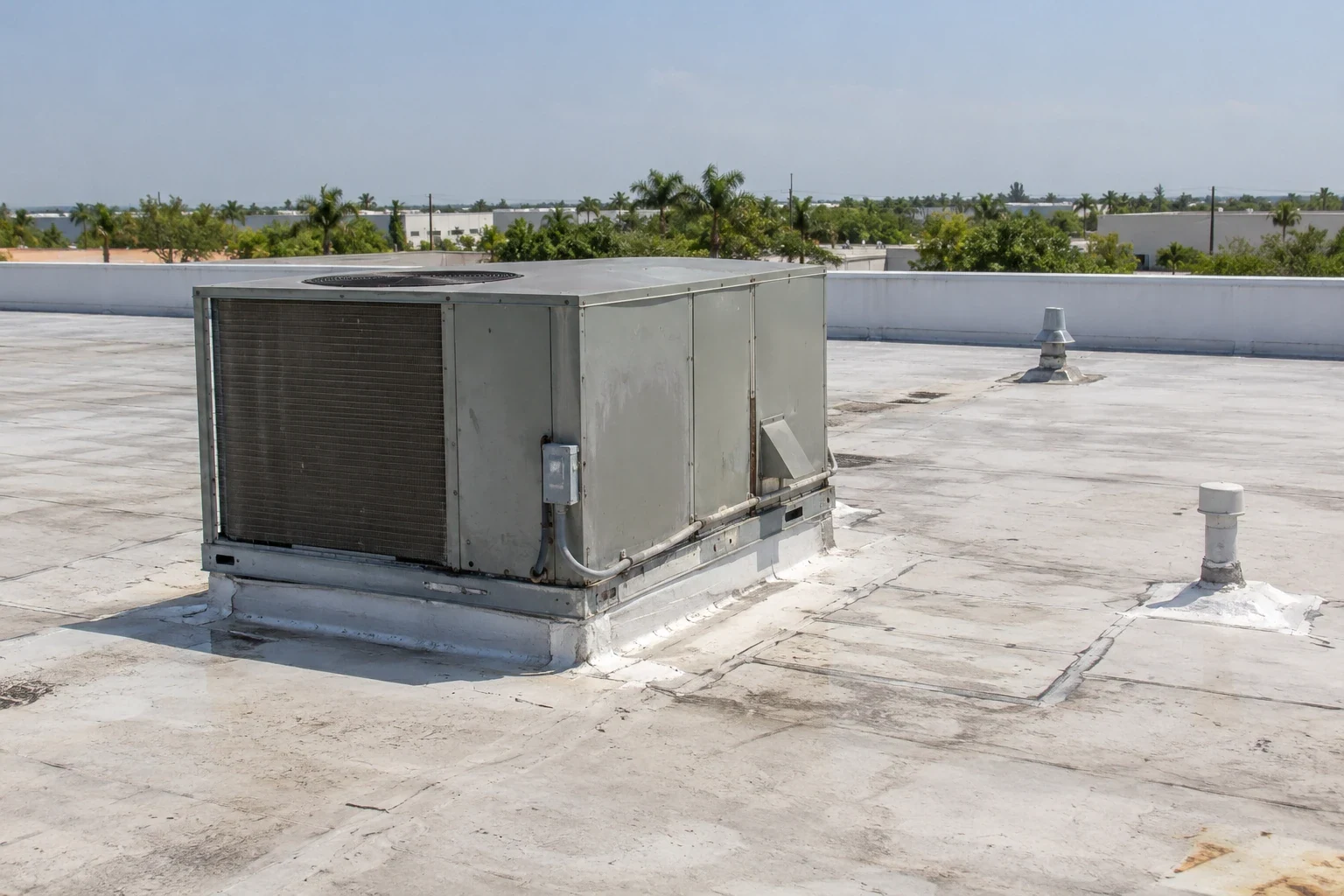
Port-related buildings add traffic of their own. A warehouse or shop that supports cargo handling keeps product moving through its docks all day, so the crane pick and the material staging go on the side of the building away from the doors. The first walk records the membrane, the insulation, the drains and the rooftop equipment, which means the plan starts from the real roof and not from a guess about it. A written commercial roof inspection with photographs gives the facility director a record to hand the safety office.
Detail the Perimeter for Wind the Levee Cannot Stop
A 17-mile levee system, built after Hurricane Carla in 1961, and the 5.2-mile Texas City Dike protect the area from water. A levee holds back a surge. It does not hold down a roof. Hurricane Ike came ashore at Galveston in September 2008, and the wind that rides with a storm like that goes for the edges first, where uplift is highest.
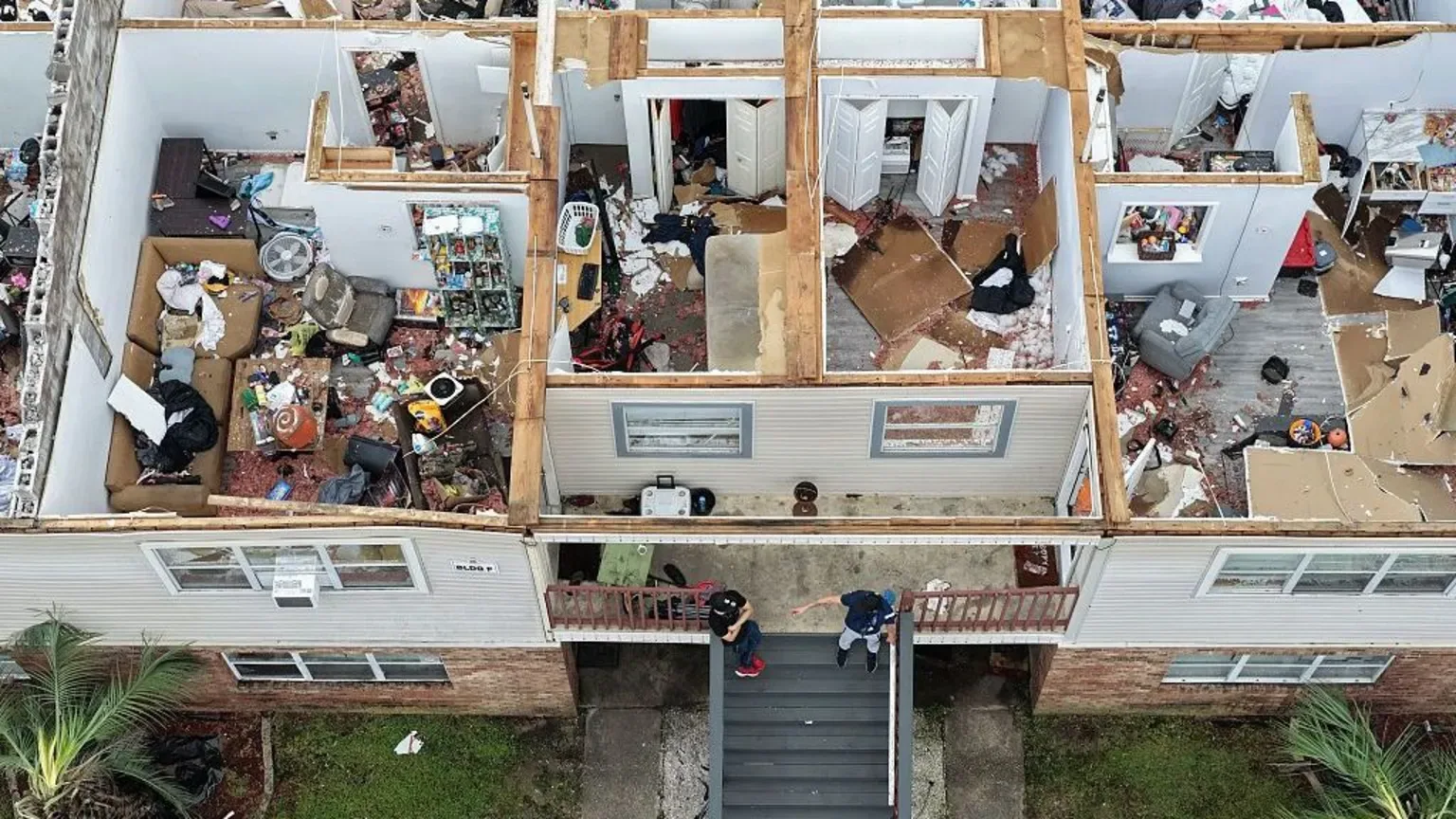
That is why perimeter securement gets the attention on a Texas City roof. We inspect coping, edge metal, base-flashing terminations and fastener patterns along the outer ring before we look at the field sheet, because a loose edge lets wind peel back a membrane that was sound the day before. Repairs that restore only the center of the roof leave the weak line behind. After a named storm the same walk becomes hurricane damage roof repair, and the photographs taken before the storm let an adjuster separate new damage from old wear. In Galveston, where Ike landed as a Category 2 storm with extensive building damage, the lesson is the same.
Schedule Deliveries Along I-45 and SH 146
I-45 and SH 146 connect Texas City to Houston and the Bay Area, so insulation, membrane, metal and the crane itself arrive over the same highways as everything else that moves in and out of town. Deliveries are booked away from plant shift changes, trucks wait off the highway until the laydown area is clear, and the crane pick is set for early morning, when traffic is light and the wind has not yet built.
Inside the fence the same discipline holds. Staging goes along the edge of the building farthest from the dock doors, and each strip of old roof that opens in the morning is covered by evening. Owners with a building here and another in Dickinson or League City can put both on one program, so a single crane booking and a single set of safety paperwork serve more than one roof. A warehouse roof that keeps its docks open is a planning result, not a speed result.
Choose Materials for Humidity, Heat and Rain
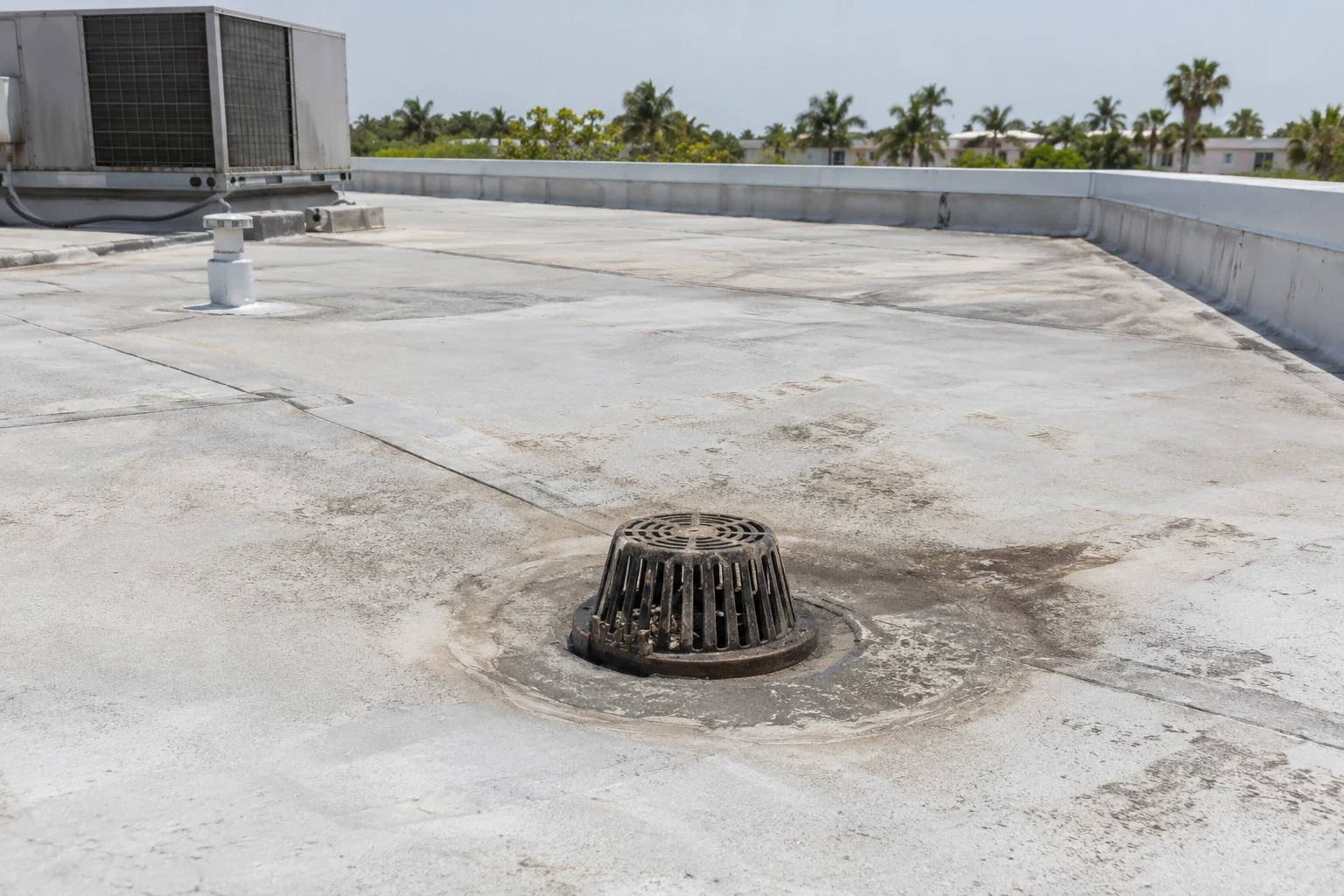
The Houston area bakes in summer, with highs averaging near 95 F in August and more than three months of days at 90 F or warmer, and its roughly 50 inches of yearly rain falls on about 104 days. Those figures describe the Houston area, and a Texas City roof near the water should be planned for heat, UV, humid bay air and standing water all at once. Dark membranes cook, drains and scuppers clog with debris from the last storm, and any low spot that holds water for two days will start to fail at its seams.
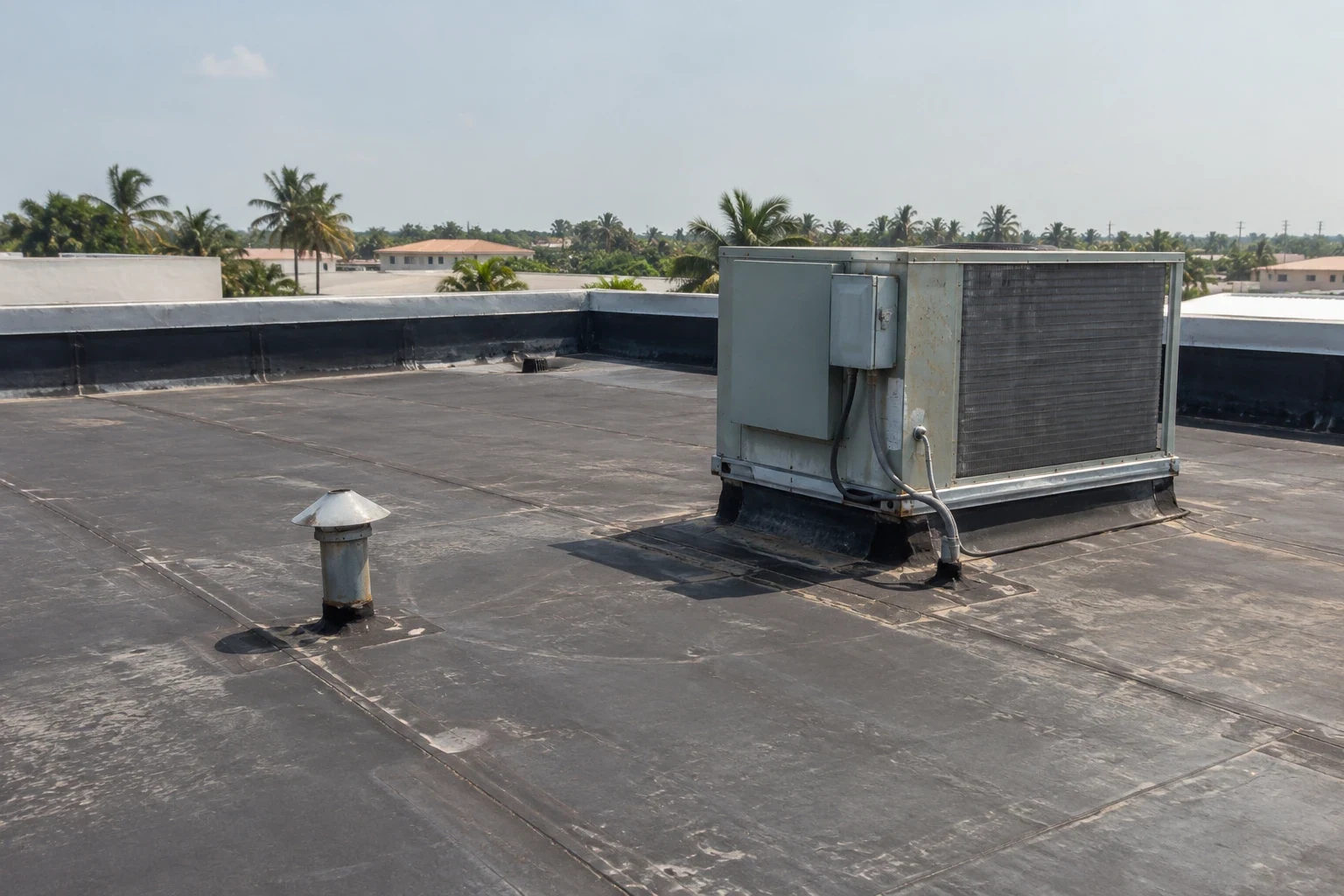
Corrosion is the slower problem. Fasteners, cut metal edges, rooftop equipment frames and unit curbs lose their protective coating first, and rust there spreads into the insulation. We look for it on every walk, and we weigh a modified bitumen or single-ply system against the owner's budget, the tear-off needed and how long the building has to stay in service. Cost follows access, crane time, the amount of wet insulation, permit hours and how many phases the site requires.
Walk These Items Before Choosing Repair or Replacement
An owner should leave the first roof walk with a short list of facts. We check seams and flashings for open laps, drains for blockage and ponding, penetrations for sealant that has split, and the deck line for sagging that points to wet insulation. Infrared scanning after sundown shows trapped moisture that the surface hides. A repair is reasonable when the damage is local and the insulation below is dry. A recover can work when the existing roof is sound enough to carry a new layer. Replacement belongs on the table when moisture has spread through the assembly.
Each option comes with a plan for phasing, material staging, safety and closeout. A preventive maintenance visit before the summer heat and again before the storm season keeps small defects from turning into emergency calls, and we answer those calls at any hour.
Commercial Roofing Questions
Does a hot work permit rule out a torch-applied roof near the plant?
Sometimes it does, and the answer is found at the permit desk rather than on the roof. Open flame needs a permit, a fire watch and a clear map of what vents or lines sit beneath the work. If the site will not issue one, a mechanically attached or adhered single-ply system gives the same watertight result without a torch.
How far ahead should roof work be booked around a shutdown window?
Early enough that materials, crane time and badging can be held as flexible reservations. A window that slips by two weeks is manageable if the booking is flexible, and it is a crisis if the order was locked to the old date. Cutting the roof into smaller sections also lets a late-moving window still work.
Does the levee protect a roof from hurricane wind?
No. The levee system and the dike protect against water, and a roof sees a different threat. Uplift builds at corners and edges, so the question for an owner is how well the coping, edge metal and fasteners are secured. We check the perimeter first for exactly that reason.
What shows up first on a roof in humid bay air?
Corrosion at fasteners, laps and cut metal edges, followed by blistered or lifted sealant around penetrations. The membrane itself often holds on longer than its small parts do. A scheduled walk that reseals those details and touches up the coatings usually adds more service life than a change of system.
Can a port-side warehouse keep its docks open during a reroof?
In most cases the docks keep working. The crane sets up away from the doors, staging runs along the quiet side of the building and the roof opens in sections that are closed up daily. Racking inside stays dry, and the night shift is not asked to work under an open deck.
Keep Reading
Related Roofing Work in Pasadena

Walk the Roof With Us Before the Calendar Fills
Tell us how your Texas City building runs, which docks and shifts matter most and when the next shutdown window opens. We will walk the roof with you, so the work plan fits your operation from day one.