
Service Areas
Commercial Roofing in Manchester, Houston, TX
Inside a Ship Channel plant, the permit comes before the plan. Hot work needs its own paperwork, a crane pick needs a lift plan, and nobody reaches the roof without a site safety orientation. In Manchester, Houston, that is the ordinary condition for commercial roof work, and the schedule that fits it is usually set by a shutdown window rather than by the weather.
Manchester is a six square mile Houston community beside the channel, with petrochemical operations that include Goodyear, LyondellBasell, Texas Petro-Chemicals and Valero. Chemical plants, refineries and hazardous cargo zones share the same ground. Pasadena, TX and Galena Park share that Ship Channel corridor, so we start a Manchester roof the way we start any plant roof: by learning how the building runs, then fitting the repair, recover or replacement into that routine.
Sort the Buildings Before Choosing the Repair
An industrial neighborhood rarely holds one kind of building. A plant can have process areas beside control buildings, maintenance shops, warehouses and offices, and each of them asks something different of its roof. A control building cannot take a leak over its panels. A warehouse can tolerate a wet corner longer than a records room can. A shop with a crane bay has a roof deck that carries loads the rest of the plant never sees.
So the first walk is a sorting exercise. We note the deck type, the insulation underneath, how many layers are already up, where the drains sit and what the rooftop equipment is doing to the membrane around it. Then we rank the roofs by what a failure would cost the operation, not by square footage. That ranking turns a pile of leak complaints into a plan a facility director can fund in order.
Match the Membrane to the Air Over the Channel
Air beside the Ship Channel is humid, and near chemical plants it can carry exhaust, which puts corrosion to work on every exposed fastener, plate and strip of edge metal. Houston summers add a second load. Temperatures reach 90 F or higher on roughly a hundred days a year, August afternoons average close to 95 F, and the air is already thick by sunrise. A dark roof absorbs all of it and swells and relaxes with the day.
Where exhaust, chemical vapor or process residue reaches the roof, PVC roofing resists the attack better than most single-ply sheets, and its welded seams stay tight. A reflective TPO sheet suits a plain support building with clean air. Fasteners, plates and flashing metal are chosen for the environment, and stainless or coated components cost little against the labor of replacing rusted ones. In a plant, a membrane that outlasts its attachments is a defect.
Schedule Around the Permit and the Shutdown Window
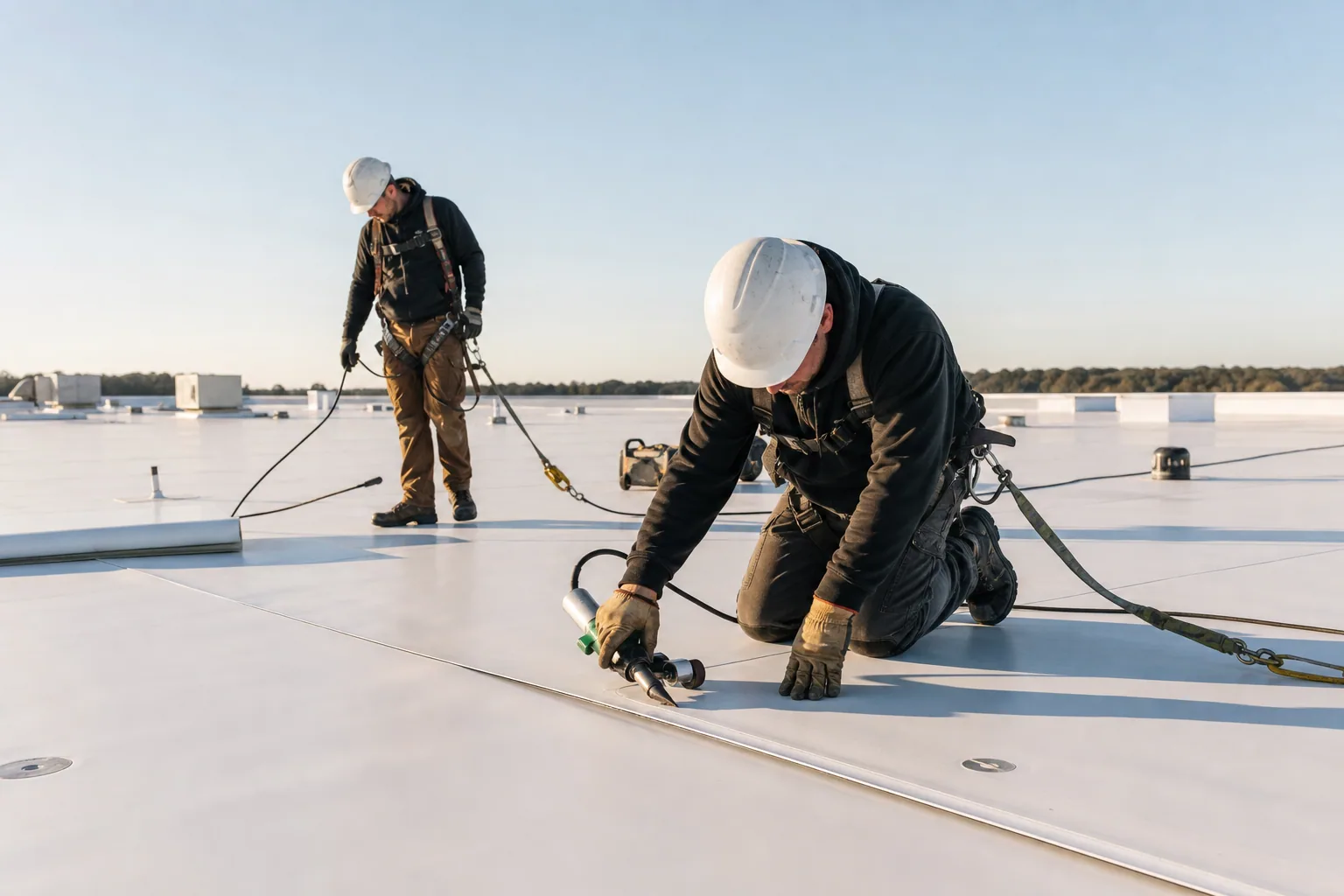
Work inside an operating complex is sequenced backward from the permits. Heat welding, torches and cutting each raise questions with the site safety group, and some units ban open flame on the roof outright. When that is the rule, we price cold-applied or mechanically attached systems, and a modified bitumen specification changes from torch to adhesive.
The rest of the sequence follows the same logic:
- The laydown area and material staging are agreed before the first delivery, so trucks do not wander into restricted zones.
- The lift plan fixes where the crane sets up and which lanes stay open during each pick.
- Badging, escorts and orientation dates are booked early, because crews cannot start without them.
- Each section is sized to be watertight before the shift ends, because Houston rain falls on about 104 days a year.
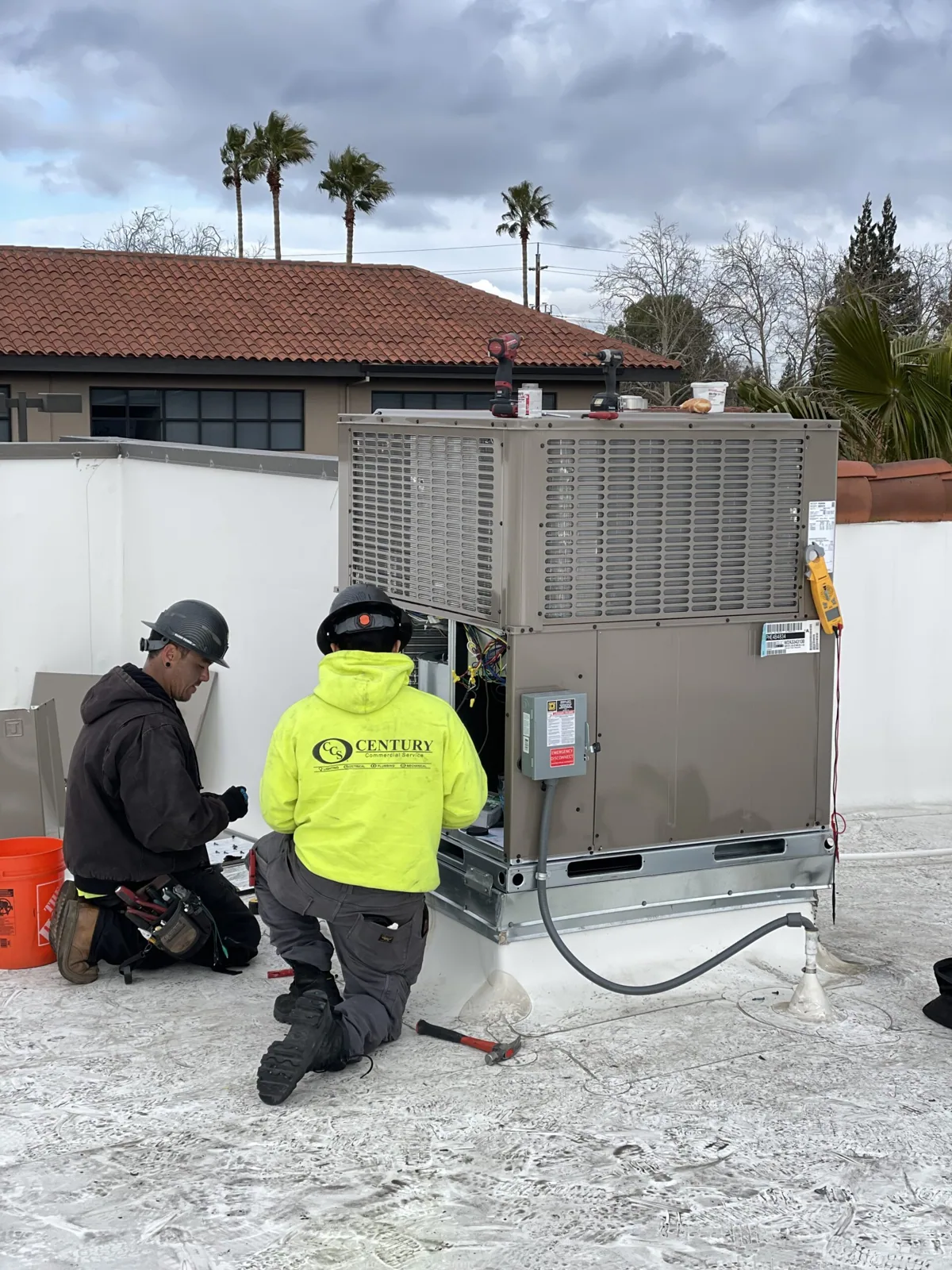
Equipment on the deck needs its own plan. Work on curbs and equipment supports is timed with operations, so a unit comes down only when it was already scheduled to.
Plan for the Storms Houston Has Already Seen
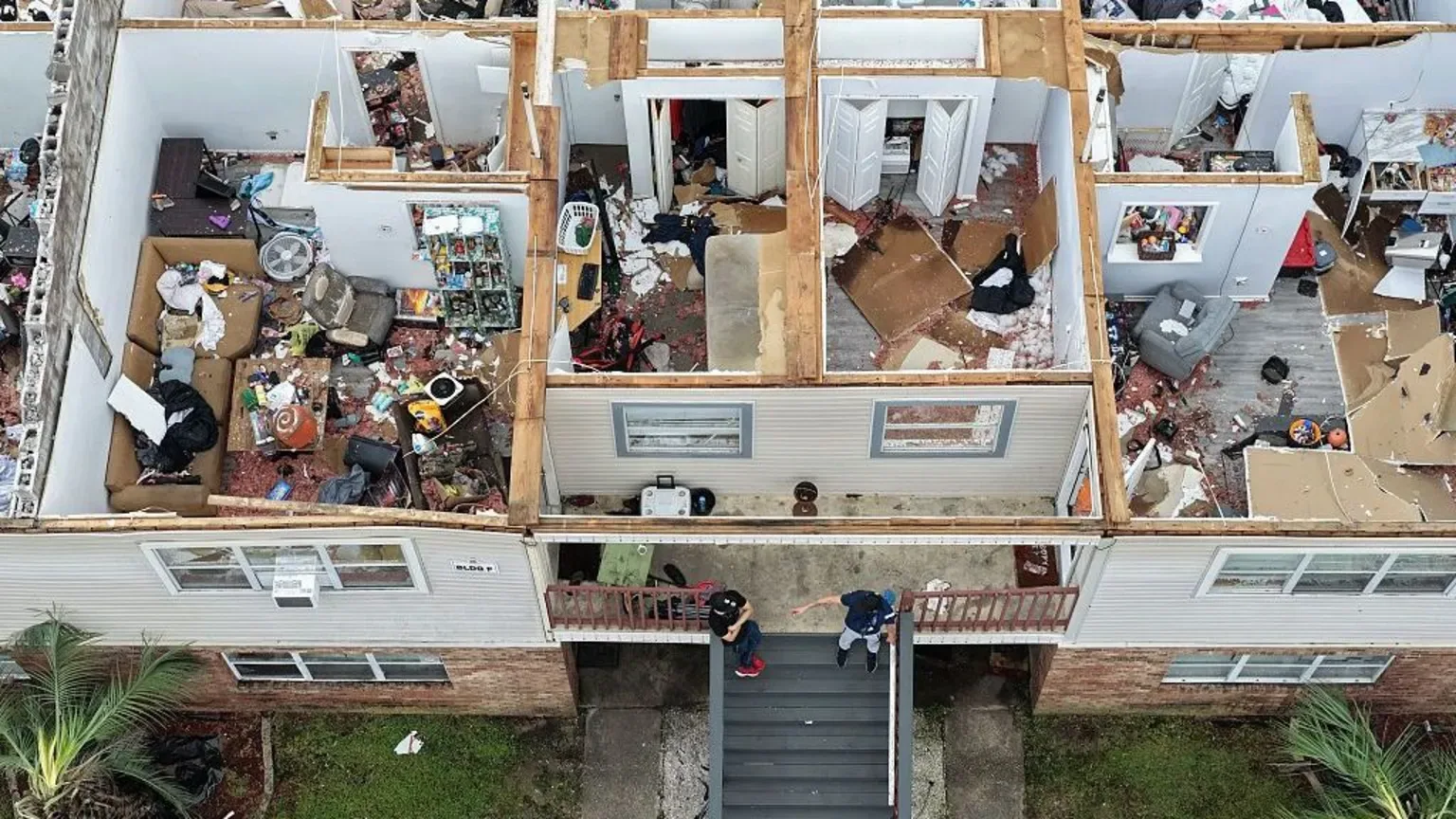
The storm record here sets the standard for the perimeter. Hurricane Ike moved along Galveston Bay on the east side of Houston in 2008. In August 2017, Hurricane Harvey idled close to an eighth of the country's refining capacity along the Gulf Coast. A derecho in May 2024 brought wind estimates of about 100 mph to downtown, and Hurricane Beryl's eastern eyewall passed over the Houston region that July.
None of those storms is a roof specification, but each shows what the perimeter has to survive. Edge metal, coping and corner zones carry the uplift, so we inspect their attachment before we look at the field membrane. After a storm we walk the roof, photograph the damage and stop the water first. The documentation matters afterward, which is why repairs after hurricane damage are tied to the paperwork an insurer expects. The rain load is steady as well, roughly 50 inches a year in Houston, so drains, scuppers and sumps get cleared and tested on every visit.
Weigh Repair, Coating, Recover and Replacement
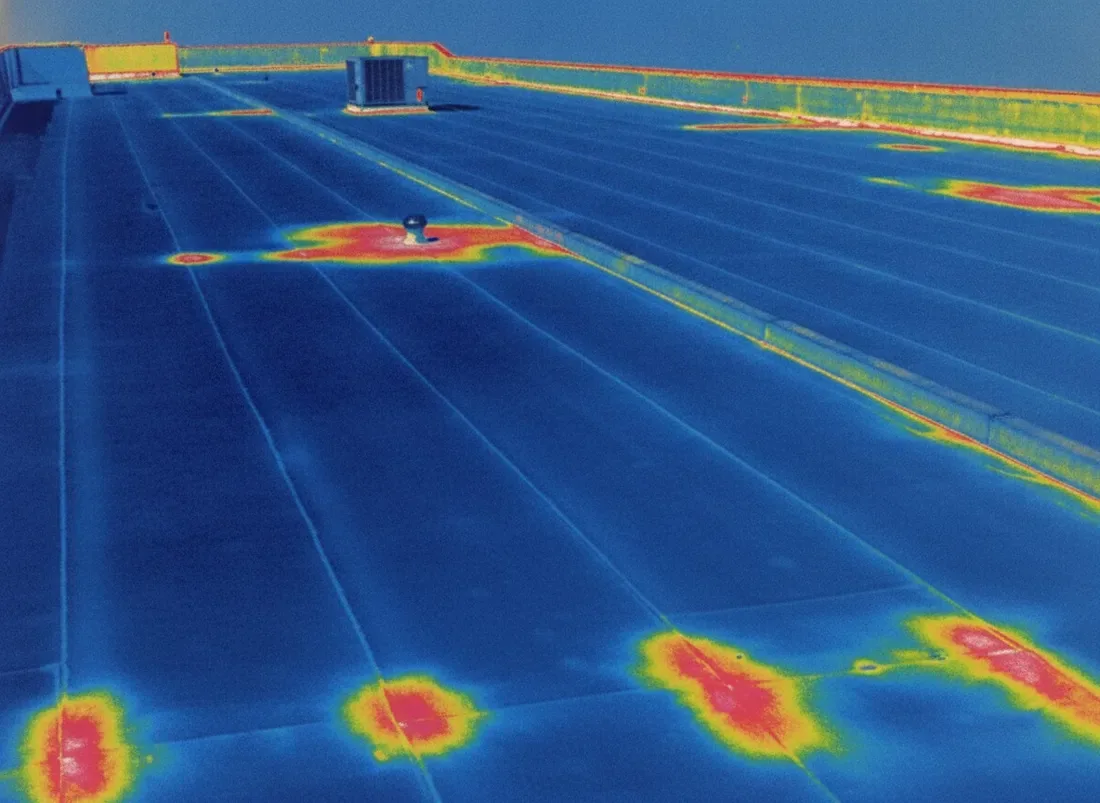
Most owners want to know how far a repair budget will stretch. That depends on how much water is already inside the roof. An infrared moisture survey maps wet insulation without cutting the membrane, and it often separates a roof that needs patching from one that needs a full system change.
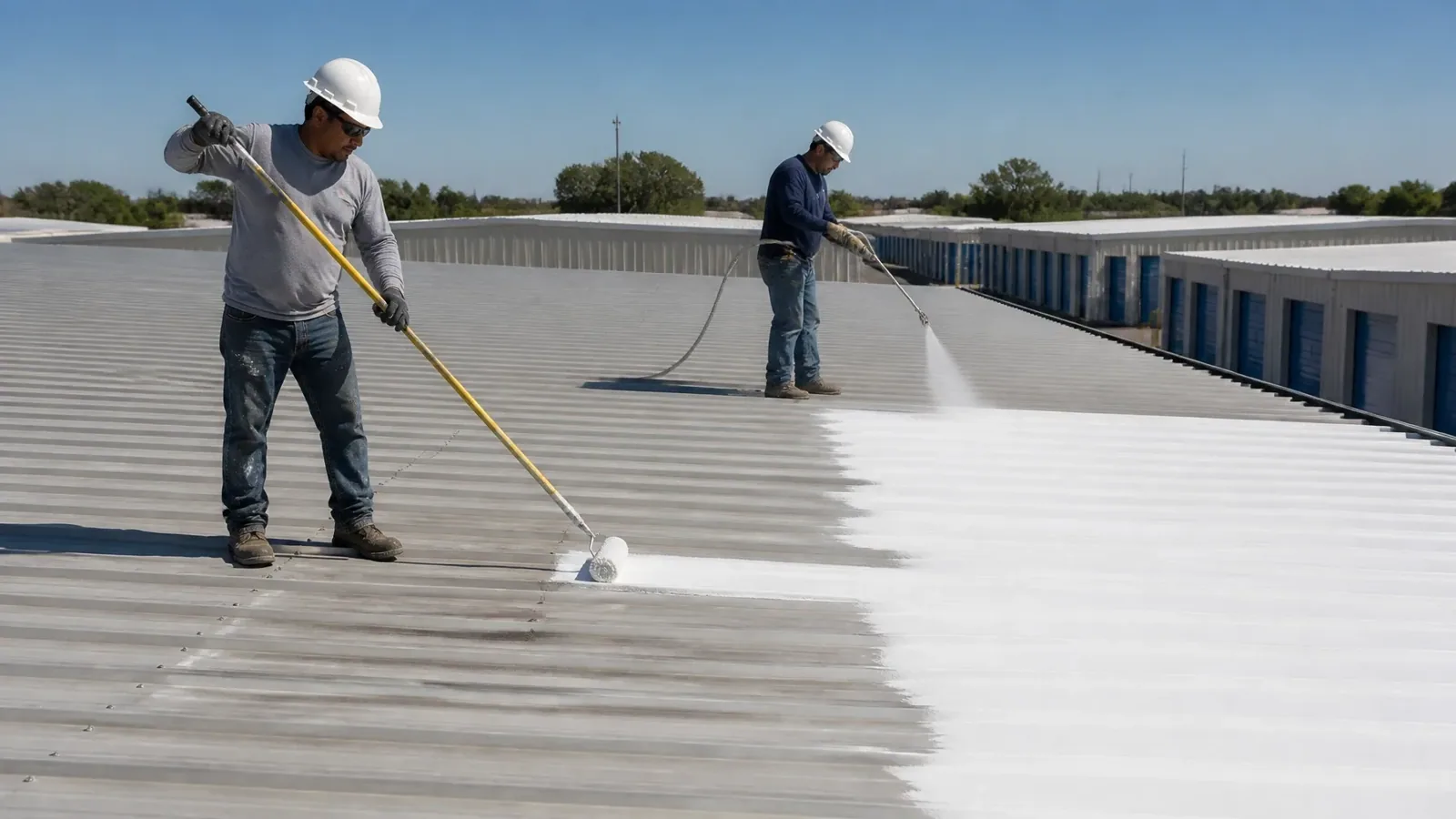
A sound membrane over dry insulation may be restored with a roof coating, which avoids a tear-off. A recover adds a new sheet over the old one when the existing layers are dry and the deck can carry the weight. Replacement is the answer when insulation is saturated or the deck has corroded. Cost moves with access, permits, crane time, disposal, the insulation thickness and the amount of equipment to be lifted and reset. Those drivers differ plant to plant, which is why a written estimate follows the walk, not the other way around.A channel-side portfolio may also include Channelview, with separate gate, staging and shutdown coordination for each site.
Commercial Roofing Questions
A hot work ban applies on our unit. Can a roof still be replaced?
Yes, when the specification avoids open flame. Mechanically attached and adhesive-applied single-ply systems, and cold-applied modified bitumen, go down without torches. We confirm the safety group's rules for welding equipment as well, and then price the system that fits them.
How do you handle a roof inside a hazardous cargo zone?
Access sets the plan. We ask for the escort route, the badging timeline and the restricted areas first, then stage material and place the crane where operations approve. Nothing is delivered or lifted until those points are written down.
Why do fasteners on a plant roof rust out before the membrane does?
Humid air carrying plant emissions attacks bare steel faster than it attacks a sheet. Plates, screws and edge metal take that exposure directly. On a channel-side building we specify coated or stainless hardware, and we inspect existing fasteners for section loss during the first walk.
What does a repair plan cost on a building we cannot shut down?
Price follows the work that protects operations: section size, crane time, escort and permit hours, and temporary protection over sensitive rooms. A survey to find wet insulation narrows the scope, and a clear scope keeps the estimate from growing after the crew mobilizes.
A storm opened a corner on a process support building. What happens first?
A temporary dry-in goes on the same day, secured against the next squall. Then we photograph and measure the loss, check the surrounding attachment, and write a ranked repair list. Our 24 hour emergency crew can start that dry-in at any hour.
Keep Reading
Related Roofing Work in Pasadena
Walk the Roof With Us Before the Shutdown Is Booked
Bring the facility director, the permit requirements and your shutdown calendar. We will walk the building with you and set a plan that fits your operation from day one.