
Service Areas
Commercial Roofing in Baytown, TX
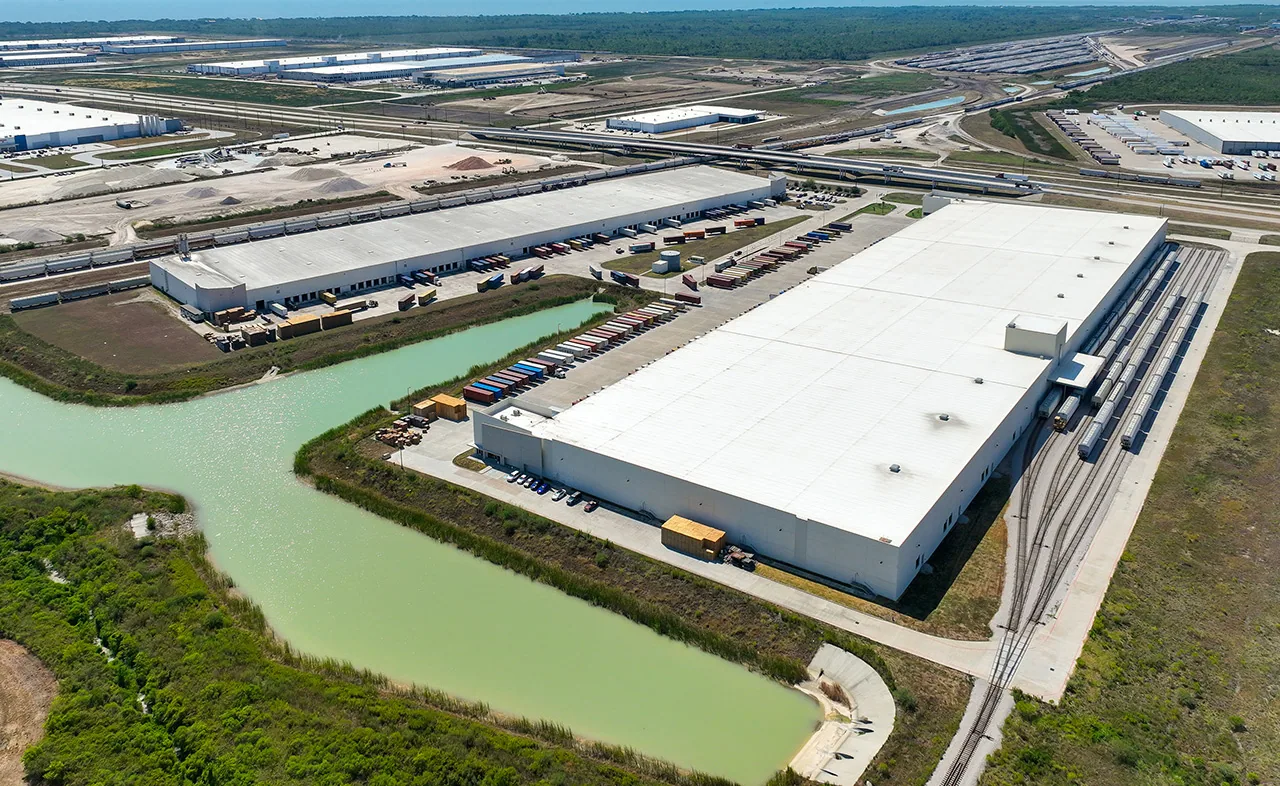
A turnaround crew and a roofing crew cannot share the same crane, the same laydown area or the same gate, so roof work in Baytown, TX is booked around the plant calendar before anything else. The ExxonMobil Baytown Complex, founded in 1919, is one of the largest industrial complexes in the world, and Chevron Phillips Cedar Bayou and Covestro operate alongside it. Cedar Crossing Industrial Park is described as the fifth largest industrial park in the world. Roof decisions made on ground like that are logistics decisions first.
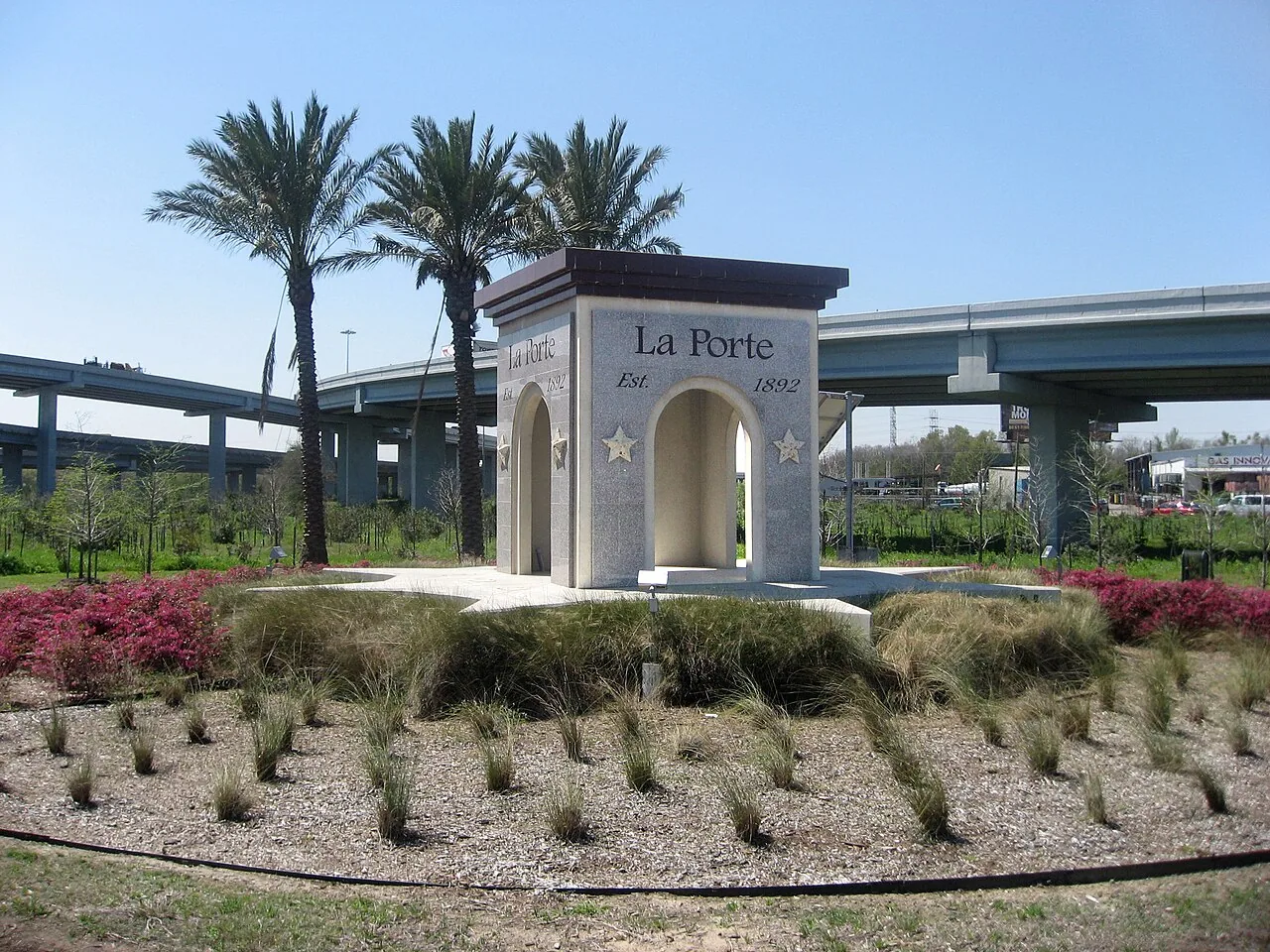
The city sits about 26 miles east of Houston, tied to I-10 by SH 99 and SH 146 and to La Porte by the Fred Hartman Bridge. Material, crews and equipment all arrive by those roads. For industrial, institutional and commercial buildings, repair, recover and replacement plans are written as a sequence: who gets on the roof, in what order, with what protection, and what happens if the shutdown window moves.
Book the Roof Around the Turnaround Calendar
Plants in this region plan their outages a long time ahead, and every trade competes for the same days. A roof crew that asks for access in the middle of someone else's critical path loses. We ask early for the calendar, the permit rules, the badging lead time and the areas that are closed to vehicles, then build backward from those facts.
The sequence for an industrial reroof usually runs like this:
- A first walk with the facility director and safety group to mark restricted zones and rooftop hazards.
- A written lift plan that sets crane position, pick weights and which lanes stay open.
- An agreed laydown area and material staging, so deliveries along SH 99 or SH 146 can be unloaded without blocking a gate.
- Hot work permit rules confirmed before a torch, a heat gun or a welder is even priced.
- A closeout walk with photographs and a punch list, signed before the crew demobilizes.
Skipping any step shifts risk to the owner. Done in order, the roof becomes one more scheduled job and not a surprise on the outage board.
Keep a Hospital Roof Working While the Building Runs
Houston Methodist Baytown Hospital employs about 1,900 people, and a hospital does not close for a roof project. Anything done overhead has to respect patient areas, rooftop air handlers, exhaust and intake locations, and noise that carries through a structure. Hospital roofing is planned with infection control in mind: air intakes are protected, debris stays contained, and loud or dusty steps are scheduled away from sensitive units.
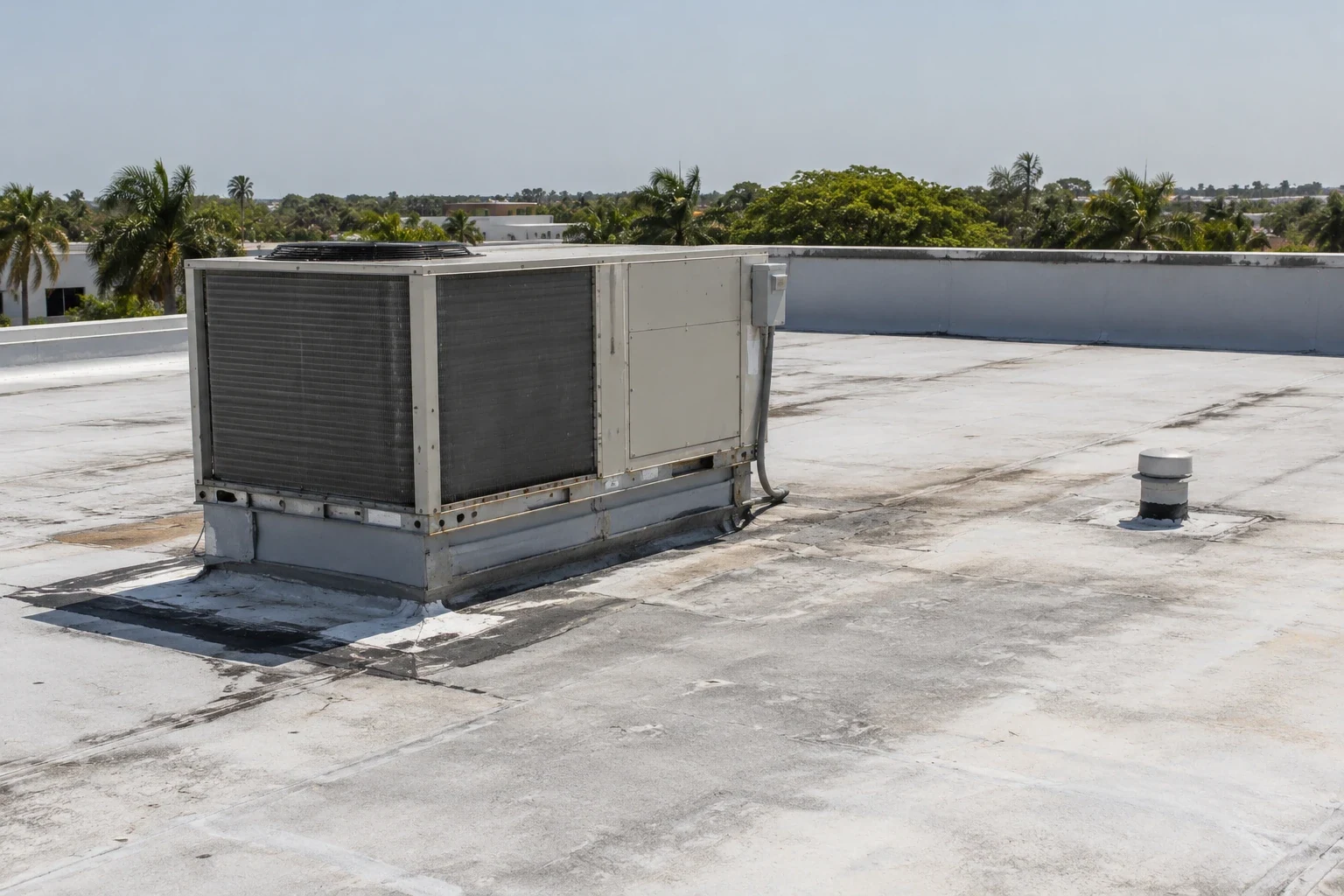
The roof itself needs the same care as the schedule. Membrane edges and equipment flashings take the beating, and mechanical rooms get checked for slow leaks that could reach electrical gear. We coordinate with the facilities team on night or weekend windows and agree on a communication path before work begins, so a nurse manager hears about a crane pick from the project lead, not from the noise.
For any occupied care building, we verify rooftop intakes and exhaust locations, agree on barriers below and coordinate a contact for each work shift. An inspection also checks drains and equipment curbs, since leaks above mechanical spaces can disrupt service before water reaches a patient area. The hospital illustrates the city's institutional building stock; the work remains specific to the owner and roof section under contract.
Phase the Work Across an Industrial Park Without Stopping Tenants
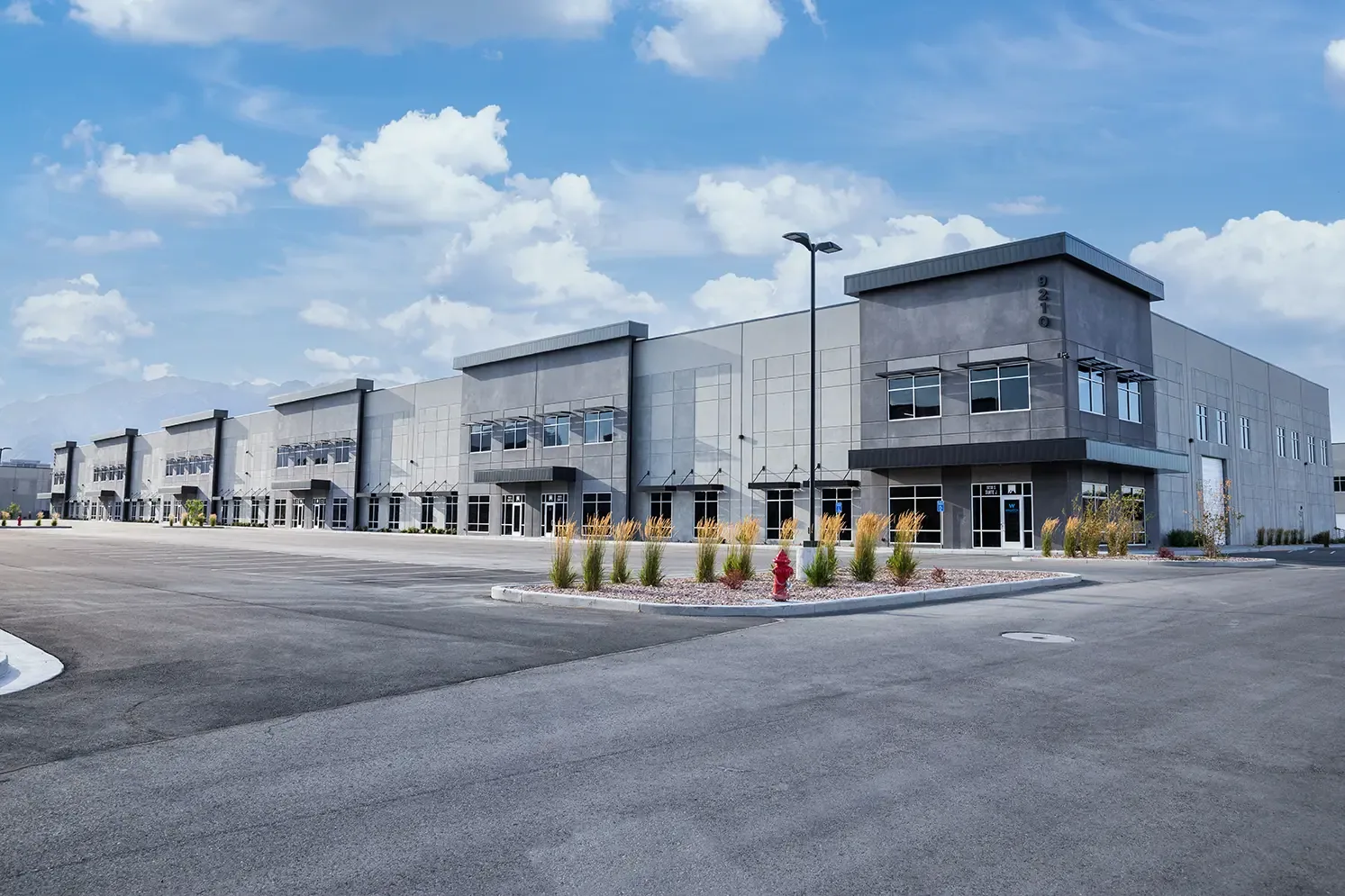
Industrial parks are full of buildings with different tenants, different dock schedules and one shared road network. Whatever a tenant makes, stores or ships, the roof questions repeat. Where do the trucks queue? Which bays hold product that cannot get wet? Which rooftop units serve a clean room, a cold room or an office suite?
For flex and industrial buildings, we like to phase the work by bay or by roof section and finish each section's dry-in the same afternoon. Where a lease puts roof cost on the tenant, a written condition report with photographs gives the owner and the tenant one common record to work from, and it keeps arguments about who caused a leak short. Occupied building reroofing is the method that keeps an active park earning while the work proceeds.
Check What the 2023 Tornado Left Behind
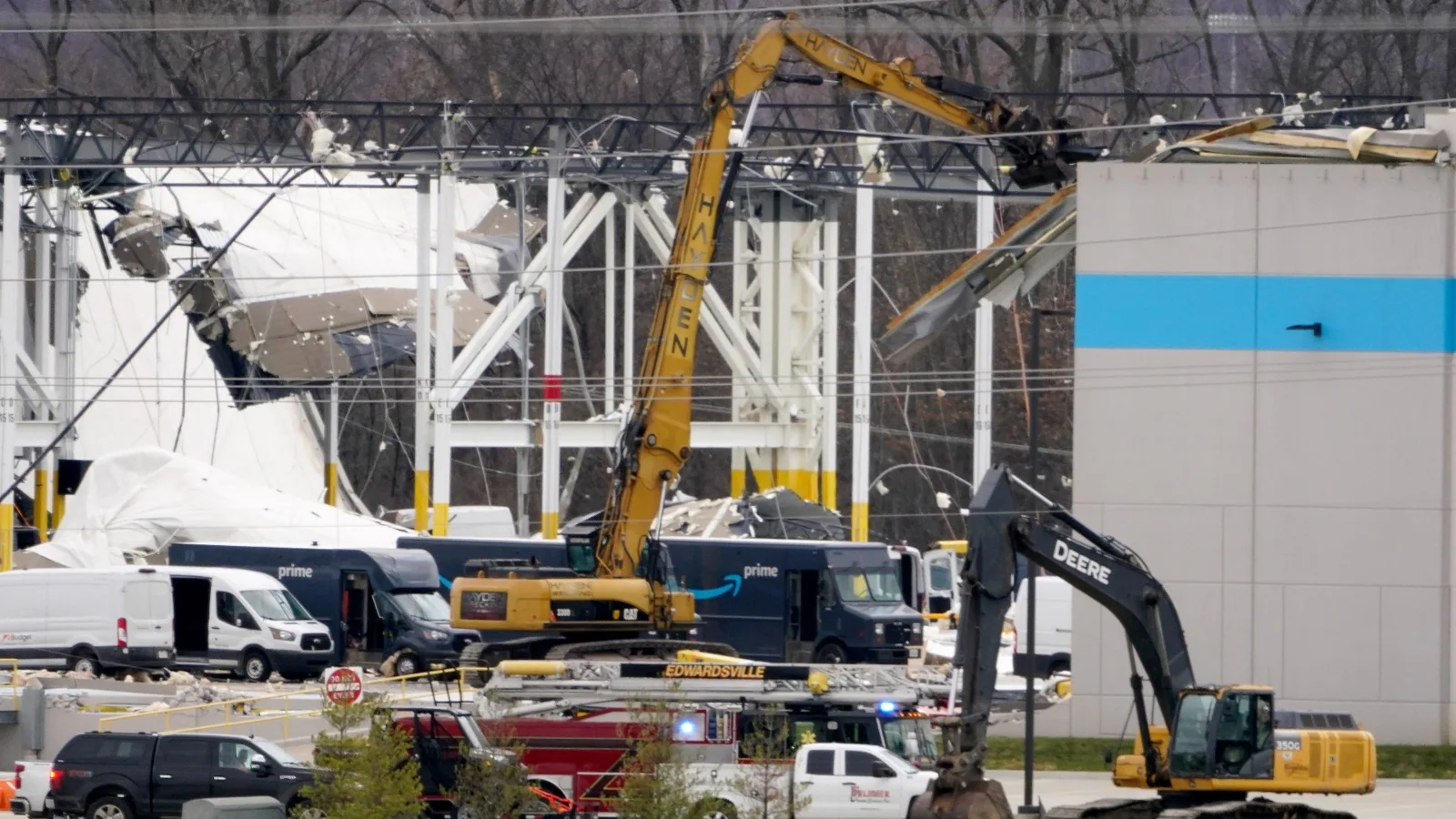
The National Weather Service reports that the January 24, 2023 tornado left a near-continuous path of EF1, EF2 and EF3 damage across Pasadena, Deer Park and Baytown, on an 18.7 mile track with peak winds near 140 mph. For owners in Baytown, that means a building near the path may carry damage nobody noticed at ground level: loosened fasteners, bent edge metal, lifted flashing, or a membrane that has been tugged out of its seams.
Older storms belong in the same file. Ike pushed up the Galveston Bay shore in 2008, and the eastern eyewall of Hurricane Beryl crossed the Houston region in 2024. We inspect for tornado damage at the perimeter first, because uplift starts at corners and edges, then cross the field probing for wet insulation. Anything found goes into a written condition report with photographs, which makes a later insurance conversation far shorter.
Specify the Membrane for Heat, Humidity and Plant Air
Houston-area summers push an August average high near 95 F and humidity above 90 percent in the morning, and a dark roof soaks all of it up. Near refining and chemical operations, the air adds corrosion. Fasteners, plates and edge metal fail before a membrane does, so those parts get stainless or coated hardware and a periodic look. Chemical plants in Pasadena's Bayport Industrial District ask the same corrosion questions of their roofs.
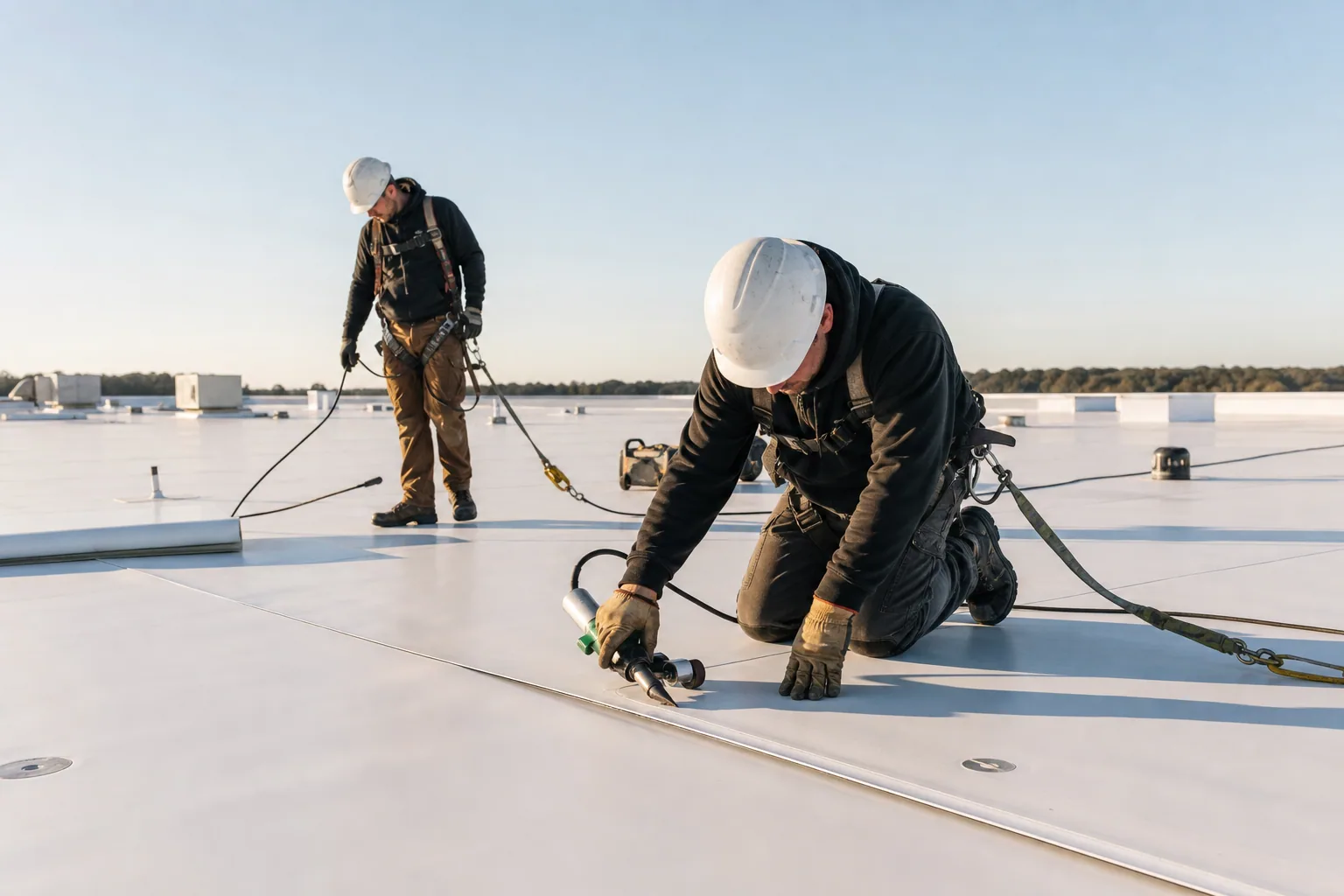
Where exhaust or process residue lands on the roof, PVC holds up better than most alternatives. On a plain support building, a reflective sheet and a well-drained deck are usually enough. A scheduled preventive maintenance visit before hurricane season clears drains, tightens flashing and reseals open seams, and heads off the emergency call that follows a clogged drain.
Commercial Roofing Questions
Our shutdown window moved by two weeks. Can the roof schedule move with it?
Usually, if the change reaches us early. Materials, crane time and badging are the items that slip hardest, so we hold them as flexible bookings and confirm each against the new dates. A window that moves late can still work when the roof is cut into smaller sections.
How do you keep construction dust and odor away from patient areas?
Air intakes near the work are covered or temporarily relocated, debris is bagged on the roof and lowered in closed containers, and loud tear-off steps are placed in the hours the nursing staff chooses. The facilities team signs off before each phase starts.
What does a roof file tell me that a quick walk does not?
A file shows how the roof has aged. Dated photographs, drain locations, past repairs, core cut results and moisture readings let a facility director see where money has gone and where it will go next, so budgets stop depending on the last leak call.
Would damage from the 2023 tornado still show up on a roof today?
It can. Lifted flashing, stressed seams and loosened fasteners may not leak until a later storm tests them. A close perimeter inspection and a moisture scan turn up what the eye misses, and the findings document the roof's condition either way.
Which costs grow when an industrial roof has to be replaced in sections?
Mobilization, temporary tie-ins and extra crane days all add expense, while risk to the interior falls. That trade is usually worth making on a plant or hospital roof, because a single wet incident costs more than the phasing does.
Keep Reading
Related Roofing Work in Pasadena

Walk the Site Before the Outage Calendar Fills
Bring the facility director, the turnaround dates and any roof records you keep. We will walk the building with you and write a work plan that fits your operation from the first day.