
Roofing Manufacturers
Johns Manville Roofing Systems in Pasadena, TX
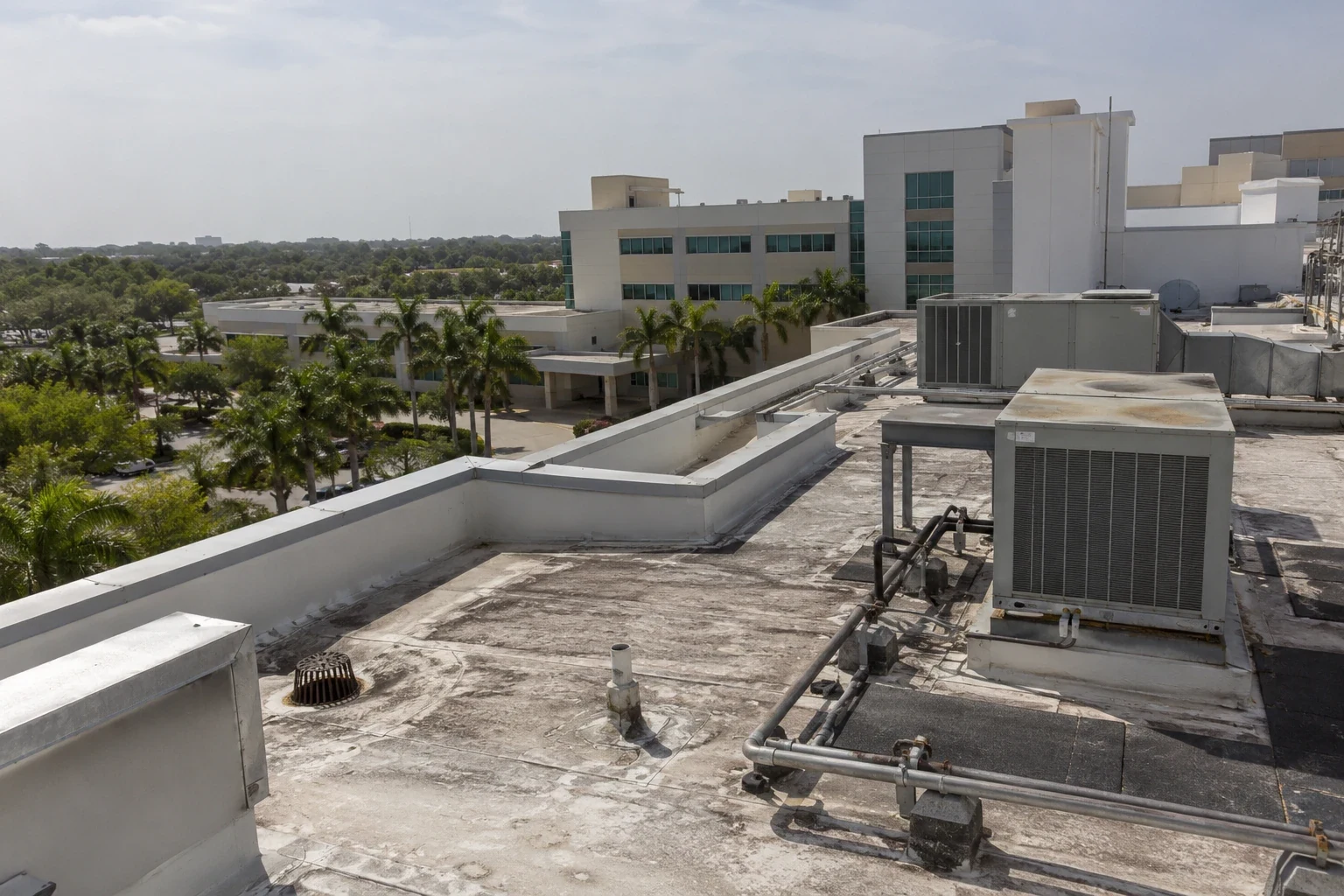
Air handlers on a hospital roof do not get switched off to make a roofer's day easier. Their intakes sit a few feet from where the crew works, and anything the work puts into the air, from asphalt fumes to adhesive vapor to grit, can be carried straight into the building. That is the first thing we think about on a Johns Manville roof over a medical building in Pasadena, TX, before membrane, insulation or crane.
Johns Manville makes several systems that appear on Gulf Coast commercial roofs: TPO, PVC and EPDM single-ply sheets, SBS and APP modified bitumen, built-up roofing built from felts and cap sheets, and polyiso insulation to sit beneath any of them. Each has its place, and the choice runs through the building's ventilation, its schedule and the people inside it.
Protect the Intake Air Before You Open the Roof
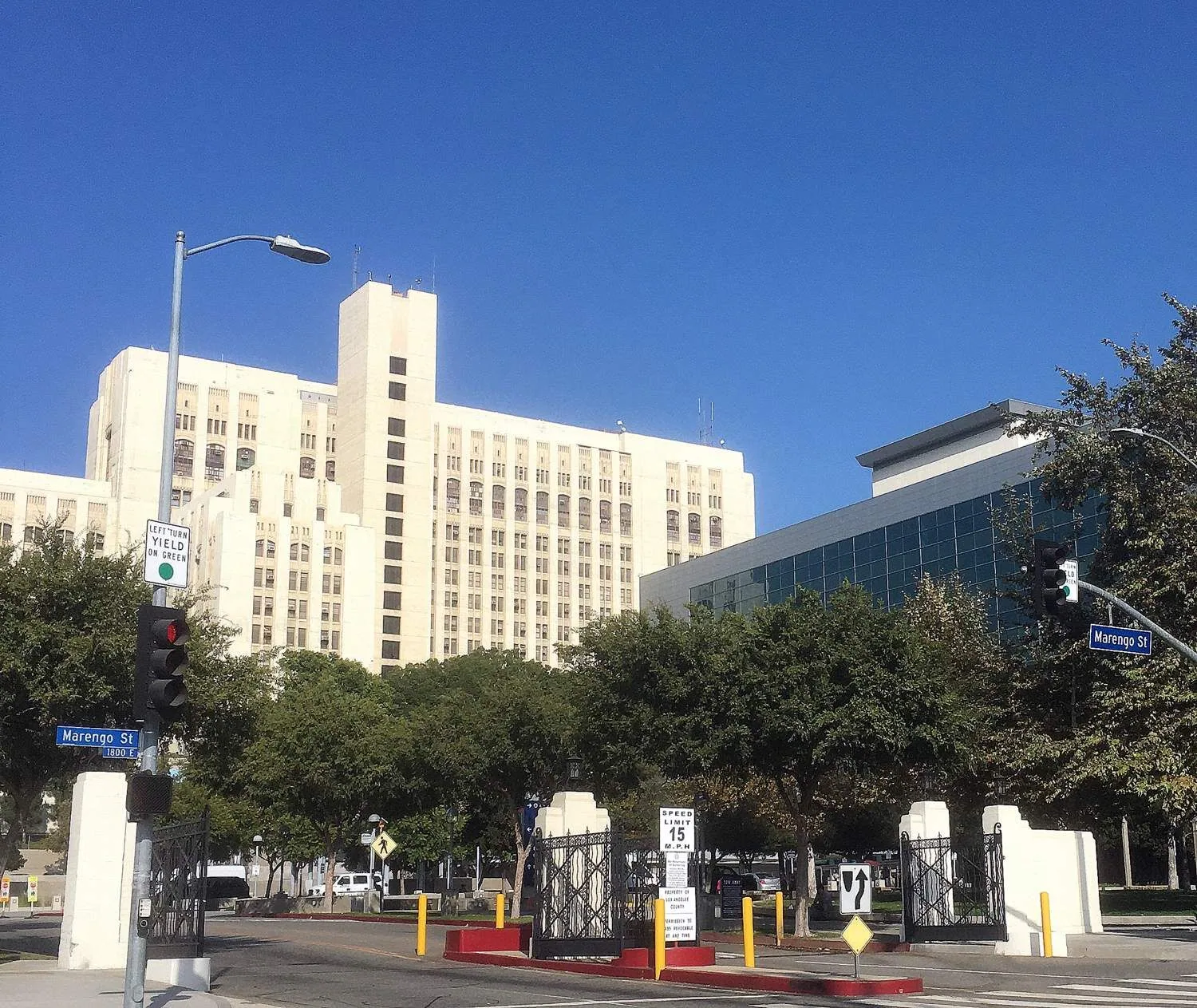
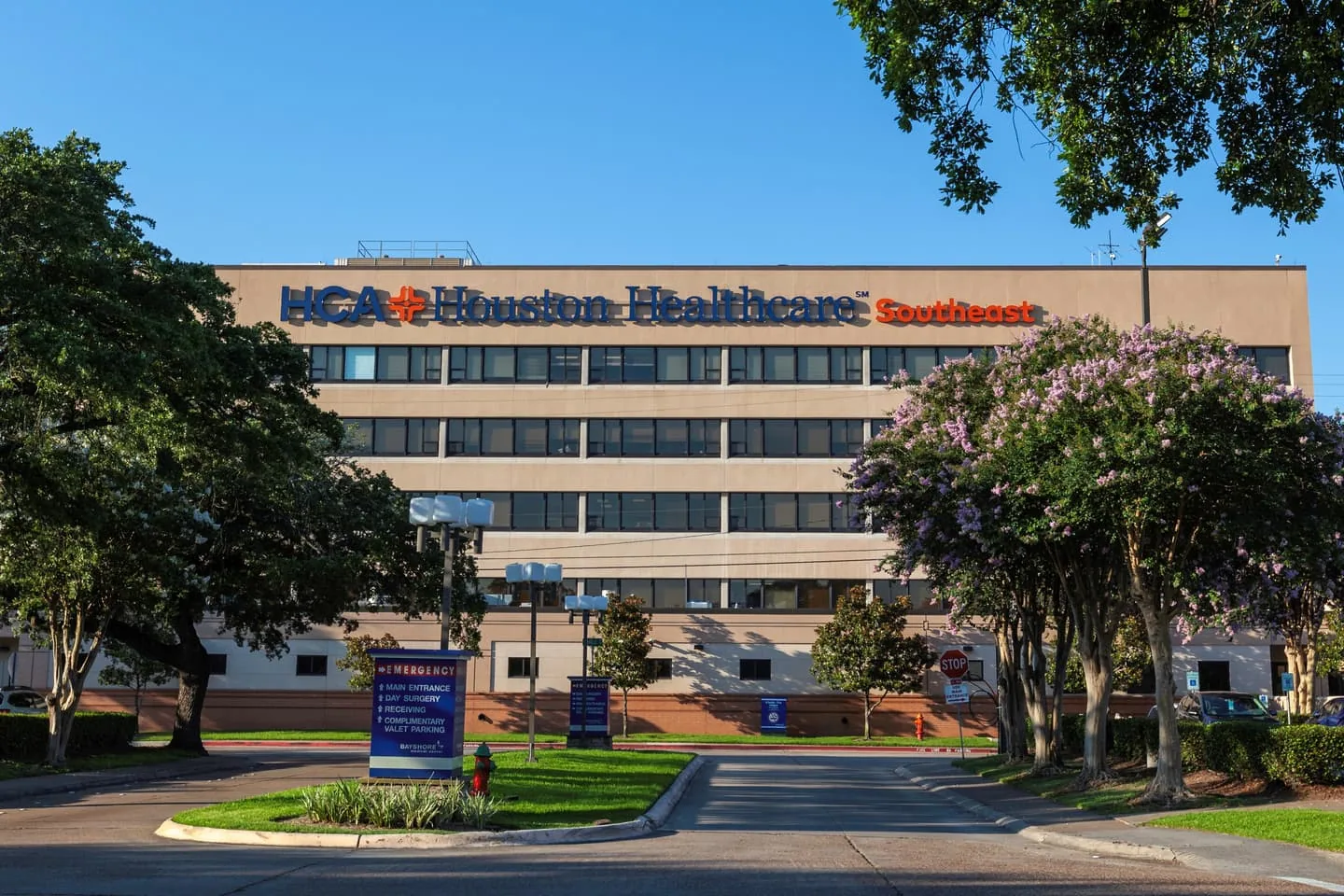
HCA Houston Healthcare Southeast on Spencer Highway is a Level III trauma center that has served Pasadena for more than sixty years, and a hospital of that kind cannot pause its air handling for a reroof. So the plan starts with a walk of the roof beside the facilities engineer. We locate every intake, relief hood and exhaust, and agree which can be temporarily shielded, which can be shut down at a scheduled time, and which fall outside the work area altogether.
Then we choose the method to match. A self-adhering or cold-applied modified bitumen sheet produces far less fume than a torch or a kettle. A heat-welded TPO or PVC sheet produces none that reaches the intakes. Sweeping and vacuuming on a fixed cycle keep grit out of the air stream. Facilities teams often run an infection control risk assessment on top, and we build our work plan to fit that document, not the reverse.
Read the Layers Johns Manville Built Into the Roof
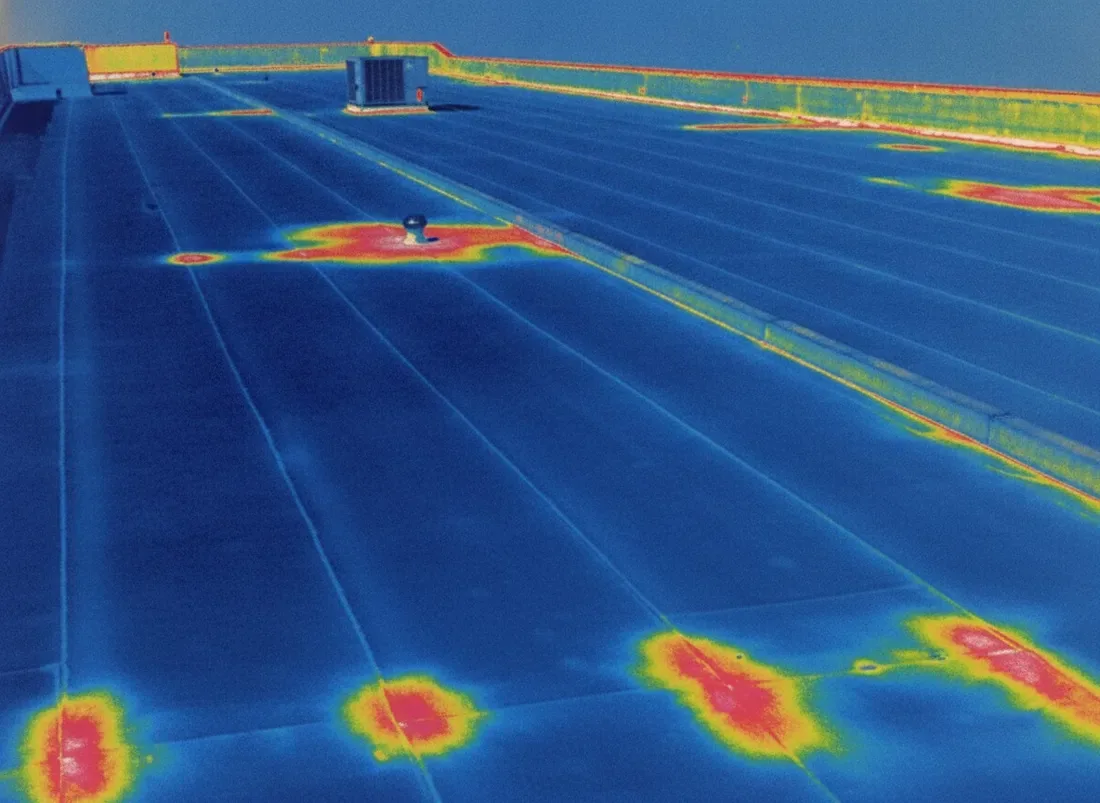
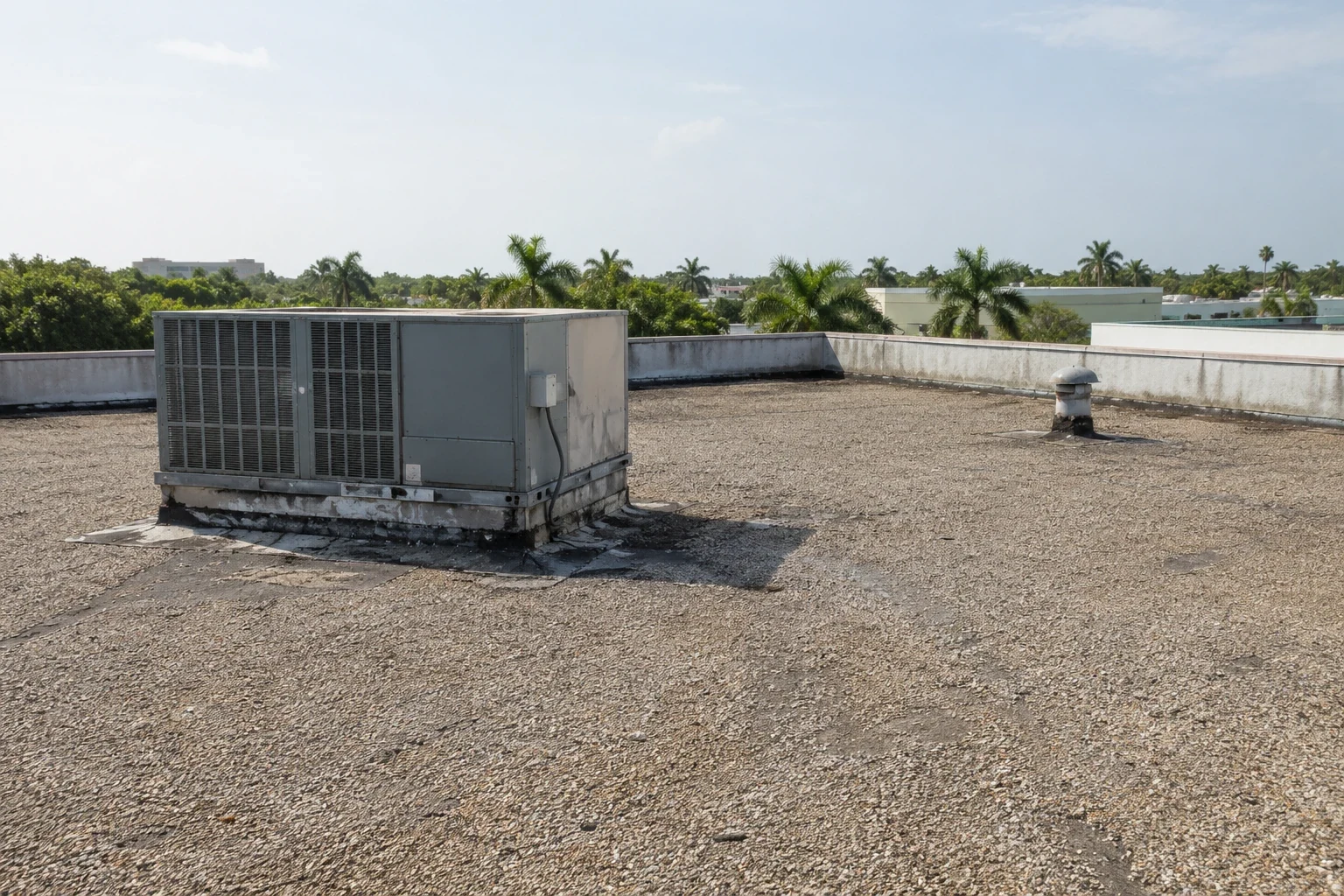
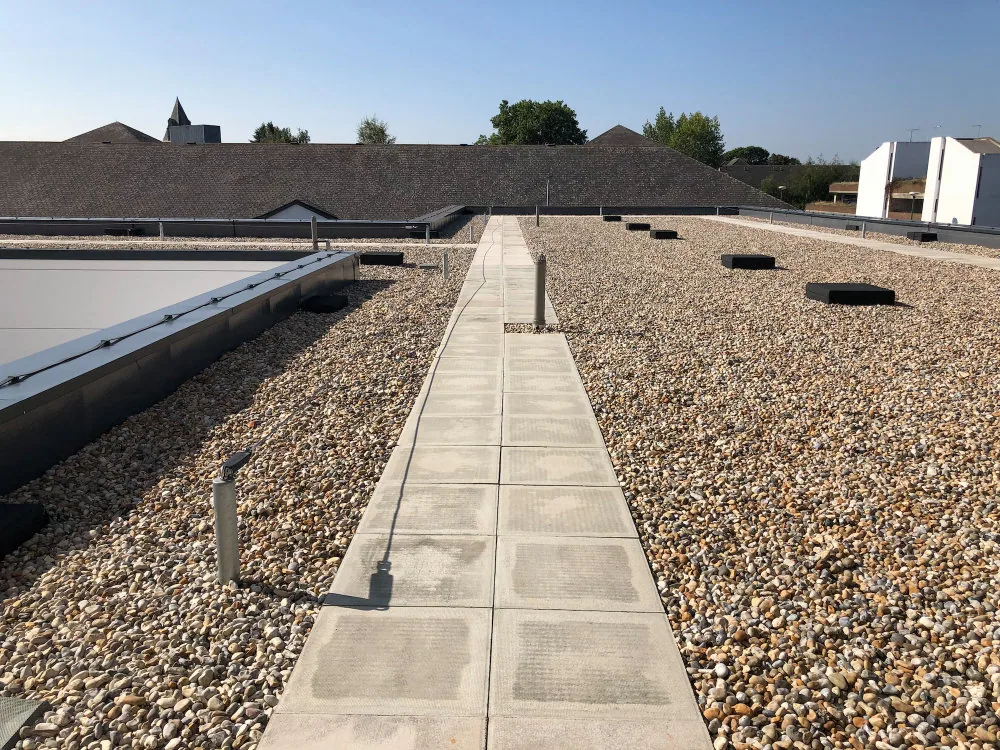
Many older Johns Manville roofs are multi-ply: alternating layers of felt and asphalt under a granulated or gravel surface. They are heavy, forgiving and slow to fail. A leak in one rarely sends water straight through, because it has to find its way through several plies before it shows up at the ceiling. That is also why finding the source is harder, and why we pair a visual walk with an infrared moisture survey before a patch goes down.
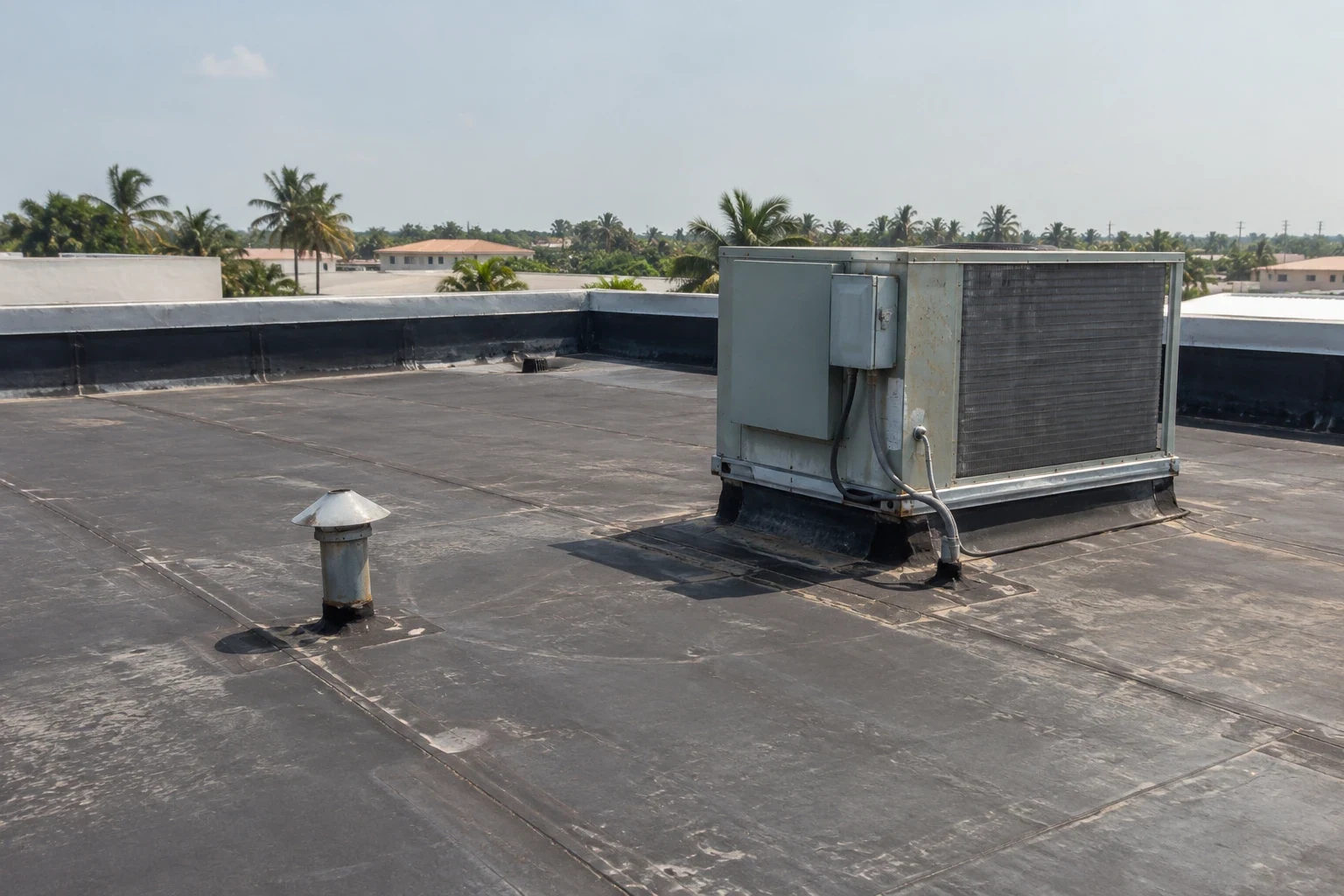
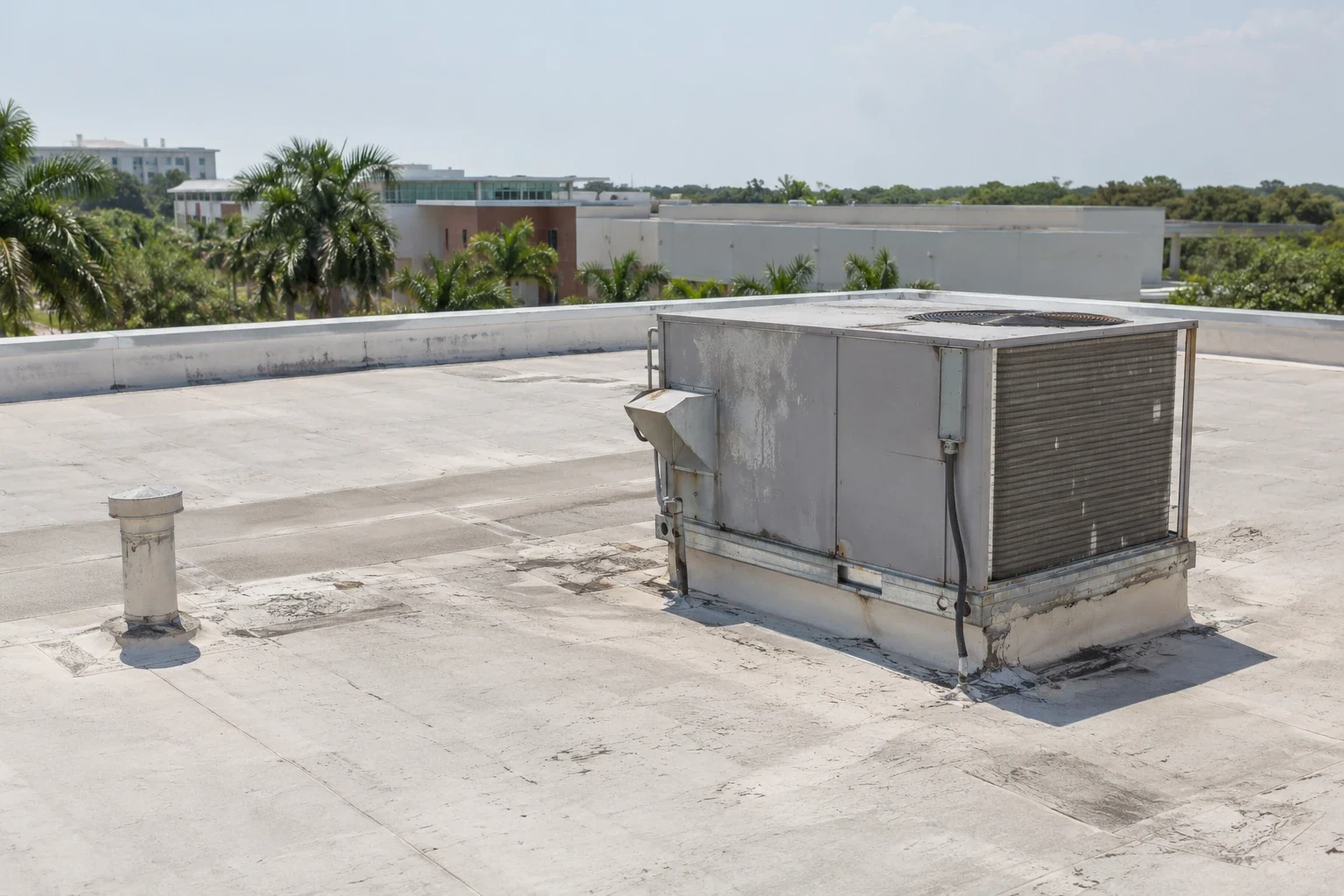
Newer roofs are more often single-ply, with seams welded in the field and a single sheet carrying the weather load. We repair them with the same family of material and hold the results to a probe test along the full length of the seam. Whichever era the roof comes from, we read it before we touch it: seams, flashing heights, drain sumps and the insulation underneath.
Choose Redundancy Where a Leak Costs More Than Money
Hospitals, labs and sterile processing areas have a different tolerance for water than a storage building. A drip over an operating room closes the room, and the cost of that closure dwarfs the cost of the roof. For hospital roofs, we lean toward a built-up roofing or reinforced modified bitumen assembly, because several plies put layers of protection between the weather and the deck.
That does not rule out a single-ply system. A well-detailed TPO or PVC roof over a tough cover board is a sound choice too, especially where an open flame would be a permit problem. The real question is how the building runs and what a failure would interrupt. For owners across a health system, our healthcare roofing work compares the options building by building instead of choosing one system for all of them.
Plan Hot Work Under the Current Fire Code
The 2024 International Fire Code and NFPA 101, the Life Safety Code, were adopted by Pasadena's council on October 21, 2025, and became effective January 19, 2026. On a healthcare roof, that matters wherever a torch, a propane kettle or a heat gun is part of the plan. Hot work needs a permit, a fire watch and clear access for emergency crews, and the plan has to say who holds each of those responsibilities.
We write the permit sequence into the schedule before the first lift. If the building's fire marshal prefers a cold-applied or heat-welded system, that decision is far easier to make in a planning meeting than on the roof with materials already staged. The same discipline applies to any occupied building.
Phase Around Clinic Hours and the Academic Calendar
The Spencer Highway corridor puts a hospital and a college campus on the same road. San Jacinto College's Central Campus in Pasadena enrolls over fifteen thousand students, so large college roofing work tends to wait for summer, with the crane pick and tear-off scheduled while the buildings are quiet.
Hospital sections run the other way. Work moves ward by ward and wing by wing, starting with the areas that can tolerate disruption and ending with the ones that cannot. Along the Spencer Highway medical and education corridor, the first scheduling question is not when the crew is free but when each department can accept a few days of reduced access.
Check the Membrane After Debris and Wind
Gulf storms test every layer. In January 2023 an EF3 tornado with peak winds near 140 mph left near-continuous damage from Pasadena through Deer Park to Baytown, and Pasadena Memorial High School suffered roof damage along the way. A roof does not have to lose a section to be hurt. Impact from flying gravel, rooftop equipment covers and fragments of neighboring buildings can puncture a membrane in dozens of small spots. After an event, tornado damage repair starts with a careful walk to find them.For a different manufacturer specification, Soprema roofing systems call for their own product and detail review.
Commercial Roofing Questions
How do you keep roofing odors out of a hospital's ventilation?
By choosing a method that makes few odors and by controlling where those odors can travel. Self-adhering and heat-welded sheets reduce the problem at the source. The rest is shielding intakes, timing the work for lower-demand hours, and agreeing a shutoff procedure with the facilities engineer before any material is opened.
Is a built-up roof out of date for a medical building?
No. Multi-ply roofs have stayed in use because several plies add redundancy, and a leak in one rarely travels straight down. The tradeoff is weight and installation method, and a heavier assembly needs the structure to support it. We look at both before recommending one over a single-ply alternative.
Which part of a medical campus should be roofed first?
The areas where a failure would do the most harm usually go first: surgical suites, imaging, sterile processing, pharmacy and areas under critical equipment. Older and weaker roofs get ranked next. A condition report lets us line the buildings up in order, so the capital plan follows risk instead of whichever leak was reported last.
We have Johns Manville roofs of several ages across our campus. How should we budget?
Start with a written condition survey of every roof, then sort them into repair, restore and replace. Roofs near the end of service life get dates, and those in better shape get maintenance. A coating can stretch a sound single-ply roof further, while a worn multi-ply system may be a candidate for tear-off and a fresh single-ply from a maker such as Holcim Elevate.
What happens to a multi-ply roof when debris from a storm lands on it?
Surface damage is common and deeper damage is less so. Gravel, glass and fragments scrape the cap sheet and can crack the felts beneath. We look for blistering, split flashing and punctures. If the damage reaches the lower plies, the repair cuts through the layers and rebuilds them in order.
Keep Reading
Related Roofing Work in Pasadena
Walk the Roof With Your Facilities Engineer
Send us the floor plan, the air-handler locations and the schedule your departments can accept. We will walk the roof with your facilities team and build a plan that keeps the building running.