
Roofing Manufacturers
GAF Commercial Roofing Systems in Pasadena, TX
Somewhere in a facility director's binder, between the fire-alarm test records and the dock leveler manuals, sits a membrane spec sheet that nobody has opened since the roof went on. On a distribution building near Beltway 8 in Pasadena, TX, that sheet may read GAF: a white TPO sheet, a self-adhering modified bitumen, or a layered bitumen roof built from one of GAF's commercial lines. The name tells us what was bought. It does not tell us how the roof has aged, and that part has to be walked.
GAF's commercial catalog is wide. EverGuard is the TPO line. Liberty is a self-adhering SBS modified bitumen. Ruberoid covers the torch-applied, hot-mopped and cold-applied bitumen systems. We install and repair all three families, and we plan every one the same way, starting with the building and working up to the roof.
Read the Roof Before You Read the Label
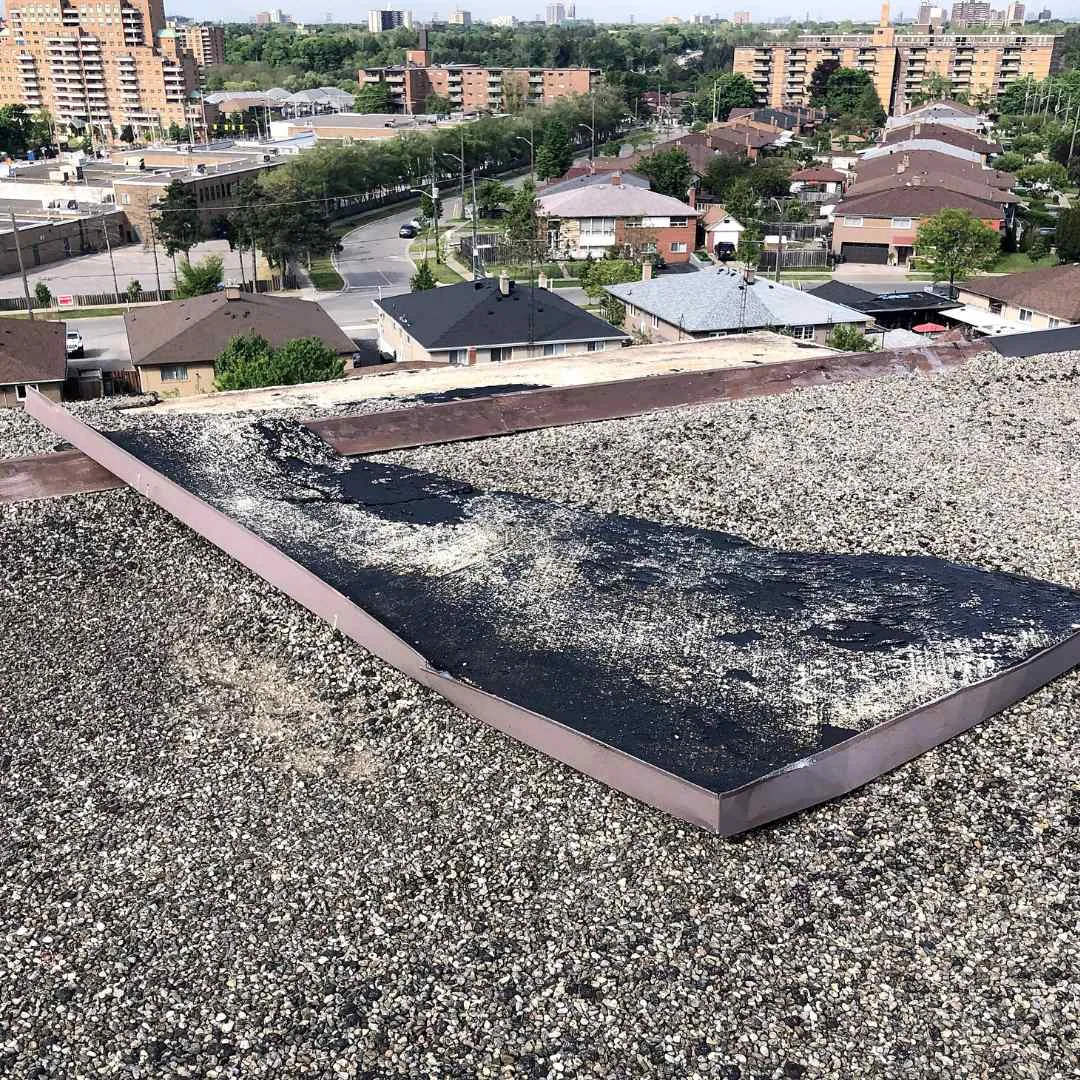
A brand name on an old invoice says what a purchasing agent ordered, not what sits on the building today. Roofs get patched, recovered and partly replaced, and a GAF sheet from one decade can lie beside another manufacturer's flashing from a later repair. So the first visit is a walk with a probe, a moisture meter and a camera. Seams that are welded smooth point to a thermoplastic sheet. Rolls lapped with a bead of asphalt at the edge point to modified bitumen. Granules collecting in the gutters point to a mineral-surfaced cap sheet that is shedding its protection.
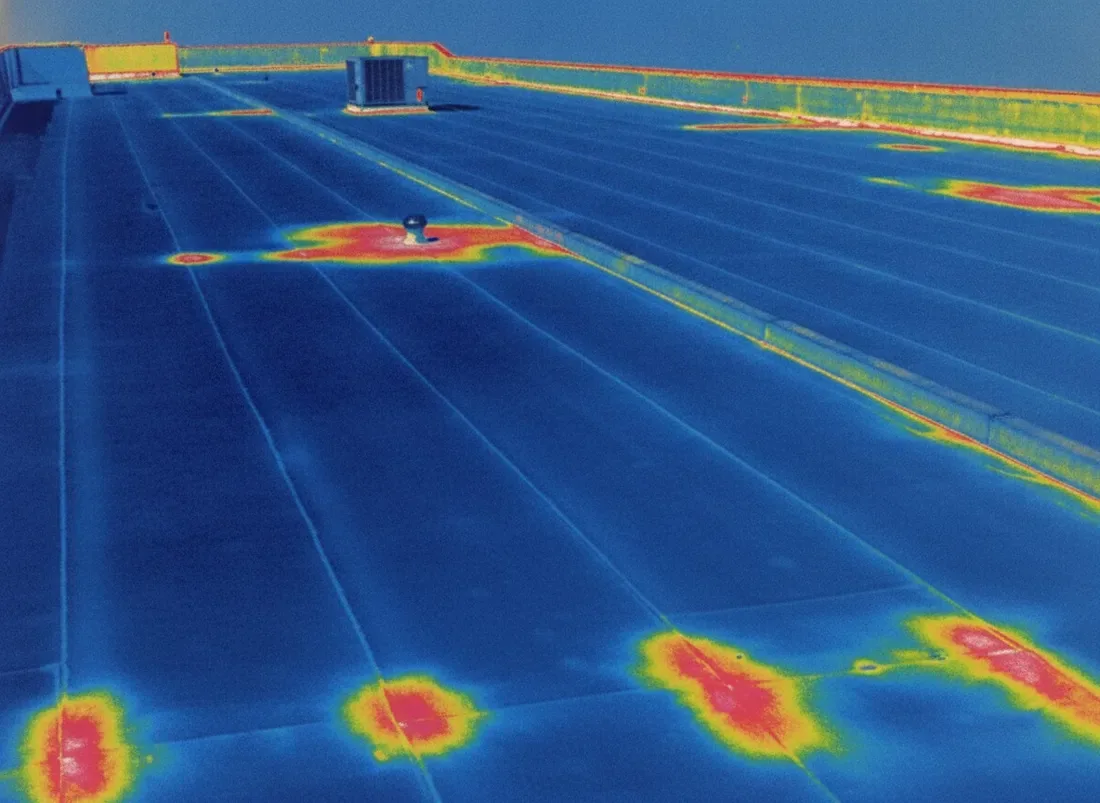
Where the eye cannot settle it, we cut a small core and read the layers. Thickness, reinforcement and the insulation underneath all change the repair, and a core costs far less than a wrong patch. On a large roof, an infrared moisture survey flown at dusk marks the wet insulation, because soaked board holds its heat longer than dry board, and those marks tell us where to cut first.
Match the GAF Line to How the Building Is Used
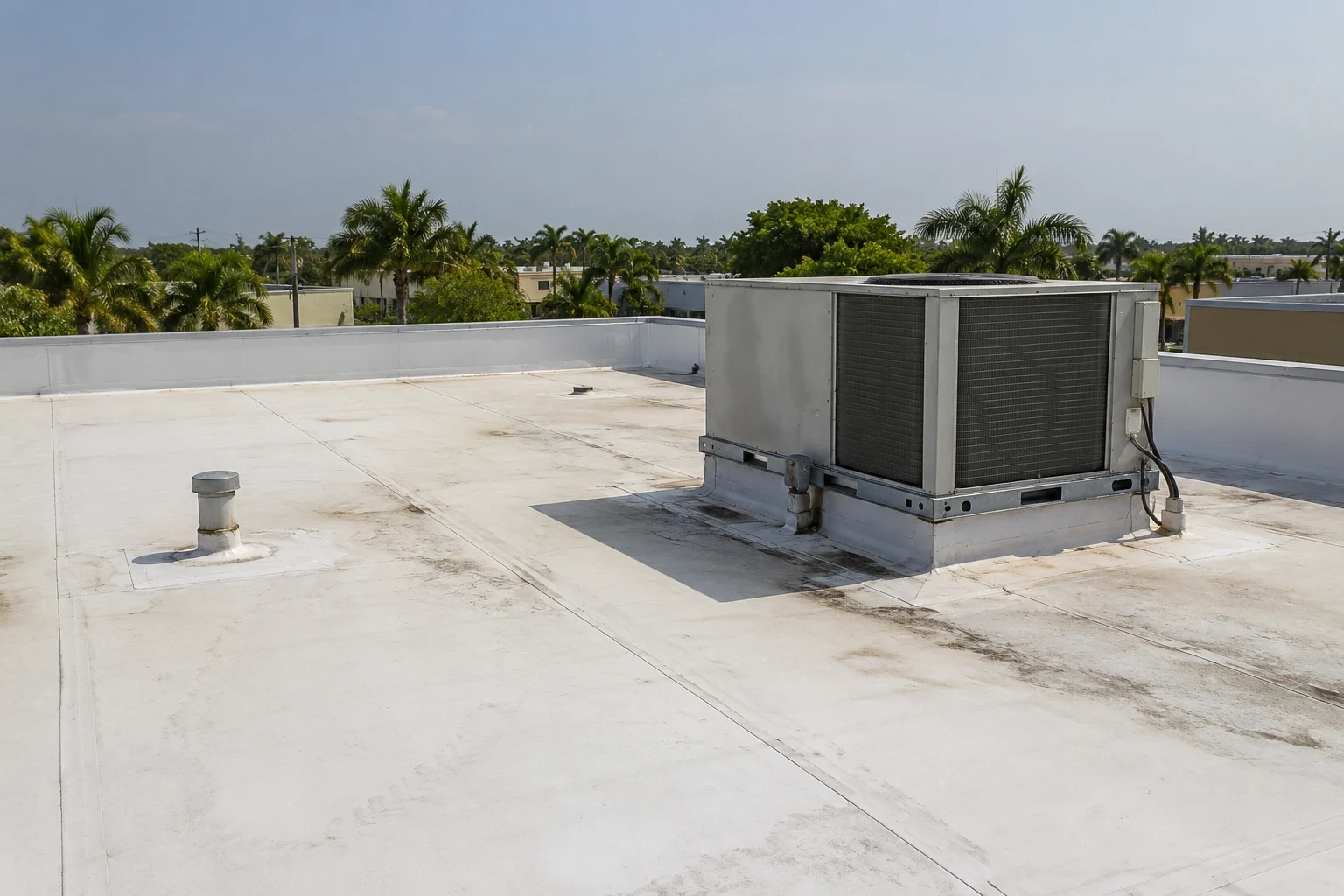
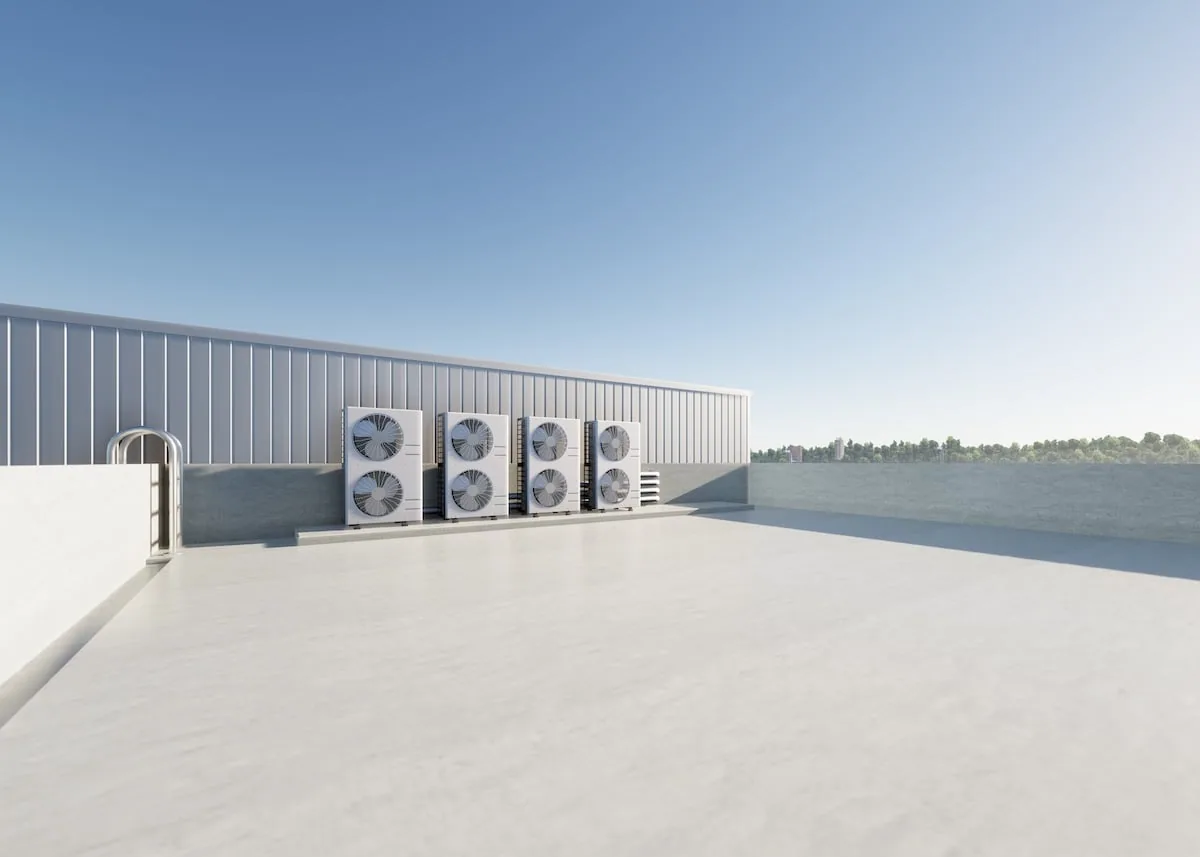
EverGuard TPO is the white, reflective sheet, heat-welded at the seams and quick to roll out over a steel deck. It suits a broad warehouse roof with few penetrations, where a TPO membrane can run in long, clean strips.
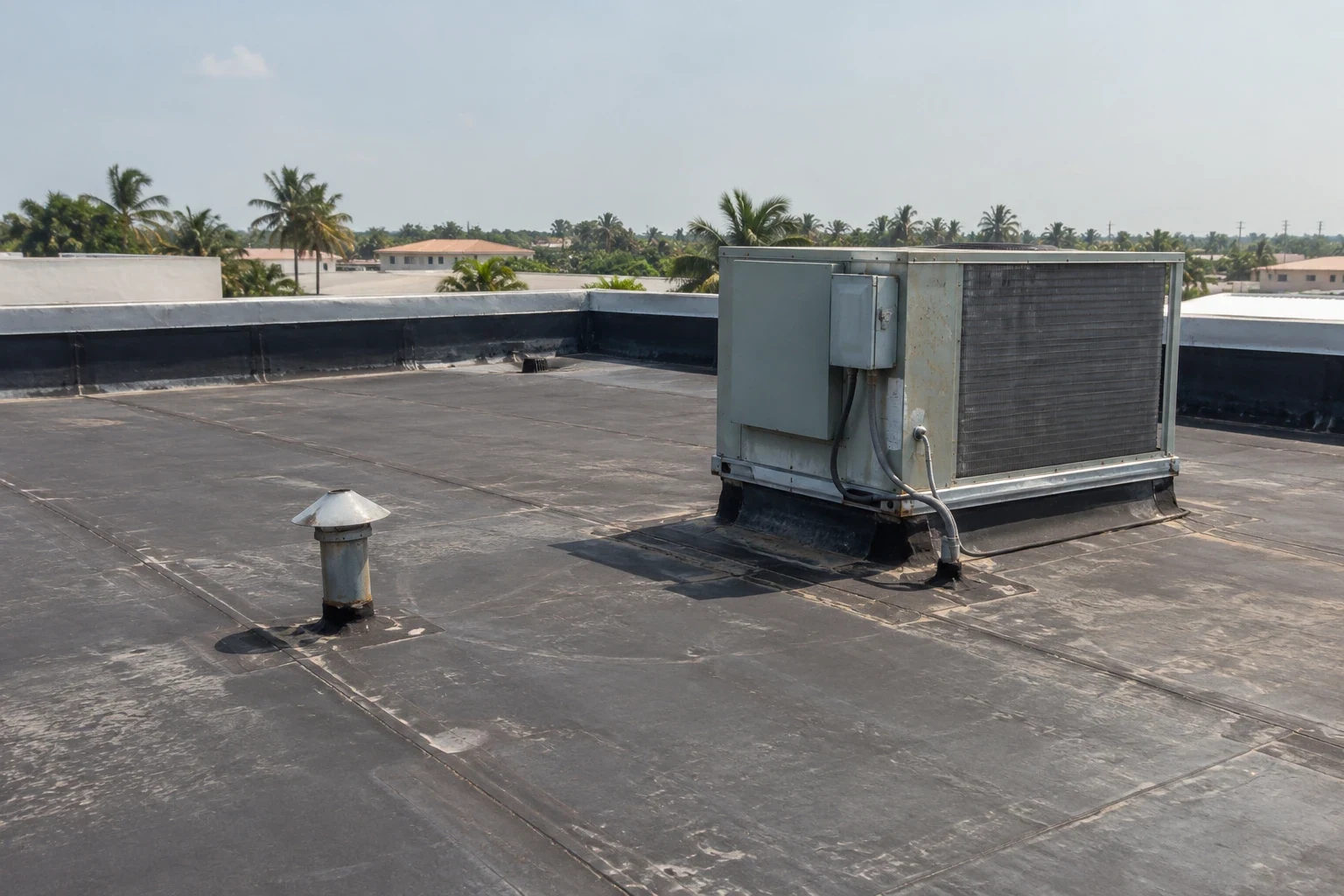
Liberty is peeled and pressed down without a torch, which matters wherever open flame is the problem. Ruberoid and the layered bitumen lines go where the roof earns hard use: mechanical yards, roofs with steady foot traffic, and buildings whose owners like having several plies of asphalt and reinforcement between the weather and the deck. We install and repair modified bitumen and built-up roofs alike, so the choice follows the building and not the crew's preference.
Pull the Hot Work Permit Before the Torch Arrives
Along the SH 225 corridor, a single spark can stop a job. Any torch, kettle or heat gun on a roof near a refinery or tank farm needs a hot work permit, a fire watch that stays after the last flame is out, and a site safety orientation for every person who goes up the ladder. That paperwork can take longer than the roofing, so we start it at the planning meeting, not on the morning of the crane pick.
Self-adhering Liberty changes the conversation. With no open flame, the permit discussion gets simpler on buildings beside process units, and the sequence turns on temperature instead. On a cool winter morning the sheet wants warmth to bond, so we stage rolls in the sun, prime where the spec calls for it and press the laps with a weighted roller. In August the problem flips and a hot sheet softens underfoot, so lifts move to the early shift. Inside the Bayport Industrial District, a plant's own contractor orientation comes before any material goes up the crane.
Tie the Edge Down for the Next Beryl
Wind does not read the spec sheet. Beryl in July 2024 passed with its eastern eyewall over greater Houston, and the derecho two months earlier put winds near 100 mph downtown by survey estimate. The January 2023 tornado cut across Fairmont Parkway and caused roof damage at Pasadena Memorial High School and several businesses. Whatever the storm, the first place wind attacks a low-slope GAF roof is the perimeter, where uplift concentrates and one loose edge can start a peel that runs across the field.
On a GAF roof, the edge is rebuilt or checked: metal fastened into solid blocking, extra fasteners or adhesive in the corner zones, terminations tight and sealed. East of State Highway 146, the windstorm insurance zone puts a reroof through the state inspection program, so the attachment schedule is written down before material is ordered. After a storm, wind damage repair starts with a dry building and ends with a close look at the edge before anyone calls the roof sound.
Repair Inside the System, Not Beside It
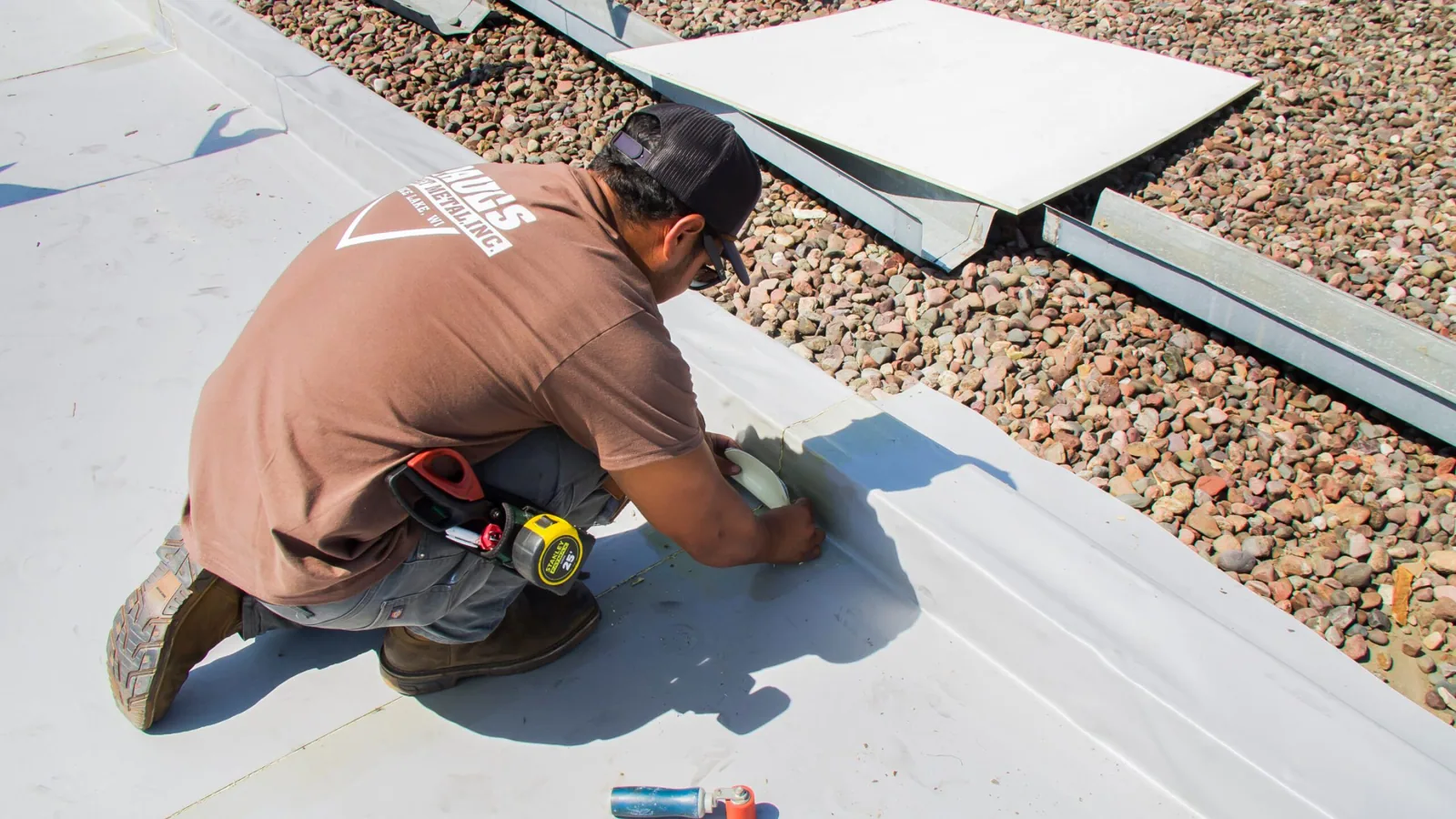
A leaking seam on a GAF TPO sheet is repaired with TPO, welded, not smeared over with mastic. A split in a Liberty lap gets a compatible modified bitumen patch. Mixing chemistries is how a small leak becomes a roof-wide blister, because asphalt-based products are incompatible with some single-ply membranes and many sealants shrink away from thermoplastic within a season.
If the roof is still under a manufacturer's warranty, the warranty document spells out who may repair what and how quickly the manufacturer must hear about a leak. We read it before we cut anything, photograph the work, and keep the paperwork with the rest of the roof warranty management file so a later claim has a trail to follow.
Leave a File the Next Facility Director Can Use
Facility directors move on; roofs stay. At closeout we hand over photographs of every termination, drain and curb, the attachment schedule, the test results, and a one-page map showing where the roof changes from one GAF line to another. For an owner with several buildings along Spencer Highway and Fairmont Parkway, those files make the next replacement a line in a capital plan instead of a Monday-morning surprise.
Commercial Roofing Questions
The original installer is out of business. Who handles a leak on our GAF roof now?
Any capable commercial roofer can repair it, and the leak does not have to wait for the original crew. What matters is matching materials and keeping the paperwork whole. We start with the file: install date, system type, past repairs. Then we repair with compatible products and log the work. If the manufacturer must be notified, we prepare the photographs and written scope for you to send.
Granules are washing off our bitumen roof into the gutters. Is the roof finished?
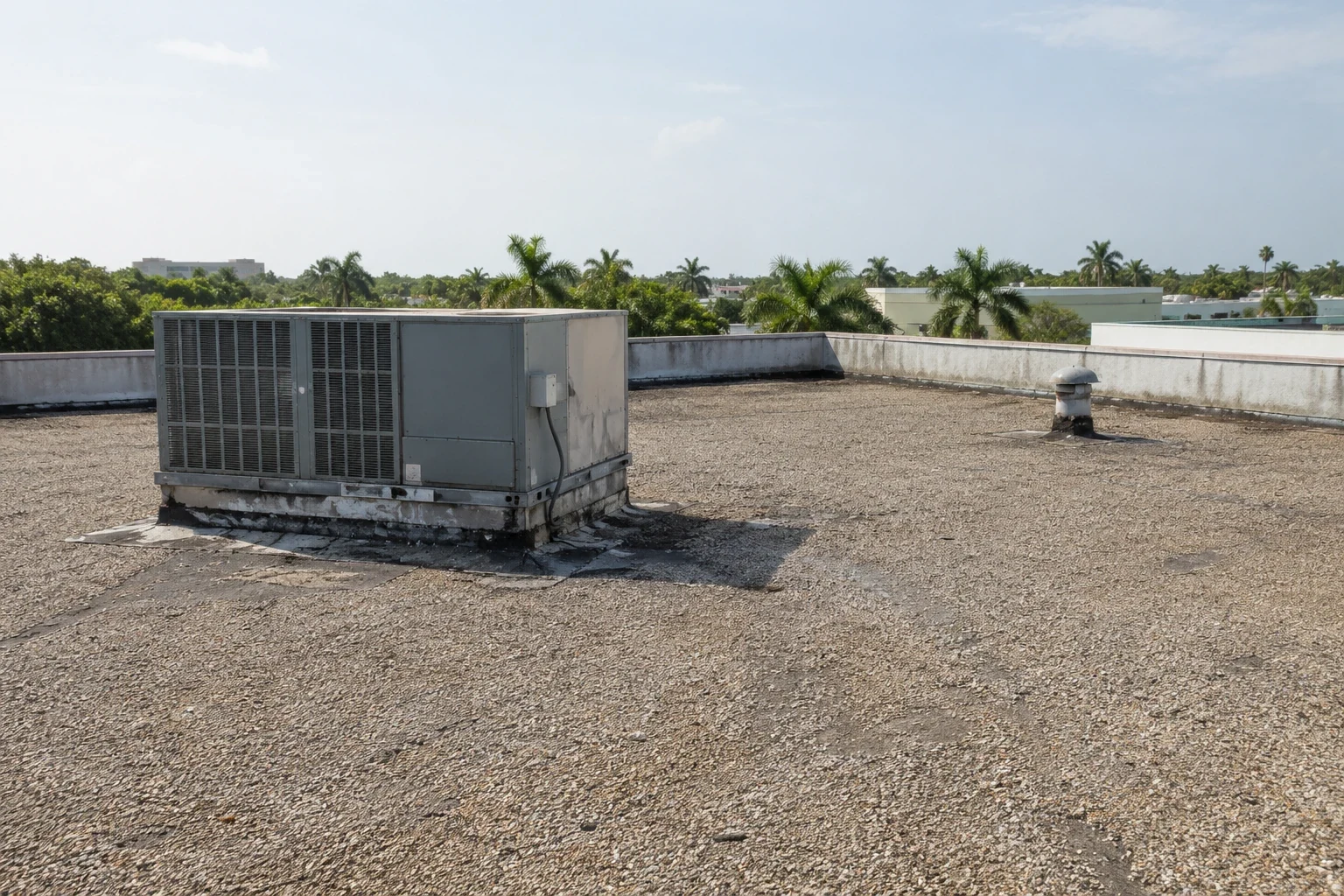
Not by that alone. Granules shield the asphalt from sun, so bare patches age faster, and the real questions are how much asphalt is exposed and whether the plies beneath are still tight. A moisture survey and a few cores answer both. Where the plies are sound, a coating or a new cap sheet can carry the roof several more seasons.
Can a self-adhering membrane go down in a Houston-area summer?
With adjustments to the workday, yes. Surface heat on a dark deck can pass what the sheet tolerates, so we start early, keep rolls shaded until they are needed, and finish laps before the afternoon sun is at full strength. Primer, deck moisture and afternoon storm cells all get checked before each day's first roll is unwrapped.
Our roof has GAF on one section and another brand beside it. Is that a problem?
It is common after tenant work or partial repairs, and it is manageable. The weak point is the tie-in where two systems meet, so we build that joint with flashing compatible with both. Roofs often carry a Carlisle SynTec or Versico section next to a GAF one, and the repair plan should record exactly where each begins.
How soon should a GAF roof be checked after a hurricane or derecho?
Within days, before the next rain. Wind can lift an edge, loosen a termination or push debris into the membrane without leaving a stain on the ceiling for weeks. We walk the perimeter first, then drains and rooftop equipment, and tarp or temporarily seal anything open so the building stays dry while insurance and repair scopes are sorted out.
Keep Reading
Related Roofing Work in Pasadena
Bring the Binder and Walk the Roof With Us
Bring the spec sheets, the dock schedule and any repair history you have. We will walk the building with your facility director and build a plan for the GAF system that fits how the operation runs.