
Roofing Manufacturers
Carlisle SynTec Roofing Systems in Pasadena, TX
A warehouse or maintenance shop that serves a container yard keeps the vessel's clock, not the office's. At the Bayport Container Terminal, five berths and a yard of 314 acres set the pace for the trucks, the cranes and every building that supports them, and a roof on any of those supporting buildings has to be worked around a schedule that cannot slip. Where a Carlisle SynTec membrane covers that kind of Pasadena, TX industrial building, the work runs best when it is planned like a vessel call: window, sequence, closeout.
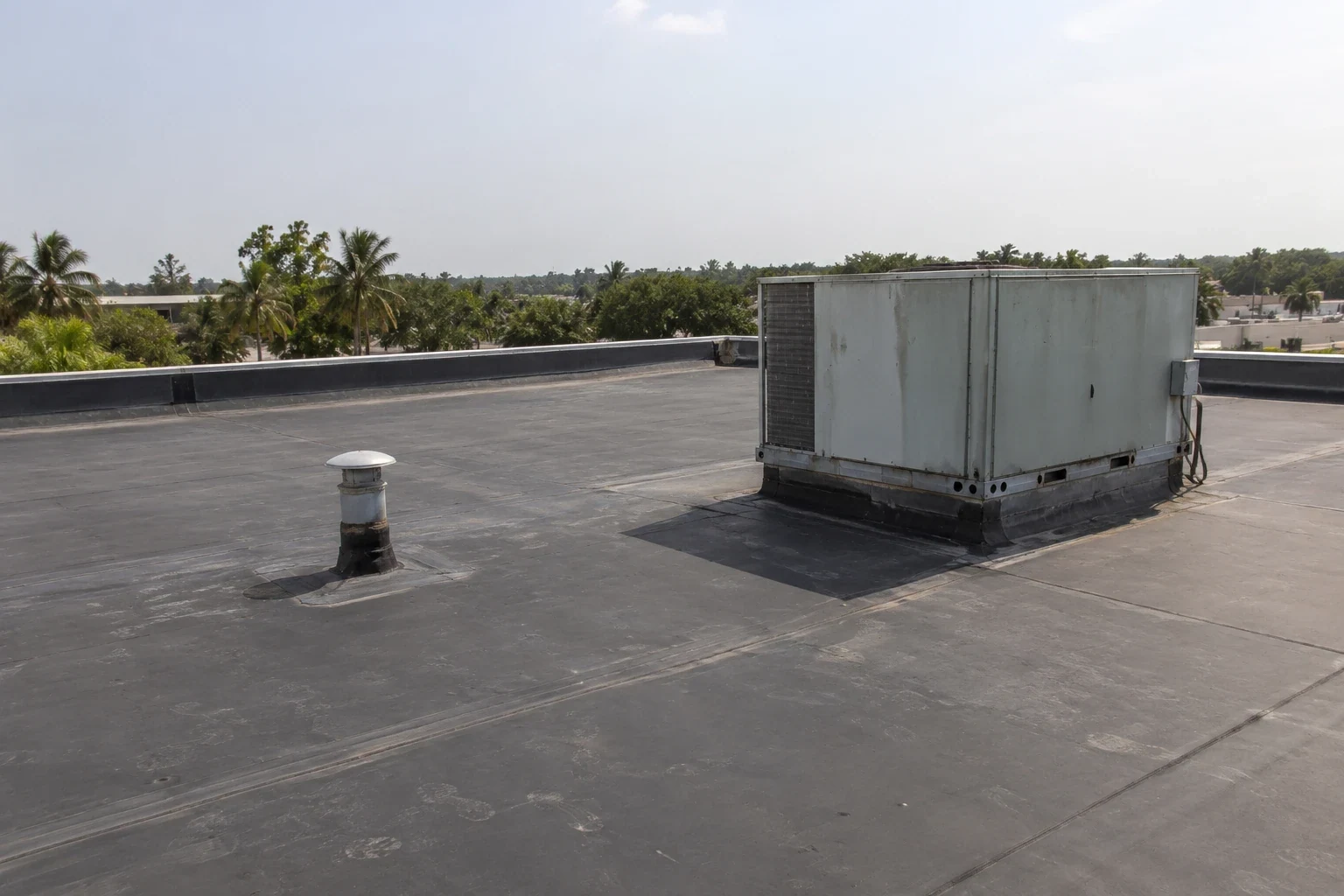
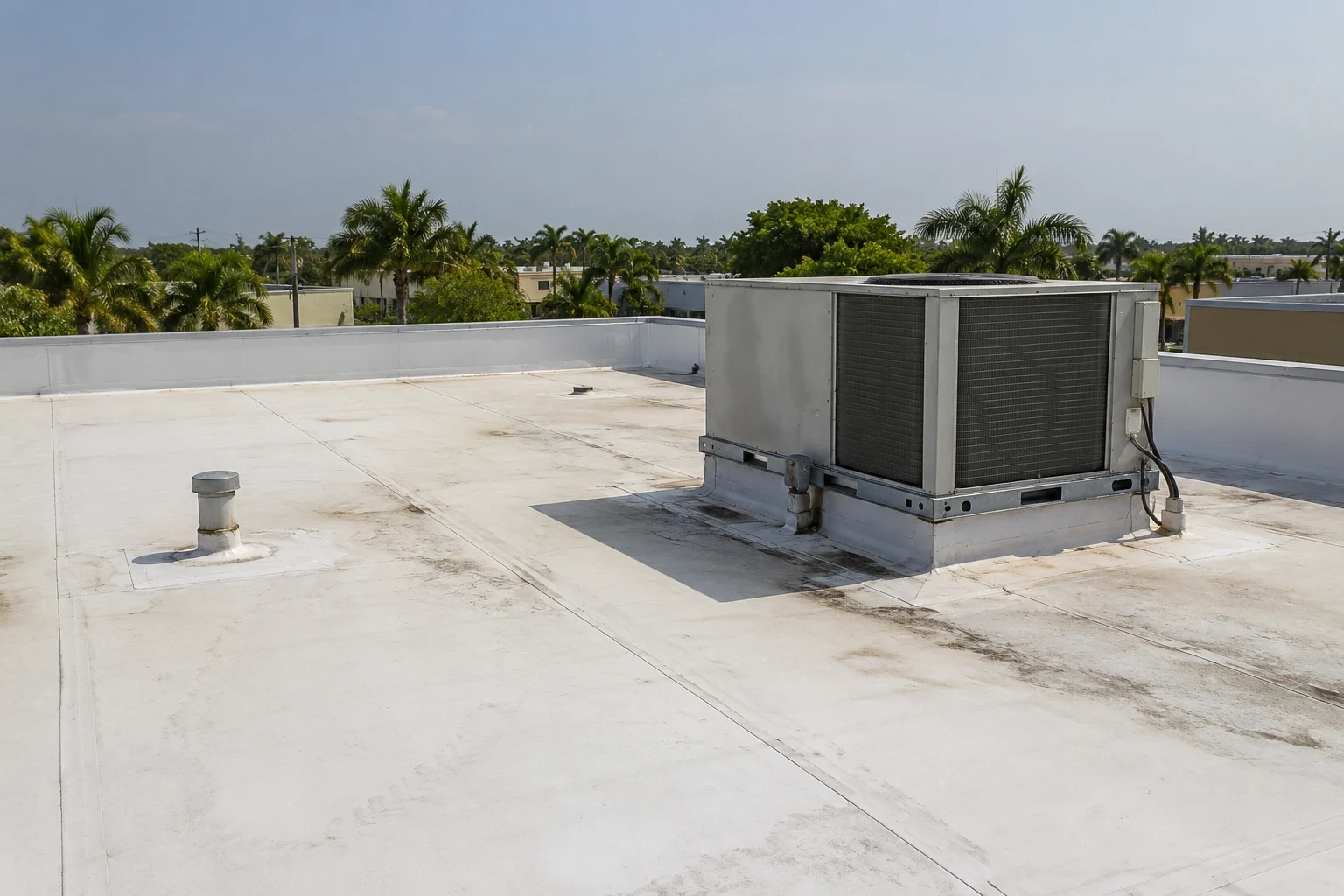
Carlisle's commercial lines are black and white EPDM under the Sure-Seal name, Sure-Weld TPO and Sure-Flex PVC, with fleece-backed versions of each for adhered installation. They look alike from a ladder and behave very differently on a roof. The first job is knowing which one is overhead.
Sort Out Which Carlisle Sheet Is Overhead
EPDM is a synthetic rubber, and its seams are joined with tape or splice adhesive, not heat. TPO and PVC are thermoplastics, and their seams are fused with hot air. A repair that works on one will fail on another, so the sort comes before the patch. We look at how the laps are made, check the underside of a loose corner for fleece, and read any stenciled or labeled information left on the field.
Condition matters as much as type. Rubber that has gone chalky at the surface, seams that have crept open at the tape edge, and shrinkage that pulls the sheet tight against a parapet are all signs EPDM has aged. Thermoplastics fail differently: dirt-trapped seams, cracked welds near fasteners, and surface crazing in the hottest part of the deck. We map each of these, then match the repair to the chemistry.
Use EPDM Where Rain and Foot Traffic Take Their Toll
Rain averages about 50 inches a year across Houston, and Hurricane Harvey in August 2017 remains the wettest tropical cyclone on record in the country. On a low-slope roof with a few tired drains, that water has nowhere to go but the membrane. EPDM roofing tolerates standing water better than most sheets, resists the hail that does occasionally reach the Houston area, and rides out the UV that wears at thermoplastics. Those are real advantages on roofs that hold equipment, are walked daily or have drains that sit a little high.
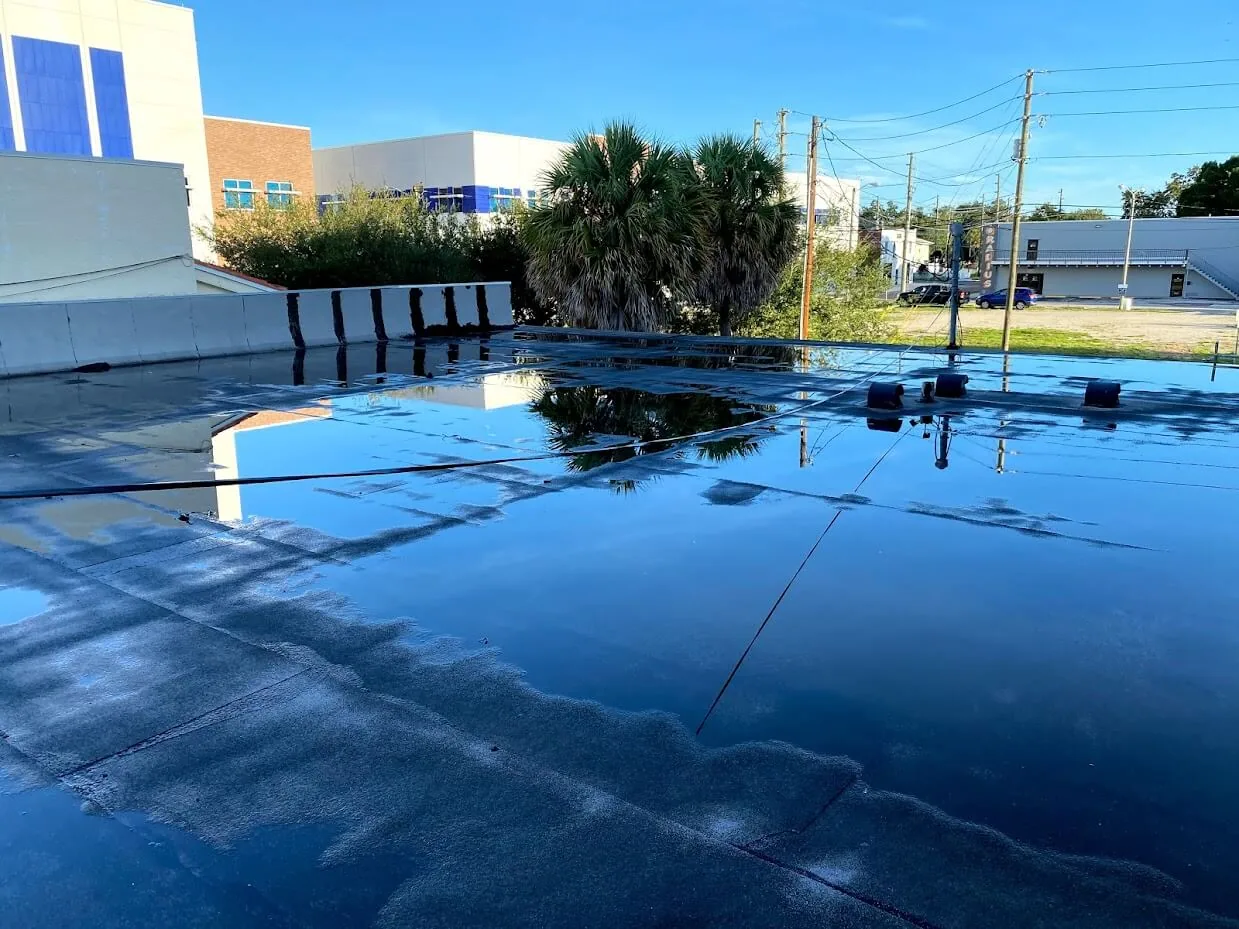
Tolerating water is not the same as inviting it. Ponding adds weight, grows algae and bleaches seams, so we still correct the low spots with tapered insulation or a new sump. Where water lingers after a storm, the ponding water repair comes before anything gets laid over the problem.
Check the Exhaust Before Picking the Membrane
Roofs in the Bayport Industrial District sit among more than 60 chemical plants, and any vent or stack that discharges oil mist or process vapors can put it on the membrane. Black EPDM is vulnerable to petroleum, swelling and softening where oils collect, which is why a roof under a vent stack gets a close look before the membrane is chosen. TPO and PVC offer more chemical tolerance, and PVC in particular is the usual answer where grease or solvent vapors land on the roof.
That logic is why we ask the maintenance supervisor where the exhaust goes. Sometimes the answer is a protective walk pad and a splash guard under the vent. Sometimes it is a different sheet within the same manufacturer's catalog, such as Sure-Flex PVC beside a TPO field. In either case, TPO can serve most of the roof while a more resistant sheet handles the hot spot.
Stage the Rolls and the Insulation for the Crane Pick
A Carlisle reroof is a materials problem before it is a roofing problem. Insulation boards, cover board, rolled membrane, adhesive drums and fasteners arrive in a certain order and have to be set where the crane can reach them without crossing a truck lane. We draw the laydown area on the yard plan, schedule the crane pick for the quietest shift and keep the staged material covered against the afternoon thunderstorms that build off the Gulf.
Behind that comes the cutting plan. We open only the area the crew can dry in before quitting time, tie each open edge into the old roof, and keep the work area isolated from the building's night shift. On a full commercial roof replacement near the terminal, that discipline is what keeps a dock door open and a trailer moving.
Weigh Humidity and Heat Against the Adhesive
Adhered Carlisle systems ask the deck to be dry, clean and the right temperature when bonding adhesive goes on. Houston summer mornings run above 90 percent humidity, and an August afternoon, with an average high near 95 F, can push a dark deck far past what the adhesive wants. We check dew point and deck temperature before each run, hold off when the surface is damp, and shift adhesive work to the part of the day when conditions hold.
Fleece-backed sheets give another path, because the adhesive or foam goes on the substrate and the sheet is set into it. They reduce the number of penetrations in the deck and suit buildings where fasteners cannot be allowed to show below. A firm cover board beneath either method gives the sheet a flat, consistent bed and helps it resist punctures from tools and foot traffic.
Close Out the Splice, the Walk Pad and the Record
The last day of a Carlisle job is spent on small things: seam probes on thermoplastic, tape and primer checks on EPDM, walk pads along every route to rooftop units, and photographs of each termination. We record the findings by area and hand the file to the facility director. When the next owner or the next maintenance contractor asks what is on the roof, the file answers it.
Commercial Roofing Questions
Is a black EPDM roof too hot for a Pasadena summer?
Black rubber absorbs more heat than a white sheet, and the building under it pays in cooling load during the long run of days above 90 F. Whether that matters depends on what the space holds. A warehouse with no air conditioning feels it little. A cold room or an office feels it more. White EPDM and TPO exist for those cases, and a coating can also change the roof's reflectance later.
The splice tape on our EPDM roof is lifting at the seams. Can it be repaired?
Usually, if the sheet itself is still flexible. We clean the lap, prime it, and set new seam tape or a cover strip, then roll it firmly. Where the rubber has hardened or the edge has lost adhesion across a long run, a patch is a short-term fix, and a conversation about recovering or replacing that section is more honest.
Can a fleece-backed sheet go over our old roof without a tear-off?
Often it can, provided the old insulation tests dry and the local limit on roof layers has not been reached. A cover board separates old from new, and the fleece-backed sheet is bonded to that board. Where core samples or infrared scanning find wet areas, those sections come out first so the new roof does not seal moisture in.
Does standing water ruin an EPDM roof after a storm like Harvey?
A few days of water will not ruin a sound sheet, but weeks of it will wear seams, grow algae and add real weight to the deck. After an event of that scale we check drains and scuppers for debris, look for low areas, and confirm the deck has not deflected. Persistent ponding should be corrected rather than tolerated.
How does Carlisle compare with other single-ply makers when we are choosing for a plant?
The membrane family often matters more than the brand name on the box. EPDM, TPO and PVC each have strengths, and so do the offerings from Versico, Sika Sarnafil and others. We compare chemical exposure, foot traffic, attachment method and schedule, then recommend whichever sheet the building actually calls for.
Keep Reading
Related Roofing Work in Pasadena
Walk the Yard and the Roof Together
Send us the site plan, the shutdown windows and anything you know about the exhaust on the roof. We will walk it with your facility director and build a Carlisle plan that fits how the operation runs.