
Roofing Capabilities
Roof Asset Management in Pasadena, TX
A property group with a warehouse off Beltway 8, a strip center on Spencer Highway and a clinic near Fairmont Parkway usually holds three leases, three maintenance contacts and three different answers to how old each roof is. Nobody is careless. The records simply live in a former manager's inbox, a contractor's invoice folder and a stack of warranty letters in an owner's office.
Roof asset management in Pasadena, TX replaces that scatter with one register: every roof area on every building, what is on it, what shape it is in, what was done to it and what it will need next. The Gulf Coast sets the pace, because heat, humidity and storm wind age membranes faster than a calendar suggests. A register lets a facility director act on evidence instead of on whichever roof leaked last.
Build the Inventory Before Anyone Ranks Anything
The first visit produces facts, not opinions. We walk each building with the facility team and draw the roof as separate areas, because a single address often carries four or five roofs of different ages: the original low-slope section, an addition from a later decade, a mechanical platform, a canopy over the loading dock. Each area gets an identifier that stays with it for good.
For every area the record holds:
- the roof system and, where it can be confirmed, how it is attached;
- the insulation and cover board, from core samples or old drawings;
- the drain and scupper count, and where each one discharges;
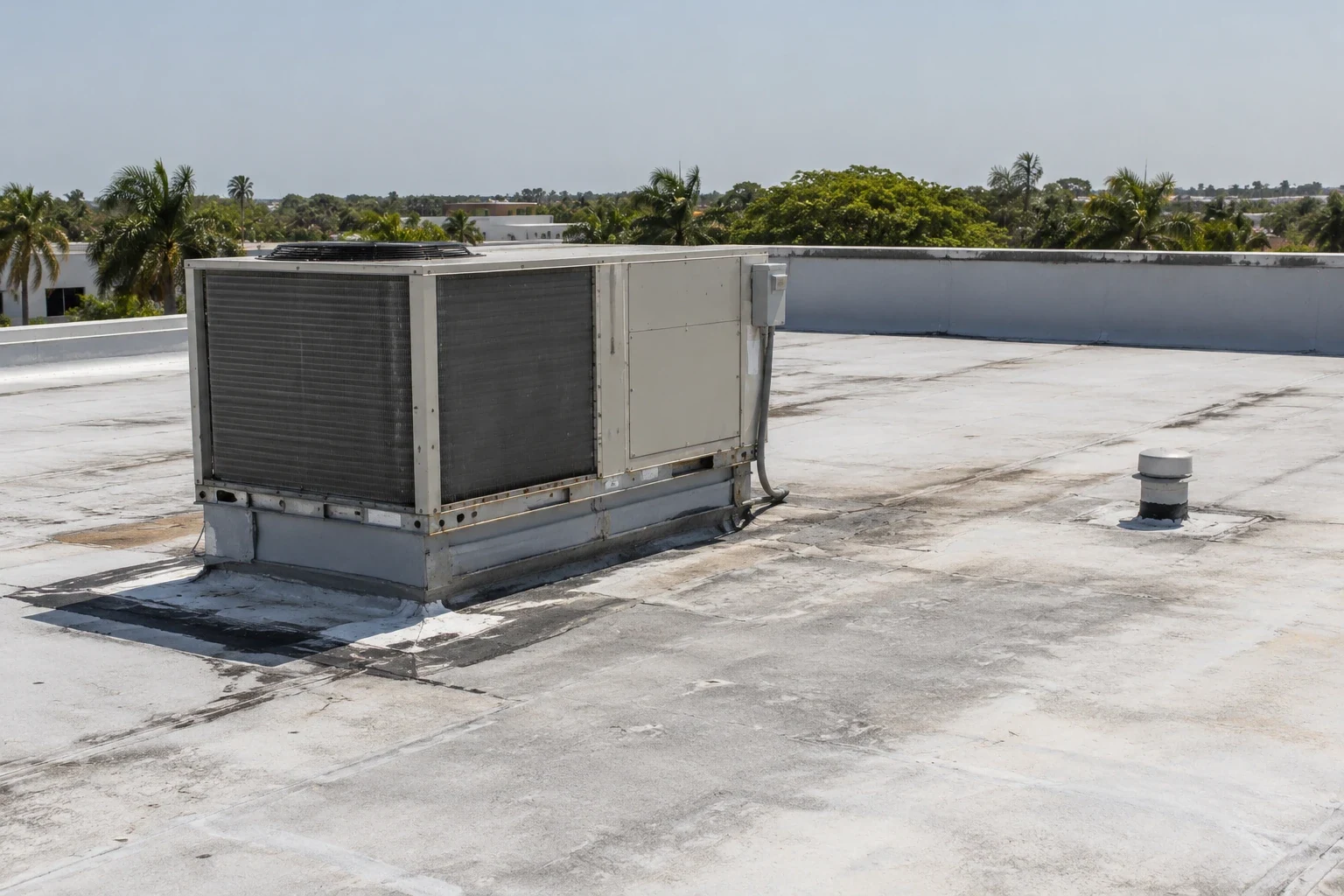
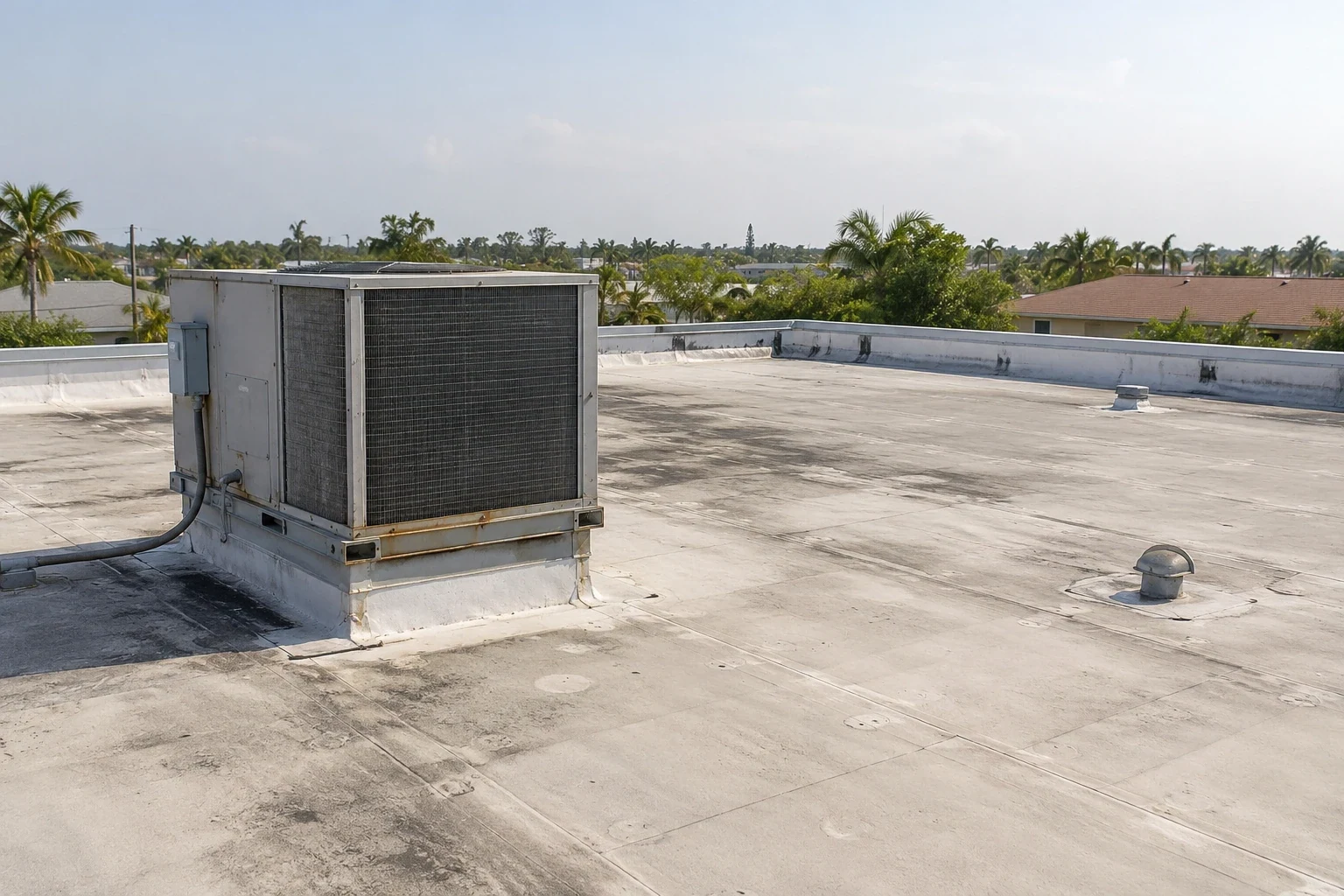
- every rooftop unit, exhaust fan and conduit run that pierces the surface.
Photographs go in with a position on the plan. A year later, the same view from the same spot shows whether a stain grew.
Score Each Roof on What a Failure Would Stop
Condition alone does not rank a roof. We score three things on each area: whether it is keeping water out today, how much service life the system has left, and what a leak would interrupt inside. The third question changes the order. A tired membrane over an empty shell can wait a budget cycle. The same membrane over racking, a pharmacy stockroom or an electrical room cannot.
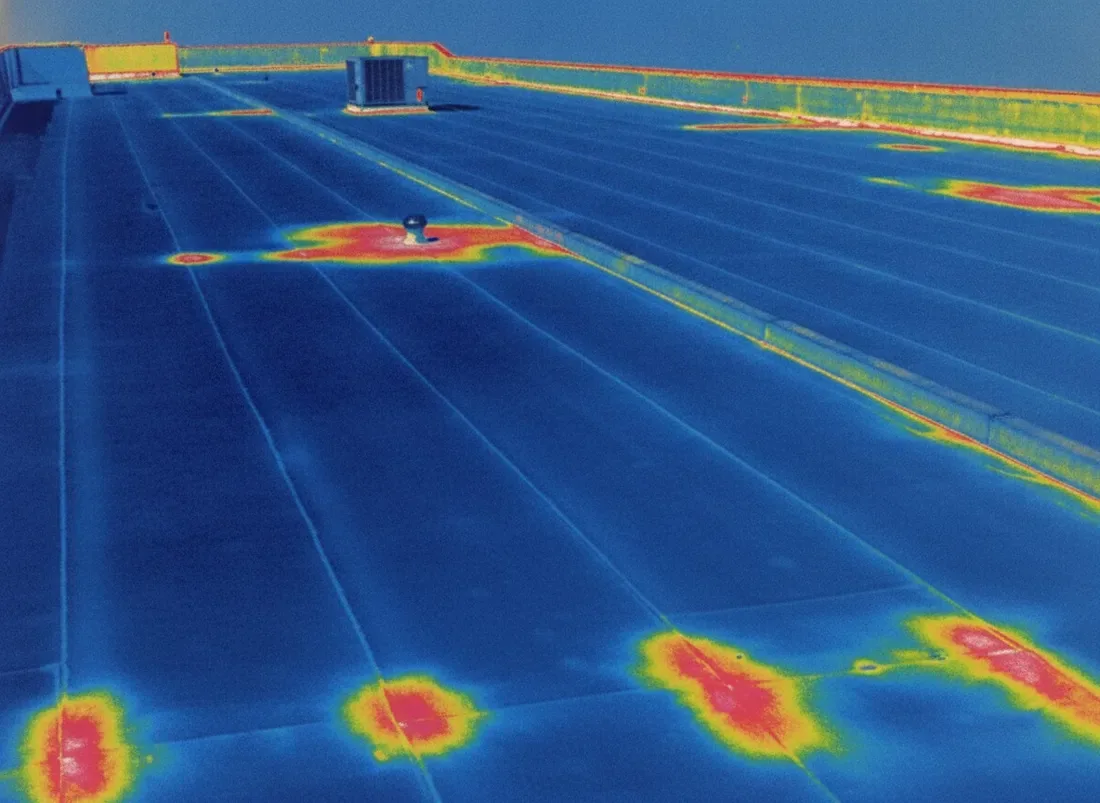
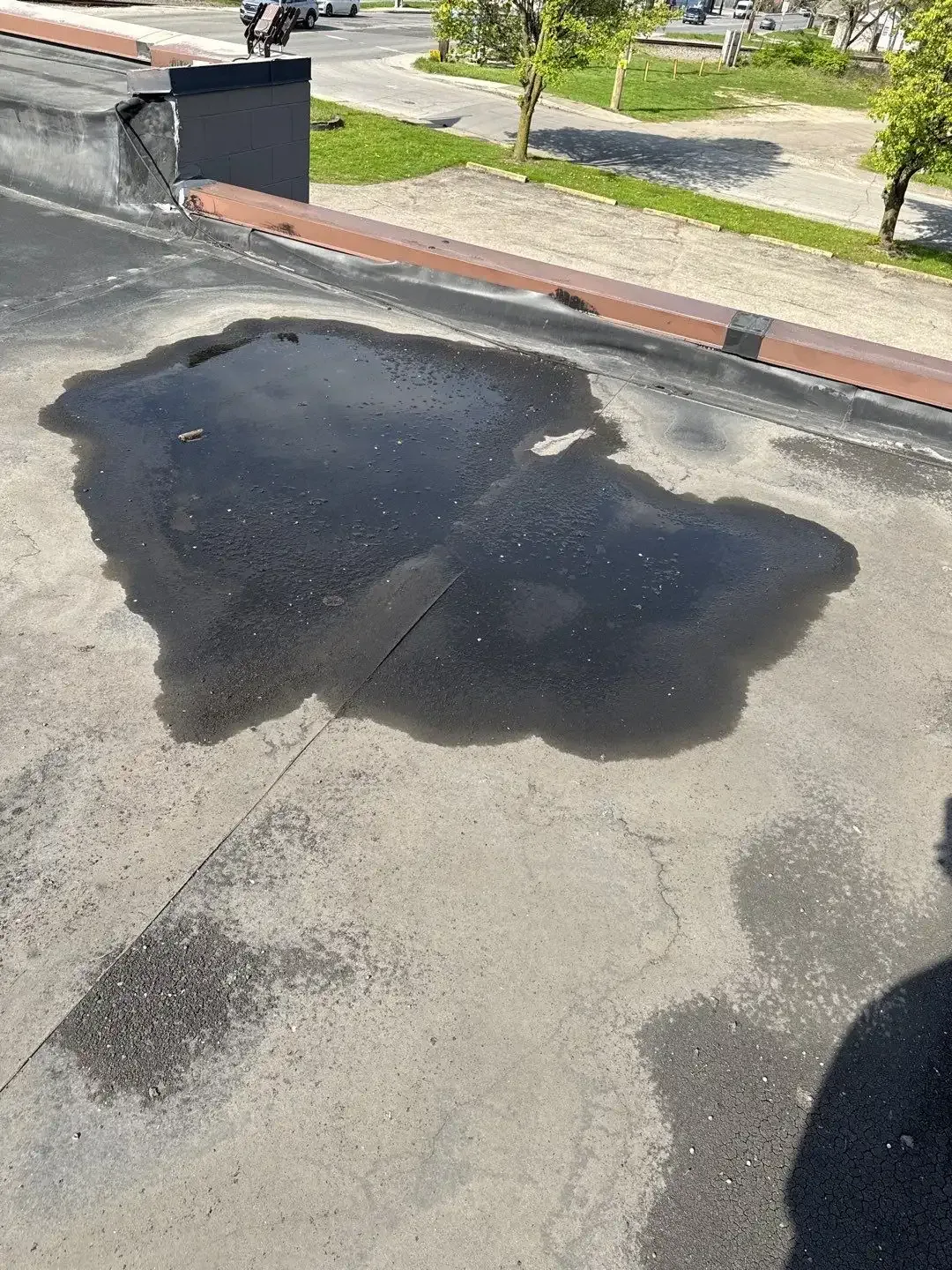
The surface score comes from what we see and measure: blisters, open seams, water still standing two days after rain, split flashing, chalked or crazed coating. Houston summers raise the stakes, with August highs averaging near 95 F and roughly 102 days each year reaching 90 F or more, so dark single-ply and modified bitumen surfaces carry heavy heat and ultraviolet load through a long season. Where a surface looks sound but the readings do not, the register flags the area for an infrared moisture survey before anyone commits money to it.
Tie Every Repair to the Roof Area It Touched
A register earns its keep when a repair appears in it the same week it happens. Each work order is logged against a roof area, not just a street address: the date, the spot marked on the plan, the cause as found, the material used and the crew that did it. Other trades matter here. When a technician swaps a unit on its curb and leaves a boot torn, the record shows who was on the roof that week, and the owner has an answer when the lease or the warranty asks who was responsible.
Patterns are the real return. One patch near a drain is routine upkeep. Three patches in the same corner over two summers point at something structural, such as a low spot, a failing termination or wet insulation spreading under the membrane, and the register calls for a closer look instead of a fourth patch. Scheduled preventive roof maintenance visits feed their findings into the same file, so the pattern surfaces without anyone hunting for it.
Rerun the Ratings After Every Gulf Storm
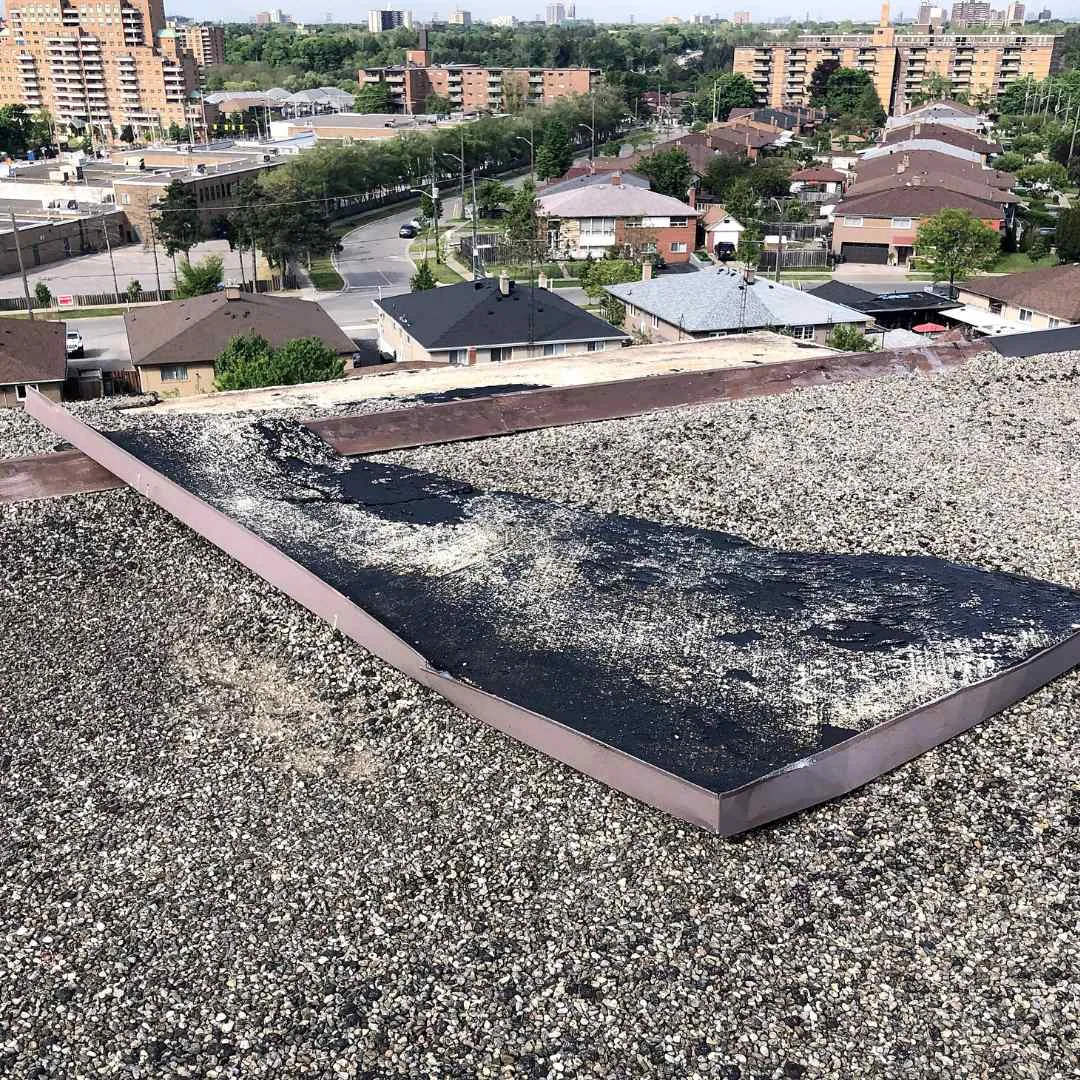
Gulf storms reset every rating. Owners here have had plenty of reasons to rerun them: the January 24, 2023 EF3 tornado that crossed Fairmont Parkway, a 97 mph gust at Bush Intercontinental Airport that June, the May 2024 derecho across Greater Houston, and Hurricane Beryl over the Houston region in July of that year. Wind of that kind works on edges, flashing and rooftop equipment, so the register's job after a storm is to show which of those details moved.
The register turns the first week after a storm into a sequence. Buildings with the oldest edge metal or the most sensitive contents get walked first, because that is where wind damage starts. Roofs with a recent photographic baseline are compared against it, which separates new damage from old wear. That separation carries weight in an insurance claim, since an adjuster can compare dated before-and-after images against the loss. Buildings east of SH 146 sit inside the Texas Windstorm Insurance Association area, so each of them also carries its windstorm inspection status as a separate field.
Give Finance One Ranked List
The register ends up as one ranked sheet an owner can read. Roofs sort into three bands: stop the water now, correct within the year, and plan for a later budget. Each line carries the area, the finding, the recommended action and the cost drivers behind it, such as deck condition, how much insulation is wet and how many penetrations need new flashing, with access on an occupied building priced as its own item. Finance reads the same list the facility director reads, and neither has to translate.
The band totals feed capital budget planning, and each roof's detail sits behind its line in a written roof condition report with photographs. Owners with many addresses can carry the same structure into a multi-site roof program with shared scopes and one schedule, which suits the property managers who answer for several owners at once. Track Spencer Highway medical and education corridor roofs separately.
Commercial Roofing Questions
Our seller kept no roof records on the three buildings we just bought. Where does the register start?
Start with the roof that carries the highest cost of failure, not the oldest one. We walk it, draw the areas, take core samples where the budget allows and photograph every penetration. Old permits, insurance loss runs and the previous tenant's repair invoices fill in the history. The rest of the portfolio follows in the order the contents inside dictate, and each finished roof speeds the next because the field list is already settled.
Does the register need special software, or will a spreadsheet hold it?
A spreadsheet holds it, provided every row is a roof area rather than a building and every photograph carries a location. Software starts to pay when several people update the file or when work orders arrive from more than one contractor. We hand over the data in whatever format the owner already uses, so the register lives where the facility team works instead of behind a login nobody opens.
Who inside our organization should own the register?
Ownership belongs to whoever signs the roof work orders, usually the facility director or the property manager. Finance reads it, leasing consults it and contractors add to it, but one name keeps it current. When that person changes, the handoff is a short walk through the roof areas with the incoming manager, which takes far less time than rebuilding the history from invoices.
Which fields change for buildings east of SH 146?
Two additions earn their place. The first is the windstorm inspection record, since roofing work in the Texas Windstorm Insurance Association area has to pass a state windstorm inspection for coverage to stay in force. The second is a closer reading of edge metal and deck fastening, because the windstorm inspection looks hard at how the roof is attached, and the register should hold that evidence before an inspector asks for it. Everything else in the register stays identical across the portfolio.
What happens to a roof's record when we replace the membrane?
The old record closes with its final condition photographs, and a new one opens the day the new system goes in. The new record holds the system, the insulation package, the detail drawings and the closeout documents, including whatever the manufacturer requires for the warranty. The area identifier stays the same, so the full life of that part of the building reads as one continuous line.
Keep Reading
Related Roofing Work in Pasadena

Start the Register With a Site Walk
Send the building list and whatever roof records you hold. We will walk the first sites with your facility staff and set up the register so the work plan fits how each property runs from day one.