
Service Areas
Commercial Roofing in Pearland, TX
Pearland Town Center is listed at 1.1 million square feet and Shadow Creek Town Center at 640,000, and any retail property at that scale raises the same roofing question: how do you work above a lot of tenants without putting a single storefront in the way of the next customer? The answer is a sequence, drawn up by bay and tenant, long before the first roll of membrane comes off a truck.
Pearland sits about 16 miles south of downtown Houston on SH 288, with Beltway 8 serving its north side, and the city counted 125,828 residents in 2020. Retail is one part of the commercial picture. Pearland ISD, Kelsey-Seybold Clinic and Memorial Hermann Pearland Hospital are among its listed employers, which means school calendars and clinic hours also set the pace of roof work here. Each of those has a different clock. We plan the job to the clock the owner actually runs on.
Treat Every Tenant as a Stakeholder
A multi-tenant center has one roof and many opinions about it. The landlord wants the work finished with minimal rent concessions. A restaurant tenant wants its exhaust fans running at lunch. A boutique wants its entrance clear on Saturday. So the work plan begins with a list: tenant names, lease constraints, delivery hours, blackout dates for busy seasons and the contact who answers the phone on each bay.
With that list in hand, we decide which bay opens first and which waits. Noisy tear-off gets scheduled over storage rooms and back-of-house space. Sensitive areas get protected from below where the lease allows access. The point is to keep each tenant's day ordinary. If the roof job is noticed at all, it should be as a sign on a fence line, not as a lost afternoon of sales.
Stage Trucks and Cranes Off SH 288 and Beltway 8
Two roads shape every delivery to a Pearland job. SH 288 ties Pearland to downtown Houston, and Beltway 8 serves the north side of the city. A long flatbed carrying rolls of membrane and pallets of insulation needs a route that avoids peak commutes and a place to stop that is not the fire lane. We plan the lift plan and the crane pick around both.
Material staging follows the roof's own layout. We set the laydown area at the edge of the lot farthest from the busiest doors, lift only the quantity the crew will install that day, and tie down everything that stays up overnight against the wind. A reroof done this way costs a little more in coordination and saves much more in tenant complaints, damaged merchandise and re-handled material.
Larger sites sometimes need several staging zones. The same staging logic applies to properties in Friendswood or at Meadowbrook / Allendale, adjusted for each lot.
Match Reflective Membranes to Gulf Heat
For plain retail roofs, a light-colored single-ply sheet does most of the work: TPO reflects heat and welds into a single surface, which suits the long, simple runs common on shopping buildings. Pearland shares the Houston-area climate: an August average high near 95 F, roughly 102 days a year at or above 90 F, and a 109 F reading at the Houston airports in summer 2023. Dark roofs absorb all of that, then pass it into the space below and into the air conditioning bill.
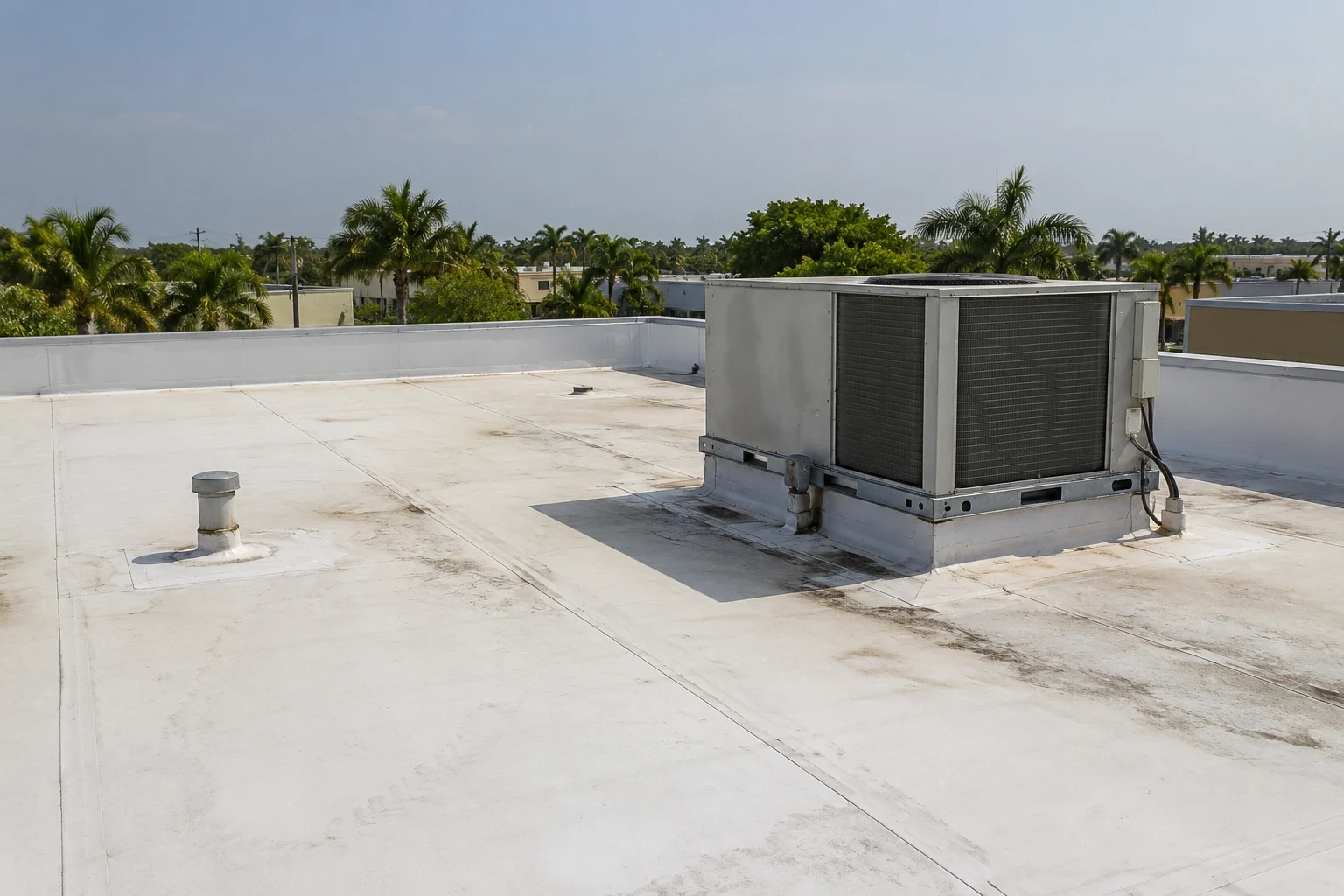
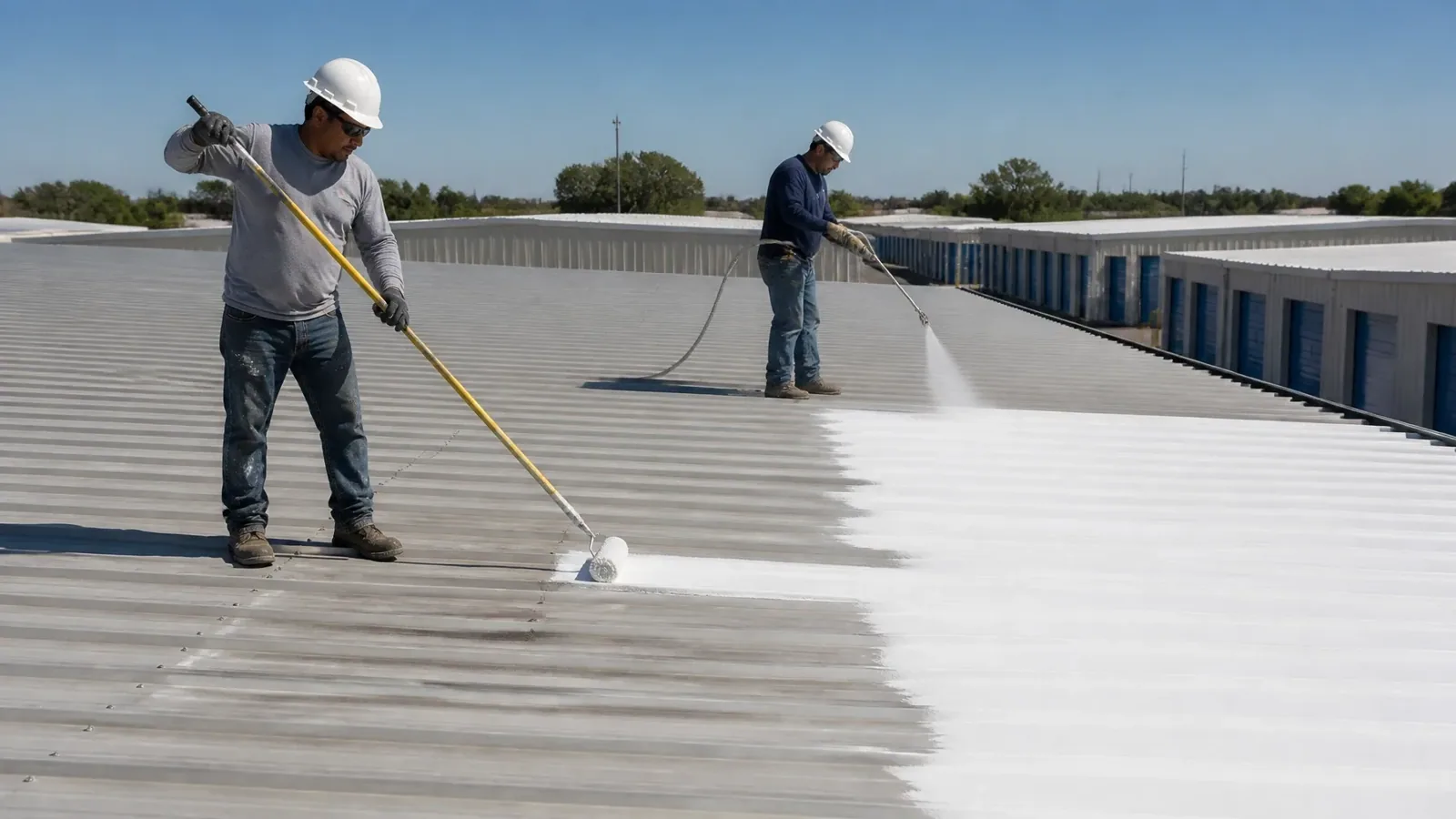
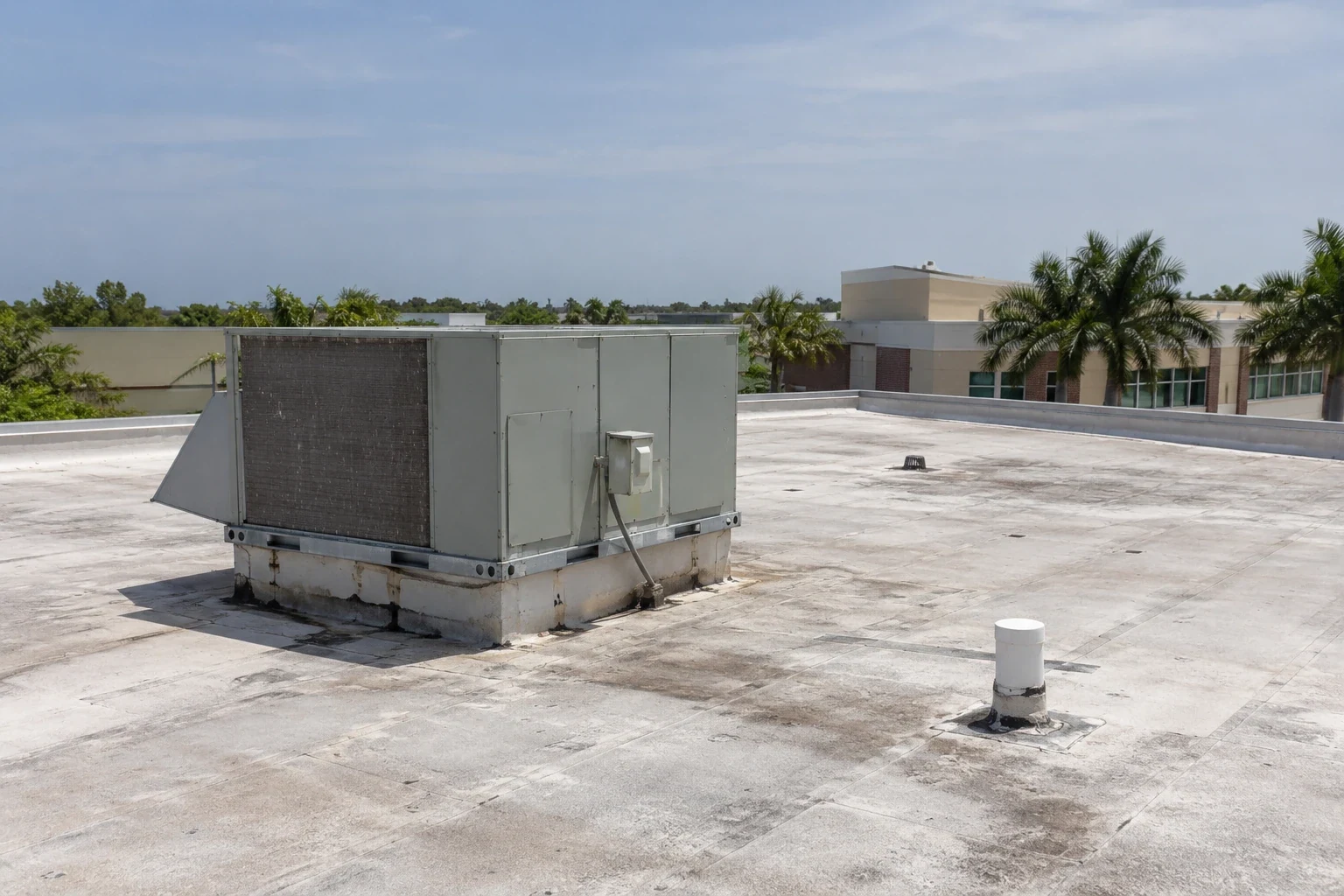
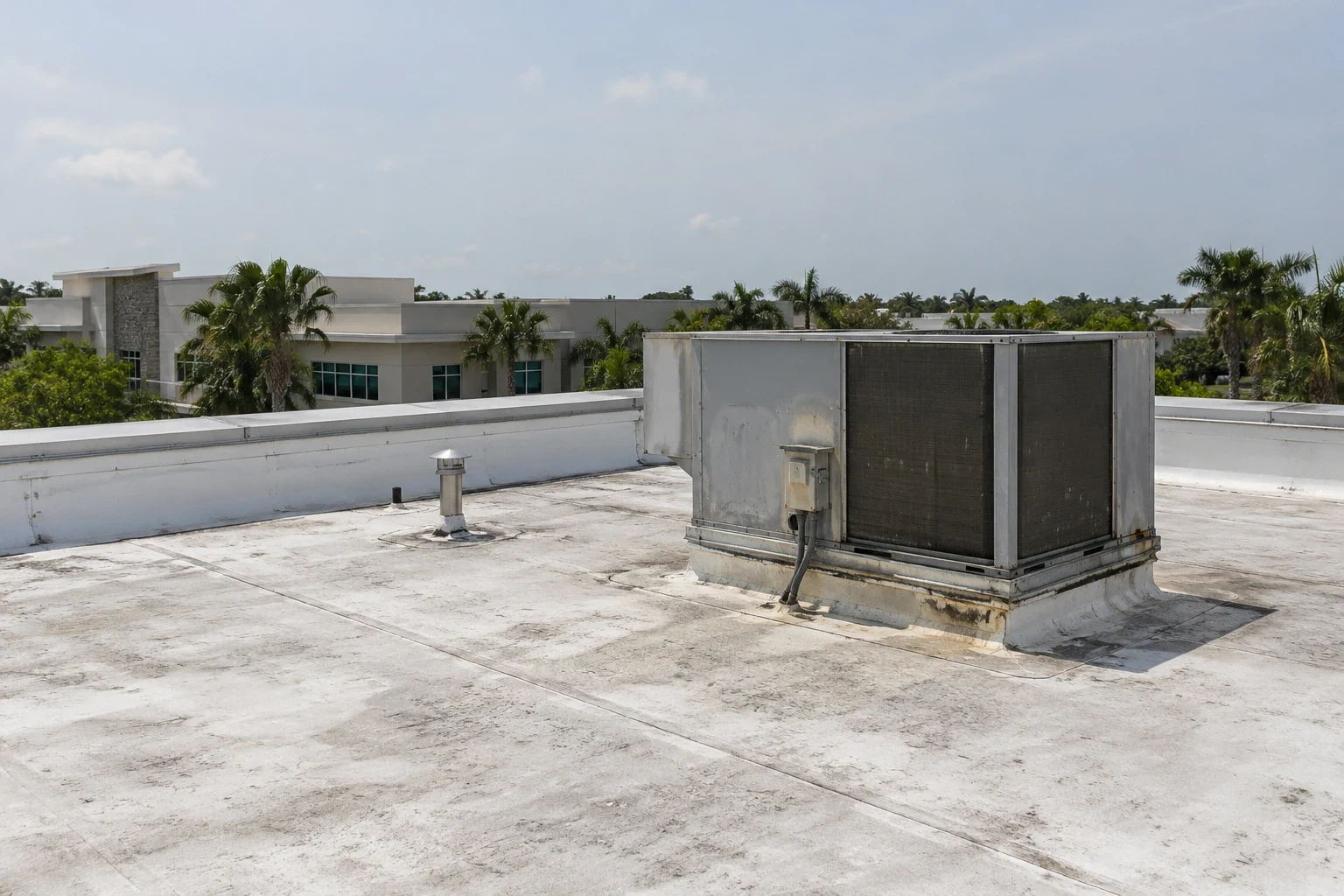
Details matter as much as the sheet. Rooftop units, parapets, signage supports and scuppers all need flashing that was made for them. We inspect every curb and every penetration, since that is where retail roofs leak first. Insulation and cover board are chosen for foot traffic from service techs who walk the same path every month. Where the roof is sound but worn, a coating restoration can extend its life without a tear-off, as long as the insulation below is dry.
Protect Clinic and Classroom Space Below the Deck
Pearland ISD, Kelsey-Seybold Clinic and Memorial Hermann Pearland Hospital are among the employers the city lists, and buildings that serve students and patients have their own rules. A school building has a summer window and a first-day-of-school deadline. A clinic has appointments and infection control. A hospital does not close at all.
For those owners the sequence tightens. Work above occupied space happens in small sections, each sealed by the end of the shift. Hot work waits on a hot work permit and a fire watch. Dust and debris leave by a separate route. Air intakes near the work area are covered or shut down on an agreed schedule. Each crew member completes a site safety orientation before the first lift. Details like these separate a roof project that is merely scheduled from one that is truly planned. The routine for school buildings and for medical offices differs mainly in which hours stay protected.
Inspect for Uplift After a Derecho or a Hurricane
On May 16, 2024 a derecho swept Greater Houston, with a measured 78 mph gust at Highlands and weather service surveys estimating about 100 mph winds downtown. Hurricane Beryl followed in July 2024. Neither needs to be a direct hit for a roof to suffer. Winds like those lift edges, loosen coping, shift rooftop units and send debris across lots.
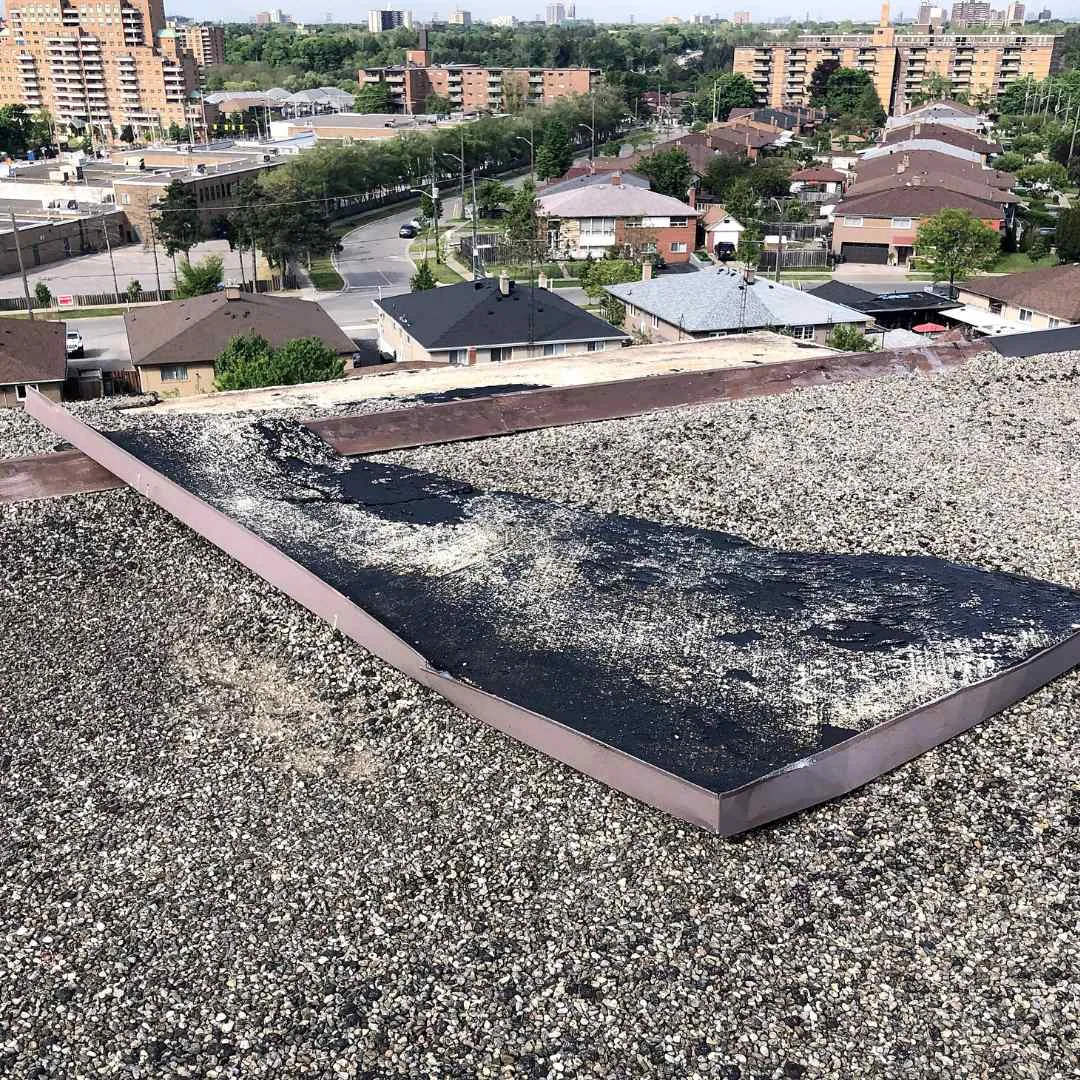
After a storm we start at the perimeter, because uplift starts there: edge metal, corners, parapet caps and the lines of fasteners nearest the edge. Then we check the units and the seams around them and walk the field looking for punctures from flying debris. A wind damage repair that begins with a temporary dry-in keeps a small problem small. Photographs before cleanup give the carrier a clear record, and a roof file kept current makes the next claim simpler.
Commercial Roofing Questions
How does a reroof at a multi-tenant center avoid disrupting every store?
Through bay-by-bay phasing. We list each tenant's hours and constraints, open one section at a time, close it before the crew leaves, and stage deliveries away from entrances. Tenants hear about their bay ahead of time, and they know who to call when something looks off.
Which part of a retail roof usually fails first?
The flashing, almost always. Around rooftop units, signage supports and parapet walls, movement and sun wear down sealants and edges long before the field of the membrane gives out. That is why a first walk looks closely at curbs, penetrations and base flashing before anything else.
Our school building needs a roof, and summer is short. Can the work finish in time?
Often it can, if the scope is set in the spring. Material orders, permits and crane scheduling need lead time. We split the job into phases so that every classroom returns dry by the first day of school, and we leave slack for Gulf storms in July and August.
Should a clinic building choose a night shift for the loud work?
Night work removes most of the risk to patients and staff, though it raises the hourly rate and requires lighting, noise limits and neighbors' consent. We price both versions side by side. Many clinics pick days for quiet prep and nights for tear-off over exam rooms.
Why does the quote list the crane separately from the membrane?
Because the crane is a cost driver of its own. Reach, number of picks and days on site all change the price, and none of it relates to the roof system you choose. Listing it separately lets an owner see what access costs and decide whether a different staging plan saves money.
Keep Reading
Related Roofing Work in Pasadena
Walk the Property With Us
Bring the tenant list, the lease constraints and the leak history. We will walk the roof and the lot together so the work plan fits your tenants from the first day.