
Roof Systems
Spray Polyurethane Foam Roofing in Pasadena, TX
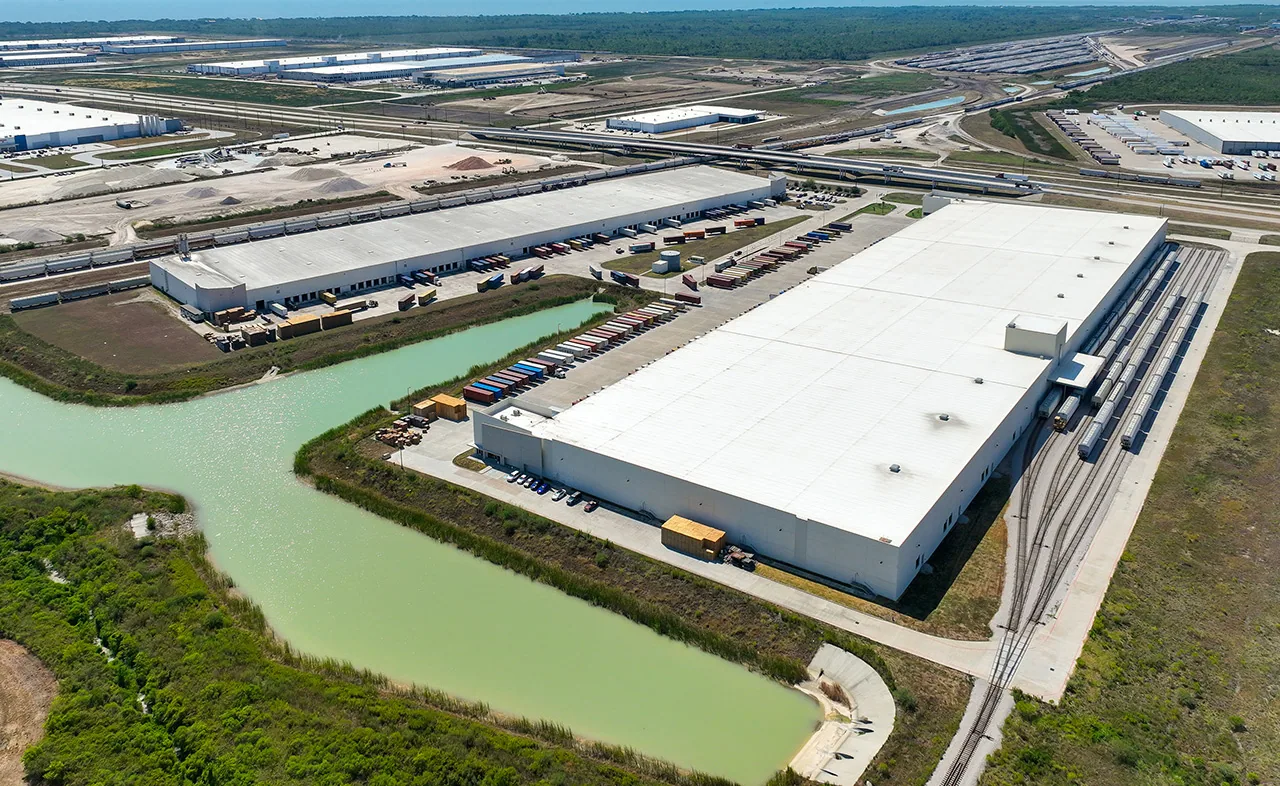
Spray foam is the one roof system that arrives on the truck as two liquids and leaves as a rigid, joint-free surface, and that single fact drives every logistics decision on the job. The rig parks in a laydown area near the building, hoses run up to the deck, and the foam expands within seconds of leaving the gun. Anything downwind of that spray, from a trailer lot to an air intake, has to be protected before the first pass. On a Pasadena, TX warehouse or process building, we plan those protections first and the foam second.
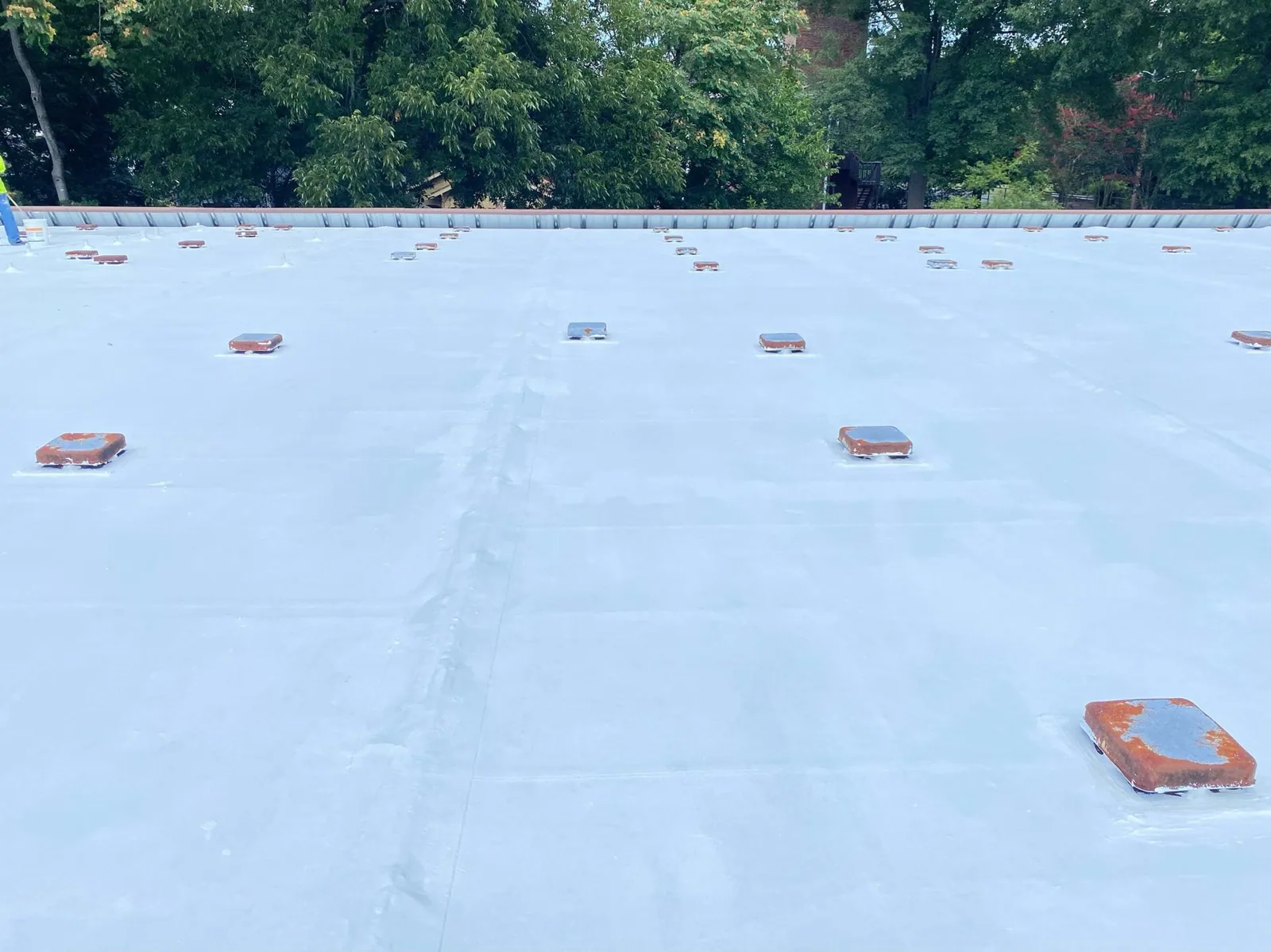
The payoff is a fully adhered, insulating layer with no laps for a storm to pry open.
Shield Everything Downwind of the Spray
Foam atomizes as it leaves the gun, and a light breeze carries a fine mist a long way. Before the rig starts, we walk the perimeter with the facility lead and mark what gets covered or moved: parked trailers, rooftop air intakes, cars in the employee lot, glass at the dock offices. We agree on a wind limit for the day with the foam applicator and stop spraying when gusts push past it. Beside a hospital such as HCA Houston Healthcare Southeast, a 350-bed hospital on Spencer Highway, fresh-air intakes near the work get sealed and the facilities team signs off on every exhaust we cover. That hour of arranging costs less than the paint complaints that follow overspray.
Read the Deck Before Choosing Foam
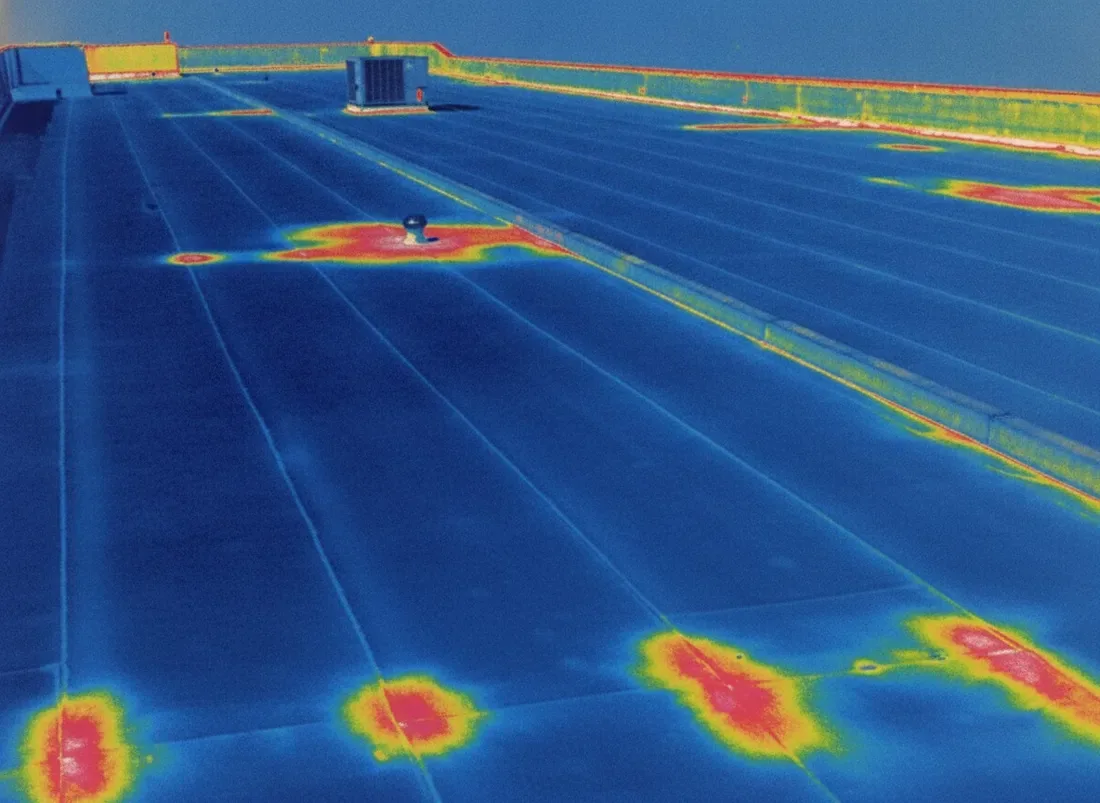
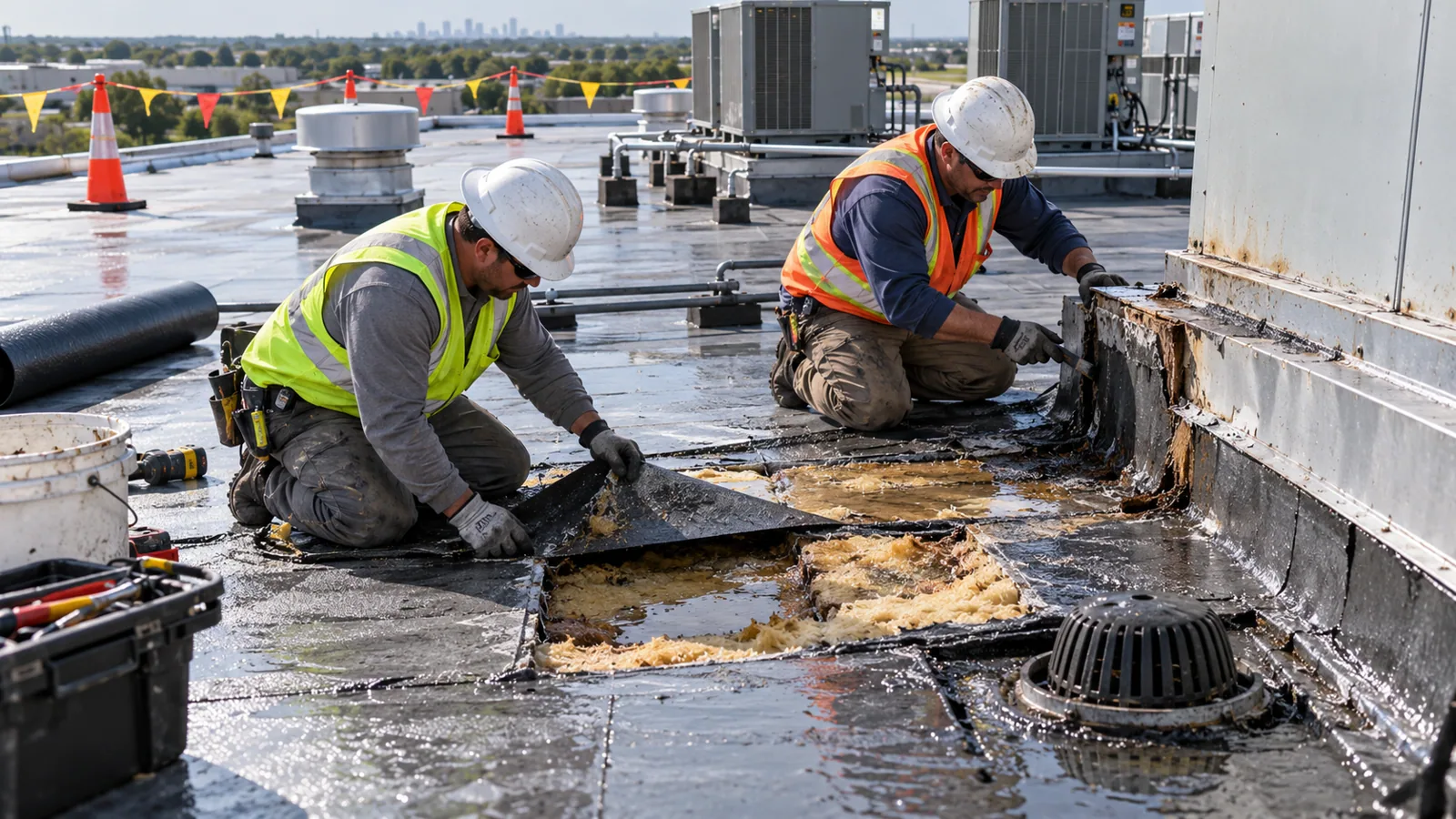
Foam bonds directly to whatever is underneath, so the substrate decides the job. Clean steel, concrete and sound built-up or modified bitumen surfaces can take it. Wet insulation, loose gravel and oily or dusty surfaces cannot. On an older roof we start with an infrared moisture survey and cut cores, because foam sprayed over wet insulation traps that water and blisters under the first hot week. Where the existing roof tests dry, foam works as a roof recover, which keeps the old membrane in place and spares a loading court from a tear-off dumpster. Where a corroded metal deck is the real problem, a metal roof retrofit may fit the building better, and we say so on the first walk.
Spray Inside the Weather Window
Foam cures properly only on a dry, warm surface, and the Gulf turns that into a daily negotiation. Morning humidity in Houston runs above 90 percent through summer, so dew sits on a steel deck well past sunrise, and the crew waits for a moisture meter reading instead of a clock. Houston collects roughly 50 inches of rain, spread over about 104 rainy days and peaking in June, so a crew that starts spraying mid-morning can be chased off by a storm cell by midafternoon. We size each day's section to what can be sprayed, coated and sealed at the edges before the sky changes.
Uncoated foam is not a finished roof. A storm finds an open edge first.
Pick the Topcoat That Suits the Air Around the Building
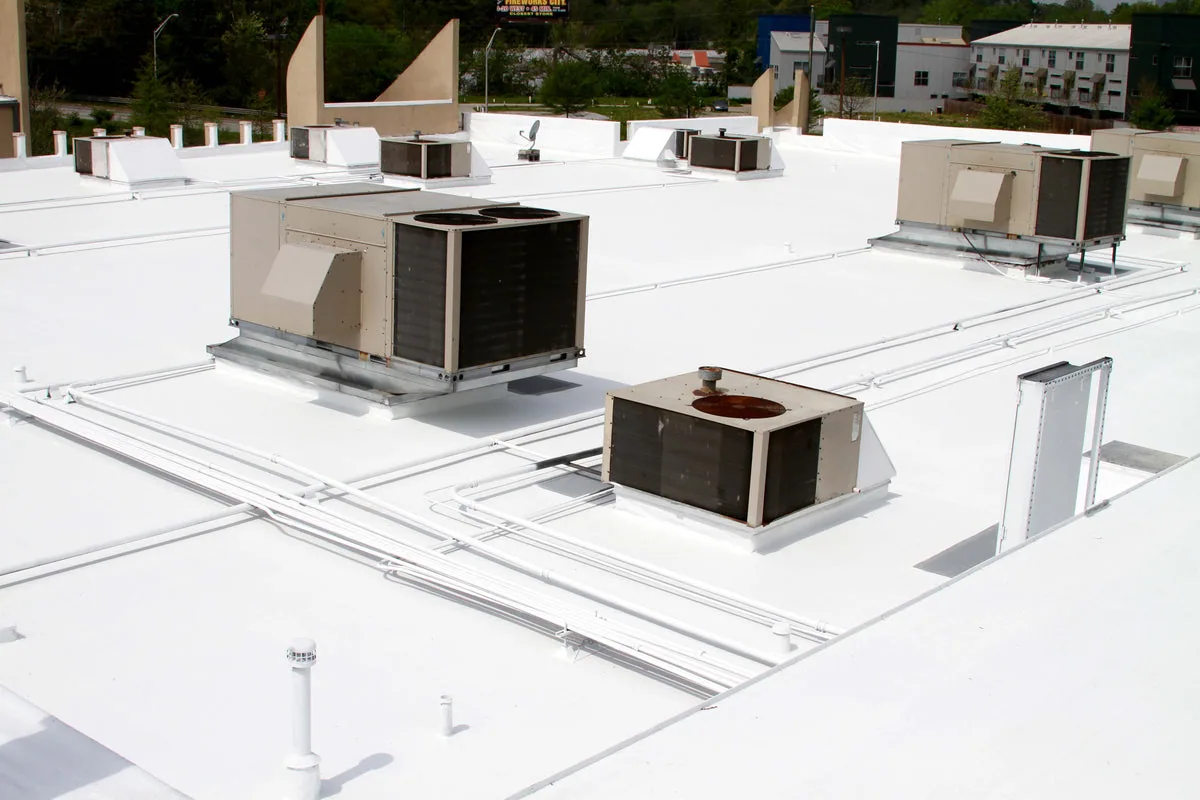
Foam cannot face the sun by itself, so a coating always goes on top. Houston's August average high sits near 95 F, and the summer of 2023 touched 109 F, which punishes anything left bare. Humid air off the Ship Channel and Galveston Bay adds slow corrosion at metal edges and fasteners around the foam. Silicone coating systems shed ponded water and hold up under constant UV, which suits a flat roof where a drain clogs now and then. Acrylic coating systems go on easily and reflect heat well, but they dislike standing water, so they belong on roofs that drain cleanly. We pick the topcoat from the drainage first and the budget second.
Test the Foam Against Wind, Hail and Foot Traffic
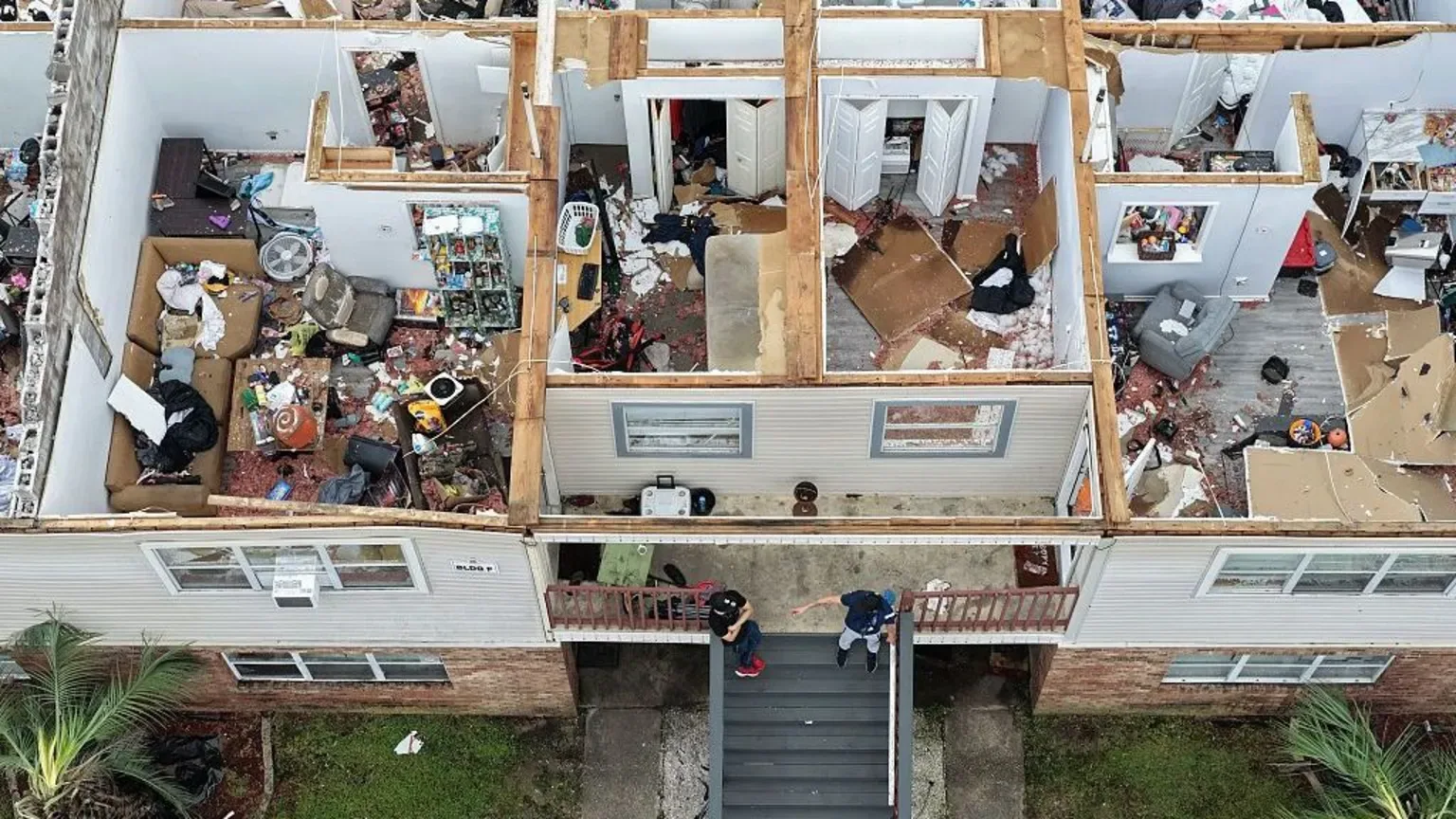
A fully adhered foam roof has no seams or exposed fasteners for gusts to lift, which matters in a market that has seen Hurricane Beryl's eastern eyewall in July 2024, a May 2024 derecho with a 78 mph gust at Highlands, and a 97 mph gust at Bush Intercontinental in June 2023. The weakness is the surface. Golf ball hail reached the Houston-Galveston area in April 2013, and a dropped tool or a heavy boot can crack a thin coating. Both are repairable if found early, which is why we cut a patch, rebuild the foam and recoat instead of leaving a scar. Buildings east of State Highway 146 also need the work to pass inspection under the Texas Department of Insurance windstorm program, so we plan that inspection into the schedule, whether the foam goes on after hurricane damage or as planned work.
Hand Over a Roof With a Recoat Schedule
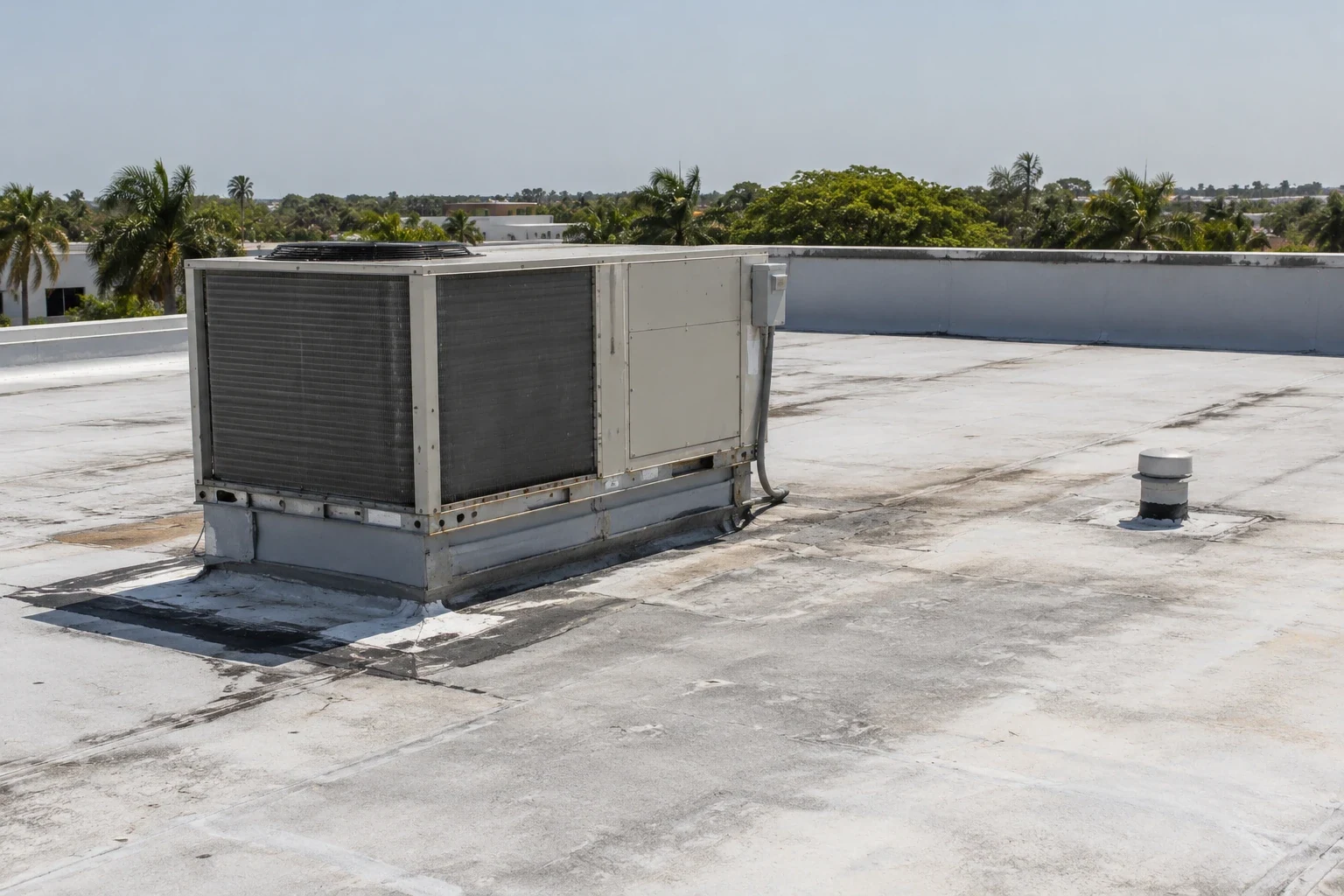
Closeout on a foam roof is more than a final walk. We take thickness readings across the field, photograph the drains, curbs and edge metal, and mark walking routes to the equipment so technicians stay off bare foam. Walking pads go in where traffic is heavy. The coating wears before the foam does, so the owner receives a recoat window instead of a surprise. Each year the roof joins the building's preventive roof maintenance visit: we clear debris, check coating wear near the drains and look for punctures around rooftop units. Along the Bayport Industrial District, in the humid air of the Galveston Bay wind zone, that rhythm is what keeps the coating ahead of the wear.
Foam quality depends on substrate preparation and consistent application conditions. Record substrate temperature, weather, mix setup, pass thickness, and any area where adhesion or surface texture requires correction. Establish a protected spray perimeter before work begins, including vehicles, intakes, neighboring operations, and exposed equipment. The crew should verify thickness at representative locations and repair voids before applying the protective topcoat. At handover, map repairs and note the coating product and maintenance interval recommended by its manufacturer. Owners should also know how to identify impact damage so a puncture can be sealed before water reaches the foam layer.
Commercial Roofing Questions
Can foam go over my existing built-up roof?
Only if the old roof is dry underneath. We map the moisture with a scan, confirm with cores, and remove any wet insulation before spraying. A dry, firmly attached built-up surface makes a good base, and one with wide blisters or loose gravel needs those areas cut out and cleaned first.
How much dock and parking area closes while the rig is running?
The overspray zone sets the footprint, and it moves with the wind on the day. Trucks and cars stay out of the downwind side until the spray stops, and we stage the rig so the dock doors on the lee side keep working. A facility lead and our foreman settle the layout each morning.
Will foam survive daily rooftop traffic from my mechanics?
Bare foam will not, and the coating alone is thin. We lay walking pads along the routes to units and hatches, and add extra coating at the spots where technicians kneel. A short list of rules for the HVAC contractor keeps the surface in good shape between recoats.
Does foam help with cooling costs through a Gulf Coast summer?
Foam is insulation as well as a roof, so it cuts heat gain through the deck, and a reflective topcoat adds to that. Pasadena's permit office asks for 2024 IECC energy compliance on remodels, additions, new construction and changes of occupancy that affect energy load, so check with it on whether a given roof scope is covered.
What happens when hail or a fallen branch breaks the surface?
Damage stays local. A technician cuts out the broken foam, sprays a new patch, and recoats beyond the repair edge so the join sheds water. Photographs of the damage also support an insurance claim if the storm affected the whole building.
Keep Reading
Related Roofing Work in Pasadena
Walk the Roof and the Laydown Area With Us
Bring the facility director and the operating schedule. We will walk the deck, mark where the rig and the protective covers go, and build a spray plan that fits how your building runs from the first morning.